


Checkpoint Kinase Inhibitor Market Size
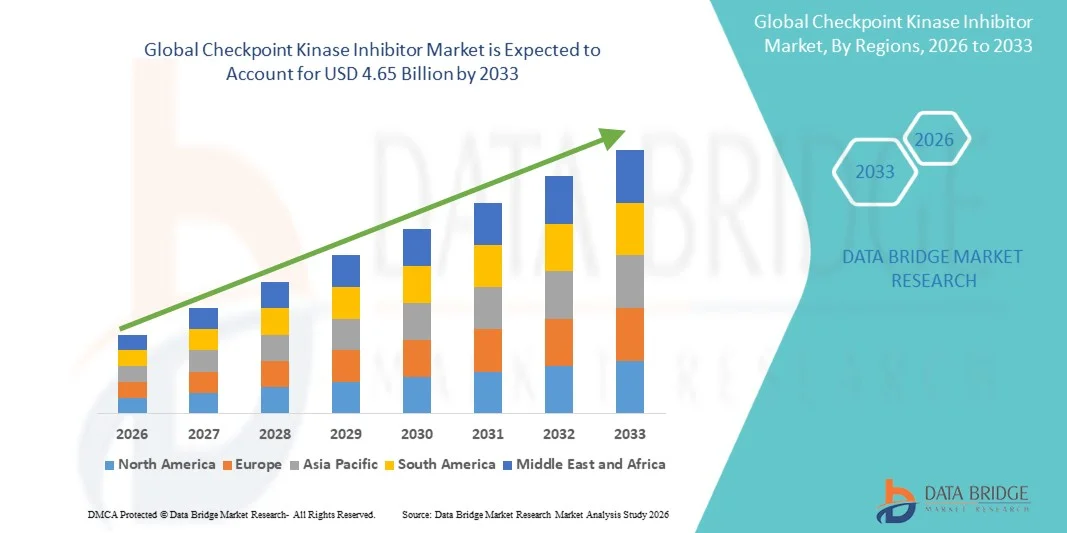
- The global checkpoint kinase inhibitor market size was valued at USD 1.50 billion in 2025 and is expected to reach USD 4.65 billion by 2033, at a CAGR of 15.20% during the forecast period
- The market growth is largely fueled by the increasing research and development in targeted cancer therapies, rising prevalence of cancers where checkpoint kinase pathways are relevant, and the drive toward personalized oncology treatments that leverage cell‑cycle modulation and DNA damage response mechanisms
- Furthermore, growing adoption of combination therapy strategies expanding clinical trial portfolios, and improving regulatory support for novel targeted agents are accelerating uptake. These converging factors are enhancing the integration of checkpoint kinase inhibitors into precision oncology, thereby significantly boosting the industry’s growth
Checkpoint Kinase Inhibitor Market Analysis
- Checkpoint kinase inhibitors, targeting key regulators of the cell cycle such as CHK1 and CHK2, are increasingly critical components of modern oncology therapeutics, particularly in precision medicine and DNA damage response-based cancer treatments, due to their ability to enhance chemotherapy and radiotherapy efficacy
- The escalating demand for checkpoint kinase inhibitors is primarily fueled by the rising prevalence of cancers responsive to DNA damage pathway modulation, growing investment in targeted therapy research, and an increasing focus on personalized oncology treatment strategies
- North America dominated the checkpoint kinase inhibitor market with the largest revenue share of 42.5% in 2025, characterized by a strong biopharmaceutical ecosystem, high R&D investment, and the presence of leading industry players, with the U.S. experiencing substantial growth in clinical trials and drug approvals, driven by innovations from both established pharmaceutical companies and biotech startups focusing on combination therapies and novel inhibitor molecules
- Asia-Pacific is expected to be the fastest-growing region in the checkpoint kinase inhibitor market during the forecast period driven by increasing cancer incidence, expanding clinical trial activities, rising healthcare expenditure, and improving regulatory frameworks that support faster drug development and approval
- CHK1 inhibitor segment dominated the checkpoint kinase inhibitor market with a market share of 46.7% in 2025, driven by its established efficacy in combination therapies, ongoing clinical validation, and increasing adoption in precision oncology protocols
Report Scope and Checkpoint Kinase Inhibitor Market Segmentation
|
Attributes |
Checkpoint Kinase Inhibitor Key Market Insights |
|
Segments Covered |
|
|
Countries Covered |
North America
Europe
Asia-Pacific
Middle East and Africa
South America
|
|
Key Market Players |
|
|
Market Opportunities |
|
|
Value Added Data Infosets |
In addition to the insights on market scenarios such as market value, growth rate, segmentation, geographical coverage, and major players, the market reports curated by the Data Bridge Market Research also include in-depth expert analysis, patient epidemiology, pipeline analysis, pricing analysis, and regulatory framework |
Checkpoint Kinase Inhibitor Market Trends
“Increasing Focus on Combination Therapy and Precision Oncology”
- A significant and accelerating trend in the global checkpoint kinase inhibitor market is the growing use of combination therapies with chemotherapeutics, PARP inhibitors, and immunotherapies to improve treatment efficacy and patient outcomes
- For instance, several ongoing clinical trials are evaluating CHK1 inhibitors in combination with DNA-damaging agents to enhance tumor cell sensitivity while minimizing toxicity to normal cells
- Precision oncology approaches using genomic profiling are enabling personalized checkpoint kinase inhibitor regimens, allowing clinicians to select patients most likely to benefit from therapy
- Integration of biomarkers and companion diagnostics with inhibitor therapy facilitates monitoring of treatment response and dose optimization, enhancing therapeutic success
- This trend towards more personalized and combinatorial treatment strategies is fundamentally reshaping oncology care, with companies such as Merck and AstraZeneca developing inhibitors tailored to specific genetic mutations
- The demand for innovative, targeted, and patient-specific checkpoint kinase inhibitors is growing rapidly across oncology indications, as researchers and clinicians increasingly prioritize precision medicine approaches
- Enhanced collaboration between academic institutions and pharmaceutical companies is fostering novel inhibitor development and accelerating clinical translation
Checkpoint Kinase Inhibitor Market Dynamics
Driver
“Rising Cancer Prevalence and Expansion of Targeted Therapy Research”
- The increasing global incidence of cancers amenable to DNA damage response modulation, coupled with greater investment in targeted therapy development, is a key driver of checkpoint kinase inhibitor market growth
- For instance, in March 2025, Merck announced advancements in CHK1 inhibitor trials for combination therapy in triple-negative breast cancer, signaling strong growth potential for the segment
- As the oncology community seeks therapies that enhance efficacy while reducing side effects, checkpoint kinase inhibitors offer a targeted approach to disrupting cancer cell replication and survival
- Furthermore, expansion of clinical trial networks, increased R&D funding, and collaboration between pharmaceutical and biotech companies are accelerating the development pipeline for novel inhibitors
- The rising adoption of personalized medicine and precision oncology strategies, coupled with improved regulatory support for innovative therapies, is driving global market expansion
- For instance, government and private grants supporting rare and aggressive cancer research are increasing the availability of funding for checkpoint kinase inhibitor studies
- Growing awareness and education among oncologists about DNA damage response pathways are encouraging broader clinical adoption of checkpoint kinase inhibitors
Restraint/Challenge
“Toxicity Management and Regulatory Hurdles”
- Concerns regarding potential off-target effects and hematologic or gastrointestinal toxicities associated with checkpoint kinase inhibitors pose significant challenges to broader adoption
- For instance, reported adverse events in clinical trials have led to dose adjustments or trial delays, raising caution among physicians and patients
- Addressing these safety concerns through optimized dosing, combination therapy strategies, and improved patient monitoring is critical to gain clinician and patient confidence
- In addition, navigating complex regulatory approval pathways across different regions can slow market entry and commercialization of novel inhibitors
- The high cost of drug development and clinical trials, coupled with stringent safety and efficacy requirements, can act as a barrier for smaller biotech companies entering the market, potentially limiting competitive growth
- Overcoming these challenges through rigorous safety studies, regulatory alignment, and patient-centric treatment designs will be vital for sustained market growth
- For instance, inconsistent regulatory requirements across regions can delay multi-country clinical trials, impacting market expansion timelines
- Limited patient awareness of novel targeted therapies may reduce early adoption, requiring educational initiatives and outreach programs
Checkpoint Kinase Inhibitor Market Scope
The market is segmented on the basis of type, target area, indication, end users, and distribution channel.
- By Type
On the basis of type, the checkpoint kinase inhibitor market is segmented into CHK1 and CHK2 inhibitors. The CHK1 inhibitor segment dominated the market with the largest revenue share of 46.7% in 2025, driven by its well-established efficacy in combination therapies and ongoing clinical validation. CHK1 inhibitors are widely used in oncology protocols targeting DNA damage response, particularly in cancers with high replication stress. They are preferred for their ability to sensitize tumor cells to chemotherapeutics and radiotherapy while maintaining tolerable safety profiles. The segment’s dominance is further strengthened by robust pipelines and extensive clinical trial data. Geographic adoption is strongest in North America and Europe, where hospitals and academic centers have high access to advanced therapies.
The CHK2 inhibitor segment is anticipated to witness the fastest growth rate of 17% CAGR from 2026 to 2033, fueled by emerging research demonstrating its potential in treating hematologic malignancies and solid tumors with specific genetic profiles. CHK2 inhibitors are increasingly explored in combination with PARP inhibitors and immunotherapies, expanding their clinical applicability. Growing investments in early-stage research, coupled with regulatory incentives for orphan cancer therapies, are driving rapid adoption. In addition, integration of companion diagnostics is improving patient selection and treatment outcomes. These factors collectively position CHK2 inhibitors for accelerated growth across multiple regions.
- By Target Area
On the basis of target area, the market is segmented into ATP Binding Pocket, G1/S or G2/M Transitions, B-cell Lymphoma 2 (Bcl-2), DNA Damage Response (DDR) Network, and Others. The DNA Damage Response (DDR) Network segment dominated the market with the largest revenue share in 2025, due to its broad applicability in multiple cancer types and its role in combination therapy protocols. DDR-targeted inhibitors, including CHK1 and CHK2 inhibitors, enhance the efficacy of chemotherapeutic agents and radiotherapy by preventing tumor cells from repairing DNA damage. Clinical adoption is high in North America, supported by established hospitals and research centers focused on personalized oncology. Pharmaceutical companies are also investing in DDR-targeted pipelines, creating a competitive and innovation-driven segment.
The ATP Binding Pocket segment is expected to witness the fastest growth from 2026 to 2033, driven by advancements in structure-based drug design and targeted inhibitor development. Novel molecules targeting the ATP binding site demonstrate high specificity, reduced off-target effects, and enhanced therapeutic efficacy. Early-stage clinical trials and preclinical research are accelerating the availability of new drug candidates. Collaborations between biotech firms and academic institutions are supporting innovation in this segment. Regulatory encouragement for first-in-class targeted therapies further boosts growth. Adoption is expected to rise in emerging markets with expanding oncology infrastructure.
- By Indication
On the basis of indication, the market is segmented into lung cancer, breast cancer, gastric cancer, and others. The Lung Cancer segment dominated the market in 2025 due to the high prevalence of lung malignancies worldwide and strong clinical evidence supporting the use of checkpoint kinase inhibitors in combination with standard-of-care therapies. Oncologists prefer these inhibitors for patients exhibiting high replication stress or DNA repair deficiencies. The segment benefits from extensive R&D investment and ongoing global clinical trials evaluating combination regimens. North America holds the largest share due to high patient awareness and advanced healthcare infrastructure. Continuous innovation in therapeutic protocols maintains the segment’s leadership position.
The Breast Cancer segment is anticipated to witness the fastest CAGR from 2026 to 2033, fueled by increasing research in triple-negative breast cancer and BRCA-mutated subtypes. Checkpoint kinase inhibitors are being tested in combination with chemotherapies and PARP inhibitors to improve patient outcomes. Awareness of targeted therapy options and adoption of precision medicine approaches support rapid growth. Pharmaceutical companies are launching specialty programs for breast cancer patients to enhance treatment efficacy. Expanding clinical trial networks in Asia-Pacific are further boosting adoption. The segment is expected to gain significant market traction over the forecast period.
- By End Users
On the basis of end users, the market is segmented into hospitals, specialty clinics, and others. The Hospital segment dominated the market with the largest revenue share in 2025, owing to their advanced oncology infrastructure, access to multidisciplinary treatment teams, and ability to conduct complex combination therapy protocols. Hospitals play a critical role in administering checkpoint kinase inhibitors and managing patient monitoring and dosage optimization. Adoption in North America and Europe is especially high due to the presence of specialized oncology centers. Strong integration with clinical trials enhances hospital-led uptake. Hospitals also facilitate education for healthcare professionals regarding novel therapies.
The Specialty Clinics segment is expected to witness the fastest growth during the forecast period, driven by the increasing number of oncology-focused outpatient centers providing personalized therapy options. These clinics often offer precision medicine testing and targeted drug administration, allowing for convenient and patient-specific treatment pathways. Expansion in Asia-Pacific and Latin America supports rapid growth. Partnerships with pharmaceutical companies are facilitating drug access and awareness. Specialty clinics are increasingly offering combination therapy programs, enhancing market penetration. Their flexible infrastructure and patient-centric models make them attractive for new therapy adoption.
- By Distribution Channel
On the basis of distribution channel, the market is segmented into hospital pharmacy, online pharmacy, retail pharmacy, and others. The Hospital Pharmacy segment dominated the market in 2025 due to the controlled administration of checkpoint kinase inhibitors in hospital settings, ensuring patient safety and adherence to treatment protocols. Hospital pharmacies provide immediate access to combination therapy regimens and are integrated with clinical care workflows. Adoption is strongest in regions with advanced oncology care infrastructure. Hospitals also monitor adverse events and optimize dosage. Strong collaboration with pharmaceutical manufacturers supports drug supply and clinical trial participation.
The Online Pharmacy segment is anticipated to witness the fastest growth from 2026 to 2033, fueled by increasing digital health adoption and patient preference for home delivery of oral targeted therapies. Online pharmacies offer convenience, subscription-based delivery, and patient education support. Regulatory acceptance of telemedicine and online prescription fulfillment is encouraging growth. This channel is gaining traction in North America and Europe and expanding in Asia-Pacific. Patient adherence programs and reminders further enhance adoption. Integration with digital health platforms enables better monitoring of treatment outcomes and follow-ups.
Checkpoint Kinase Inhibitor Market Regional Analysis
- North America dominated the checkpoint kinase inhibitor market with the largest revenue share of 42.5% in 2025, characterized by a strong biopharmaceutical ecosystem, high R&D investment, and the presence of leading industry players
- Hospitals and research institutions in the region have well-established oncology infrastructure, enabling extensive clinical trials and early adoption of novel checkpoint kinase inhibitors
- Widespread awareness of targeted therapies among oncologists, coupled with patient access to advanced healthcare facilities, has accelerated market penetration. High investment in drug development, regulatory support for innovative therapies, and collaborations between pharmaceutical and biotech companies are key factors sustaining growth
U.S. Checkpoint Kinase Inhibitor Market Insight
The U.S. checkpoint kinase inhibitor market captured the largest revenue share of 78% in 2025 within North America, fueled by the high prevalence of cancers and strong adoption of targeted therapies. Oncology centers and hospitals are increasingly incorporating CHK1 and CHK2 inhibitors into combination therapy protocols. The growing emphasis on precision medicine and personalized oncology treatments further drives market expansion. Robust clinical trial infrastructure, regulatory support for innovative therapies, and early adoption of novel inhibitors contribute to rapid uptake. In addition, partnerships between pharmaceutical and biotech companies enhance accessibility and innovation in inhibitor development. The U.S. market continues to lead due to advanced healthcare infrastructure and high patient awareness of novel cancer therapies.
Europe Checkpoint Kinase Inhibitor Market Insight
The Europe checkpoint kinase inhibitor market is projected to expand at a substantial CAGR throughout the forecast period, primarily driven by rising cancer incidence and the increasing need for precision oncology treatments. Well-established healthcare systems and supportive regulatory frameworks foster clinical adoption of novel inhibitors. Countries such as Germany, France, and Italy are investing in targeted cancer therapies and expanding clinical trial networks. European patients show growing awareness of combination therapies and personalized medicine options. The market benefits from collaborations between hospitals, research centers, and pharmaceutical companies to accelerate drug accessibility. Continuous R&D and reimbursement support further strengthen regional growth.
U.K. Checkpoint Kinase Inhibitor Market Insight
The U.K. checkpoint kinase inhibitor market is anticipated to grow at a noteworthy CAGR during the forecast period, driven by the demand for advanced oncology treatments and targeted therapy adoption. Increasing prevalence of breast, lung, and hematologic cancers encourages clinicians to use CHK1 and CHK2 inhibitors. The country’s strong clinical trial ecosystem supports early access to novel inhibitors. Awareness campaigns and oncology-focused healthcare initiatives are promoting adoption in both hospitals and specialty clinics. Government support for precision medicine and combination therapy protocols further propels market growth. In addition, integration of companion diagnostics enhances treatment outcomes, making inhibitors more attractive to physicians.
Germany Checkpoint Kinase Inhibitor Market Insight
The Germany checkpoint kinase inhibitor market is expected to expand at a considerable CAGR during the forecast period, fueled by rising awareness of personalized cancer therapies and strong healthcare infrastructure. Germany’s emphasis on clinical research, innovation, and regulatory support promotes adoption of checkpoint kinase inhibitors. Hospitals and oncology centers are increasingly integrating these inhibitors into treatment regimens, particularly for lung and breast cancers. Collaborations between pharmaceutical companies and research institutes accelerate clinical trial pipelines. The focus on patient-specific therapies and targeted combination regimens strengthens market penetration. Demand is also supported by reimbursement frameworks facilitating access to innovative treatments.
Asia-Pacific Checkpoint Kinase Inhibitor Market Insight
The Asia-Pacific checkpoint kinase inhibitor market is poised to grow at the fastest CAGR of 22% during 2026–2033, driven by rising cancer prevalence, increasing healthcare expenditure, and expanding oncology infrastructure in countries such as China, Japan, and India. Government initiatives supporting precision medicine and clinical trials are accelerating inhibitor adoption. Growing awareness among physicians and patients about targeted therapies is increasing uptake across hospitals and specialty clinics. The region is witnessing expansion in clinical trial activities and manufacturing capabilities for oncology drugs. Rapid urbanization and rising disposable incomes further enhance affordability and accessibility. Asia-Pacific’s fast-growing healthcare systems and research collaborations make it a key growth region.
Japan Checkpoint Kinase Inhibitor Market Insight
The Japan checkpoint kinase inhibitor market is gaining momentum due to high healthcare standards, advanced oncology infrastructure, and strong focus on personalized medicine. Adoption of CHK1 and CHK2 inhibitors is fueled by a growing number of clinical trials targeting lung and breast cancers. Integration of companion diagnostics helps in precise patient selection for targeted therapy. The aging population increases demand for effective and less toxic cancer treatments. Pharmaceutical companies are investing in combination therapy protocols to improve clinical outcomes. Japan’s regulatory support for innovative oncology drugs further boosts market growth in both hospital and specialty clinic settings.
India Checkpoint Kinase Inhibitor Market Insight
The India checkpoint kinase inhibitor market accounted for the largest market revenue share in Asia-Pacific in 2025, driven by rising cancer incidence, improving healthcare infrastructure, and growing awareness of targeted therapies. Expansion of oncology hospitals and specialty clinics facilitates wider access to CHK inhibitors. Government initiatives promoting cancer care and clinical research support market growth. Increasing affordability of advanced therapies and collaborations with multinational pharmaceutical companies enhance adoption. Urbanization and rising disposable incomes further contribute to market penetration. India’s focus on precision oncology and expansion of clinical trial networks positions it as a high-growth market in the region.
Checkpoint Kinase Inhibitor Market Share
The Checkpoint Kinase Inhibitor industry is primarily led by well-established companies, including:
- Merck & Co., Inc., (U.S.)
- GSK plc (U.K.)
- AstraZeneca plc (U.K.)
- Pfizer Inc. (U.S.)
- Gilead Sciences, Inc. (U.S.)
- C.H. Boehringer Sohn AG & Co. KG (Germany)
- F. Hoffmann‑La Roche Ltd (Switzerland)
- Boundless Bio, Inc. (U.S.)
- Bristol‑Myers Squibb Company (U.S.)
- AbbVie Inc. (U.S.)
- Novartis AG (Switzerland)
- Amgen Inc. (U.S.)
- Takeda Pharmaceutical Company Limited (Japan)
- Sanofi (France)
- Vertex Pharmaceuticals Incorporated (U.S.)
- Exelixis, Inc. (U.S.)
- Cyteir Therapeutics, Inc. (U.S.)
- Checkpoint Therapeutics, Inc. (U.S.)
- Eli Lilly and Company (U.S.)
What are the Recent Developments in Global Checkpoint Kinase Inhibitor Market?
- In November 2025, researchers published findings showing that combining CHK1 inhibition (using the CHK1 inhibitor Prexasertib) with anti‑PD‑L1 immunotherapy improved tumor remission and enhanced anti‑tumor immunity in ovarian cancer xenograft models, suggesting a promising dual‑checkpoint blockade strategy. This preclinical development highlights synergistic effects on tumor stemness reduction and elevated cytotoxic T‑cell infiltration, potentially informing future combination therapy trials
- In October 2025, a Phase 2 multi‑cohort clinical trial of the CHK1 inhibitor prexasertib (LY2606368) reported clinical activity in heavily pretreated breast and ovarian cancer patients, showing measurable response rates and manageable toxicity, underscoring continued clinical interest in checkpoint kinase targeting for difficult cancers
- In August 2025, a study reported that CHK1 inhibition in ARID1A‑deficient colorectal cancer models significantly increased therapeutic response to radiotherapy via activation of antitumor immunity, providing evidence that targeting the ATR/CHK1 axis can remodel the tumor microenvironment and enhance combined modality outcomes. This discovery underscores the expanding role of checkpoint kinase targeting beyond cytotoxic sensitization alone
- In March 2025, Checkpoint Therapeutics announced an agreement to merge with Sun Pharmaceutical Industries in a deal valued up to approximately USD 416 million, signaling consolidation and strategic expansion in targeted oncology and immunotherapy development. The merger plan includes amended proxy filings and an expected stockholder vote in Q2 2025, highlighting industry confidence in the company’s oncology portfolio
- In December 2024, the U.S. Food and Drug Administration (FDA) approved UNLOXCYT™ (cosibelimab‑ipdl), a PD‑L1 immune checkpoint inhibitor, for adults with metastatic or locally advanced cutaneous squamous cell carcinoma, representing a significant regulatory milestone for new immuno‑oncology therapies. This marked the drug’s first FDA approval after addressing manufacturing concerns earlier in the process

- Interactive Data Analysis Dashboard
- Company Analysis Dashboard for high growth potential opportunities
- Research Analyst Access for customization & queries
- Competitor Analysis with Interactive dashboard
- Latest News, Updates & Trend analysis
- Harness the Power of Benchmark Analysis for Comprehensive Competitor Tracking
Data collection and base year analysis are done using data collection modules with large sample sizes. The stage includes obtaining market information or related data through various sources and strategies. It includes examining and planning all the data acquired from the past in advance. It likewise envelops the examination of information inconsistencies seen across different information sources. The market data is analysed and estimated using market statistical and coherent models. Also, market share analysis and key trend analysis are the major success factors in the market report. To know more, please request an analyst call or drop down your inquiry.
The key research methodology used by DBMR research team is data triangulation which involves data mining, analysis of the impact of data variables on the market and primary (industry expert) validation. Data models include Vendor Positioning Grid, Market Time Line Analysis, Market Overview and Guide, Company Positioning Grid, Patent Analysis, Pricing Analysis, Company Market Share Analysis, Standards of Measurement, Global versus Regional and Vendor Share Analysis. To know more about the research methodology, drop in an inquiry to speak to our industry experts.
Data Bridge Market Research is a leader in advanced formative research. We take pride in servicing our existing and new customers with data and analysis that match and suits their goal. The report can be customized to include price trend analysis of target brands understanding the market for additional countries (ask for the list of countries), clinical trial results data, literature review, refurbished market and product base analysis. Market analysis of target competitors can be analyzed from technology-based analysis to market portfolio strategies. We can add as many competitors that you require data about in the format and data style you are looking for. Our team of analysts can also provide you data in crude raw excel files pivot tables (Fact book) or can assist you in creating presentations from the data sets available in the report.












