


Chronic Ocular Pain Market Size
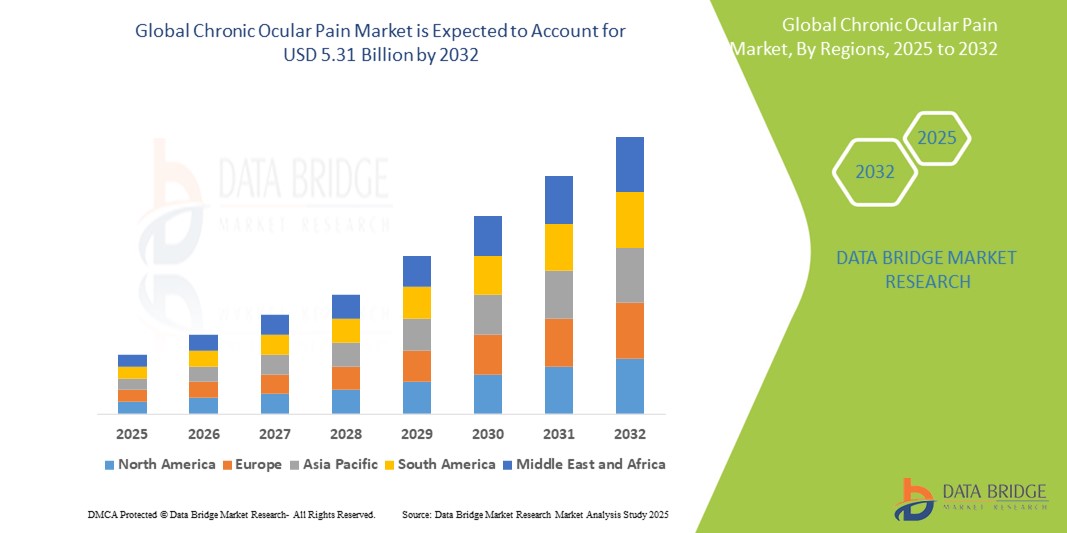
- The global chronic ocular pain market size was valued at USD 3.41 billion in 2024 and is expected to reach USD 5.31 billion by 2032, at a CAGR of 5.70% during the forecast period
- The market growth is largely fueled by increasing prevalence of ocular diseases and rising awareness about chronic eye conditions, leading to greater demand for effective pain management solutions in ophthalmology
- Furthermore, advancements in pharmaceutical formulations and innovative drug delivery systems are enhancing treatment efficacy and patient compliance, thereby significantly boosting the uptake of chronic ocular pain therapies and driving the industry's growth
Chronic Ocular Pain Market Analysis
- Chronic ocular pain treatments are gaining significant traction as a critical component of eye care, driven by growing awareness of ocular health issues, increased prevalence of eye disorders, and advancements in therapeutic options across both clinical and outpatient settings
- The escalating demand for effective chronic ocular pain management is primarily fueled by an aging global population, rising incidence of dry eye disease, neuropathic pain conditions, and increasing patient preference for minimally invasive treatment options that improve quality of life
- North America dominated the chronic ocular pain market with the largest revenue share of 38.5% in 2024, characterized by a well-established healthcare infrastructure, high awareness levels, and a strong presence of key pharmaceutical and medical device players. The U.S. leads the market growth, driven by innovation in diagnostic techniques, advanced treatment modalities, and increasing insurance coverage for ocular pain therapies
- Asia-Pacific is expected to be the fastest-growing region in the chronic ocular pain market during the forecast period, owing to rapid urbanization, increasing healthcare expenditure, growing geriatric population, and expanding access to eye care facilities in countries such as China, India, and Japan
- The topical segment dominated the ocular pain market with a market share of 79.8% in 2024, driven by the direct and localized delivery of medication to the eye, minimizing systemic side effects and ensuring high drug concentration at the site of action. This route is preferred for most common ocular conditions, including post-surgical inflammation and dry eye-related pain
Report Scope and Chronic Ocular Pain Market Segmentation
|
Attributes |
Chronic Ocular Pain Key Market Insights |
|
Segments Covered |
|
|
Countries Covered |
North America
Europe
Asia-Pacific
Middle East and Africa
South America
|
|
Key Market Players |
|
|
Market Opportunities |
|
|
Value Added Data Infosets |
In addition to the insights on market scenarios such as market value, growth rate, segmentation, geographical coverage, and major players, the market reports curated by the Data Bridge Market Research also include in-depth expert analysis, pricing analysis, brand share analysis, consumer survey, demography analysis, supply chain analysis, value chain analysis, raw material/consumables overview, vendor selection criteria, PESTLE Analysis, Porter Analysis, and regulatory framework. |
Chronic Ocular Pain Market Trends
“Enhanced Convenience Through Innovative Drug Delivery and Personalized Treatment Approaches”
- A significant and accelerating trend in the global chronic ocular pain market is the shift towards more innovative drug delivery systems and personalized treatment regimens that aim to improve patient adherence and therapeutic outcomes. These developments are enhancing patient convenience and overall management of chronic ocular conditions
- For instance, sustained-release ocular inserts and microparticle-based formulations are gaining traction as they reduce the need for frequent dosing and ensure a controlled release of medication directly to the ocular tissues. This allows for better compliance, particularly among elderly patients or those with limited mobility
- Personalized treatment protocols, guided by diagnostic imaging and patient-specific biomarkers, are enabling ophthalmologists to tailor therapies more effectively. For instance, newer corticosteroid formulations or immunomodulators are being selected based on individual inflammatory profiles, reducing trial-and-error prescribing
- In addition, teleophthalmology platforms are facilitating remote monitoring and consultation, allowing patients with chronic ocular pain to manage their symptoms more consistently and access specialist care without geographic limitations. This has proven especially valuable in rural and underserved regions
- The integration of patient-centric features such as pre-filled syringes, preservative-free formulations, and pain-relieving eye drops with fewer side effects is also improving the patient experience and expanding the market potential across both clinical and homecare settings
- This trend toward more intelligent, accessible, and personalized ocular pain management solutions is fundamentally reshaping expectations in the ophthalmic care landscape. As a result, companies are increasingly investing in advanced ocular therapeutics that not only treat symptoms but also improve the long-term quality of life for patients
- The growing demand for next-generation ocular pain treatments is evident across both hospital-based ophthalmology departments and specialized eye clinics, as healthcare providers and patients alike prioritize convenience, safety, and consistent symptom relief
Chronic Ocular Pain Market Dynamics
Driver
“Growing Need Due to Rising Incidence of Ocular Conditions and Demand for Patient-Centric Care”
- The increasing global prevalence of chronic ocular conditions such as dry eye disease, uveitis, glaucoma, and post-surgical inflammation is a significant driver for the growing demand in the chronic ocular pain market. As populations age and screen time increases, the incidence of persistent eye discomfort and neuropathic ocular pain continues to rise
- For instance, a 2024 study published in ophthalmology found that nearly 30% of patients with chronic dry eye symptoms also report ongoing ocular pain, indicating a substantial unmet need for effective and long-term pain management solutions
- The rising awareness among patients and healthcare professionals about the limitations of conventional therapies—such as overuse of lubricating drops or steroids—has prompted a shift toward targeted treatments such as neuro-modulatory agents and sustained-release corticosteroids
- Furthermore, the demand for personalized and non-invasive treatment approaches, along with the adoption of teleophthalmology for long-term condition monitoring, is creating new opportunities for innovation in ocular pain therapeutics
- The increasing use of multimodal diagnostic tools and the development of topical, injectable, and implantable drug formulations tailored for chronic pain have also contributed significantly to the growth of this market
Restraint/Challenge
“Limited Understanding of Neuropathic Ocular Pain and High Development Costs”
- One of the key challenges restraining the growth of the chronic ocular pain market is the limited clinical understanding and diagnostic clarity surrounding neuropathic pain of ocular origin. Unlike acute inflammation, chronic ocular pain can result from altered nerve function, making it more complex to diagnose and treat
- For instance, conventional ocular exams often fail to detect nerve-related dysfunction, leading to underdiagnosis and inappropriate treatment strategies. This diagnostic gap poses a barrier for both clinicians and patients seeking effective long-term management
- In addition, the high cost of drug development, particularly for niche ophthalmic indications, acts as a financial hurdle for market entrants. Developing safe and effective chronic ocular pain therapies often requires extensive clinical trials, long regulatory pathways, and investments in specialized drug delivery systems
- Moreover, limited reimbursement options for newer and advanced therapeutics, especially in emerging markets, further hinder widespread adoption. Patients may be reluctant to pay out-of-pocket for therapies not covered by insurance, particularly when symptom relief is gradual or variable
- Addressing these challenges will require greater investments in research, better education for eye care professionals, and clearer clinical guidelines for diagnosis and treatment. In addition, industry stakeholders must work toward affordable innovation, ensuring access to effective solutions across income groups
Chronic Ocular Pain Market Scope
The market is segmented on the basis of type, route of administration, end user, and application.
- By Type
On the basis of type, the global chronic ocular pain market is segmented into Topical NSAIDs, corticosteroids, analgesics, antibiotics, and others. The topical NSAIDs segment dominated the market with the largest revenue share of 34.5% in 2024, owing to their efficacy in reducing inflammation and ocular pain following surgeries or trauma, as well as their favorable safety profile for short-term use.
The analgesics segment is expected to witness the fastest CAGR of 7.9% from 2025 to 2032, driven by growing awareness of pain management in ophthalmology and the increasing prevalence of chronic ocular conditions such as dry eye syndrome and neuropathic eye pain.
- By Route of Administration
On the basis of route of administration, the chronic ocular pain market is segmented into topical, oral, parenteral, and others. The topical administration segment held the dominant market share of 79.8% in 2024, as it enables direct delivery to the affected ocular tissues, ensuring faster relief with minimal systemic exposure. It is the preferred method for NSAIDs and corticosteroids.
The oral administration segment is anticipated to grow at the highest CAGR of 8.3% from 2025 to 2032, particularly for chronic pain syndromes and when systemic treatment is required, including for conditions linked to neuropathic pain.
- By End User
On the basis of end user, the chronic ocular pain market is segmented into hospitals, clinics, specialty eye care centers, research institutes, and others. The hospitals segment accounted for the largest revenue share of 39.2% in 2024, due to the high volume of ocular surgeries, post-operative pain management, and availability of advanced diagnostic and therapeutic tools.
The specialty eye care centers segment is expected to register the fastest CAGR of 9.1% from 2025 to 2032, fueled by the rise in outpatient visits, specialization in chronic eye conditions, and increasing preference for focused, expert-led care settings.
- By Application
On the basis of application, the chronic ocular pain market is segmented into diagnosis, treatment, management, and others. The treatment segment held the dominant share of 56.3% in 2024, supported by a growing demand for therapeutic interventions such as anti-inflammatory and analgesic drugs to address both nociceptive and neuropathic ocular pain.
The management segment is projected to grow at the fastest CAGR of 8.7% from 2025 to 2032, as long-term care strategies, including patient monitoring, customized drug regimens, and adjunctive therapies, gain traction for chronic ocular pain syndromes.
Chronic Ocular Pain Market Regional Analysis
- North America dominated the chronic ocular pain market with the largest revenue share of 38.5% in 2024, driven by the high prevalence of ocular conditions such as dry eye syndrome, post-surgical inflammation, and neuropathic eye pain. The region’s robust healthcare infrastructure, strong focus on ophthalmic research, and early adoption of advanced eye care treatments significantly contribute to market growth
- Patients and healthcare providers in the region highly value effective and targeted pain relief therapies, particularly topical NSAIDs and corticosteroids, which are commonly prescribed in ophthalmic care settings. The availability of well-established clinical guidelines and greater access to specialized eye care professionals further supports therapeutic precision and patient compliance
- Moreover, increasing investments in R&D, rising awareness of chronic eye conditions, and favorable reimbursement policies reinforce the widespread use of pharmacologic interventions across both hospitals and specialty eye clinics, solidifying North America’s position as a leading market for chronic ocular pain treatment and management
U.S. Chronic Ocular Pain Market Insight
The U.S. chronic ocular pain market d captured the largest revenue share of 73.5% in 2024. This dominance is driven by a combination of high awareness levels, early diagnosis practices, and extensive access to advanced ocular therapies. The country boasts a strong pharmaceutical R&D ecosystem and a large base of ophthalmologists specializing in managing persistent ocular discomfort caused by conditions such as dry eye syndrome, neuropathic eye pain, and post-operative inflammation. The widespread use of topical NSAIDs and corticosteroids, alongside ongoing innovation in neuromodulatory agents, continues to expand treatment options. Patient-centric healthcare models and insurance coverage for chronic ocular conditions further reinforce market growth.
Europe Chronic Ocular Pain Market Insight
The Europe chronic ocular pain market is expected to expand at a steady CAGR of 6.4% between 2025 and 2032, driven by the growing elderly population and an increasing focus on ophthalmic health. European nations such as Germany, France, and Italy are experiencing a surge in chronic eye conditions, often linked to aging and environmental stressors. The market benefits from robust regulatory frameworks, well-structured public health systems, and rising demand for long-term ocular pain management solutions. Moreover, the adoption of personalized treatment protocols and investment in specialized eye care facilities are helping fuel demand for topical, oral, and parenteral therapies across both urban and semi-rural regions.
U.K. Chronic Ocular Pain Market Insight
The U.K. chronic ocular pain market is projected to grow at a CAGR of 6.1% during the forecast period, supported by the National Health Service's emphasis on preventive eye care and early intervention. The prevalence of dry eye disease, allergic conjunctivitis, and surgical recovery-related eye pain continues to increase, especially among older adults. The country’s robust telemedicine infrastructure has enhanced access to ophthalmologists and facilitated regular monitoring of chronic ocular conditions, which in turn supports consistent treatment adherence. The growing use of prescription analgesics and anti-inflammatory eye drops in outpatient and primary care settings also contributes to market expansion.
Germany Chronic Ocular Pain Market Insight
The Germany chronic ocular pain market is anticipated to exhibit a CAGR of 6.7% from 2025 to 2032, driven by a strong pharmaceutical industry, increasing healthcare spending, and a well-integrated network of specialized ophthalmology centers. With a large segment of the population over the age of 60, chronic ocular issues such as corneal neuropathy, post-LASIK pain, and ocular inflammation are being diagnosed more frequently. Germany’s emphasis on high-efficacy treatments and clinical rigor supports the widespread use of corticosteroids and novel non-steroidal formulations for chronic management. In addition, government support for innovative drug approvals accelerates market penetration of new therapies.
Asia-Pacific Chronic Ocular Pain Market Insight
The Asia-Pacific chronic ocular pain market is projected to experience the fastest growth globally, with a CAGR of 8.7% from 2025 to 2032, reflecting a strong uptick in diagnosis and treatment of chronic ocular pain conditions. Countries such as China, India, and South Korea are witnessing an increasing burden of chronic eye diseases due to urban pollution, rising screen exposure, and surgical interventions. Rapid healthcare infrastructure development, rising disposable incomes, and growing awareness of ophthalmic disorders are expanding access to topical NSAIDs, antibiotics, and corticosteroids. In addition, regional manufacturing capabilities and government-led eye health initiatives are contributing to improved affordability and availability of treatments.
Japan Chronic Ocular Pain Market Insight
The Japan chronic ocular pain market is expected to hold a significant position in the Asia-Pacific chronic ocular pain market and is projected to grow at a CAGR of 7.2% during the forecast period. The market is largely supported by Japan's aging population, which is highly susceptible to dry eye syndrome and ocular surface inflammation. Japan’s emphasis on quality of care, coupled with its advanced research in ophthalmology, drives the demand for combination therapies and low-irritation drug formulations. The healthcare system’s focus on chronic disease management ensures continuous patient engagement and supports the sustained use of topical and systemic medications for ocular pain relief.
China Chronic Ocular Pain Market Insight
The China chronic ocular pain market accounted for the largest revenue share in the Asia-Pacific chronic ocular pain market in 2024, contributing 37.8% of the regional revenue. This leadership stems from the country’s vast and aging population, increasing incidence of dry eye disease, and improved access to ophthalmic care in both metropolitan and second-tier cities. With rising government investment in public health and a booming domestic pharmaceutical industry, China is rapidly expanding its offerings in pain-relief formulations for chronic ocular conditions. In addition, digital health platforms and e-pharmacies are helping bridge the gap between patients and specialized eye care solutions in remote areas.
Chronic Ocular Pain Market Share
The chronic ocular pain industry is primarily led by well-established companies, including:
- Novartis AG (Switzerland)
- Bausch + Lomb (Canada)
- Alcon Inc. (Switzerland)
- Sun Pharmaceutical Industries Ltd. (India)
- Santen Pharmaceutical. (Japan)
- RegeneRx (U.S.)
- Kiora Pharmaceuticals, Inc. (U.S.)
- Eyecool Therapeutics (U.S.)
- Channel (U.S.)
Latest Developments in Global Chronic Ocular Pain Market
- In April 2025, NeuroVision Therapeutics, a leading biopharmaceutical company, announced the successful completion of Phase III clinical trials for its novel treatment targeting chronic ocular pain caused by neuropathic conditions. This breakthrough therapy demonstrated significant pain reduction and improved quality of life for patients, marking a major advancement in addressing unmet needs in ocular pain management. NeuroVision's development highlights the growing focus on innovative pharmacological solutions in the chronic ocular pain market
- In March 2025, Allergan (AbbVie) expanded its portfolio with the launch of a new sustained-release ocular analgesic, designed to provide long-lasting relief for patients suffering from chronic ocular surface pain. This product leverages advanced drug delivery technology to ensure extended therapeutic effects while minimizing side effects, reinforcing Allergan’s commitment to improving patient outcomes in ophthalmology
- In February 2025, Bausch + Lomb initiated a global collaboration with leading research institutions to explore novel diagnostic tools aimed at early detection and personalized treatment of chronic ocular pain. The partnership focuses on integrating AI-driven imaging and biomarkers to enhance clinical decision-making and tailor therapies more effectively to individual patient profiles
- In January 2025, Oxurion NV, a biotechnology firm specializing in eye diseases, announced promising preclinical results for its investigational drug targeting neuroinflammation associated with chronic ocular pain. The company aims to progress rapidly toward clinical trials, potentially offering a new therapeutic option for patients with refractory ocular pain conditions
- In January 2025, the American Academy of Ophthalmology (AAO) released updated clinical guidelines emphasizing a multidisciplinary approach to managing chronic ocular pain, incorporating pharmacological, behavioral, and surgical interventions. This shift reflects the increasing recognition of the complex mechanisms underlying ocular pain and the necessity for comprehensive treatment strategies

- Interactive Data Analysis Dashboard
- Company Analysis Dashboard for high growth potential opportunities
- Research Analyst Access for customization & queries
- Competitor Analysis with Interactive dashboard
- Latest News, Updates & Trend analysis
- Harness the Power of Benchmark Analysis for Comprehensive Competitor Tracking
Data collection and base year analysis are done using data collection modules with large sample sizes. The stage includes obtaining market information or related data through various sources and strategies. It includes examining and planning all the data acquired from the past in advance. It likewise envelops the examination of information inconsistencies seen across different information sources. The market data is analysed and estimated using market statistical and coherent models. Also, market share analysis and key trend analysis are the major success factors in the market report. To know more, please request an analyst call or drop down your inquiry.
The key research methodology used by DBMR research team is data triangulation which involves data mining, analysis of the impact of data variables on the market and primary (industry expert) validation. Data models include Vendor Positioning Grid, Market Time Line Analysis, Market Overview and Guide, Company Positioning Grid, Patent Analysis, Pricing Analysis, Company Market Share Analysis, Standards of Measurement, Global versus Regional and Vendor Share Analysis. To know more about the research methodology, drop in an inquiry to speak to our industry experts.
Data Bridge Market Research is a leader in advanced formative research. We take pride in servicing our existing and new customers with data and analysis that match and suits their goal. The report can be customized to include price trend analysis of target brands understanding the market for additional countries (ask for the list of countries), clinical trial results data, literature review, refurbished market and product base analysis. Market analysis of target competitors can be analyzed from technology-based analysis to market portfolio strategies. We can add as many competitors that you require data about in the format and data style you are looking for. Our team of analysts can also provide you data in crude raw excel files pivot tables (Fact book) or can assist you in creating presentations from the data sets available in the report.












