


Clonorchiasis Market Size
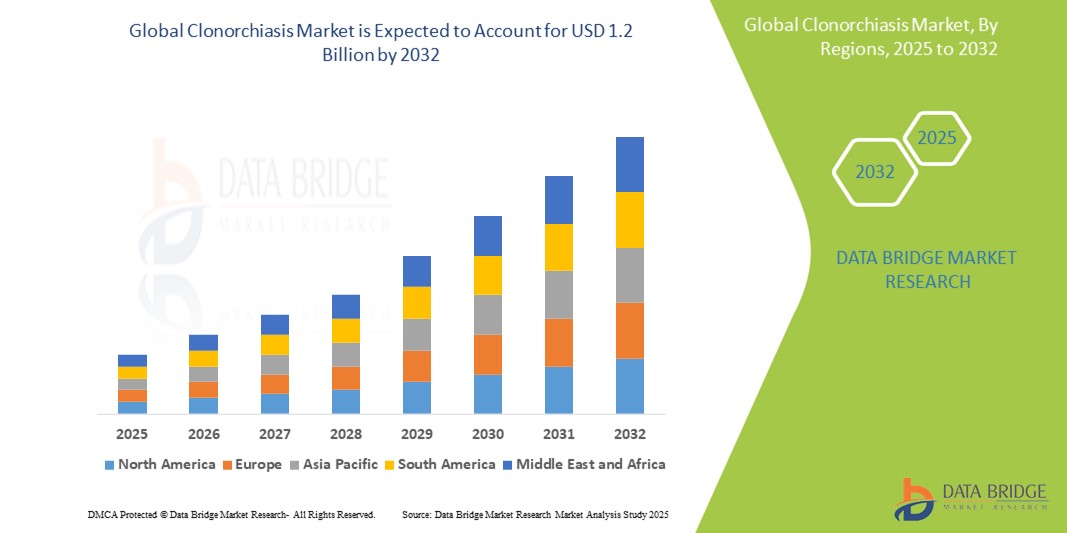
- The Global Clonorchiasis Market size was valued at USD 560.10 Million in 2024 and is expected to reach USD 1.2 billion by 2032, at a CAGR of 6.90% during the forecast period
- The market growth is largely fueled by the rising prevalence of parasitic infections, especially in East Asia and Southeast Asia, where Clonorchis sinensis infestation remains endemic. Increased focus on early diagnosis, mass drug administration (MDA), and public health awareness is supporting broader treatment access.
- Furthermore, growing healthcare initiatives targeting bile duct-related complications such as jaundice, liver cirrhosis, and bile duct obstruction—which are commonly associated with clonorchiasis—are propelling the demand for effective antiparasitic therapies such as praziquantel and albendazole.
- These converging factors, along with the availability of oral drug formulations, improved distribution channels, and government-backed screening programs, are accelerating the uptake of clonorchiasis treatment solutions and significantly boosting the industry's growth through 2032.
Clonorchiasis Market Analysis
- Clonorchiasis, caused by the liver fluke Clonorchis sinensis, remains a significant public health concern, especially in endemic regions, and is increasingly gaining global attention due to its association with bile duct inflammation, jaundice, liver fibrosis, and even cholangiocarcinoma in chronic cases. The demand for accurate diagnosis and effective anti-parasitic treatment is growing steadily as healthcare systems expand surveillance and intervention efforts in affected populations.
- The growing need for preventive strategies, improved sanitation, and mass drug administration (MDA) programs is fueling market growth, along with the rising availability of cost-effective oral treatment options such as praziquantel and albendazole, which are considered first-line therapies.
- Asia-Pacific dominates the clonorchiasis market with the largest revenue share of 67.4% in 2025, attributed to high disease burden in countries like China, Vietnam, Thailand, and South Korea, coupled with expanding public health efforts for mass treatment and disease control. Governments and non-governmental organizations are increasingly investing in community health campaigns, diagnostic kits, and treatment access in rural and semi-urban areas.
- Africa and Latin America are emerging as high-potential regions, driven by increasing parasitic disease surveillance and improved access to diagnostic and pharmaceutical services. These regions are expected to experience faster growth during the forecast period due to improved healthcare infrastructure and international support for neglected tropical diseases (NTDs).
- The praziquantel segment is expected to dominate the clonorchiasis market with a market share of 58.9% in 2025, owing to its high efficacy, oral convenience, and recommendation by the WHO for treating liver fluke infections. Its affordability and wide availability make it the cornerstone of clonorchiasis treatment in both endemic and non-endemic settings.
Report Scope and Clonorchiasis Market Segmentation
|
Attributes |
Clonorchiasis Key Market Insights |
|
Segments Covered |
|
|
Countries Covered |
North America
Europe
Asia-Pacific
Middle East and Africa
South America
|
|
Key Market Players |
|
|
Market Opportunities |
|
|
Value Added Data Info sets |
In addition to the insights on market scenarios such as market value, growth rate, segmentation, geographical coverage, and major players, the market reports curated by the Data Bridge Market Research also include in-depth expert analysis, pricing analysis, brand share analysis, consumer survey, demography analysis, supply chain analysis, value chain analysis, raw material/consumables overview, vendor selection criteria, PESTLE Analysis, Porter Analysis, and regulatory framework. |
Clonorchiasis Market Trends
“Focus on Early Detection and Mass Drug Administration in Endemic Regions”
- A significant and accelerating trend in the global clonorchiasis market is the expansion of public health initiatives focused on early diagnosis and large-scale preventive treatment, particularly in East and Southeast Asia, where Clonorchis sinensis remains highly endemic.
- Governments and international health agencies are increasingly deploying mass drug administration (MDA) campaigns to control the spread of infection. These efforts are supported by the World Health Organization (WHO) and regional ministries of health, targeting at-risk communities with praziquantel as the first-line treatment.
- Diagnostic advancements, including the development of rapid antigen detection tests, PCR assays, and mobile diagnostic tools, are improving case identification in remote and rural populations. These technologies are designed to reduce time-to-treatment and enhance surveillance capabilities, especially in areas with poor access to traditional lab infrastructure.
- Additionally, oral treatment options such as praziquantel and albendazole are seeing broader use due to their affordability, ease of administration, and inclusion in national health guidelines. Innovations in fixed-dose combinations and pediatric formulations are improving patient compliance and treatment outcomes.
- This trend toward preventive, scalable, and community-based approaches, combined with a growing focus on educational outreach, food safety practices, and sanitation improvements, is reshaping how clonorchiasis is managed globally.
- As a result, pharmaceutical companies and diagnostic firms are increasingly investing in product development and strategic partnerships with health ministries, NGOs, and global disease control programs to expand their presence in high-burden markets.
Clonorchiasis Market Dynamics
Driver
“Increasing Disease Burden and Global Focus on Neglected Tropical Diseases (NTDs)”
- The growing incidence of clonorchiasis, particularly in regions with limited sanitation and high raw fish consumption, is a major driver of the market. According to WHO estimates, tens of millions are infected globally, with significant disease burden concentrated in China, Vietnam, Korea, Laos, and Thailand.
- The global health community’s renewed focus on neglected tropical diseases (NTDs) has placed clonorchiasis on the radar for intervention, leading to increased funding, research, and program implementation.
- The inclusion of clonorchiasis in national and international disease control frameworks is driving the demand for anthelmintic therapies, screening kits, and preventive strategies.
- As healthcare infrastructure strengthens in endemic regions, diagnostic accuracy and treatment coverage are improving, contributing to earlier interventions and reduced progression to complications such as liver cirrhosis and cholangiocarcinoma.
- Rising awareness campaigns and educational programs focused on food safety, hygiene, and preventive medicine are also supporting long-term reductions in incidence and recurrent infection.
- The availability of government-procured medications, international tender distribution, and WHO-prequalified drugs is supporting growth across both the public and private sector channels.
Restraint/Challenge
“Limited Awareness Outside Endemic Regions and Inconsistent Diagnostic Infrastructure”
- One of the significant challenges in the global clonorchiasis market is the low level of awareness and recognition of the disease in non-endemic and low-prevalence regions. This underrecognition leads to misdiagnosis or delayed diagnosis, especially in imported cases among travelers or migrants.
- Additionally, diagnostic infrastructure is often underdeveloped in rural and remote areas where the infection burden is highest. Access to reliable tools such as stool microscopy, PCR testing, or imaging for hepatobiliary complications remains limited in many community clinics and primary care centers.
- Inconsistent implementation of screening programs, coupled with varying diagnostic standards across countries, can hinder early treatment and contribute to chronic disease progression.
- Another challenge is the risk of drug resistance, although still rare, particularly with repeated monotherapy in mass treatment settings. Monitoring for resistance and maintaining drug efficacy through treatment guidelines and pharmacovigilance is critical.
- Financial constraints in under-resourced health systems, along with limited private sector investment in NTDs, also restrict innovation in drug development and diagnostic R&D.
- Overcoming these obstacles will require multi-sectoral collaboration, public health funding, and policy-level prioritization, along with expanded access to affordable diagnostics, continuous training for healthcare providers, and integration of clonorchiasis control with broader public health programs.
Clonorchiasis Market Scope
The market is segmented on the basis of applications, product, route of administration, treatment, end users, and distribution channel.
- By Applications
On the basis of applications, the clonorchiasis market is segmented into viral infections, jaundice, bile duct obstruction, bile duct inflammation, liver cirrhosis, and others. The bile duct obstruction segment dominates the largest market revenue share of 29.6% in 2025, driven by the high frequency of biliary tract complications in chronic clonorchiasis cases. Persistent fluke infestation often leads to structural obstruction, prompting early diagnosis and treatment.
The liver cirrhosis segment is expected to witness the fastest CAGR of 7.4% from 2025 to 2032, due to the rising incidence of long-term liver damage linked with untreated or recurrent infections. Increased screening and awareness initiatives in endemic countries are contributing to improved detection and therapeutic intervention.
• By Product
On the basis of product, the clonorchiasis market is segmented into tablets and capsules. The tablet segment accounted for the largest market share in 2025, owing to its high acceptance across mass drug administration (MDA) programs, cost-effectiveness, and ease of storage and transportation in low-resource settings.
The capsule segment is projected to grow at the fastest rate during the forecast period, supported by increasing demand in urban healthcare facilities and private sector channels where patient comfort and compliance are prioritized.
• By Route of Administration
On the basis of route of administration, the market is segmented into oral and parenteral. The oral segment holds the dominant revenue share in 2025, as most anti-parasitic drugs for clonorchiasis—including praziquantel and albendazole—are administered orally. The non-invasive nature, low cost, and ease of administration make this route ideal for large-scale public health programs.
The parenteral segment is expected to grow moderately, with niche applications for severe or complicated cases requiring supportive injectable therapies for liver function stabilization or symptom management.
• By Treatment
On the basis of treatment, the market is segmented into praziquantel and albendazole. The praziquantel segment dominates the market with a market share of 58.9% in 2025, attributed to its WHO-recommended status as the first-line treatment for clonorchiasis. Praziquantel’s high cure rate, broad availability, and affordability drive its widespread use in both public and private healthcare settings.
The albendazole segment is anticipated to witness the fastest CAGR from 2025 to 2032, particularly in areas adopting combination or second-line therapies. Albendazole is also being explored for patients who show resistance or adverse reactions to praziquantel.
• By End Users
On the basis of end users, the clonorchiasis market is segmented into hospitals, specialty clinics, ambulatory surgical centres, and others. Hospitals dominate the market in 2025, as they handle the majority of clonorchiasis cases requiring diagnosis through imaging, lab testing, and liver function monitoring. Hospitals are also key centers for treating complications such as biliary obstruction and liver damage.
The specialty clinics segment is projected to grow at the fastest rate during the forecast period, due to the increasing establishment of parasitology and gastroenterology centers in high-burden countries, along with rising patient preference for localized, outpatient care.
• By Distribution Channel
On the basis of distribution channel, the market is segmented into online pharmacy, hospital pharmacy, retail pharmacy, direct tender, and others. The hospital pharmacy segment holds the largest market share in 2025, due to centralized procurement of anthelmintic drugs under national health programs and WHO-backed initiatives.
The online pharmacy segment is expected to experience the fastest CAGR from 2025 to 2032, driven by increasing smartphone and internet penetration in developing nations, as well as the rising availability of prescription and OTC antiparasitic medications through e-commerce platforms.
Clonorchiasis Market Regional Analysis
- Asia-Pacific dominates the clonorchiasis market with the largest revenue share of 68.4% in 2024, primarily due to the high endemicity of the disease in countries such as China, South Korea, Vietnam, and parts of Southeast Asia. These regions experience a large number of clonorchiasis cases due to the consumption of raw or undercooked freshwater fish, which is a key source of infection.
- Governments and healthcare agencies in the region are increasingly investing in public health campaigns, mass deworming programs, and disease surveillance initiatives, further contributing to the region’s market leadership.
- Additionally, rising awareness, improved diagnostics, and growing access to anti-parasitic drugs such as praziquantel and albendazole are driving early diagnosis and treatment, supporting market expansion.
- The Middle East and Africa and Latin America markets are expected to grow steadily, supported by improved healthcare access, targeted awareness campaigns, and the presence of small endemic clusters due to migration and changing food practices.
- North America and Europe hold minimal market share, mainly attributed to low disease prevalence. However, increased international travel and migration from endemic areas are prompting periodic diagnostic assessments and awareness initiatives in non-endemic countries.
U.S. Clonorchiasis Market Insight
The U.S. clonorchiasis market accounted for the largest revenue share of 81% within North America in 2025, driven by improved disease surveillance and rising awareness among healthcare professionals due to increased immigration from endemic regions such as East and Southeast Asia. Despite the low domestic incidence, the U.S. has invested in strengthening diagnostic capabilities and public health reporting for parasitic infections. The presence of advanced laboratory infrastructure, academic research interest, and efforts by CDC to monitor foodborne parasitic threats are further contributing to the detection and management of imported clonorchiasis cases.
Europe Clonorchiasis Market Insight
The European clonorchiasis market is projected to grow at a steady CAGR over the forecast period, fueled by increasing travel and migration from endemic areas. Although clonorchiasis remains rare in native populations, the disease is gaining attention in medical literature and public health circles due to imported cases. Countries such as Germany, France, and the UK are enhancing their diagnostic preparedness and reporting frameworks to manage rare helminthic infections. The growing emphasis on global health security and improved diagnostic access are expected to support market expansion.
U.K. Clonorchiasis Market Insight
The U.K. clonorchiasis market is anticipated to register notable growth during the forecast period, driven by a combination of improved diagnostic outreach and surveillance initiatives for neglected tropical diseases. As a hub for international students and migrants from East Asia, the U.K. is witnessing sporadic cases, especially among individuals with a history of consuming raw or undercooked freshwater fish. Increased physician awareness, aided by updates in clinical guidelines, is expected to further drive early detection and appropriate treatment.
Germany Clonorchiasis Market Insight
The German clonorchiasis market is likely to expand at a moderate CAGR, driven by the country’s robust healthcare infrastructure and increased screening for imported parasitic diseases. As Germany strengthens its infectious disease control systems in light of global health risks, clonorchiasis is gaining visibility in diagnostic panels, particularly among immigrant populations and travelers. Collaborations between tropical medicine institutes and public health agencies are also supporting case identification and treatment access.
Asia-Pacific Clonorchiasis Market Insight
The Asia-Pacific clonorchiasis market is projected to grow at the fastest CAGR of over 24% in 2025, with countries like China, South Korea, Vietnam, and Thailand being the major contributors due to high endemicity. In these countries, raw freshwater fish is commonly consumed, leading to high transmission rates. Government-led mass deworming programs, public health campaigns, and WHO-backed initiatives are boosting awareness and driving demand for diagnostics and treatment options like praziquantel. Increased healthcare access in rural areas and ongoing urbanization further support early intervention and sustained market growth.
Japan Clonorchiasis Market Insight
The Japan clonorchiasis market is advancing steadily, supported by the country’s high health literacy, surveillance systems, and public hygiene standards. While Japan has seen significant declines in clonorchiasis prevalence over the past decades, sporadic cases still occur, especially in older populations and regions with past endemicity. Strong collaboration between hospitals and public health authorities ensures timely treatment, while pharmaceutical companies continue to supply anti-parasitic drugs for both domestic use and export.
China Clonorchiasis Market Insight
The China clonorchiasis market held the largest revenue share in the Asia-Pacific region in 2025, accounting for a dominant portion due to the country’s historically high burden of the disease, especially in provinces like Guangdong, Guangxi, and Heilongjiang. The Chinese government has implemented multiple strategies, including public education, control of intermediate hosts, and promotion of safe food practices. Continued efforts to curb the consumption of raw freshwater fish and improve sanitation are expected to reduce incidence while maintaining strong demand for diagnostic and treatment solutions in the near term.
Clonorchiasis Market Share
The Clonorchiasis industry is primarily led by well-established companies, including:
- Samarth Life Sciences Pvt Ltd. (India)
- Merck KGaA (Germany)
- Ningbo Distant Chemicals Co., Ltd. (China)
- Hebei Veyong Animal Pharmaceutical Co., Ltd. (China)
- Cipla Inc. (India)
- Solara Active Pharma (India)
- Shandong Zhanhua Yonghao Pharmaceutical Technology Co., Ltd. (China)
- Solara (India)
- Bristol-Myers Squibb Company (U.S.)
- Novartis AG (Switzerland)
- Genentech USA, Inc. (U.S.) (Subsidiary of Roche)
- F. Hoffmann-La Roche AG Ltd. (Switzerland)
- Amgen Inc. (U.S.)
- AstraZeneca (UK)
- Daiichi Sankyo Co., Ltd. (Japan)
- Eisai Co., Ltd. (Japan)
- GlaxoSmithKline plc (UK)
- Pfizer, Inc. (U.S.)
- Sanofi (France)
- Johnson & Johnson Services, Inc. (U.S.)
- Nordisk A/S (Denmark)

- Interactive Data Analysis Dashboard
- Company Analysis Dashboard for high growth potential opportunities
- Research Analyst Access for customization & queries
- Competitor Analysis with Interactive dashboard
- Latest News, Updates & Trend analysis
- Harness the Power of Benchmark Analysis for Comprehensive Competitor Tracking
Data collection and base year analysis are done using data collection modules with large sample sizes. The stage includes obtaining market information or related data through various sources and strategies. It includes examining and planning all the data acquired from the past in advance. It likewise envelops the examination of information inconsistencies seen across different information sources. The market data is analysed and estimated using market statistical and coherent models. Also, market share analysis and key trend analysis are the major success factors in the market report. To know more, please request an analyst call or drop down your inquiry.
The key research methodology used by DBMR research team is data triangulation which involves data mining, analysis of the impact of data variables on the market and primary (industry expert) validation. Data models include Vendor Positioning Grid, Market Time Line Analysis, Market Overview and Guide, Company Positioning Grid, Patent Analysis, Pricing Analysis, Company Market Share Analysis, Standards of Measurement, Global versus Regional and Vendor Share Analysis. To know more about the research methodology, drop in an inquiry to speak to our industry experts.
Data Bridge Market Research is a leader in advanced formative research. We take pride in servicing our existing and new customers with data and analysis that match and suits their goal. The report can be customized to include price trend analysis of target brands understanding the market for additional countries (ask for the list of countries), clinical trial results data, literature review, refurbished market and product base analysis. Market analysis of target competitors can be analyzed from technology-based analysis to market portfolio strategies. We can add as many competitors that you require data about in the format and data style you are looking for. Our team of analysts can also provide you data in crude raw excel files pivot tables (Fact book) or can assist you in creating presentations from the data sets available in the report.












