


Closed-Loop Neuromodulation Devices Market Size
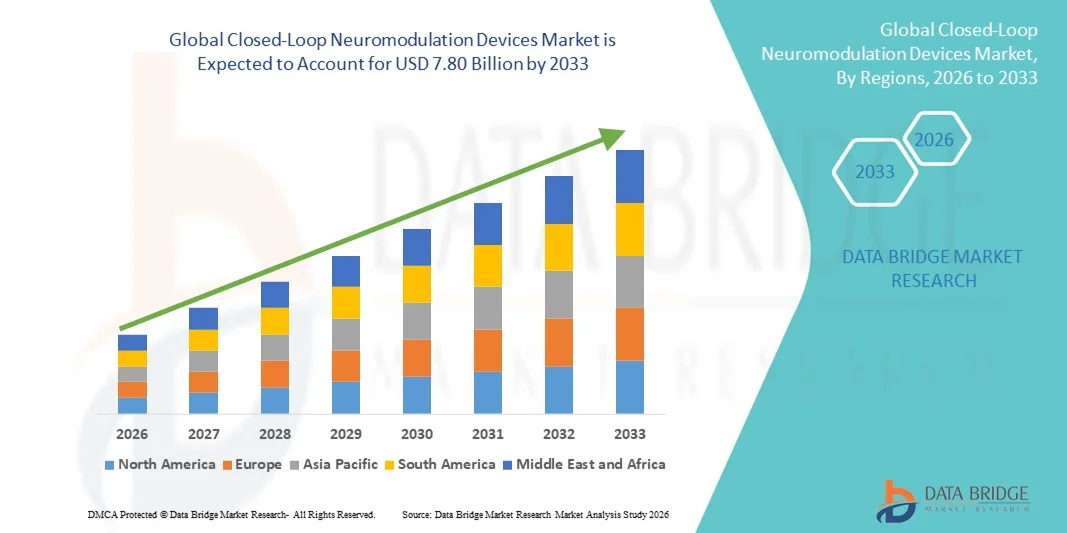
- The global closed-loop neuromodulation devices market size was valued at USD 2.38 billion in 2025 and is expected to reach USD 7.80 billion by 2033, at a CAGR of 16.00% during the forecast period
- The market growth is largely driven by increasing prevalence of neurological disorders, rising adoption of advanced medical devices, and technological innovations in adaptive neuromodulation systems that provide real-time feedback for optimized therapy
- Furthermore, growing awareness among patients and healthcare providers about personalized neuromodulation treatments, coupled with the expansion of implantable and wearable device applications, is accelerating market adoption, thereby significantly boosting the industry’s growth
Closed-Loop Neuromodulation Devices Market Analysis
- Closed-loop neuromodulation devices, providing adaptive electrical or biofeedback stimulation for neurological conditions, are becoming critical components of advanced patient care in hospitals, specialty clinics, and homecare settings due to their personalized therapy capabilities, real-time monitoring, and integration with digital health platforms
- The increasing demand for these devices is primarily driven by the rising prevalence of neurological disorders such as chronic pain, epilepsy, Parkinson’s disease, and treatment-resistant depression, along with growing awareness of personalized and responsive therapy options among patients and healthcare providers
- North America dominated the closed-loop neuromodulation devices market with the largest revenue share of 42.5% in 2025, supported by advanced healthcare infrastructure, early adoption of medical technologies, high healthcare expenditure, and the presence of key industry players developing adaptive and AI-enabled neuromodulation systems
- Asia-Pacific is expected to be the fastest-growing region in the market during the forecast period due to increasing investments in healthcare infrastructure, rising incidence of neurological disorders, and growing access to advanced medical devices in emerging economies such as China and India
- Implantable devices segment dominated the closed-loop neuromodulation devices market in 2025 with a share of 55.4%, driven by their proven efficacy in delivering targeted therapy, established clinical adoption, and continuous technological advancements enabling real-time feedback and therapy optimization
Report Scope and Closed-Loop Neuromodulation Devices Market Segmentation
|
Attributes |
Closed-Loop Neuromodulation Devices Key Market Insights |
|
Segments Covered |
|
|
Countries Covered |
North America
Europe
Asia-Pacific
Middle East and Africa
South America
|
|
Key Market Players |
|
|
Market Opportunities |
|
|
Value Added Data Infosets |
In addition to the insights on market scenarios such as market value, growth rate, segmentation, geographical coverage, and major players, the market reports curated by the Data Bridge Market Research also include in-depth expert analysis, patient epidemiology, pipeline analysis, pricing analysis, and regulatory framework |
Closed-Loop Neuromodulation Devices Market Trends
Advancements in AI-Enabled Adaptive Therapy
- A significant and accelerating trend in the global closed-loop neuromodulation devices market is the integration of artificial intelligence (AI) and machine learning into adaptive neuromodulation systems, enhancing therapy personalization and real-time responsiveness
- For instance, the NeuroPace RNS System utilizes AI algorithms to detect abnormal brain activity and automatically adjust stimulation parameters, improving seizure control for patients with epilepsy
- AI-enabled devices can analyze patient-specific neural patterns, optimize stimulation schedules, and provide predictive alerts to healthcare providers, enhancing overall treatment efficacy
- The seamless integration of closed-loop devices with cloud-based monitoring platforms allows clinicians to track patient progress remotely and fine-tune therapy without requiring frequent hospital visits
- This trend towards intelligent, data-driven neuromodulation systems is reshaping patient care expectations and outcomes, driving companies such as Boston Scientific to develop AI-integrated DBS devices with continuous feedback and remote management features
- The demand for closed-loop devices with advanced AI capabilities is growing rapidly across hospitals, specialty clinics, and homecare settings, as healthcare providers increasingly prioritize personalized and responsive treatment solutions
- Enhanced wireless connectivity and smartphone app integration are enabling patients and caregivers to monitor therapy progress, receive alerts, and adjust device settings conveniently
- Partnerships between medical device companies and digital health platforms are creating interoperable ecosystems, further boosting adoption of closed-loop neuromodulation solutions
Closed-Loop Neuromodulation Devices Market Dynamics
Driver
Rising Prevalence of Neurological Disorders and Personalized Therapy Demand
- The increasing prevalence of chronic pain, epilepsy, Parkinson’s disease, and treatment-resistant depression, coupled with growing awareness of personalized therapy options, is a major driver for the heightened demand for closed-loop neuromodulation devices
- For instance, in March 2025, Boston Scientific expanded its portfolio of adaptive deep brain stimulation systems to include AI-enabled closed-loop features, supporting more effective therapy management for movement disorders
- As patients and healthcare providers seek targeted, adaptive interventions, closed-loop neuromodulation devices provide real-time therapy adjustments, improving clinical outcomes compared to traditional open-loop systems
- Furthermore, the growing adoption of wearable and implantable medical devices, along with increasing healthcare investments in digital health and remote monitoring, is fueling market growth
- The convenience of real-time neural feedback, remote monitoring, and automated therapy optimization are key factors propelling adoption in both hospital and homecare settings, particularly in advanced healthcare markets
- Expanding clinical awareness, supportive reimbursement policies, and ongoing R&D in AI-driven neuromodulation further strengthen market growth prospects
- Increasing government initiatives and funding for neurological disorder research are driving innovation and accessibility of closed-loop neuromodulation therapies
- The integration of telemedicine and remote programming platforms is enabling wider adoption in rural and underserved regions, increasing patient access to advanced therapies
Restraint/Challenge
High Cost and Regulatory Hurdles
- The relatively high cost of advanced closed-loop neuromodulation devices, along with complex regulatory requirements for medical device approval, pose significant challenges to broader market penetration
- For instance, rigorous FDA and CE approval processes for adaptive neuromodulation systems can delay product launches and limit availability in emerging markets
- In addition, concerns about long-term safety, device reliability, and surgical risks for implantable systems make some patients and providers cautious about adoption
- Addressing these challenges requires robust clinical evidence, post-market surveillance, and comprehensive physician training programs to ensure safe and effective therapy
- While costs are gradually decreasing for wearable and minimally invasive systems, the premium pricing of high-end implantable devices may still hinder adoption, especially in developing countries
- Overcoming regulatory hurdles, expanding reimbursement coverage, and developing cost-effective solutions will be vital for sustained growth in the global closed-loop neuromodulation devices market
- Limited patient awareness and reluctance to adopt implantable neuromodulation therapies continue to constrain market expansion in certain regions
- Variability in regulatory standards across countries complicates global commercialization and increases time-to-market for new devices, creating challenges for manufacturers
Closed-Loop Neuromodulation Devices Market Scope
The market is segmented on the basis of product type, technology, application, and end user.
- By Product Type
On the basis of product type, the closed-loop neuromodulation devices market is segmented into implantable devices, wearable devices, and external devices. The implantable devices segment dominated the market with the largest market revenue share of 55.4% in 2025, driven by their proven clinical efficacy in treating neurological disorders such as epilepsy, chronic pain, and Parkinson’s disease. Implantable closed-loop systems continuously monitor neural activity and automatically adjust stimulation parameters in real time, providing highly personalized therapy for patients. These devices are widely adopted in hospitals and specialty clinics due to their long-term therapeutic benefits and ability to significantly improve patient outcomes. Advancements in implantable neurostimulators, including improved battery life, miniaturization, and wireless programming capabilities, are further supporting their dominance. In addition, increasing clinical approvals and expanding indications for implantable neuromodulation devices are strengthening their demand in the global healthcare sector.
The wearable devices segment is anticipated to witness the fastest growth rate during the forecast period, fueled by the increasing demand for non-invasive neuromodulation solutions and remote patient monitoring capabilities. Wearable closed-loop devices enable continuous monitoring of neural signals while delivering adaptive stimulation without the need for surgical implantation. These systems are gaining popularity for conditions such as chronic pain management, migraine treatment, and certain neurological disorders due to their convenience and lower risk profile. The rising adoption of digital health technologies and home-based care solutions is further supporting the growth of wearable neuromodulation devices. Moreover, ongoing technological advancements in sensor integration, wireless connectivity, and AI-enabled analytics are enhancing the effectiveness of wearable systems. The increasing preference for patient-friendly, portable treatment solutions is expected to accelerate the adoption of wearable closed-loop neuromodulation devices in the coming years.
- By Technology
On the basis of technology, the market is segmented into electrical stimulation, magnetic stimulation, ultrasound, and other techniques. The electrical stimulation segment dominated the market with the largest revenue share in 2025, primarily due to its widespread clinical adoption and proven effectiveness in treating neurological disorders. Electrical stimulation technologies such as deep brain stimulation (DBS), spinal cord stimulation (SCS), and vagus nerve stimulation (VNS) are extensively used in closed-loop neuromodulation systems. These technologies enable precise modulation of neural circuits by delivering controlled electrical impulses based on real-time neural feedback. Healthcare providers widely rely on electrical stimulation due to its established clinical evidence and long history of therapeutic success. Continuous technological improvements, including adaptive stimulation algorithms and improved electrode designs, are also enhancing the performance and reliability of these systems. As a result, electrical stimulation remains the most widely implemented technology within closed-loop neuromodulation devices.
The ultrasound segment is expected to witness the fastest growth rate during the forecast period, driven by increasing research into non-invasive neuromodulation techniques and their potential clinical applications. Focused ultrasound technology enables targeted stimulation of deep brain structures without requiring surgical implantation. This capability is generating significant interest among researchers and clinicians exploring new treatment approaches for neurological and psychiatric disorders. Ultrasound neuromodulation is also associated with fewer complications compared to invasive procedures, making it an attractive alternative therapy. Advancements in imaging guidance and precision targeting technologies are further improving the safety and effectiveness of ultrasound-based neuromodulation systems. As clinical research expands and regulatory approvals increase, ultrasound technology is expected to play an increasingly important role in the future of closed-loop neuromodulation therapies.
- By Application
On the basis of application, the closed-loop neuromodulation devices market is segmented into chronic pain management, epilepsy, Parkinson’s disease, depression & psychiatric disorders, urinary and fecal incontinence, and other neurological conditions. The chronic pain management segment dominated the market with the largest market revenue share in 2025, primarily due to the high global prevalence of chronic pain conditions. Closed-loop neuromodulation devices provide real-time feedback-based stimulation that adjusts therapy according to patient-specific neural responses. This adaptive approach significantly improves pain control compared to traditional open-loop stimulation systems. Increasing demand for non-opioid pain management solutions is also contributing to the growth of this segment. Healthcare providers are increasingly adopting neuromodulation therapies to reduce long-term dependence on pharmaceutical treatments. In addition, growing awareness of advanced pain management technologies is further driving the adoption of closed-loop neuromodulation systems for chronic pain treatment.
The epilepsy segment is anticipated to witness the fastest growth during the forecast period, driven by increasing adoption of responsive neurostimulation therapies for seizure control. Closed-loop neuromodulation systems can detect abnormal brain activity associated with seizures and automatically deliver targeted stimulation to prevent or reduce seizure severity. This capability offers significant therapeutic benefits for patients who do not respond adequately to conventional antiepileptic medications. Growing clinical evidence supporting the effectiveness of responsive neurostimulation systems is encouraging broader adoption in neurology practices. In addition, ongoing advancements in neural signal monitoring and AI-driven detection algorithms are improving device accuracy and treatment outcomes. The rising global burden of epilepsy and increasing awareness of advanced neuromodulation therapies are expected to drive strong growth in this segment.
- By End User
On the basis of end user, the closed-loop neuromodulation devices market is segmented into hospitals, ambulatory surgical centers, specialty clinics, homecare & remote monitoring, research institutes, and others. The hospitals segment dominated the market with the largest revenue share in 2025, driven by the availability of advanced healthcare infrastructure and specialized neurology departments. Hospitals serve as the primary settings for implantation procedures and comprehensive neuromodulation therapies. The presence of experienced neurosurgeons, advanced diagnostic tools, and multidisciplinary care teams enables hospitals to effectively manage complex neurological disorders. In addition, hospitals often participate in clinical trials and research initiatives that promote the adoption of innovative neuromodulation technologies. Increasing healthcare investments and improved access to advanced medical equipment are further strengthening hospital dominance in the market. As a result, hospitals continue to remain the primary end users of closed-loop neuromodulation devices worldwide.
The homecare & remote monitoring segment is expected to witness the fastest growth rate during the forecast period, fueled by the growing shift toward decentralized healthcare and remote patient management. Closed-loop neuromodulation devices integrated with wireless monitoring platforms allow healthcare providers to track patient conditions and adjust therapy remotely. This capability reduces the need for frequent hospital visits while improving treatment continuity and patient convenience. The increasing adoption of wearable neuromodulation devices and digital health platforms is further supporting the growth of home-based care solutions. In addition, healthcare systems are increasingly emphasizing cost-effective treatment approaches that enable long-term patient management outside hospital environments. As telemedicine and remote monitoring technologies continue to advance, homecare settings are expected to become a rapidly expanding segment within the closed-loop neuromodulation devices market.
Closed-Loop Neuromodulation Devices Market Regional Analysis
- North America dominated the closed-loop neuromodulation devices market with the largest revenue share of 42.5% in 2025, supported by advanced healthcare infrastructure, early adoption of medical technologies, high healthcare expenditure, and the presence of key industry players developing adaptive and AI-enabled neuromodulation systems
- Healthcare providers in the region highly value the clinical effectiveness, real-time monitoring capabilities, and adaptive stimulation features offered by closed-loop neuromodulation devices for treating conditions such as epilepsy, chronic pain, and Parkinson’s disease
- This widespread adoption is further supported by advanced healthcare infrastructure, strong research and development activities, and the presence of leading medical device manufacturers, establishing closed-loop neuromodulation systems as a preferred therapeutic solution in modern neurological care
U.S. Closed-Loop Neuromodulation Devices Market Insight
The U.S. closed-loop neuromodulation devices market captured the largest revenue share within North America in 2025, fueled by the rapid adoption of advanced neurostimulation technologies and the increasing prevalence of neurological disorders. Healthcare providers are increasingly prioritizing adaptive neuromodulation therapies that provide real-time monitoring and personalized stimulation for conditions such as epilepsy, Parkinson’s disease, and chronic pain. The strong presence of leading medical device manufacturers, combined with extensive clinical research and innovation, further propels the neuromodulation industry. Moreover, the growing integration of digital health platforms, remote monitoring systems, and AI-enabled neurostimulation technologies is significantly contributing to the market’s expansion.
Europe Closed-Loop Neuromodulation Devices Market Insight
The Europe closed-loop neuromodulation devices market is projected to expand at a substantial CAGR throughout the forecast period, primarily driven by increasing investments in neurological research and rising demand for advanced therapeutic solutions. The growing prevalence of neurological disorders and the need for minimally invasive treatment options are fostering the adoption of closed-loop neuromodulation systems. European healthcare providers are also attracted to the clinical benefits and long-term treatment efficiency these devices offer. The region is witnessing notable growth across hospitals, specialty clinics, and research institutions, with neuromodulation therapies being increasingly incorporated into modern neurological treatment protocols.
U.K. Closed-Loop Neuromodulation Devices Market Insight
The U.K. closed-loop neuromodulation devices market is anticipated to grow at a noteworthy CAGR during the forecast period, driven by the increasing demand for innovative neurological therapies and improved patient care solutions. In addition, the rising prevalence of chronic neurological conditions is encouraging healthcare providers to adopt advanced neuromodulation treatments. The country’s strong healthcare infrastructure and ongoing research in neuroscience are supporting the integration of adaptive neuromodulation devices into clinical practice. The U.K.’s emphasis on technological advancement in healthcare, alongside growing collaborations between medical institutions and device manufacturers, is expected to continue to stimulate market growth.
Germany Closed-Loop Neuromodulation Devices Market Insight
The Germany closed-loop neuromodulation devices market is expected to expand at a considerable CAGR during the forecast period, fueled by increasing awareness of advanced neurological treatment technologies and the demand for effective long-term therapies. Germany’s well-established healthcare infrastructure, combined with its strong focus on medical innovation and research, promotes the adoption of neuromodulation devices in both clinical and research environments. The integration of adaptive neurostimulation systems in neurological treatment plans is also becoming increasingly prevalent, with healthcare providers emphasizing precision-based therapies that improve patient outcomes and treatment efficiency.
Asia-Pacific Closed-Loop Neuromodulation Devices Market Insight
The Asia-Pacific closed-loop neuromodulation devices market is poised to grow at the fastest CAGR during the forecast period of 2026 to 2033, driven by rising healthcare investments, increasing prevalence of neurological disorders, and improving access to advanced medical technologies in countries such as China, Japan, and India. The region’s expanding healthcare infrastructure, supported by government initiatives promoting advanced medical treatments, is driving the adoption of neuromodulation devices. Furthermore, as Asia-Pacific emerges as a significant hub for medical technology development and clinical research, the accessibility and adoption of neuromodulation therapies are expanding to a broader patient population.
Japan Closed-Loop Neuromodulation Devices Market Insight
The Japan closed-loop neuromodulation devices market is gaining momentum due to the country’s advanced healthcare system, strong technological capabilities, and increasing demand for innovative neurological treatments. The Japanese market places a strong emphasis on precision medicine and patient-centered care, driving the adoption of adaptive neuromodulation therapies. The integration of neuromodulation devices with advanced monitoring technologies and digital health platforms is further fueling market growth. Moreover, Japan’s aging population is likely to spur demand for effective neurological treatment solutions, particularly for conditions such as Parkinson’s disease and chronic pain.
India Closed-Loop Neuromodulation Devices Market Insight
The India closed-loop neuromodulation devices market accounted for a significant market share in Asia Pacific in 2025, attributed to the country’s expanding healthcare sector, increasing awareness of advanced neurological therapies, and growing adoption of medical technologies. India represents one of the emerging markets for neuromodulation devices, with hospitals and specialty clinics increasingly integrating these systems into neurological treatment procedures. The push toward improving healthcare infrastructure and expanding access to advanced medical treatments, alongside rising investments in medical research, are key factors propelling the market in India.
Closed-Loop Neuromodulation Devices Market Share
The Closed-Loop Neuromodulation Devices industry is primarily led by well-established companies, including:
- Medtronic (Ireland)
- Abbott (U.S.)
- Boston Scientific Corporation (U.S.)
- Nevro Corp. (U.S.)
- LivaNova PLC (U.K.)
- NeuroPace, Inc. (U.S.)
- Saluda Medical Pty Ltd (Australia)
- Cala Health, Inc. (U.S.)
- MicroTransponder, Inc. (U.S.)
- BIOTRONIK SE & Co. KG (Germany)
- CorTec GmbH (Germany)
- Neuspera Medical, Inc. (U.S.)
- Blackrock Neurotech (U.S.)
- Precision Neuroscience Corporation (U.S.)
- Motif Neurotech (U.S.)
- Synergia Medical SA (Belgium)
- BrainQ Technologies Ltd. (Israel)
- Aleva Neurotherapeutics SA (Switzerland)
- Newronika S.r.l. (Italy)
- NeuroSigma, Inc. (U.S.)
What are the Recent Developments in Global Closed-Loop Neuromodulation Devices Market?
- In December 2025, NeuroPace announced that it had filed a Premarket Approval (PMA) supplement with the U.S. FDA to expand the indication of its RNS® System for treating idiopathic generalized epilepsy (IGE). The submission was supported by positive preliminary results from the NAUTILUS clinical study evaluating responsive neurostimulation in patients with drug-resistant epilepsy. The RNS System is a closed-loop neuromodulation device that monitors brain activity and delivers targeted stimulation when abnormal neural signals are detected
- In December 2025, NeuroPace announced that its RNS® System and AI-driven data platform would be featured in more than 80 scientific presentations at the American Epilepsy Society (AES) Annual Meeting. The presentations highlighted clinical outcomes and data-driven insights from patients using responsive neurostimulation therapy. The RNS System continuously monitors brain activity and delivers targeted electrical stimulation when seizure-related patterns are detected
- In October 2025, Boston Scientific announced plans to acquire the remaining equity in Nalu Medical for approximately USD 533 million, strengthening its neuromodulation and chronic pain therapy portfolio. Nalu Medical develops a miniaturized peripheral nerve stimulation system designed to deliver targeted pain relief using wireless power and smartphone control. The acquisition is expected to enhance Boston Scientific’s neuromodulation capabilities and expand its solutions for patients suffering from chronic pain condition
- In August 2025, researchers published new clinical insights into adaptive deep brain stimulation (aDBS) for Parkinson’s disease, highlighting advances in chronic closed-loop neuromodulation strategies. The study demonstrated how biomarker-based stimulation can dynamically adjust therapy according to neural signals, improving treatment outcomes compared with conventional open-loop stimulation
- In April 2025, Medtronic received FDA approval for a closed-loop adaptive deep brain stimulation system designed to treat Parkinson’s disease. The technology uses BrainSense™ sensing capabilities to continuously record brain signals and automatically adjust stimulation levels based on patient symptoms throughout the day. Unlike traditional DBS systems with fixed stimulation settings, this adaptive approach allows more personalized therapy and improved symptom control. The approval represents a significant advancement in responsive neuromodulation technologies

- Interactive Data Analysis Dashboard
- Company Analysis Dashboard for high growth potential opportunities
- Research Analyst Access for customization & queries
- Competitor Analysis with Interactive dashboard
- Latest News, Updates & Trend analysis
- Harness the Power of Benchmark Analysis for Comprehensive Competitor Tracking
Data collection and base year analysis are done using data collection modules with large sample sizes. The stage includes obtaining market information or related data through various sources and strategies. It includes examining and planning all the data acquired from the past in advance. It likewise envelops the examination of information inconsistencies seen across different information sources. The market data is analysed and estimated using market statistical and coherent models. Also, market share analysis and key trend analysis are the major success factors in the market report. To know more, please request an analyst call or drop down your inquiry.
The key research methodology used by DBMR research team is data triangulation which involves data mining, analysis of the impact of data variables on the market and primary (industry expert) validation. Data models include Vendor Positioning Grid, Market Time Line Analysis, Market Overview and Guide, Company Positioning Grid, Patent Analysis, Pricing Analysis, Company Market Share Analysis, Standards of Measurement, Global versus Regional and Vendor Share Analysis. To know more about the research methodology, drop in an inquiry to speak to our industry experts.
Data Bridge Market Research is a leader in advanced formative research. We take pride in servicing our existing and new customers with data and analysis that match and suits their goal. The report can be customized to include price trend analysis of target brands understanding the market for additional countries (ask for the list of countries), clinical trial results data, literature review, refurbished market and product base analysis. Market analysis of target competitors can be analyzed from technology-based analysis to market portfolio strategies. We can add as many competitors that you require data about in the format and data style you are looking for. Our team of analysts can also provide you data in crude raw excel files pivot tables (Fact book) or can assist you in creating presentations from the data sets available in the report.













