


What is the Global Cryptococcosis Market Size and Growth Rate?
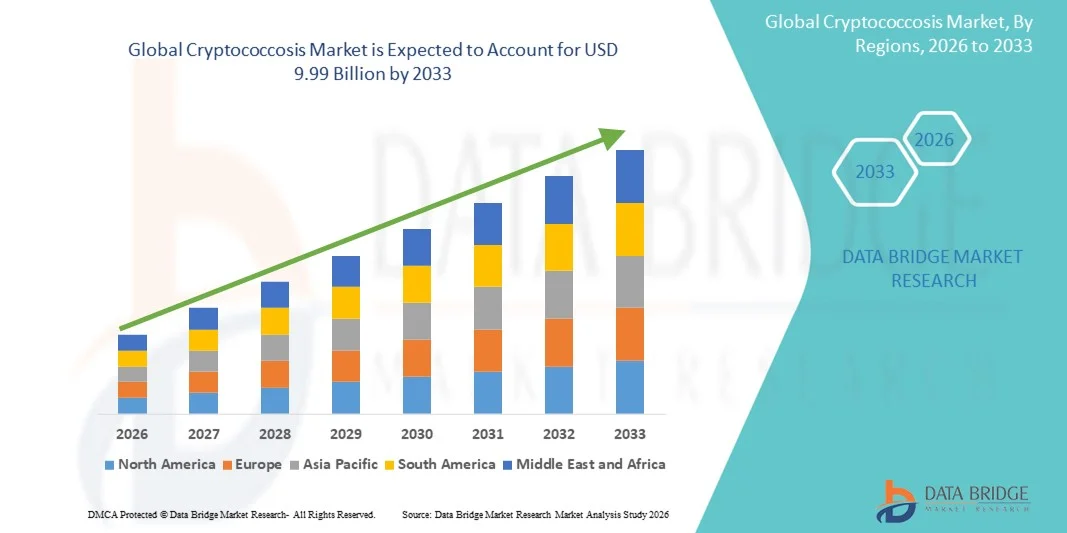
- As per Data Bridge Market Research analysis, global Cryptococcosis market size was valued at USD 6.92 billion in 2025 and is expected to reach USD 9.99 billion by 2033, at a CAGR of 4.70% during the forecast period
- The market growth is largely fueled by the rising prevalence of immunocompromised conditions such as HIV/AIDS, organ transplants, and other diseases, driving increased demand for diagnosis and treatment of cryptococcal infections worldwide
- Furthermore, advancements in antifungal therapies, improved diagnostics, and expansion of healthcare infrastructure in developing regions are establishing effective treatment and diagnostic solutions as the standard of care. These converging factors are accelerating the adoption of Cryptococcosis therapeutics and diagnostics, thereby significantly boosting the industry's growth
Market Size & Forecast
Global Market Value (2025): USD 6.92 Billion
Expected Market Value (2033): USD 9.99 Billion
Forecast CAGR (2026–2033): 4.70%
What are the Major Takeaways of Cryptococcosis Market?
- Cryptococcosis therapeutics and diagnostics, targeting opportunistic fungal infections caused by Cryptococcus species, are increasingly vital components of healthcare systems worldwide, especially for immunocompromised populations such as HIV/AIDS patients, organ transplant recipients, and other high-risk groups, due to their critical role in reducing morbidity and mortality
- The escalating demand for Cryptococcosis treatments and diagnostics is primarily fueled by the rising prevalence of immunocompromised conditions, growing awareness among healthcare providers, and advancements in antifungal therapies and rapid diagnostic technologies
- North America dominated the Cryptococcosis market with the largest revenue share of 42.9% in 2025, characterized by advanced healthcare infrastructure, high healthcare expenditure, and a strong presence of key industry players, with the U.S. experiencing substantial growth in antifungal treatment adoption and diagnostic testing, driven by innovations in combination therapies, point-of-care testing, and government-supported healthcare programs targeting high-risk populations
- Asia-Pacific is expected to be the fastest-growing region in the Cryptococcosis market during the forecast period due to increasing prevalence of HIV/AIDS, improving healthcare infrastructure, and rising awareness and access to effective antifungal treatments
- Amphotericin B segment dominated the Cryptococcosis market with a market share of 38.4% in 2025, driven by its established efficacy, wide clinical adoption, and ongoing development of safer and more effective formulations
Report Scope and Cryptococcosis Market Segmentation
|
Attributes |
Cryptococcosis Key Market Insights |
|
Segments Covered |
|
|
Countries Covered |
North America
Europe
Asia-Pacific
Middle East and Africa
South America
|
|
Key Market Players |
|
|
Market Opportunities |
|
|
Value Added Data Infosets |
In addition to the insights on market scenarios such as market value, growth rate, segmentation, geographical coverage, and major players, the market reports curated by the Data Bridge Market Research also include in-depth expert analysis, patient epidemiology, pipeline analysis, pricing analysis, and regulatory framework |
What is the Key Trend in the Cryptococcosis Market?
Advancements in Rapid Diagnostics and Point-of-Care Testing
- A significant and accelerating trend in the global Cryptococcosis market is the adoption of rapid diagnostic technologies, including CSF Polymerase Chain Reaction (PCR) and lateral flow assays, enabling faster detection of infections in both hospital and outpatient settings
- For instance, the IMMY CrAg LFA (lateral flow assay) allows clinicians to detect cryptococcal antigen within minutes, supporting timely initiation of antifungal therapy for immunocompromised patients
- Integration of rapid diagnostics with electronic health records (EHR) and clinical decision support systems enables better patient monitoring, early intervention, and improved treatment outcomes
- The growing emphasis on point-of-care testing facilitates decentralized care, allowing smaller clinics and rural healthcare centers to provide timely Cryptococcosis diagnosis without relying on centralized laboratories
- Increasing research on AI-assisted diagnostic tools that analyze imaging and laboratory data is helping clinicians predict disease progression and tailor individualized treatment plans
- Rising adoption of multiplex testing platforms that can simultaneously detect multiple opportunistic infections is streamlining patient care and improving clinical efficiency
- This trend towards faster, more accessible, and clinically integrated diagnostic solutions is reshaping clinical protocols for cryptococcal infection management, with companies such as IMMY and Bio-Rad developing portable and high-accuracy testing kits
- The demand for rapid and reliable Cryptococcosis diagnostics is increasing globally, driven by rising HIV/AIDS prevalence and a greater focus on early detection to reduce mortality and healthcare costs
Cryptococcosis Market Dynamics
Driver
Increasing Prevalence of Immunocompromised Conditions
- The rising prevalence of immunocompromised populations, including HIV/AIDS patients, organ transplant recipients, and chemotherapy-treated individuals, is a significant driver for the heightened demand for Cryptococcosis diagnosis and treatment
- For instance, in March 2025, Gilead Sciences highlighted the growing need for antifungal therapies among high-risk patients in North America and Asia-Pacific, aiming to expand access to treatment
- As awareness of opportunistic fungal infections increases, clinicians and healthcare providers are prioritizing early testing and preventive therapy to reduce mortality and morbidity
- Furthermore, government health programs and NGO initiatives in developing regions are increasing screening for Cryptococcal infections, especially in HIV-endemic areas
- Expansion of hospital and clinic infrastructure in emerging economies is enabling broader availability of diagnostics and treatment services for high-risk populations
- Increasing collaborations between pharmaceutical companies and public health agencies are improving the distribution of antifungal drugs in underserved regions
- The combination of rising disease prevalence, growing medical awareness, and supportive health policies is driving global adoption of Cryptococcosis diagnostics and therapeutics in hospitals and clinics
Restraint/Challenge
Limited Access to Affordable Antifungal Treatments
- Limited availability and high cost of effective antifungal therapies pose a significant challenge to broader market growth, particularly in low- and middle-income countries where HIV/AIDS prevalence is high
- For instance, reports of limited Flucytosine availability in parts of Sub-Saharan Africa have delayed treatment initiation, resulting in higher morbidity and mortality
- Ensuring consistent supply chains, reducing drug costs, and increasing local manufacturing are crucial to improving patient access and market penetration
- In addition, lack of awareness among patients and healthcare providers in rural regions contributes to underdiagnosis and delayed treatment, restricting overall market growth
- Stringent regulatory requirements and lengthy approval processes for new antifungal drugs can delay market entry and limit the introduction of innovative therapies
- Challenges in maintaining cold chain storage and proper handling of antifungal drugs in remote areas further restrict effective treatment delivery
- Addressing these challenges through expanded access programs, price reductions, and educational initiatives will be vital to sustaining growth and improving global outcomes for Cryptococcosis
How is the Cryptococcosis Market Segmented?
The market is segmented on the basis of treatment, diagnosis, end-users, and distribution channel.
- By Treatment
On the basis of treatment, the Cryptococcosis market is segmented into Amphotericin B, Flucytosine, Fluconazole, Voriconazole, surgery treatment, and others. The Amphotericin B segment dominated the market with the largest revenue share of 38.4% in 2025, driven by its established efficacy and wide clinical adoption for severe cryptococcal infections. Amphotericin B is preferred in hospital settings for its rapid fungicidal activity and ability to be used in combination therapy with Flucytosine, providing improved patient survival rates. Its long-standing presence in clinical practice, along with proven outcomes in immunocompromised patients, reinforces its dominance. Healthcare providers often rely on Amphotericin B for treating both cryptococcal meningitis and pulmonary cryptococcosis. The availability of lipid-based formulations has further enhanced its safety profile, increasing clinician confidence. Continuous R&D efforts to improve dosing convenience and reduce toxicity are also supporting sustained market share.
The Fluconazole segment is expected to witness the fastest growth rate of 16.8% from 2026 to 2033, fueled by its oral administration, lower cost, and suitability for long-term maintenance therapy. Fluconazole is widely prescribed for consolidation and prophylaxis, particularly in resource-limited settings, due to its convenience and manageable side-effect profile. Its compatibility with outpatient care and ability to reduce hospital stays make it increasingly attractive in emerging markets. Growing awareness about prophylactic antifungal treatment among clinicians is expanding its adoption. In addition, government and NGO programs in HIV-endemic regions are promoting Fluconazole distribution, supporting rapid market growth. Rising research into combination therapies that include Fluconazole is also boosting its usage across diverse patient populations.
- By Diagnosis
On the basis of diagnosis, the market is segmented into Bronchoscopy, X-ray, MRI, lung biopsy, CSF Polymerase Chain Reaction (PCR), CT Scan, and others. The CSF Polymerase Chain Reaction (PCR) segment dominated the market with a revenue share of 34% in 2025, owing to its high sensitivity and rapid detection of cryptococcal infections in cerebrospinal fluid. PCR allows clinicians to identify infections at an early stage, supporting timely initiation of antifungal therapy, which is critical for immunocompromised patients. Hospitals favor PCR for its ability to deliver precise results, reducing misdiagnosis and improving treatment outcomes. The integration of PCR with modern laboratory systems enables streamlined reporting and patient monitoring. Continuous technological advancements have improved the accuracy and speed of PCR assays, further driving adoption. Its role in guiding clinical decision-making makes CSF PCR the preferred diagnostic method in tertiary care centers worldwide.
The Bronchoscopy segment is expected to witness the fastest CAGR from 2026 to 2033, driven by its effectiveness in obtaining tissue samples from the lungs for accurate diagnosis of pulmonary cryptococcosis. Bronchoscopy is increasingly used in advanced hospitals and specialized clinics for minimally invasive assessment. It supports targeted biopsy collection and allows clinicians to evaluate disease progression directly. Rising investment in healthcare infrastructure in emerging markets is expanding the availability of bronchoscopy services. Growing expertise among pulmonologists and infectious disease specialists is also contributing to higher adoption rates. In addition, bronchoscopy’s integration with imaging technologies enhances diagnostic accuracy and patient management.
- By End-Users
On the basis of end-users, the market is segmented into clinic, hospital, and others. The Hospital segment dominated the market with a share of 57% in 2025, owing to high patient volumes, advanced laboratory facilities, and access to a full range of antifungal therapies. Hospitals are primary care centers for severe cases of cryptococcosis, particularly in immunocompromised patients requiring inpatient monitoring. Specialized infectious disease units and tertiary care centers ensure timely diagnosis and treatment, reinforcing hospital dominance. Adoption of combination therapies and advanced diagnostic techniques such as PCR and imaging is highest in hospital settings. Hospitals also play a key role in educating patients about adherence to therapy and monitoring for drug toxicity. The availability of trained medical staff and supportive infrastructure continues to strengthen their market share.
The Clinic segment is expected to witness the fastest growth from 2026 to 2033, driven by increasing outpatient care for HIV/AIDS patients and other high-risk populations. Clinics offer convenient, localized access to prophylactic therapy and routine diagnostic testing, reducing the burden on hospitals. Rising awareness of opportunistic infections in community healthcare centers is expanding service offerings. Clinics are increasingly equipped with point-of-care diagnostics, including lateral flow assays, supporting rapid disease detection. Growing public-private partnerships and government health initiatives are enhancing clinic capabilities. The cost-effectiveness and accessibility of clinic-based services are key factors driving growth in this segment.
- By Distribution Channel
On the basis of distribution channel, the market is segmented into hospital pharmacy, retail pharmacy, and online pharmacy. The Hospital Pharmacy segment dominated the market with a share of 61% in 2025, reflecting institutional procurement of antifungal therapies for inpatient care. Hospitals directly supply Amphotericin B and other critical medications, ensuring timely availability for severe cases. Hospital pharmacies also facilitate combination therapy protocols and monitor adherence and dosing accuracy. Centralized distribution in hospitals helps manage inventory, reduce drug shortages, and maintain quality control. Strong institutional purchasing agreements and partnerships with pharmaceutical companies further support dominance. Hospital pharmacy dominance is reinforced by its ability to provide medications to critically ill patients under supervision, ensuring safety and efficacy.
The Online Pharmacy segment is expected to witness the fastest growth from 2026 to 2033, fueled by increasing digital adoption, patient convenience, and home delivery of antifungal medications. Online platforms enable patients in remote or underserved areas to access Fluconazole and other oral therapies without frequent hospital visits. Rising e-health initiatives and telemedicine integration further accelerate adoption. Online pharmacies also offer subscription and delivery services, supporting adherence to long-term treatment regimens. Growing trust in e-pharmacies and expansion of logistics networks enhance reliability and market penetration. In addition, awareness campaigns and government support for online healthcare services are driving rapid uptake globally.
Which Region Holds the Largest Share of the Cryptococcosis Market?
- North America dominated the Cryptococcosis market with the largest revenue share of 42.9% in 2025, characterized by advanced healthcare infrastructure, high healthcare expenditure, and a strong presence of key industry players
- Patients and healthcare providers in the region highly value rapid diagnostics such as CSF PCR, advanced antifungal therapies such as Amphotericin B, and the availability of specialized infectious disease units for timely and effective treatment
- This widespread adoption is further supported by high healthcare expenditure, robust research and development in antifungal therapies, and strong government and NGO support for screening programs, establishing North America as a key market for Cryptococcosis therapeutics and diagnostics in both inpatient and outpatient settings
U.S. Cryptococcosis Market Insight
The U.S. Cryptococcosis market captured the largest revenue share of 81% in 2025 within North America, driven by the high prevalence of immunocompromised patients and advanced healthcare infrastructure. Hospitals and clinics increasingly prioritize rapid diagnostics, such as CSF PCR, and effective antifungal therapies, including Amphotericin B and Fluconazole. Growing awareness among clinicians about early intervention and prophylactic treatment for high-risk populations further propels market growth. In addition, government health programs and NGO initiatives supporting HIV/AIDS and transplant patient care are expanding the reach of diagnostics and therapeutics. The strong presence of key pharmaceutical and diagnostic companies ensures timely drug availability and continuous innovation. Moreover, integration of laboratory automation and clinical decision support systems enhances treatment outcomes and patient management.
Europe Cryptococcosis Market Insight
The Europe Cryptococcosis market is projected to expand at a substantial CAGR throughout the forecast period, primarily driven by well-developed healthcare infrastructure, increasing awareness of opportunistic infections, and supportive government healthcare initiatives. The growing adoption of advanced diagnostic methods, including PCR and lateral flow assays, is fostering the early detection and treatment of Cryptococcosis. European healthcare providers are emphasizing standardized treatment protocols and combination antifungal therapies to improve patient outcomes. In addition, the region’s focus on research and clinical trials contributes to continuous product innovation and improved therapeutics. Hospitals and specialty clinics are integrating point-of-care diagnostics, enhancing accessibility for high-risk populations. The presence of major pharmaceutical companies and diagnostic tool manufacturers further strengthens market growth.
U.K. Cryptococcosis Market Insight
The U.K. Cryptococcosis market is anticipated to grow at a noteworthy CAGR during the forecast period, driven by rising HIV/AIDS prevalence, organ transplants, and chemotherapy-treated populations. Increased awareness among clinicians regarding opportunistic fungal infections is encouraging early screening and prophylactic treatment. Advanced healthcare infrastructure, alongside well-equipped hospitals and outpatient clinics, supports the adoption of rapid diagnostics and effective antifungal therapies. Public health programs and NGO-led initiatives are enhancing access to diagnostics and treatments in both urban and rural areas. In addition, the U.K.’s robust pharmaceutical and diagnostic manufacturing ecosystem supports timely drug and kit availability. Growing research collaborations and adoption of standardized treatment guidelines are expected to further stimulate market growth.
Germany Cryptococcosis Market Insight
The Germany Cryptococcosis market is expected to expand at a considerable CAGR during the forecast period, fueled by high awareness of fungal infections, advanced healthcare services, and strong research infrastructure. Hospitals and specialized clinics are increasingly implementing rapid diagnostics and combination therapy protocols for immunocompromised patients. Germany’s emphasis on innovation, precision medicine, and evidence-based care promotes the use of effective antifungal therapies. Government health programs and hospital initiatives support early screening and treatment accessibility. In addition, increasing clinical trials and adoption of new diagnostic technologies further enhance market growth. Healthcare providers are prioritizing patient safety and outcomes, driving the adoption of reliable and effective treatment solutions.
Asia-Pacific Cryptococcosis Market Insight
The Asia-Pacific Cryptococcosis market is poised to grow at the fastest CAGR of 24% from 2026 to 2033, driven by the rising prevalence of HIV/AIDS and expanding healthcare infrastructure in countries such as China, India, and Japan. Increasing awareness of opportunistic infections and access to affordable antifungal therapies are boosting market penetration. Government initiatives promoting HIV screening and management, coupled with NGO programs, are supporting early diagnosis and treatment. Rapid urbanization and rising healthcare investments are enabling hospitals and clinics to adopt advanced diagnostics such as PCR and lateral flow assays. The region’s expanding pharmaceutical manufacturing capabilities improve drug availability and reduce treatment costs. In addition, growing public-private collaborations and telemedicine integration are increasing accessibility to Cryptococcosis care across urban and rural areas.
Japan Cryptococcosis Market Insight
The Japan Cryptococcosis market is gaining momentum due to the country’s advanced healthcare infrastructure, high awareness of opportunistic infections, and rising number of immunocompromised patients. Hospitals and specialized clinics are increasingly using rapid diagnostics and combination antifungal therapies for early and effective treatment. Public health programs targeting HIV/AIDS and transplant patients are supporting broader access to therapy. Integration of laboratory automation and telemedicine platforms facilitates timely diagnosis and follow-up care. Continuous investment in research and clinical studies is driving innovation in diagnostics and therapeutics. In addition, Japan’s focus on preventive healthcare and improving patient outcomes is further stimulating market growth.
India Cryptococcosis Market Insight
The India Cryptococcosis market accounted for the largest market revenue share in Asia-Pacific in 2025, attributed to the high prevalence of HIV/AIDS, expanding healthcare infrastructure, and increasing awareness of opportunistic infections. Hospitals, clinics, and community health centers are adopting rapid diagnostics and effective antifungal therapies, including Amphotericin B and Fluconazole. Government programs and NGO initiatives are strengthening early screening and treatment access in both urban and rural regions. Rising healthcare spending, improving laboratory facilities, and expansion of diagnostic networks are key factors propelling market growth. The availability of affordable therapies and local pharmaceutical manufacturing further supports treatment penetration. In addition, training programs for healthcare providers and awareness campaigns for patients are enhancing adoption and treatment outcomes across the country.
Which are the Top Companies in Cryptococcosis Market?
The Cryptococcosis industry is primarily led by well-established companies, including:
- Pfizer Inc., (U.S.)
- Gilead Sciences, Inc., (U.S.)
- Merck & Co., Inc., (U.S.)
- Novartis AG (Switzerland)
- Astellas Pharma (Japan)
- Bayer AG (Germany)
- GSK plc (U.K.)
- Abbott (U.S.)
- Sanofi (France)
- Teva Pharmaceutical Industries Ltd, (Israel)
- Glenmark Pharmaceuticals Ltd., (India)
- Cipla (India)
- Dr. Reddy’s Laboratories Ltd., (India)
- AbbVie Inc., (U.S.)
- F. Hoffmann La Roche Ltd, (Switzerland)
- Lupin (India)
- Zydus Group, (India)
- Wockhardt, (India)
- Lannett, (U.S.)
- Basilea Pharmaceutica Ltd., (Switzerland)
What are the Recent Developments in Global Cryptococcosis Market?
- In April 2025, the not‑for‑profit research organization Drugs for Neglected Diseases initiative (DNDi) announced that a new sustained‑release formulation of Flucytosine (key antifungal drug) has entered Phase II clinical trials in Malawi and Tanzania designed to simplify dosing (twice daily vs every 6 hours), improve adherence, and make treatment more practical in resource‑limited settings
- In February 2025, WHO launched a new training course under the WHO Academy on management of cryptococcal disease, aimed at equipping health‑care workers worldwide with up-to-date knowledge on screening, diagnosis, treatment and management of treatment toxicity a crucial step toward improving care delivery and standardizing treatment practices globally
- In April 2022, the World Health Organization (WHO) issued new “Rapid Advice” guidelines recommending the single high‑dose L‑AmB regimen as the preferred induction therapy for cryptococcal disease in people living with HIV marking a formal global policy shift that may significantly improve access to safer, simpler treatment
- In March 2022, following the AMBITION‑cm trial, the new treatment regimen (single‑dose L‑AmB with flucytosine and fluconazole) was published in the New England Journal of Medicine, showing similar 10‑week survival compared to standard care but with lower drug toxicity — a major milestone that could simplify cryptococcal meningitis treatment globally
- In July 2021, the AMBITION‑cm Trial the largest study ever conducted on HIV‑associated cryptococcal meningitis demonstrated that a single high‑dose of liposomal Amphotericin B (L‑AmB) plus standard antifungals was non‑inferior to the traditional multi‑day regimen, but with significantly fewer serious side‑effects and reduced need for prolonged hospital care

- Interactive Data Analysis Dashboard
- Company Analysis Dashboard for high growth potential opportunities
- Research Analyst Access for customization & queries
- Competitor Analysis with Interactive dashboard
- Latest News, Updates & Trend analysis
- Harness the Power of Benchmark Analysis for Comprehensive Competitor Tracking
Data collection and base year analysis are done using data collection modules with large sample sizes. The stage includes obtaining market information or related data through various sources and strategies. It includes examining and planning all the data acquired from the past in advance. It likewise envelops the examination of information inconsistencies seen across different information sources. The market data is analysed and estimated using market statistical and coherent models. Also, market share analysis and key trend analysis are the major success factors in the market report. To know more, please request an analyst call or drop down your inquiry.
The key research methodology used by DBMR research team is data triangulation which involves data mining, analysis of the impact of data variables on the market and primary (industry expert) validation. Data models include Vendor Positioning Grid, Market Time Line Analysis, Market Overview and Guide, Company Positioning Grid, Patent Analysis, Pricing Analysis, Company Market Share Analysis, Standards of Measurement, Global versus Regional and Vendor Share Analysis. To know more about the research methodology, drop in an inquiry to speak to our industry experts.
Data Bridge Market Research is a leader in advanced formative research. We take pride in servicing our existing and new customers with data and analysis that match and suits their goal. The report can be customized to include price trend analysis of target brands understanding the market for additional countries (ask for the list of countries), clinical trial results data, literature review, refurbished market and product base analysis. Market analysis of target competitors can be analyzed from technology-based analysis to market portfolio strategies. We can add as many competitors that you require data about in the format and data style you are looking for. Our team of analysts can also provide you data in crude raw excel files pivot tables (Fact book) or can assist you in creating presentations from the data sets available in the report.












