


What is the Daratumumab Market Size and Growth Rate?
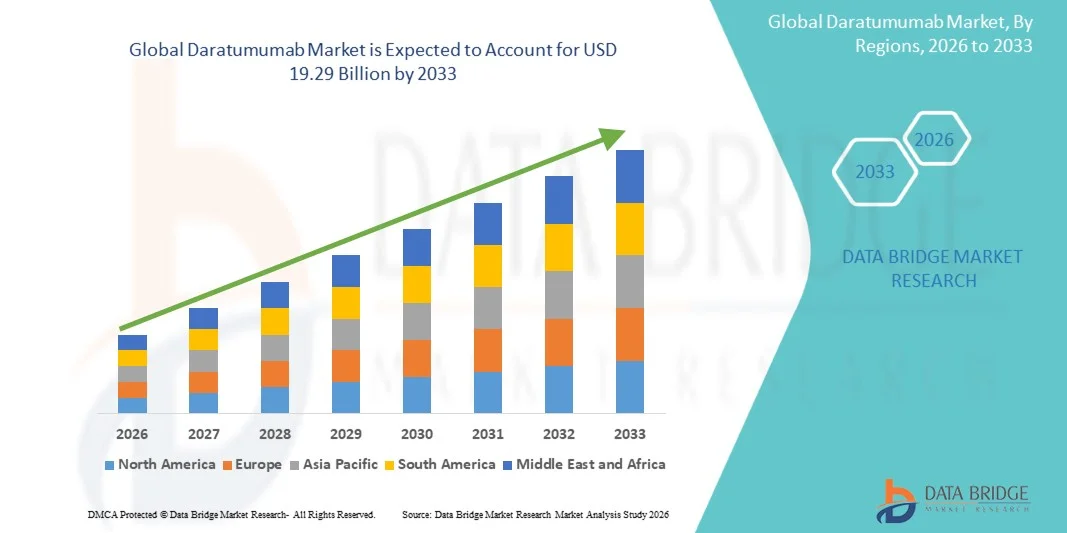
As per Data Bridge Market Research analysis, the daratumumab market was valued at USD 12.86 billion in 2025 and is projected to reach USD 19.29 billion by 2033, growing at a CAGR of 5.20% from 2026 to 2033. Growth is being driven by the rising global incidence of multiple myeloma, continued label expansion of daratumumab-based regimens into earlier and higher-risk disease settings, and sustained conversion from intravenous to subcutaneous administration.
Daratumumab, marketed by Janssen Biotech under the brand name Darzalex, is a first-in-class human IgG1 kappa monoclonal that targets CD38, a protein highly expressed on multiple myeloma cells, and has become a backbone therapy across nearly all lines of multiple myeloma treatment. The subcutaneous formulation, Darzalex Faspro, co-formulated with Halozyme’s ENHANZE drug-delivery technology, has progressively displaced the original intravenous formulation by significantly reducing administration time, and continued regulatory approvals in earlier disease settings, including high-risk smoldering multiple myeloma, are extending the drug’s addressable patient population through the forecast period.
Key Market Trends & Insights
- North America dominated the global daratumumab market with the largest revenue share of 46.80% in 2025, supported by high multiple myeloma diagnosis rates, strong reimbursement coverage, and rapid adoption of the subcutaneous formulation.
- The subcutaneous (darzalex faspro) segment led the market with a 61.40% share in 2025, driven by its significantly shorter administration time compared with the intravenous formulation and growing physician and patient preference for at-home or outpatient administration.
- Asia-Pacific is expected to be the fastest-growing region at a CAGR of 6.90% from 2026 to 2033, fueled by rising multiple myeloma incidence, expanding access to targeted biologic therapies, and increasing regulatory approvals across China, Japan, and India.
- The relapsed/refractory multiple myeloma segment held the largest indication share at 44.20% in 2025, reflecting daratumumab’s long-established use across later lines of therapy since its initial approval.
- The high-risk smoldering multiple myeloma segment is the fastest-growing indication, projected to register a CAGR in excess of 15%, following regulatory approvals in the U.S. and Europe in 2025 based on Phase 3 AQUILA trial data demonstrating a significant reduction in progression risk.
- Continued label expansions into frontline, transplant-eligible newly diagnosed multiple myeloma settings, supported by long-term PERSEUS and CEPHEUS study data, are reinforcing daratumumab’s position as a backbone frontline therapy.
- Daratumumab’s U.S. patent protection is expected to extend to 2029, with European patent protection through 2031–2032, meaning branded revenue is expected to remain largely insulated from biosimilar competition through most of the forecast period.
Market Size & Forecast
- Global Market Value (2025): USD 12.86 Billion
- Expected Market Value (2033): USD 19.29 Billion
- Forecast CAGR (2026–2033): 5.20%
- Leading Region in 2025: North America
- Fastest Growing Region: Asia-Pacific
Report Scope and Daratumumab Market Segmentation
|
Attributes |
Daratumumab Key Market Insights |
|
Segments Covered |
|
|
Countries Covered |
North America
Europe
Asia-Pacific
Middle East and Africa
South America
|
|
Key Market Players |
|
|
Market Opportunities |
|
|
Value Added Data Infosets |
In addition to the insights on market scenarios such as market value, growth rate, segmentation, geographical coverage, and major players, the market reports curated by the Data Bridge Market Research also include in-depth expert analysis, geographically represented company-wise production and capacity, network layouts of distributors and partners, detailed and updated price trend analysis and deficit analysis of supply chain and demand. |
What is the Key Trend in the Daratumumab Market?
Trend: Expansion into Earlier-Stage Disease and Continued IV-to-SC Conversion
Daratumumab continues to expand its clinical footprint beyond relapsed or refractory multiple myeloma into earlier stages of disease, supported by growing clinical evidence demonstrating improved long-term patient outcomes. The approval of daratumumab for high-risk smoldering multiple myeloma (SMM) based on the AQUILA Phase III trial marked a significant milestone by introducing the first approved therapy for this pre-symptomatic disease stage. At the same time, the market continues to witness a rapid transition from the original intravenous (IV) formulation to the subcutaneous (SC) formulation, Darzalex Faspro, owing to substantially shorter administration times, reduced infusion-related reactions, and improved patient convenience.
For instance, Johnson & Johnson continues to prioritize Darzalex Faspro across newly approved indications, accelerating conversion from IV administration in both hospital and outpatient settings. Growing adoption of outpatient infusion centers and expanding home-based administration programs are further transforming treatment delivery, improving healthcare resource utilization while enhancing patient experience and treatment adherence.
Daratumumab Market Dynamics
Key Market Driver: Rising Global Incidence of Multiple Myeloma and Continued Label Expansion
The rising global incidence of multiple myeloma, primarily driven by an aging population, increasing life expectancy, and improved diagnostic capabilities, continues to expand the eligible patient population for daratumumab-based treatment regimens. Continuous regulatory approvals have progressively expanded daratumumab's use from relapsed or refractory disease into frontline treatment for both transplant-eligible and transplant-ineligible newly diagnosed multiple myeloma patients.
Approvals in high-risk smoldering multiple myeloma have significantly broadened the drug's addressable population by enabling treatment before symptomatic disease develops. In addition, long-term clinical data from landmark studies such as MAIA, CASSIOPEIA, PERSEUS, GRIFFIN, and AQUILA continue to demonstrate improvements in progression-free survival, minimal residual disease negativity, and overall survival, reinforcing daratumumab as a backbone therapy across nearly every stage of multiple myeloma management. Ongoing clinical trials evaluating additional combination regimens and earlier intervention strategies are expected to further strengthen long-term market growth.
Key Restraint/Challenge: Regulatory Setbacks and Looming Long-Term Patent Expiry
Although daratumumab continues to expand across multiple indications, regulatory approval is not guaranteed for every proposed label expansion. For instance, the U.S. FDA issued a Complete Response Letter (CRL) in 2025 for a supplemental application involving Darzalex Faspro in newly diagnosed transplant-ineligible multiple myeloma, highlighting the increasingly rigorous regulatory requirements for oncology biologics.
Furthermore, while patent protection currently extends through 2029 in the U.S. and into the early 2030s across several European markets, the eventual introduction of biosimilar daratumumab products represents a significant long-term competitive challenge. Biosimilar manufacturers are expected to begin development activities well before patent expiration, potentially increasing pricing pressure and reducing branded market share over time. In addition, the high cost of biologic therapies, reimbursement restrictions, and unequal access across developing countries continue to limit broader global adoption despite strong clinical benefits.
Key Market Opportunity: Early-Stage Disease Intervention and Emerging Market Access Expansion
The approval of daratumumab for high-risk smoldering multiple myeloma has created an entirely new treatment opportunity by enabling intervention before patients develop symptomatic disease, potentially delaying progression and improving long-term outcomes. This milestone significantly expands the eligible treatment population and positions daratumumab as the first approved therapy for this disease stage.
Simultaneously, increasing healthcare investment, expanding oncology infrastructure, and improving reimbursement systems across China, India, Brazil, Southeast Asia, and the Middle East are creating substantial opportunities for broader adoption of biologic cancer therapies. Governments continue investing in specialized hematology-oncology centers, advanced diagnostic capabilities, and national cancer control programs, improving patient access to innovative monoclonal antibody therapies. Furthermore, continued expansion of clinical research collaborations, increasing physician awareness, and growing adoption of subcutaneous biologics are expected to strengthen daratumumab's long-term commercial potential across both developed and emerging markets.
How is the Daratumumab Market Segmented?
The daratumumab market is segmented on the basis of formulation, indication, treatment line, distribution channel, and end user.
- By Formulation
On the basis of formulation, the global daratumumab market is segmented into subcutaneous (Darzalex Faspro) and intravenous.
The subcutaneous (Darzalex Faspro) segment dominated the market with a 61.40% share in 2025, driven by its significantly shorter administration time, lower incidence of infusion-related reactions, and improved patient convenience compared with the original intravenous formulation. The formulation has been rapidly adopted across hospitals, oncology centers, and outpatient infusion clinics following multiple regulatory approvals and expanded treatment indications. Growing physician preference for simplified administration, improved healthcare resource utilization, and enhanced patient satisfaction continues to accelerate conversion from intravenous therapy.
The subcutaneous segment is also expected to remain the fastest-growing formulation, registering a CAGR of 6.10% from 2026 to 2033, as remaining intravenous-treated patients continue transitioning to the newer formulation and newly diagnosed patients increasingly initiate therapy with subcutaneous daratumumab. Growing adoption of outpatient and home-based administration, supported by specialty pharmacy services and healthcare system efforts to improve treatment efficiency, is expected to further strengthen long-term segment growth.
- By Indication
On the basis of indication, the market is segmented into newly diagnosed multiple myeloma (transplant-eligible), newly diagnosed multiple myeloma (transplant-ineligible), relapsed/refractory multiple myeloma, high-risk smoldering multiple myeloma, and light-chain (AL) amyloidosis.
The relapsed/refractory multiple myeloma segment dominated the market with a 44.20% share in 2025, reflecting daratumumab's long-established clinical use following its initial regulatory approvals in later lines of therapy. Extensive real-world clinical experience, strong efficacy across multiple combination regimens, and widespread physician familiarity continue to support high utilization in patients who experience disease progression following previous therapies. Continued inclusion in international treatment guidelines further reinforces the segment's leading position.
The high-risk smoldering multiple myeloma segment is expected to witness the fastest growth during the forecast period, supported by recent regulatory approvals in the U.S. and Europe that established daratumumab as the first approved therapy for this early, pre-symptomatic disease stage. Increasing physician awareness regarding early intervention, expanding clinical evidence demonstrating delayed disease progression, and growing adoption of proactive treatment strategies are expected to significantly accelerate growth across this emerging indication.
- By Treatment Line
On the basis of treatment line, the market is segmented into frontline/first-line, second-line, and third-line & beyond.
The frontline/first-line segment held the largest share at 48.60% in 2025, supported by continued regulatory approvals expanding daratumumab into both transplant-eligible and transplant-ineligible newly diagnosed multiple myeloma patient populations. Strong clinical outcomes demonstrated across major Phase III studies have established daratumumab-based combination regimens as a preferred standard-of-care in frontline treatment. Earlier initiation of therapy is improving long-term disease control while increasing the overall duration of treatment.
The frontline/first-line segment is also projected to witness the fastest CAGR of 6.70% from 2026 to 2033, as continued label expansion, increasing physician confidence, and broader adoption of quadruplet combination regimens continue to shift treatment toward earlier disease stages. Expanding approvals for high-risk smoldering multiple myeloma further strengthen long-term growth prospects.
- By Distribution Channel
On the basis of distribution channel, the market is segmented into hospital pharmacies, specialty pharmacies, and retail pharmacies.
The hospital pharmacies segment dominated the market with a 52.30% share in 2025, owing to the predominance of hospital-based administration of biologic oncology therapies and the need for specialized preparation, storage, and monitoring during treatment initiation. Hospitals remain the primary treatment setting for patients receiving combination regimens, infusion therapies, and multidisciplinary hematology-oncology care, supporting continued dominance of this distribution channel.
The specialty pharmacies segment is projected to witness the fastest CAGR of 6.90% from 2026 to 2033, driven by increasing adoption of subcutaneous daratumumab, expanding home-based administration programs, and growing integration of specialty pharmacy networks with oncology care providers. These pharmacies play an increasingly important role in coordinating biologic distribution, patient education, reimbursement support, and adherence monitoring, particularly as treatment shifts toward outpatient care.
- By End User
On the basis of end user, the market is segmented into hospitals, cancer/oncology treatment centers, and specialty clinics.
The hospitals segment dominated the market with a 47.50% share in 2025, owing to their central role in diagnosing multiple myeloma, initiating biologic therapy, managing treatment-related complications, and providing comprehensive multidisciplinary cancer care. Hospitals also serve as major centers for stem cell transplantation, clinical trials, and administration of complex combination treatment regimens, supporting continued demand for daratumumab across multiple treatment settings.
The cancer/oncology treatment centers segment is expected to register the fastest CAGR of 6.30% from 2026 to 2033, reflecting the growing role of dedicated hematology-oncology centers in delivering specialized biologic therapies. Increasing adoption of subcutaneous daratumumab, expansion of outpatient infusion facilities, and growing emphasis on patient-centered cancer care are encouraging greater utilization of specialized oncology treatment centers while improving treatment efficiency and patient convenience.
North America Daratumumab Market Insight
North America dominated the daratumumab market and accounted for the largest revenue share of 46.80% in 2025, supported by high multiple myeloma incidence, well-established hematology-oncology treatment infrastructure, favorable reimbursement policies, and rapid adoption of innovative biologic therapies. The region benefits from early regulatory approvals, strong physician awareness, and widespread utilization of daratumumab-based combination regimens across frontline and relapsed treatment settings. The rapid transition from intravenous daratumumab to Darzalex Faspro has significantly improved treatment efficiency by reducing administration time and increasing outpatient care capacity. The U.S. continues to account for the majority of regional revenue due to strong Medicare and commercial insurance coverage, active participation in global clinical trials, and the presence of Johnson & Johnson's extensive commercial infrastructure. Continued label expansion into earlier stages of multiple myeloma and increasing adoption of subcutaneous administration are expected to further strengthen regional market growth throughout the forecast period.
Europe Daratumumab Market Insight
The Europe daratumumab market represents a significant share of global revenue, supported by comprehensive national reimbursement systems, favorable regulatory decisions by the European Medicines Agency (EMA), and well-established hematology treatment networks across Germany, France, the U.K., Italy, and Spain. Increasing physician adoption of subcutaneous daratumumab, expanding access to innovative biologic therapies, and strong implementation of evidence-based treatment guidelines continue to drive market growth. The 2025 approval of daratumumab for high-risk smoldering multiple myeloma further expanded the eligible patient population across the region while reinforcing the importance of early disease intervention. Continued investment in specialized cancer centers, precision diagnostics, and multidisciplinary hematology care is expected to support sustained adoption of daratumumab throughout the forecast period.
Asia-Pacific Daratumumab Market Insight
The Asia-Pacific daratumumab market is expected to witness the fastest growth during the forecast period, driven by increasing incidence of multiple myeloma, expanding access to biologic oncology therapies, and rapid improvements in healthcare infrastructure across China, Japan, India, South Korea, and Australia. Governments throughout the region are increasing investments in cancer diagnosis, specialized hematology centers, and reimbursement programs to improve access to advanced therapies. Growing physician awareness, earlier diagnosis of hematologic malignancies, and expanding availability of targeted biologic treatments are contributing to increased utilization of daratumumab across both newly diagnosed and relapsed disease settings. Furthermore, increasing participation in international clinical trials and expanding healthcare expenditure continue to position Asia-Pacific as one of the fastest-growing regional markets for daratumumab.
Japan Daratumumab Market Insight
The Japan daratumumab market is supported by one of the world's fastest-aging populations, contributing to a growing incidence of multiple myeloma and other hematologic malignancies. Strong national health insurance coverage, well-developed oncology treatment infrastructure, and rapid adoption of innovative biologic therapies continue to support market expansion. Japanese regulatory authorities have maintained close alignment with global approvals for daratumumab, allowing timely patient access to newly approved indications and formulations. Increasing physician preference for subcutaneous administration, combined with expanding use of frontline daratumumab-based combination regimens and continued investment in hematology research, is expected to support steady market growth over the forecast period.
China Daratumumab Market Insight
The China daratumumab market is experiencing steady growth, supported by rising multiple myeloma incidence, expanding oncology infrastructure, and improving access to innovative biologic therapies through continued healthcare reforms. Increasing inclusion of high-value oncology medicines within the National Reimbursement Drug List (NRDL) has significantly improved patient affordability and treatment accessibility. The government continues to invest heavily in specialized cancer hospitals, advanced diagnostic capabilities, and national cancer control programs, supporting broader adoption of monoclonal antibody therapies. Growing physician awareness, increasing availability of hematology specialists, and expanding participation in global oncology clinical trials are further strengthening market demand. These factors, combined with continued improvements in healthcare coverage and cancer care infrastructure, are expected to accelerate long-term market penetration across China.
Daratumumab Market Share
The daratumumab market remains highly concentrated around its originator and technology partners, alongside a growing group of companies preparing biosimilar development pipelines ahead of long-term patent expiry, including:
- Janssen Biotech, Inc. (Johnson & Johnson) (U.S.)
- Genmab A/S (Denmark)
- Halozyme Therapeutics, Inc. (U.S.)
- Amgen Inc. (U.S.)
- Celltrion Inc. (South Korea)
- Samsung Bioepis Co., Ltd. (South Korea)
- Sandoz Group AG (Switzerland)
- Biocon Biologics Limited (India)
- Dr. Reddy’s Laboratories Ltd. (India)
- Alvotech (Iceland)
- Formycon AG (Germany)
- Fresenius Kabi AG (Germany)
- Viatris Inc. (U.S.)
- Teva Pharmaceutical Industries Ltd. (Israel)
- Pfizer Inc. (U.S.)
What are Latest Developments in Developments Market?
- In November 2025, the U.S. FDA approved Darzalex Faspro (daratumumab and hyaluronidase-fihj) for adults with high-risk smoldering multiple myeloma, based on Phase 3 AQUILA trial data showing a 51% reduction in risk of progression to active multiple myeloma.
- In July 2025, the European Commission licensed subcutaneous daratumumab for patients with high-risk smoldering multiple myeloma, marking the first approved therapy for this early, pre-symptomatic disease stage in the region.
- In August 2025, the U.S. FDA issued a Complete Response Letter for Darzalex Faspro in the newly diagnosed, transplant-ineligible multiple myeloma setting, indicating that additional data or actions are required before approval in this indication.
- In February 2025, Johnson & Johnson’s subcutaneous daratumumab-based regimen received a positive CHMP opinion for newly diagnosed multiple myeloma patients regardless of transplant eligibility.
- In April 2025, Johnson & Johnson presented long-term modeling based on the PERSEUS and CEPHEUS studies, indicating a potential progression-free survival benefit extending up to 17 years in transplant-eligible patients receiving daratumumab-based regimens.

- Interactive Data Analysis Dashboard
- Company Analysis Dashboard for high growth potential opportunities
- Research Analyst Access for customization & queries
- Competitor Analysis with Interactive dashboard
- Latest News, Updates & Trend analysis
- Harness the Power of Benchmark Analysis for Comprehensive Competitor Tracking
Data collection and base year analysis are done using data collection modules with large sample sizes. The stage includes obtaining market information or related data through various sources and strategies. It includes examining and planning all the data acquired from the past in advance. It likewise envelops the examination of information inconsistencies seen across different information sources. The market data is analysed and estimated using market statistical and coherent models. Also, market share analysis and key trend analysis are the major success factors in the market report. To know more, please request an analyst call or drop down your inquiry.
The key research methodology used by DBMR research team is data triangulation which involves data mining, analysis of the impact of data variables on the market and primary (industry expert) validation. Data models include Vendor Positioning Grid, Market Time Line Analysis, Market Overview and Guide, Company Positioning Grid, Patent Analysis, Pricing Analysis, Company Market Share Analysis, Standards of Measurement, Global versus Regional and Vendor Share Analysis. To know more about the research methodology, drop in an inquiry to speak to our industry experts.
Data Bridge Market Research is a leader in advanced formative research. We take pride in servicing our existing and new customers with data and analysis that match and suits their goal. The report can be customized to include price trend analysis of target brands understanding the market for additional countries (ask for the list of countries), clinical trial results data, literature review, refurbished market and product base analysis. Market analysis of target competitors can be analyzed from technology-based analysis to market portfolio strategies. We can add as many competitors that you require data about in the format and data style you are looking for. Our team of analysts can also provide you data in crude raw excel files pivot tables (Fact book) or can assist you in creating presentations from the data sets available in the report.












