


Diabetic Gastroparesis Treatment Market Size
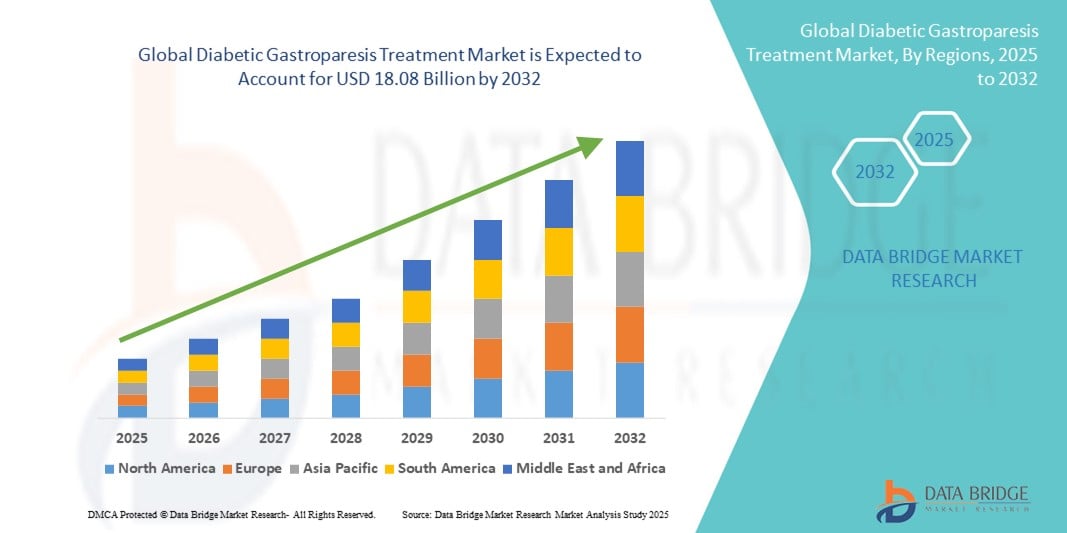
- The global diabetic gastroparesis treatment market size was valued at USD 13.73 billion in 2024 and is expected to reach USD 18.08 billion by 2032, at a CAGR of 3.50% during the forecast period
- The market growth is primarily driven by the increasing prevalence of diabetes worldwide, which leads to a higher incidence of diabetic gastroparesis. Advancements in healthcare and gastric treatments, along with improved diagnostic methods, are also contributing to the expansion of treatment options and accessibility
- Furthermore, the development of new pharmacological therapies and surgical interventions is enhancing treatment efficacy and patient outcomes. The growing awareness among healthcare professionals and patients about diabetic gastroparesis is further establishing it as a significant focus area in diabetes management
Diabetic Gastroparesis Treatment Market Analysis
- Diabetic gastroparesis treatments, including pharmacological therapies, surgical interventions, and dietary management, are increasingly vital components of diabetes care due to their ability to improve gastric motility, reduce symptoms such as nausea and vomiting, and enhance patients’ overall quality of life
- The escalating demand for diabetic gastroparesis treatments is primarily fueled by the rising prevalence of diabetes worldwide, growing awareness among healthcare professionals and patients, and advancements in treatment options, including novel gastroprokinetic and antiemetic drugs
- North America dominated the diabetic gastroparesis treatment market with the largest revenue share of 42.5% in 2024, characterized by advanced healthcare infrastructure, high patient awareness, and a strong presence of leading pharmaceutical companies, with the U.S. witnessing substantial adoption of new pharmacological therapies and clinical interventions
- Asia-Pacific is expected to be the fastest-growing region in the diabetic gastroparesis treatment market during the forecast period due to increasing diabetes prevalence, improving healthcare access, and rising investments in healthcare infrastructure
- Gastroprokinetic agents dominated the diabetic gastroparesis treatment market with a market share of 46.5% in 2024, driven by their established efficacy in improving gastric motility and widespread clinical adoption as the first-line therapy for managing gastroparesis symptoms
Report Scope and Diabetic Gastroparesis Treatment Market Segmentation
|
Attributes |
Diabetic Gastroparesis Treatment Key Market Insights |
|
Segments Covered |
|
|
Countries Covered |
North America
Europe
Asia-Pacific
Middle East and Africa
South America
|
|
Key Market Players |
|
|
Market Opportunities |
|
|
Value Added Data Infosets |
In addition to the insights on market scenarios such as market value, growth rate, segmentation, geographical coverage, and major players, the market reports curated by the Data Bridge Market Research also include in-depth expert analysis, pricing analysis, brand share analysis, consumer survey, demography analysis, supply chain analysis, value chain analysis, raw material/consumables overview, vendor selection criteria, PESTLE Analysis, Porter Analysis, and regulatory framework. |
Diabetic Gastroparesis Treatment Market Trends
Advancements in Pharmacological Therapies and Minimally Invasive Interventions
- A significant and accelerating trend in the global diabetic gastroparesis treatment market is the development of novel pharmacological therapies, including next-generation gastroprokinetic and antiemetic agents, as well as minimally invasive interventions such as gastric electrical stimulators. These innovations are improving symptom management, patient compliance, and overall quality of life
- For instance, newer prokinetic agents in clinical trials aim to enhance gastric motility with fewer side effects, while devices such as Enterra gastric stimulators are increasingly used in refractory cases to improve gastric emptying
- Integration of digital health solutions, such as remote monitoring of gastric motility and symptom tracking apps, enables more personalized treatment plans and timely interventions, enhancing patient outcomes
- The growing adoption of combination therapies and tailored treatment regimens allows healthcare providers to optimize therapy based on individual patient profiles, creating a more precise and effective management approach
- This trend towards more targeted, patient-centric, and technologically supported treatment strategies is reshaping expectations for diabetic gastroparesis management, with companies such as Motus GI and Allergan developing advanced therapeutic options
- The demand for treatments that offer improved efficacy, reduced side effects, and convenience is increasing rapidly across both hospital and homecare settings as patients and clinicians seek better management of gastroparesis symptoms
Diabetic Gastroparesis Treatment Market Dynamics
Driver
Rising Diabetes Prevalence and Growing Awareness of Gastroparesis
- The increasing prevalence of diabetes globally, coupled with growing awareness among patients and healthcare professionals about diabetic gastroparesis, is a significant driver of market growth
- For instance, in 2024, the U.S. reported rising diabetic complications awareness campaigns, which encouraged early diagnosis and adoption of targeted therapies, driving market demand
- As more patients are diagnosed early, healthcare providers increasingly prescribe pharmacological therapies and lifestyle interventions, leading to wider adoption of available treatments
- Furthermore, expanding clinical research, educational initiatives, and guidelines for diabetic gastroparesis management are making treatment options more accessible, particularly in specialized diabetes and gastroenterology clinics
- The increasing availability of homecare therapies and patient-friendly drug formulations further supports market growth by enabling long-term management outside hospital settings
- Rising investment by pharmaceutical companies in clinical trials and new product launches is expanding the therapeutic portfolio and encouraging physician adoption of newer treatments
- Growing patient advocacy and support programs are improving disease awareness, adherence to treatment, and timely diagnosis, indirectly boosting market expansion
Restraint/Challenge
Limited Treatment Efficacy and High Costs of Advanced Therapies
- The limited efficacy of existing treatments for some patients and the high cost of advanced pharmacological therapies or surgical interventions pose significant challenges to market penetration. Many patients continue to experience persistent symptoms despite treatment.
- For instance, some gastroprokinetic drugs may cause adverse effects such as cardiovascular issues, limiting their use in certain patient populations
- High costs of novel therapies and devices, coupled with limited insurance coverage in many regions, can hinder access, particularly in emerging markets.
- In addition, the slow adoption of newer therapies in regions with limited healthcare infrastructure can restrict overall market growth
- Fragmented reimbursement policies across different countries further restrict access to advanced therapies and affect market adoption rates
- Limited awareness among general practitioners about specialized treatment options may delay referral to gastroenterology specialists, slowing early intervention and therapy uptake
- Overcoming these challenges through the development of safer, more effective therapies, improved insurance coverage, and patient education on disease management will be crucial for sustained market expansion
Diabetic Gastroparesis Treatment Market Scope
The market is segmented on the basis of indication type, treatment, drugs, route of administration, end-users, and distribution channel.
- By Indication Type
On the basis of indication type, the diabetic gastroparesis treatment market is segmented into compensated gastroparesis and gastric failure. The compensated gastroparesis segment dominated the market with the largest revenue share in 2024, driven by the higher prevalence of early-stage gastroparesis among diabetic patients. Patients in this category typically respond well to pharmacological therapies, including gastroprokinetic and antiemetic drugs, which are widely prescribed by healthcare professionals. Early diagnosis and symptom management strategies contribute to sustained demand for compensated gastroparesis treatments. In addition, increasing awareness programs and patient education initiatives improve early treatment adoption, reinforcing the dominance of this segment. Hospitals and specialty clinics often focus on managing compensated cases to prevent progression to gastric failure, which further supports market revenue.
The gastric failure segment is expected to witness the fastest growth rate during the forecast period, fueled by rising awareness of advanced treatment options and the growing prevalence of severe diabetic complications. Patients with gastric failure often require surgical interventions or gastric stimulators, driving demand for specialized therapies. Advancements in minimally invasive procedures, coupled with increasing adoption in tertiary care centers, are expanding treatment accessibility. Furthermore, improved diagnostic tools allow earlier identification of high-risk patients, supporting the growth of this segment. The increasing emphasis on individualized patient management and combination therapy approaches also contributes to the rapid expansion of the gastric failure treatment segment.
- By Treatment
On the basis of treatment, the diabetic gastroparesis treatment market is segmented into medication and surgery. The medication segment dominated the market in 2024, owing to the widespread adoption of gastroprokinetic and antiemetic drugs as first-line therapies. Oral pharmacological treatments are convenient, cost-effective, and widely available, making them the preferred choice for most patients. Continuous development of novel drugs with improved efficacy and reduced side effects enhances adoption. In addition, clinicians often prescribe medications for long-term management, increasing the volume of repeat prescriptions. The dominance of this segment is reinforced by healthcare infrastructure in developed markets, where early intervention and outpatient management are common.
The surgery segment is expected to witness the fastest growth rate during forecast period, driven by the rising prevalence of refractory gastroparesis and gastric failure cases unresponsive to medications. Surgical interventions, including gastric electrical stimulation and pyloroplasty, are increasingly adopted in specialized healthcare centers. Technological advancements in minimally invasive techniques reduce recovery times and improve patient outcomes, making surgical treatment more attractive. Growing awareness among physicians and patients about advanced therapeutic options further supports this growth. Expansion of hospital infrastructure in emerging markets also facilitates higher adoption of surgical interventions.
- By Drugs
On the basis of drugs, the diabetic gastroparesis treatment market is segmented into gastroprokinetic agents, antiemetic agents, botulinum toxin, and others. The gastroprokinetic agents segment dominated the market with the largest share of 46.5% in 2024, driven by its effectiveness in improving gastric motility and symptom relief. These drugs are widely prescribed due to their established clinical efficacy and inclusion in treatment guidelines. Continuous research and development are leading to improved formulations with fewer adverse effects, boosting adoption. Gastroprokinetic agents are compatible with both oral and injectable administration, providing flexibility for physicians and patients. Hospitals, specialty clinics, and homecare settings extensively utilize these agents for long-term management, further reinforcing their market dominance.
The botulinum toxin segment is expected to witness the fastest growth rate during the forecast period, primarily due to increasing clinical adoption for refractory gastroparesis cases. Botulinum toxin injections target pyloric dysfunction, providing symptom relief where conventional drugs may fail. Advancements in injection techniques and growing physician expertise are supporting wider adoption. Rising awareness among patients and healthcare professionals about alternative treatment options also contributes to the segment’s rapid growth. Moreover, favorable outcomes in clinical studies are encouraging regulatory approvals in more regions, enhancing market potential.
- By Route of Administration
On the basis of route of administration, the diabetic gastroparesis treatment market is segmented into oral and injectable. The oral segment dominated the market in 2024, due to its convenience, patient compliance, and suitability for long-term management. Most gastroprokinetic and antiemetic drugs are available in oral formulations, allowing self-administration at home. Hospitals and outpatient clinics prefer oral treatments for early-stage management and chronic care. The wide availability and lower cost of oral medications compared to injectables reinforce the dominance of this segment.
The injectable segment is expected to witness the fastest growth rate during forecast period, driven by increasing use in hospital and specialty clinic settings for severe or refractory cases. Injectable therapies, including botulinum toxin and certain advanced prokinetic formulations, provide rapid onset of action and controlled dosing. Technological improvements in delivery devices and minimally invasive techniques enhance patient acceptance. Growing adoption in tertiary care centers and increasing clinical evidence of efficacy support the expansion of this segment. Rising awareness among physicians about injectable options also contributes to segment growth.
- By End-Users
On the basis of end-users, the diabetic gastroparesis treatment market is segmented into hospitals, homecare, specialty clinics, and others. The hospitals segment dominated the market with the largest share in 2024, due to the availability of specialized care, advanced diagnostics, and access to both medication and surgical interventions. Hospitals cater to both early-stage and severe cases, ensuring continuous demand for diabetic gastroparesis treatments. The presence of gastroenterology specialists and multidisciplinary teams enhances patient outcomes and drives treatment adoption.
The homecare segment is expected to witness the fastest growth rate during forecast period, fueled by increasing patient preference for outpatient management and convenience. Homecare enables long-term therapy adherence, reduces hospital visits, and supports self-administration of oral medications. Rising adoption of remote monitoring technologies and telehealth services further accelerates growth. Improved awareness among patients and caregivers about symptom management at home enhances market potential. This segment is particularly important in regions with growing elderly populations and increasing chronic disease management needs.
- By Distribution Channel
On the basis of distribution channel, the diabetic gastroparesis treatment market is segmented into hospital pharmacies, retail pharmacies, and others. The hospital pharmacies segment dominated the market in 2024, owing to the direct availability of prescription drugs for inpatients and easy access for specialty treatments. Hospital pharmacies also facilitate the dispensing of injectable therapies and advanced treatment devices, reinforcing their market dominance.
The retail pharmacies segment is expected to witness the fastest growth rate during forecast period, driven by increasing outpatient prescriptions and homecare therapy adoption. Retail pharmacies provide convenience for patients, improve adherence, and support widespread availability of oral medications. Growth is also supported by expanding pharmacy chains and improved supply chain networks in emerging markets. Patient preference for community-based access to medications further boosts the segment’s expansion
Diabetic Gastroparesis Treatment Market Regional Analysis
- North America dominated the diabetic gastroparesis treatment market with the largest revenue share of 42.5% in 2024, characterized by advanced healthcare infrastructure, high patient awareness, and a strong presence of leading pharmaceutical companies
- Patients in the region benefit from early diagnosis, easy access to specialized gastroenterology centers, and availability of both pharmacological and advanced surgical treatments. The high adoption of novel therapies and combination treatment approaches further supports market dominance
- The widespread adoption is reinforced by strong research and development activities, favorable reimbursement policies, and a high standard of clinical care, establishing North America as a key market for diabetic gastroparesis management. Hospitals, specialty clinics, and homecare services collectively contribute to the region’s leading position in the global market
U.S. Diabetic Gastroparesis Treatment Market Insight
The U.S. diabetic gastroparesis treatment market captured the largest revenue share of 38% in North America in 2024, fueled by the rising prevalence of diabetes and increasing awareness of gastroparesis complications. Patients and healthcare providers are increasingly prioritizing early diagnosis and effective management through pharmacological therapies and advanced interventions. The growing trend of personalized treatment plans, combined with strong adoption of combination therapies and minimally invasive procedures, further propels market growth. Moreover, robust healthcare infrastructure, favorable reimbursement policies, and the presence of key pharmaceutical companies contribute significantly to market expansion.
Europe Diabetic Gastroparesis Treatment Market Insight
The Europe diabetic gastroparesis treatment market is projected to expand at a substantial CAGR throughout the forecast period, primarily driven by increasing diabetes prevalence and the rising need for effective management of complications. Growth is supported by advanced healthcare systems, well-established gastroenterology centers, and a focus on patient-centric therapies. European patients are increasingly seeking convenient and effective pharmacological options, and hospitals are adopting advanced therapies, including gastric stimulators and combination drug treatments. The market is witnessing notable growth in both newly diagnosed patients and those with long-term diabetic complications, fostering adoption across multiple healthcare settings.
U.K. Diabetic Gastroparesis Treatment Market Insight
The U.K. diabetic gastroparesis treatment market is anticipated to grow at a noteworthy CAGR during the forecast period, driven by the increasing prevalence of diabetes and the demand for enhanced disease management. Awareness campaigns and educational initiatives among patients and healthcare providers are encouraging early diagnosis and adoption of effective treatments. In addition, the availability of specialized clinics, coupled with strong healthcare infrastructure, supports patient access to pharmacological and surgical interventions. Rising concerns over diabetic complications and hospital-based management programs further stimulate market growth in the region.
Germany Diabetic Gastroparesis Treatment Market Insight
The Germany diabetic gastroparesis treatment market is expected to expand at a considerable CAGR during the forecast period, fueled by growing awareness of gastroparesis and advanced treatment availability. Germany’s well-developed healthcare system, combined with a focus on research and innovation, encourages adoption of both pharmacological therapies and minimally invasive interventions. Hospitals and specialty clinics are increasingly integrating digital monitoring and patient management systems, improving treatment adherence and outcomes. The demand for safe, effective, and technologically advanced treatments aligns with local patient expectations, supporting steady market growth.
Asia-Pacific Diabetic Gastroparesis Treatment Market Insight
The Asia-Pacific diabetic gastroparesis treatment market is poised to grow at the fastest CAGR of 23% during the forecast period of 2025 to 2032, driven by the rising prevalence of diabetes, increasing healthcare access, and awareness of diabetic complications in countries such as China, India, and Japan. Growing urbanization and rising disposable incomes are facilitating better access to diagnostic services and advanced treatment options. Furthermore, government initiatives to improve chronic disease management and expand healthcare infrastructure are driving adoption. The emergence of local pharmaceutical manufacturing and affordable therapies is also increasing treatment accessibility across the region.
Japan Diabetic Gastroparesis Treatment Market Insight
The Japan diabetic gastroparesis treatment market is gaining momentum due to the country’s high prevalence of diabetes, technologically advanced healthcare infrastructure, and rising demand for patient-centric care. Japanese patients increasingly prefer minimally invasive treatments and effective pharmacological therapies for long-term management. Integration of digital health monitoring and telemedicine supports adherence and symptom tracking, boosting therapy adoption. In addition, an aging population is such asly to increase demand for convenient and safe treatment options in both outpatient and homecare settings.
India Diabetic Gastroparesis Treatment Market Insight
The India diabetic gastroparesis treatment market accounted for the largest market revenue share in Asia-Pacific in 2024, attributed to the country’s growing diabetes population, rapid urbanization, and expanding healthcare access. India has witnessed increasing awareness among patients and healthcare providers about diabetic gastroparesis management, leading to higher adoption of pharmacological therapies. Government initiatives to improve chronic disease management and the availability of affordable therapies further contribute to market growth. The presence of domestic pharmaceutical companies and the expansion of specialty clinics also play a significant role in driving the Indian market.
Diabetic Gastroparesis Treatment Market Share
The diabetic gastroparesis treatment industry is primarily led by well-established companies, including:
- Evoke Pharma, Inc. (U.S.)
- Abbott (U.S.)
- AbbVie Inc. (U.S.)
- Salix Pharmaceuticals, Inc. (U.S.)
- Theravance Biopharma, Inc. (U.S.)
- Medtronic (Ireland)
- Bausch Health Companies Inc. (Canada)
- Pfizer Inc. (U.S.)
- Teva Pharmaceutical Industries Ltd. (Israel)
- Takeda Pharmaceutical Company Limited (Japan)
- Cadila Pharmaceuticals Ltd. (India)
- Eisai Co., Ltd. (Japan)
- GSK plc (U.K.)
- Ipca Laboratories Ltd. (India)
- Johnson & Johnson Inc. (U.S.)
- Rhythm Pharmaceuticals, Inc. (U.S.)
- Vanda Pharmaceuticals Inc. (U.S.)
- Processa Pharmaceuticals, Inc. (U.S.)
- Neurogastrx, Inc. (U.S.)
- Vanda Pharmaceuticals Inc. (U.S.)
What are the Recent Developments in Global Diabetic Gastroparesis Treatment Market?
- In June 2025, Enterra Medical began the NAVIGATE clinical trial to evaluate the effectiveness of Gastric Electrical Stimulation (GES) therapy in controlling chronic nausea and vomiting symptoms in gastroparesis patients. This trial aims to provide further evidence supporting GES as a viable treatment option for individuals with drug-refractory gastroparesis
- In October 2023, Enterra Medical, Inc. announced that its Enterra II System has been granted MR Conditional approval by the U.S. Food and Drug Administration (FDA). This approval allows patients with the Enterra II System to safely undergo magnetic resonance imaging (MRI) examinations of the head or upper/lower extremities under specific conditions
- In March 2024, the Enterra II System, a gastric electrical stimulation device, received FDA approval for magnetic resonance (MR) conditional use. This advancement allows patients with gastroparesis to undergo MRI procedures without removing the device, enhancing treatment flexibility. The Enterra® II System delivers mild electrical pulses to the stomach muscles to alleviate chronic nausea and vomiting associated with gastroparesis
- In May 2023, Ironwood Pharmaceuticals announced its acquisition of VectivBio, a clinical-stage biotech company specializing in rare gastrointestinal diseases. This acquisition, valued at approximately USD 1 billion, gives Ironwood access to VectivBio's lead investigational asset, apraglutide, a drug being developed for conditions such as short bowel syndrome
- In October 2021, Processa Pharmaceuticals was cleared by the FDA to proceed with a Phase 2a clinical trial for PCS12852, a novel serotonin 5-HT4 receptor agonist for the treatment of gastroparesis. The trial aimed to evaluate the safety and efficacy of the drug in improving gastric emptying rates in patients with moderate to severe gastroparesis

- Interactive Data Analysis Dashboard
- Company Analysis Dashboard for high growth potential opportunities
- Research Analyst Access for customization & queries
- Competitor Analysis with Interactive dashboard
- Latest News, Updates & Trend analysis
- Harness the Power of Benchmark Analysis for Comprehensive Competitor Tracking
Data collection and base year analysis are done using data collection modules with large sample sizes. The stage includes obtaining market information or related data through various sources and strategies. It includes examining and planning all the data acquired from the past in advance. It likewise envelops the examination of information inconsistencies seen across different information sources. The market data is analysed and estimated using market statistical and coherent models. Also, market share analysis and key trend analysis are the major success factors in the market report. To know more, please request an analyst call or drop down your inquiry.
The key research methodology used by DBMR research team is data triangulation which involves data mining, analysis of the impact of data variables on the market and primary (industry expert) validation. Data models include Vendor Positioning Grid, Market Time Line Analysis, Market Overview and Guide, Company Positioning Grid, Patent Analysis, Pricing Analysis, Company Market Share Analysis, Standards of Measurement, Global versus Regional and Vendor Share Analysis. To know more about the research methodology, drop in an inquiry to speak to our industry experts.
Data Bridge Market Research is a leader in advanced formative research. We take pride in servicing our existing and new customers with data and analysis that match and suits their goal. The report can be customized to include price trend analysis of target brands understanding the market for additional countries (ask for the list of countries), clinical trial results data, literature review, refurbished market and product base analysis. Market analysis of target competitors can be analyzed from technology-based analysis to market portfolio strategies. We can add as many competitors that you require data about in the format and data style you are looking for. Our team of analysts can also provide you data in crude raw excel files pivot tables (Fact book) or can assist you in creating presentations from the data sets available in the report.












