


Vomiting Treatment Market Size
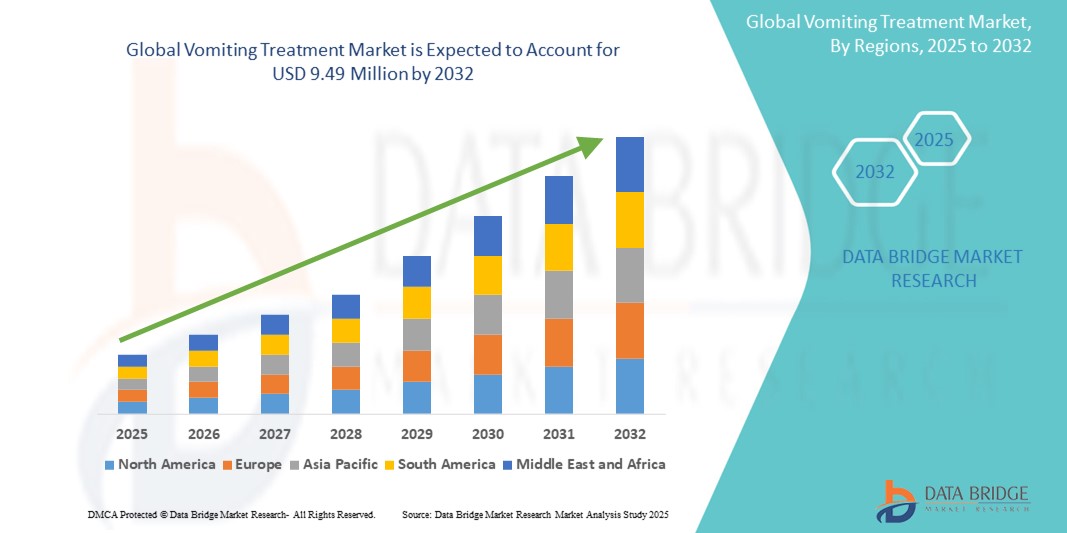
- The global vomiting treatment market size was valued at USD 5.90 million in 2024 and is expected to reach USD 9.49 million by 2032, at a CAGR of 6.10% during the forecast period
- The market growth is largely fueled by the increasing prevalence of gastrointestinal disorders, motion sickness, post-operative recovery requirements, and chemotherapy-induced nausea and vomiting (CINV), all of which are driving demand for effective antiemetic medications and therapies
- Furthermore, rising awareness of supportive care in cancer treatment, improved access to over-the-counter (OTC) and prescription-based antiemetic drugs, and advancements in drug delivery methods are positioning vomiting treatments as essential in both acute and chronic healthcare management. These converging factors are accelerating the adoption of vomiting treatment solutions, thereby significantly boosting the industry's growth
Vomiting Treatment Market Analysis
- Vomiting treatment solutions, encompassing a range of pharmaceutical interventions such as antiemetic drugs and non-pharmacological therapies, are becoming increasingly essential in modern clinical practice for managing nausea and vomiting associated with conditions such as gastrointestinal infections, chemotherapy, pregnancy, and post-operative recovery
- The escalating demand for vomiting treatments is primarily driven by the growing incidence of chronic illnesses such as cancer and gastrointestinal disorders, the expanding elderly population prone to such symptoms, and rising awareness of supportive care in oncology and palliative treatment
- North America dominates the vomiting treatment market with the largest revenue share of 39.2% in 2024, characterized by advanced healthcare infrastructure, high adoption of novel antiemetic formulations, and a strong pipeline of supportive drugs in oncology care
- Asia-Pacific is expected to be the fastest growing region in the vomiting treatment market during the forecast period due to a growing patient population, expanding access to healthcare, and increasing government focus on cancer care and maternal health
- Serotonin antagonist segment dominates the vomiting treatment market with a market share of 42.1% in 2024, driven by its high efficacy in managing chemotherapy-induced and postoperative nausea and vomiting, along with a strong safety profile
Report Scope and Vomiting Treatment Market Segmentation
|
Attributes |
Vomiting Treatment Key Market Insights |
|
Segments Covered |
|
|
Countries Covered |
North America
Europe
Asia-Pacific
Middle East and Africa
South America
|
|
Key Market Players |
|
|
Market Opportunities |
|
|
Value Added Data Infosets |
In addition to the insights on market scenarios such as market value, growth rate, segmentation, geographical coverage, and major players, the market reports curated by the Data Bridge Market Research also include in-depth expert analysis, pricing analysis, brand share analysis, consumer survey, demography analysis, supply chain analysis, value chain analysis, raw material/consumables overview, vendor selection criteria, PESTLE Analysis, Porter Analysis, and regulatory framework. |
Vomiting Treatment Market Trends
“Advancements in Targeted Antiemetic Therapies and Personalized Care”
- A significant and accelerating trend in the global vomiting treatment market is the development and adoption of targeted antiemetic therapies designed to effectively manage nausea and vomiting caused by chemotherapy, postoperative recovery, motion sickness, and other medical conditions. This focus on precision treatment is improving patient outcomes and comfort
- For instance, combination therapies involving 5-HT3 receptor antagonists and NK1 receptor antagonists are becoming standard in cancer care, offering enhanced control over chemotherapy-induced nausea and vomiting (CINV). Similarly, the introduction of orally disintegrating tablets (ODTs) and transdermal patches provides easier administration options, especially for pediatric and geriatric patients
- Personalized medicine approaches are also emerging, where treatments are tailored based on individual patient profiles, genetic factors, and specific vomiting causes, allowing for more effective symptom management. Complementary therapies such as acupuncture and advanced rehydration techniques are gaining traction as adjuncts to pharmaceutical treatments, further enhancing patient well-being
- The increasing availability of oral formulations and patient-friendly drug delivery systems is driving higher patient compliance, especially in outpatient and home care settings.
- This trend towards personalized, multi-modal, and patient-centric vomiting treatment is fundamentally reshaping therapeutic strategies, with pharmaceutical companies investing heavily in innovative drug formulations and combination therapies to meet diverse patient needs
- The demand for advanced vomiting treatment solutions that provide improved efficacy and quality of life is growing rapidly across oncology, gastroenterology, and emergency care, as healthcare providers prioritize comprehensive symptom control and supportive care
Vomiting Treatment Market Dynamics
Driver
“Rising Incidence of Chronic Illnesses and Growing Awareness of Supportive Care”
- The increasing prevalence of chronic diseases such as cancer, gastrointestinal disorders, and viral infections, along with a growing elderly population prone to nausea and vomiting, is a significant driver boosting demand for vomiting treatment solutions
- For instance, in March 2024, a leading pharmaceutical company launched a novel combination antiemetic therapy targeting chemotherapy-induced nausea, highlighting the focus on enhancing supportive care in oncology. Such innovations by key players are expected to accelerate market growth during the forecast period
- As patients and healthcare providers become more aware of the importance of effective symptom management, vomiting treatments offering improved efficacy and safety profiles are gaining preference over older therapies
- Furthermore, rising public awareness about the complications of untreated vomiting, such as dehydration and electrolyte imbalance, is driving adoption of both pharmacological and non-pharmacological treatment options
- The growing availability of oral antiemetics, rehydration therapies, and comprehensive treatment protocols across hospitals, clinics, and home care settings is facilitating wider access and better patient outcomes, supporting market expansion
- Increasing investments in research and development for targeted antiemetic drugs and personalized treatment approaches are also key factors propelling the vomiting treatment market growth globally
Restraint/Challenge
“Side Effects and Limited Access in Low-Income Regions”
- Despite advancements in antiemetic therapies, concerns regarding the side effects and tolerability of certain vomiting treatment drugs pose a significant challenge to broader market penetration. Common adverse effects such as sedation, extrapyramidal symptoms, or cardiac concerns associated with some medications, such as dopamine antagonists or serotonin antagonists, can limit their use in specific patient populations
- For instance, regulatory agencies have issued cautions about the use of certain antiemetics in pediatric and geriatric patients due to increased risk of adverse events, making clinicians more cautious in prescribing them. These safety-related concerns create barriers in achieving universal treatment protocols and necessitate ongoing drug monitoring and education
- Addressing these concerns through the development of better-tolerated formulations, patient-specific treatment strategies, and clearer dosing guidelines is crucial for expanding treatment coverage. Pharmaceutical companies are increasingly focusing on producing targeted antiemetics with improved safety profiles to alleviate these concerns
- In addition, limited access to effective vomiting treatments in low-income and rural regions remains a major barrier to market growth. The lack of availability of newer antiemetics, coupled with poor healthcare infrastructure and insufficient awareness, prevents timely diagnosis and management of vomiting symptoms in underserved populations
- While generic medications are helping to lower treatment costs, disparities in distribution, cold-chain logistics for certain formulations, and low prioritization of symptom control in primary care settings hinder widespread access
- Overcoming these challenges through drug safety enhancements, healthcare provider training, and global access initiatives will be critical to ensuring equitable and sustained growth in the global vomiting treatment market
Vomiting Treatment Market Scope
The market is segmented on the basis of type, mechanism of action, drugs, treatment, route of administration, and distribution channel.
-
By Type
On the basis of type, the vomiting treatment market is segmented into posseting, reflux, and projectile vomiting. The reflux segment dominates the largest market revenue share in 2024, driven by its high prevalence across both pediatric and adult populations, particularly in gastrointestinal conditions and post-operative settings. Reflux-associated vomiting is frequently treated due to its recurrent nature, prompting the widespread use of antiemetics and acid-suppressing agents. The increasing awareness about early diagnosis and the availability of effective pharmacological therapies further support the growth of this segment.
The projectile vomiting segment is anticipated to witness the fastest growth rate from 2025 to 2032, fueled by rising diagnostic rates of underlying causes such as pyloric stenosis and neurological disorders. The growing demand for accurate and prompt treatment protocols, along with improved pediatric healthcare infrastructure, is expected to drive this segment forward during the forecast period.
- By Mechanism Of Action
On the basis of mechanism of action, the vomiting treatment market is segmented into serotonin antagonists, antihistamines, D2 receptor antagonists, benzodiazepines, dopamine antagonists, and others. The serotonin antagonist segment dominates the largest market revenue share of 42.1% in 2024, driven by its proven effectiveness in treating acute, chemotherapy-induced, and post-operative vomiting. Widely used agents such as ondansetron are considered first-line treatment in various clinical scenarios due to their minimal side effects and rapid onset of action.
The D2 receptor antagonists segment is expected to witness the fastest growth rate from 2025 to 2032, driven by their expanding role in chronic nausea and gastrointestinal disorders. Their effectiveness in patients unresponsive to standard treatments and increasing use in hospital settings contribute to the rising demand.
- By Drugs
On the basis of drugs, the market is segmented into ondansetron, promethazine, metoclopramide, lorazepam, and others. The ondansetron segment holds the largest market revenue share in 2024, driven by its well-established efficacy across a wide range of vomiting etiologies, including chemotherapy-induced nausea, pregnancy-related vomiting, and post-operative nausea. Its inclusion in essential medicine lists and broad clinical acceptance further cement its market dominance.
The metoclopramide segment is anticipated to grow rapidly over the forecast period due to its dual prokinetic and antiemetic effects, especially in treating gastroparesis and functional dyspepsia-related vomiting. As awareness grows regarding the diverse utility of this medication, demand is expected to increase in both primary care and specialist settings.
- By Treatment
On the basis of treatment, the vomiting treatment market is segmented into medications, rehydration, and others. The medications segment dominates the largest market revenue share in 2024, driven by their immediate effectiveness in symptom relief and the availability of multiple drug classes targeting different mechanisms. As vomiting is often a secondary symptom to various underlying conditions, medications remain the frontline approach in both acute and chronic scenarios.
The rehydration segment is projected to register the fastest CAGR from 2025 to 2032, fueled by rising emphasis on supportive care, especially in pediatric and elderly populations where fluid loss poses greater health risks. Growing healthcare focus on holistic recovery and guidelines promoting fluid balance management further support segment growth
- By Route Of Administration
On the basis of route of administration, the vomiting treatment market is segmented into oral and parenteral. The oral segment dominates the largest market revenue share in 2024, attributed to the widespread availability of tablets, syrups, and dissolvable forms that offer convenience and compliance, especially in outpatient care. Oral antiemetics are often the first line of defense for mild to moderate cases, with rapid advancements improving bioavailability and onset time.
The parenteral segment is expected to witness strong growth during forecast period, driven by its importance in emergency and hospital settings where oral intake is not feasible. Intravenous formulations are especially favored in post-surgical recovery, oncology, and severe dehydration cases.
- By Distribution Channel
On the basis of distribution channel, the vomiting treatment market is segmented into hospital pharmacy, retail pharmacy, and online pharmacy. The retail pharmacy segment dominates the largest market revenue share in 2024, driven by strong over-the-counter availability of key antiemetic drugs and wide accessibility to consumers across urban and rural settings. Pharmacist guidance and affordability also contribute to the popularity of this channel.
The online pharmacy segment is anticipated to witness the fastest growth rate from 2025 to 2032, supported by increasing consumer shift towards digital healthcare platforms, rising penetration of e-pharmacies in emerging markets, and the convenience of doorstep delivery. Enhanced regulatory clarity and growing trust in licensed online platforms further accelerate this trend.
Vomiting Treatment Market Regional Analysis
- North America dominates the vomiting treatment market with the largest revenue share of 39.2% in 2024, driven by advanced healthcare infrastructure, high adoption of novel antiemetic formulations, and a strong pipeline of supportive drugs in oncology care
- The region's advanced healthcare infrastructure, along with widespread access to prescription and over-the-counter antiemetics, significantly contributes to market leadership. Patients and healthcare providers increasingly rely on rapid-acting medications and supportive care for symptom relief
- In addition, strong R&D activities, favorable reimbursement policies, and awareness initiatives for conditions such as chemotherapy-induced nausea and motion sickness support consistent demand, positioning North America as a leading region for both innovation and consumption in vomiting treatment therapies
U.S. Vomiting Treatment Market Insight
The U.S. vomiting treatment market captured the largest revenue share of 79.3% in 2024 within North America, fueled by a high prevalence of conditions such as chemotherapy-induced nausea, gastrointestinal disorders, and post-operative vomiting. A well-established healthcare infrastructure, along with the availability of advanced antiemetic therapies and supportive care protocols, further strengthens the market. The demand is also driven by the growing elderly population and widespread adoption of prescription medications, with strong physician and patient awareness promoting early intervention and adherence to treatment regimens.
Europe Vomiting Treatment Market Insight
The Europe vomiting treatment market is projected to expand at a substantial CAGR throughout the forecast period, primarily due to the growing incidence of chronic illnesses and increasing hospital admissions across the region. Enhanced focus on quality of care, stringent treatment guidelines for nausea and vomiting management, and rising preference for effective and well-tolerated antiemetics contribute to the market expansion. In addition, European healthcare systems emphasize evidence-based care and reimbursement for vomiting treatments, driving adoption in both inpatient and outpatient settings.
U.K. Vomiting Treatment Market Insight
The U.K. vomiting treatment market is anticipated to grow at a noteworthy CAGR during the forecast period, driven by a robust public healthcare infrastructure and the rising use of antiemetics in cancer care, pregnancy-related nausea, and emergency settings. Increased awareness among patients and general practitioners regarding the timely treatment of vomiting-related symptoms is boosting demand. Moreover, strong regulatory standards and the presence of key pharmaceutical players contribute to the availability and innovation in the vomiting treatment landscape.
Germany Vomiting Treatment Market Insight
The Germany vomiting treatment market is expected to expand at a considerable CAGR during the forecast period, supported by a rising burden of gastrointestinal and neurological disorders, which commonly present with vomiting. Germany's advanced healthcare infrastructure, combined with patient-centric care approaches and early diagnosis practices, contributes to increasing treatment uptake. The country's strong pharmaceutical manufacturing base and investment in research and development further propel innovation in the antiemetic segment.
Asia-Pacific Vomiting Treatment Market Insight
The Asia-Pacific vomiting treatment market is poised to grow at the fastest CAGR of 23.2% during the forecast period of 2025 to 2032, driven by the increasing prevalence of infectious diseases, cancer, and pregnancy-related complications leading to vomiting. Countries such as India, China, and Japan are witnessing improvements in healthcare access, insurance coverage, and medical awareness, which support the rising adoption of vomiting treatments. Moreover, growing investments in healthcare infrastructure and pharmaceutical manufacturing make the region a critical growth hub for antiemetic therapies.
Japan Vomiting Treatment Market Insight
The Japan vomiting treatment market is gaining momentum due to the country’s aging population, increasing prevalence of chronic diseases, and high standards of healthcare. The demand for safe, fast-acting antiemetics is rising, particularly in oncology, geriatrics, and surgical care. Japan’s focus on advanced pharmacological research and integration of digital health tools ensures timely diagnosis and treatment adherence, strengthening its position as a mature and innovation-driven market.
India Vomiting Treatment Market Insight
The India vomiting treatment market accounted for the largest market revenue share in Asia Pacific in 2024, attributed to rising awareness, rapid urbanization, and improved access to healthcare services. High incidence of gastrointestinal infections, malaria, pregnancy-related nausea, and increased cancer treatment cycles are driving the demand for antiemetic drugs. The growing adoption of both over-the-counter and prescription vomiting treatments, supported by government health initiatives and domestic pharmaceutical production, are key contributors to India's strong market performance.
Vomiting Treatment Market Share
The vomiting treatment industry is primarily led by well-established companies, including:
- Pfizer Inc. (U.S.)
- GSK plc. (U.K.)
- Johnson & Johnson Services, Inc. (U.S.)
- Novartis AG (Switzerland)
- Sanofi. (France)
- AstraZeneca (U.K.)
- F. Hoffmann-La Roche Ltd (Switzerland)
- Bayer AG (Germany)
- Takeda Pharmaceutical Company Limited (Japan)
- Lilly (U.S.)
- AbbVie Inc. (U.S.)
- Teva Pharmaceutical Industries Ltd. (Israel)
- Sun Pharmaceutical Industries Ltd. (India)
- Dr. Reddy’s Laboratories Ltd. (India)
- Cipla Limited (India)
- Aurobindo Pharma Limited (India)
- Torrent Pharmaceuticals Ltd. (India)
- Perrigo Company plc (Ireland)
- Zydus Group (India)
- Lupin (India)
Latest Developments in Global Vomiting Treatment Market
- In April 2024, Pfizer Inc. announced positive overall survival results from its Phase III ECHELON-3 trial, evaluating ADCETRIS plus lenalidomide and rituximab versus lenalidomide and rituximab plus placebo in adult patients with relapsed/refractory diffuse large B-cell lymphoma. The study demonstrated a significant improvement in patient outcomes, positioning the combination as a potential advancement in oncology supportive care
- In March 2024, GlaxoSmithKline (GSK) launched a new over-the-counter (OTC) formulation of Dramamine XR, an extended-release antihistamine aimed at preventing motion sickness and associated vomiting. This product caters to travelers seeking long-lasting relief, reflecting GSK's commitment to expanding its consumer healthcare portfolio
- In February 2024, Johnson & Johnson's Janssen Pharmaceuticals received FDA approval for IMAAVY™ (nipocalimab), a novel FcRn blocker offering long-lasting disease control in the broadest population of people living with generalized myasthenia gravis (gMG). This approval underscores the company's commitment to developing treatments that address unmet medical needs
- In January 2024, Novartis AG entered into a strategic collaboration with Voyager Therapeutics to license novel capsids for use in gene therapy programs. This partnership aims to enhance the delivery of gene therapies, potentially benefiting various therapeutic areas, including those addressing vomiting and nausea
- In December 2023, Sanofi S.A. presented new data at the American Society of Hematology (ASH) 2023, highlighting its commitment to innovation in rare blood diseases and cancers. While not directly related to vomiting treatments, advancements in oncology can have implications for managing chemotherapy-induced nausea and vomiting

- Interactive Data Analysis Dashboard
- Company Analysis Dashboard for high growth potential opportunities
- Research Analyst Access for customization & queries
- Competitor Analysis with Interactive dashboard
- Latest News, Updates & Trend analysis
- Harness the Power of Benchmark Analysis for Comprehensive Competitor Tracking
Data collection and base year analysis are done using data collection modules with large sample sizes. The stage includes obtaining market information or related data through various sources and strategies. It includes examining and planning all the data acquired from the past in advance. It likewise envelops the examination of information inconsistencies seen across different information sources. The market data is analysed and estimated using market statistical and coherent models. Also, market share analysis and key trend analysis are the major success factors in the market report. To know more, please request an analyst call or drop down your inquiry.
The key research methodology used by DBMR research team is data triangulation which involves data mining, analysis of the impact of data variables on the market and primary (industry expert) validation. Data models include Vendor Positioning Grid, Market Time Line Analysis, Market Overview and Guide, Company Positioning Grid, Patent Analysis, Pricing Analysis, Company Market Share Analysis, Standards of Measurement, Global versus Regional and Vendor Share Analysis. To know more about the research methodology, drop in an inquiry to speak to our industry experts.
Data Bridge Market Research is a leader in advanced formative research. We take pride in servicing our existing and new customers with data and analysis that match and suits their goal. The report can be customized to include price trend analysis of target brands understanding the market for additional countries (ask for the list of countries), clinical trial results data, literature review, refurbished market and product base analysis. Market analysis of target competitors can be analyzed from technology-based analysis to market portfolio strategies. We can add as many competitors that you require data about in the format and data style you are looking for. Our team of analysts can also provide you data in crude raw excel files pivot tables (Fact book) or can assist you in creating presentations from the data sets available in the report.












