


Digestive Enzymes Market Size
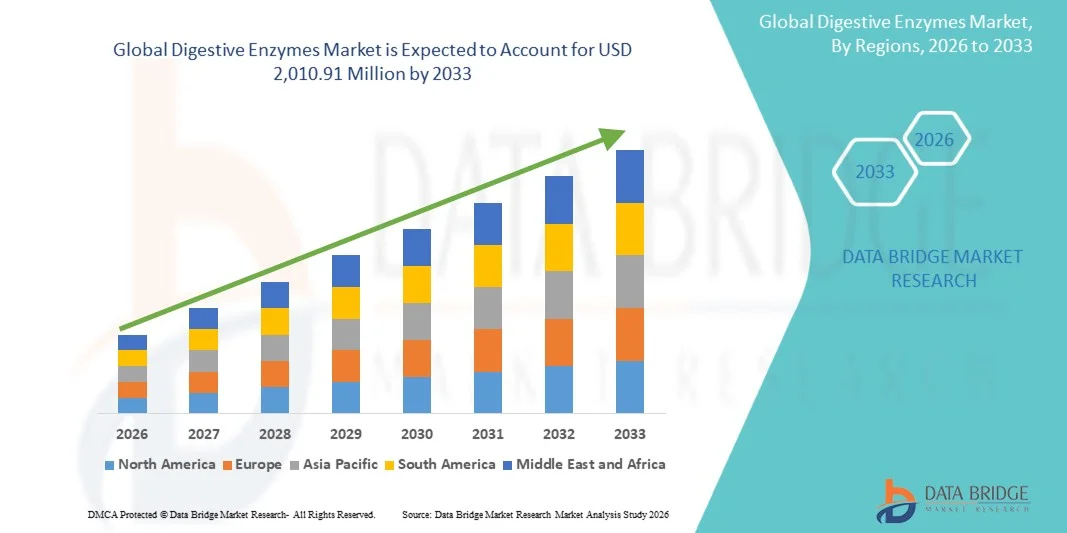
- The global digestive enzymes market size was valued at USD 994.52 million in 2025 and is expected to reach USD 2,010.91 million by 2033, at a CAGR of 9.20% during the forecast period
- The market growth is largely fueled by increasing awareness regarding digestive health, rising prevalence of gastrointestinal disorders, and growing adoption of dietary supplements across diverse age groups, leading to higher demand in both clinical and consumer health segments
- Furthermore, expanding applications in functional foods, pharmaceuticals, and nutraceuticals, along with rising consumer preference for natural and plant-based enzyme formulations, are establishing digestive enzymes as an essential component of modern digestive care solutions. These converging factors are accelerating the uptake of digestive enzyme products, thereby significantly boosting the industry's growth
Digestive Enzymes Market Analysis
- Digestive enzymes, which facilitate the breakdown of food components such as proteins, carbohydrates, and fats, are increasingly essential in modern healthcare and nutrition systems across both therapeutic and clinical settings due to their role in improving nutrient absorption and managing enzyme deficiency-related disorders
- The escalating demand for digestive enzymes is primarily fueled by the rising prevalence of gastrointestinal conditions, increasing incidence of pancreatic insufficiency disorders, and growing awareness regarding enzyme replacement therapies, particularly in patients requiring long-term digestive support
- North America dominated the digestive enzymes market with the largest revenue share of 38.6% in 2025, characterized by advanced healthcare infrastructure, strong diagnosis rates, and widespread availability of enzyme replacement therapies, with the U.S. experiencing substantial demand driven by increasing cases of pancreatic disorders and cystic fibrosis
- Asia-Pacific is expected to be the fastest growing region in the digestive enzymes market during the forecast period due to improving healthcare access, rising patient population, and increasing awareness regarding early diagnosis and treatment of digestive disorders
- Pancrelipase segment dominated the digestive enzymes market with a market share of 46.3% in 2025, driven by its extensive clinical use in treating pancreatic exocrine dysfunction, cystic fibrosis, and chronic pancreatitis, along with strong prescription rates and proven therapeutic efficacy
Report Scope and Digestive Enzymes Market Segmentation
|
Attributes |
Digestive Enzymes Key Market Insights |
|
Segments Covered |
|
|
Countries Covered |
North America
Europe
Asia-Pacific
Middle East and Africa
South America
|
|
Key Market Players |
|
|
Market Opportunities |
|
|
Value Added Data Infosets |
In addition to the insights on market scenarios such as market value, growth rate, segmentation, geographical coverage, and major players, the market reports curated by the Data Bridge Market Research also include in-depth expert analysis, patient epidemiology, pipeline analysis, pricing analysis, and regulatory framework |
Digestive Enzymes Market Trends
“Rising Shift Toward Advanced Therapeutic and Targeted Enzyme Therapies”
- A significant and accelerating trend in the global digestive enzymes market is the increasing focus on precision-based enzyme replacement therapies supported by advancements in gastroenterology diagnostics and personalized treatment approaches
- For instance, pancreatic enzyme formulations such as pancrelipase are being increasingly optimized for targeted delivery in conditions such as pancreatic exocrine dysfunction and chronic pancreatitis
- Improved formulation technologies are enabling enhanced enzyme stability, bioavailability, and controlled release mechanisms, improving treatment outcomes in patients with malabsorption disorders
- The integration of digestive enzymes into clinical nutrition and hospital-based therapeutic protocols is expanding, enabling more standardized management of enzyme deficiency conditions
- Growing adoption of microbiome-linked therapeutic approaches is supporting the use of digestive enzymes alongside probiotics to improve overall gut health outcomes
- This shift toward more specialized, effective, and patient-centric enzyme therapies is reshaping clinical expectations in digestive disorder management
- The demand for advanced enzyme formulations is growing rapidly across healthcare systems as clinicians increasingly prioritize improved digestive efficiency and long-term patient outcomes
Digestive Enzymes Market Dynamics
Driver
“Growing Prevalence of Digestive Disorders and Rising Adoption of Enzyme Replacement Therapy”
- The increasing prevalence of gastrointestinal disorders and pancreatic insufficiency conditions is a major driver accelerating demand for digestive enzyme-based therapies globally
- For instance, in patients with cystic fibrosis and chronic pancreatitis, enzyme replacement therapy such as pancrelipase is widely prescribed to improve nutrient absorption and digestive function
- Rising awareness among healthcare providers regarding early diagnosis and long-term management of digestive enzyme deficiencies is further supporting market expansion
- Furthermore, improved access to prescription enzyme drugs in hospitals and specialty clinics is increasing treatment adoption rates across developed and emerging markets
- The growing burden of age-related digestive inefficiencies is also contributing to sustained demand for enzyme supplementation therapies
- Expanding use of digestive enzymes in post-surgical recovery care for gastrointestinal procedures is further strengthening clinical demand
- Increasing integration of digestive enzymes into standard treatment guidelines is strengthening their role in clinical gastrointestinal care
Restraint/Challenge
“High Treatment Cost and Limited Access in Emerging Healthcare Systems”
- Concerns surrounding the high cost of long-term enzyme replacement therapies and limited accessibility in low-resource healthcare systems pose a significant challenge to broader market penetration
- For instance, branded pancrelipase formulations used in chronic conditions such as pancreatic exocrine dysfunction often require continuous usage, increasing overall patient treatment burden
- Limited reimbursement coverage in several developing regions further restricts patient access to essential digestive enzyme therapies
- In addition, variability in product availability and dependence on prescription-based distribution channels can delay timely treatment initiation
- Strict regulatory approval requirements for enzyme-based drug formulations can slow down product launches in certain regions
- Lack of awareness regarding enzyme deficiency disorders in rural and underdeveloped healthcare systems further limits early diagnosis and treatment adoption
- Price sensitivity among patients in emerging economies often limits adoption of advanced enzyme formulations despite clinical need
- Addressing affordability challenges through generic enzyme development and improved healthcare reimbursement frameworks will be vital for sustained market growth
Digestive Enzymes Market Scope
The market is segmented on the basis of drugs, indication, end-users, and distribution channel.
- By Drugs
On the basis of drugs, the global digestive enzymes market is segmented into pancrelipase, lactase, and others. The pancrelipase segment dominated the market with the largest revenue share of 46.3% in 2025, driven by its strong clinical application in managing pancreatic exocrine dysfunction, chronic pancreatitis, and cystic fibrosis. It is widely prescribed as a first-line enzyme replacement therapy due to its ability to effectively replace deficient pancreatic enzymes and improve nutrient absorption. Increasing diagnosis rates of pancreatic disorders and strong physician preference further strengthen its dominance. In addition, consistent availability in hospital pharmacies and established reimbursement support in developed markets reinforce its leading position. Growing long-term dependency of patients on pancrelipase therapy also contributes significantly to sustained demand.
The lactase segment is expected to witness the fastest growth rate of 18.9% from 2026 to 2033, driven by the rising prevalence of lactose intolerance globally. Increasing consumer awareness regarding dairy digestion issues and growing demand for over-the-counter digestive supplements are supporting segment expansion. Lactase enzymes are widely used in functional foods and dietary supplements, increasing their accessibility beyond prescription-based settings. Expanding vegan and dairy-free dietary trends are further boosting adoption. In addition, easy availability through retail and online pharmacies is accelerating consumer uptake.
- By Indication
On the basis of indication, the market is segmented into pancreatic exocrine dysfunction, cystic fibrosis, chronic pancreatitis, and others. The pancreatic exocrine dysfunction segment dominated the market with the largest revenue share of 41.8% in 2025, driven by the high global prevalence of enzyme insufficiency conditions and strong reliance on long-term enzyme replacement therapy. Patients suffering from this condition require continuous supplementation, ensuring steady demand for digestive enzyme drugs. Increased diagnostic capabilities and early detection of pancreatic disorders further support market dominance. Physicians widely prescribe pancrelipase-based treatments as standard care. In addition, hospital-based treatment protocols strongly favor enzyme therapy in managing malabsorption symptoms.
The cystic fibrosis segment is expected to witness the fastest growth rate of 17.6% from 2026 to 2033, driven by rising awareness and improved survival rates of patients due to advanced treatments. As life expectancy increases, long-term enzyme therapy becomes essential for managing digestive complications. Enhanced newborn screening programs are enabling earlier diagnosis and timely intervention. Strong support from specialty clinics and patient assistance programs is improving treatment accessibility. Furthermore, continuous innovation in enzyme formulations tailored for pediatric and adult CF patients is accelerating segment growth.
- By End-Users
On the basis of end-users, the market is segmented into hospitals, homecare, specialty clinics, and others. The hospitals segment dominated the market with the largest revenue share of 48.5% in 2025, driven by high patient inflow for gastrointestinal disorders and strong preference for clinically supervised enzyme therapy initiation. Hospitals serve as the primary point of diagnosis and prescription for pancreatic insufficiency conditions. Availability of specialized gastroenterology departments further strengthens hospital-based dominance. In addition, reimbursement policies favor hospital-administered treatments in many developed markets. Integration of digestive enzymes into inpatient care and post-surgical recovery protocols also contributes significantly to demand.
The homecare segment is expected to witness the fastest growth rate of 20.3% from 2026 to 2033, driven by increasing shift toward self-managed treatment and long-term chronic disease management at home. Patients prefer homecare settings due to convenience, reduced hospital visits, and lower overall healthcare costs. Rising availability of patient-friendly enzyme formulations supports home administration. Digital health platforms and telemedicine consultations are further enabling remote monitoring of therapy adherence. Growing aging population requiring continuous digestive support is also accelerating homecare adoption.
- By Distribution Channel
On the basis of distribution channel, the market is segmented into hospital pharmacy, online pharmacy, and retail pharmacy. The hospital pharmacy segment dominated the market with the largest revenue share of 52.1% in 2025, driven by strong prescription-based distribution of enzyme replacement therapies in clinical settings. Most digestive enzyme drugs, particularly pancrelipase, are initiated and dispensed directly through hospitals. Established supply chains and physician-controlled prescribing patterns reinforce hospital pharmacy dominance. In addition, reimbursement-linked hospital procurement systems ensure consistent demand. Close monitoring of patient response in hospital environments further supports this channel’s leadership.
The online pharmacy segment is expected to witness the fastest growth rate of 22.4% from 2026 to 2033, driven by increasing digitalization of healthcare and rising consumer preference for convenient drug purchasing. Online platforms offer easy access to over-the-counter digestive enzyme supplements such as lactase. Growing internet penetration and smartphone usage are further supporting adoption in emerging markets. Home delivery services and discount pricing models are attracting cost-sensitive consumers. In addition, expansion of e-pharmacy regulations is improving trust and accessibility across regions.
Digestive Enzymes Market Regional Analysis
- North America dominated the digestive enzymes market with the largest revenue share of 38.6% in 2025, characterized by advanced healthcare infrastructure, strong diagnosis rates, and widespread availability of enzyme replacement therapies
- Patients and healthcare providers in the region highly value advanced treatment accessibility, strong diagnostic capabilities, and widespread availability of prescription enzyme drugs such as pancrelipase for managing pancreatic insufficiency conditions
- This widespread adoption is further supported by a well-established healthcare infrastructure, high healthcare expenditure, and increasing awareness regarding digestive health and enzyme deficiency disorders, establishing digestive enzymes as a standard component of therapeutic management in both hospital and outpatient care settings
U.S. Digestive Enzymes Market Insight
The U.S. digestive enzymes market captured the largest revenue share of 81% in North America in 2025, driven by high diagnosis rates of pancreatic disorders and strong penetration of enzyme replacement therapies. The country benefits from advanced healthcare infrastructure and widespread access to prescription-based treatments such as pancrelipase. Increasing prevalence of chronic conditions such as cystic fibrosis and chronic pancreatitis is further boosting demand. In addition, strong insurance coverage and reimbursement support enhance patient access to long-term enzyme therapy. Growing awareness of digestive health and early screening practices also contribute significantly to market expansion.
Europe Digestive Enzymes Market Insight
The Europe digestive enzymes market is projected to expand at a substantial CAGR throughout the forecast period, primarily driven by increasing cases of chronic gastrointestinal disorders and strong emphasis on early disease diagnosis. The region benefits from well-developed healthcare systems and structured reimbursement frameworks supporting enzyme therapies. Rising awareness regarding digestive health and preventive care is further encouraging adoption. Growth is also supported by increasing use of enzyme formulations in hospital nutrition programs and specialty care settings.
U.K. Digestive Enzymes Market Insight
The U.K. digestive enzymes market is anticipated to grow at a noteworthy CAGR during the forecast period, driven by rising incidence of pancreatic disorders and increasing demand for advanced gastrointestinal treatments. Growing awareness of digestive health among consumers is supporting early consultation and diagnosis. The presence of a strong public healthcare system enables wider access to enzyme replacement therapies. In addition, increasing adoption of specialty digestive supplements in both clinical and homecare settings is contributing to market expansion.
Germany Digestive Enzymes Market Insight
The Germany digestive enzymes market is expected to expand at a considerable CAGR during the forecast period, fueled by rising focus on precision medicine and high awareness of digestive health management. Germany’s strong healthcare infrastructure supports early diagnosis of enzyme deficiency conditions and effective treatment pathways. Increasing use of pancrelipase in chronic pancreatitis and cystic fibrosis patients is driving demand. Moreover, emphasis on high-quality pharmaceutical standards and advanced therapeutic formulations is supporting market growth.
Asia-Pacific Digestive Enzymes Market Insight
The Asia-Pacific digestive enzymes market is poised to grow at the fastest CAGR of 19.2% during 2026 to 2033, driven by rising gastrointestinal disease burden, increasing healthcare awareness, and expanding access to medical treatment. Rapid urbanization and improving healthcare infrastructure in countries such as China, India, and Japan are accelerating adoption. Growing middle-class population and increasing expenditure on health supplements are also supporting demand. In addition, expansion of pharmaceutical manufacturing capabilities in the region is improving availability and affordability of enzyme-based therapies.
Japan Digestive Enzymes Market Insight
The Japan digestive enzymes market is gaining momentum due to an aging population, high healthcare standards, and strong focus on digestive wellness. Increasing prevalence of age-related digestive disorders is driving demand for enzyme supplementation. The country’s advanced healthcare system supports early diagnosis and structured treatment of pancreatic insufficiency conditions. Integration of enzyme therapies into hospital-based nutrition and chronic care programs is further strengthening market growth. In addition, strong pharmaceutical innovation supports development of high-quality enzyme formulations.
India Digestive Enzymes Market Insight
The India digestive enzymes market accounted for the largest market revenue share in Asia-Pacific in 2025, attributed to rapid urbanization, rising digestive disorder prevalence, and increasing awareness of gastrointestinal health. Expanding middle-class population and growing healthcare access are boosting demand for enzyme-based therapies and supplements. The rise of affordable generic enzyme formulations is improving treatment accessibility. In addition, increasing presence of online and retail pharmacy channels is enhancing product availability across urban and semi-urban regions.
Digestive Enzymes Market Share
The Digestive Enzymes industry is primarily led by well-established companies, including:
- Advanced Enzyme Technologies Ltd (India)
- Specialty Enzymes & Probiotics (U.S.)
- Advanced Enzymes USA Inc. (U.S.)
- AST Enzymes (U.S.)
- ADM Animal Nutrition (U.S.)
- Bioseutica Group (Switzerland)
- Bioseutica SA (Switzerland)
- Fordras SA (Switzerland)
- Neova Technologies Inc. (Canada)
- Healiva SA (Switzerland)
- Enzymedica Inc. (U.S.)
- Klaire Labs LLC (U.S.)
- Metagenics Inc. (U.S.)
- Integrative Therapeutics LLC (U.S.)
- Garden of Life LLC (U.S.)
- Country Life LLC (U.S.)
- National Enzyme Company (U.S.)
- Biotics Research Corporation (U.S.)
- Amway Corporation (U.S.)
- AbbVie Inc. (U.S.)
What are the Recent Developments in Global Digestive Enzymes Market?
- In November 2025, Alcresta Therapeutics announced expanded FDA clearance allowing use of its lipase-based digestive enzyme cartridge RELiZORB in neonates and infants. The device supports fat hydrolysis during enteral feeding and addresses malabsorption in critically ill and genetically predisposed patients. This regulatory milestone enhanced early-life nutritional intervention options for enzyme-deficient patients
- In January 2025, Alcresta Therapeutics received FDA clearance expanding the use of RELiZORB, a digestive enzyme cartridge containing lipase, for pediatric patients aged 1 year and older. The device is designed to mimic pancreatic lipase activity during enteral feeding and improve fat absorption in patients with conditions such as cystic fibrosis and short bowel syndrome. This expansion significantly broadened its clinical applicability across younger patient groups requiring long-term nutritional support
- In October 2023, Nestlé Health Science expanded the distribution of its pancreatic enzyme replacement therapy portfolio, including pancrelipase-based formulations, across multiple international markets. The expansion aimed to improve access for patients suffering from pancreatic exocrine insufficiency and cystic fibrosis. The initiative strengthened the company’s presence in clinical nutrition and enzyme therapy solutions worldwide
- In June 2022, AbbVie expanded manufacturing and global supply of CREON (pancrelipase delayed-release capsules), one of the most widely prescribed digestive enzyme therapies for pancreatic exocrine insufficiency. The expansion aimed to meet rising global demand and reduce supply constraints for chronic digestive disorder patients. CREON remains a key standard-of-care enzyme replacement therapy globally
- In March 2021, The U.S. FDA maintained and updated regulatory frameworks for pancrelipase-based digestive enzyme products, ensuring continued availability of enzyme replacement therapies for cystic fibrosis and chronic pancreatitis patients. These updates supported safety labeling, dosing optimization, and long-term use guidelines. This regulatory reinforcement helped stabilize the enzyme therapy market in clinical practice

- Interactive Data Analysis Dashboard
- Company Analysis Dashboard for high growth potential opportunities
- Research Analyst Access for customization & queries
- Competitor Analysis with Interactive dashboard
- Latest News, Updates & Trend analysis
- Harness the Power of Benchmark Analysis for Comprehensive Competitor Tracking
Data collection and base year analysis are done using data collection modules with large sample sizes. The stage includes obtaining market information or related data through various sources and strategies. It includes examining and planning all the data acquired from the past in advance. It likewise envelops the examination of information inconsistencies seen across different information sources. The market data is analysed and estimated using market statistical and coherent models. Also, market share analysis and key trend analysis are the major success factors in the market report. To know more, please request an analyst call or drop down your inquiry.
The key research methodology used by DBMR research team is data triangulation which involves data mining, analysis of the impact of data variables on the market and primary (industry expert) validation. Data models include Vendor Positioning Grid, Market Time Line Analysis, Market Overview and Guide, Company Positioning Grid, Patent Analysis, Pricing Analysis, Company Market Share Analysis, Standards of Measurement, Global versus Regional and Vendor Share Analysis. To know more about the research methodology, drop in an inquiry to speak to our industry experts.
Data Bridge Market Research is a leader in advanced formative research. We take pride in servicing our existing and new customers with data and analysis that match and suits their goal. The report can be customized to include price trend analysis of target brands understanding the market for additional countries (ask for the list of countries), clinical trial results data, literature review, refurbished market and product base analysis. Market analysis of target competitors can be analyzed from technology-based analysis to market portfolio strategies. We can add as many competitors that you require data about in the format and data style you are looking for. Our team of analysts can also provide you data in crude raw excel files pivot tables (Fact book) or can assist you in creating presentations from the data sets available in the report.












