


Disposable Insulin Pumps Market Size
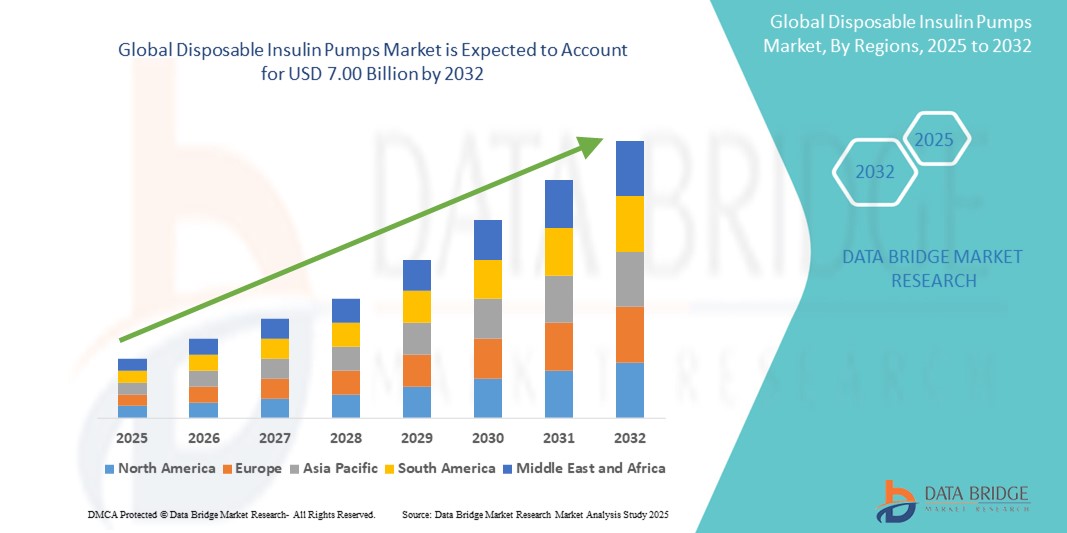
- The global disposable insulin pumps market size was valued at USD 3.84 billion in 2024 and is expected to reach USD 7.00 billion by 2032, at a CAGR of 7.77% during the forecast period
- The market growth is largely fueled by the increasing prevalence of diabetes globally, combined with the growing adoption of wearable medical technologies such as disposable insulin pumps, which offer improved convenience and glycemic control for patients
- Furthermore, rising consumer demand for minimally invasive, user-friendly, and portable insulin delivery solutions is establishing disposable insulin pumps as a preferred alternative to traditional injection-based methods. These converging factors are accelerating the uptake of Disposable Insulin Pumps solutions, thereby significantly boosting the industry's growth
Disposable Insulin Pumps Market Analysis
- Disposable insulin pumps, which provide continuous subcutaneous insulin infusion without the need for tubing or complex programming, are becoming increasingly essential in diabetes management due to their ease of use, affordability, and reduced maintenance compared to traditional pumps. These devices are especially beneficial for short-term insulin delivery in hospitals and for newly diagnosed patients seeking a non-invasive and simple alternative
- The growing demand for disposable insulin pumps is primarily driven by the rising global prevalence of diabetes, increasing awareness about insulin delivery methods, and the growing preference for portable, user-friendly, and cost-effective diabetes management solutions.
- North America dominated the disposable insulin pumps market with the largest revenue share of 41.8% in 2024, attributed to a high diabetes burden, advanced healthcare infrastructure, and rapid adoption of innovative treatment devices
- Asia-Pacific is projected to be the fastest-growing region in the disposable insulin pumps market with a CAGR of 10.6% from 2025 to 2032, fueled by rising healthcare expenditure, expanding diabetic population, and government initiatives to promote access to affordable diabetes care technologies in countries such as China and India
- The patch pumps segment dominated the disposable insulin pumps market with the largest market revenue share of 58.4% in 2024, driven by their tubeless design, ease of use, and growing preference for discreet insulin delivery among diabetic patients. These pumps adhere directly to the skin and are ideal for active individuals seeking flexibility and minimal interference in daily routines
Report Scope and Disposable Insulin Pumps Market Segmentation
|
Attributes |
Disposable Insulin Pumps Key Market Insights |
|
Segments Covered |
|
|
Countries Covered |
North America
Europe
Asia-Pacific
Middle East and Africa
South America
|
|
Key Market Players |
|
|
Market Opportunities |
|
|
Value Added Data Infosets |
In addition to the insights on market scenarios such as market value, growth rate, segmentation, geographical coverage, and major players, the market reports curated by the Data Bridge Market Research also include in-depth expert analysis, pricing analysis, brand share analysis, consumer survey, demography analysis, supply chain analysis, value chain analysis, raw material/consumables overview, vendor selection criteria, PESTLE Analysis, Porter Analysis, and regulatory framework. |
Disposable Insulin Pumps Market Trends
“Growing Demand for Seamless, User-Centric Diabetes Management Solutions”
- A significant and accelerating trend in the global disposable insulin pumps market is the integration of advanced technologies that enhance user convenience and enable streamlined diabetes management. These solutions are increasingly focused on minimizing user intervention while maximizing accuracy and real-time responsiveness
- For instance, next-generation disposable insulin pumps are being developed with enhanced connectivity that allows users to monitor and control insulin delivery via smartphone applications and cloud-based platforms. This offers real-time glucose level tracking, automated alerts, and personalized dosage recommendations
- Smart integration features in these devices include intuitive interfaces, real-time data transmission to healthcare providers, and the ability to adjust basal insulin rates based on lifestyle or physiological changes. Some pumps even adapt over time using user data to enhance dosing precision and reduce hypoglycemic events
- These devices are also becoming more discreet and portable, increasing patient compliance—particularly among younger and active users. As demand for minimal-maintenance and cost-effective diabetic care grows, disposable pumps offer an alternative to traditional multiple daily injections or reusable pump systems
- Manufacturers such as Insulet Corporation, Tandem Diabetes Care, and Debiotech SA are advancing user-focused innovations, designing pumps that can integrate with continuous glucose monitors (CGMs) and digital health platforms. These developments are reshaping expectations around convenience, control, and personalized diabetes care.
- The surge in demand for intelligent, compact, and easy-to-use insulin delivery devices is expected to drive significant growth across global markets, particularly in regions with a high diabetes burden and rising health-tech adoption
Disposable Insulin Pumps Market Dynamics
Driver
“Growing Need Due to Rising Diabetes Prevalence and Demand for Convenient Insulin Delivery Solutions”
- The increasing global prevalence of diabetes, particularly Type 1 and insulin-dependent Type 2 diabetes, is significantly driving demand for disposable insulin pumps as an effective and user-friendly alternative to traditional injection methods
- For instance, in April 2024, Tandem Diabetes Care, Inc. announced the development of a compact and pre-filled disposable insulin pump system aimed at simplifying insulin therapy and improving patient adherence. Such advancements are expected to support the market’s growth over the forecast period
- As patients and healthcare providers seek safer, more convenient ways to manage diabetes, disposable insulin pumps offer consistent insulin delivery with minimal patient input, reducing the risk of missed or inaccurate dosages
- Furthermore, the rise in home healthcare and self-management trends is making disposable pumps more popular, especially for patients who prefer discrete, easy-to-use, and maintenance-free insulin administration solutions
- Features such as pre-programmed basal and bolus dosing, wearable designs, and the elimination of manual refilling have made these devices a preferred choice in both clinical and homecare settings. The growing acceptance of wearable medical technology and digital health integration further supports the expansion of disposable insulin pump usage
Restraint/Challenge
“Concerns Regarding Device Cost and Limited Access in Low-Income Regions”
- Despite their clinical benefits, the high initial cost and limited insurance coverage for disposable insulin pumps remain key barriers to market adoption, particularly in low- and middle-income countries
- For instance, a single-use insulin pump system may cost significantly more than conventional insulin pens or vials, creating affordability challenges for patients without access to reimbursement or government aid programs
- In addition, the accessibility of these devices is limited in rural or underdeveloped areas due to weak distribution networks and a lack of trained healthcare professionals to educate patients on pump usage
- Manufacturers are actively working to address these issues by developing more cost-effective models, expanding patient assistance programs, and partnering with local health agencies to improve access and affordability
- Overcoming these challenges through pricing innovation, healthcare infrastructure improvements, and broader public health initiatives will be essential for achieving sustained growth in the global disposable insulin pumps market
Disposable Insulin Pumps Market Scope
The market is segmented on the basis of type, product, accessories, and end user.
- By Type
On the basis of type, the disposable insulin pumps market is segmented into patch pumps and tethered pumps. The patch pumps segment dominated the largest market revenue share of 58.4% in 2024, driven by their tubeless design, ease of use, and growing preference for discreet insulin delivery among diabetic patients. These pumps adhere directly to the skin and are ideal for active individuals seeking flexibility and minimal interference in daily routines.
The tethered pumps segment is projected to witness the fastest CAGR of 22.6% from 2025 to 2032, fueled by advancements in infusion set design and growing demand for continuous subcutaneous insulin infusion (CSII) therapy. Their reliable insulin delivery and compatibility with advanced glucose monitoring systems make them suitable for long-term diabetes management, particularly in clinical settings.
- By Product
On the basis of product, the disposable insulin pumps market is categorized into MiniMed, Accu-Chek, Tandem, Omnipod, and Others. In 2024, the Omnipod segment captured the largest revenue share of 37.9%, owing to its tubeless and waterproof patch design, which enhances user comfort and convenience. The system's automated insulin delivery and smartphone compatibility have made it popular among Type 1 diabetic patients.
Meanwhile, the Tandem segment is expected to grow at the fastest pace during the forecast period, supported by its sleek touchscreen interface and integration with advanced continuous glucose monitoring (CGM) technologies.
- By Accessories
On the basis of accessories, the disposable insulin pumps market is segmented into insulin reservoirs or cartridges, insulin set insertion devices, and batteries. The insulin reservoirs or cartridges segment accounted for the largest share of 44.6% in 2024, driven by their essential role in ensuring consistent insulin delivery. Innovations in pre-filled and reusable cartridges are streamlining replacement and improving convenience for users.
The insulin set insertion devices segment is anticipated to witness the fastest CAGR over the forecast period, as manufacturers continue to enhance user safety and comfort through automated and minimally invasive insertion mechanisms.
- By End User
On the basis of end user, the disposable insulin pumps market is segmented into hospitals and clinics, home care, and laboratories. The home care segment dominated the market with the largest share of 51.3% in 2024, reflecting a growing trend toward patient-centric diabetes management and the increasing use of remote monitoring and self-administration of insulin.
The hospitals and clinics segment is forecast to expand at the fastest CAGR from 2025 to 2032, supported by the rising number of diagnosed diabetes cases and the demand for effective insulin therapy during inpatient care and disease stabilization.
Disposable Insulin Pumps Market Regional Analysis
- North America dominated the disposable insulin pumps market with the largest revenue share of 41.8% in 2024, driven by the growing prevalence of diabetes
- Increasing adoption of advanced insulin delivery technologies, and the presence of well-established healthcare infrastructure
- The region benefits from high health awareness, favorable reimbursement frameworks, and widespread use of digital health solutions, supporting the uptake of wearable insulin pump devices
U.S. Disposable Insulin Pumps Market Insight
The U.S. disposable insulin pumps market captured the largest revenue share of 61% within North America in 2024, owing to robust demand for compact, easy-to-use insulin management tools and increasing patient preference for at-home diabetes care solutions. Technological innovations, such as smartphone-connected insulin delivery and AI-driven glucose tracking, further boost product penetration. Major companies such as Insulet (Omnipod) and Medtronic are reinforcing U.S. leadership through continuous R&D and product launches.
Europe Disposable Insulin Pumps Market Insight
The Europe disposable insulin pumps market is projected to expand at a substantial CAGR throughout the forecast period, primarily driven by increasing diabetes incidence and enhanced regulatory support for wearable medical devices. Public health initiatives to promote early diagnosis and treatment of diabetes, coupled with growing interest in portable and patient-friendly insulin administration, are driving demand. Countries such as Germany, France, and the U.K. are leading the region’s growth through healthcare digitization and supportive insurance schemes.
U.K. Disposable Insulin Pumps Market Insight
The U.K. disposable insulin pumps market is anticipated to grow at a noteworthy CAGR during the forecast period, supported by NHS programs that encourage the adoption of advanced insulin therapy options. Rising awareness about type 1 diabetes in children and teenagers, coupled with policy-driven support for wearable tech, positions the U.K. as a major growth hub for disposable insulin pumps in Europe.
Germany Disposable Insulin Pumps Market Insight
The Germany disposable insulin pumps market is expected to expand at a considerable CAGR during the forecast period, driven by a strong emphasis on personalized medicine, increasing geriatric diabetic population, and favorable health insurance reimbursements. The country’s leadership in medtech innovation, alongside adoption of sensor-based and patch pump technologies, is reinforcing market expansion.
Asia-Pacific Disposable Insulin Pumps Market Insight
The Asia-Pacific disposable insulin pumps market is poised to grow at the fastest CAGR of 10.6% from 2025 to 2032, fueled by surging diabetes prevalence, increasing awareness about insulin pump therapy, and government efforts toward digital healthcare integration. Countries such as China, Japan, and India are investing in affordable and scalable diabetes management solutions. The rise of regional manufacturers and expanding distribution networks are making these devices more accessible.
Japan Disposable Insulin Pumps Market Insight
The Japan disposable insulin pumps market is gaining momentum with a CAGR of 22.7%, owing to the country's advanced healthcare infrastructure, high-tech manufacturing base, and growing elderly diabetic population. Japan's emphasis on patient comfort, coupled with rising adoption of wearable medical devices, is accelerating the shift toward disposable pumps that require minimal training and offer seamless insulin administration.
China Disposable Insulin Pumps Market Insight
The China disposable insulin pumps market accounted for the largest revenue share in the Asia-Pacific region at 35.5% in 2024, driven by a rising middle-class population, rapid urbanization, and government support for chronic disease management. The growth of domestic medtech companies, such as MicroTech and Yuwell, along with improving access to diabetes education and diagnostics, is expanding market adoption across both Tier 1 cities and rural areas.
Disposable Insulin Pumps Market Share
The disposable insulin pumps industry is primarily led by well-established companies, including:
- Medtronic (U.S.)
- Insulet Corporation (U.S.)
- F. Hoffmann-La Roche Ltd (Switzerland)
- SOOIL Developments Co., Ltd (South Korea)
- Tandem Diabetes Care, Inc. (U.S.)
- SHINMYUNG MEDIYES CO., LTD. (South Korea)
- Debiotech SA (Switzerland)
- TOP Corporation (Japan)
- Kingfa Sci.&Tech. Co., Ltd (China)
- Sphere Fluidics (U.K.)
- Medsolve (UK) Limited (U.K.)
- Sanofi (France)
- Abbott (U.S.)
- BD (U.S.)
Latest Developments in Global Disposable Insulin Pumps Market
- In September 2024, Embecta Corp., a global leader in diabetes care with a century-long history in insulin delivery, has announced that it has received 510(k) clearance from the U.S. Food and Drug Administration (FDA) for its innovative disposable insulin delivery system. Designed for adults managing diabetes, including both type 1 (T1D) and type 2 (T2D), this system features a tubeless patch pump design equipped with a 300-unit insulin reservoir, developed based on insights from individuals with T2D and their healthcare providers
- In March 2024, The FDA has cleared the twiist Automated Insulin Delivery (AID) system, marking it as the first insulin pump to integrate with Tidepool Loop. Approved for individuals with type 1 diabetes aged 6 and older, the twiist AID system, in conjunction with Tidepool Loop, provides precise microdosing capabilities, allows users to set a target as low as 87 mg/dL, and offers bolusing options based on various food types
- In January 2024, Medtronic plc, a global frontrunner in healthcare technology, has announced that it has received CE (Conformité Européenne) Mark approval for the MiniMed™ 780G system, which includes Simplera Sync, a disposable, all-in-one continuous glucose monitor (CGM) that eliminates the need for fingersticks or overtape. The Simplera Sync offers an enhanced user experience with a straightforward two-step insertion process and is half the size of earlier Medtronic sensors
- In December 2023, Medtronic has canceled its plans to acquire EOFlow, a company that manufactures an insulin patch pump currently involved in a patent dispute with Insulet. Medtronic cited “multiple breaches” of the agreements between the two companies as the reason for the decision. This year, EOFlow has faced ongoing patent litigation with Insulet
- In May 2023, Embecta has partnered with Tidepool to collaborate on the development of an innovative insulin pump designed to enhance diabetes management. This strategic alliance aims to integrate advanced technology and user-friendly features into the device, improving patient outcomes. In addition, Embecta has raised its growth outlook for the second quarter, reflecting confidence in its product pipeline and market demand

- Interactive Data Analysis Dashboard
- Company Analysis Dashboard for high growth potential opportunities
- Research Analyst Access for customization & queries
- Competitor Analysis with Interactive dashboard
- Latest News, Updates & Trend analysis
- Harness the Power of Benchmark Analysis for Comprehensive Competitor Tracking
Data collection and base year analysis are done using data collection modules with large sample sizes. The stage includes obtaining market information or related data through various sources and strategies. It includes examining and planning all the data acquired from the past in advance. It likewise envelops the examination of information inconsistencies seen across different information sources. The market data is analysed and estimated using market statistical and coherent models. Also, market share analysis and key trend analysis are the major success factors in the market report. To know more, please request an analyst call or drop down your inquiry.
The key research methodology used by DBMR research team is data triangulation which involves data mining, analysis of the impact of data variables on the market and primary (industry expert) validation. Data models include Vendor Positioning Grid, Market Time Line Analysis, Market Overview and Guide, Company Positioning Grid, Patent Analysis, Pricing Analysis, Company Market Share Analysis, Standards of Measurement, Global versus Regional and Vendor Share Analysis. To know more about the research methodology, drop in an inquiry to speak to our industry experts.
Data Bridge Market Research is a leader in advanced formative research. We take pride in servicing our existing and new customers with data and analysis that match and suits their goal. The report can be customized to include price trend analysis of target brands understanding the market for additional countries (ask for the list of countries), clinical trial results data, literature review, refurbished market and product base analysis. Market analysis of target competitors can be analyzed from technology-based analysis to market portfolio strategies. We can add as many competitors that you require data about in the format and data style you are looking for. Our team of analysts can also provide you data in crude raw excel files pivot tables (Fact book) or can assist you in creating presentations from the data sets available in the report.













