


Disruptive Mood Dysregulation Disorder (DMDD) Market Size
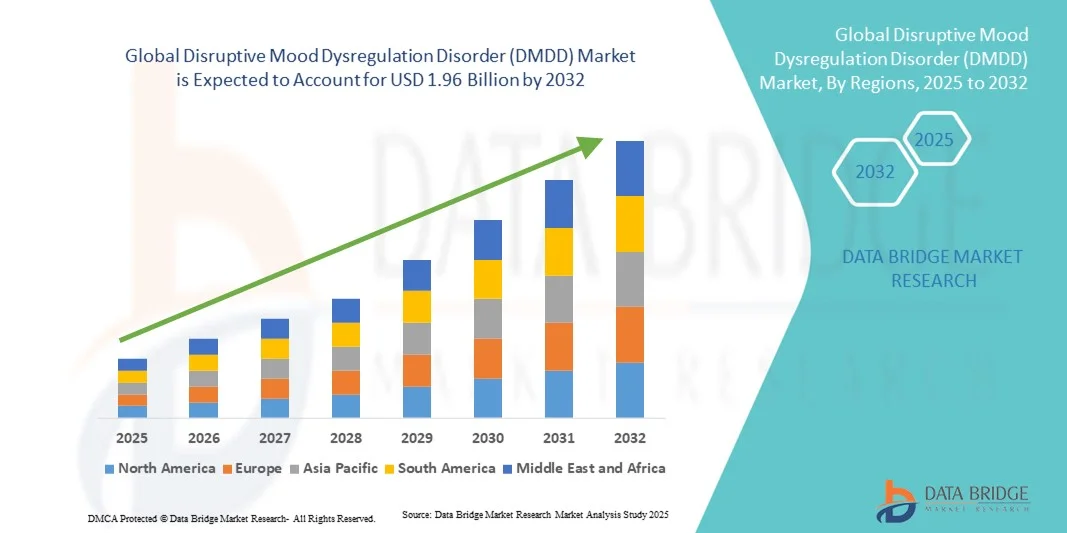
- The global disruptive mood dysregulation disorder (DMDD) market size was valued at USD 1.33 billion in 2024 and is expected to reach USD 1.96 billion by 2032, at a CAGR of 5.00% during the forecast period
- The market growth is largely fueled by the rising prevalence of mood and behavioral disorders among children and adolescents, coupled with advancements in pharmacological and psychotherapeutic treatment options
- Furthermore, increasing awareness, early diagnosis initiatives, and advocacy efforts by healthcare organizations are driving demand for effective DMDD management solutions, establishing them as the preferred treatment approach and significantly boosting the industry's growth
Disruptive Mood Dysregulation Disorder (DMDD) Market Analysis
- Disruptive Mood Dysregulation Disorder (DMDD), characterized by severe irritability, frequent temper outbursts, and persistent mood dysregulation in children and adolescents, is increasingly recognized as a critical mental health condition requiring specialized intervention in both clinical and community settings due to its long-term impact on emotional, social, and academic development
- The escalating demand for DMDD treatment is primarily fueled by the rising prevalence of mood and behavioral disorders among youth, increasing awareness among parents and healthcare providers, and advancements in both pharmacological and non-pharmacological therapies
- North America dominated the global disruptive mood dysregulation disorder (DMDD) market with the largest revenue share of 43% in 2024, driven by high awareness levels, advanced healthcare infrastructure, early diagnosis, and a strong presence of key pharmaceutical and mental health service providers, with the U.S. witnessing substantial adoption of specialized treatment programs and innovative therapies
- Asia-Pacific is expected to be the fastest-growing region in the global disruptive mood dysregulation disorder (DMDD) market during the forecast period due to increasing healthcare investments, rising awareness of pediatric mental health, and expanding access to specialized psychiatric care
- Medication segment dominated the global disruptive mood dysregulation disorder (DMDD) market in 2024 with a market share of 46.5%, driven by the widespread adoption of mood stabilizers, antipsychotics, and other therapeutics
Report Scope and Disruptive Mood Dysregulation Disorder (DMDD) Market Segmentation
|
Attributes |
Disruptive Mood Dysregulation Disorder (DMDD) Key Market Insights |
|
Segments Covered |
|
|
Countries Covered |
North America
Europe
Asia-Pacific
Middle East and Africa
South America
|
|
Key Market Players |
|
|
Market Opportunities |
|
|
Value Added Data Infosets |
In addition to the insights on market scenarios such as market value, growth rate, segmentation, geographical coverage, and major players, the market reports curated by the Data Bridge Market Research also include in-depth expert analysis, pricing analysis, brand share analysis, consumer survey, demography analysis, supply chain analysis, value chain analysis, raw material/consumables overview, vendor selection criteria, PESTLE Analysis, Porter Analysis, and regulatory framework. |
Disruptive Mood Dysregulation Disorder (DMDD) Market Trends
Rising Adoption of Digital Therapeutics and Telepsychiatry
- A significant and accelerating trend in the global DMDD market is the increasing integration of digital therapeutics and telepsychiatry platforms, enabling remote monitoring, therapy sessions, and patient engagement, thereby enhancing accessibility and adherence to treatment plans
- For instance, telepsychiatry platforms allow clinicians to deliver cognitive-behavioral therapy (CBT) and parent management training to children with DMDD in remote or underserved areas, improving treatment continuity and outcomes
- Digital therapeutics also support personalized care by tracking mood patterns, behavioral incidents, and medication adherence, providing clinicians with actionable insights to adjust treatment strategies over time
- The seamless integration of DMDD management apps with electronic health records (EHRs) and wearable devices facilitates centralized tracking of patient progress, symptom severity, and treatment effectiveness in real time
- This trend towards technology-enabled, patient-centric care is reshaping expectations for pediatric mental health management, prompting companies to develop AI-driven digital tools that can predict mood outbursts and provide tailored interventions
- The demand for solutions that combine telepsychiatry, mobile apps, and AI analytics is growing rapidly as caregivers and healthcare providers prioritize convenience, engagement, and comprehensive DMDD management
Disruptive Mood Dysregulation Disorder (DMDD) Market Dynamics
Driver
Increasing Awareness and Rising Diagnosis Rates
- The growing prevalence of mood and behavioral disorders among children and adolescents, along with heightened awareness among parents and clinicians, is a major driver for the increased adoption of DMDD treatment solutions
- For instance, initiatives by healthcare organizations to educate caregivers on early identification of irritability, temper outbursts, and persistent mood dysregulation are contributing to higher diagnosis rates and timely intervention
- As awareness spreads, more children are being screened in schools and pediatric clinics, enabling early treatment through pharmacological and psychotherapeutic interventions
- Furthermore, advancements in treatment options, including mood stabilizers, antipsychotics, and structured behavioral therapies, are encouraging clinicians to adopt comprehensive care plans for managing DMDD
- The rising focus on pediatric mental health and the integration of DMDD treatment protocols into standard clinical practice are driving demand in both developed and emerging markets
- Healthcare providers and caregivers increasingly seek evidence-based interventions that improve long-term outcomes, fueling market expansion across clinical and hospital settings
Restraint/Challenge
Diagnostic Complexity and Treatment Accessibility
- Challenges in accurately diagnosing DMDD, due to symptom overlap with ADHD, bipolar disorder, and oppositional defiant disorder, pose a significant restraint on market growth, potentially leading to underdiagnosis or misdiagnosis
- For instance, children exhibiting severe irritability may initially be treated for other behavioral disorders, delaying appropriate DMDD-specific interventions and affecting treatment efficacy
- Limited availability of specialized mental health professionals and pediatric psychiatrists in many regions restricts access to timely and appropriate care
- High treatment costs, particularly for combination therapy approaches involving both pharmacological and behavioral interventions, can be a barrier for price-sensitive patients and families, especially in emerging markets
- Stigma surrounding mental health disorders and lack of awareness about DMDD continue to hinder adoption of available treatment solutions
- Overcoming these challenges through enhanced diagnostic tools, telehealth adoption, and caregiver education is essential for sustainable market growth and broader patient access
Disruptive Mood Dysregulation Disorder (DMDD) Market Scope
The market is segmented on the basis of treatment, symptoms, dosage, route of administration, end-users, and distribution channel.
- By Treatment
On the basis of treatment, the disruptive mood dysregulation disorder (DMDD) market is segmented into medication, physiological treatments, and others. The medication segment dominated the market with the largest revenue share of 46.5% in 2024, driven by the widespread use of mood stabilizers, antipsychotics, and other therapeutics targeting severe irritability and temper outbursts. Medication provides rapid symptom control and is often the first-line approach in clinical settings. Clinicians prefer it due to its proven efficacy and compatibility with combination therapies involving behavioral interventions. The segment benefits from the development of new pharmacological treatments that enhance symptom management. Caregiver awareness and acceptance of medication further reinforce its market dominance. Overall, the segment remains the cornerstone of DMDD management in pediatric populations.
The physiological treatments segment is expected to witness the fastest growth during forecast period, driven by the rising adoption of cognitive-behavioral therapy, parent management training, and other structured behavioral interventions. These therapies improve emotional regulation and social functioning over the long term. Digital platforms and telepsychiatry services are expanding access to these interventions, particularly in underserved regions. Increased research supporting the efficacy of physiological treatments boosts confidence among clinicians and caregivers. Integration of behavioral therapies with medication is promoting holistic patient care. Demand for patient-centric, non-pharmacological options continues to accelerate this segment’s growth.
- By Symptoms
On the basis of symptoms, the disruptive mood dysregulation disorder (DMDD) market is segmented into physical, behavioral, psychosocial, and cognitive. The behavioral segment dominated the market with the largest revenue share in 2024, as symptoms such as frequent temper outbursts and aggression are primary diagnostic criteria and most directly addressed by interventions. Monitoring behavioral patterns helps clinicians adjust treatment plans effectively. Behavioral symptoms are often the first trigger for clinical evaluation, increasing treatment adoption. Schools and pediatric clinics frequently prioritize behavioral assessment for early detection. Behavioral-focused interventions are widely integrated into therapy programs. The dominance of this segment reflects the clinical and caregiver focus on observable, manageable symptoms.
The psychosocial segment is expected to witness the fastest growth during forecast period, fueled by growing awareness of the impact of DMDD on social interactions, family dynamics, and academic performance. Psychosocial interventions, such as social skills training and family counseling, are increasingly integrated into treatment plans. These approaches improve long-term functional outcomes beyond symptom reduction. Telehealth platforms are enabling broader access to psychosocial therapies. Caregivers are more engaged in psychosocial management due to educational programs and awareness campaigns. Increasing investment in school- and community-based programs is accelerating adoption of psychosocial solutions.
- By Dosage
On the basis of dosage, the disruptive mood dysregulation disorder (DMDD) market is segmented into tablet, injection, and others. The tablet segment dominated the market in 2024 with the largest revenue share due to the convenience and non-invasiveness of oral administration for pediatric patients. Tablets allow flexible dosing adjustments and combination therapy integration. The availability of pediatric-friendly formulations further drives adoption. Caregivers prefer tablets for ease of administration and adherence monitoring. Clinical protocols support tablet-based treatment as the standard approach. Tablets also provide a cost-effective and scalable solution for long-term DMDD management.
The injection segment is expected to witness the fastest growth during forecast period, driven by development of long-acting formulations and depot injections for patients with adherence challenges. Injectable treatments offer sustained therapeutic effects and reduce the need for daily dosing. Hospitals and clinics increasingly use injections for severe cases requiring rapid symptom control. Research into novel injectable compounds is expanding treatment options. Adoption is facilitated by physician preference for predictable pharmacokinetics. Injectable therapies are anticipated to play a key role in hospital-based DMDD treatment programs.
- By Route of Administration
On the basis of route of administration, the disruptive mood dysregulation disorder (DMDD) market is segmented into oral, intravenous, and others. The oral segment dominated the market with the largest revenue share in 2024, owing to its ease of use, non-invasive nature, and high compliance rates among pediatric patients. Oral administration allows gradual dose adjustments and is compatible with behavioral therapies. Caregiver preference supports widespread adoption of oral medications. Clinical protocols favor oral administration as a standard treatment. Tablets and liquid formulations increase flexibility in dosage management. The segment’s dominance reflects convenience, safety, and clinical acceptance.
The intravenous segment is expected to witness the fastest growth during forecast period, driven by hospital-based treatment for acute or severe DMDD cases requiring immediate symptom control. IV administration ensures rapid onset of action and precise dosing. It is often used in inpatient or emergency settings. Integration with hospital care pathways enhances patient monitoring and treatment outcomes. Hospitals adopting IV therapy complement psychotherapeutic interventions for comprehensive management. The segment growth reflects increasing hospital-based care for complex DMDD presentations.
- By End-Users
On the basis of end-users, the disruptive mood dysregulation disorder (DMDD) market is segmented into clinics, hospitals, and others. The clinic segment dominated the market with a revenue share of 51% in 2024, driven by outpatient treatment programs and access to specialized pediatric mental health professionals. Clinics serve as the first point of diagnosis and ongoing care. Combination therapy involving medication and behavioral interventions is widely delivered in clinics. Clinics provide structured monitoring and follow-up, improving treatment adherence. Early intervention programs are concentrated in clinics, reinforcing their dominance. Caregivers frequently rely on clinics for continuous support and guidance.
The hospital segment is expected to witness the fastest growth during forecast period, fueled by increasing adoption of inpatient psychiatric care and multidisciplinary management of severe DMDD cases. Hospitals integrate telehealth and intensive behavioral therapies alongside pharmacological treatment. Hospital-based programs enable continuous monitoring and complex intervention delivery. Hospitals are expanding pediatric mental health units to manage rising case volumes. Collaboration with outpatient clinics enhances patient transition and continuity of care. Growth is driven by increasing recognition of the need for specialized hospital-based DMDD treatment.
- By Distribution Channel
On the basis of distribution channel, the disruptive mood dysregulation disorder (DMDD) market is segmented into hospital pharmacy, retail pharmacy, and online pharmacy. The hospital pharmacy segment dominated the market in 2024, driven by direct access to prescriptions from clinics and hospitals and the ability to monitor adherence and provide counseling. Hospital pharmacies ensure timely availability of medication and therapy support. Integration with clinical treatment plans reinforces their market position. Caregivers prefer hospital pharmacies for guidance and follow-up. Hospital pharmacies often coordinate with digital therapeutics and telehealth services. The segment dominance reflects trust, reliability, and clinical integration.
The online pharmacy segment is expected to witness the fastest growth during forecast period, driven by the increasing adoption of e-pharmacies, convenience of home delivery, and digital prescription services. Online platforms enable access to medication and digital therapeutics in regions with limited physical pharmacy infrastructure. Integration with telemedicine and mobile apps improves adherence and monitoring. Caregivers increasingly prefer discreet, convenient options for managing pediatric treatment. Online pharmacies reduce geographic barriers and improve treatment continuity. The segment growth reflects rising consumer preference for digital healthcare solutions.
Disruptive Mood Dysregulation Disorder (DMDD) Market Regional Analysis
- North America dominated the disruptive mood dysregulation disorder (DMDD) market with the largest revenue share of 43% in 2024, driven by high awareness levels, advanced healthcare infrastructure, early diagnosis, and a strong presence of key pharmaceutical and mental health service providers, with the U.S. witnessing substantial adoption of specialized treatment programs and innovative therapies
- Clinicians and caregivers in the region prioritize early diagnosis and evidence-based interventions, including pharmacological therapies and structured behavioral treatments, leading to strong adoption of DMDD management solutions
- The region benefits from advanced research, clinical trials, and innovation in both medication and digital therapeutics, enhancing access to effective treatment options for children and adolescents
U.S. Disruptive Mood Dysregulation Disorder (DMDD) Market Insight
The U.S. disruptive mood dysregulation disorder (DMDD) market captured the largest revenue share of 38% in 2024 within North America, driven by high awareness of pediatric mental health and widespread adoption of evidence-based treatments. Clinicians prioritize early diagnosis and intervention through both pharmacological therapies and structured behavioral programs. Increasing integration of digital therapeutics and telepsychiatry platforms is enhancing access to treatment, particularly in remote and underserved areas. The growing focus on comprehensive care, including combination therapy approaches, supports market expansion. Government initiatives, school-based screening programs, and insurance coverage further strengthen adoption. Rising prevalence of mood and behavioral disorders among children and adolescents continues to propel market growth.
Europe Disruptive Mood Dysregulation Disorder (DMDD) Market Insight
The Europe disruptive mood dysregulation disorder (DMDD) market is projected to expand at a substantial CAGR throughout the forecast period, primarily driven by increasing awareness of pediatric mental health, stringent clinical guidelines, and rising demand for early intervention programs. The region benefits from advanced healthcare infrastructure and robust mental health services in countries such as Germany, France, and Italy. Increasing urbanization, growing access to specialized psychiatrists, and integration of digital therapy platforms are fostering adoption. European caregivers are also emphasizing psychosocial interventions alongside medication, promoting holistic management. Expanding school-based screening and early intervention programs contribute to early diagnosis. Rising investment in pediatric mental health initiatives is further stimulating market growth.
U.K. Disruptive Mood Dysregulation Disorder (DMDD) Market Insight
The U.K. disruptive mood dysregulation disorder (DMDD) market is anticipated to grow at a noteworthy CAGR during the forecast period, driven by the increasing focus on child and adolescent mental health, coupled with the adoption of evidence-based treatment programs. Concerns regarding emotional dysregulation, school performance, and social functioning are motivating early intervention. Integration of telepsychiatry and digital therapeutics enhances accessibility for children and families across urban and rural areas. Government campaigns and public awareness programs are reducing stigma, improving diagnosis rates. The country’s well-established healthcare system supports widespread access to both pharmacological and behavioral treatments. Increasing prevalence of mood and behavioral disorders among school-aged children further contributes to market growth.
Germany Disruptive Mood Dysregulation Disorder (DMDD) Market Insight
The Germany disruptive mood dysregulation disorder (DMDD) market is expected to expand at a considerable CAGR during the forecast period, fueled by high awareness of mental health, strong healthcare infrastructure, and early adoption of advanced treatment modalities. Clinicians emphasize evidence-based pharmacological and behavioral interventions, supported by clinical research and guidelines. The integration of digital therapeutics and telepsychiatry facilitates remote monitoring and therapy for pediatric patients. German caregivers increasingly value comprehensive treatment programs that combine medication and psychosocial support. The focus on early diagnosis in schools and clinics improves treatment outcomes. In addition, government initiatives and professional training programs enhance the quality and accessibility of pediatric mental healthcare.
Asia-Pacific Disruptive Mood Dysregulation Disorder (DMDD) Market Insight
The Asia-Pacific disruptive mood dysregulation disorder (DMDD) market is poised to grow at the fastest CAGR during the forecast period of 2025 to 2032, driven by rising awareness of pediatric mental health and expanding healthcare infrastructure in countries such as China, Japan, and India. Increasing urbanization, growing disposable incomes, and rising prevalence of mood and behavioral disorders are boosting demand for DMDD treatment solutions. Telepsychiatry and mobile-based therapy platforms are improving access in remote and underserved regions. Government initiatives promoting child mental health, school-based screening programs, and the adoption of digital therapeutics are fueling market expansion. Cultural shifts reducing stigma and increasing parental concern further drive treatment uptake. Enhanced training of mental health professionals supports the rapid growth of specialized services across the region.
Japan Disruptive Mood Dysregulation Disorder (DMDD) Market Insight
The Japan disruptive mood dysregulation disorder (DMDD) market is gaining momentum due to the country’s high awareness of child mental health, focus on early diagnosis, and adoption of advanced treatment approaches. Increasing school-based interventions and telepsychiatry programs are improving accessibility to evidence-based behavioral therapies. The country’s aging population and declining birth rates highlight the importance of quality pediatric mental healthcare, supporting investments in specialized programs. Integration of digital tools for symptom tracking and therapy engagement enhances treatment outcomes. Parents and caregivers are increasingly adopting combined medication and behavioral approaches. Rising government initiatives and professional training in child psychiatry are expected to further fuel market growth in Japan.
India Disruptive Mood Dysregulation Disorder (DMDD) Market Insight
The India disruptive mood dysregulation disorder (DMDD) market accounted for the largest revenue share in Asia-Pacific in 2024, driven by rising awareness of pediatric mental health and increasing prevalence of mood and behavioral disorders among children and adolescents. Expanding healthcare infrastructure, growing urbanization, and increasing disposable incomes are facilitating access to treatment. Telepsychiatry and digital therapeutics are improving reach in rural and semi-urban areas. Government programs promoting child mental health, school screening initiatives, and the reduction of stigma are accelerating adoption. Affordable treatment options and increasing availability of trained mental health professionals are key growth drivers. The combination of pharmacological and behavioral therapies is becoming increasingly accessible, supporting rapid market expansion.
Disruptive Mood Dysregulation Disorder (DMDD) Market Share
The disruptive mood dysregulation disorder (DMDD) industry is primarily led by well-established companies, including:
- A MISSION FOR MICHAEL (U.S.)
- The Sylvia Brafman Mental Health Center. (U.S.)
- DMDD.org (U.S.)
- CenterPointe Hospital (U.S.)
- The Care Clinic. (U.S.)
- Suffolk DBT (U.S.)
- Family First Adolescent Services (U.S.)
- Longleaf Hospital (U.S.)
- Duke University Health System (U.S.)
- NYU Langone Hospitals (U.S.)
- Dr. Messina (U.S.)
- RDMDD (U.S.)
- DBT for DMDD (U.S.)
- The Meadows (U.S.)
- The Forge Recovery Center (U.S.)
- Choosing Therapy, Inc. (U.S.)
- SimplePractice, LLC (U.S.)
- KEY HEALTHCARE (U.S.)
What are the Recent Developments in Global Disruptive Mood Dysregulation Disorder (DMDD) Market?
- In July 2025, a study published in the Journal of Clinical Psychology explored the application of Cognitive Behavioral Therapy (CBT) for children with DMDD. The research highlighted that CBT, when adapted to address severe irritability, can be effective in managing DMDD symptoms. This development emphasizes the importance of tailoring therapeutic approaches to meet the specific needs of children with DMDD
- In April 2025, Springer published Finding the Calm Child Within: Raising Resilient Children with Disruptive Mood Dysregulation Disorder, authored by Drs. Sam Goldstein and Robert Brooks, along with co-authors Donna DiMaio Rooney and Molly Anthony. The book provides evidence-based approaches to assessing and treating children with DMDD, including parent training, therapeutic interventions, and medication management
- In May 2024, NIMH-supported research captured expressions of irritability across developmental stages through a new clinically relevant measurement tool called the MAPS Temper Loss Scale. This development is crucial for better characterization and understanding of DMDD symptoms across different age groups
- In April 2023, An international collaboration of 15 experts used the Delphi method to reach a consensus on the assessment and treatment of DMDD. The findings, published in Frontiers in Psychiatry, highlighted the importance of measuring the intensity, frequency, and impact of DMDD symptoms across various settings
- In February 2022, A systematic review published in Atlantis Press brought attention to the use of the Research Domain Criteria (RDoC) framework to understand the underlying mechanisms of DMDD. This collaboration among researchers seeks to move beyond traditional diagnostic labels and explore the neurobiological and psychological systems at the core of the disorder

- Interactive Data Analysis Dashboard
- Company Analysis Dashboard for high growth potential opportunities
- Research Analyst Access for customization & queries
- Competitor Analysis with Interactive dashboard
- Latest News, Updates & Trend analysis
- Harness the Power of Benchmark Analysis for Comprehensive Competitor Tracking
Data collection and base year analysis are done using data collection modules with large sample sizes. The stage includes obtaining market information or related data through various sources and strategies. It includes examining and planning all the data acquired from the past in advance. It likewise envelops the examination of information inconsistencies seen across different information sources. The market data is analysed and estimated using market statistical and coherent models. Also, market share analysis and key trend analysis are the major success factors in the market report. To know more, please request an analyst call or drop down your inquiry.
The key research methodology used by DBMR research team is data triangulation which involves data mining, analysis of the impact of data variables on the market and primary (industry expert) validation. Data models include Vendor Positioning Grid, Market Time Line Analysis, Market Overview and Guide, Company Positioning Grid, Patent Analysis, Pricing Analysis, Company Market Share Analysis, Standards of Measurement, Global versus Regional and Vendor Share Analysis. To know more about the research methodology, drop in an inquiry to speak to our industry experts.
Data Bridge Market Research is a leader in advanced formative research. We take pride in servicing our existing and new customers with data and analysis that match and suits their goal. The report can be customized to include price trend analysis of target brands understanding the market for additional countries (ask for the list of countries), clinical trial results data, literature review, refurbished market and product base analysis. Market analysis of target competitors can be analyzed from technology-based analysis to market portfolio strategies. We can add as many competitors that you require data about in the format and data style you are looking for. Our team of analysts can also provide you data in crude raw excel files pivot tables (Fact book) or can assist you in creating presentations from the data sets available in the report.












