


Dunbar Syndrome Treatment Market Size
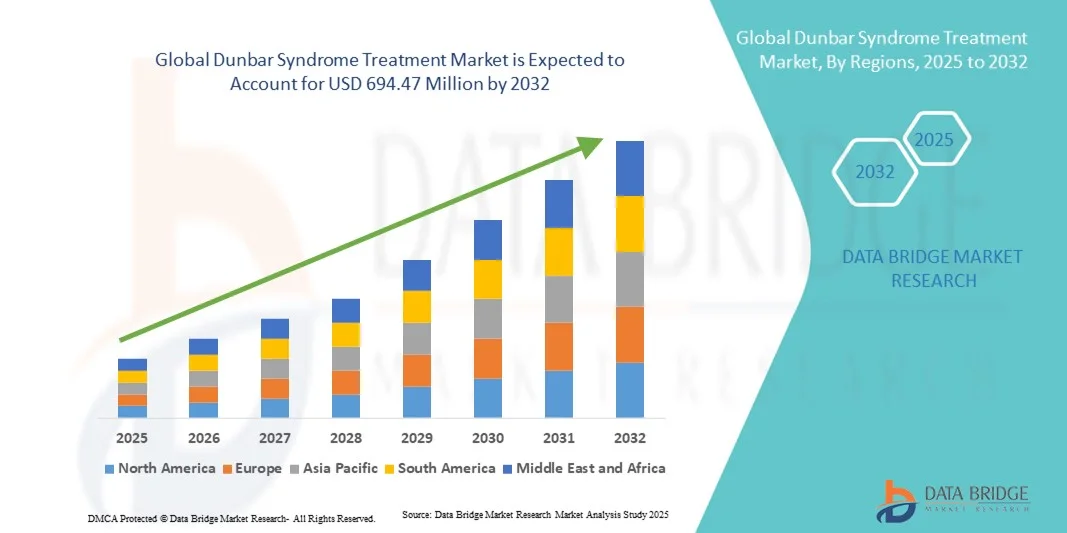
- The global Dunbar Syndrome treatment market size was valued at USD 478.00 million in 2024 and is expected to reach USD 694.47 million by 2032, at a CAGR of 4.78% during the forecast period
- The market growth is primarily driven by increasing awareness and early diagnosis of median arcuate ligament syndrome (MALS), along with advancements in minimally invasive and robotic-assisted vascular surgeries that enhance patient recovery and outcomes
- In addition, growing healthcare expenditure, technological innovation in diagnostic imaging, and the development of specialized treatment centers are expanding access to effective care worldwide. These combined factors are fueling the rising demand for Dunbar Syndrome treatments and are expected to significantly strengthen market growth through 2032
Dunbar Syndrome Treatment Market Analysis
- Dunbar Syndrome treatments include surgical decompression, endovascular interventions, and pain management therapies aimed at relieving celiac artery compression and restoring normal blood flow. Minimally invasive and robotic-assisted procedures are increasingly preferred for their precision, faster recovery, and lower complication rates
- The growing prevalence of chronic abdominal pain syndromes, rising clinical awareness of MALS among healthcare professionals, and increasing use of advanced imaging modalities such as CT angiography and Doppler ultrasound are major drivers of market growth
- North America dominated the Dunbar Syndrome treatment market with the largest revenue share of 42.6% in 2024, supported by advanced healthcare infrastructure, early adoption of robotic vascular surgery, and greater diagnostic accessibility across the U.S. and Canada
- Asia-Pacific is expected to be the fastest-growing region during the forecast period, driven by rising healthcare expenditure, growing awareness of rare vascular disorders, and expanding adoption of minimally invasive treatment techniques in countries such as China, Japan, India, and South Korea
- The surgery segment accounted for the largest market share of 62.8% in 2024, attributed to the high success rate and long-term efficacy of median arcuate ligament release procedures compared to conservative or drug-based management
Report Scope and Dunbar Syndrome Treatment Market Segmentation
|
Attributes |
Dunbar Syndrome Treatment Key Market Insights |
|
Segments Covered |
|
|
Countries Covered |
North America
Europe
Asia-Pacific
Middle East and Africa
South America
|
|
Key Market Players |
|
|
Market Opportunities |
|
|
Value Added Data Infosets |
In addition to the insights on market scenarios such as market value, growth rate, segmentation, geographical coverage, and major players, the market reports curated by the Data Bridge Market Research also include in-depth expert analysis, patient epidemiology, pipeline analysis, pricing analysis, and regulatory framework |
Dunbar Syndrome Treatment Market Trends
Advancement of Minimally Invasive and Robotic-Assisted Surgical Techniques
- A significant and accelerating trend in the global Dunbar Syndrome treatment market is the adoption of minimally invasive and robotic-assisted surgical procedures, offering enhanced precision, reduced postoperative complications, and faster patient recovery
- For instance, Intuitive Surgical’s da Vinci robotic system is increasingly being used in vascular decompression surgeries, allowing surgeons to perform delicate dissections around the celiac artery with improved visualization and accuracy
- The integration of robotic technology in Dunbar Syndrome treatment enables surgeons to achieve greater consistency in ligament release, minimize intraoperative bleeding, and reduce hospital stays, which ultimately improves patient satisfaction and surgical outcomes
- Furthermore, advancements in intraoperative imaging and 3D navigation are supporting better diagnosis and surgical planning, enhancing the overall treatment effectiveness for MALS patients
- This technological shift towards less invasive, precision-based procedures is encouraging hospitals and specialty centers to invest in robotic platforms and vascular imaging systems
- The growing preference for these advanced techniques among both surgeons and patients is accelerating innovation and shaping the future of Dunbar Syndrome treatment globally
Dunbar Syndrome Treatment Market Dynamics
Driver
Rising Diagnostic Awareness and Access to Advanced Imaging Modalities
- The increasing clinical awareness of Dunbar Syndrome among healthcare professionals, supported by improvements in diagnostic imaging technologies, is a major driver of market growth
- For instance, the expanded use of CT angiography and Doppler ultrasound in identifying celiac artery compression has significantly improved diagnostic accuracy and early detection rates
- As more physicians recognize the condition’s underlying vascular nature, patients are being referred earlier for specialized evaluation and treatment, driving demand for surgical interventions
- Furthermore, the establishment of specialized vascular and gastrointestinal centers in developed and emerging economies is facilitating timely diagnosis and access to expert care
- The growing investment in healthcare infrastructure and physician education programs is also supporting greater recognition of MALS as a treatable cause of chronic abdominal pain
- This rising diagnostic awareness and improved access to imaging solutions are expected to sustain strong demand for Dunbar Syndrome treatments throughout the forecast period
Restraint/Challenge
Limited Disease Awareness and High Surgical Costs
- The rarity and often-misdiagnosed nature of Dunbar Syndrome pose significant challenges to accurate diagnosis and timely treatment across many regions
- For instance, many patients undergo multiple evaluations for gastrointestinal or psychological conditions before being correctly identified as MALS cases, delaying intervention
- This diagnostic uncertainty reduces the number of confirmed cases eligible for surgical treatment, constraining overall market expansion
- In addition, the high cost of advanced surgical procedures, particularly robotic-assisted decompression, limits accessibility in low- and middle-income countries
- While healthcare modernization is improving globally, uneven insurance coverage and lack of reimbursement policies continue to restrict patient uptake in developing regions
- Overcoming these challenges through awareness campaigns, cost-effective surgical solutions, and broader reimbursement initiatives will be vital for the long-term growth of the Dunbar Syndrome treatment market
Dunbar Syndrome Treatment Market Scope
The market is segmented on the basis of diagnosis, symptoms, treatment, mode of administration, and distribution channel.
- By Diagnosis
On the basis of diagnosis, the Dunbar Syndrome treatment market is segmented into CT, MRI, and traditional angiography. The CT segment dominated the market with the largest market revenue share in 2024, driven by its superior ability to identify celiac artery compression and high-resolution imaging that supports precise diagnosis. CT angiography is widely used as the first-line diagnostic tool due to its non-invasive approach, rapid scan time, and accessibility across healthcare facilities. Its capability to provide detailed cross-sectional images helps clinicians accurately evaluate the extent of vascular obstruction. Furthermore, advancements such as 3D reconstruction and low-dose radiation technology enhance safety and diagnostic reliability. The segment also benefits from increasing use in preoperative planning and postoperative evaluation, reinforcing its dominance in the diagnostic landscape.
The MRI segment is anticipated to witness the fastest growth rate from 2025 to 2032, fueled by its excellent soft-tissue contrast and radiation-free imaging benefits. MRI angiography enables dynamic visualization of blood flow, making it highly effective for evaluating vascular compression and functional changes in MALS patients. Growing preference for non-radiation imaging methods, coupled with increasing availability of advanced MRI systems, supports its rapid adoption. For instance, modern 4D flow MRI provides precise hemodynamic assessments, improving diagnostic accuracy and clinical outcomes. The rising focus on patient safety and technological innovation in imaging techniques further boosts this segment’s growth trajectory.
- By Symptoms
On the basis of symptoms, the Dunbar Syndrome treatment market is segmented into postprandial abdominal pain, nausea, vomiting, and subsequently weight loss. The Postprandial Abdominal Pain segment dominated the market with the largest share in 2024, as it is the most prominent and defining symptom of Dunbar Syndrome. Patients commonly report severe abdominal pain after meals, leading to higher diagnosis and treatment rates. This symptom’s strong clinical relevance drives the adoption of vascular imaging and surgical interventions for symptom relief. For instance, physicians often use postprandial pain as the primary indicator to recommend advanced imaging studies for celiac artery evaluation. Increased physician awareness and diagnostic accuracy are further supporting this segment’s dominance. The prevalence of this symptom across all patient groups reinforces its role as the key diagnostic and therapeutic focus in the market.
The Subsequently Weight Loss segment is projected to witness the fastest growth rate during the forecast period, driven by its increasing recognition as a serious manifestation of untreated or chronic Dunbar Syndrome. Weight loss occurs when patients avoid eating due to postprandial pain, leading to malnutrition and severe metabolic decline. Growing clinical awareness linking unexplained weight loss with vascular compression disorders is improving early diagnosis. For instance, multidisciplinary management programs are incorporating nutritional therapy and early surgical consultation to address this symptom effectively. The increasing prevalence of chronic cases and patient education initiatives are expected to strengthen the growth of this segment through 2032.
- By Treatment
On the basis of treatment, the Dunbar Syndrome treatment market is segmented into surgery and drugs. The Surgery segment dominated the market with the largest market revenue share of 62.8% in 2024, due to its role as the definitive and most effective treatment for Dunbar Syndrome. Laparoscopic and robotic-assisted median arcuate ligament release surgeries are increasingly adopted for their minimally invasive nature and superior recovery outcomes. For instance, leading hospitals are utilizing robotic platforms for enhanced precision in vascular decompression. The high success rate and lasting symptom relief achieved through surgery make it the preferred option for severe cases. In addition, technological advancements and growing adoption of robotic-assisted surgery contribute to this segment’s sustained dominance. Increasing surgeon expertise and favorable reimbursement policies further drive segment growth.
The Drugs segment is expected to register the fastest growth rate from 2025 to 2032, attributed to the rising preference for non-surgical management options among patients with mild or inoperable conditions. Drug-based therapy includes pain management medications, vasodilators, and antispasmodics aimed at alleviating symptoms and improving quality of life. For instance, the growing use of neuropathic pain modulators in conservative care settings is expanding the drug segment’s adoption. The development of advanced pharmacological formulations and increasing awareness of early symptom management are expected to strengthen this segment’s growth potential.
- By Mode of Administration
On the basis of mode of administration, the Dunbar Syndrome treatment market is segmented into injectables, oral, and others. The Injectables segment dominated the market in 2024, primarily due to its critical role in surgical and postoperative care. Injectable drugs are used for anesthesia, pain management, and vascular therapy, offering immediate and effective relief. For instance, hospitals use targeted injectable anesthetics during decompression surgeries to enhance patient safety and precision. The high bioavailability and rapid onset of injectable formulations make them indispensable in acute and inpatient settings. Growing adoption of controlled-release injectables and improvements in drug delivery technology further drive this segment’s dominance. The increasing number of hospital-based procedures continues to reinforce the demand for injectable therapies.
The Oral segment is expected to witness the fastest growth rate during the forecast period, driven by increasing use of oral painkillers, antispasmodics, and anti-inflammatory medications for long-term management. Oral drugs offer convenience, patient compliance, and suitability for home-based treatment of mild symptoms. For instance, the availability of oral vasodilators and non-opioid analgesics is supporting outpatient management of chronic MALS cases. The rise of telemedicine and online pharmacies is further improving access to prescription-based oral therapies. Growing emphasis on conservative treatment and chronic pain management strategies is projected to sustain strong growth for this segment.
- By Distribution Channel
On the basis of distribution channel, the Dunbar Syndrome treatment market is segmented into hospital pharmacies, retail pharmacies, and online pharmacies. The Hospital Pharmacies segment dominated the market with the largest market share in 2024, owing to the concentration of surgical procedures and inpatient treatments in hospital settings. Hospitals dispense perioperative drugs, anesthesia agents, and postoperative pain management medications, ensuring standardized care. For instance, vascular specialty hospitals maintain direct pharmacy integration to manage complex surgical cases efficiently. The availability of high-quality injectables and real-time coordination with surgical teams support this segment’s dominance. Expanding hospital infrastructure and specialized vascular centers are expected to reinforce its leading position throughout the forecast period.
The Online Pharmacies segment is projected to witness the fastest growth rate during the forecast period, supported by the expansion of digital healthcare services and growing patient preference for remote medicine delivery. For instance, the rise of e-prescription platforms allows patients to easily access pain management and supportive medications for post-surgical recovery. Competitive pricing, home delivery convenience, and increased trust in licensed e-pharmacies are propelling segment adoption. Moreover, collaborations between online platforms and healthcare providers to facilitate chronic care management are expected to accelerate this segment’s growth in the coming years.
Dunbar Syndrome Treatment Market Regional Analysis
- North America dominated the Dunbar Syndrome treatment market with the largest revenue share of 42.6% in 2024, supported by advanced healthcare infrastructure, early adoption of robotic vascular surgery, and greater diagnostic accessibility across the U.S. and Canada
- The region benefits from widespread adoption of cutting-edge imaging technologies such as CT angiography and robotic-assisted laparoscopic surgeries, ensuring early detection and effective treatment outcomes
- Furthermore, favorable reimbursement policies, high healthcare expenditure, and a growing number of clinical research initiatives focusing on celiac artery compression syndromes continue to strengthen North America’s leading position in the global market
U.S. Dunbar Syndrome Treatment Market Insight
The U.S. Dunbar Syndrome treatment market captured the largest revenue share of 82% in 2024 within North America, driven by the country’s advanced diagnostic capabilities and increasing awareness of rare vascular compression disorders. The growing use of high-resolution imaging techniques such as CT and MRI angiography enables earlier and more accurate detection of celiac artery compression. Furthermore, the strong presence of specialized vascular surgeons and academic medical centers contributes to improved patient outcomes. The rise in minimally invasive surgical procedures, including laparoscopic and robotic-assisted approaches, is further boosting treatment adoption across leading healthcare facilities.
Europe Dunbar Syndrome Treatment Market Insight
The Europe Dunbar Syndrome treatment market is projected to expand at a substantial CAGR throughout the forecast period, fueled by advancements in diagnostic imaging technologies and an increasing number of vascular disorder screenings. Growing awareness among healthcare professionals and patients regarding the symptoms of Dunbar Syndrome, such as chronic postprandial pain and weight loss, is accelerating early diagnosis and intervention. Furthermore, supportive healthcare infrastructure, government initiatives for rare disease management, and availability of skilled vascular specialists drive market growth across major European countries.
U.K. Dunbar Syndrome Treatment Market Insight
The U.K. Dunbar Syndrome treatment market is anticipated to grow at a noteworthy CAGR during the forecast period, driven by the increasing prevalence of rare gastrointestinal vascular conditions and enhanced access to advanced imaging services. Rising awareness among clinicians regarding celiac artery compression syndrome has led to earlier identification and referral for surgical intervention. The country’s well-established healthcare system, combined with growing collaborations between research institutions and hospitals, supports the availability of innovative treatment options, including laparoscopic decompression surgery.
Germany Dunbar Syndrome Treatment Market Insight
The Germany Dunbar Syndrome treatment market is expected to expand at a considerable CAGR during the forecast period, supported by strong clinical expertise in vascular and gastrointestinal surgery. Germany’s technologically advanced hospitals and robust diagnostic capabilities promote the early detection of Dunbar Syndrome through CT angiography and Doppler ultrasound. In addition, increasing patient preference for minimally invasive treatment approaches and government support for rare disease research foster the expansion of this market within the country’s healthcare landscape.
Asia-Pacific Dunbar Syndrome Treatment Market Insight
The Asia-Pacific Dunbar Syndrome treatment market is poised to grow at the fastest CAGR of 25.4% from 2025 to 2032, driven by improving healthcare access, rising medical tourism, and the growing awareness of vascular compression syndromes in emerging economies such as China, Japan, and India. Expanding diagnostic capabilities and the adoption of laparoscopic surgery techniques are enhancing patient management in tertiary care centers. Furthermore, the increasing number of collaborations between regional hospitals and international medical research institutions is fostering greater recognition and treatment availability across the region.
Japan Dunbar Syndrome Treatment Market Insight
The Japan Dunbar Syndrome treatment market is gaining momentum owing to the country’s advanced healthcare infrastructure, increasing diagnostic precision, and emphasis on minimally invasive vascular procedures. Japan’s aging population and higher diagnostic awareness among clinicians are contributing to early detection rates. The growing adoption of robotic-assisted surgeries, combined with government support for rare disease research, is expected to enhance patient outcomes. Furthermore, Japan’s technological innovation in imaging modalities continues to support precise evaluation and effective management of the syndrome.
India Dunbar Syndrome Treatment Market Insight
The India Dunbar Syndrome treatment market accounted for the largest market revenue share in Asia Pacific in 2024, attributed to improved healthcare accessibility, growing medical tourism, and rising diagnostic awareness. Increasing availability of advanced imaging tools and skilled laparoscopic surgeons in major metropolitan hospitals supports early identification and intervention. In addition, the expansion of tertiary care centers and rising government investments in rare disease programs are accelerating market growth. The country’s rapidly evolving private healthcare sector and cost-effective surgical options make India a preferred destination for Dunbar Syndrome treatment across the region.
Dunbar Syndrome Treatment Market Share
The Dunbar Syndrome Treatment industry is primarily led by well-established companies, including:
- Intuitive Surgical, Inc. (U.S.)
- Medtronic (Ireland)
- Stryker (U.S.)
- Johnson & Johnson Services, Inc. (U.S.)
- Boston Scientific Corporation (U.S.)
- Abbott (U.S.)
- Cook (U.S.)
- W. L. Gore & Associates, Inc. (U.S.)
- Terumo Corporation (Japan)
- Cardinal Health, Inc. (U.S.)
- Siemens Healthineers AG (Germany)
- Koninklijke Philips N.V. (Netherlands)
- GE Healthcare (U.S.)
- Karl Storz SE & Co. KG (Germany)
- Olympus Corporation (Japan)
- Smith & Nephew (U.K.)
- Zimmer Biomet. (U.S.)
- BD (U.S.)
- Penumbra, Inc. (U.S.)
- AngioDynamics, Inc. (U.S.)
What are the Recent Developments in Global Dunbar Syndrome Treatment Market?
- In March 2025, a single-center 8-year cohort published results showing robot-assisted median arcuate ligament release increasingly adopted with good safety and symptom-improvement rates the study reported R-MALR as a safe, effective option with low complication rates and encouraging midterm outcomes, underscoring a trend toward robotic precision for delicate MAL dissections
- In October 2024, a multicenter analysis of minimally invasive MAL release reported that 85% of patients experienced symptom improvement after surgery, with significant postoperative reductions in celiac artery peak systolic velocity; the paper concluded both laparoscopic and robotic approaches are safe and produce good short- and long-term outcomes
- In April 2023, a Lausanne team published a single-center series describing a systematic hybrid approach laparoscopic MAL release performed together with immediate endovascular angioplasty/stenting when residual celiac stenosis remained finding the combined workflow feasible, with good 6-month stent patency and no 30-day mortality, supporting a multidisciplinary lap + endovascular pathway for selected Dunbar (MALS) patients
- In July 2022, a nationwide NSQIP analysis covering 2010–2020 documented a clear rise in laparoscopic MAL release showing laparoscopic procedures had shorter hospital stays and lower major complication rates versus open surgery evidence of broader adoption of minimally invasive treatment for Dunbar syndrome
- In March 2021, an observational single-center series published in the Journal of Minimal Access Surgery reported successful outcomes from laparoscopic decompression for MALS (Dunbar syndrome) with short hospital stays and symptomatic relief at 6-month follow-up, reinforcing laparoscopy as an effective, lower-morbidity primary surgical option

- Interactive Data Analysis Dashboard
- Company Analysis Dashboard for high growth potential opportunities
- Research Analyst Access for customization & queries
- Competitor Analysis with Interactive dashboard
- Latest News, Updates & Trend analysis
- Harness the Power of Benchmark Analysis for Comprehensive Competitor Tracking
Data collection and base year analysis are done using data collection modules with large sample sizes. The stage includes obtaining market information or related data through various sources and strategies. It includes examining and planning all the data acquired from the past in advance. It likewise envelops the examination of information inconsistencies seen across different information sources. The market data is analysed and estimated using market statistical and coherent models. Also, market share analysis and key trend analysis are the major success factors in the market report. To know more, please request an analyst call or drop down your inquiry.
The key research methodology used by DBMR research team is data triangulation which involves data mining, analysis of the impact of data variables on the market and primary (industry expert) validation. Data models include Vendor Positioning Grid, Market Time Line Analysis, Market Overview and Guide, Company Positioning Grid, Patent Analysis, Pricing Analysis, Company Market Share Analysis, Standards of Measurement, Global versus Regional and Vendor Share Analysis. To know more about the research methodology, drop in an inquiry to speak to our industry experts.
Data Bridge Market Research is a leader in advanced formative research. We take pride in servicing our existing and new customers with data and analysis that match and suits their goal. The report can be customized to include price trend analysis of target brands understanding the market for additional countries (ask for the list of countries), clinical trial results data, literature review, refurbished market and product base analysis. Market analysis of target competitors can be analyzed from technology-based analysis to market portfolio strategies. We can add as many competitors that you require data about in the format and data style you are looking for. Our team of analysts can also provide you data in crude raw excel files pivot tables (Fact book) or can assist you in creating presentations from the data sets available in the report.












