


What is the Epigenetic Therapy Drug Market Size and Growth Rate?
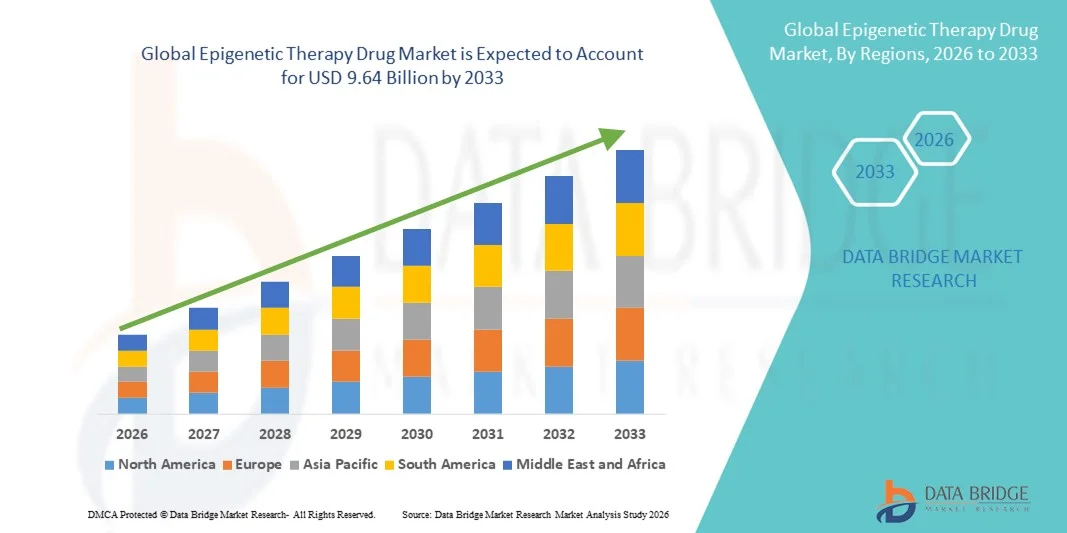
- As per Data Bridge Market Research Analysis the global Epigenetic Therapy Drug market size was valued at USD 3.68 billion in 2025 and is expected to reach USD 9.64 billion by 2033, at a CAGR of 12.80% during the forecast period
- The market growth is largely fueled by the increasing prevalence of cancers and other epigenetically linked disorders, along with advancements in targeted therapies and personalized medicine
- Furthermore, rising investments in research and development, expanding clinical trials, and growing adoption of combination therapies are accelerating the uptake of Epigenetic Therapy Drug solutions, significantly boosting market growth
Market Size & Forecast
- Global Market Value (2025): USD 3.68 billion
- Expected Market Value (2033): USD 9.64 billion
- Forecast CAGR (2026–2033): 12.80%
Epigenetic Therapy Drug Market Analysis
- Epigenetic therapy drugs, including histone deacetylase (HDAC) inhibitors and DNA methyltransferase (DNMT) inhibitors, are increasingly vital components of modern oncology and personalized medicine due to their targeted mechanism, ability to reverse epigenetic modifications, and potential in combination therapies
- The escalating demand for epigenetic therapy drugs is primarily fueled by the rising prevalence of cancer and other epigenetically linked disorders, growing clinical trial activities, and increasing adoption of precision medicine approaches
- North America dominated the epigenetic therapy drug market with the largest revenue share of 41.2% in 2025, characterized by advanced healthcare infrastructure, high R&D investments, and a strong presence of key pharmaceutical players, with the U.S. experiencing substantial growth in epigenetic therapy adoption, particularly in oncology and rare disease treatments, driven by innovations from both established companies and emerging biotech startup
- Asia-Pacific is expected to be the fastest-growing region in the epigenetic therapy drug market during the forecast period, with a projected CAGR of 13.8%, due to increasing healthcare investments, growing awareness of epigenetic therapies, expanding oncology treatment facilities, and the rising presence of multinational pharmaceutical companies in countries like China and India
- The HDAC inhibitors segment dominated the largest market revenue share of 38% in 2025, driven by their established efficacy in treating hematologic malignancies and growing clinical adoption. Increasing approvals for HDAC inhibitors in leukemia, lymphoma, and multiple myeloma enhance market demand
Report Scope and Epigenetic Therapy Drug Market Segmentation
|
Attributes |
Epigenetic Therapy Drug Key Market Insights |
|
Segments Covered |
|
|
Countries Covered |
North America
Europe
Asia-Pacific
Middle East and Africa
South America
|
|
Key Market Players |
|
|
Market Opportunities |
|
|
Value Added Data Infosets |
In addition to the insights on market scenarios such as market value, growth rate, segmentation, geographical coverage, and major players, the market reports curated by the Data Bridge Market Research also include in-depth expert analysis, patient epidemiology, pipeline analysis, pricing analysis, and regulatory framework. |
What is the Key Trend in the Epigenetic Therapy Drug Market?
Rising Focus on Personalized and Targeted Epigenetic Therapies
- A significant and accelerating trend in the global epigenetic therapy drug market is the increasing development and adoption of targeted therapies that modulate gene expression to treat various diseases such as cancer, autoimmune disorders, and rare genetic conditions
- For instance, leading pharmaceutical companies such as Celgene Corporation and Epizyme Inc. are investing in next-generation inhibitors and epigenetic modulators that provide high specificity with reduced side effects
- Researchers are increasingly combining epigenetic drugs with other treatment modalities, including immunotherapy and chemotherapy, to enhance therapeutic efficacy and overcome drug resistance
- Precision medicine initiatives and advanced biomarker identification are enabling patient-specific epigenetic therapy, improving treatment outcomes and fostering adoption across oncology and other therapeutic areas
- The trend toward oral formulations, long-acting injectables, and combination therapies is expanding patient convenience and adherence, driving the broader adoption of epigenetic therapeutics worldwide
Epigenetic Therapy Drug Market Dynamics
Driver
Growing Prevalence of Cancer and Genetic Disorders
- The increasing global incidence of cancers, hematologic malignancies, and genetic disorders is a primary driver for the growth of the Epigenetic Therapy Drug market. According to WHO, millions of new cases are diagnosed annually, creating urgent demand for innovative therapeutic approaches.
- For instance, Roche successfully launched Tazemetostat, an epigenetic inhibitor for EZH2-positive cancers, highlighting the potential of targeted epigenetic therapy to treat rare mutations effectively. Similarly, Pfizer has expanded clinical trials for BET inhibitors in hematologic malignancies, reflecting increasing investment and interest in epigenetic drug applications
- Rising awareness among healthcare providers and patients regarding the potential of epigenetic modulation to target underlying disease mechanisms is boosting market uptake
- Investment in research and development by key players, as well as government and private funding for clinical trials, is accelerating the introduction of new drugs into the pipeline
- Expansion of healthcare infrastructure in emerging economies and increased access to advanced therapies is contributing to broader patient adoption of epigenetic drugs
- The growing emphasis on personalized medicine and precision oncology, including companion diagnostic tools, is driving demand for therapies that can be tailored to individual genetic and epigenetic profiles
Restraint/Challenge
High Development Costs and Regulatory Hurdles
- The relatively high cost of developing epigenetic therapy drugs, including extensive preclinical and clinical trials, poses a significant challenge for market growth
- For instance, Novartis had to suspend certain HDAC inhibitor trials in Europe due to high development costs and regulatory delays. Similarly, the FDA’s extended review period for new epigenetic therapeutics, such as EZH2 inhibitors, illustrates the regulatory and financial hurdles faced by developers
- Stringent regulatory requirements and lengthy approval processes for novel epigenetic therapeutics can delay market entry and increase the financial risk for manufacturers
- Limited long-term safety and efficacy data for certain epigenetic drugs may hinder adoption among healthcare providers and patients, requiring extensive post-marketing surveillance
- Accessibility and affordability challenges in developing regions, coupled with the specialized administration and monitoring requirements for some therapies, can restrict widespread utilization
- Overcoming these challenges through strategic collaborations, cost-effective clinical development, and supportive regulatory frameworks will be critical to sustaining growth in the Epigenetic Therapy Drug market
Epigenetic Therapy Drug Market Scope
The market is segmented on the basis of drug class and application.
- By Drug Class
On the basis of drug class, the market is segmented into DNA Methyltransferase (DNMT) inhibitors, Histone Deacetylase (HDAC) inhibitors, Histone Methyltransferase (HMT) inhibitors, Bromodomain and Extra-Terminal (BET) inhibitors, and others. The HDAC inhibitors segment dominated the largest market revenue share of 38% in 2025, driven by their established efficacy in treating hematologic malignancies and growing clinical adoption. Increasing approvals for HDAC inhibitors in leukemia, lymphoma, and multiple myeloma enhance market demand. The drugs’ ability to modulate gene expression and improve patient outcomes strengthens adoption across hospitals and oncology clinics. Strong research pipelines and collaborations with biotechnology firms support innovation. Healthcare infrastructure in North America and Europe further boosts accessibility. Physician awareness programs and treatment guidelines favor HDAC inhibitors. Efficacy in combination therapies with chemotherapeutics and immunotherapies expands usage. Rising prevalence of hematologic cancers contributes to sustained demand. Established manufacturing processes and patent protections support market stability. Improved formulation and reduced side effects encourage prescriber confidence. Integration into clinical protocols for solid tumors also drives uptake.
The DNMT inhibitors segment is expected to witness the fastest CAGR of 10.8% from 2026 to 2033, fueled by advancements in epigenetic research and growing application in solid tumors. Increasing approvals for DNMT inhibitors in combination therapies are driving adoption. Clinical trials exploring efficacy in breast, lung, and colorectal cancers are expanding market potential. Enhanced drug delivery systems and reduced adverse effects encourage prescriber confidence. Emerging markets, particularly in Asia-Pacific, are witnessing growing demand due to rising cancer prevalence. Biotechnology companies are actively investing in R&D to expand the DNMT inhibitor pipeline. Patient awareness programs promoting epigenetic therapies enhance adoption. Integration with precision medicine approaches, including biomarker-driven treatment, boosts utilization. Academic and research collaborations accelerate development. The growing elderly population with higher cancer risk further fuels demand. Reimbursement policies in developed markets support accessibility. Overall, DNMT inhibitors are gaining prominence due to their versatility across multiple cancer types.
- By Application
On the basis of application, the market is segmented into leukemia, lymphoma, myeloma, solid tumors, breast cancer, lung cancer, colorectal cancer, prostate cancer, and others. The leukemia segment dominated the largest market revenue share of 32% in 2025, owing to the high prevalence of acute and chronic leukemia and the demonstrated efficacy of epigenetic therapies. Hematologic malignancies remain the primary indication for HDAC and DNMT inhibitors. Hospitals and specialized oncology centers extensively adopt these drugs for frontline and combination therapies. Clinical guidelines and physician recommendations reinforce utilization. Advances in formulation improving patient compliance support adoption. Pharmaceutical companies are increasing production and distribution to meet demand. Awareness campaigns and early diagnosis programs contribute to growth. Government and private funding for leukemia research also bolster market expansion. North America and Europe account for a significant share due to advanced healthcare infrastructure. The integration of epigenetic drugs into multi-drug regimens enhances treatment outcomes. Strategic partnerships between pharma companies and research institutions accelerate therapy adoption. Real-world evidence from ongoing trials further validates clinical efficacy.
The solid tumors segment is expected to witness the fastest CAGR of 11.2% from 2026 to 2033, driven by increasing clinical trials and approvals for epigenetic therapies targeting breast, lung, and colorectal cancers. Expansion into solid tumor indications is supported by growing research on tumor-specific epigenetic modifications. Pharmaceutical innovations in combination therapies enhance efficacy and reduce toxicity. Rising awareness among oncologists about epigenetic approaches fuels adoption. Emerging markets with improving cancer treatment infrastructure present growth opportunities. Integration with precision medicine and biomarker-based treatments drives clinical uptake. Patients increasingly demand novel therapies offering targeted outcomes. Academic collaborations and government-funded initiatives encourage therapy adoption. Ongoing R&D for BET and HMT inhibitors expands potential indications. Insurance and reimbursement policies support accessibility in developed regions. Technological advancements, including better drug delivery systems, improve patient compliance. Overall, solid tumors are becoming a rapidly growing segment due to expanding clinical validation and unmet medical needs
Epigenetic Therapy Drug Market Regional Analysis
- North America dominated the epigenetic therapy drug market with a revenue share of approximately 41.2% in 2025. The region’s growth is fueled by advanced healthcare infrastructure, high R&D investments, and a strong presence of key pharmaceutical players
- Rising adoption of epigenetic therapies in oncology, rare diseases, and personalized medicine supports market expansion. Hospitals, specialty clinics, and research centers are increasingly integrating innovative epigenetic drugs into treatment protocols
- Government support for advanced therapeutics and robust clinical trial frameworks further accelerate adoption. High patient awareness, strong reimbursement policies, and technological capabilities make the region highly favorable. Overall, North America represents a mature and innovation-driven market for epigenetic therapies
U.S. Epigenetic Therapy Drug Market Insight
The U.S. epigenetic therapy drug market captured the largest revenue share within North America, driven by substantial adoption of epigenetic therapies in oncology and rare disease treatments. Leading pharmaceutical companies and emerging biotech startups are investing in R&D, developing innovative therapeutics, and expanding clinical trials. Hospitals and specialty clinics are increasingly using these therapies to improve patient outcomes and personalized care. Favorable regulatory frameworks, high healthcare spending, and strong reimbursement mechanisms further encourage market growth. Integration of advanced diagnostics, precision medicine, and AI-assisted drug development enhances accessibility and efficacy. Overall, the U.S. remains the largest and most technologically advanced market in North America.
Europe Epigenetic Therapy Drug Market Insight
Europe’s epigenetic therapy drug market is projected to grow steadily at a significant CAGR, driven by increasing healthcare investments, rising awareness of epigenetic therapies, and adoption of innovative oncology treatments. Germany, France, and the U.K. are witnessing growing use of targeted epigenetic drugs in hospitals and specialty clinics. Expansion of clinical trials, government support for precision medicine, and well-established healthcare infrastructure further propel market growth. Rising prevalence of cancers, rare genetic disorders, and chronic diseases increases demand. Adoption of combination therapies, bioinformatics tools, and patient-centric care solutions supports market expansion. Overall, Europe represents a stable and innovation-oriented market.
U.K. Epigenetic Therapy Drug Market Insight
The U.K. epigenetic therapy drug market is expected to grow at a moderate CAGR, driven by increasing adoption of epigenetic therapies for oncology and rare diseases. Rising patient awareness, government support for clinical trials, and investments in precision medicine facilitate market expansion. Hospitals and specialized clinics are integrating advanced therapeutics to improve treatment outcomes. Regulatory support, reimbursement policies, and presence of global pharmaceutical players further enhance adoption. Focus on personalized medicine, combination therapies, and patient monitoring technologies is increasing. Overall, the U.K. demonstrates steady growth with a strong emphasis on innovation and healthcare quality.
Germany Epigenetic Therapy Drug Market Insight
Germany epigenetic therapy drug market remains a key European market, driven by advanced healthcare infrastructure, high awareness of epigenetic therapies, and well-established pharmaceutical R&D capabilities. Hospitals and specialty clinics are adopting targeted epigenetic drugs for oncology and rare disease treatments. Rising prevalence of cancers, strong clinical trial networks, and government support for innovative therapeutics contribute to growth. Integration of precision medicine, bioinformatics, and AI-assisted drug development further enhances adoption. Reimbursement frameworks and presence of leading multinational pharma companies support market expansion. Overall, Germany represents a high-potential and technologically advanced market in Europe.
Asia-Pacific Epigenetic Therapy Drug Market Insight
Asia-Pacific epigenetic therapy drug market is expected to be the fastest-growing region in the Epigenetic Therapy Drug market, with a projected CAGR of approximately 13.8% during the forecast period. Growth is driven by increasing healthcare investments, rising awareness of epigenetic therapies, and expanding oncology and rare disease treatment facilities in countries such as China, India, and Japan. Hospitals and specialty clinics are rapidly adopting advanced therapeutics, while multinational pharmaceutical companies are expanding their presence in the region. Government initiatives, rising healthcare spending, and improved access to precision medicine further support market penetration. Technological adoption, growing clinical trial networks, and rising patient awareness enhance market growth. Overall, Asia-Pacific offers significant opportunities for expansion.
Japan Epigenetic Therapy Drug Market Insight
Japan’s epigenetic therapy drug market is gaining momentum due to high healthcare spending, technological adoption, and strong demand for oncology and rare disease treatments. Hospitals, specialty clinics, and research centers are increasingly adopting epigenetic therapeutics. Government support for clinical trials, precision medicine initiatives, and patient awareness campaigns facilitate adoption. Rising prevalence of cancers and rare disorders further drives demand. Integration of AI-assisted drug development, diagnostics, and combination therapies improves treatment outcomes. Overall, Japan represents a fast-growing market within Asia-Pacific, driven by innovation and advanced healthcare infrastructure.
China Epigenetic Therapy Drug Market Insight
China epigenetic therapy drug market accounted for the largest revenue share in Asia-Pacific in 2025, driven by growing healthcare investments, increasing awareness of epigenetic therapies, and rising oncology treatment facilities. Hospitals and specialty clinics are expanding access to advanced therapeutics, while multinational pharmaceutical companies strengthen their regional presence. Government initiatives supporting innovation, clinical trials, and precision medicine further accelerate adoption. Rising prevalence of cancers and rare diseases fuels demand. Integration of digital healthcare tools, AI-assisted analysis, and combination therapies enhances market penetration. Overall, China is a highly dynamic and fast-growing market within Asia-Pacific.
Epigenetic Therapy Drug Market Share
The Epigenetic Therapy Drug industry is primarily led by well-established companies, including:
- Roche (Switzerland)
- Novartis (Switzerland)
- Merck & Co. (U.S.)
- Bristol-Myers Squibb (U.S.)
- GlaxoSmithKline (U.K.)
- Johnson & Johnson (U.S.)
- Seattle Genetics (U.S.)
- Syros Pharmaceuticals (U.S.)
- Constellation Pharmaceuticals (U.S.)
- Zai Lab (China)
- Hutchison MediPharma (China)
- BeiGene (China)
- Celgene (U.S.)
- Adaptimmune (U.K.)
- Pfizer (U.S.)
- Chugai Pharmaceutical (Japan)
- Arch Oncology (U.S.)
- Sepax Technologies (China)
- Lundbeck (Denmark)
- Incyte Corporation (U.S.)
Latest Developments in Global Epigenetic Therapy Drug Market
- In November 2023, Epic Bio’s epigenetic therapy candidate EPI‑321 received Orphan Drug Designation from the U.S. Food and Drug Administration (FDA) for the treatment of facioscapulohumeral muscular dystrophy (FSHD), recognising its potential as a novel therapy that targets the underlying epigenetic cause of the disease by modulating gene expression. This designation offered the program regulatory incentives, including potential market exclusivity and development support toward early‑phase clinical trials
- In November 2024, Epigenic Therapeutics announced that its EPI‑003 epigenetic inactivator candidate for chronic hepatitis B entered clinical development after receiving approval from New Zealand regulatory authorities (Medsafe) to initiate a clinical trial, marking another advancement in disease‑modifying epigenetic therapies beyond oncology
- In March 2025, Epicrispr Biotechnologies secured USD68 million in Series B financing led by Ally Bridge Group to support the initiation of clinical trials for EPI‑321, a first‑in‑class epigenetic therapy targeting FSHD, marking one of the sector’s largest investments in epigenetic modulation therapies and enabling plans for first‑in‑human studies in New Zealand and globally
- In April 2025, the U.S. FDA cleared the Investigational New Drug (IND) application for EPI‑321 by Epicrispr Biotechnologies, paving the way for a global Phase 1/2 clinical trial of this investigational epigenetic therapy for facioscapulohumeral muscular dystrophy (FSHD) later in 2025. The clearance followed Medsafe approval in New Zealand and is part of broader development plans
- In January 2025, Tune Therapeutics completed a US USD175 million Series B financing round to accelerate development of its epigenomic editing therapy platform centered on Tune‑401 for chronic hepatitis B, boosting research capabilities for targeted epigenetic treatments and supporting long‑term clinical programs

- Interactive Data Analysis Dashboard
- Company Analysis Dashboard for high growth potential opportunities
- Research Analyst Access for customization & queries
- Competitor Analysis with Interactive dashboard
- Latest News, Updates & Trend analysis
- Harness the Power of Benchmark Analysis for Comprehensive Competitor Tracking
Data collection and base year analysis are done using data collection modules with large sample sizes. The stage includes obtaining market information or related data through various sources and strategies. It includes examining and planning all the data acquired from the past in advance. It likewise envelops the examination of information inconsistencies seen across different information sources. The market data is analysed and estimated using market statistical and coherent models. Also, market share analysis and key trend analysis are the major success factors in the market report. To know more, please request an analyst call or drop down your inquiry.
The key research methodology used by DBMR research team is data triangulation which involves data mining, analysis of the impact of data variables on the market and primary (industry expert) validation. Data models include Vendor Positioning Grid, Market Time Line Analysis, Market Overview and Guide, Company Positioning Grid, Patent Analysis, Pricing Analysis, Company Market Share Analysis, Standards of Measurement, Global versus Regional and Vendor Share Analysis. To know more about the research methodology, drop in an inquiry to speak to our industry experts.
Data Bridge Market Research is a leader in advanced formative research. We take pride in servicing our existing and new customers with data and analysis that match and suits their goal. The report can be customized to include price trend analysis of target brands understanding the market for additional countries (ask for the list of countries), clinical trial results data, literature review, refurbished market and product base analysis. Market analysis of target competitors can be analyzed from technology-based analysis to market portfolio strategies. We can add as many competitors that you require data about in the format and data style you are looking for. Our team of analysts can also provide you data in crude raw excel files pivot tables (Fact book) or can assist you in creating presentations from the data sets available in the report.












