


Epigenetics-Based Therapeutics Market Size
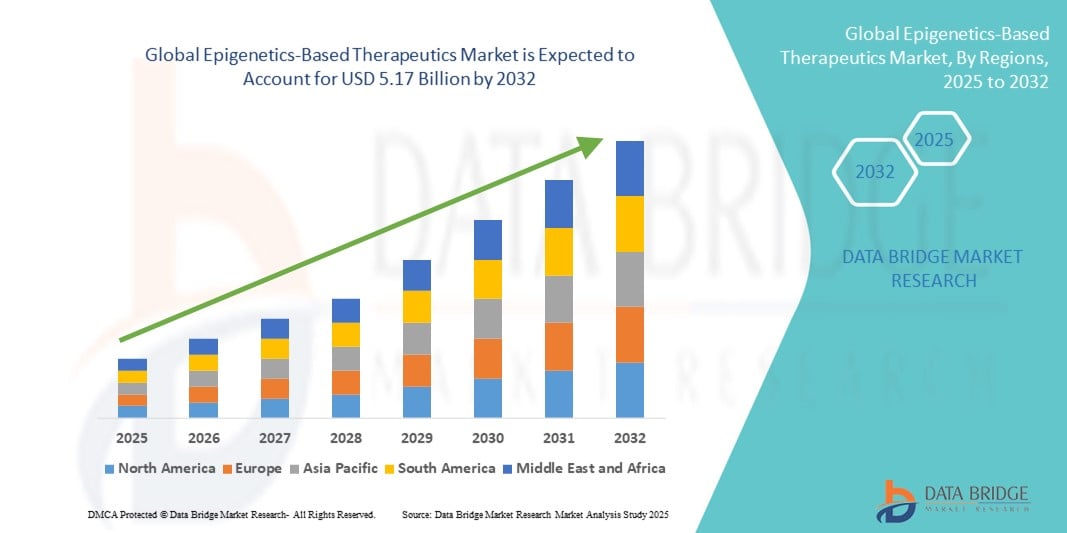
- The global epigenetics-based therapeutics market size was valued at USD 1.76 billion in 2024 and is expected to reach USD 5.17 billion by 2032, at a CAGR of 14.40% during the forecast period
- The market growth is primarily driven by increasing advancements in molecular biology and precision medicine, particularly in the development of therapies targeting epigenetic modifications such as DNA methylation and histone acetylation. These innovations are reshaping the landscape of cancer treatment and rare disease management
- Moreover, rising investments in personalized medicine and the growing prevalence of chronic conditions including oncology, neurological, and autoimmune disorders are accelerating the adoption of epigenetics-based therapeutics. This rising clinical and commercial interest is propelling the market forward and significantly expanding its global footprint
Epigenetics-Based Therapeutics Market Analysis
- Epigenetics-based therapeutics, which target reversible gene expression mechanisms without altering the DNA sequence, are becoming vital in the treatment of complex diseases, particularly cancer, due to their precision, reduced toxicity, and ability to modulate disease-related genes
- The growing demand for these therapies is primarily driven by the rising global cancer burden, advances in biomarker discovery, increasing focus on personalized medicine, and the expanding use of epigenetic modulators in clinical trials targeting oncology and non-oncology indications
- North America dominated the epigenetics-based therapeutics market with the largest revenue share of 38.29% in 2024, supported by strong R&D infrastructure, substantial investment from biopharmaceutical companies, and early adoption of innovative therapies, with the U.S. leading in approvals and trials of epigenetic drugs, particularly in hematologic and solid tumors
- Asia-Pacific is expected to be the fastest growing region in the epigenetics-based therapeutics market during the forecast period due to expanding biotechnology sectors, rising healthcare spending, increasing clinical research activity, and a growing population affected by cancer and chronic diseases
- The oncology segment dominated the epigenetics-based therapeutics market with a market share of 70.5% in 2024, driven by the high prevalence of cancer and the central role of epigenetic dysregulation in tumor development, making it a primary focus for epigenetic drug development and clinical pipeline expansion
Report Scope and Epigenetics-Based Therapeutics Market Segmentation
|
Attributes |
Epigenetics-Based Therapeutics Key Market Insights |
|
Segments Covered |
|
|
Countries Covered |
North America
Europe
Asia-Pacific
Middle East and Africa
South America
|
|
Key Market Players |
|
|
Market Opportunities |
|
|
Value Added Data Infosets |
In addition to the insights on market scenarios such as market value, growth rate, segmentation, geographical coverage, and major players, the market reports curated by the Data Bridge Market Research also include in-depth expert analysis, pricing analysis, brand share analysis, consumer survey, demography analysis, supply chain analysis, value chain analysis, raw material/consumables overview, vendor selection criteria, PESTLE Analysis, Porter Analysis, and regulatory framework. |
Epigenetics-Based Therapeutics Market Trends
Precision Medicine and Targeted Therapies Driving Therapeutic Innovation
- A significant and accelerating trend in the global epigenetics-based therapeutics market is the growing integration of epigenetic insights into precision medicine strategies, enabling more targeted, effective, and personalized treatment regimens across oncology and chronic disease landscapes. This trend is reshaping the pharmaceutical approach to gene regulation, leveraging therapies that modify DNA methylation, histone acetylation, and non-coding RNA pathways
- For instance, approved drugs such as azacitidine and decitabine which target DNA methylation have set the stage for next-generation epigenetic therapies that are more specific and have improved safety profiles. Companies such as Syndax Pharmaceuticals and Epizyme, Inc. are advancing HDAC and EZH2 inhibitors, respectively, to target cancers with defined epigenetic abnormalities
- Emerging epigenetic therapeutics are being developed to not only treat but also prevent disease progression by reprogramming abnormal gene expression. AI is increasingly being used in drug discovery platforms to identify new epigenetic targets and biomarkers. This includes predictive modeling for gene expression modulation and precision drug pairing based on individual epigenomic data
- The convergence of epigenetics with companion diagnostics is enabling clinicians to select patients most such asly to respond to epigenetic drugs, improving clinical outcomes. For example, epigenomic profiling tools help identify hypermethylated tumor suppressor genes or histone variants, allowing for more refined therapy selection and monitoring
- This trend toward targeted, biomarker-driven therapeutics is fundamentally transforming expectations in drug development and clinical oncology. Consequently, companies such as Constellation Pharmaceuticals and 4D Molecular Therapeutics are pursuing epigenetic treatments aimed at broader indications such as hematologic malignancies and rare genetic disorders
- The demand for epigenetics-based therapeutics that are precisely targeted and integrated into personalized treatment pathways is growing rapidly across both oncology and non-oncology fields, as researchers and clinicians seek more effective and durable solutions to complex diseases
Epigenetics-Based Therapeutics Market Dynamics
Driver
Rising Cancer Incidence and Expanding Precision Medicine Applications
- The escalating global incidence of cancer, alongside a growing emphasis on individualized treatment strategies, is a major driver for the increasing adoption of epigenetics-based therapeutics. These therapies offer a mechanism to reverse gene silencing or abnormal gene activation implicated in tumor growth
- For instance, clinical studies targeting epigenetic pathways in acute myeloid leukemia (AML) and non-small cell lung cancer (NSCLC) have demonstrated encouraging results, prompting major pharmaceutical companies to invest in the development of more selective and combinatory epigenetic drugs
- As healthcare systems globally shift toward personalized medicine, epigenetic therapies are gaining traction for their ability to fine-tune gene expression based on a patient’s unique molecular profile. This is further supported by advances in liquid biopsy and next-gen sequencing, which allow real-time monitoring of epigenetic changes
- In addition to oncology, growing research into the role of epigenetics in neurodegenerative diseases, autoimmune disorders, and metabolic syndromes is expanding therapeutic potential and commercial interest in this field. The flexibility to combine epigenetic therapies with other treatment modalities further enhances their appeal
- The increasing number of clinical trials, rising investments from biopharma, and regulatory support for orphan drugs are also accelerating innovation and commercialization of epigenetic-based treatments
Restraint/Challenge
Limited Target Specificity and High Development Costs
- One of the primary challenges in the epigenetics-based therapeutics market is achieving high target specificity without affecting healthy gene expression, which can lead to unintended off-target effects and toxicity. Unsuch as traditional drugs, epigenetic agents can impact large genomic regions, raising concerns about long-term safety and disease recurrence
- For instance, earlier-generation HDAC inhibitors have shown modest efficacy but also widespread effects on gene expression, prompting the need for more selective compounds with better therapeutic indices
- In addition, the complex biology of epigenetic regulation presents scientific and technical hurdles in identifying validated targets and developing biomarkers for treatment response. The lack of robust predictive markers can delay clinical development and affect regulatory approvals
- The cost of developing and validating these therapies combined with the expense of companion diagnostics can be prohibitively high, particularly for smaller biotech firms. This challenge is amplified in regions with limited R&D infrastructure and healthcare funding
- Furthermore, there is still limited awareness among clinicians regarding epigenetic therapies, which can slow clinical adoption. Addressing these barriers will require enhanced target validation techniques, greater collaboration between diagnostic and therapeutic developers, and increased education within the medical community
- Overcoming these challenges through improved molecular targeting, AI-driven drug design, and public-private investment will be essential for the sustained advancement and accessibility of epigenetics-based therapeutics
Epigenetics-Based Therapeutics Market Scope
The market is segmented on the basis of product, technique, application, and end user.
- By Product
On the basis of product, the epigenetics-based therapeutics market is segmented into kits & reagents, enzymes, instruments & accessories, and software & services. The kits & reagents segment dominated the market with the largest revenue share in 2024, driven by their foundational role in a wide range of epigenetic research and diagnostic workflows, including DNA methylation and chromatin analysis. These tools are essential for sample preparation, target identification, and biomarker validation, and are widely used across research institutions and pharmaceutical companies.
The software & services segment is anticipated to witness the fastest growth rate from 2025 to 2032, fueled by the rising demand for data-driven insights, bioinformatics platforms, and epigenetic sequencing analysis tools. The growing complexity of omics data and the need for integrated solutions for therapeutic design and validation are contributing to the rapid expansion of this segment.
- By Technique
On the basis of technique, the epigenetics-based therapeutics market is segmented into DNA methylation, histone modification, non-coding RNA, chromatin accessibility, and others. The DNA methylation segment held the largest market share in 2024 due to its well-established role in gene silencing, tumor suppression, and biomarker development. Widely used in cancer diagnostics and therapy, DNA methylation techniques such as bisulfite sequencing and methylation-specific PCR are considered gold standards in epigenetics.
The histone modification segment is expected to register the fastest CAGR from 2025 to 2032, driven by growing interest in histone acetylation and methylation as druggable targets in various cancers and neurological disorders. Advancements in ChIP-seq and mass spectrometry-based profiling are supporting the clinical translation of histone-targeting therapeutics.
- By Application
On the basis of application, the epigenetics-based therapeutics market is segmented into oncology, metabolic diseases, neurological disorders, cardiovascular diseases, autoimmune diseases, infectious diseases, and others. The oncology segment dominated the market in 2024 with market share of 70.5%, accounting for the highest revenue share, owing to the central role of epigenetic changes in tumorigenesis, cancer progression, and therapeutic resistance. Epigenetic drugs such as DNMT and HDAC inhibitors have already been approved for various hematologic malignancies, and ongoing trials continue to expand their scope in solid tumors.
The neurological disorders segment is projected to experience the fastest growth over the forecast period, as epigenetic dysregulation is increasingly implicated in conditions such as Alzheimer’s, Parkinson’s, and autism spectrum disorders. The potential for early intervention through gene expression modulation offers promising therapeutic avenues in CNS research.
- By End User
On the basis of end user, the epigenetics-based therapeutics market is segmented into academic & research institutions, pharmaceutical & biotechnology companies, contract research organizations (CROs), and hospitals & clinics. The academic & research institutions segment held the largest share in 2024, driven by a surge in basic epigenetic research, government funding for genomics studies, and academic collaborations with pharmaceutical companies. These institutions play a key role in elucidating epigenetic mechanisms and identifying novel therapeutic targets.
The contract research organizations (CROs) segment is expected to register the fastest CAGR from 2025 to 2032. As pharma and biotech companies increasingly outsource epigenetics-focused preclinical and clinical research, CROs are expanding their capabilities in genomic sequencing, biomarker discovery, and regulatory services. Their cost efficiency and expertise are accelerating the commercialization of epigenetic therapeutics.
Epigenetics-Based Therapeutics Market Regional Analysis
- North America dominated the epigenetics-based therapeutics market with the largest revenue share of 38.29% in 2024, supported by strong R&D infrastructure, substantial investment from biopharmaceutical companies, and early adoption of innovative therapies, with the U.S. leading in approvals and trials of epigenetic drugs, particularly in hematologic and solid tumors
- The region's pharmaceutical and biotechnology companies are heavily investing in the development of epigenetic drugs, particularly for oncology, supported by government funding and collaborative research initiatives
- High healthcare expenditure, favorable regulatory frameworks, and growing demand for targeted therapies have further strengthened market growth, positioning North America as a leading hub for innovation in epigenetics-based treatment strategies across cancer and non-oncology indications
U.S. Epigenetics-Based Therapeutics Market Insight
The U.S. epigenetics-based therapeutics market captured the largest revenue share of 79.6% in 2024 within North America, driven by a strong pharmaceutical pipeline, extensive clinical trial activity, and early regulatory approvals. The country’s advanced R&D infrastructure and widespread adoption of precision medicine are accelerating the development of epigenetic drugs, particularly for oncology and rare genetic disorders. Strategic collaborations between academic institutions and biotech firms, along with favorable funding from the NIH and private investors, continue to propel innovation in this sector.
Europe Epigenetics-Based Therapeutics Market Insight
The Europe epigenetics-based therapeutics market is projected to expand at a substantial CAGR throughout the forecast period, fueled by increasing government support for biomedical research and a rising burden of chronic diseases. Countries across the region are actively funding epigenetic research through national initiatives and cross-border collaborations. The demand for targeted, mechanism-based therapies is surging, especially in oncology, neurological, and autoimmune disorders, positioning Europe as a growing hub for epigenetic clinical trials and personalized treatment strategies.
U.K. Epigenetics-Based Therapeutics Market Insight
The U.K. epigenetics-based therapeutics market is anticipated to grow at a noteworthy CAGR during the forecast period, driven by an expanding biotech ecosystem and supportive regulatory pathways. With institutions such as the NHS embracing genomic medicine and initiatives such as Genomics England, the country is fostering the adoption of epigenetic therapies. The rising incidence of cancer and neurodegenerative conditions, along with strong public-private research partnerships, is accelerating drug development and market adoption in the U.K.
Germany Epigenetics-Based Therapeutics Market Insight
The Germany epigenetics-based therapeutics market is expected to expand at a considerable CAGR during the forecast period, supported by a strong foundation in pharmaceutical innovation and clinical diagnostics. The presence of leading academic research institutions and biotech startups focusing on epigenomics is enhancing the development of next-generation therapeutics. Increasing awareness of targeted therapies, favorable reimbursement policies, and robust investments in life sciences are driving the demand for epigenetics-based treatments across oncology and metabolic disease segments.
Asia-Pacific Epigenetics-Based Therapeutics Market Insight
The Asia-Pacific epigenetics-based therapeutics market is poised to grow at the fastest CAGR of 25.4% during the forecast period of 2025 to 2032, led by rising healthcare expenditure, growing prevalence of chronic diseases, and expanding R&D capabilities. Countries such as China, Japan, and South Korea are significantly increasing investment in precision medicine and genomics. Regional pharmaceutical companies are forming global partnerships to advance epigenetic pipelines, while government initiatives supporting biotechnology development are fostering a favorable growth environment.
Japan Epigenetics-Based Therapeutics Market Insight
The Japan epigenetics-based therapeutics market is gaining traction due to its strong focus on personalized medicine, an aging population, and a well-established regulatory environment. With government-led initiatives supporting advanced therapeutics, Japanese pharma companies are expanding their presence in epigenetics through research collaborations and novel drug development. The market is particularly focused on applications in oncology and neurological disorders, with a preference for high-precision, minimally invasive treatment modalities.
India Epigenetics-Based Therapeutics Market Insight
The India epigenetics-based therapeutics market accounted for the largest revenue share in Asia Pacific in 2024, driven by increasing investments in biotechnology, favorable government programs such as Make in India and Ayushman Bharat, and a high disease burden. Growing awareness of personalized treatment options and expanding clinical trial activity in epigenetics are bolstering market adoption. Indian pharmaceutical companies are increasingly engaging in global partnerships and investing in novel therapeutics to cater to both domestic and international markets.
Epigenetics-Based Therapeutics Market Share
The epigenetics-based therapeutics industry is primarily led by well-established companies, including:
- Epizyme, Inc. (U.S.)
- Chroma Medicine, Inc. (U.S.)
- Syndax Pharmaceuticals, Inc. (U.S.)
- Oryzon Genomics S.A. (Spain)
- 4SC AG (Germany)
- Syros Pharmaceuticals, Inc. (U.S.)
- EnLiven Therapeutics, Inc. (U.S.)
- Storm Therapeutics Ltd. (U.K.)
- MEI Pharma, Inc. (U.S.)
- GSK plc (U.K.)
- Novartis AG (Switzerland)
- Roche Holding AG (Switzerland)
- AbbVie Inc. (U.S.)
- Merck & Co., Inc. (U.S.)
- Johnson & Johnson and its affiliates (U.S.)
- Eisai Co., Ltd. (Japan)
- ValiRx Plc (U.K.)
- Zymeworks Inc. (Canada)
- Celgene Corporation (U.S.)
What are the Recent Developments in Global Epigenetics-Based Therapeutics Market?
- In May 2024, Epizyme, Inc., a fully integrated biopharmaceutical company focused on novel epigenetic therapies, announced the initiation of a global Phase III clinical trial for tazemetostat in combination with standard chemotherapy for relapsed/refractory follicular lymphoma. This advancement highlights the company’s strategic focus on expanding the indications of its FDA-approved EZH2 inhibitor, reflecting the growing potential and real-world impact of epigenetic drugs in hematologic malignancies
- In March 2024, Syndax Pharmaceuticals, Inc. reported promising Phase II results for its investigational drug, SNDX-5613, a menin inhibitor being evaluated for acute leukemias. The therapy demonstrated meaningful clinical responses in patients with KMT2A-rearranged and NPM1-mutant leukemias. These findings reinforce the role of epigenetic modulation in targeting genetically defined cancers and underscore Syndax’s commitment to addressing high unmet needs through precision oncology
- In February 2024, Constellation Pharmaceuticals, a MorphoSys company, expanded its collaboration with Royal Marsden NHS Foundation Trust to explore epigenetic therapies for prostate and breast cancer. This strategic initiative leverages translational research to identify biomarkers and optimize treatment outcomes, demonstrating how partnerships between biotech firms and academic institutions are advancing the frontiers of personalized epigenetic medicine
- In January 2024, Eisai Co., Ltd. announced a new clinical development program focused on its histone deacetylase (HDAC) inhibitor, E7438 (now known as erdafitinib), for the treatment of solid tumors with defined epigenetic signatures. The program emphasizes Eisai's broader oncology strategy to incorporate epigenetic profiling in drug development, reinforcing the therapeutic promise of HDAC inhibitors in precision oncology
- In December 2023, Chroma Medicine, a Boston-based startup, emerged from stealth with USD 135 million in Series B funding to advance its proprietary epigenetic editing platform. Unsuch as traditional gene editing, Chroma’s platform rewrites gene expression without altering the DNA sequence. The funding and platform launch mark a significant milestone in the evolution of epigenetic therapies, positioning the company as a pioneer in developing durable, reversible treatments for both rare and common diseases

- Interactive Data Analysis Dashboard
- Company Analysis Dashboard for high growth potential opportunities
- Research Analyst Access for customization & queries
- Competitor Analysis with Interactive dashboard
- Latest News, Updates & Trend analysis
- Harness the Power of Benchmark Analysis for Comprehensive Competitor Tracking
Data collection and base year analysis are done using data collection modules with large sample sizes. The stage includes obtaining market information or related data through various sources and strategies. It includes examining and planning all the data acquired from the past in advance. It likewise envelops the examination of information inconsistencies seen across different information sources. The market data is analysed and estimated using market statistical and coherent models. Also, market share analysis and key trend analysis are the major success factors in the market report. To know more, please request an analyst call or drop down your inquiry.
The key research methodology used by DBMR research team is data triangulation which involves data mining, analysis of the impact of data variables on the market and primary (industry expert) validation. Data models include Vendor Positioning Grid, Market Time Line Analysis, Market Overview and Guide, Company Positioning Grid, Patent Analysis, Pricing Analysis, Company Market Share Analysis, Standards of Measurement, Global versus Regional and Vendor Share Analysis. To know more about the research methodology, drop in an inquiry to speak to our industry experts.
Data Bridge Market Research is a leader in advanced formative research. We take pride in servicing our existing and new customers with data and analysis that match and suits their goal. The report can be customized to include price trend analysis of target brands understanding the market for additional countries (ask for the list of countries), clinical trial results data, literature review, refurbished market and product base analysis. Market analysis of target competitors can be analyzed from technology-based analysis to market portfolio strategies. We can add as many competitors that you require data about in the format and data style you are looking for. Our team of analysts can also provide you data in crude raw excel files pivot tables (Fact book) or can assist you in creating presentations from the data sets available in the report.













