


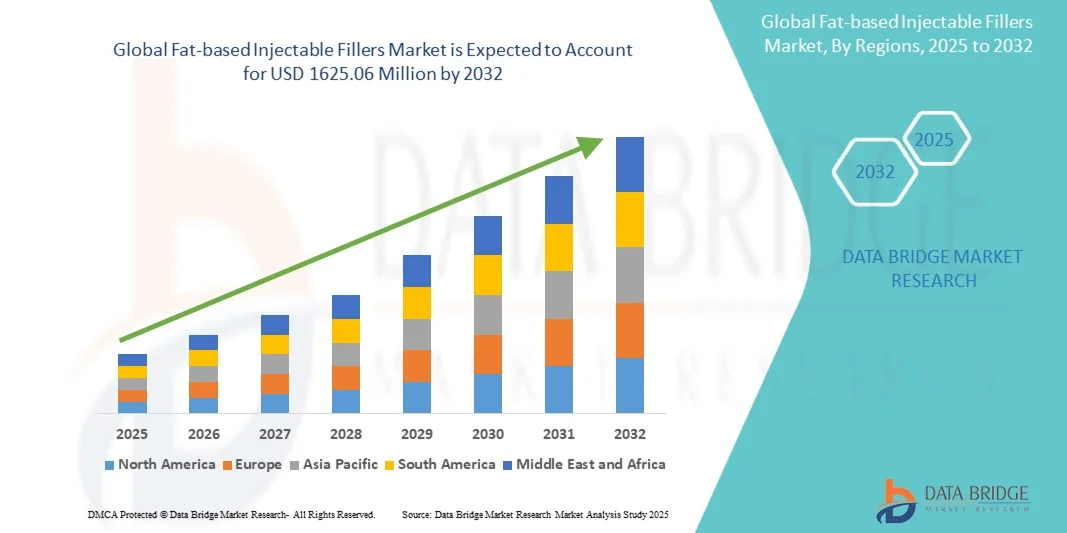
Fat-based Injectable Fillers Market Size
- The global fat-based injectable fillers market size was valued at USD 743.92 Million in 2024 and is expected to reach USD 1625.06 Million by 2032, at a CAGR of 10.26% during the forecast period
- The market growth is largely fueled by the rising demand for minimally invasive aesthetic procedures and continuous technological advancements in fat grafting and injection techniques, which are enhancing treatment outcomes and safety profiles
- Furthermore, increasing consumer preference for natural, long-lasting, and biocompatible filler solutions is positioning fat-based injectable fillers as a preferred choice in cosmetic and reconstructive procedures. These converging factors are accelerating the adoption of Fat-based injectable fillers solutions, thereby significantly boosting the industry's growth
Fat-based Injectable Fillers Market Analysis
- Fat-based injectable fillers, derived from autologous fat harvested from a patient’s own body, are increasingly recognized as a vital component of modern aesthetic and reconstructive medicine due to their natural composition, biocompatibility, and long-lasting volumizing effects. They are widely used in facial rejuvenation, body contouring, and post-surgical reconstruction to restore volume and improve contour definition
- The escalating demand for fat-based injectable fillers is primarily fueled by the growing popularity of minimally invasive cosmetic procedures, increasing awareness of natural aesthetic enhancement, and technological advancements in fat harvesting and purification techniques that improve safety and efficacy
- North America dominated the fat-based injectable fillers market with the largest revenue share of 41.2% in 2024, driven by a high number of aesthetic procedures, strong presence of skilled practitioners, and growing demand for natural, autologous filler materials. The U.S. continues to lead regional growth, supported by increased adoption of fat grafting techniques and rising consumer expenditure on cosmetic treatments
- Asia-Pacific is expected to be the fastest-growing region in the fat-based injectable fillers market during the forecast period, expanding at a notable CAGR, due to increasing medical tourism, expanding healthcare infrastructure, and a growing middle-class population seeking affordable aesthetic solutions in countries such as China, South Korea, and India
- The female segment dominated the market with a share of 78.9% in 2024, driven by a higher demand for facial rejuvenation, lip enhancement, and contour correction procedures among women
Report Scope and Fat-based Injectable Fillers Market Segmentation
|
Attributes |
Fat-based Injectable Fillers Key Market Insights |
|
Segments Covered |
|
|
Countries Covered |
North America
Europe
Asia-Pacific
Middle East and Africa
South America
|
|
Key Market Players |
|
|
Market Opportunities |
|
|
Value Added Data Infosets |
In addition to the insights on market scenarios such as market value, growth rate, segmentation, geographical coverage, and major players, the market reports curated by the Data Bridge Market Research also include in-depth expert analysis, patient epidemiology, pipeline analysis, pricing analysis, and regulatory framework. |
Fat-based Injectable Fillers Market Trends
“Enhanced Convenience Through AI and Advanced Regenerative Technologies”
- A significant and accelerating trend in the global fat-based injectable fillers market is the integration of artificial intelligence (AI), imaging technologies, and regenerative medicine techniques to enhance procedural precision, safety, and personalized outcomes. AI-driven modeling tools are increasingly being used to assess facial anatomy and predict post-injection results, enabling practitioners to plan treatments with higher accuracy and improved patient satisfaction
- For instance, several aesthetic technology companies have developed AI-powered facial analysis platforms that evaluate volume deficits and skin texture to optimize filler placement, supporting a data-driven approach to aesthetic enhancements. Similarly, advancements in automated injection systems are helping surgeons achieve consistent volume delivery and symmetry during fat transfer procedures
- AI integration also extends to research and development, where predictive algorithms assist in evaluating filler biocompatibility and long-term tissue integration. Some next-generation systems utilize AI to monitor post-treatment recovery trends and provide clinicians with predictive alerts about potential complications, improving patient safety and follow-up care
- The growing convergence of AI with regenerative aesthetics is promoting innovation in adipose-derived stem cell (ADSC) enrichment techniques and cellular viability analysis, ensuring that transplanted fat cells achieve optimal survival and natural rejuvenation effects
- This trend toward intelligent, biologically active filler systems is reshaping expectations in the cosmetic industry, emphasizing outcomes that look natural, last longer, and support tissue health. Consequently, manufacturers are focusing on developing advanced AI-compatible, bio-stimulative filler formulations that not only restore volume but also stimulate collagen production and improve skin texture
- The rising demand for precision-based, AI-enhanced aesthetic treatments across both developed and emerging markets underscores a transformative shift in the Fat-based Injectable Fillers landscape, aligning cosmetic enhancement with regenerative medicine and digital intelligence
Fat-based Injectable Fillers Market Dynamics
Driver
“Rising Demand for Natural, Long-lasting Aesthetic Results and Regenerative Procedures”
- The increasing preference for natural-looking cosmetic enhancements, coupled with the growing popularity of minimally invasive and regenerative aesthetic procedures, is a primary driver fueling the demand for Fat-based Injectable Fillers worldwide
- For instance, in May 2024, BioScience GmbH announced the expansion of its research partnerships to develop next-generation autologous fat transfer systems aimed at improving fat cell viability and integration. Such developments underscore the growing commitment of leading manufacturers to innovate in the regenerative aesthetic segment
- Fat-based fillers are gaining significant traction over synthetic dermal fillers as they utilize the patient’s own adipose tissue, reducing the risk of allergic reactions and ensuring longer-lasting, more natural results
- The global rise in cosmetic procedures such as facial contouring, breast augmentation, and scar correction is further driving adoption, particularly in clinics emphasizing safety and biocompatibility
- Furthermore, advancements in microfat and nanofat grafting techniques are enhancing precision and clinical outcomes, making these procedures increasingly appealing to patients seeking volume restoration and skin rejuvenation
- The synergy between regenerative medicine, stem-cell therapy, and aesthetic innovation is positioning Fat-based Injectable Fillers as a cornerstone of next-generation aesthetic medicine. The trend toward personalized treatments and autologous tissue use continues to boost market growth across developed and emerging regions
Restraint/Challenge
“High Procedure Costs, Limited Standardization, and Technical Complexities”
- Despite their growing popularity, fat-based injectable fillers face challenges related to high procedural costs, time-intensive preparation processes, and variability in fat graft survival rates, which can affect the consistency of aesthetic outcomes
- For instance, inconsistent fat harvesting and processing techniques across clinics often lead to uneven results or unpredictable resorption rates, limiting patient confidence and practitioner adoption
- Moreover, the lack of standardized protocols and the need for specialized training in fat handling and injection techniques can increase the risk of complications, particularly in smaller or less-equipped aesthetic facilities
- The high initial investment in advanced equipment—such as centrifugation systems, microcannulas, and cell isolation devices—also adds to the overall cost of treatment, making procedures less accessible to certain patient demographics
- While technology is gradually improving fat purification and viability assessment, challenges such as postoperative swelling, variable fat survival, and procedural downtime still deter some patients from opting for autologous fillers
- Overcoming these barriers requires increased clinical standardization, wider adoption of automated fat-processing systems, and further R&D into optimizing adipocyte survival rates. Expanding education, training, and cost-effective technologies will be critical to ensuring broader market penetration and sustained growth in the coming years
Fat-based Injectable Fillers Market Scope
The market is segmented on the basis of type, material, application, gender, and end user.
• By Type
On the basis of type, the Fat-based Injectable Fillers market is segmented into autologous fat injections, allogeneic fat injections, and others. The autologous fat injections segment dominated the largest market revenue share of 68.4% in 2024, driven by the rising preference for natural and biocompatible aesthetic solutions that minimize the risk of immune reactions or rejection. Patients increasingly favor autologous fat transfer procedures since they utilize the individual’s own adipose tissue, ensuring long-lasting results and promoting tissue regeneration. The growing popularity of lipofilling and microfat grafting for facial rejuvenation, breast reconstruction, and contour enhancement has strengthened this segment’s leadership. Moreover, advances in fat purification and cell viability technologies have improved fat retention rates, resulting in enhanced safety and aesthetic outcomes. The segment’s dominance is further fueled by increasing awareness of regenerative benefits associated with adipose-derived stem cells (ADSCs), making autologous fat injections the gold standard for natural volume restoration procedures.
The allogeneic fat injections segment is anticipated to witness the fastest growth rate of 18.9% CAGR from 2025 to 2032, owing to advancements in allogeneic tissue engineering, cryopreservation, and sterilization technologies. This growth is primarily driven by the growing interest in off-the-shelf, ready-to-use fat filler products that reduce procedural time and eliminate donor site morbidity. The increasing adoption of bioengineered allogeneic fillers in cosmetic and reconstructive surgeries, coupled with ongoing research into enhancing graft integration and reducing immune responses, supports this segment’s rapid expansion. In addition, rising acceptance in clinical trials and regulatory progress across developed markets are further boosting demand, positioning allogeneic fat injections as the next frontier in advanced aesthetic biomaterials.
• By Material
On the basis of material, the Fat-based Injectable Fillers market is segmented into micronized fat, nanofat, and macrofat.
The micronized fat segment held the largest market share of 45.7% in 2024, attributed to its superior injectability, natural texture, and versatility in facial contouring procedures. Micronized fat offers a balanced composition of adipocytes and stromal vascular fractions, providing both volumizing and regenerative benefits. Surgeons favor this material for correcting mid-face volume loss, fine wrinkles, and periorbital hollowing, as it integrates well with host tissues and yields natural-looking results. Its ability to retain cellular viability while maintaining smooth flow characteristics during injection makes it a preferred choice for aesthetic professionals. Furthermore, advancements in mechanical emulsification and filtration technologies have improved the consistency and retention of micronized fat, reinforcing its widespread clinical use in aesthetic and reconstructive treatments.
The nanofat segment is projected to witness the fastest CAGR of 20.3% from 2025 to 2032, driven by its growing utilization in regenerative dermatology and skin rejuvenation therapies. Nanofat, rich in adipose-derived stem cells and growth factors, promotes collagen synthesis and enhances skin elasticity. It is increasingly being used for fine-line correction, scar revision, and skin texture improvement without significant volumizing effects. The rising adoption of nanofat injections for minimally invasive facial procedures and regenerative applications, along with ongoing R&D into cellular enrichment and delivery techniques, supports its strong growth trajectory. The segment’s promise in anti-aging medicine and tissue regeneration continues to attract both clinicians and researchers globally.
• By Application
On the basis of application, the Fat-based Injectable Fillers market is segmented into facial line correction, lip enhancement, breast augmentation, buttock augmentation, and others. The facial line correction segment accounted for the largest market revenue share of 39.6% in 2024, propelled by the surging demand for minimally invasive facial rejuvenation procedures. Increasing consumer preference for natural and long-lasting aesthetic enhancements, along with the ability of fat fillers to restore youthful volume and elasticity, drives this segment’s dominance. Fat grafting is extensively used for nasolabial folds, cheeks, and under-eye hollows, offering superior biocompatibility and durability compared to synthetic fillers. The widespread availability of advanced fat harvesting and processing systems has further enhanced safety and patient satisfaction. Continuous advancements in microinjection techniques have made fat-based facial rejuvenation one of the most popular cosmetic procedures worldwide.
The breast augmentation segment is anticipated to record the fastest growth at a CAGR of 21.5% from 2025 to 2032, driven by growing acceptance of natural alternatives to silicone implants. Fat grafting provides a dual benefit of body contouring through liposuction and natural volume enhancement of the breasts. Rising awareness regarding implant-related complications and a growing preference for autologous options are fueling adoption. Technological innovations improving fat survival rates and volume retention have made this approach safer and more predictable. Increasing numbers of reconstructive breast surgeries post-mastectomy and the integration of regenerative medicine principles further bolster the segment’s growth outlook.
• By Gender
On the basis of gender, the Fat-based Injectable Fillers market is segmented into female and male. The female segment dominated the market with a share of 78.9% in 2024, driven by a higher demand for facial rejuvenation, lip enhancement, and contour correction procedures among women. The increasing focus on natural beauty, youthful appearance, and minimally invasive aesthetic procedures has amplified demand in this demographic. Women are also more likely to seek preventive aesthetic treatments at a younger age, contributing to steady market growth. The segment benefits from wide accessibility to specialized cosmetic clinics and growing social acceptance of aesthetic enhancements in both developed and emerging economies.
The male segment is expected to witness the fastest CAGR of 17.8% from 2025 to 2032, attributed to the increasing acceptance of cosmetic procedures among men and growing awareness of subtle facial enhancement techniques. Rising participation in professional and social spheres where appearance plays a key role is driving male consumers toward fat-based fillers for facial contouring, jawline definition, and skin revitalization. Marketing strategies targeting men and a shift toward gender-neutral aesthetic offerings further support this growth. In addition, advancements in minimally invasive techniques and shorter recovery times are encouraging more men to opt for fat-based filler procedures. The increasing influence of social media and celebrity endorsements promoting male grooming and aesthetic care is further amplifying this segment’s growth momentum.
• By End User
On the basis of end user, the Fat-based Injectable Fillers market is segmented into hospitals, cosmetic clinics, ambulatory surgical centers, and others. The cosmetic clinics segment dominated the market with a revenue share of 52.4% in 2024, supported by the increasing number of specialized aesthetic centers offering fat transfer procedures. These clinics provide advanced technologies, personalized treatment options, and specialized expertise, attracting a broad patient base seeking minimally invasive enhancements. The segment’s dominance is also driven by the availability of high-quality imaging and injection systems in private cosmetic facilities, enhancing procedural precision and safety. Furthermore, growing collaborations between aesthetic surgeons and regenerative medicine specialists have accelerated adoption within this segment.
The ambulatory surgical centers (ASCs) segment is projected to witness the fastest growth at a CAGR of 19.6% from 2025 to 2032, due to their cost-effective procedural environment, faster recovery times, and growing preference for outpatient treatments. ASCs are increasingly equipped with state-of-the-art fat processing and injection systems, allowing surgeons to perform fat grafting safely and efficiently. Rising patient inclination toward short-duration, minimally invasive surgeries and the expanding network of accredited ASCs globally are major contributors to this segment’s accelerated growth trajectory.
Fat-based Injectable Fillers Market Regional Analysis
- North America dominated the fat-based injectable fillers market with the largest revenue share of 41.2% in 2024, driven by the high number of aesthetic procedures, strong presence of skilled practitioners, and growing demand for natural, autologous filler materials
- Consumers in this region increasingly prefer fat-based injectable fillers due to their biocompatibility, long-lasting results, and lower risk of allergic reactions compared to synthetic alternatives. The region’s advanced healthcare infrastructure, robust adoption of minimally invasive cosmetic procedures, and the availability of specialized aesthetic clinics further fuel market expansion
- In addition, a rise in awareness regarding regenerative and anti-aging treatments, along with the increasing use of nanofat and micronized fat for facial rejuvenation, continues to strengthen North America’s market dominance
U.S. Fat-based Injectable Fillers Market Insight
The U.S. fat-based injectable fillers market accounted for the largest revenue share in 2024 within North America, supported by the rapid adoption of fat grafting techniques for facial and body contouring. The growing preference for autologous fat as a safe and natural filler alternative, coupled with rising disposable income and heightened aesthetic consciousness, is driving the market. Increasing FDA approvals for advanced lipofilling devices and technologies, combined with the presence of well-established cosmetic clinics and plastic surgery centers, further accelerates growth. The trend toward holistic, long-term facial rejuvenation and body enhancement procedures continues to strengthen the U.S. market outlook.
Europe Fat-based Injectable Fillers Market Insight
The Europe fat-based injectable fillers market is projected to expand at a significant CAGR during the forecast period, propelled by the growing preference for non-synthetic and biocompatible fillers. Countries such as Germany, France, and the U.K. are witnessing a steady rise in cosmetic procedures emphasizing natural-looking outcomes. Increased awareness about regenerative aesthetic procedures using stem-cell-enriched fat and advancements in liposuction and fat purification technologies support market expansion. Moreover, favorable government regulations on cosmetic procedures, coupled with the region’s aging population and demand for minimally invasive rejuvenation, are enhancing adoption across hospitals and specialty clinics.
U.K. Fat-based Injectable Fillers Market Insight
The U.K. fat-based injectable fillers market is anticipated to grow at a robust CAGR through 2032, driven by the rising acceptance of aesthetic treatments among both men and women and the demand for natural enhancement methods. Growing awareness about the benefits of autologous fat transfer for facial rejuvenation, breast augmentation, and scar correction is propelling adoption. The presence of skilled aesthetic surgeons, expanding cosmetic clinic chains, and technological improvements in fat processing systems further reinforce market growth in the country.
Germany Fat-based Injectable Fillers Market Insight
The Germany fat-based injectable fillers market is expected to record steady growth, supported by high patient awareness of regenerative medicine and the increasing preference for autologous materials. The country’s emphasis on safety, precision, and clinical efficacy aligns well with the use of purified fat-based fillers for long-term results. Moreover, innovations in nanofat and micronized fat applications for skin rejuvenation and anti-aging are gaining traction among both patients and practitioners.
Asia-Pacific Fat-based Injectable Fillers Market Insight
The Asia-Pacific fat-based injectable fillers market is poised to grow at the fastest CAGR from 2025 to 2032, fueled by the rising popularity of cosmetic enhancements, increasing disposable income, and rapid advancements in aesthetic technologies. The surge in medical tourism across countries such as China, South Korea, Thailand, and India, coupled with the availability of affordable procedures and skilled professionals, is significantly boosting market growth. Additionally, growing awareness about body contouring and facial rejuvenation, along with the adoption of advanced fat grafting techniques, supports the region’s strong growth trajectory.
Japan Fat-based Injectable Fillers Market Insight
The Japan fat-based injectable fillers market is witnessing considerable growth due to the country’s focus on minimally invasive aesthetic procedures and innovation in regenerative treatments. The aging population, coupled with high aesthetic consciousness, is driving demand for fat-based fillers that provide natural, lasting results. The integration of nanofat and stem-cell-enriched techniques for skin revitalization and fine-line correction is further stimulating the market in Japan.
China Fat-based Injectable Fillers Market Insight
The China fat-based injectable fillers market captured the largest revenue share within Asia-Pacific in 2024, driven by an expanding middle-class population, growing beauty consciousness, and increasing acceptance of cosmetic procedures among younger demographics. The country’s well-established manufacturing base for medical devices and fillers ensures accessibility and affordability. The rise of medical tourism, the presence of advanced cosmetic surgery centers, and ongoing innovation in fat purification and injection systems are propelling the adoption of fat-based injectable fillers in China.
Fat-based Injectable Fillers Market Share
The Fat-based Injectable Fillers industry is primarily led by well-established companies, including:
- Revance Therapeutics (U.S.)
- Galderma (Switzerland)
- Merz Aesthetics (Germany)
- Lipogems International S.p.A. (Italy)
- Anika Therapeutics, Inc. (U.S.)
- BioScience GmbH (Germany)
- Sinclair Pharma (U.K.)
- RegenLab SA (Switzerland)
- Medikan International (South Korea)
- Cellular Biomedicine Group (China)
- Teoxane Laboratories (Switzerland)
- Huons Co., Ltd. (South Korea)
- StemMedical A/S (Denmark)
- SCULPT Luxury Aesthetics (U.S.)
- Estetique International (France)
- NextMotion (France)
- Lavivida (Germany)
Latest Developments in Global Fat-based Injectable Fillers Market
- In February 2024, industry experts highlighted the “revolution” underway in facial fat grafting, noting that emerging techniques such as nanofat and stem-cell enriched fat transfer are rapidly gaining adoption in aesthetic practices worldwide. This presentation, delivered at a major plastic surgery conference, emphasized how the market for fat-based injectable fillers is evolving from simple volumizing toward regenerative, tissue-friendly treatments — supporting long-term retention and improved skin texture
- In March 2023, a report on dermal fillers stated that advances in fat grafting techniques and the growing safety profile of fat-based fillers are expected to drive significant growth in the sector over the coming years. The mention underscored that patient preference is shifting toward more natural-looking, autologous fat-based solutions instead of older synthetic fillers

- Interactive Data Analysis Dashboard
- Company Analysis Dashboard for high growth potential opportunities
- Research Analyst Access for customization & queries
- Competitor Analysis with Interactive dashboard
- Latest News, Updates & Trend analysis
- Harness the Power of Benchmark Analysis for Comprehensive Competitor Tracking
Data collection and base year analysis are done using data collection modules with large sample sizes. The stage includes obtaining market information or related data through various sources and strategies. It includes examining and planning all the data acquired from the past in advance. It likewise envelops the examination of information inconsistencies seen across different information sources. The market data is analysed and estimated using market statistical and coherent models. Also, market share analysis and key trend analysis are the major success factors in the market report. To know more, please request an analyst call or drop down your inquiry.
The key research methodology used by DBMR research team is data triangulation which involves data mining, analysis of the impact of data variables on the market and primary (industry expert) validation. Data models include Vendor Positioning Grid, Market Time Line Analysis, Market Overview and Guide, Company Positioning Grid, Patent Analysis, Pricing Analysis, Company Market Share Analysis, Standards of Measurement, Global versus Regional and Vendor Share Analysis. To know more about the research methodology, drop in an inquiry to speak to our industry experts.
Data Bridge Market Research is a leader in advanced formative research. We take pride in servicing our existing and new customers with data and analysis that match and suits their goal. The report can be customized to include price trend analysis of target brands understanding the market for additional countries (ask for the list of countries), clinical trial results data, literature review, refurbished market and product base analysis. Market analysis of target competitors can be analyzed from technology-based analysis to market portfolio strategies. We can add as many competitors that you require data about in the format and data style you are looking for. Our team of analysts can also provide you data in crude raw excel files pivot tables (Fact book) or can assist you in creating presentations from the data sets available in the report.













