


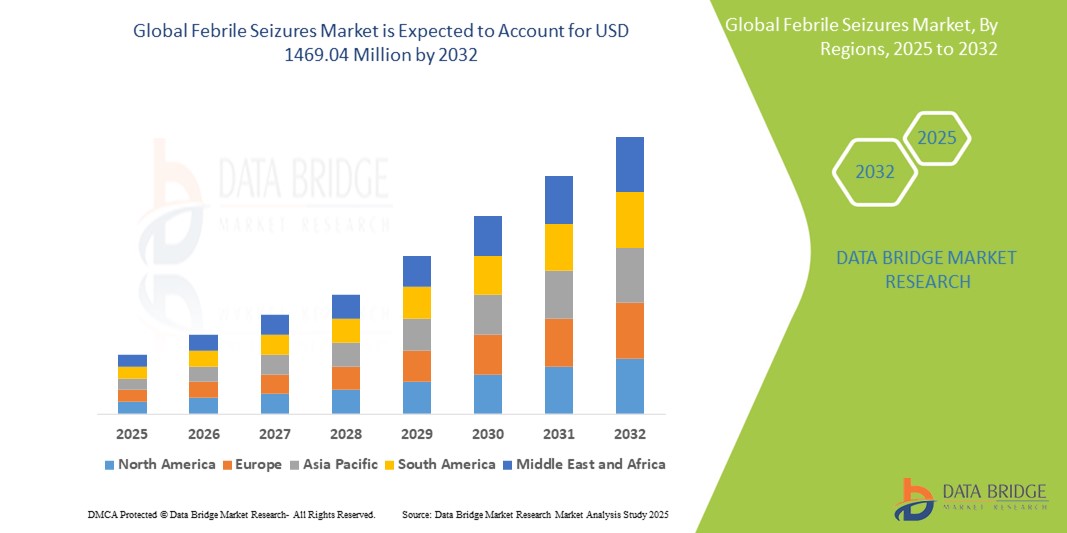
Febrile Seizures Market Size
- The global Febrile Seizures market size was valued at USD 949.99 million in 2024 and is expected to reach USD 1,469.04 million by 2032, at a CAGR of 5.60% during the forecast period
- The market growth is primarily driven by the increasing prevalence of febrile seizures in infants and young children, coupled with growing awareness among caregivers and healthcare providers about early diagnosis and intervention
- In addition, advancements in antiepileptic drugs, expanded pediatric healthcare infrastructure, and rising investments in neurological research are fostering the development of effective treatment and management options. These driving forces are propelling the adoption of febrile seizure therapies globally, thereby contributing significantly to the expansion of this specialized pharmaceutical market
Febrile Seizures Market Analysis
- Febrile seizures, which are convulsions triggered by fever in young children, are gaining increasing clinical attention as pediatric neurological disorders, prompting advancements in diagnostic protocols and therapeutic interventions across both hospital and outpatient settings due to their recurring nature and potential impact on child development
- The rising incidence of febrile seizures, especially among infants aged 6 months to 5 years, is the key factor fueling market demand, along with growing awareness among parents, expanded access to pediatric neurology services, and increased use of antipyretic and anticonvulsant therapies
- North America dominated the febrile seizures market, with the largest revenue share of 39.2% in 2024, supported by well-established healthcare infrastructure, early diagnosis practices, and active research into pediatric seizure management, with the U.S. contributing significantly through hospital-led treatment programs and preventive care strategies
- Asia-Pacific is expected to witness the fastest growth in the febrile seizures market during the forecast period, attributed to growing pediatric populations, increasing healthcare expenditure, and rising public health awareness campaigns
- Simple febrile seizures segment dominated the febrile seizures market with a market share of 61.8% in 2024, driven by its higher prevalence compared to complex seizures and generally benign nature, making them more commonly diagnosed and managed
Report Scope and Febrile Seizures Market Segmentation
|
Attributes |
Febrile Seizures Key Market Insights |
|
Segments Covered |
|
|
Countries Covered |
North America
Europe
Asia-Pacific
Middle East and Africa
South America
|
|
Key Market Players |
|
|
Market Opportunities |
|
|
Value Added Data Infosets |
In addition to the insights on market scenarios such as market value, growth rate, segmentation, geographical coverage, and major players, the market reports curated by the Data Bridge Market Research also include in-depth expert analysis, pricing analysis, brand share analysis, consumer survey, demography analysis, supply chain analysis, value chain analysis, raw material/consumables overview, vendor selection criteria, PESTLE Analysis, Porter Analysis, and regulatory framework. |
Febrile Seizures Market Trends
“Shift Toward Personalized and Preventive Pediatric Neurology”
- A significant and accelerating trend in the global febrile seizures market is the growing shift toward personalized and preventive care in pediatric neurology. This transformation is driven by increased understanding of genetic risk factors, improved diagnostics, and an emphasis on early intervention to minimize long-term neurological complications
- For instance, genetic screening tools are increasingly being utilized to identify children at higher risk of recurrent or complex febrile seizures, enabling timely interventions and tailored treatment plans. In addition, the use of predictive biomarkers and family history assessments is improving the precision of seizure management strategies
- Preventive approaches, including intermittent prophylactic anticonvulsant therapy and caregiver training on fever management, are gaining traction, particularly in children with a history of prolonged or clustered febrile seizures. This supports a more proactive rather than reactive model of care
- Digital health tools such as wearable temperature monitors and mobile seizure tracking apps are also enhancing parental vigilance and real-time management, enabling faster clinical response and better outcome tracking. These innovations are increasingly being integrated into pediatric care models in both hospital and homecare settings
- The trend toward early identification, customized treatment, and technology-enabled monitoring is redefining care standards for pediatric seizure disorders. Consequently, pharmaceutical and diagnostic companies are focusing on developing innovative solutions that cater to the specific needs of this vulnerable age group
- The demand for individualized, tech-assisted, and preventive solutions is growing steadily across both developed and emerging markets, as healthcare systems increasingly prioritize early diagnosis and child-centered neurological care
Febrile Seizures Market Dynamics
Driver
“Rising Prevalence and Awareness of Pediatric Neurological Disorders”
- The rising incidence of febrile seizures among infants and young children, coupled with growing awareness of pediatric neurological health, is a significant driver for the increasing demand for effective diagnosis and treatment options in this market
- For instance, national pediatric health initiatives in countries such as the U.S., Canada, and Japan have launched campaigns to educate parents on febrile seizure symptoms, emergency response, and when to seek medical attention. These efforts are improving early diagnosis rates and enhancing care delivery
- As healthcare systems enhance their pediatric infrastructure and expand access to neurologists, more families are receiving timely interventions, leading to greater adoption of both pharmacological treatments and diagnostic procedures
- Furthermore, the availability of effective drugs such as rectal diazepam and midazolam, as well as guidelines from bodies such as the American Academy of Pediatrics (AAP), has standardized treatment protocols, making them more accessible and trusted by clinicians
- The demand for supportive tools such as seizure diaries, pediatric EEG monitoring, and accessible antipyretic therapies is also growing, reflecting a comprehensive approach to febrile seizure management across care settings
Restraint/Challenge
“Diagnosis Complexity and Limited Access in Developing Regions”
- A major challenge impeding the growth of the febrile seizures market is the complexity of accurate diagnosis, particularly in differentiating between simple febrile seizures, complex seizures, and other neurological disorders such as epilepsy
- For instance, access to neurodiagnostic tools such as EEGs and MRIs remains limited in many low- and middle-income regions, leading to delayed or missed diagnoses. Without proper differentiation, children may receive inadequate or unnecessary treatments, impacting long-term health outcomes
- Another barrier is the shortage of specialized pediatric neurologists in rural or underserved areas, where general practitioners may lack the training to manage febrile seizures effectively. This contributes to inconsistent care and low treatment adherence
- Cost-related constraints further limit access to advanced therapies or preventive medications in many countries, especially when such treatments are not included in insurance coverage or public health programs
- While efforts are underway to improve training, infrastructure, and telemedicine reach, the disparity in diagnostic and treatment capabilities remains a substantial hurdle for achieving equitable care across global markets. Addressing these challenges will be essential for sustainable growth and broader access to febrile seizure management solutions
Febrile Seizures Market Scope
The market is segmented on the basis of type, cause, product type, and end user.
- By Type
On the basis of type, the febrile seizures market is segmented into simple and complex febrile seizures. The simple febrile seizures segment dominated the market with the largest market revenue share of 61.8% in 2024, owing to its high incidence in children aged 6 months to 5 years and relatively benign clinical course. These seizures are typically short in duration and do not recur within 24 hours, making them more frequently diagnosed and treated in outpatient or homecare settings.
The complex febrile seizures segment is anticipated to witness a fastest growth rate during the forecast period, driven by the increasing focus on specialized diagnosis and long-term neurological monitoring. Complex seizures, which last longer than 15 minutes or recur within 24 hours, often require in-depth investigation and hospital-based management, thus propelling demand for advanced diagnostic tools and neurologist-led interventions.
- By Cause
On the basis of cause, the febrile seizures market is segmented into immunization, viral infection, bacterial infection, and genetics. The viral infection segment held the largest market share of 45.7% in 2024, as fevers triggered by common viruses such as influenza, roseola, and adenoviruses are the leading contributors to febrile seizures. The prevalence of seasonal viral infections and limited immunity among infants and toddlers are key drivers behind this dominance.
The immunization segment is expected to witness steady growth over the forecast period, particularly due to ongoing vaccine expansion programs and parent concerns about post-vaccination febrile responses. Although rare, some vaccines can induce fever, leading to febrile seizures in susceptible children, thereby increasing demand for anticipatory treatment and monitoring.
- By Product Type
On the basis of product type, the febrile seizures market is segmented into treatment and diagnosis. The treatment segment dominated the market with a revenue share of 66.8% in 2024, driven by the widespread use of antipyretics, benzodiazepines, and supportive care to manage acute seizure episodes. Treatments such as rectal diazepam and buccal midazolam are commonly prescribed for immediate relief, especially in home and emergency settings.
The diagnosis segment is expected to grow steadily during forecast period, fueled by increased utilization of EEG, MRI, and genetic testing in cases of recurrent or atypical febrile seizures. Rising awareness and improved pediatric neurological infrastructure are contributing to early and accurate seizure assessment.
- By End User
On the basis of end user, the febrile seizures market is segmented into hospitals, specialty clinics, homecare, and others. The hospitals segment led the market with the highest share of 48.6% in 2024, owing to their role as primary centers for emergency seizure treatment, neurological evaluations, and inpatient care for complex cases. Access to advanced diagnostics and multidisciplinary expertise makes hospitals the preferred choice for both acute and long-term seizure management.
The homecare segment is anticipated to grow at the fastest pace during the forecast period, supported by the increasing availability of at-home treatments, wearable monitoring devices, and parent-administered emergency interventions. This trend is further fueled by the global push for decentralized pediatric care and cost-effective management strategies outside of clinical settings.
Febrile Seizures Market Regional Analysis
- North America held the largest revenue share of the febrile seizures market in 2024, accounting for 39.2%, supported by well-established healthcare infrastructure, early diagnosis practices, and active research into pediatric seizure management, with the U.S. contributing significantly through hospital-led treatment programs and preventive care strategies
- Parents and healthcare providers in the region place a strong emphasis on early detection, preventive care, and access to specialized neurology services, which has led to widespread adoption of standardized treatment approaches for febrile seizures.
- Further supporting market growth is the region's high healthcare spending, availability of advanced diagnostic tools, and presence of leading pharmaceutical and biotech companies focused on pediatric neurology, making North America a key hub for febrile seizure management across both hospital and homecare settings.
U.S. Febrile Seizures Market Insight
The U.S. febrile seizures market captured the largest revenue share of 81% in 2024 within North America, fueled by high awareness among caregivers and healthcare providers, robust access to pediatric care, and the presence of advanced neurological diagnostics. The market is driven by widespread implementation of clinical guidelines for early intervention, along with strong demand for antiepileptic treatments and pediatric neurology consultations. In addition, the U.S. healthcare system’s emphasis on preventive care and growing research funding into childhood seizure disorders continue to strengthen the market’s development.
Europe Febrile Seizures Market Insight
The Europe febrile seizures market is projected to expand at a substantial CAGR throughout the forecast period, primarily driven by rising pediatric healthcare investments and improved access to neurological services. The increase in public health awareness campaigns across countries, along with the availability of trained pediatric neurologists, supports early diagnosis and effective management. Europe’s growing commitment to child health, supported by national healthcare systems, is promoting the use of standardized seizure treatment protocols across hospitals and clinics.
U.K. Febrile Seizures Market Insight
The U.K. febrile seizures market is anticipated to grow at a noteworthy CAGR during the forecast period, driven by the National Health Service’s (NHS) strong focus on child health and neurological disorders. Growing parental awareness and frequent public health messaging on fever management in infants contribute to early intervention. The U.K.’s emphasis on equitable healthcare access and investments in pediatric neurology infrastructure continue to play a crucial role in the diagnosis and treatment of febrile seizures.
Germany Febrile Seizures Market Insight
The Germany febrile seizures market is expected to expand at a considerable CAGR during the forecast period, supported by the country’s robust pediatric care system and emphasis on innovation in medical diagnostics. With strong public health insurance coverage, most children have access to early screening and treatment. In addition, Germany’s leadership in pharmaceutical R&D fosters the availability of newer antiepileptic drugs and advanced monitoring tools, contributing to market growth in both urban and rural regions.
Asia-Pacific Febrile Seizures Market Insight
The Asia-Pacific febrile seizures market is poised to grow at the fastest CAGR of 24% during the forecast period of 2025 to 2032, driven by increasing birth rates, rising healthcare expenditure, and expanding access to pediatric services. Countries such as China, India, and Japan are investing in child healthcare infrastructure and early screening programs. The rapid adoption of digital health technologies and mobile-based health tracking solutions is also supporting early detection and timely treatment across the region.
Japan Febrile Seizures Market Insight
The Japan febrile seizures market is gaining momentum due to its advanced healthcare system, high public awareness, and integration of digital technologies in pediatric monitoring. The country’s aging population encourages preventive healthcare strategies for young families, and pediatricians often implement proactive fever management to prevent seizures. Integration with smart health tools and real-time communication between parents and providers is helping enhance response and reduce complications.
India Febrile Seizures Market Insight
The India febrile seizures market accounted for the largest market revenue share in Asia-Pacific in 2024, attributed to the country’s large pediatric population, growing urbanization, and increasing availability of affordable treatment options. Rising awareness about childhood neurological conditions, along with expanding government healthcare programs such as Ayushman Bharat, is enhancing access to diagnosis and medication. Strong domestic pharmaceutical production and increasing pediatric consultations are propelling market growth, especially in metro and tier-2 cities.
Febrile Seizures Market Share
The febrile seizures industry is primarily led by well-established companies, including:
- Sanofi (France)
- Cardinal Health (U.S.)
- Merck KGaA (Germany)
- Pfizer Inc. (U.S.)
- Johnson & Johnson Services, Inc. (U.S.)
- Abbott (U.S.)
- GSK plc (U.K.)
- Cephalon (U.S.)
- UCB S.A. (Belgium)
- F. Hoffmann-La Roche Ltd (Switzerland)
- Ranbaxy Medical Services Pvt Limited (India)
- Lonza (Switzerland)
- Biogen (U.S.)
- AbbVie Inc. (U.S.)
- Novavax (U.S.)
- CSL (Australia)
- Astellas Pharma Inc. (Japan)
- Panacea Biotec Ltd. (India)
What are the Recent Developments in Global Febrile Seizures Market?
- In May 2024, Pfizer Inc. announced the advancement of its pediatric neurology pipeline with the initiation of a clinical trial evaluating the efficacy of an innovative anticonvulsant therapy specifically designed for febrile seizure recurrence prevention. The trial targets high-risk pediatric populations and highlights Pfizer’s commitment to expanding treatment options for common childhood neurological disorders. This development reflects growing pharmaceutical interest in addressing the unmet needs in pediatric seizure management
- In April 2024, Boston Children’s Hospital launched a digital seizure monitoring initiative aimed at enhancing early detection and home-based management of febrile seizures. The program incorporates wearable devices and a mobile application that tracks body temperature and seizure activity in real time, facilitating faster clinical response and parental support. This innovation underscores the hospital’s role in pioneering technology-integrated pediatric care
- In March 2024, UCB S.A., a global biopharmaceutical company, expanded its access program in Southeast Asia to improve the availability of pediatric antiepileptic drugs used in febrile seizure management. The initiative includes physician training, parental education campaigns, and subsidized medication access, reflecting the company’s dedication to global health equity and support for vulnerable pediatric populations
- In February 2024, Neurelis, Inc. announced regulatory approval in select European markets for its intranasal diazepam formulation, designed for the acute treatment of seizure clusters in children, including those linked to complex febrile seizures. The approval is expected to improve emergency response options outside clinical settings, reinforcing Neurelis’ focus on rapid, user-friendly seizure solutions
- In January 2024, The Epilepsy Foundation partnered with pediatric neurologists across the U.S. to launch a national awareness campaign titled "Know the Signs – Act in Time", focused on educating caregivers about early symptoms, risk factors, and management of febrile seizures. The initiative also promotes first-aid training and access to reliable treatment resources, highlighting the growing emphasis on public education in seizure care

- Interactive Data Analysis Dashboard
- Company Analysis Dashboard for high growth potential opportunities
- Research Analyst Access for customization & queries
- Competitor Analysis with Interactive dashboard
- Latest News, Updates & Trend analysis
- Harness the Power of Benchmark Analysis for Comprehensive Competitor Tracking
Data collection and base year analysis are done using data collection modules with large sample sizes. The stage includes obtaining market information or related data through various sources and strategies. It includes examining and planning all the data acquired from the past in advance. It likewise envelops the examination of information inconsistencies seen across different information sources. The market data is analysed and estimated using market statistical and coherent models. Also, market share analysis and key trend analysis are the major success factors in the market report. To know more, please request an analyst call or drop down your inquiry.
The key research methodology used by DBMR research team is data triangulation which involves data mining, analysis of the impact of data variables on the market and primary (industry expert) validation. Data models include Vendor Positioning Grid, Market Time Line Analysis, Market Overview and Guide, Company Positioning Grid, Patent Analysis, Pricing Analysis, Company Market Share Analysis, Standards of Measurement, Global versus Regional and Vendor Share Analysis. To know more about the research methodology, drop in an inquiry to speak to our industry experts.
Data Bridge Market Research is a leader in advanced formative research. We take pride in servicing our existing and new customers with data and analysis that match and suits their goal. The report can be customized to include price trend analysis of target brands understanding the market for additional countries (ask for the list of countries), clinical trial results data, literature review, refurbished market and product base analysis. Market analysis of target competitors can be analyzed from technology-based analysis to market portfolio strategies. We can add as many competitors that you require data about in the format and data style you are looking for. Our team of analysts can also provide you data in crude raw excel files pivot tables (Fact book) or can assist you in creating presentations from the data sets available in the report.












