


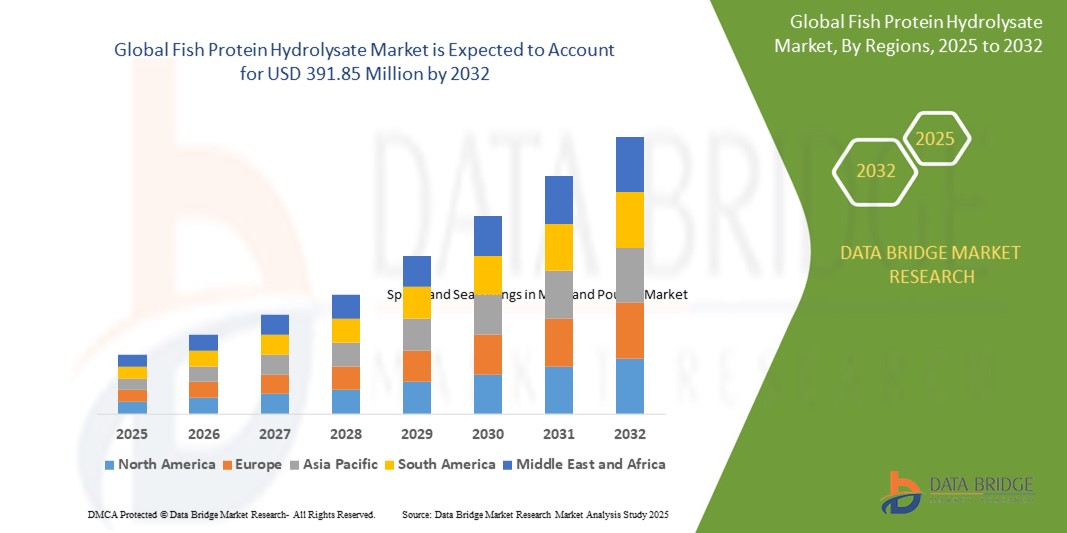
Fish Protein Hydrolysate Market Size
- The global fish protein hydrolysate market size was valued at USD 277.66 million in 2024 and is expected to reach USD 391.85 million by 2032, at a CAGR of 4.40% during the forecast period
- The market growth is primarily driven by increasing demand for high-protein, natural ingredients in animal feed, food, and cosmetics, coupled with advancements in hydrolysis technologies
- Growing consumer awareness of sustainable and nutrient-rich products, along with the rising application of fish protein hydrolysate in pharmaceuticals and agriculture, is further propelling market expansion
Fish Protein Hydrolysate Market Analysis
- Fish protein hydrolysate, derived from fish through hydrolysis processes, are highly valued for their rich amino acid profiles, bioavailability, and functional properties, making them essential in animal feed, food fortification, cosmetics, pharmaceuticals, and agricultural applications
- The market is fueled by the rising demand for sustainable protein sources, increasing focus on pet and livestock nutrition, and growing consumer preference for clean-label and functional food products
- Europe dominated the fish protein hydrolysate market with the largest revenue share of 38.5% in 2024, driven by stringent regulations promoting sustainable fishery by-products, advanced processing technologies, and high demand in animal feed and food industries, particularly in countries such as Norway and Denmark
- Asia-Pacific is expected to be the fastest-growing region during the forecast period, attributed to rapid urbanization, rising disposable incomes, and growing aquaculture industries in countries such as China, India, and Thailand
- The powder segment dominated the largest market revenue share of 68% in 2024, driven by its versatility, ease of storage, and transportation. Powdered fish protein hydrolysates are widely used in animal feed, pet food, and functional food products due to their concentrated protein content, extended shelf life, and ease of integration into various formulations
Report Scope and Fish Protein Hydrolysate Market Segmentation
|
Attributes |
Fish Protein Hydrolysate Key Market Insights |
|
Segments Covered |
|
|
Countries Covered |
North America
Europe
Asia-Pacific
Middle East and Africa
South America
|
|
Key Market Players |
|
|
Market Opportunities |
|
|
Value Added Data Infosets |
In addition to the insights on market scenarios such as market value, growth rate, segmentation, geographical coverage, and major players, the market reports curated by the Data Bridge Market Research also include in-depth expert analysis, pricing analysis, brand share analysis, consumer survey, demography analysis, supply chain analysis, value chain analysis, raw material/consumables overview, vendor selection criteria, PESTLE Analysis, Porter Analysis, and regulatory framework. |
Fish Protein Hydrolysate Market Trends
“Increasing Integration of Advanced Processing Technologies and Sustainability Practices”
- The global fish protein hydrolysate (FPH) market is experiencing a significant trend toward the integration of advanced processing technologies, particularly enzymatic hydrolysis, to enhance product quality and functionality
- These technologies enable precise breakdown of fish proteins into peptides and amino acids, improving bioavailability and nutritional profiles for various applications
- Advanced processing methods, such as enzymatic hydrolysis, allow for the production of high-quality hydrolysates with specific attributes such as enhanced solubility and bioactivity, catering to diverse industries
- For instance, companies are leveraging enzymatic hydrolysis to develop FPH for specialized applications, such as functional foods with antioxidant properties or pet food with improved digestibility
- The focus on sustainability is driving the use of fish by-products (heads, bones, and scales) in FPH production, aligning with circular economy principles and reducing waste in the seafood industry
- These advancements enhance the value proposition of FPH, making it more appealing to industries such as animal feed, cosmetics, and pharmaceuticals, while addressing consumer demand for sustainable and natural ingredients
Fish Protein Hydrolysate Market Dynamics
Driver
“Rising Demand for Natural and Sustainable Protein Sources”
- The growing consumer preference for natural, sustainable, and nutrient-rich protein sources is a major driver for the global fish protein hydrolysate market
- FPH is increasingly valued in applications such as animal feed, food, cosmetics, pharmaceuticals, and agriculture due to its rich amino acid profile and bioactive peptides, which support health and performance
- The expansion of the aquaculture industry, particularly in Asia-Pacific, is boosting demand for FPH as a high-quality feed ingredient to enhance fish growth and health
- Government initiatives promoting sustainable practices in the fisheries sector, especially in Europe, are encouraging the adoption of FPH derived from fish by-products
- The proliferation of clean-label trends and consumer awareness of health benefits, such as the antioxidant and anti-inflammatory properties of FPH, are further driving its use in dietary supplements and functional foods
Restraint/Challenge
“High Production Costs and Raw Material Supply Constraints”
- The high cost of production, particularly for enzymatic hydrolysis, which requires expensive enzymes and energy-intensive processes, poses a significant barrier to market growth, especially in cost-sensitive regions
- Integrating advanced processing technologies into existing production systems can be complex and costly, limiting adoption by smaller manufacturers
- In addition, the scarcity of raw materials, such as tuna from the Pacific Ocean or Atlantic salmon from Scandinavian countries, creates supply chain challenges and increases production costs
- Concerns over overfishing and environmental sustainability further complicate the sourcing of quality fish stocks, impacting the availability of raw materials for FPH production
- These factors can deter market expansion, particularly in emerging markets where cost sensitivity is high and infrastructure for sustainable sourcing is limited
Fish Protein Hydrolysate market Scope
The market is segmented on the basis of form, source, technology, application, and distribution channel.
- By Form
On the basis of form, the global fish protein hydrolysate market is segmented into paste, powder, and liquid. The powder segment dominated the largest market revenue share of 68% in 2024, driven by its versatility, ease of storage, and transportation. Powdered fish protein hydrolysates are widely used in animal feed, pet food, and functional food products due to their concentrated protein content, extended shelf life, and ease of integration into various formulations.
The liquid segment is expected to witness the fastest growth rate of 6.2% from 2025 to 2032, fueled by increasing demand in agriculture for liquid fertilizers and in aquaculture for liquid feed supplements. Liquid hydrolysates offer high solubility and ease of application, enhancing their adoption in these sectors.
- By Source
On the basis of source, the global fish protein hydrolysate market is segmented into tilapia, crustacean anchovy, sardine, Atlantic salmon, tuna, molluscs, and codfish. The anchovy segment dominated the market with a revenue share of 30% in 2024, owing to its abundant availability, high protein content, and cost-effectiveness for large-scale production. Anchovies are widely used in animal feed, dietary supplements, and functional foods due to their rich amino acid profile.
The Atlantic salmon segment is anticipated to experience the fastest growth rate of 20% from 2025 to 2032, driven by its high nutritional value, including omega-3 fatty acids and premium protein content. The increasing focus on sustainable aquaculture and utilization of salmon by-products further boosts this segment’s growth.
- By Technology
On the basis of technology, the global fish protein hydrolysate market is segmented into autolytic hydrolysis, acid hydrolysis, and enzymatic hydrolysis. The enzymatic hydrolysis segment held the largest market revenue share of 84% in 2024, attributed to its ability to produce high-quality, bioavailable hydrolysates with minimal contamination and preserved nutritional properties. This technology’s precision and alignment with clean-label trends drive its dominance.
The acid hydrolysis segment is expected to witness significant growth from 2025 to 2032, due to its cost-effectiveness and high extraction efficiency. Despite challenges such as potential nutrient degradation, advancements in process optimization are enhancing its adoption in cost-sensitive applications.
- By Application
On the basis of application, the global fish protein hydrolysate market is segmented into animal feed, food, cosmetics, pharmaceutical, and agriculture. The animal feed segment accounted for the largest market revenue share of 60% in 2024, driven by the rising demand for high-quality, sustainable protein sources in aquaculture and livestock feed. Fish protein hydrolysates offer superior digestibility and amino acid profiles, enhancing animal health and growth.
The cosmetics segment is anticipated to witness robust growth of 7.1% from 2025 to 2032, fueled by increasing consumer preference for natural ingredients in personal care products. Fish protein hydrolysates, rich in bioactive peptides, are valued for their skin-conditioning, anti-aging, and moisturizing properties.
- By Distribution Channel
On the basis of distribution channel, the global fish protein hydrolysate market is segmented into direct and indirect. The direct distribution channel segment held the largest market revenue share of 55% in 2024, driven by manufacturers’ focus on establishing direct relationships with end-users such as animal feed producers and pharmaceutical companies to ensure product quality and customization.
The indirect distribution channel segment is expected to witness the fastest growth rate of 5.8% from 2025 to 2032, propelled by the expansion of e-commerce platforms and third-party distributors. These channels enhance market reach, particularly in emerging economies with growing demand for fish protein hydrolysates.
Fish Protein Hydrolysate Market Regional Analysis
- Europe dominated the fish protein hydrolysate market with the largest revenue share of 38.5% in 2024, driven by stringent regulations promoting sustainable fishery by-products, advanced processing technologies, and high demand in animal feed and food industries, particularly in countries such as Norway and Denmark
- Consumers prioritize fish protein hydrolysates for their nutritional benefits, including high amino acid content and bioavailability, particularly in applications such as animal feed, food, and cosmetics, across regions with diverse dietary and industrial needs
- Growth is supported by advancements in hydrolysis technology, such as enzymatic processes, alongside rising adoption in both industrial and consumer segments, with a focus on sustainability and clean-label products
U.S. Fish Protein Hydrolysate Market Insight
The U.S. fish protein hydrolysate market is expected to experience rapid growth fueled by strong demand in aquaculture and pet food industries. Growing consumer awareness of the health benefits of fish protein hydrolysates, such as improved digestibility and amino acid profile, drives market expansion. The trend towards sustainable and clean-label products, coupled with advancements in enzymatic hydrolysis, further boosts both OEM and aftermarket segments.
Europe Fish Protein Hydrolysate Market Insight
The Europe fish protein hydrolysate market holds the largest share globally, fueled by advanced aquaculture practices and strong demand for sustainable protein sources in animal feed and pet food. Countries such as Germany, France, and the U.K. lead due to high consumer awareness of health benefits, such as improved digestion and immune support, and stringent regulations promoting eco-friendly products. The integration of hydrolysates in cosmetics and pharmaceuticals further drives market expansion.
U.K. Fish Protein Hydrolysate Market Insight
The U.K. market for fish protein hydrolysates is expected to experience rapid growth, driven by increasing demand for natural ingredients in pet food and dietary supplements. Rising awareness of the benefits of bioactive peptides for health and wellness, combined with a growing pet adoption rate, encourages market adoption. Evolving regulations favoring sustainable sourcing influence consumer preferences, balancing nutritional benefits with environmental compliance.
Germany Fish Protein Hydrolysate Market Insight
Germany is expected to witness significant growth in the fish protein hydrolysate market, attributed to its advanced food and feed processing industries and high consumer focus on health and sustainability. German consumers prefer enzymatically hydrolyzed products for their superior nutritional profile and application in functional foods and animal nutrition. The country’s emphasis on organic farming and clean-label products supports sustained market growth.
Asia-Pacific Fish Protein Hydrolysate Market Insight
The Asia-Pacific region is expected to witness the fastest growth rate, propelled by expanding aquaculture production and rising disposable incomes in countries such as China, India, and Japan. Growing awareness of the nutritional benefits of fish protein hydrolysates, including heat rejection and antioxidant properties, boosts demand in animal feed and food applications. Government initiatives promoting sustainable fisheries and food security further encourage the adoption of advanced hydrolysates.
Japan Fish Protein Hydrolysate Market Insight
Japan’s fish protein hydrolysate market is expected to witness rapid growth due to strong consumer preference for high-quality, enzymatically hydrolyzed products that enhance nutritional value and food safety. The presence of major food and feed manufacturers and the integration of hydrolysates in both OEM and aftermarket products accelerate market penetration. Rising interest in health supplements and sustainable agriculture also contributes to growth.
China Fish Protein Hydrolysate Market Insight
The China holds the largest share of the Asia-Pacific fish protein hydrolysate market, driven by rapid urbanization, increasing aquaculture output, and rising demand for nutrient-rich ingredients in animal feed and functional foods. The country’s expanding middle class and focus on health-conscious diets support the adoption of hydrolysates. Strong domestic manufacturing capabilities and competitive pricing enhance market accessibility.
Fish Protein Hydrolysate Market Share
The fish protein hydrolysate industry is primarily led by well-established companies, including:
- SOPROPECHE (France)
- Diana Group S.r.l. (Italy)
- Copalis (France)
- Scanbio Marine Group AS (Norway)
- Bio-marine Ingredients (Ireland)
- United Fisheries Limited (New Zealand)
- Shenzhen Taier (China)
- New Alliance Dye Chem Pvt. Ltd. (India)
- Neptune's Harvest (U.S.)
- Great Pacific BioProducts (Canada)
- BrownsFish Genesis (U.S.)
- Dramm Corporation (U.S.)
- U.S. Ag Florida, Inc. (U.S.)
- Hofseth BioCare ASA (Norway)
- Janatha Fish Meal & Oil Products (India)
What are the Recent Developments in Global Fish Protein Hydrolysate Market?
- In July 2023: Hill's Pet Nutrition, a leading pet food manufacturer, launched a new line of sustainable fish protein hydrolysate-based pet food products under its Science SeaDiet brand, incorporating Marine Stewardship Council (MSC)-certified Alaskan Pollock. This product launch aims to meet the rising consumer demand for eco-friendly and high-quality protein sources in premium pet nutrition, strengthening Hill's position in the global fish protein hydrolysate market
- In March 2023: Bio-marine Ingredients Ireland Ltd. announced a strategic collaboration with the Irish Research Council to conduct a 12-week feeding trial for a new fish protein hydrolysate feed supplement for Atlantic salmon. This partnership focuses on enhancing aquaculture sustainability by evaluating the product's impact on health and growth performance, aiming to open new avenues for sustainable feed solutions
- In January 2023: Hofseth BioCare ASA acquired a regional fish processing company in Norway to expand its production capacity for fish protein hydrolysate products used in nutraceuticals and animal feed. This acquisition strengthens Hofseth's supply chain and market presence, enabling it to meet growing global demand for high-quality, sustainable protein hydrolysates
- In November 2022: Scanbio Marine Group AS partnered with Verdane and Pioneer Point Partners LLP to enhance its fish waste management and hydrolysate production capabilities. This collaboration aims to position Scanbio as a leading provider of high-value fish protein hydrolysate products for aquaculture and animal feed, emphasizing sustainable sourcing and innovation
- In July 2022: Copalis Sea Solutions launched a new enzymatic hydrolysis-based fish protein hydrolysate product tailored for the cosmetics industry, targeting skin-rejuvenating and moisturizing applications. This product launch highlights Copalis' focus on diversifying applications of fish protein hydrolysates, capitalizing on the growing demand for natural ingredients in personal care products

- Interactive Data Analysis Dashboard
- Company Analysis Dashboard for high growth potential opportunities
- Research Analyst Access for customization & queries
- Competitor Analysis with Interactive dashboard
- Latest News, Updates & Trend analysis
- Harness the Power of Benchmark Analysis for Comprehensive Competitor Tracking
Global Fish Protein Hydrosylate Market, Supply Chain Analysis and Ecosystem Framework
To support market growth and help clients navigate the impact of geopolitical shifts, DBMR has integrated in-depth supply chain analysis into its Global Fish Protein Hydrosylate Market research reports. This addition empowers clients to respond effectively to global changes affecting their industries. The supply chain analysis section includes detailed insights such as Global Fish Protein Hydrosylate Market consumption and production by country, price trend analysis, the impact of tariffs and geopolitical developments, and import and export trends by country and HSN code. It also highlights major suppliers with data on production capacity and company profiles, as well as key importers and exporters. In addition to research, DBMR offers specialized supply chain consulting services backed by over a decade of experience, providing solutions like supplier discovery, supplier risk assessment, price trend analysis, impact evaluation of inflation and trade route changes, and comprehensive market trend analysis.
Data collection and base year analysis are done using data collection modules with large sample sizes. The stage includes obtaining market information or related data through various sources and strategies. It includes examining and planning all the data acquired from the past in advance. It likewise envelops the examination of information inconsistencies seen across different information sources. The market data is analysed and estimated using market statistical and coherent models. Also, market share analysis and key trend analysis are the major success factors in the market report. To know more, please request an analyst call or drop down your inquiry.
The key research methodology used by DBMR research team is data triangulation which involves data mining, analysis of the impact of data variables on the market and primary (industry expert) validation. Data models include Vendor Positioning Grid, Market Time Line Analysis, Market Overview and Guide, Company Positioning Grid, Patent Analysis, Pricing Analysis, Company Market Share Analysis, Standards of Measurement, Global versus Regional and Vendor Share Analysis. To know more about the research methodology, drop in an inquiry to speak to our industry experts.
Data Bridge Market Research is a leader in advanced formative research. We take pride in servicing our existing and new customers with data and analysis that match and suits their goal. The report can be customized to include price trend analysis of target brands understanding the market for additional countries (ask for the list of countries), clinical trial results data, literature review, refurbished market and product base analysis. Market analysis of target competitors can be analyzed from technology-based analysis to market portfolio strategies. We can add as many competitors that you require data about in the format and data style you are looking for. Our team of analysts can also provide you data in crude raw excel files pivot tables (Fact book) or can assist you in creating presentations from the data sets available in the report.













