


What is the Flexible Spinal Implants Market Size and Growth Rate?
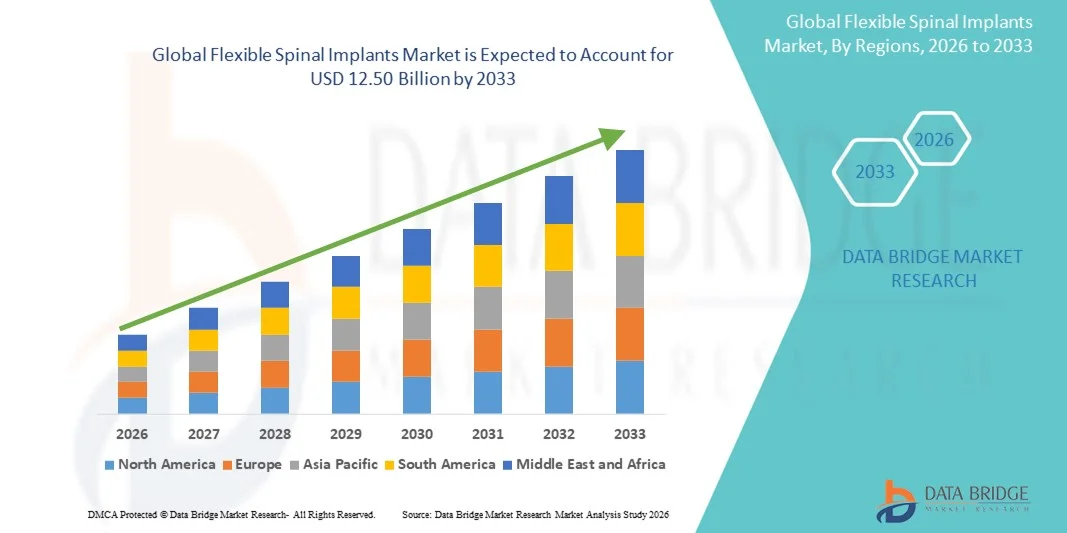
- The global flexible spinal implants market size was valued at USD 4.82 billion in 2025 and is expected to reach USD 12.50 billion by 2033, at a CAGR of 12.66% during the forecast period
- The market growth is largely fueled by the increasing prevalence of spinal disorders technological advancements in implant design and materials, and growing adoption of minimally invasive surgical procedures that preserve natural spine motion.
- Furthermore, rising demand for motion‑preserving surgical solutions that offer improved patient outcomes, alongside expanding healthcare infrastructure and higher patient awareness globally, is establishing flexible spinal implants as a preferred alternative to traditional rigid fixation systems. These converging factors are accelerating the uptake of flexible spinal implant solutions, thereby significantly boosting the industry’s growth
What are the Major Takeaways of Flexible Spinal Implants Market?
- Flexible spinal implants, designed to provide motion-preserving stabilization of the spine, are increasingly preferred over traditional rigid fixation systems in both lumbar and cervical procedures due to their ability to maintain spinal mobility, reduce adjacent segment degeneration, and enhance post-operative recovery
- The rising demand for flexible spinal implants is primarily driven by the increasing prevalence of spinal disorders such as degenerative disc disease, spinal stenosis, and scoliosis, coupled with growing adoption of minimally invasive spinal surgeries and advancements in biomaterials and implant design
- North America dominated the flexible spinal implants market with the largest revenue share of 38.7% in 2025, supported by advanced healthcare infrastructure, high patient awareness, and the presence of major implant manufacturers. The U.S. market witnessed significant growth due to innovations in motion-preserving technologies, expanding adoption of minimally invasive procedures, and increasing surgeon preference for flexible fixation systems
- Asia-Pacific is expected to be the fastest-growing region in the flexible spinal implants market during the forecast period, driven by rising healthcare expenditure, growing incidence of spinal disorders, expanding surgical facilities, and increasing patient access to advanced spinal care
- Rods segment dominated the flexible spinal implants market with a share of 32.9% in 2025, owing to their versatility, effectiveness in stabilizing spinal segments, and ease of implantation across multiple spinal levels
Report Scope and Flexible Spinal Implants Market Segmentation
|
Attributes |
Flexible Spinal Implants Key Market Insights |
|
Segments Covered |
|
|
Countries Covered |
North America
Europe
Asia-Pacific
Middle East and Africa
South America
|
|
Key Market Players |
|
|
Market Opportunities |
|
|
Value Added Data Infosets |
In addition to the insights on market scenarios such as market value, growth rate, segmentation, geographical coverage, and major players, the market reports curated by the Data Bridge Market Research also include in-depth expert analysis, patient epidemiology, pipeline analysis, pricing analysis, and regulatory framework |
What is the Key Trend in the Flexible Spinal Implants Market?
Advancements in Motion-Preserving Implant Technologies
- A significant and accelerating trend in the global flexible spinal implants market is the development of advanced motion-preserving implant technologies, allowing stabilization while maintaining natural spinal mobility For instance, NuVasive’s coflex interlaminar implant provides segmental stabilization without restricting motion, improving patient post-operative outcomes
- Modern implants utilize biomaterials such as PEEK and titanium alloys to enhance durability, reduce implant rejection, and optimize load distribution, supporting long-term spine health
- Integration with imaging-guided and navigation-assisted surgical systems enables precise placement of flexible implants, minimizing tissue damage and accelerating recovery
- Growing focus on personalized and patient-specific implants is driving innovation in customizable spinal rods and cages to match individual anatomy
- Increasing use of 3D printing technology allows creation of implants with complex geometries for better biomechanical performance and osseointegration
- This trend towards more biomechanically intelligent and patient-specific implants is reshaping surgeon preferences for minimally invasive spinal solutions
- The demand for flexible implants that preserve spinal motion and reduce adjacent segment degeneration is growing rapidly across both hospitals and specialized spinal surgery centers, as healthcare providers focus on improved clinical outcomes
What are the Key Drivers of Flexible Spinal Implants Market?
Rising Prevalence of Spinal Disorders and Minimally Invasive Surgeries
- The increasing prevalence of spinal disorders such as degenerative disc disease, scoliosis, and spinal stenosis, along with the growing adoption of minimally invasive surgeries, is a significant driver for flexible spinal implant demand For instance, Medtronic introduced its TDR (total disc replacement) solutions integrated with flexible rod systems, targeting motion preservation in lumbar surgeries
- Flexible implants offer clinical advantages such as reduced recovery times, lower risk of adjacent segment disease, and enhanced post-operative mobility, making them highly preferred over rigid fixation systems
- Furthermore, the growing number of trained spine surgeons and specialized spinal centers is expanding the adoption of flexible implants globally
- The rising healthcare expenditure and increasing patient awareness regarding advanced spinal treatment options are also propelling the market, especially in developed regions
- Technological collaborations between implant manufacturers and hospitals are accelerating product innovation and adoption of advanced spinal solutions
- Increasing government initiatives to improve spinal healthcare infrastructure in emerging markets are boosting accessibility and demand for flexible spinal implants
Restraint/Challenge
High Cost and Regulatory Approval Barriers
- The relatively high cost of flexible spinal implants compared to traditional rigid systems remains a significant challenge, limiting adoption in price-sensitive regions For instance, advanced implant systems from companies such as Globus Medical are priced higher due to sophisticated biomaterials and motion-preserving designs
- Regulatory approval processes and compliance with stringent safety standards can delay product launches and increase development costs, posing barriers for new market entrants
- Limited reimbursement policies in certain regions further constrain the widespread use of these implants, particularly in emerging markets
- Lack of surgeon awareness or training on newer motion-preserving systems can slow adoption in some regions
- Variability in patient outcomes and clinical data for newer flexible implants may reduce physician confidence and affect market penetration
- Overcoming these challenges through cost optimization, streamlined regulatory pathways, and increased insurance coverage will be crucial for sustained market growth
How is the Flexible Spinal Implants Market Segmented?
The market is segmented on the basis of type, application, and end user.
- By Type
On the basis of type, the flexible spinal implants market is segmented into rods, hooks, pedicle screws, plates, cages, and other implants. The rods segment dominated the market with the largest market revenue share of 32.9% in 2025, driven by their versatility and effectiveness in stabilizing spinal segments across thoracic, lumbar, and cervical regions. Rods are widely preferred by surgeons due to their ease of implantation and ability to support both rigid and flexible fixation systems. The segment also benefits from the availability of advanced materials such as PEEK and titanium alloys, which enhance durability, reduce rejection risk, and improve post-operative outcomes. Increasing adoption in minimally invasive spinal surgeries further contributes to its dominance. Rods are compatible with multiple fixation systems, making them a preferred choice for hospitals and specialty spine centers globally. The growing awareness among surgeons and patients about motion-preserving spinal stabilization is expected to maintain the segment’s leading position.
The pedicle screws segment is anticipated to witness the fastest growth rate from 2026 to 2033, driven by their ability to provide strong vertebral anchorage while enabling flexible motion preservation. Pedicle screws are increasingly integrated with rods and cages for complex deformity corrections and spinal fusion procedures. Their precision placement, often aided by navigation-assisted surgery, minimizes tissue trauma and improves surgical outcomes. The rising prevalence of degenerative spine disorders and increasing demand for minimally invasive procedures are boosting the adoption of pedicle screws. In addition, continuous technological advancements, such as expandable screws and improved biomaterials, are further accelerating growth. The growing acceptance in emerging markets with expanding spinal surgery infrastructure also contributes to their rapid market adoption.
- By Application
On the basis of application, the flexible spinal implants market is segmented into thoracic, lumbar, cervical, artificial discs, and other applications. The lumbar segment dominated the market in 2025, reflecting the high prevalence of lumbar spine disorders such as degenerative disc disease, spinal stenosis, and spondylolisthesis. Lumbar implants are commonly used due to the significant load-bearing requirements in the lower spine and the need for motion-preserving solutions to reduce adjacent segment degeneration. Hospitals and clinics prefer lumbar implants because they are compatible with a wide range of fixation systems and surgical techniques. Minimally invasive lumbar surgeries are increasingly performed, driving demand for flexible rods and pedicle screws. Patient awareness regarding lumbar treatments and post-operative mobility improvements further support the dominance of this segment. Lumbar spinal implants also benefit from strong clinical data supporting improved outcomes compared to rigid fixation.
The cervical segment is expected to witness the fastest growth rate from 2026 to 2033 due to increasing incidences of cervical spine injuries and degenerative disorders in the aging population. Cervical implants, including rods, screws, and cages, are used in both motion-preserving and fusion procedures. Advanced designs facilitate minimally invasive surgeries and reduce post-operative complications. Rising adoption in emerging markets, improvements in surgical techniques, and innovations in implant biomaterials are driving growth. In addition, cervical implants are increasingly used in outpatient and ambulatory surgical centers, enhancing accessibility. Continuous R&D and surgeon training programs are expected to further accelerate adoption during the forecast period.
- By End User
On the basis of end user, the flexible spinal implants market is segmented into hospitals and clinics, ambulatory surgical centers, and others. The hospitals and clinics segment dominated the market with the largest share in 2025, driven by higher surgical volumes, advanced spinal surgery infrastructure, and availability of specialized spine surgeons. Hospitals provide access to a wide range of spinal procedures, including complex minimally invasive and motion-preserving surgeries. The dominance of this segment is also supported by strong reimbursement coverage and patient trust in established healthcare facilities. Hospitals often act as centers for clinical trials and product adoption, further strengthening market leadership. Increasing awareness among patients regarding spinal health and post-operative rehabilitation contributes to the continued preference for hospitals as the primary end user.
The ambulatory surgical centers segment is expected to witness the fastest growth rate from 2026 to 2033, fueled by rising preference for outpatient spinal procedures due to reduced hospitalization costs and faster recovery times. These centers are increasingly equipped to handle minimally invasive surgeries using flexible spinal implants. The growing trend of same-day discharge procedures and improvements in surgical technologies enhance their attractiveness to both patients and surgeons. Expanding healthcare infrastructure in urban and semi-urban regions supports the rapid adoption of these facilities. Moreover, favorable government initiatives and insurance coverage for outpatient procedures contribute to the accelerated growth of this segment. Patient convenience and cost efficiency remain key factors driving the growth of ambulatory surgical centers in spinal implant applications.
What are the Major Takeaways of MaFlexible Spinal Implants Market?
- North America dominated the flexible spinal implants market with the largest revenue share of 38.7% in 2025, supported by advanced healthcare infrastructure, high patient awareness, and the presence of major implant manufacturers
- Patients and surgeons in the region highly value the clinical advantages of flexible implants, such as motion preservation, reduced recovery times, and lower risk of adjacent segment degeneration, which contribute to their growing preference over traditional rigid fixation systems
- This widespread adoption is further supported by the presence of major spinal implant manufacturers, strong reimbursement policies, and rising awareness about advanced spinal treatments, establishing flexible spinal implants as a preferred solution in hospitals and specialized spine centers
U.S. Flexible Spinal Implants Market Insight
The U.S. flexible spinal implants market captured the largest revenue share of 80% in 2025 within North America, fueled by high prevalence of spinal disorders and the increasing adoption of minimally invasive and motion-preserving spinal surgeries. Patients and surgeons are prioritizing implants that maintain spinal mobility while reducing post-operative complications. The availability of advanced spinal surgery infrastructure, well-trained surgeons, and strong reimbursement policies further propels market growth. Moreover, U.S. hospitals and specialty spine centers are actively integrating flexible implants with navigation-assisted and image-guided surgical systems, driving clinical adoption and innovation.
Europe Flexible Spinal Implants Market Insight
The Europe flexible spinal implants market is projected to expand at a substantial CAGR during the forecast period, primarily driven by rising prevalence of degenerative spinal conditions and the growing adoption of motion-preserving technologies. Increasing urbanization, coupled with the demand for minimally invasive spine procedures, is fostering implant adoption. European healthcare providers are also drawn to the improved patient outcomes and reduced post-operative recovery times offered by flexible implants. The region is witnessing growth across hospitals and ambulatory surgical centers, with implants being incorporated in both elective and corrective spinal surgeries.
U.K. Flexible Spinal Implants Market Insight
The U.K. flexible spinal implants market is anticipated to grow at a noteworthy CAGR during the forecast period, driven by an increasing preference for motion-preserving solutions and minimally invasive spinal procedures. Concerns regarding spinal degeneration and post-operative mobility are encouraging patients and surgeons to opt for flexible implants over traditional rigid systems. The U.K.’s advanced healthcare infrastructure, supportive insurance coverage, and growing number of spinal specialists are expected to continue stimulating market growth. Surgeons are increasingly leveraging flexible rods, pedicle screws, and cages for lumbar and cervical applications.
Germany Flexible Spinal Implants Market Insight
The Germany flexible spinal implants market is expected to expand at a considerable CAGR during the forecast period, fueled by increasing awareness of advanced spinal treatment options and a growing focus on patient-centric, motion-preserving solutions. Germany’s well-developed healthcare infrastructure, combined with emphasis on innovation and quality in medical devices, promotes the adoption of flexible implants across both hospitals and clinics. Integration with minimally invasive procedures, navigation-assisted surgery, and enhanced biomaterials is also gaining prevalence, with strong preference for implants that reduce recovery time and post-surgery complications.
Asia-Pacific Flexible Spinal Implants Market Insight
The Asia-Pacific flexible spinal implants market is poised to grow at the fastest CAGR of 24% during the forecast period of 2026 to 2033, driven by increasing prevalence of spinal disorders, rising healthcare expenditure, and expansion of surgical facilities in countries such as China, Japan, and India. Growing awareness among patients and surgeons regarding motion-preserving implants is boosting adoption. Government initiatives promoting advanced spinal care and digital health infrastructure are facilitating wider access. Furthermore, the region’s growing medical device manufacturing capabilities are improving affordability and accessibility of flexible spinal implants.
Japan Flexible Spinal Implants Market Insight
The Japan flexible spinal implants market is gaining momentum due to the country’s high technological adoption, aging population, and demand for advanced minimally invasive spine procedures. Japanese patients and surgeons prioritize implants that preserve spinal motion, reduce recovery time, and minimize surgical complications. The increasing number of smart hospitals and specialized spinal centers, along with integration of navigation-assisted surgery, is fueling market growth. Japan’s focus on patient safety and post-operative quality of life is further driving the adoption of flexible spinal implants across lumbar, cervical, and thoracic applications.
India Flexible Spinal Implants Market Insight
The India flexible spinal implants market accounted for the largest market revenue share in Asia-Pacific in 2025, attributed to rapid urbanization, rising middle-class population, and growing awareness of spinal health. India is emerging as a key market for advanced spinal treatments, with flexible implants increasingly adopted in hospitals, specialty clinics, and ambulatory surgical centers. The government’s push toward modern healthcare infrastructure and initiatives supporting minimally invasive procedures are key factors driving the market. Availability of cost-effective implants and increasing presence of domestic and international manufacturers are further propelling growth.
Flexible Spinal Implants Market Share
The Flexible Spinal Implants industry is primarily led by well-established companies, including:
- Medtronic (Ireland)
- Orthofix Medical Inc. (U.S.)
- RTI Surgical Holdings, Inc. (U.S.)
- Alphatec Holdings, Inc. (U.S.)
- Zimmer Biomet (U.S.)
- Paradigm Spine GmbH (Germany)
- SeaSpine Holdings Corporation (U.S.)
- Centinel Spine, Inc. (U.S.)
- Stryker (U.S.)
- Spinal Elements, Inc. (U.S.)
- ChoiceSpine LLC (U.S.)
- NuVasive, Inc. (U.S.
- B. Braun SE (Germany)
- Abbott (U.S.)
- K2M Group Holdings, Inc. (U.S.)
- Globus Medical, Inc. (U.S.)
- LDR Holding Corporation (U.S.)
- SpineGuard S.A. (France)
- Xenco Medical (U.S.)
- 4WEB Medical (U.S.)
What are the Recent Developments in Global Flexible Spinal Implants Market?
- In July 2025, IMPLANET secured China FDA (CFDA) approval for its innovative JAZZ range of spinal tape fixation systems, enabling distribution of hybrid spinal fixation solutions in the world’s largest potential device market and expanding implant options for spinal stability procedures
- In October 2024, Vy Spine announced FDA clearance of its advanced LumiVy™ OsteoVy™ PEKK Lumbar IBF device, a 3D‑printed lumbar interbody fusion implant that leverages novel lattice structures and osseointegration‑enhancing materials to address degenerative disc disease, broadening options for flexible lumbar spinal implant treatments
- In April 2024, Proprio partnered with the Biedermann Group to integrate advanced spinal procedural systems including augmented reality and AI‑driven visualization with spinal implant surgery solutions, aiming to improve surgical accuracy and patient outcomes in flexible spinal procedures
- In January 2024, Accelus launched its LineSider® Modular‑Cortical System, a new modular spinal construct platform designed to improve precision and surgical efficiency with interchangeable components for customizable implant configurations
- In June 2023, Premia Spine’s TOPS™ System (Total Posterior Spine System), a motion‑preserving lumbar spinal implant designed to stabilize the lower spine while maintaining mobility, received FDA Premarket Approval as an alternative to spinal fusion for patients with degenerative spondylolisthesis and lumbar spinal stenosis, marking a significant step forward in non‑fusion spinal implant technology
- https://echanges.dila.gouv.fr/OPENDATA/AMF/BWR/2025/07/FCBWR163887_20250715.pdf
- https://www.reanin.com/reports/flexible-spinal-implants-market
- https://g-medtech.com/news/vy-spine-secures-fda-clearance-for-innovative-3d-printed-lumivy-osteovy-pekk-lumbar-ibf/
- https://www.fda.gov/medical-devices/recently-approved-devices/tops-system-p220002?
- https://www.reanin.com/reports/flexible-spinal-implants-market

- Interactive Data Analysis Dashboard
- Company Analysis Dashboard for high growth potential opportunities
- Research Analyst Access for customization & queries
- Competitor Analysis with Interactive dashboard
- Latest News, Updates & Trend analysis
- Harness the Power of Benchmark Analysis for Comprehensive Competitor Tracking
Data collection and base year analysis are done using data collection modules with large sample sizes. The stage includes obtaining market information or related data through various sources and strategies. It includes examining and planning all the data acquired from the past in advance. It likewise envelops the examination of information inconsistencies seen across different information sources. The market data is analysed and estimated using market statistical and coherent models. Also, market share analysis and key trend analysis are the major success factors in the market report. To know more, please request an analyst call or drop down your inquiry.
The key research methodology used by DBMR research team is data triangulation which involves data mining, analysis of the impact of data variables on the market and primary (industry expert) validation. Data models include Vendor Positioning Grid, Market Time Line Analysis, Market Overview and Guide, Company Positioning Grid, Patent Analysis, Pricing Analysis, Company Market Share Analysis, Standards of Measurement, Global versus Regional and Vendor Share Analysis. To know more about the research methodology, drop in an inquiry to speak to our industry experts.
Data Bridge Market Research is a leader in advanced formative research. We take pride in servicing our existing and new customers with data and analysis that match and suits their goal. The report can be customized to include price trend analysis of target brands understanding the market for additional countries (ask for the list of countries), clinical trial results data, literature review, refurbished market and product base analysis. Market analysis of target competitors can be analyzed from technology-based analysis to market portfolio strategies. We can add as many competitors that you require data about in the format and data style you are looking for. Our team of analysts can also provide you data in crude raw excel files pivot tables (Fact book) or can assist you in creating presentations from the data sets available in the report.













