


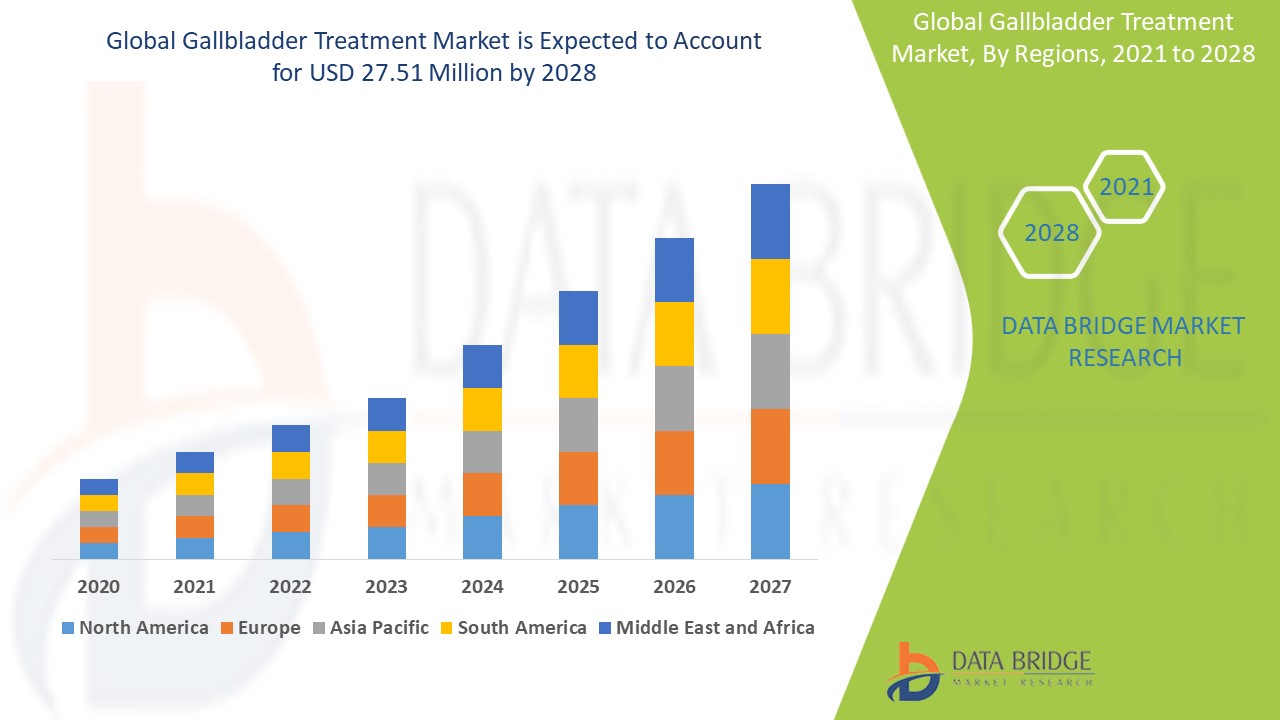
Gallbladder Treatment Market Analysis
The gallbladder treatment market is driven by increasing incidences of gallbladder diseases such as cholelithiasis and cholecystitis, leading to higher demand for treatment options. According to the National Library of Medicine, gallstones are a major health issue in developed countries, impacting 10% to 15% of the adult population. Advancements in minimally invasive surgical techniques, such as laparoscopic cholecystectomy, have improved patient outcomes and contributed to the market's growth. In addition, growing awareness about gallbladder health, alongside rising healthcare expenditure, is further fueling the demand for various treatment options.
The market is characterized by a range of therapeutic interventions, including surgical procedures, medication, and alternative treatments. Surgical procedures remain the most common form of treatment, with laparoscopic methods gaining prominence due to their reduced recovery times and minimal discomfort. Medication options for non-surgical treatment, such as ursodeoxycholic acid, are also in demand for patients who cannot undergo surgery.
The development of novel therapeutic agents and advancements in diagnostic tools are expected to create new opportunities within the market. For instance, the approval of new drugs to dissolve gallstones could offer non-invasive treatment alternatives. Moreover, increasing investment in research and development to better understand gallbladder diseases and improve treatment efficacy is likely to drive future market expansion. As the healthcare sector continues to innovate, the gallbladder treatment market is poised for sustained growth.
Gallbladder Treatment Market Size
The global gallbladder treatment market size was valued at USD 15.70 billion in 2024 and is projected to reach USD 23.54 billion by 2032, with a CAGR of 5.19% during the forecast period of 2025 to 2032. In addition to the insights on market scenarios such as market value, growth rate, segmentation, geographical coverage, and major players, the market reports curated by the Data Bridge Market Research also include depth expert analysis, patient epidemiology, pipeline analysis, pricing analysis, and regulatory framework.
Gallbladder Treatment Market Trends
“Increasing Prevalence of Gallbladder Conditions”
One significant trend driving the growth of the Gallbladder Treatment Market is the increasing prevalence of gallbladder conditions, such as gallstones, particularly in developed nations. With 10% to 15% of adults affected by gallstones, the demand for innovative gallstone treatment options has significantly risen. This growing health concern, along with an aging demographic, has led to a rise in healthcare awareness, prompting more individuals to pursue medical treatment. In addition, advancements in minimally invasive techniques, such as laparoscopic cholecystectomy, have transformed gallbladder surgery, making it safer, more efficient, and less invasive. This has resulted in greater patient preference for surgical solutions. These modern procedures offer quicker recovery, reduced complications, and minimal scarring compared to traditional surgery. In parallel, the expanding use of non-surgical alternatives, such as bile acid therapy for gallstones, is diversifying treatment options. With increased access to advanced treatments, rising disease prevalence, and better patient outcomes, these market trends are fueling the ongoing growth of the gallbladder treatment sector.
Report Scope and Gallbladder Treatment Market Segmentation
|
Attributes |
Gallbladder Treatment Key Market Insights |
|
Segments Covered |
|
|
Countries Covered |
U.S., Canada and Mexico, Germany, France, U.K., Italy, Russia, Spain, Denmark, Sweden, Norway, Rest of Europe, China, Japan, India, South Korea, Australia, Thailand, Rest of Asia-Pacific (APAC), Saudi Arabia, U.A.E, South Africa, Nigeria, Egypt, Kuwait, Rest of Middle East and Africa, Brazil, Argentina and Rest of South America |
|
Key Market Players |
Abbott (U.S.), Boston Scientific Corporation (U.S.), Cook (U.S.), Intuitive Surgical (U.S.), Stryker (U.S.), BD (U.S.), Medtronic (U.S.), Dornier MedTech (Germany), B. Braun SE (Germany), Sanofi (France), Bristol-Myers Squibb Company (U.S.), Lilly (U.S.), F. Hoffmann-La Roche Ltd (Switzerland), Pfizer Inc. (U.S.), Skylar Surgical Instruments (U.S.), Fortimedix Surgical (The Netherlands), Levita Magnetics (U.S.), Olympus Corporation (Japan), Simulab Corporation (U.S.) and Johnson & Johnson Services, Inc. (U.S.). |
|
Market Opportunities |
|
|
Value Added Data Infosets |
In addition to the insights on market scenarios such as market value, growth rate, segmentation, geographical coverage, and major players, the market reports curated by the Data Bridge Market Research also include depth expert analysis, patient epidemiology, pipeline analysis, pricing analysis, and regulatory framework. |
Gallbladder Treatment Market Definition
Gallbladder treatment refers to medical interventions used to address various gallbladder-related conditions, primarily gallstones, cholecystitis, and other disorders affecting the gallbladder. Treatment options may include surgical procedures such as cholecystectomy (removal of the gallbladder), typically performed using minimally invasive techniques such as laparoscopic surgery, as well as non-surgical treatments such as medication (for instance bile acid therapy) to dissolve gallstones. The goal of gallbladder treatment is to alleviate symptoms, prevent complications, and improve the patient’s quality of life.
Gallbladder Treatment Market Dynamics
Drivers
- Technological Advancements in Surgical Techniques
Innovations in surgical techniques, particularly in minimally invasive surgeries, have significantly boosted the gallbladder treatment market. Laparoscopic cholecystectomy, a minimally invasive procedure for gallbladder removal, has become the preferred treatment method due to its advantages over traditional open surgery. For instance, robot-assisted surgery, such as the use of the da Vinci Surgical System, offers enhanced precision and control during gallbladder surgeries, reducing complications and shortening recovery times. This shift towards less invasive methods has encouraged more patients to opt for surgical treatments, fueling market demand. Furthermore, the development of single-incision laparoscopic surgery (SILS) is further reducing scarring and recovery time, making the procedure even more appealing to patients. As these advanced technologies continue to evolve, they drive the adoption of surgical options, thereby accelerating market growth.
- Increased Availability of Non-Surgical Treatment Options
The expansion of non-invasive treatment alternatives for gallstones, such as bile acid therapy and shock wave lithotripsy, has been a major driver of the Gallbladder Treatment Market. For patients who are not candidates for surgery or wish to avoid invasive procedures, medications such as ursodeoxycholic acid can dissolve cholesterol-based gallstones over time. For instance, in the United States, ursodiol has been widely prescribed for patients with small, non-calcified gallstones, providing a less risky and more affordable option than surgery. Similarly, shock wave lithotripsy, which uses high-energy sound waves to break down gallstones, offers a non-invasive alternative that avoids surgery entirely. As these non-surgical treatments become more accessible and effective, they cater to a broader patient base, driving demand and contributing to the overall growth of the market. The increasing acceptance and availability of these treatments have expanded patient options, further fueling market expansion.
Opportunities
- Expansion of Non-Invasive Treatment Options
One significant opportunity in the Gallbladder Treatment Market lies in the development and expansion of non-invasive treatment alternatives. As patients increasingly seek options that avoid surgery, there is a growing demand for medications such as ursodeoxycholic acid (UDCA) and oral bile acids that can dissolve gallstones without the need for surgical intervention. For instance, in the U.S., ursodiol is used for patients with cholesterol-based gallstones, particularly those who are not ideal candidates for surgery. Furthermore, shock wave lithotripsy, which uses sound waves to break up stones, presents a non-invasive approach, particularly in regions such as Asia-Pacific where medical cost concerns make surgery less accessible. Developing and refining these non-surgical treatments presents a key market opportunity, as it aligns with the growing patient preference for less invasive options that offer quicker recovery times and fewer complications.
- Increasing Investment in Research and Development
Another significant opportunity for the gallbladder treatment market lies in increased investment in research and development (R&D) for novel treatment methods and diagnostic tools. Advancements in biotechnology and genetic therapies could provide new, targeted treatments for gallbladder diseases, improving efficacy and reducing side effects. For instance, researchers are exploring gene therapies and new drug formulations that could prevent or treat gallstone formation more effectively than current treatments. In addition, artificial intelligence (AI) and machine learning technologies are being integrated into diagnostic processes to enhance the accuracy and speed of gallbladder disease detection. Companies and research institutions that invest in these cutting-edge technologies stand to benefit by providing innovative solutions that cater to the evolving needs of the healthcare sector. As these advancements are integrated into clinical practice, they will drive demand for more effective, personalized treatments, creating substantial market growth opportunities.
Restraints/Challenges
- High Treatment Costs
One major restraint in the Gallbladder Treatment Market is the high cost associated with advanced treatments, particularly for surgical procedures. Laparoscopic cholecystectomy and robot-assisted surgeries often come with significant costs, including the expense of medical equipment, hospital stays, and recovery. In regions with limited healthcare budgets, such as parts of Africa and South Asia, the high costs of surgery and associated care may prevent patients from seeking treatment. For instance, in developing countries, the price of minimally invasive surgeries can exceed the financial means of a large portion of the population, leading to delayed treatment or reliance on traditional, less expensive methods with higher risks. This economic barrier hampers market growth in these regions, limiting access to modern gallbladder treatments.
- Limited Awareness in Emerging Markets
A significant challenge in the Gallbladder Treatment Market is the lack of awareness about gallbladder diseases and treatment options in emerging markets. In regions such as Sub-Saharan Africa and parts of Southeast Asia, many individuals may not recognize the symptoms of gallbladder diseases or seek medical care in time, resulting in the progression of the disease to more severe stages. For instance, in rural areas, cultural factors or limited access to healthcare facilities may lead to delayed diagnoses and a reliance on home remedies rather than professional treatments. This lack of awareness and medical infrastructure can hinder the adoption of advanced treatments such as laparoscopic surgery or non-invasive therapies, slowing market growth in these regions.
This market report provides details of new recent developments, trade regulations, import-export analysis, production analysis, value chain optimization, market share, impact of domestic and localized market players, analyses opportunities in terms of emerging revenue pockets, changes in market regulations, strategic market growth analysis, market size, category market growths, application niches and dominance, product approvals, product launches, geographic expansions, technological innovations in the market. To gain more info on the market contact Data Bridge Market Research for an Analyst Brief, our team will help you take an informed market decision to achieve market growth.
Gallbladder Treatment Market Scope
The market is segmented on the basis of disease, diagnosis, treatment and end users. The growth amongst these segments will help you analyze meagre growth segments in the industries and provide the users with a valuable market overview and market insights to help them make strategic decisions for identifying core market applications.
Disease
- Gallstones
- Cholelithiasis and Choledocholithiasis
- Gallbladder Polyps
- Gall Bladder Cancer
Diagnosis
- Ultrasound
- Blood Tests
- Computerized Tomography
- Cholangiography
- Hepatobiliary Scintigraphy
Treatment
- Surgery
- Drugs
End Users
- Hospitals and Gynecology Clinics
- Academic and Research Centers
Gallbladder Treatment Market Regional Analysis
The market is analysed and market size insights and trends are provided by country, disease, diagnosis, treatment and end users as referenced above.
The countries covered in the market report are U.S., Canada and Mexico, Germany, France, U.K., Italy, Russia, Spain, Denmark, Sweden, Norway, Rest of Europe, China, Japan, India, South Korea, Australia, Thailand, Rest of Asia-Pacific (APAC), Saudi Arabia, U.A.E, South Africa, Nigeria, Egypt, Kuwait, Rest of Middle East and Africa, Brazil, Argentina and Rest of South America.
North America is expected to dominate the gallbladder treatment market. This is primarily due to the high prevalence of gallbladder diseases, advanced healthcare infrastructure, and strong demand for both surgical and non-surgical procedures options in the region. The United States, in particular, leads in the adoption of minimally invasive surgeries such as laparoscopic cholecystectomy and robot-assisted surgeries, which are widely available in hospitals and healthcare centers. In addition, the rising healthcare awareness and access to cutting-edge diagnostic tools further contribute to the demand for gallbladder treatments. Also, North America benefits from a high level of healthcare expenditure, enabling both patients and healthcare providers to invest in the latest treatment technologies and therapies.
The Asia-Pacific (APAC) region is expected to exhibit the highest growth rate in the gallbladder treatment market. This growth is driven by several factors, including the increasing prevalence of gallbladder diseases, expanding healthcare infrastructure, and rising awareness about treatment options in countries such as India, China, and Japan. In particular, India and China are experiencing significant healthcare improvements, leading to better access to modern treatment options, including minimally invasive surgeries and non-surgical alternatives. In addition, the growing middle class in these countries is increasingly able to afford advanced treatments, contributing to market expansion.
The country section of the report also provides individual market impacting factors and changes in regulation in the market domestically that impacts the current and future trends of the market. Data points such as down-stream and upstream value chain analysis, technical trends and porter's five forces analysis, case studies are some of the pointers used to forecast the market scenario for individual countries. Also, the presence and availability of global brands and their challenges faced due to large or scarce competition from local and domestic brands, impact of domestic tariffs and trade routes are considered while providing forecast analysis of the country data.
Gallbladder Treatment Market Share
The market competitive landscape provides details by competitor. Details included are company overview, company financials, revenue generated, market potential, investment in research and development, new market initiatives, global presence, production sites and facilities, production capacities, company strengths and weaknesses, product launch, product width and breadth, application dominance. The above data points provided are only related to the companies' focus related to market.
Gallbladder Treatment Market Leaders Operating in the Market Are:
- Abbott (U.S.)
- Boston Scientific Corporation (U.S.)
- Cook (U.S.)
- Intuitive Surgical (U.S.)
- Stryker (U.S.)
- BD (U.S.)
- Medtronic (U.S.)
- Dornier MedTech (Germany)
- B. Braun SE (Germany)
- Sanofi (France)
- Bristol-Myers Squibb Company (U.S.)
- Lilly (U.S.)
- F. Hoffmann-La Roche Ltd (Switzerland)
- Pfizer Inc. (U.S.)
- Skylar Surgical Instruments (U.S.)
- Fortimedix Surgical (The Netherlands)
- Levita Magnetics (U.S.)
- Olympus Corporation (Japan)
- Simulab Corporation (U.S.)
- Johnson & Johnson Services, Inc. (U.S.)
Latest Developments in Gallbladder Treatment Market
- In October 2024, CMR Surgical announced that it has obtained Food and Drug Administration (FDA) approval for its Versius robotic system, with the initial indication for gallbladder removal surgery. As part of a multi-phase strategic plan, CMR will collaborate with select hospitals to introduce the robot in the United States.
- In June 2024, B. Braun Interventional Systems Inc. (BIS) introduced its new ACCEL All-Purpose and Biliary Drainage Catheters, featuring TrueGlide Hydrophilic Coating for percutaneous drainage. These catheters are designed to enhance both patient comfort and clinical performance. The ACCEL catheters feature large oval holes to optimize fluid drainage capacity, while the TrueGlide Hydrophilic Coating ensures smooth and easy catheter insertion.
- In April 2024, Dornier MedTech unveiled UroGPT, an Artificial Intelligence (AI) tool aimed at assisting kidney stone patients. This launch represents a significant step in the company’s commitment to utilizing digital innovation to offer patient-centric healthcare solutions. UroGPT showcases Dornier MedTech's focus on leveraging cutting-edge digital health technologies to enhance patient care and engagement. The tool offers urology patients on-demand guidance and valuable insights, helping them navigate the challenges of their condition with informed reassurance.
- In October 2023, Levita Magnetics announced the world’s first commercial use of its MARS platform. MARS, an innovative surgical system utilizing Levita’s proprietary Dynamic Magnetic Positioning technology, recently received FDA clearance for high-volume abdominal surgeries. This includes procedures such as laparoscopic bariatric surgery, cholecystectomy (gallbladder removal), as well as prostate and colorectal surgeries.
- In February 2023, Olympus Corporation announced its agreement to acquire Taewoong Medical Co., Ltd., a Korea-based manufacturer of medical devices, including gastrointestinal (GI) metallic stents. Metallic stents are commonly used to treat jaundice, a symptom of a blocked or narrowed biliary tract, often caused by biliary cancer.

- Interactive Data Analysis Dashboard
- Company Analysis Dashboard for high growth potential opportunities
- Research Analyst Access for customization & queries
- Competitor Analysis with Interactive dashboard
- Latest News, Updates & Trend analysis
- Harness the Power of Benchmark Analysis for Comprehensive Competitor Tracking
Data collection and base year analysis are done using data collection modules with large sample sizes. The stage includes obtaining market information or related data through various sources and strategies. It includes examining and planning all the data acquired from the past in advance. It likewise envelops the examination of information inconsistencies seen across different information sources. The market data is analysed and estimated using market statistical and coherent models. Also, market share analysis and key trend analysis are the major success factors in the market report. To know more, please request an analyst call or drop down your inquiry.
The key research methodology used by DBMR research team is data triangulation which involves data mining, analysis of the impact of data variables on the market and primary (industry expert) validation. Data models include Vendor Positioning Grid, Market Time Line Analysis, Market Overview and Guide, Company Positioning Grid, Patent Analysis, Pricing Analysis, Company Market Share Analysis, Standards of Measurement, Global versus Regional and Vendor Share Analysis. To know more about the research methodology, drop in an inquiry to speak to our industry experts.
Data Bridge Market Research is a leader in advanced formative research. We take pride in servicing our existing and new customers with data and analysis that match and suits their goal. The report can be customized to include price trend analysis of target brands understanding the market for additional countries (ask for the list of countries), clinical trial results data, literature review, refurbished market and product base analysis. Market analysis of target competitors can be analyzed from technology-based analysis to market portfolio strategies. We can add as many competitors that you require data about in the format and data style you are looking for. Our team of analysts can also provide you data in crude raw excel files pivot tables (Fact book) or can assist you in creating presentations from the data sets available in the report.













