


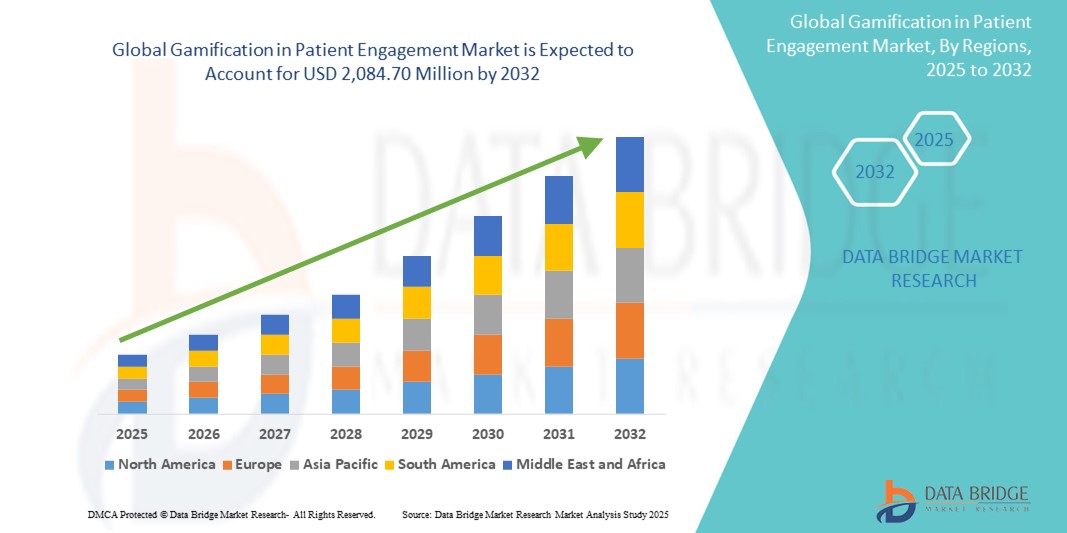
Gamification in Patient Engagement Market Size
- The global gamification in patient engagement market size was valued at USD 735.08 million in 2024 and is expected to reach USD 2,084.70 million by 2032, at a CAGR of 13.90% during the forecast period
- The market growth is largely driven by increasing emphasis on patient-centric care and the widespread integration of digital health technologies, such as mobile apps and wearable devices, which facilitate interactive, personalized healthcare experiences
- Furthermore, growing demand for tools that enhance patient adherence, motivation, and education especially in chronic disease management and preventive care is establishing gamification as a valuable tool for healthcare providers. These intersecting trends are accelerating the adoption of gamified healthcare platforms, thereby significantly boosting the industry's growth
Gamification in Patient Engagement Market Analysis
- Gamification in patient engagement, involving the use of game-based elements in healthcare applications, is becoming an increasingly integral part of modern digital health strategies due to its ability to enhance patient motivation, adherence, and overall experience across various therapeutic areas and wellness programs
- The growing adoption of mobile health apps, wearable devices, and remote monitoring tools is primarily fueling demand for gamified solutions that promote healthier behaviors, improve chronic disease management, and drive long-term patient participation in treatment plans
- North America dominated the gamification in patient engagement market with the largest revenue share of 41.7% in 2024, supported by advanced healthcare infrastructure, early adoption of digital health technologies, and strong presence of major players offering gamified platforms for physical and mental health improvement
- Asia-Pacific is expected to be the fastest growing region in the gamification in patient engagement market during the forecast period due to expanding mobile health access, rising smartphone penetration, and increasing focus on preventive healthcare
- Exercise games segment dominated the gamification in patient engagement market with a market share of 46.2% in 2024, driven by its effectiveness in promoting physical activity, rehabilitation, and patient adherence through interactive, device-integrated solution
Report Scope and Gamification in Patient Engagement Market Segmentation
|
Attributes |
Gamification in Patient Engagement Key Market Insights |
|
Segments Covered |
|
|
Countries Covered |
North America
Europe
Asia-Pacific
Middle East and Africa
South America
|
|
Key Market Players |
|
|
Market Opportunities |
|
|
Value Added Data Infosets |
In addition to the insights on market scenarios such as market value, growth rate, segmentation, geographical coverage, and major players, the market reports curated by the Data Bridge Market Research also include in-depth expert analysis, pricing analysis, brand share analysis, consumer survey, demography analysis, supply chain analysis, value chain analysis, raw material/consumables overview, vendor selection criteria, PESTLE Analysis, Porter Analysis, and regulatory framework. |
Gamification in Patient Engagement Market Trends
“Personalized Engagement Through AI and Digital Health Integration”
- A significant and accelerating trend in the global gamification in patient engagement market is the integration of artificial intelligence (AI), wearable technology, and mobile health platforms to deliver adaptive, personalized, and engaging healthcare experiences. This combination is significantly enhancing patient motivation, self-management, and adherence to treatment plans
- For instance, digital health apps such as mySugr and Mango Health integrate gamification with AI-driven insights to provide patients with real-time feedback, medication reminders, and reward-based health tracking systems, improving daily health routines and engagement
- AI integration in gamified healthcare tools enables platforms to learn user behavior patterns, adjust difficulty levels, and deliver personalized challenges or incentives based on health data, improving both engagement and health outcomes. In addition, gamified apps connected with wearable devices can track vitals and activities, converting real-time data into progress bars, badges, and leaderboards to drive sustained behavior change
- The seamless integration of gamification with broader digital health ecosystems—including electronic health records, telemedicine portals, and remote monitoring platforms—facilitates centralized management of patient data and engagement strategies. This allows healthcare providers to monitor adherence and intervene promptly when needed
- This trend towards intelligent, personalized, and connected gamification solutions is reshaping how patients interact with their health journeys. Consequently, companies such as Noom and Omada Health are expanding AI-enabled features to offer behavior-based interventions and scalable wellness programs
- The demand for gamified health solutions that offer real-time personalization, data integration, and continuous motivation is growing rapidly across chronic disease care, mental health, fitness, and preventive care sectors, as healthcare systems increasingly prioritize patient engagement and value-based outcomes
Gamification in Patient Engagement Market Dynamics
Driver
“Rising Demand for Patient-Centric Solutions and Chronic Disease Support”
- The growing burden of chronic illnesses and the global shift towards value-based, patient-centered healthcare are key drivers behind the rising adoption of gamification in patient engagement
- For instance, platforms such as Noom and Kaia Health use game-based models to support behavior change, promote therapy adherence, and enhance disease self-management, aligning with healthcare provider goals to reduce readmissions and improve long-term outcomes
- As patients increasingly expect interactive and intuitive digital health experiences, gamified platforms offer an engaging approach to treatment adherence, health education, and wellness tracking
- Furthermore, the proliferation of mobile devices, increased internet penetration, and improved digital literacy across populations are making gamified health applications more accessible and scalable
- The convenience of mobile-based reward systems, progress tracking, and personalized nudges drives user retention and satisfaction. This is especially relevant for younger demographics and chronic condition patients seeking ongoing motivation and simplified management tools
- As healthcare stakeholders continue to emphasize digital transformation, remote monitoring, and patient empowerment, gamification is becoming a key tool to enhance engagement across care pathways and age groups
Restraint/Challenge
“Data Privacy Concerns and Clinical Validation Limitations”
- Concerns regarding data privacy, regulatory compliance, and limited clinical validation pose major challenges to the broader adoption of gamification in patient engagement. As these platforms collect sensitive personal health information, compliance with frameworks such as HIPAA and GDPR is critical to ensure trust and legal adherence
- For instance, gamified apps that track medication adherence or activity levels must implement robust encryption protocols, transparent data-sharing policies, and user consent mechanisms to protect user data and build confidence among both patients and providers
- In addition, a lack of standardized outcome measures and insufficient clinical trials supporting the efficacy of many gamified interventions create barriers to widespread adoption, particularly in institutional healthcare settings
- High variability in app quality, limited integration with legacy EHR systems, and the absence of reimbursement models further restrict scalability. While some startups demonstrate short-term engagement success, long-term effectiveness in improving clinical outcomes remains under scrutiny
- Overcoming these challenges will require stronger regulatory oversight, rigorous clinical validation, and the development of interoperable, evidence-based gamification models that align with provider workflows and payer expectations
Gamification in Patient Engagement Market Scope
The market is segmented on the basis of game type, application, technology, and end user.
- By Game Type
On the basis of game type, the gamification in patient engagement market is segmented into casual games, serious games, and exercise games. The exercise games segment dominated the market with the largest revenue share of 46.2% in 2024, driven by its effectiveness in encouraging physical activity and rehabilitation through interactive, device-integrated platforms. These games are widely used in fitness, post-surgical recovery, and elderly care, offering patients a fun and engaging way to meet therapy goals while improving adherence to prescribed routines.
The serious games segment is anticipated to witness the fastest growth rate from 2025 to 2032, fueled by increasing application in medical education, behavioral therapy, and chronic disease management. These games are designed to simulate real-life healthcare scenarios and support therapeutic outcomes by immersing patients or learners in engaging, informative environments that promote skill-building and decision-making.
- By Application
On the basis of application, the global gamification in patient engagement market is segmented into prevention & wellness, therapeutics, education & medical training, medication management, physical rehabilitation, and mental health. The prevention & wellness segment held the largest market share in 2024, driven by the rising demand for fitness, nutrition, and lifestyle management tools that integrate gamification to promote long-term behavior change. These applications encourage users to meet health goals through challenges, reward systems, and progress tracking, contributing to improved overall well-being.
The medication management segment is projected to grow at the fastest CAGR from 2025 to 2032, owing to increasing use of gamified reminders, pill tracking systems, and adherence rewards in chronic care programs. These applications are proving effective in reducing medication non-compliance by transforming routine drug intake into engaging and rewarding activities for patients.
- By Technology
On the basis of technology, the global gamification in patient engagement market is segmented into mobile applications, web-based platforms, wearable devices, and virtual reality (VR). The mobile applications segment dominated the market in 2024, attributed to the widespread penetration of smartphones and the convenience of accessing gamified healthcare tools through app-based interfaces. Mobile platforms offer versatility, easy updates, and real-time interaction, making them the preferred medium for gamification across various health conditions.
The wearable devices segment is expected to experience the fastest growth from 2025 to 2032, driven by increasing integration of gamification features in fitness trackers and health monitoring devices. These wearables collect user data such as steps, heart rate, and sleep patterns, which are then translated into game-such as feedback and achievements, enhancing patient motivation and real-world health tracking.
- By End User
On the basis of end user, the global gamification in patient engagement market is segmented into enterprise-based solutions and consumer-based solutions. The enterprise-based solutions segment held the largest market share in 2024, driven by high adoption among healthcare providers, insurance companies, pharmaceutical firms, and wellness program administrators. These organizations leverage gamification to improve patient engagement, adherence, and education at scale, often integrating the platforms into broader digital health strategies.
The consumer-based solutions segment is projected to grow at the fastest rate from 2025 to 2032, due to increasing health awareness and self-management among individuals. The proliferation of consumer health apps, gamified wellness challenges, and personalized coaching platforms is enabling patients to take a proactive role in managing their health outside clinical settings
Gamification in Patient Engagement Market Regional Analysis
- North America dominated the gamification in patient engagement market with the largest revenue share of 41.7% in 2024, supported by advanced healthcare infrastructure, early adoption of digital health technologies, and strong presence of major players offering gamified platforms for physical and mental health improvement
- Consumers in the region highly value personalized and engaging healthcare experiences, with gamified platforms offering interactive education, medication reminders, and behavior modification tools that align with both preventive and chronic care goals
- This widespread adoption is further supported by advanced healthcare infrastructure, favorable reimbursement frameworks, and active participation from healthcare providers, insurers, and technology companies, establishing gamification as a critical component of digital health strategies across the region
U.S. Gamification in Patient Engagement Market Insight
The U.S. gamification in patient engagement market captured the largest revenue share of 82% in 2024 within North America, driven by the widespread implementation of digital health tools, value-based care models, and the integration of gamified applications into chronic disease management. Patients are increasingly engaging with mobile health apps, wearables, and behavioral tracking tools that offer rewards, reminders, and personalized feedback. The presence of major digital health companies, coupled with support from healthcare providers and payers, is significantly propelling the market’s expansion.
Europe Gamification in Patient Engagement Market Insight
The Europe gamification in patient engagement market is projected to expand at a substantial CAGR throughout the forecast period, supported by government-backed digital health strategies and the emphasis on patient empowerment. The growing demand for preventive care and remote patient monitoring, especially in aging populations, is encouraging the adoption of gamified health applications. The region is experiencing strong growth across both public and private healthcare sectors, with gamification tools being increasingly incorporated into wellness programs, rehabilitation, and behavioral health management.
U.K. Gamification in Patient Engagement Market Insight
The U.K. gamification in patient engagement market is anticipated to grow at a noteworthy CAGR during the forecast period, driven by NHS initiatives promoting digital health engagement and behavioral interventions. Growing consumer awareness of digital wellness solutions, combined with increasing use of mobile apps for fitness, mental health, and medication adherence, is fueling adoption. The country's focus on reducing healthcare system burdens through remote care and patient self-management is expected to continue accelerating market growth.
Germany Gamification in Patient Engagement Market Insight
The Germany gamification in patient engagement market is expected to expand at a considerable CAGR during the forecast period, supported by the country’s strong digital infrastructure and early integration of digital therapeutics into national health coverage. Emphasis on secure, evidence-based health apps and the widespread use of wearable technology contribute to market expansion. As Germany continues to focus on data privacy and patient autonomy, gamified platforms that align with regulatory standards are seeing increased adoption across wellness, prevention, and chronic care programs.
Asia-Pacific Gamification in Patient Engagement Market Insight
The Asia-Pacific gamification in patient engagement market is poised to grow at the fastest CAGR of 24% during 2025 to 2032, driven by increasing smartphone penetration, government-led digital health initiatives, and rising healthcare consumerism in countries such as China, Japan, and India. The region’s rapidly growing middle class and emphasis on preventive healthcare are promoting demand for mobile health apps and gamified wellness solutions. In addition, APAC’s role as a tech innovation hub supports the development of affordable, scalable gamified health platforms.
Japan Gamification in Patient Engagement Market Insight
The Japan gamification in patient engagement market is gaining momentum due to its advanced healthcare infrastructure, high technology adoption, and growing elderly population. Demand for gamified solutions is being driven by the need for simplified, accessible tools that support independent living, rehabilitation, and mental wellness. Integration with robotics, AI, and home healthcare services is enhancing the appeal of gamified platforms, particularly in managing age-related conditions and promoting active lifestyles among older adults.
India Gamification in Patient Engagement Market Insight
The India gamification in patient engagement market accounted for the largest market revenue share in Asia-Pacific in 2024, fueled by rapid urbanization, expanding mobile connectivity, and rising digital health awareness. India’s large population with chronic conditions and increasing use of smartphones for healthcare access are driving the adoption of gamified apps for fitness, wellness, and treatment adherence. Government support for digital health through initiatives such as Ayushman Bharat and the rise of health tech startups are further accelerating market growth across urban and semi-urban regions.
Gamification in Patient Engagement Market Share
The gamification in patient engagement industry is primarily led by well-established companies, including:
- Noom Inc. (U.S.)
- mySugr GmbH (Austria)
- Ayogo Health Inc. (Canada)
- Mango Health, Inc. (U.S.)
- Health Hero, Inc. (U.S.)
- WellDoc, Inc. (U.S.)
- Fitbit LLC (U.S.)
- Happify Health, Inc. (U.S.)
- MindMaze SA (Switzerland)
- YuCentric Health Pvt. Ltd. (India)
- Bunchball Inc. (U.S.)
- Virta Health Corp. (U.S.)
- Kaia Health Software GmbH (Germany)
- Zamzee Company (U.S.)
- HealthUnlocked Ltd. (U.K.)
- StoryHealth, Inc. (U.S.)
- Dacadoo AG (Switzerland)
- Twentyeight Health, Inc. (U.S.)
- Sweetch Health Ltd. (Israel)
- MediLynx Monitoring, Inc. (U.S.)
What are the Recent Developments in Global Gamification in Patient Engagement Market?
- In March 2024, Noom Inc., a digital health platform focused on behavior change, launched an AI-powered update to its wellness application, introducing gamified health journeys tailored to individual goals such as weight loss, diabetes prevention, and stress management. This update enables deeper personalization and real-time coaching through adaptive challenges and rewards, reinforcing Noom’s commitment to leveraging behavioral science and gamification to drive sustainable health outcomes
- In February 2024, mySugr GmbH, a subsidiary of Roche and a leader in diabetes management apps, expanded its gamified interface to include real-time glucose pattern alerts and motivational challenges for users. This feature encourages users with diabetes to maintain healthier routines through daily streaks and achievements. The enhancement reflects the growing emphasis on engaging, data-driven interventions in chronic disease management through gamification
- In January 2024, Health Hero, a gamified health engagement platform, partnered with several employers in the U.K. and Southeast Asia to roll out its digital wellness programs across corporate wellness initiatives. The programs incorporate daily step tracking, mental wellness quizzes, and leaderboard-based incentives to drive employee participation. This expansion highlights the platform’s role in addressing preventive care through workplace gamification, reinforcing proactive health management
- In December 2023, Ayogo Health Inc., a Canadian-based health engagement company, announced the launch of a new version of its gamified behavioral platform “Empower,” designed for patients managing complex treatment regimens such as oncology and rare diseases. The update introduced new features including real-time encouragement prompts, caregiver coordination tools, and interactive storytelling formats to support adherence and emotional resilience
- In November 2023, Mango Health, known for its gamified medication adherence solutions, integrated its platform with major telehealth providers to deliver coordinated care reminders, behavior tracking, and gamified engagement directly through virtual care interfaces. This move demonstrates the increasing convergence between gamification, remote care, and digital therapeutics aimed at enhancing long-term patient outcomes

- Interactive Data Analysis Dashboard
- Company Analysis Dashboard for high growth potential opportunities
- Research Analyst Access for customization & queries
- Competitor Analysis with Interactive dashboard
- Latest News, Updates & Trend analysis
- Harness the Power of Benchmark Analysis for Comprehensive Competitor Tracking
Data collection and base year analysis are done using data collection modules with large sample sizes. The stage includes obtaining market information or related data through various sources and strategies. It includes examining and planning all the data acquired from the past in advance. It likewise envelops the examination of information inconsistencies seen across different information sources. The market data is analysed and estimated using market statistical and coherent models. Also, market share analysis and key trend analysis are the major success factors in the market report. To know more, please request an analyst call or drop down your inquiry.
The key research methodology used by DBMR research team is data triangulation which involves data mining, analysis of the impact of data variables on the market and primary (industry expert) validation. Data models include Vendor Positioning Grid, Market Time Line Analysis, Market Overview and Guide, Company Positioning Grid, Patent Analysis, Pricing Analysis, Company Market Share Analysis, Standards of Measurement, Global versus Regional and Vendor Share Analysis. To know more about the research methodology, drop in an inquiry to speak to our industry experts.
Data Bridge Market Research is a leader in advanced formative research. We take pride in servicing our existing and new customers with data and analysis that match and suits their goal. The report can be customized to include price trend analysis of target brands understanding the market for additional countries (ask for the list of countries), clinical trial results data, literature review, refurbished market and product base analysis. Market analysis of target competitors can be analyzed from technology-based analysis to market portfolio strategies. We can add as many competitors that you require data about in the format and data style you are looking for. Our team of analysts can also provide you data in crude raw excel files pivot tables (Fact book) or can assist you in creating presentations from the data sets available in the report.













