


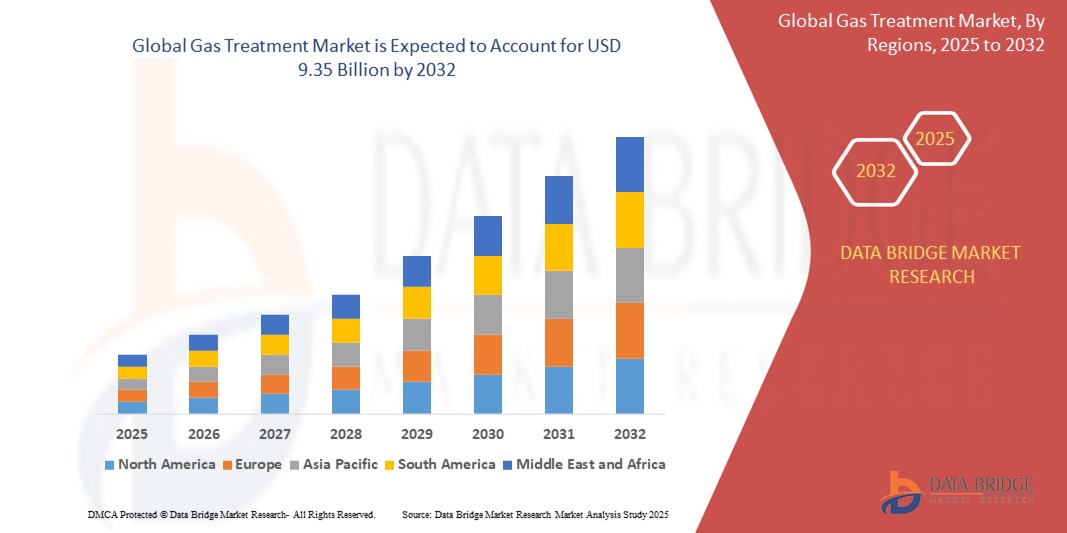
Gas Treatment Market Size
- The global gas treatment market size was valued at USD 6.28 billion in 2024 and is expected to reach USD 9.35 billion by 2032, at a CAGR of 5.1% during the forecast period
- The market growth is largely fuelled by the advancements in gas purification technologies and rising environmental regulations promoting cleaner industrial processes
- Increasing adoption of advanced gas treatment solutions to enhance operational efficiency and reduce harmful emissions across industries
Gas Treatment Market Analysis
- The gas treatment market is experiencing steady expansion as industries increasingly adopt advanced purification and filtration technologies to meet stricter environmental standards and improve operational efficiency
- Growing focus on reducing emissions and enhancing the quality of industrial gases is driving demand for innovative gas treatment solutions, supported by technological advancements and integration of automation systems
- North America dominates the global gas treatment market, holding a significant revenue share, primarily driven by the region's robust oil and gas sector, particularly the shale gas boom in the U.S. and Canada, which necessitates extensive gas purification to meet quality and environmental standards. The growing demand for LNG exports and increasing investments in carbon capture utilization and storage (CCUS) technologies also contribute to market growth.
- Asia-Pacific is expected to be the fastest growing region in the gas treatment market during the forecast period due to rapid industrialization, increasing urbanization, and growing energy demand in countries such as China, India, and Japan. This growth is further propelled by the expansion of petrochemical and power industries, along with surging LNG imports and government efforts towards environmental protection
- The amines segment dominates the largest market revenue share, driven by its long-standing role as a key chemical solvent in gas treatment. Amines are extensively used for removing acidic gases such as hydrogen sulfide and carbon dioxide from natural gas and refinery streams due to their high efficiency, availability, and selectivity.
Report Scope and Gas Treatment Market Segmentation
|
Attributes |
Gas Treatment Key Market Insights |
|
Segments Covered |
|
|
Countries Covered |
North America
Europe
Asia-Pacific
Middle East and Africa
South America
|
|
Key Market Players |
|
|
Market Opportunities |
|
|
Value Added Data Infosets |
In addition to the insights on market scenarios such as market value, growth rate, segmentation, geographical coverage, and major players, the market reports curated by the Data Bridge Market Research also include import export analysis, production capacity overview, production consumption analysis, price trend analysis, climate change scenario, supply chain analysis, value chain analysis, raw material/consumables overview, vendor selection criteria, PESTLE Analysis, Porter Analysis, and regulatory framework. |
Gas Treatment Market Trends
“Rising Adoption of Eco-Friendly Gas Treatment Solutions”
- Industries are increasingly adopting eco-friendly gas treatment solutions to comply with stricter environmental regulations and reduce their carbon footprint, especially in sectors such as oil and gas and power generation
- There is a shift from traditional chemical-based methods to sustainable alternatives such as bio-based solvents and low-toxicity absorbents that contribute to safer operations and long-term savings
- For instance, several natural gas processing plants are transitioning to amine-free and solid sorbent technologies to lower environmental impact and meet emissions standards
- Renewable energy projects are also integrating environmentally responsible gas purification systems to align with their overall sustainability goals
- For instance, the use of biodegradable solvents in flue gas treatment systems, which helps reduce hazardous chemical waste and supports cleaner industrial practices
Gas Treatment Market Dynamics
Driver
“Stricter environmental regulations driving adoption of gas treatment technologies”
- The gas treatment market is being driven by stringent environmental regulations aimed at reducing emissions of harmful gases such as hydrogen sulfide, sulfur dioxide, and volatile organic compounds
- Industries such as oil and gas, power generation, and chemicals are investing in technologies such as amine gas treating, membrane separation, and regenerative adsorption to comply with emission standards
- These technologies not only help meet regulatory compliance but also enhance operational efficiency and reduce risks to health and safety
- For instance, many refineries are installing acid gas removal units to purify natural gas before distribution, ensuring safer use for end consumers
- Another example is the adoption of flue gas desulfurization systems in coal-fired power plants to significantly lower sulfur dioxide emissions and support cleaner energy production
Restraint/Challenge
“High operational costs and complexity limit adoption”
- One of the key challenges in the gas treatment market is the high capital and operational costs involved in deploying and maintaining advanced treatment systems
- Technologies such as amine absorbers, membrane filters, and cryogenic gas separation systems demand significant financial investment, which can be difficult for small and medium-sized enterprises
- These systems also incur ongoing expenses such as energy usage, absorbent replacement, and the need for skilled labour to manage maintenance and efficiency
- For instance, gas processing facilities using chemical solvents must deal with issues such as solvent degradation and corrosion, increasing downtime and maintenance costs
- For instance, companies in remote locations facing delays and added expenses due to limited access to spare parts and technical support for their treatment systems
- For instance, gas processing facilities using chemical solvents must deal with issues such as solvent degradation and corrosion, increasing downtime and maintenance costs
Gas Treatment Market Scope
The global gas treatment market is segmented on the basis of type, type of gas, treatment, technology, and industry.
- By Type
On the basis of type, the gas treatment market is segmented into amines and non-amines. The amines segment dominates the largest market revenue share, driven by its long-standing role as a key chemical solvent in gas treatment. Amines are extensively used for removing acidic gases such as hydrogen sulfide and carbon dioxide from natural gas and refinery streams due to their high efficiency, availability, and selectivity. These solvents are crucial in gas sweetening processes and are widely adopted in oil and gas refineries, petrochemical plants, and power generation facilities. Their ability to regenerate and reuse also makes them cost-effective over time. Continued technological enhancements in amine-based systems are reinforcing their dominance in the market.
The non-amines segment is anticipated to witness the fastest growth, owing to increasing preference for eco-friendly and less corrosive alternatives. Physical solvents, membrane separation, and biological gas treatment methods are gaining popularity for their reduced energy requirements and minimal environmental impact. These alternatives are especially attractive for companies focused on sustainability and compliance with evolving environmental regulations. Advancements in membrane technologies and bio-based solutions are further expanding application areas across industries. This shift is being supported by government incentives and growing investments in green technologies.
- By Type of Gas
On the basis of type of gas, the gas treatment market is segmented into acid gas and synthesis gas. The acid gas segment accounted for the largest market revenue share, largely influenced by stringent environmental regulations targeting emissions of sulfur dioxide and hydrogen sulfide from industrial sources. Compliance with these regulations is critical, especially for industries such as oil and gas, power generation, and chemicals, where acid gas emissions are substantial. This has led to widespread adoption of technologies such as amine gas treating and regenerative adsorption systems for effective acid gas removal. Increased environmental awareness and regulatory enforcement further strengthen demand in this segment, ensuring its continued market dominance.
The synthesis gas segment is expected to witness the fastest growth, driven by the rising global emphasis on hydrogen production and chemical manufacturing from diverse feedstocks. Coal gasification, natural gas reforming, and biomass conversion are increasingly used to generate synthesis gas, which is essential for downstream applications such as ammonia production and Fischer-Tropsch synthesis. The expansion of clean fuel initiatives and chemical processing industries is accelerating the need for high-purity synthesis gas, thereby propelling this segment forward.
- By Treatment
On the basis of treatment, the gas treatment market is segmented into acid gas removal, dehydration, and others. The acid gas removal segment held the largest market revenue share, driven by the urgent need to eliminate corrosive and environmentally harmful acidic compounds such as hydrogen sulfide and carbon dioxide from natural gas and industrial emissions. This treatment is vital for protecting pipeline integrity, preventing equipment damage, and meeting stringent environmental and air quality regulations. Industries such as oil and gas heavily rely on these systems to ensure product quality and operational safety, reinforcing the segment’s dominance in the market.
The dehydration segment is anticipated to witness the fastest growth, propelled by the growing demand for removing water vapor from natural gas to prevent hydrate formation and internal corrosion in pipelines. As natural gas is increasingly transported across long distances and stored under varying conditions, moisture control becomes critical to maintaining flow efficiency and system longevity. The global expansion of gas infrastructure and liquefied natural gas projects further boosts the demand for advanced gas dehydration technologies.
- By Technology
On the basis of technology, the gas treatment market is segmented into OASE, flexsorb, ADIP, UOP, SPREX, and others. The ADIP technology segment held the largest market revenue share, attributed to its long-standing reliability and widespread use in the natural gas processing industry, particularly for selective hydrogen sulfide removal. This technology is known for its robust performance in treating sour gas streams and its economic viability, making it a preferred solution among operators handling large-scale gas treatment operations. Its compatibility with varying gas compositions and minimal operational challenges further contribute to its dominance in the market.
The OASE technology segment is expected to witness the fastest growth, driven by its advanced, energy-efficient solutions for carbon dioxide capture and acid gas removal. With growing regulatory pressure to reduce greenhouse gas emissions, OASE technology is gaining traction for its ability to lower regeneration energy requirements and reduce overall operational costs. Its flexibility across various industrial applications and effectiveness in both retrofitting and new installations position it as a leading choice for companies aiming to meet environmental standards.
- By Industry
On the basis of industry, the gas treatment market is segmented into power plants, refineries, sugar, metal and mining, oil and gas, pulp and paper, food and beverages, and others. The oil and gas segment accounted for the largest market revenue share, as gas treatment plays a vital role in processes such as natural gas sweetening, crude oil refining, and liquefied natural gas production. These treatments ensure compliance with quality specifications and pipeline standards, making them essential for safe and efficient fuel distribution. The segment continues to dominate due to sustained global demand for energy and the expansion of upstream and downstream operations.
The power plants segment is expected to witness the fastest compound annual growth rate, fueled by international efforts to curb sulfur dioxide and nitrogen oxide emissions from fossil-fuel-based electricity generation. This growth is supported by the widespread adoption of flue gas desulfurization systems and nitrogen oxide control technologies, which help plants meet stricter environmental regulations. The transition toward cleaner power generation practices is further accelerating the need for effective gas treatment solutions in this segment.
Gas Treatment Market Regional Analysis
- North America dominates the global gas treatment market, holding a significant revenue share, primarily driven by the region's robust oil and gas sector, particularly the shale gas boom in the U.S. and Canada, which necessitates extensive gas purification to meet quality and environmental standards
- The growing demand for LNG exports and increasing investments in carbon capture utilization and storage (CCUS) technologies also contribute to market growth
- In addition, stringent environmental regulations aimed at reducing industrial emissions and improving air quality further drive the demand for advanced gas treatment solutions
U.S. Gas Treatment Market Insight
The U.S. gas treatment market captured the largest revenue share within North America, fuelled by its abundant natural gas resources and stringent environmental regulations. The continuous expansion of natural gas production and consumption, coupled with increasing investments in industrial and power generation sectors, drives the demand for advanced gas treatment solutions.
Europe Gas Treatment Market Insight
The Europe gas treatment market is expected to grow at a substantial growth rate throughout the forecast period, primarily driven by stringent environmental regulations, particularly those related to carbon emission reduction and net-zero targets. The region's focus on energy security, increasing hydrogen production projects, and the need for efficient gas purification in the robust chemical and refining industries are key growth drivers.
U.K. Gas Treatment Market Insight
The U.K. gas treatment market is expected to grow at a substantial growth rate during the forecast period, fuelled by increasing investment in renewable natural gas projects and carbon capture initiatives. The country's commitment to reducing greenhouse gas emissions and its growing demand for clean energy sources are driving the adoption of advanced gas treatment technologies.
Germany Gas Treatment Market Insight
The German gas treatment market is expected to grow at a substantial growth rate during the forecast period, driven by its emphasis on innovation and sustainability in industrial processes and power generation. Strict environmental protection policies and significant funding for clean energy technologies are promoting the adoption of efficient gas treatment solutions.
Asia-Pacific Gas Treatment Market Insight
The Asia-Pacific gas treatment market is expected to grow at a substantial growth rate, driven by rapid industrialization, increasing urbanization, and growing energy demand in countries such as China, India, and Japan. The expansion of petrochemical and power industries, along with surging LNG imports and government efforts towards environmental protection, are accelerating the adoption of gas treatment solutions.
Japan Gas Treatment Market Insight
The Japan gas treatment market is expected to grow at a substantial growth rate due to the country's high-tech industrial base and increasing focus on environmental sustainability. The emphasis on clean energy sources, stringent air quality regulations, and investments in advanced gas cleaning technologies contribute to market growth.
China Gas Treatment Market Insight
The China gas treatment market is expected to grow at a substantial growth rate in Asia Pacific in 2022, attributed to its large industrial base, rapid economic growth, and increasing demand for natural gas and purified industrial gases. The government's strong push for environmental protection and pollution control measures further propels the market.
Gas Treatment Market Share
The gas treatment industry is primarily led by well-established companies, including:
- BASF SE (Germany)
- Dow (U.S.)
- Exxon Mobil Corporation (U.S.)
- Shell International B.V. (Netherlands)
- Honeywell International Inc. (U.S.)
- INEOS (U.K.)
- Eastman Chemical Company (U.S.)
- CLARIANT (Switzerland)
- Ecolab (U.S.)
- Huntsman International LLC (U.S.)
- Cabot Corporation (U.S.)
- Lhoist Group (Belgium)
- Axens (France)
- BERRYMAN CHEMICAL (U.S.)
- John Wood Group PLC (U.K.)
- Eunisell Chemicals (Nigeria)
Latest Developments in Global Gas Treatment Market
- In 2021, Shell announced the development of an 820,000-tonnes-per-year biofuels facility in Rotterdam, focusing on sustainable aviation fuel and renewable diesel production from waste. This initiative supports the gas treatment market’s shift toward reducing emissions and meeting the rising demand for eco-friendly fuel alternatives. By integrating advanced gas treatment technologies, Shell aims to lower the carbon footprint of fuel production, promoting sustainability across the energy sector
- In 2021, Exxon Mobil Corporation expanded its carbon capture and storage operations at the LaBarge, Wyoming facility, targeting the capture of up to 1 million metric tons of carbon dioxide annually. This project highlights the increasing role of gas treatment technologies in emissions reduction and environmental protection. The initiative supports the growth of sustainable practices within the industry and encourages wider adoption of carbon capture solutions to address climate change challenges

- Interactive Data Analysis Dashboard
- Company Analysis Dashboard for high growth potential opportunities
- Research Analyst Access for customization & queries
- Competitor Analysis with Interactive dashboard
- Latest News, Updates & Trend analysis
- Harness the Power of Benchmark Analysis for Comprehensive Competitor Tracking
Global Gas Treatment Market, Supply Chain Analysis and Ecosystem Framework
To support market growth and help clients navigate the impact of geopolitical shifts, DBMR has integrated in-depth supply chain analysis into its Global Gas Treatment Market research reports. This addition empowers clients to respond effectively to global changes affecting their industries. The supply chain analysis section includes detailed insights such as Global Gas Treatment Market consumption and production by country, price trend analysis, the impact of tariffs and geopolitical developments, and import and export trends by country and HSN code. It also highlights major suppliers with data on production capacity and company profiles, as well as key importers and exporters. In addition to research, DBMR offers specialized supply chain consulting services backed by over a decade of experience, providing solutions like supplier discovery, supplier risk assessment, price trend analysis, impact evaluation of inflation and trade route changes, and comprehensive market trend analysis.
Data collection and base year analysis are done using data collection modules with large sample sizes. The stage includes obtaining market information or related data through various sources and strategies. It includes examining and planning all the data acquired from the past in advance. It likewise envelops the examination of information inconsistencies seen across different information sources. The market data is analysed and estimated using market statistical and coherent models. Also, market share analysis and key trend analysis are the major success factors in the market report. To know more, please request an analyst call or drop down your inquiry.
The key research methodology used by DBMR research team is data triangulation which involves data mining, analysis of the impact of data variables on the market and primary (industry expert) validation. Data models include Vendor Positioning Grid, Market Time Line Analysis, Market Overview and Guide, Company Positioning Grid, Patent Analysis, Pricing Analysis, Company Market Share Analysis, Standards of Measurement, Global versus Regional and Vendor Share Analysis. To know more about the research methodology, drop in an inquiry to speak to our industry experts.
Data Bridge Market Research is a leader in advanced formative research. We take pride in servicing our existing and new customers with data and analysis that match and suits their goal. The report can be customized to include price trend analysis of target brands understanding the market for additional countries (ask for the list of countries), clinical trial results data, literature review, refurbished market and product base analysis. Market analysis of target competitors can be analyzed from technology-based analysis to market portfolio strategies. We can add as many competitors that you require data about in the format and data style you are looking for. Our team of analysts can also provide you data in crude raw excel files pivot tables (Fact book) or can assist you in creating presentations from the data sets available in the report.













