


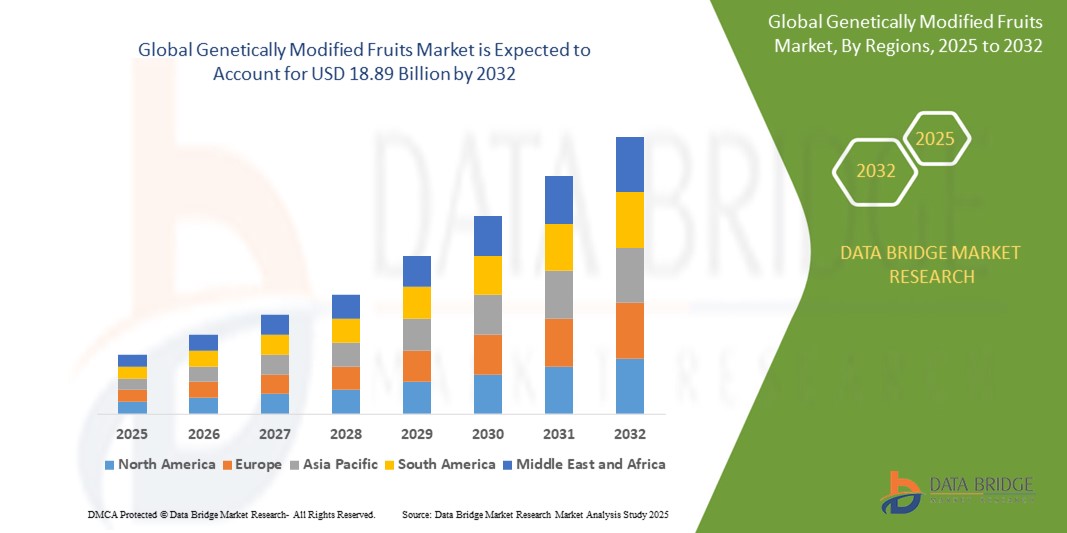
Genetically Modified Fruits Market Size
- The global genetically modified fruits market size was valued at USD 12.31 billion in 2024 and is expected to reach USD 18.89 billion by 2032, at a CAGR of 5.50% during the forecast period
- The market growth is largely fueled by the rising global population, leading to increased food demand and the need for higher crop yields
- Furthermore, growing consumer health consciousness and awareness regarding the potential nutritional benefits of genetically modified fruits are fueling market expansion
Genetically Modified Fruits Market Analysis
- Genetically Modified (GM) fruits, developed through biotechnology for traits such as pest resistance and extended shelf life, are becoming essential for global food security and sustainable food production. They represent innovative solutions to optimize crop quality and yield
- The rising demand for genetically modified fruits is driven by increasing global population, food security concerns, the need for higher crop yields, and consumer desire for improved fruit characteristics (e.g., disease resistance, prolonged freshness, enhanced nutrition)
- North America dominated the genetically modified fruits market with a share of 41.1% in 2024, due to advanced agricultural biotechnology, favorable regulatory frameworks, and high consumer demand for longer shelf life and pest-resistant produce
- Asia-Pacific is expected to be the fastest growing region in the genetically modified fruits market during the forecast period due to food security challenges, rising population, and increasing acceptance of biotechnology in agriculture
- Crops segment dominated the market due to by the widespread cultivation of genetically modified staple crops such as corn, soybean, and canola. These crops are primarily engineered for herbicide tolerance and insect resistance, significantly improving yields and reducing losses due to pests and weeds. In addition, their importance in processed food production and animal feed has cemented their market leadership
Report Scope and Genetically Modified Fruits Market Segmentation
|
Attributes |
Genetically Modified Fruits Key Market Insights |
|
Segments Covered |
|
|
Countries Covered |
North America
Europe
Asia-Pacific
Middle East and Africa
South America
|
|
Key Market Players |
|
|
Market Opportunities |
|
|
Value Added Data Infosets |
In addition to the insights on market scenarios such as market value, growth rate, segmentation, geographical coverage, and major players, the market reports curated by the Data Bridge Market Research also include in-depth expert analysis, pricing analysis, brand share analysis, consumer survey, demography analysis, supply chain analysis, value chain analysis, raw material/consumables overview, vendor selection criteria, PESTLE Analysis, Porter Analysis, and regulatory framework. |
Genetically Modified Fruits Market Trends
“Rising Advancements in Biotechnology”
- A significant and accelerating trend in the global genetically modified fruits market is the deepening integration of advanced biotechnology and innovative breeding techniques. This fusion of technologies is significantly enhancing crop yields, nutritional content, and resistance to diseases and pests
- For instance, companies such as Monsanto (now Bayer) have pioneered gene editing technologies such as CRISPR-Cas9, allowing for precise modifications to fruit genomes to enhance desirable traits. Similarly, Corteva Agriscience has developed genetically modified fruits with improved shelf life and nutritional profiles, offering consumers enhanced convenience
- Advanced biotechnology in genetically modified fruits enables features such as marker-assisted selection for faster and more efficient breeding, leading to the development of fruits with enhanced resistance to environmental stresses and improved flavor profiles
- Furthermore, techniques such as tissue culture and genetic transformation offer the ability to introduce specific beneficial genes into fruit varieties
- The seamless integration of advanced biotechnology into fruit production facilitates centralized control over various aspects of the agricultural process. Through these technologies, producers can manage crop characteristics alongside resource utilization, pest management, and environmental impact, creating a more efficient and sustainable food production system
- This trend towards more resilient, nutritious, and sustainably produced fruits is fundamentally reshaping user expectations for food quality and availability. Consequently, companies such as Syngenta are developing genetically modified fruits with traits such as virus resistance and enhanced vitamin content, contributing to global food security and improved nutrition
- The demand for genetically modified fruits that offer the benefits of advanced biotechnology is growing rapidly across both large-scale agriculture and specialized farming sectors, as producers increasingly prioritize efficiency, sustainability, and the delivery of high-quality produce to consumers
Genetically Modified Fruits Market Dynamics
Driver
“Rising Food Security Concerns”
- The increasing prevalence of food security concerns among global populations and governments, coupled with the accelerating demand for sustainable and efficient agricultural solutions, is a significant driver for the heightened demand for genetically modified fruits
- For instance, in recent years, organizations such as the Food and Agriculture Organization of the United Nations (FAO) have highlighted the urgent need to enhance food production to feed a growing global population. Such global challenges are expected to drive the genetically modified fruit industry growth in the forecast period
- As consumers and policymakers become more aware of potential food shortages due to climate change, pests, and diseases, genetically modified fruits offer advanced features such as increased yields, enhanced nutritional content, and resistance to harsh conditions, providing a compelling upgrade over conventionally bred fruits
- Furthermore, the growing focus on sustainable agriculture and the desire for more resilient food systems are making genetically modified fruits an integral component of these systems, offering seamless integration with modern farming practices and reduced reliance on pesticides
- The potential to rapidly increase food production, improve nutritional value in staple crops, and the ability to cultivate fruits in challenging environments are key factors propelling the adoption of genetically modified fruits in both developed and developing countries. The trend towards greater investment in agricultural biotechnology and the increasing availability of diverse Genetically Modified fruit varieties further contribute to market growth
Restraint/Challenge
“Demand for Natural Options”
- Concerns surrounding the potential health and environmental impacts of genetically modified organisms, including genetically modified fruits, pose a significant challenge to broader market acceptance. As genetically modified fruits involve altering the natural genetic makeup of produce, they can raise anxieties among potential consumers about the safety and long-term effects of their consumption
- For instance, persistent consumer advocacy for organic and non-genetically modified labeled foods has made some consumers hesitant to purchase or consume genetically modified fruits. Addressing these concerns through comprehensive safety assessments, transparent labeling, and public education is crucial for building consumer trust
- Organizations such as the Non-genetically modified Project and consumer advocacy groups actively campaign for natural and non-genetically modified food options, influencing consumer purchasing decisions. In addition, the perceived higher value and health benefits associated with organic and naturally grown fruits compared to genetically modified options can be a barrier to wider adoption for some consumers
- While genetically modified fruits are often designed to be more affordable for mass production, the demand for premium, natural alternatives remains strong.
- While the affordability and increased yields of genetically modifieds can be advantageous, the strong consumer preference for foods perceived as "natural" can still hinder widespread adoption, especially for those who prioritize organically grown or traditionally bred fruits. Overcoming these challenges through enhanced transparency, rigorous scientific validation of safety, and the development of genetically modified options that address specific consumer needs without compromising perceived naturalness will be vital for sustained market growth
Genetically Modified Fruits Market Scope
The market is segmented on the basis of type, alcoholic content, flavor, category, packaging, and distribution channel.
- By Type
On the basis of type, the genetically modified fruits market is segmented into vegetables, crops, fruits, and animal products. The crops segment dominates the largest market revenue share in 2024, driven by the widespread cultivation of genetically modified staple crops such as corn, soybean, and canola. These crops are primarily engineered for herbicide tolerance and insect resistance, significantly improving yields and reducing losses due to pests and weeds. In addition, their importance in processed food production and animal feed has cemented their market leadership.
The fruits segment is anticipated to witness the fastest growth rate from 2025 to 2032, propelled by the rising demand for longer shelf-life, improved taste, and disease resistance in high-consumption fruits such as papaya, apples, and bananas. The commercial success of genetically modified papaya in combating ringspot virus in Hawaii and recent advancements in non-browning apple varieties highlight consumer acceptance and market potential. Ongoing research in enhancing fruit resilience and quality continues to drive innovation and interest from growers and consumers alike.
- By Trait
On the basis of trait, the genetically modified fruits market is segmented into Herbicide Tolerance (HR), Insect Resistance (IR), and Stacked Traits (ST). The Herbicide Tolerance (HR) segment held the largest market revenue share in 2024 due to the efficiency and convenience it offers in large-scale farming. HR traits allow crops to survive applications of specific herbicides, enabling more effective weed management, reduced tillage, and improved soil health. This has led to widespread adoption, especially in genetically modified crops such as soybean, cotton, and maize.
The Stacked Traits (ST) segment is expected to witness the fastest CAGR from 2025 to 2032. Stacked traits combine multiple genetic modifications—typically herbicide tolerance and insect resistance—within a single crop variety, offering comprehensive protection and greater efficiency for farmers. As the agricultural sector moves towards maximizing productivity and sustainability, stacked traits are increasingly favored in markets demanding high-output, low-intervention farming methods.
- By Application
On the basis of application, the genetically modified fruits market is segmented into poultry, swine, cattle, dairy, aquaculture, pet food, equine, and other applications. The cattle segment accounted for the largest market revenue share in 2024, driven by the extensive use of genetically modified crop derivatives such as corn and soybean in cattle feed. These genetically modified-based feed ingredients offer consistent quality, enhanced nutritional profiles, and cost-effectiveness, which are critical for meat and dairy producers facing rising input costs.
The aquaculture segment is expected to witness the fastest CAGR from 2025 to 2032, spurred by the growing global demand for sustainable seafood and the push for optimized fish feed. genetically modified-derived soymeal and corn gluten are increasingly replacing traditional fishmeal, offering high protein content and lower environmental impact. Enhanced feed conversion ratios, along with the rise of commercial fish farming, particularly in Asia-Pacific and North America, are set to propel rapid growth in this application.
Genetically Modified Fruits Market Regional Analysis
- North America dominated the genetically modified fruits market with the largest revenue share of 41.1% in 2024, driven by advanced agricultural biotechnology, favorable regulatory frameworks, and high consumer demand for longer shelf life and pest-resistant produce
- The region's focus on improving crop yields, reducing food waste, and ensuring year-round availability of fruit is propelling the adoption of genetically modified technologies, particularly in crops such as apples and papayas
- Strong R&D infrastructure, the presence of key biotech firms, and support from agricultural policy initiatives further bolster the genetically modified fruits market across the U.S. and Canada
U.S. Genetically Modified Fruits Market Insight
The U.S. genetically modified fruits market captured the largest revenue share within North America in 2024, supported by a well-established biotech sector and widespread consumer and industry acceptance of genetically modified crops. genetically modified apples (such as the Arctic Apple) and virus-resistant papayas have seen robust market penetration, driven by benefits such as reduced browning and improved disease resistance. The USDA's supportive stance on biotechnology and continued innovation by domestic biotech firms are enabling expanded adoption of genetically modified fruit varieties across the fresh produce and food processing sectors.
Europe Genetically Modified Fruits Market Insight
The Europe genetically modified fruits market is projected to grow at a steady CAGR over the forecast period, despite ongoing regulatory scrutiny and mixed consumer sentiment. The growth is being driven by increased research efforts, the emergence of new gene-editing techniques (such as CRISPR), and a push toward sustainable agriculture amidst climate change challenges. Certain regions, particularly in Eastern and Southern Europe, are becoming more receptive to genetically modified crops as a means to ensure food security and reduce reliance on pesticides.
U.K. Genetically Modified Fruits Market Insight
The U.K. genetically modified fruits market is expected to expand significantly following its regulatory divergence from the EU post-Brexit, with new government policies encouraging biotech innovation. Recent legislative shifts have paved the way for gene-edited crops to enter the market more swiftly, with ongoing trials and investments targeting genetically modified strawberries and disease-resistant apples. Public-private collaborations and a growing interest in sustainable agriculture are likely to accelerate adoption in the coming years.
Germany Genetically Modified Fruits Market Insight
Germany’s genetically modified fruits market remains relatively cautious but is seeing slow growth driven by advancements in genome editing and sustainability concerns. Consumer skepticism and strict regulations have limited adoption; however, biotech innovations focusing on climate resilience and reduced pesticide use are gradually reshaping public discourse. The country’s robust scientific community and emphasis on eco-friendly farming could spur selective adoption in controlled environments, particularly for research and export purposes.
Asia-Pacific Genetically Modified Fruits Market Insight
The Asia-Pacific genetically modified fruits market is projected to grow at the fastest CAGR from 2025 to 2032, fueled by food security challenges, rising population, and increasing acceptance of biotechnology in agriculture. Supportive government policies, especially in China and India, combined with growing demand for high-yield and disease-resistant fruit varieties, are key growth drivers. The region is also becoming a hub for genetically modified research and field trials, aiming to address regional agricultural issues such as pests, drought, and low productivity.
Japan Genetically Modified Fruits Market Insight
Japan’s genetically modified fruits market is gradually expanding, driven by the country’s need for food self-sufficiency and strong interest in high-tech agriculture. The government has started approving gene-edited foods with no foreign DNA, which has helped ease consumer concerns and encouraged innovation in crops such as grapes and tomatoes, With an aging farmer population and increasing focus on automation, genetically modified fruits are seen as a viable solution to ensure stable domestic production and supply.
China Genetically Modified Fruits Market Insight
China’s genetically modified fruits market accounted for the largest revenue share in Asia-Pacific in 2024, driven by state-led initiatives to modernize agriculture and ensure national food security. The Chinese government has approved several genetically modified varieties for commercial cultivation and consumption, including papayas and trials for genetically edited strawberries and melons. A robust domestic biotech sector and expanding export opportunities are accelerating the growth of genetically modified fruits in both domestic and global markets.
Genetically Modified Fruits Market Share
The genetically modified fruits industry is primarily led by well-established companies, including:
The Major Market Leaders Operating in the Market Are:
- BASF (Germany)
- Bayer AG (Germany)
- Syngenta Crop Protection AG (Switzerland)
- Sakata Seed America Inc. (U.S.)
- DuPont. (U.S.)
- Groupe Limagrain Holding SA (France)
- KWS SAAT SE & Co. KGaA (Germany)
- J.R. Simplot Company (U.S.)
- Stine Seed Company LLC (U.S.)
- Dow Inc. (U.S.)
- Agritope Inc (U.S.)
- Corteva Agriscience (U.S.)
Latest Developments in Global Genetically Modified Fruits Market
- In March 2024, Brothers All Natural introduced their innovative Infused Freeze-Dried Fruit Crisps at Expo West, featuring Fuji apples infused with raspberry, blueberry, and strawberry juice, offering a 100% fruit snack without additives or preservatives, and making them available online and on Amazon following the event, with a Chili Lime Mango flavor being launched at Expo West in 2025
- In August 2023, GNT unveiled Shade Vivid Orange, marking the introduction of their first 100% oil-soluble, plant-based orange color derived from non-genetically modified paprika within their EXBERRY range. This innovative product offers a vibrant orange hue suitable for replacing both paprika oleoresin and synthetic colors across various fat-containing food applications, including both sweet and savory items

- Interactive Data Analysis Dashboard
- Company Analysis Dashboard for high growth potential opportunities
- Research Analyst Access for customization & queries
- Competitor Analysis with Interactive dashboard
- Latest News, Updates & Trend analysis
- Harness the Power of Benchmark Analysis for Comprehensive Competitor Tracking
Global Genetically Modified Fruits Market, Supply Chain Analysis and Ecosystem Framework
To support market growth and help clients navigate the impact of geopolitical shifts, DBMR has integrated in-depth supply chain analysis into its Global Genetically Modified Fruits Market research reports. This addition empowers clients to respond effectively to global changes affecting their industries. The supply chain analysis section includes detailed insights such as Global Genetically Modified Fruits Market consumption and production by country, price trend analysis, the impact of tariffs and geopolitical developments, and import and export trends by country and HSN code. It also highlights major suppliers with data on production capacity and company profiles, as well as key importers and exporters. In addition to research, DBMR offers specialized supply chain consulting services backed by over a decade of experience, providing solutions like supplier discovery, supplier risk assessment, price trend analysis, impact evaluation of inflation and trade route changes, and comprehensive market trend analysis.
Data collection and base year analysis are done using data collection modules with large sample sizes. The stage includes obtaining market information or related data through various sources and strategies. It includes examining and planning all the data acquired from the past in advance. It likewise envelops the examination of information inconsistencies seen across different information sources. The market data is analysed and estimated using market statistical and coherent models. Also, market share analysis and key trend analysis are the major success factors in the market report. To know more, please request an analyst call or drop down your inquiry.
The key research methodology used by DBMR research team is data triangulation which involves data mining, analysis of the impact of data variables on the market and primary (industry expert) validation. Data models include Vendor Positioning Grid, Market Time Line Analysis, Market Overview and Guide, Company Positioning Grid, Patent Analysis, Pricing Analysis, Company Market Share Analysis, Standards of Measurement, Global versus Regional and Vendor Share Analysis. To know more about the research methodology, drop in an inquiry to speak to our industry experts.
Data Bridge Market Research is a leader in advanced formative research. We take pride in servicing our existing and new customers with data and analysis that match and suits their goal. The report can be customized to include price trend analysis of target brands understanding the market for additional countries (ask for the list of countries), clinical trial results data, literature review, refurbished market and product base analysis. Market analysis of target competitors can be analyzed from technology-based analysis to market portfolio strategies. We can add as many competitors that you require data about in the format and data style you are looking for. Our team of analysts can also provide you data in crude raw excel files pivot tables (Fact book) or can assist you in creating presentations from the data sets available in the report.













