


Groove Pancreatitis Treatment Market Size
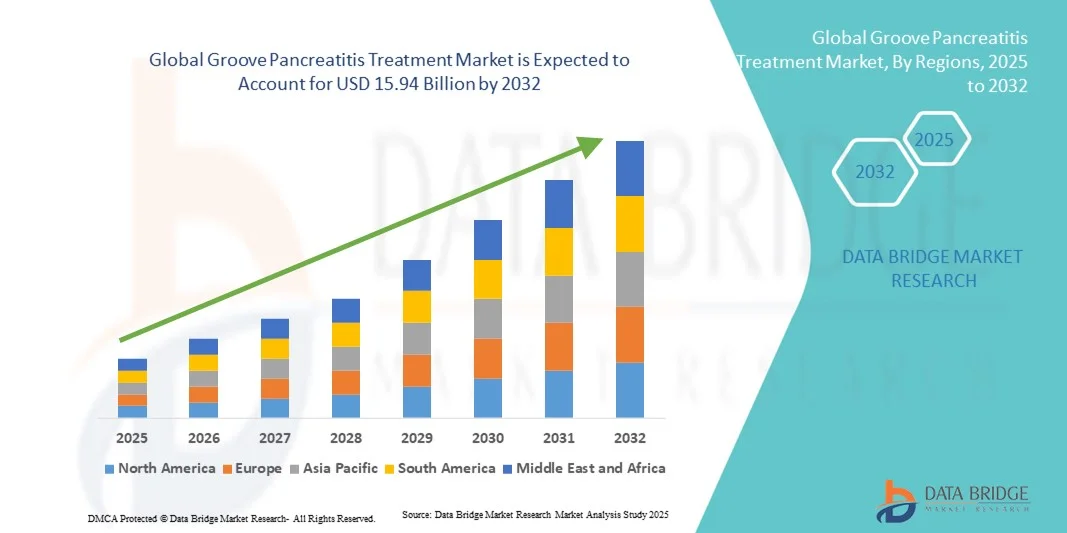
- The global groove pancreatitis treatment market size was valued at USD 10.79 billion in 2024 and is expected to reach USD 15.94 billion by 2032, at a CAGR of 5.00% during the forecast period
- The market growth is largely fueled by the increasing prevalence of pancreatic disorders, growing awareness of rare gastrointestinal diseases, and advancements in diagnostic imaging technologies such as endoscopic ultrasound (EUS) and magnetic resonance cholangiopancreatography (MRCP). These innovations are enabling earlier and more accurate detection of Groove Pancreatitis, driving treatment adoption
- Furthermore, rising research and development investments in pancreatic disease management, along with the growing use of minimally invasive surgical techniques and endoscopic procedures, are significantly enhancing patient outcomes. These converging factors are accelerating the uptake of groove pancreatitis treatment solutions, thereby substantially boosting the industry’s growth
Groove Pancreatitis Treatment Market Analysis
- The Groove Pancreatitis Treatment market is witnessing steady growth, driven by the rising prevalence of pancreatic and gastrointestinal disorders, increasing awareness among clinicians, and advancements in imaging and endoscopic technologies that enable earlier and more precise diagnosis. The growing availability of novel therapeutic approaches, including endoscopic drainage, stenting, and minimally invasive surgeries, is also contributing to market expansion
- The demand for effective treatment options is further supported by an increasing number of cases associated with alcohol consumption and peptic ulcers, along with the growing emphasis on personalized and multidisciplinary management of pancreatic diseases
- The North America dominated the groove pancreatitis treatment market with the largest revenue share of 42.5% in 2024, driven by a strong presence of advanced healthcare infrastructure, early adoption of innovative diagnostic techniques, and the availability of experienced gastroenterologists and surgeons specializing in pancreatic diseases. The presence of leading research institutions and ongoing clinical studies focusing on chronic pancreatitis and related conditions further support market growth in the country
- Asia-Pacific is projected to be the fastest-growing region in the groove pancreatitis treatment market during the forecast period, with an estimated CAGR of 8.3%, owing to increasing healthcare expenditure, improving diagnostic capabilities, and growing awareness of rare gastrointestinal disorders. Emerging economies such as China and India are expected to witness significant market expansion due to the rising patient pool and government initiatives promoting early disease diagnosis
- The intravenous fluid segment dominated the market with a revenue share of 42.1% in 2024, due to its essential role in stabilizing patients during acute episodes. Fluid resuscitation prevents hypovolemia, reduces pancreatic necrosis, and improves organ perfusion
Report Scope and Groove Pancreatitis Treatment Market Segmentation
|
Attributes |
Groove Pancreatitis Treatment Key Market Insights |
|
Segments Covered |
|
|
Countries Covered |
North America
Europe
Asia-Pacific
Middle East and Africa
South America
|
|
Key Market Players |
|
|
Market Opportunities |
|
|
Value Added Data Infosets |
In addition to the insights on market scenarios such as market value, growth rate, segmentation, geographical coverage, and major players, the market reports curated by the Data Bridge Market Research also include in-depth expert analysis, patient epidemiology, pipeline analysis, pricing analysis, and regulatory framework. |
Groove Pancreatitis Treatment Market Trends
Advancements in Precision Therapeutics and Multidisciplinary Care
- A significant and accelerating trend in the global groove pancreatitis treatment market is the shift toward precision therapeutics and integrated multidisciplinary treatment protocols that combine endoscopy, radiology, surgery, and niche biologic or small-molecule therapy. These innovations are transforming traditional management paradigms, allowing for tailored interventions and improved long-term outcomes
- For instance, new investigational biologic agents targeting pancreatic inflammatory pathways and fibrosis progression are being evaluated in early-phase trials, offering an alternative to purely surgical or symptomatic treatment. Similarly, enhanced imaging protocols and minimally invasive robotic approaches are increasingly used to identify and treat segments of the disease earlier
- The integration of advanced diagnostic biomarkers such as pancreatic enzyme profiles, genetic predisposition panels, and imaging texture analysis enables clinicians to stratify patients by disease stage, predict treatment response, and personalize therapy accordingly. This stratification approach boosts therapeutic efficacy while minimizing unnecessary interventions
- Further, improved endoscopic and radiologic interventional tools — including lumen-apposing metal stents (LAMS) for cavity drainage, robotic endoscopy, and targeted ablative technologies — are expanding the treatment repertoire for groove pancreatitis, especially in complex anatomical regions
- Collaborative care models involving gastroenterologists, pancreatic surgeons, interventional radiologists, and nutrition/endocrine specialists are becoming standard practice, enhancing outcome coherence and patient quality of life. These models underpin market growth by improving standard of care and enabling earlier intervention
- This trend toward more personalized, multi-modality care is reshaping expectations within the groove pancreatitis community. As such, pharmaceutical companies and device manufacturers are increasingly investing in combinatorial therapy platforms — for example, coupling anti-fibrotic agents with endoscopic drainage systems to improve tissue healing and reduce recurrence risk
- The demand for novel therapeutic options that integrate diagnostics, minimally invasive treatment, and patient-specific management strategies is growing rapidly across major markets, as clinicians and patients alike move beyond symptomatic management to curative-intent approaches
Groove Pancreatitis Treatment Market Dynamics
Driver
Rising Diagnostic Capability and Multidisciplinary Treatment Pathways
- The expanding ability to diagnose groove pancreatitis accurately through advanced imaging (MRCP, EUS) and biomarkers is a major driver for the market’s growth. Earlier and more accurate diagnosis enables timely intervention, improving outcomes
- For instance, in early 2024, several pancreatic institutes reported increased detection of groove-type disease due to improved MRI protocols identifying subtle groove region fibrosis and cystic changes, which encourages earlier therapeutic referral
- Increasing patient awareness and the rise of specialized pancreatic centers are promoting earlier treatment presentation and uptake of advanced therapeutic options
- In addition, the shift from purely symptomatic care toward integrated care pathways combining nutrition, endocrinology and interventional therapy is raising demand for comprehensive treatment packages
- The growth in minimally invasive treatment modalities (endoscopy, robotic surgery) is increasing the acceptance of interventional treatment over conservative management alone
- Further, global increases in chronic pancreatitis incidence — including groove subtype — and higher recognition of its complications (such as pseudocysts or biliary obstruction) reinforce the need for advanced treatment options and thus market expansion
Restraint/Challenge
Complexity of Disease Management and High Treatment Costs
- Managing groove pancreatitis remains highly complex due to its anatomical location at the pancreatic head–duodenum interface, proximity to bile and pancreatic ducts, and frequent involvement of multiple systems (endocrine, exocrine, biliary). These complexities often result in extensive imaging, multiple procedures, and higher cumulative costs
- Moreover, many patients continue to require lifelong monitoring and possible interventions due to recurrent inflammation, fibrosis progression, or complications such as hepatic dysfunction or biliary stricture, which increases economic burden
- Treatment access in emerging regions remains limited due to fewer specialized pancreatic centers, low availability of modern endoscopic/robotic infrastructure, and less reimbursement for advanced therapies
- For instance, a 2023 clinical audit conducted by the Asian Pancreatic Society found that over 40% of groove pancreatitis patients in Southeast Asia faced delayed treatment due to lack of access to endoscopic ultrasound-guided interventions and cost barriers associated with advanced stenting procedures
- The high cost of combined therapies — for example, endoscopic stent placement plus biologic therapy plus hormone replacement — makes them less affordable in resource-constrained settings, limiting penetration
- Further, the relative lack of large randomized controlled trials specific to groove pancreatitis compared with more common pancreatic diseases limits high-level evidence for newer therapies, delaying guideline endorsement and reimbursement
- Overcoming these barriers through improved global infrastructure, greater clinical trial activity, cost-effective therapeutic models, and improved insurance coverage will be critical for sustained market growth
Groove Pancreatitis Treatment Market Scope
The market is segmented on the basis of cause, symptoms, treatment, and end users.
- By Cause
On the basis of cause, the Groove Pancreatitis Treatment market is segmented into gallstones, alcohol, and others. The gallstones segment accounted for the largest market revenue share of 47.6% in 2024, driven by the rising prevalence of gallstone-related pancreatitis globally. Gallstones obstructing the pancreatic duct lead to acute inflammation, necessitating prompt medical or surgical intervention. Increasing rates of obesity, unhealthy dietary habits, and sedentary lifestyles have further elevated gallstone formation risks, particularly in older adults and women. Hospitals report a significant rise in hospitalizations linked to gallstone-induced pancreatitis, reinforcing its dominance in the market. Growing awareness about early diagnosis and minimally invasive treatment approaches, such as ERCP and laparoscopic cholecystectomy, continues to strengthen this segment’s position. In addition, improved imaging diagnostics like endoscopic ultrasound (EUS) and MRCP enhance early detection, ensuring targeted management and reduced complications.
The alcohol segment is anticipated to witness the fastest CAGR of 8.9% from 2025 to 2032, fueled by the growing incidence of alcohol-induced pancreatic injury worldwide. Increasing alcohol consumption, especially among younger populations in emerging economies, contributes significantly to chronic pancreatitis cases. Alcohol disrupts pancreatic enzyme regulation, leading to recurrent inflammation and fibrosis. Advancements in diagnostic imaging, such as MRI and CT-based scoring systems, allow earlier identification of alcohol-related cases, improving management outcomes. Governments and healthcare agencies are initiating awareness programs focusing on alcohol moderation, indirectly boosting diagnostic and treatment rates. The introduction of enzyme replacement therapy and nutritional support programs for chronic pancreatitis further supports market expansion within this segment.
- By Symptoms
On the basis of symptoms, the Groove Pancreatitis Treatment market is segmented into abdominal pain, weight loss, postprandial vomiting, nausea, and others. The abdominal pain segment held the largest market revenue share of 38.5% in 2024, attributed to its high prevalence as the primary presenting symptom in most patients. Severe and persistent upper abdominal pain radiating to the back is a hallmark sign, driving patient visits to emergency and gastroenterology departments. This has resulted in increased diagnostic testing demand, including imaging and enzyme assays. Healthcare providers prioritize pain management through analgesics, nerve blocks, and minimally invasive approaches. Moreover, awareness among clinicians regarding early intervention to prevent chronic pain syndromes has driven growth. Ongoing innovation in pain control methods and the integration of multidisciplinary treatment teams further reinforce the dominance of this segment.
The weight loss segment is projected to grow at the fastest CAGR of 9.5% from 2025 to 2032, driven by the rising incidence of malabsorption and nutritional deficiencies in chronic pancreatitis patients. Weight loss often signals pancreatic exocrine insufficiency, prompting early nutritional intervention. Increasing use of pancreatic enzyme replacement therapy (PERT) and specialized nutritional supplements fuels demand for targeted treatment solutions. Clinical research emphasizing nutritional rehabilitation as a key component of patient recovery also contributes to growth. Moreover, increasing collaboration between gastroenterologists and dietitians to optimize long-term patient outcomes strengthens this segment’s market potential.
- By Treatment
On the basis of treatment, the Groove Pancreatitis Treatment market is segmented into intravenous fluid, analgesics, nutritional support, endoscopic retrograde cholangiopancreatography (ERCP), and others. The intravenous fluid segment dominated the market with a revenue share of 42.1% in 2024, due to its essential role in stabilizing patients during acute episodes. Fluid resuscitation prevents hypovolemia, reduces pancreatic necrosis, and improves organ perfusion. Hospitals widely adopt evidence-based hydration protocols to improve outcomes and minimize complications. In addition, the increasing availability of balanced crystalloids and monitoring devices for fluid management supports segment expansion. This segment remains fundamental to all stages of treatment, from emergency care to recovery.
The endoscopic retrograde cholangiopancreatography (ERCP) segment is expected to witness the fastest CAGR of 10.1% from 2025 to 2032, propelled by the growing adoption of minimally invasive techniques for diagnosis and therapy. ERCP enables effective stone extraction, ductal stenting, and drainage in groove pancreatitis patients. Advancements in endoscopic imaging, coupled with skilled gastroenterologists and robotic-assisted tools, enhance procedural precision and safety. The increasing shift toward minimally invasive approaches due to reduced recovery times and improved patient comfort drives growth. Moreover, favorable reimbursement and technological evolution continue to fuel demand for ERCP in managing complex pancreatitis cases.
- By End Users
On the basis of end users, the Groove Pancreatitis Treatment market is segmented into hospitals, clinics, homecare, specialty centers, and others. The hospitals segment held the largest market revenue share of 54.3% in 2024, owing to the high rate of hospital admissions for acute and severe pancreatitis cases. Hospitals serve as the primary setting for diagnostics, intensive care, and endoscopic procedures, supported by advanced imaging technologies and multidisciplinary teams. The presence of specialized gastroenterology units and emergency services ensures comprehensive management from diagnosis to post-recovery. Increased healthcare expenditure and improved hospital infrastructure in developing economies further consolidate the dominance of this segment.
The specialty centers segment is anticipated to record the fastest CAGR of 9.8% from 2025 to 2032, driven by the increasing preference for specialized gastrointestinal and pancreatic care facilities. These centers provide tailored, multidisciplinary care involving gastroenterologists, dietitians, and endoscopic surgeons. Growing awareness about the benefits of specialized management, coupled with advanced diagnostic capabilities, attracts patients seeking focused treatment. Furthermore, collaborations between research institutes and specialty centers facilitate clinical trials for novel therapies, enhancing growth prospects. The rising number of outpatient and minimally invasive treatment setups also contributes to this segment’s rapid expansion.
Groove Pancreatitis Treatment Market Regional Analysis
- North America dominated the groove pancreatitis treatment market with the largest revenue share of 42.5% in 2024
- Driven by a strong presence of advanced healthcare infrastructure, early adoption of innovative diagnostic techniques, and the availability of experienced gastroenterologists and surgeons specializing in pancreatic diseases
- The presence of leading research institutions and ongoing clinical studies focusing on chronic and groove pancreatitis further supports market growth in the region
U.S. Groove Pancreatitis Treatment Market Insight
The U.S. groove pancreatitis treatment market accounted for the largest revenue share in 2024 within North America, primarily due to the availability of cutting-edge imaging modalities, specialized treatment centers, and growing awareness of rare pancreatic disorders. Increasing adoption of minimally invasive and endoscopic procedures, coupled with the strong presence of pharmaceutical and biotech firms involved in pancreatitis drug research, continues to propel market expansion in the country.
Europe Groove Pancreatitis Treatment Market Insight
The Europe groove pancreatitis treatment market is projected to grow at a steady CAGR during the forecast period, supported by rising investments in clinical research and advancements in pancreatic imaging and endoscopy. The increasing prevalence of chronic pancreatitis, coupled with government-funded healthcare systems and supportive reimbursement policies, is fueling market development.
U.K. Groove Pancreatitis Treatment Market Insight
The U.K. groove pancreatitis treatment market is anticipated to expand at a notable CAGR through 2032, driven by the availability of advanced diagnostic facilities, increasing awareness of pancreatic diseases, and the growing number of specialized gastroenterology centers. Continued research collaborations between academic institutions and healthcare providers further strengthen the market outlook.
Germany Groove Pancreatitis Treatment Market Insight
Germany groove pancreatitis treatment market is expected to witness significant market growth due to its strong medical infrastructure, widespread access to advanced imaging technologies such as MRI and endoscopic ultrasound (EUS), and increasing focus on early disease detection. The presence of a large network of tertiary care hospitals and academic research institutions supports continued innovation in pancreatitis management.
Asia-Pacific Groove Pancreatitis Treatment Market Insight
The Asia-Pacific groove pancreatitis treatment market is projected to grow at the fastest CAGR of 8.3% during the forecast period (2025–2032), driven by improving healthcare infrastructure, increasing healthcare expenditure, and rising awareness of rare gastrointestinal disorders. Expanding diagnostic capabilities and government initiatives promoting early disease detection are further boosting market adoption.
Japan Groove Pancreatitis Treatment Market Insight
Japan’s groove pancreatitis treatment market growth is supported by the country’s advanced healthcare technology, increasing geriatric population, and rising prevalence of pancreatic and gastrointestinal disorders. The availability of specialized diagnostic centers and ongoing research into pancreatic fibrosis and cystic lesions are further enhancing treatment accessibility.
China Groove Pancreatitis Treatment Market Insight
China groove pancreatitis treatment market captured the largest market share within Asia-Pacific in 2024, driven by rapid improvements in healthcare infrastructure, the growing number of tertiary hospitals, and the expanding patient pool. Rising public and private healthcare investments and increased awareness of chronic pancreatitis symptoms are fostering early diagnosis and treatment adoption.
Groove Pancreatitis Treatment Market Share
The Groove Pancreatitis Treatment industry is primarily led by well-established companies, including:
- AbbVie Inc. (U.S.)
- Bristol Myers Squibb (U.S.)
- Pfizer Inc. (U.S.)
- Novartis AG (Switzerland)
- Takeda Pharmaceutical Company Limited (Japan)
- Roche Holding AG (Switzerland)
- AstraZeneca plc (U.K.)
- Lilly (U.S.)
- Johnson & Johnson and its affiliates (U.S.)
- Sanofi (France)
- Merck & Co., Inc. (U.S.)
- GSK plc (U.K.)
- Dr. Reddy’s Laboratories Ltd. (India)
- Sun Pharmaceutical Industries Ltd. (India)
- Cipla Ltd. (India)
- Abbott (U.S.)
Latest Developments in Global Groove Pancreatitis Treatment Market
- In March 2025, a clinical case report titled “Groove Pancreatitis Presenting with Upper Gastrointestinal Obstruction and Abnormal Renal Function” was published, highlighting rare complications and proposing updated management algorithms emphasizing early diagnosis and multidisciplinary intervention
- In July 2024, a comprehensive review titled “Groove Pancreatitis—From Enigma to Future Directions” summarized advancements in diagnostic imaging, endoscopic treatments, and the growing preference for minimally invasive management approaches to reduce surgical complications
- In October 2023, during the American College of Gastroenterology Annual Meeting, physicians presented a successful case of endoscopic balloon dilation for duodenal stenosis caused by groove pancreatitis, demonstrating significant progress in non-surgical therapeutic options
- In April 2023, researchers documented a case of successful duodenum-preserving surgical bypass (gastro-enteroanastomosis) for a patient with refractory groove pancreatitis, indicating advancements in surgical techniques aimed at improving recovery and preserving pancreatic function

- Interactive Data Analysis Dashboard
- Company Analysis Dashboard for high growth potential opportunities
- Research Analyst Access for customization & queries
- Competitor Analysis with Interactive dashboard
- Latest News, Updates & Trend analysis
- Harness the Power of Benchmark Analysis for Comprehensive Competitor Tracking
Data collection and base year analysis are done using data collection modules with large sample sizes. The stage includes obtaining market information or related data through various sources and strategies. It includes examining and planning all the data acquired from the past in advance. It likewise envelops the examination of information inconsistencies seen across different information sources. The market data is analysed and estimated using market statistical and coherent models. Also, market share analysis and key trend analysis are the major success factors in the market report. To know more, please request an analyst call or drop down your inquiry.
The key research methodology used by DBMR research team is data triangulation which involves data mining, analysis of the impact of data variables on the market and primary (industry expert) validation. Data models include Vendor Positioning Grid, Market Time Line Analysis, Market Overview and Guide, Company Positioning Grid, Patent Analysis, Pricing Analysis, Company Market Share Analysis, Standards of Measurement, Global versus Regional and Vendor Share Analysis. To know more about the research methodology, drop in an inquiry to speak to our industry experts.
Data Bridge Market Research is a leader in advanced formative research. We take pride in servicing our existing and new customers with data and analysis that match and suits their goal. The report can be customized to include price trend analysis of target brands understanding the market for additional countries (ask for the list of countries), clinical trial results data, literature review, refurbished market and product base analysis. Market analysis of target competitors can be analyzed from technology-based analysis to market portfolio strategies. We can add as many competitors that you require data about in the format and data style you are looking for. Our team of analysts can also provide you data in crude raw excel files pivot tables (Fact book) or can assist you in creating presentations from the data sets available in the report.












