


Head and Neck Cancer Drug Market Size
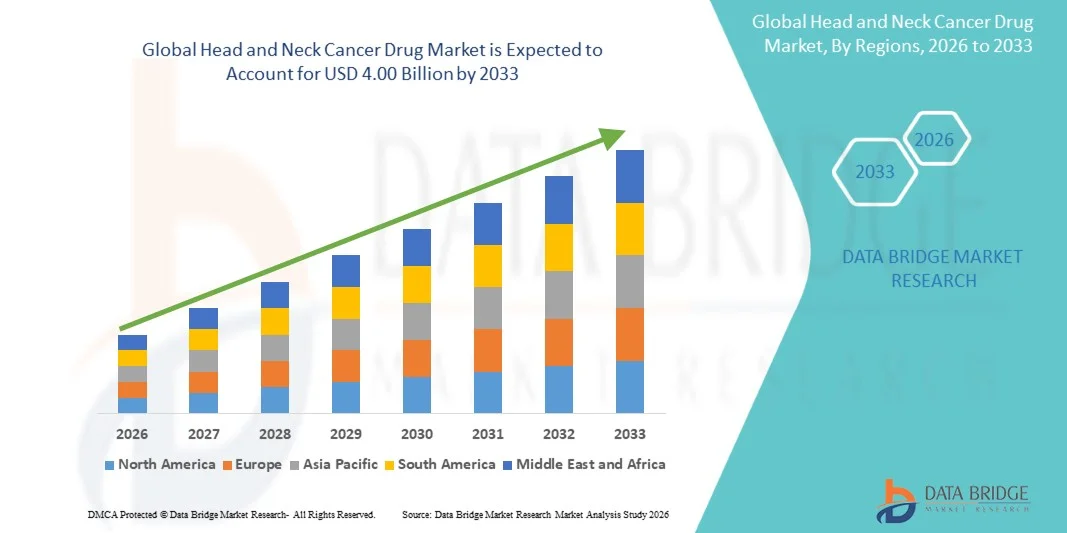
- The global head and neck cancer drug market size was valued at USD 2.06 billion in 2025 and is expected to reach USD 4.00 billion by 2033, at a CAGR of 8.65% during the forecast period
- The market growth is largely fueled by increasing prevalence of head and neck cancers, advancements in targeted therapies, immunotherapies, and personalized medicine, along with rising investment in oncology research and development
- Furthermore, growing awareness among patients and healthcare providers about early diagnosis, coupled with the demand for more effective and safer treatment options, is driving adoption of novel drug therapies. These converging factors are accelerating the uptake of head and neck cancer drugs, thereby significantly boosting the industry's growth
Head and Neck Cancer Drug Market Analysis
- Head and neck cancer drugs, including targeted therapies, immunotherapies, and chemotherapeutic agents, are increasingly vital components of modern oncology treatment protocols due to their enhanced efficacy, reduced side effects, and ability to be tailored to individual patient profiles
- The escalating demand for head and neck cancer drugs is primarily fueled by the rising prevalence of head and neck cancers, advancements in precision medicine, and growing awareness among healthcare providers and patients regarding early diagnosis and treatment options
- North America dominated the head and neck cancer drug market with the largest revenue share of 40.2% in 2025, characterized by advanced healthcare infrastructure, high R&D investments, and a strong presence of key pharmaceutical and biotech players, with the U.S. experiencing substantial growth in drug approvals and clinical trials, particularly for immunotherapies and combination therapies
- Asia-Pacific is expected to be the fastest growing region in the head and neck cancer drug market during the forecast period due to increasing cancer incidence, improving healthcare infrastructure, and rising access to advanced therapies
- Targeted therapy segment dominated the head and neck cancer drug market with a market share of 41.5% in 2025, driven by its demonstrated efficacy, lower systemic toxicity, and growing adoption as a standard of care in personalized oncology treatment regimens
Report Scope and Head and Neck Cancer Drug Market Segmentation
|
Attributes |
Head and Neck Cancer Drug Key Market Insights |
|
Segments Covered |
|
|
Countries Covered |
North America
Europe
Asia-Pacific
Middle East and Africa
South America
|
|
Key Market Players |
|
|
Market Opportunities |
|
|
Value Added Data Infosets |
In addition to the insights on market scenarios such as market value, growth rate, segmentation, geographical coverage, and major players, the market reports curated by the Data Bridge Market Research also include in-depth expert analysis, patient epidemiology, pipeline analysis, pricing analysis, and regulatory framework |
Head and Neck Cancer Drug Market Trends
“Advancements in Immunotherapy and Targeted Treatments”
- A significant and accelerating trend in the global head and neck cancer drug market is the rising development and adoption of immunotherapies and targeted therapies, enhancing treatment efficacy while minimizing systemic toxicity
- For instance, the FDA-approved combination of pembrolizumab with chemotherapy has shown improved survival outcomes in recurrent or metastatic head and neck squamous cell carcinoma patients, offering a new standard of care
- Targeted therapies enable precision treatment by focusing on specific molecular pathways, reducing off-target effects and improving patient quality of life. For instance, cetuximab, an EGFR inhibitor, is widely adopted in patients with overexpressed EGFR tumors to provide more effective management
- The integration of novel drug modalities with biomarkers and companion diagnostics allows personalized therapy selection, optimizing outcomes and minimizing unnecessary exposure to ineffective treatments
- This trend towards personalized, biologically driven treatment regimens is reshaping oncology practice guidelines, encouraging pharmaceutical companies to invest in next-generation targeted and immunotherapeutic agents
- The demand for innovative, targeted, and immuno-oncology-based head and neck cancer drugs is growing rapidly across hospitals, oncology centers, and specialty clinics, as clinicians increasingly prioritize treatment efficacy and patient-specific therapy selection
- Digital health integration, including AI-based patient monitoring and predictive analytics, is beginning to support treatment planning and response assessment, improving therapy personalization and real-world efficacy tracking
Head and Neck Cancer Drug Market Dynamics
Driver
“Rising Cancer Incidence and Awareness of Early Diagnosis”
- The increasing prevalence of head and neck cancers globally, coupled with growing awareness about early detection and advanced treatment options, is a significant driver for the heightened demand for novel oncology drugs
- For instance, in March 2024, Bristol-Myers Squibb highlighted increased clinical trial activity for nivolumab in combination regimens to improve outcomes in recurrent or metastatic head and neck cancers, supporting market growth
- As patient populations and healthcare access expand, demand for drugs with proven efficacy, manageable side effects, and better survival rates is rising, prompting adoption of immunotherapies and combination therapies
- Furthermore, enhanced screening programs and early intervention initiatives are leading to increased diagnosis rates, thereby boosting the need for effective treatment options
- Growing physician and patient preference for personalized treatment plans, including biomarker-driven therapy selection and targeted drug options, is propelling market adoption and overall growth
- Rising investments from pharmaceutical and biotechnology companies in R&D for next-generation head and neck cancer therapies are accelerating pipeline development and market expansion
- Increased collaborations between research institutes, hospitals, and drug developers are facilitating faster clinical trials, regulatory approvals, and commercialization of innovative drugs
Restraint/Challenge
“High Cost and Regulatory Hurdles”
- The high cost of novel head and neck cancer drugs, including immunotherapies and targeted therapies, poses a significant challenge to broader market accessibility, especially in developing regions with limited healthcare funding
- For instance, high-profile reports on the annual treatment costs of immunotherapies such as pembrolizumab have raised concerns about affordability for many patients, limiting widespread uptake
- Stringent regulatory approval processes for oncology drugs, requiring extensive clinical trial data and long evaluation periods, can delay product launches and reduce market penetration
- In addition, adverse effects and variability in patient response necessitate careful monitoring, which can hinder adoption among physicians and healthcare providers unfamiliar with newer therapies
- Overcoming these challenges through health insurance coverage expansion, patient assistance programs, and accelerated regulatory pathways will be crucial for sustained market growth
- Limited awareness and accessibility of advanced therapies in rural or underdeveloped regions restrict market penetration and equitable patient access
- Competition from generic chemotherapeutic drugs and biosimilars can pressure pricing and adoption rates for high-cost novel therapies, challenging market profitability
Head and Neck Cancer Drug Market Scope
The market is segmented on the basis of treatment type, cancer type, drug type, route of administration, and end-users.
- By Treatment Type
On the basis of treatment type, the head and neck cancer drug market is segmented into chemotherapy, targeted therapy, immunotherapy, surgery, radiation therapy, medication, and others. The targeted therapy segment dominated the market with the largest revenue share of 41.5% in 2025, driven by its ability to precisely attack cancer cells while minimizing damage to healthy tissues. Patients and physicians increasingly prefer targeted therapies for their efficacy in improving survival rates, especially in recurrent or metastatic cases. Strong clinical evidence supporting drugs such as cetuximab and afatinib reinforces physician confidence in these therapies. Pharmaceutical companies are also focusing on expanding the portfolio of targeted therapies for different molecular subtypes of head and neck cancers. Market adoption is further enhanced by companion diagnostics, enabling personalized treatment approaches. Ongoing R&D and approval of new targeted agents are expected to sustain market dominance in the forecast period.
The immunotherapy segment is anticipated to witness the fastest growth from 2026 to 2033, fueled by rising adoption of checkpoint inhibitors such as pembrolizumab and nivolumab. Immunotherapy’s potential to induce durable responses in patients who have limited options with traditional therapies is accelerating uptake. Growing clinical trials and regulatory approvals support increased availability and physician confidence. Patient demand is rising due to immunotherapy’s favorable safety profile compared to conventional chemotherapy. Moreover, combination therapies pairing immunotherapy with chemotherapy or targeted agents are creating additional growth opportunities. Rapid technological advancements in immune-oncology are expected to drive the segment’s expansion in both developed and emerging markets.
- By Cancer Type
On the basis of cancer type, the market is segmented into laryngeal and hypopharyngeal cancer, nasal cavity and paranasal sinus cancer, nasopharyngeal cancer, oral and oropharyngeal cancer, salivary gland cancer, and others. The oral and oropharyngeal cancer segment dominated the market with the largest revenue share in 2025, attributed to the high global incidence of these cancers, particularly in regions with tobacco and alcohol use prevalence. Early detection programs and rising awareness are contributing to higher diagnosis rates, driving demand for treatment. Clinical guidelines often recommend multi-modal treatment approaches, including targeted therapy and immunotherapy, enhancing adoption. Patients benefit from improved survival outcomes due to the availability of advanced drug therapies. Strong pipeline activity for novel drugs in oral and oropharyngeal cancer further sustains market leadership. The high unmet medical need ensures consistent market investment and growth.
The nasopharyngeal cancer segment is expected to witness the fastest CAGR from 2026 to 2033, driven by the increasing prevalence in Asia-Pacific regions such as China and Southeast Asia. Rising awareness and early screening programs are leading to more diagnosed cases, boosting drug adoption. Targeted therapies and immunotherapies are being actively tested for nasopharyngeal cancer, enhancing treatment options. Pharmaceutical companies are expanding clinical trials in high-incidence regions to improve accessibility. The segment benefits from government healthcare initiatives and increasing healthcare expenditure. Continued research and market penetration in emerging economies are expected to accelerate growth.
- By Drug Type
On the basis of drug type, the market is segmented into carboplatin, cisplatin, docetaxel, paclitaxel, 5-fluorouracil, epirubicin, and others. The cisplatin segment dominated the market with the largest revenue share in 2025 due to its long-standing use as a standard chemotherapeutic agent in head and neck cancers. Cisplatin’s efficacy in combination regimens, particularly for locally advanced and metastatic cases, drives its continued adoption. Oncologists widely rely on cisplatin for both monotherapy and combination therapy protocols. Strong clinical evidence, established dosing regimens, and familiarity among clinicians support market dominance. Healthcare institutions maintain robust supply chains for cisplatin, ensuring accessibility. Its integration with modern treatment protocols, including chemoradiotherapy, reinforces sustained demand.
The docetaxel segment is expected to witness the fastest growth from 2026 to 2033, driven by increased use in combination therapies and for patients resistant to platinum-based drugs. Docetaxel’s effectiveness in recurrent or metastatic settings enhances adoption. Pharmaceutical R&D efforts are expanding its indications across head and neck cancer subtypes. Improved safety management protocols and dosing flexibility make it appealing to physicians. Rising clinical evidence supports better outcomes with docetaxel-based regimens. Adoption in emerging markets is also expected to contribute to rapid growth.
- By Route of Administration
On the basis of route of administration, the market is segmented into oral, radiation, and injectable. The injectable segment dominated the market in 2025 due to the widespread use of intravenous chemotherapy, targeted therapy, and immunotherapy agents. Injectable administration ensures precise dosing, rapid bioavailability, and suitability for hospital-based treatment protocols. Oncologists prefer injectable forms for severe or advanced-stage patients requiring controlled and monitored therapy. Hospitals and specialty clinics are equipped to administer injectable drugs safely, reinforcing market preference. Pharmaceutical companies continue to invest in injectable formulations for both new and existing drugs. Treatment adherence and efficacy monitoring are more straightforward with injectable routes, sustaining market dominance.
The oral segment is expected to witness the fastest CAGR from 2026 to 2033, driven by the rising development of orally bioavailable targeted therapies and supportive medications. Oral administration offers convenience, improves patient compliance, and enables at-home treatment, reducing hospital visits. The growth of digital adherence tools and telemedicine further supports oral drug adoption. Emerging therapies, such as small-molecule inhibitors, are increasingly available in oral form. Patient preference for less invasive treatment options is accelerating oral therapy uptake. Expansion of reimbursement policies for oral oncology drugs is expected to enhance market growth.
- By End-Users
On the basis of end-users, the market is segmented into hospitals, homecare, specialty clinics, and others. The hospitals segment dominated the market with the largest revenue share in 2025, due to the availability of specialized oncology departments, experienced healthcare professionals, and advanced infrastructure for drug administration. Hospitals are the primary treatment centers for chemotherapy, immunotherapy, and targeted therapy, ensuring patient safety and monitoring. High patient volume and referral systems contribute to sustained adoption. Hospitals also play a key role in clinical trials and early access programs, supporting market dominance. Established supply chains and partnerships with pharmaceutical companies ensure reliable drug availability. The comprehensive care model offered by hospitals reinforces their continued leadership in end-user adoption.
The homecare segment is expected to witness the fastest growth from 2026 to 2033, driven by the rising demand for at-home administration of oral therapies and supportive medications. Homecare solutions reduce hospital congestion and improve patient convenience. Remote monitoring tools, telemedicine consultations, and nurse-led programs enhance safety and adherence. Increasing patient preference for home-based care, especially during long-term therapy, is contributing to segment growth. Pharmaceutical companies are partnering with homecare providers to expand service offerings. Growth in homecare is also supported by cost efficiencies and insurance reimbursement initiatives
Head and Neck Cancer Drug Market Regional Analysis
- North America dominated the head and neck cancer drug market with the largest revenue share of 40.2% in 2025, characterized by advanced healthcare infrastructure, high R&D investments, and a strong presence of key pharmaceutical and biotech players
- Patients and healthcare providers in the region highly value access to targeted therapies, immunotherapies, and personalized treatment regimens that improve survival outcomes and quality of life
- This widespread adoption is further supported by well-established cancer treatment centers, government initiatives promoting early diagnosis, and reimbursement policies that facilitate access to high-cost novel drugs, establishing North America as a key market for head and neck cancer therapies
U.S. Head and Neck Cancer Drug Market Insight
The U.S. head and neck cancer drug market captured the largest revenue share of 42% in 2025 within North America, fueled by early adoption of novel therapies and advanced oncology infrastructure. Patients and healthcare providers are increasingly prioritizing access to targeted therapies, immunotherapies, and precision medicine approaches to improve survival and quality of life. The growing number of clinical trials, combined with robust FDA approvals and insurance reimbursement programs, further propels the market. Moreover, strong investments by pharmaceutical and biotechnology companies in R&D and combination therapies are significantly contributing to market expansion.
Europe Head and Neck Cancer Drug Market Insight
The Europe head and neck cancer drug market is projected to expand at a substantial CAGR throughout the forecast period, primarily driven by increasing cancer prevalence and rising awareness of early diagnosis and treatment options. Government healthcare initiatives, supportive reimbursement policies, and access to innovative therapies are fostering market adoption. European patients and providers are also drawn to the efficacy and safety profiles of advanced targeted and immuno-oncology drugs. The region is experiencing significant growth across hospitals, specialty clinics, and homecare settings, with novel therapies being incorporated into standard treatment protocols.
U.K. Head and Neck Cancer Drug Market Insight
The U.K. head and neck cancer drug market is anticipated to grow at a noteworthy CAGR during the forecast period, driven by increasing incidence rates and the adoption of advanced treatment options. Rising awareness of early detection, combined with patient demand for personalized therapies, is encouraging healthcare providers to integrate targeted therapies and immunotherapies. The U.K.’s robust healthcare system, coupled with strong clinical trial activity and favorable reimbursement frameworks, is expected to continue stimulating market growth. Concerns about treatment efficacy and patient survival rates are pushing both public and private institutions to adopt next-generation therapies.
Germany Head and Neck Cancer Drug Market Insight
The Germany head and neck cancer drug market is expected to expand at a considerable CAGR during the forecast period, fueled by high awareness of cancer treatment options and advanced healthcare infrastructure. Germany’s emphasis on research and innovation promotes the adoption of targeted and immuno-oncology therapies, particularly in hospitals and specialty clinics. Increasing patient demand for effective, personalized treatment, coupled with government initiatives supporting early diagnosis and innovative drug access, supports market growth. Integration of precision medicine approaches with established treatment protocols is becoming increasingly prevalent.
Asia-Pacific Head and Neck Cancer Drug Market Insight
The Asia-Pacific head and neck cancer drug market is poised to grow at the fastest CAGR of 22% during the forecast period of 2026 to 2033, driven by rising cancer prevalence, improving healthcare infrastructure, and increasing access to innovative therapies in countries such as China, Japan, and India. Growing awareness about early diagnosis, coupled with government initiatives promoting oncology care, is driving the adoption of advanced drug therapies. Furthermore, expanding healthcare expenditure and availability of cost-effective treatment options are enabling wider patient access across the region.
Japan Head and Neck Cancer Drug Market Insight
The Japan head and neck cancer drug market is gaining momentum due to the country’s high healthcare standards, rising cancer incidence, and focus on patient-centered care. Adoption of advanced therapies, including immunotherapies and targeted treatments, is driven by clinical evidence supporting improved survival rates and quality of life. Integration of innovative drugs into hospital and specialty clinic protocols is fueling growth. Moreover, Japan’s aging population and demand for safer, more effective treatments in both residential care and hospital settings are expected to spur market expansion.
India Head and Neck Cancer Drug Market Insight
The India head and neck cancer drug market accounted for the largest market revenue share in Asia-Pacific in 2025, attributed to the country’s high incidence of oral and oropharyngeal cancers, increasing awareness, and improving healthcare infrastructure. Rising access to advanced therapies, combined with government initiatives promoting cancer screening and treatment, is driving adoption. India is becoming an important growth market for global pharmaceutical companies due to its large patient pool and increasing affordability of novel therapies. Expansion of oncology centers, specialty clinics, and homecare services further propels market growth.
Head and Neck Cancer Drug Market Share
The Head and Neck Cancer Drug industry is primarily led by well-established companies, including:
- Merck & Co., Inc. (U.S.)
- Bristol Myers Squibb Company (U.S.)
- Eli Lilly and Company (U.S.)
- AstraZeneca (U.K.)
- Sanofi (France)
- F. Hoffmann La Roche Ltd. (Switzerland)
- Takeda Pharmaceutical Company Limited (Japan)
- Teva Pharmaceutical Industries Ltd. (Israel)
- Novartis AG (Switzerland)
- Pfizer Inc. (U.S.)
- AbbVie Inc. (U.S.)
- GSK plc (U.K.)
- Bayer AG (Germany)
- Amgen Inc. (U.S.)
- Regeneron Pharmaceuticals, Inc. (U.S.)
- Coherus Oncology, Inc. (U.S.)
- Eisai Co., Ltd. (Japan)
- Rakuten Medical, Inc. (Japan)
- Natco Pharma (India)
- Transgene S.A. (France)
What are the Recent Developments in Global Head and Neck Cancer Drug Market?
- In June 2025, the FDA approved pembrolizumab (Keytruda) as the first immunotherapy used perioperatively (before and after surgery) for adults with resectable locally advanced head and neck squamous cell carcinoma whose tumors express PD‑L1, marking a significant shift in treatment strategy
- In May 2025, results from the Phase III KEYNOTE‑689 trial presented at ASCO 2025 showed that adding pembrolizumab to standard‑of‑care significantly extended disease‑free survival in head and neck cancer patients demonstrating immunotherapy’s long‑term benefit in this setting
- In April 2025, the U.S. Food and Drug Administration (FDA) approved penpulimab‑kcqx in combination with chemotherapy (cisplatin or carboplatin + gemcitabine) as a first‑line treatment for recurrent or metastatic non‑keratinizing nasopharyngeal carcinoma (NPC) and also approved penpulimab as a single‑agent for metastatic NPC patients after platinum chemotherapy, expanding treatment options in a rare head and neck cancer subtype
- In February 2025, Pyxis Oncology’s PYX‑201 received FDA Fast Track Designation for the treatment of adult patients with recurrent or metastatic head and neck squamous cell carcinoma (HNSCC) whose disease progressed after platinum‑based chemotherapy and anti‑PD‑(L)1 therapy, accelerating its development pathway
- In February 2025, the FDA granted Fast Track Designation to PYX‑201 (an antibody‑drug conjugate targeting Extradomain‑B fibronectin) for HNSCC, reinforcing the potential of novel targeted therapies beyond PD‑1 inhibitors in difficult‑to‑treat head and neck cancers

- Interactive Data Analysis Dashboard
- Company Analysis Dashboard for high growth potential opportunities
- Research Analyst Access for customization & queries
- Competitor Analysis with Interactive dashboard
- Latest News, Updates & Trend analysis
- Harness the Power of Benchmark Analysis for Comprehensive Competitor Tracking
Data collection and base year analysis are done using data collection modules with large sample sizes. The stage includes obtaining market information or related data through various sources and strategies. It includes examining and planning all the data acquired from the past in advance. It likewise envelops the examination of information inconsistencies seen across different information sources. The market data is analysed and estimated using market statistical and coherent models. Also, market share analysis and key trend analysis are the major success factors in the market report. To know more, please request an analyst call or drop down your inquiry.
The key research methodology used by DBMR research team is data triangulation which involves data mining, analysis of the impact of data variables on the market and primary (industry expert) validation. Data models include Vendor Positioning Grid, Market Time Line Analysis, Market Overview and Guide, Company Positioning Grid, Patent Analysis, Pricing Analysis, Company Market Share Analysis, Standards of Measurement, Global versus Regional and Vendor Share Analysis. To know more about the research methodology, drop in an inquiry to speak to our industry experts.
Data Bridge Market Research is a leader in advanced formative research. We take pride in servicing our existing and new customers with data and analysis that match and suits their goal. The report can be customized to include price trend analysis of target brands understanding the market for additional countries (ask for the list of countries), clinical trial results data, literature review, refurbished market and product base analysis. Market analysis of target competitors can be analyzed from technology-based analysis to market portfolio strategies. We can add as many competitors that you require data about in the format and data style you are looking for. Our team of analysts can also provide you data in crude raw excel files pivot tables (Fact book) or can assist you in creating presentations from the data sets available in the report.












