


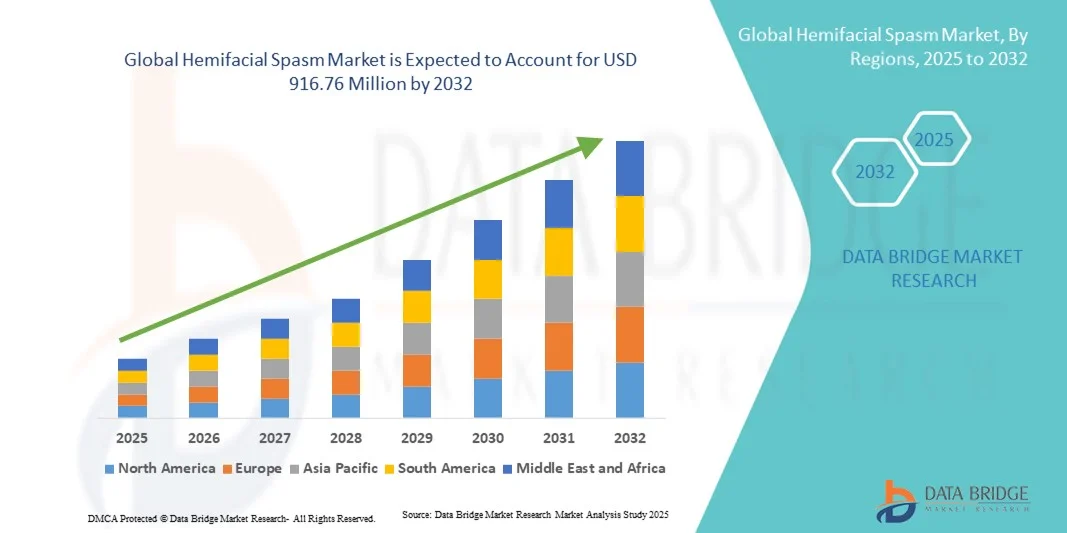
Hemifacial Spasm Market Size
- The global hemifacial spasm market size was valued at USD 620.50 million in 2024 and is expected to reach USD 916.76 million by 2032, at a CAGR of 5.00% during the forecast period
- The market growth is primarily driven by increasing awareness of neurological disorders, advancements in minimally invasive surgical techniques, and the development of effective pharmacological treatments for hemifacial spasm
- Moreover, the rising prevalence of facial nerve disorders and the growing demand for precise, safe, and efficient treatment options in both developed and emerging markets are positioning advanced therapeutic interventions as the preferred solution. These factors collectively are accelerating the adoption of innovative treatment approaches, thereby significantly propelling market growth
Hemifacial Spasm Market Analysis
- Hemifacial spasm, characterized by involuntary muscle contractions on one side of the face, is increasingly recognized as a significant neurological disorder requiring precise diagnosis and targeted treatment, with therapeutic options ranging from botulinum toxin injections to microvascular decompression surgery
- The growing demand for effective hemifacial spasm treatments is primarily driven by rising awareness of neurological disorders, increasing prevalence of facial nerve compression, and advancements in minimally invasive surgical techniques and pharmacological therapies
- North America dominated the hemifacial spasm market with the largest revenue share of 38.5% in 2024, attributed to early adoption of advanced treatment methods, strong healthcare infrastructure, and significant investment in neurological research, with the U.S. showing substantial uptake of botulinum toxin therapies and microvascular decompression procedures
- Asia-Pacific is expected to be the fastest growing region in the hemifacial spasm market during the forecast period due to increasing healthcare accessibility, rising geriatric population, and growing awareness of treatment options
- Botulinum toxin segment dominated the hemifacial spasm market with a market share of 47.5% in 2024, driven by its non-invasive nature, high efficacy, and growing preference among patients seeking symptom relief without major surgery
Report Scope and Hemifacial Spasm Market Segmentation
|
Attributes |
Hemifacial Spasm Key Market Insights |
|
Segments Covered |
|
|
Countries Covered |
North America
Europe
Asia-Pacific
Middle East and Africa
South America
|
|
Key Market Players |
|
|
Market Opportunities |
|
|
Value Added Data Infosets |
In addition to the insights on market scenarios such as market value, growth rate, segmentation, geographical coverage, and major players, the market reports curated by the Data Bridge Market Research also include in-depth expert analysis, pricing analysis, brand share analysis, consumer survey, demography analysis, supply chain analysis, value chain analysis, raw material/consumables overview, vendor selection criteria, PESTLE Analysis, Porter Analysis, and regulatory framework. |
Hemifacial Spasm Market Trends
Advancements in Minimally Invasive and Targeted Therapies
- A significant and accelerating trend in the global hemifacial spasm market is the increasing adoption of minimally invasive procedures such as microvascular decompression (MVD) and image-guided botulinum toxin injections, enhancing treatment precision and patient recovery
- For instance, ultrasound-guided botulinum toxin delivery allows clinicians to target affected muscles more accurately, reducing side effects and improving overall efficacy for patients with hemifacial spasm
- Technological innovations, including high-resolution imaging and robotic-assisted surgical tools, are enabling neurosurgeons to perform safer and more effective interventions, reducing recurrence rates and procedural risks
- The integration of advanced monitoring systems and real-time imaging during treatment procedures allows for improved outcomes, personalized dosing, and better management of muscle contractions in affected patients
- This trend towards precision, minimally invasive, and patient-centric therapies is reshaping clinical expectations for hemifacial spasm management, with companies such as Ipsen developing targeted botulinum toxin formulations with enhanced efficacy and longer duration of action
- The demand for advanced, minimally invasive, and targeted treatment options is growing rapidly across both developed and emerging markets, as patients increasingly seek effective symptom relief with minimal downtime
Hemifacial Spasm Market Dynamics
Driver
Rising Awareness and Growing Geriatric Population
- The increasing awareness of neurological disorders and the growing geriatric population are significant drivers for the rising demand for hemifacial spasm therapies
- For instance, Ipsen and Revance have initiated awareness campaigns highlighting early diagnosis and effective management of facial nerve disorders to enhance patient outreach
- As more patients seek professional intervention, demand for botulinum toxin therapy and microvascular decompression is expanding in hospitals and specialized clinics
- Furthermore, the growing prevalence of facial nerve compression and related conditions is driving the adoption of advanced diagnostic tools such as high-resolution MRI and EMG monitoring
- Increasing access to neurologists and treatment centers in both urban and semi-urban regions is making therapies more accessible, fueling market growth
- Patient preference for non-invasive, effective, and low-risk treatments is contributing to the heightened adoption of botulinum toxin injections and other minimally invasive interventions
Restraint/Challenge
High Treatment Costs and Limited Skilled Specialists
- The relatively high cost of advanced treatments and limited availability of skilled neurologists and neurosurgeons pose a significant challenge to broader market penetration
- For instance, microvascular decompression requires highly specialized surgical expertise and hospital infrastructure, making it less accessible in developing regions
- Botulinum toxin therapy, while effective, requires repeated administration and can be cost-prohibitive for patients without adequate insurance coverage
- In addition, lack of awareness in rural and semi-urban areas often leads to delayed diagnosis and underutilization of available therapies
- Addressing these challenges through training programs for specialists, patient education campaigns, and the development of cost-effective therapy options will be crucial for improving treatment accessibility
- Companies such as Medtronic and Ipsen are exploring partnerships and outreach initiatives to expand access to treatments and reduce the burden of high costs on patients
Hemifacial Spasm Market Scope
The market is segmented on the basis of treatment, route of administration, end-users, and distribution channel.
- By Treatment
On the basis of treatment, the hemifacial spasm market is segmented into oral medication, botulinum toxin, and surgery. The botulinum toxin segment dominated the market with the largest revenue share of 47.5% in 2024, driven by its non-invasive nature, high efficacy, and rapid symptomatic relief. Patients and physicians prefer botulinum toxin due to its ability to selectively target affected facial muscles without major surgical intervention. The segment’s dominance is further strengthened by ongoing advancements in formulation, delivery methods, and long-acting versions that reduce treatment frequency. Healthcare providers also favor botulinum toxin injections for their low complication rates and outpatient procedure convenience. Continuous education programs and awareness campaigns by companies such as Ipsen are boosting patient acceptance and adoption globally. The increasing prevalence of facial nerve disorders ensures consistent demand for botulinum toxin therapies across both developed and emerging markets.
The surgical segment is anticipated to witness the fastest growth rate of 18.9% from 2025 to 2032, fueled by increasing awareness of minimally invasive procedures such as microvascular decompression (MVD). Surgery provides a long-term solution for severe or recurrent cases, attracting patients seeking permanent symptom relief. Technological advancements in imaging, robotic assistance, and surgical precision are enhancing safety and outcomes, contributing to the growing adoption. Hospitals and specialized clinics are increasingly offering surgery as part of comprehensive treatment programs, driving growth in this segment. Moreover, rising healthcare infrastructure investments in Asia-Pacific and Latin America are making surgical interventions more accessible. Increased collaboration between neurosurgeons and rehabilitation centers also enhances post-surgery patient management and recovery outcomes.
- By Route of Administration
On the basis of route of administration, the hemifacial spasm market is segmented into oral, parenteral, and others. The parenteral segment dominated the market with the largest revenue share in 2024, primarily due to the widespread use of injectable botulinum toxin therapies. Parenteral administration ensures precise targeting of affected muscles, rapid onset of action, and predictable clinical outcomes. Clinicians and patients prefer this route as it allows dose customization and reduces systemic exposure compared to oral medications. Pharmaceutical companies are investing in advanced parenteral delivery systems and formulations to improve patient comfort and compliance. In addition, the ease of administration in outpatient settings supports its strong market presence. Continuous R&D and the introduction of guided injection techniques further strengthen the adoption of parenteral treatments in key markets.
The oral medication segment is expected to witness the fastest growth rate from 2025 to 2032, driven by increasing research and development of neuroprotective and muscle-relaxing drugs. Oral therapies offer convenience for long-term management and are particularly attractive in regions with limited access to specialized injection services. Rising patient preference for non-invasive treatment options and the availability of combination therapy approaches further propel growth in this segment. The development of safer, more effective oral formulations also supports broader adoption. Healthcare providers are increasingly recommending oral therapies as adjuncts to botulinum toxin injections for symptom management. Growing awareness campaigns and e-prescription initiatives further boost patient acceptance of oral medications.
- By End-Users
On the basis of end-users, the hemifacial spasm market is segmented into clinics, hospitals, homecare, and others. The hospital segment dominated the market with the largest revenue share in 2024, attributed to the availability of advanced diagnostic tools, specialist neurologists, and surgical facilities. Hospitals provide comprehensive treatment options including botulinum toxin injections, surgery, and post-treatment monitoring, attracting a majority of patients. The presence of established healthcare infrastructure and insurance coverage for procedures also supports higher hospital utilization. Hospitals often lead awareness initiatives, increasing patient inflow and boosting market growth. Partnerships between hospitals and pharmaceutical companies help ensure consistent drug availability and treatment standardization. The strong presence of teaching hospitals also facilitates clinical trials and adoption of innovative therapies.
The homecare segment is expected to witness the fastest growth rate from 2025 to 2032, fueled by the rising demand for at-home botulinum toxin administration and remote monitoring solutions. Patients increasingly prefer home-based therapies for convenience, comfort, and reduced hospital visits. Telemedicine integration and patient education initiatives enable safe homecare treatment, supporting adoption. The growing geriatric population and chronic condition management needs further contribute to the expansion of this segment. Companies are offering mobile healthcare units and trained homecare nurses to facilitate therapy delivery. Homecare adoption is further driven by insurance support and reimbursement models for remote treatment services.
- By Distribution Channel
On the basis of distribution channel, the hemifacial spasm market is segmented into hospital pharmacy, retail pharmacy, online pharmacy, and others. The hospital pharmacy segment dominated the market with the largest revenue share in 2024, primarily due to direct access to prescribed botulinum toxin treatments and specialized medications. Hospital pharmacies provide ensured quality, professional supervision, and patient guidance, enhancing trust and adoption. They also serve as a hub for both inpatient and outpatient treatment programs, supporting the distribution of high-demand therapies. Strategic partnerships between manufacturers and hospital networks facilitate efficient supply chains and consistent availability of medications. Hospitals often bundle pharmacy services with diagnostic and treatment programs, increasing patient convenience and adherence. The reputation of hospital pharmacies for authentic medications ensures higher consumer confidence and repeat usage.
The online pharmacy segment is expected to witness the fastest growth rate from 2025 to 2032, driven by increasing internet penetration, e-prescriptions, and the convenience of doorstep delivery. Online platforms are expanding access to oral medications and supportive therapies, particularly in remote and underserved regions. Digital ordering systems and teleconsultation services are making online pharmacies a viable channel for chronic condition management. Rising consumer comfort with e-commerce and healthcare integration further fuels growth in this segment. In addition, online pharmacies offer subscription-based services and reminders for repeat dosing, improving patient adherence. Marketing collaborations with neurologists and clinics further enhance visibility and adoption of online pharmacy services.
Hemifacial Spasm Market Regional Analysis
- North America dominated the hemifacial spasm market with the largest revenue share of 38.5% in 2024, attributed to early adoption of advanced treatment methods, strong healthcare infrastructure, and significant investment in neurological research, with the U.S. showing substantial uptake of botulinum toxin therapies and microvascular decompression procedures
- The region benefits from the presence of leading pharmaceutical companies and specialized neurology centers offering botulinum toxin therapy and microvascular decompression, ensuring comprehensive patient care
- High disposable incomes, widespread insurance coverage, and strong government support for neurological disorder management further contribute to the adoption of advanced therapies in both outpatient and hospital settings
U.S. Hemifacial Spasm Market Insight
The U.S. hemifacial spasm market captured the largest revenue share of 82% in 2024 within North America, fueled by the high prevalence of facial nerve disorders and early adoption of advanced treatment options. Patients increasingly prefer botulinum toxin therapy due to its non-invasive nature and rapid symptomatic relief. The growing trend of minimally invasive surgeries, combined with expanding access to specialized neurology centers, further propels the market. Moreover, awareness campaigns and patient education programs regarding early diagnosis and effective management are significantly contributing to market growth. Insurance coverage and reimbursement for botulinum toxin injections and surgical procedures also support adoption. Continuous innovation by key pharmaceutical companies and healthcare providers ensures the availability of advanced treatment options.
Europe Hemifacial Spasm Market Insight
The Europe hemifacial spasm market is projected to expand at a substantial CAGR throughout the forecast period, driven by increasing awareness of neurological disorders and the growing availability of botulinum toxin therapies. The rising geriatric population and higher prevalence of facial nerve disorders are fostering market demand. European patients are also drawn to minimally invasive therapies and personalized treatment approaches that reduce procedural risks and recovery time. The region is witnessing significant growth across hospitals, clinics, and homecare settings, with botulinum toxin injections being preferred for both initial and ongoing management. Government healthcare initiatives and support for neurological disorder treatment are further boosting adoption. Continuous clinical research and specialized neurology centers are strengthening market expansion.
U.K. Hemifacial Spasm Market Insight
The U.K. hemifacial spasm market is anticipated to grow at a noteworthy CAGR during the forecast period, driven by the increasing focus on early diagnosis and effective treatment of facial nerve disorders. Rising patient awareness and concerns regarding symptom management are encouraging individuals to seek timely intervention. The U.K.’s robust healthcare infrastructure, combined with access to advanced therapies such as botulinum toxin injections and microvascular decompression, is expected to continue stimulating market growth. Hospitals and specialized clinics are expanding treatment services to cater to both urban and semi-urban populations. In addition, the growing trend of telemedicine and homecare therapies is improving accessibility for patients. Government and private initiatives promoting neurological health further support market development.
Germany Hemifacial Spasm Market Insight
The Germany hemifacial spasm market is expected to expand at a considerable CAGR during the forecast period, fueled by increasing awareness of neurological health and the demand for technologically advanced treatment solutions. Germany’s well-established healthcare system and emphasis on clinical research promote the adoption of botulinum toxin therapies and minimally invasive surgical procedures. Patients and clinicians show a strong preference for evidence-based treatment options with predictable outcomes and low complication rates. Integration of diagnostic imaging and precision-guided injection techniques is becoming more prevalent in clinical practice. Hospitals and specialty clinics play a key role in expanding treatment access across the country. Continuous R&D and patient education initiatives further enhance market growth in Germany.
Asia-Pacific Hemifacial Spasm Market Insight
The Asia-Pacific hemifacial spasm market is poised to grow at the fastest CAGR during the forecast period of 2025 to 2032, driven by increasing urbanization, rising geriatric population, and improved access to neurological care in countries such as China, Japan, and India. The region's growing inclination toward advanced, minimally invasive treatments, supported by government healthcare initiatives, is driving market adoption. Rising awareness of facial nerve disorders and the availability of botulinum toxin therapies in hospitals and clinics are key growth factors. Furthermore, telemedicine services and homecare therapy options are improving treatment accessibility across remote regions. Increased investments by global and domestic pharmaceutical companies are enhancing therapy availability. The expansion of specialized neurology centers and training programs is further fueling market growth.
Japan Hemifacial Spasm Market Insight
The Japan hemifacial spasm market is gaining momentum due to the country’s aging population, high healthcare awareness, and strong preference for minimally invasive treatments. The market places significant emphasis on patient safety, convenience, and effective symptom management. Increasing adoption of botulinum toxin therapy and advanced surgical interventions in hospitals and clinics is fueling growth. Integration of precision diagnostic imaging and real-time monitoring in treatment procedures is becoming increasingly common. Rising patient education initiatives and government support for neurological disorder management further boost adoption. The trend of homecare and outpatient botulinum toxin administration is such asly to enhance patient convenience and market expansion in Japan.
India Hemifacial Spasm Market Insight
The India hemifacial spasm market accounted for the largest market revenue share in Asia-Pacific in 2024, attributed to rapid urbanization, increasing awareness of neurological disorders, and growing healthcare infrastructure. India is emerging as a key market for botulinum toxin therapies and minimally invasive surgical interventions, with hospitals and clinics expanding specialized neurology services. Rising disposable incomes and government healthcare initiatives supporting neurological disorder management are propelling market adoption. Telemedicine and homecare services are improving access to treatment in semi-urban and rural areas. The availability of cost-effective treatment options, coupled with training programs for specialists, further supports market growth. Domestic pharmaceutical companies and international collaborations are enhancing therapy availability and patient outreach across the country.
Hemifacial Spasm Market Share
The Hemifacial Spasm industry is primarily led by well-established companies, including:
- AbbVie Inc. (U.S.)
- Ipsen Pharma (France)
- UCB S.A. (Belgium)
- REVANCE. (U.S.)
- Medytox, (South Korea)
- Merz Pharma (Germany)
- Sumitomo Pharma America, Inc. (U.S.)
- Novartis AG (Switzerland)
- Pfizer Inc. (U.S.)
- GSK plc (U.K.)
- Johnson & Johnson Services, Inc. (U.S.)
- Stryker (U.S.)
- Sanofi (France)
- Bausch Health Companies Inc. (Canada)
- Cephalon, Inc. (U.S.)
- Teva Pharmaceutical Industries Ltd. (Israel)
- Abbott (U.S.)
- GE HealthCare (U.S.)
What are the Recent Developments in Global Hemifacial Spasm Market?
- In October 2025, AbbVie announced positive topline results from its Phase 2 ELATE trial evaluating OnabotulinumtoxinA (BOTOX) for the treatment of upper limb essential tremor. While not directly related to hemifacial spasm, these results may influence the broader application of botulinum toxin therapies in neurological disorders
- In February 2025, Revance Therapeutics initiated a clinical trial to evaluate the efficacy and safety of DaxibotulinumtoxinA (Daxxify) for the treatment of hemifacial spasm. This trial aims to assess the potential benefits of Daxxify in providing longer-lasting relief compared to traditional botulinum toxin therapies
- In September 2024, Allergan Aesthetics launched BOTOX Cosmetic (onabotulinumtoxinA) for the treatment of masseter muscle prominence in adults in China. This expansion into a new indication demonstrates the versatility of botulinum toxin products and may influence their use in treating hemifacial spasm
- In January 2024, Galderma announced positive results from its Phase III study of RelabotulinumtoxinA, demonstrating significant efficacy in treating frown lines and crow’s feet. While primarily aimed at aesthetic applications, the long duration of effect observed in this study may have implications for treating conditions such as hemifacial spasm
- In January 2024, A study published in Surgical Neurology International reported on the long-term outcomes of microvascular decompression surgery for hemifacial spasm. The findings suggested that patients experienced sustained relief from symptoms, with some achieving complete remission over time

- Interactive Data Analysis Dashboard
- Company Analysis Dashboard for high growth potential opportunities
- Research Analyst Access for customization & queries
- Competitor Analysis with Interactive dashboard
- Latest News, Updates & Trend analysis
- Harness the Power of Benchmark Analysis for Comprehensive Competitor Tracking
Data collection and base year analysis are done using data collection modules with large sample sizes. The stage includes obtaining market information or related data through various sources and strategies. It includes examining and planning all the data acquired from the past in advance. It likewise envelops the examination of information inconsistencies seen across different information sources. The market data is analysed and estimated using market statistical and coherent models. Also, market share analysis and key trend analysis are the major success factors in the market report. To know more, please request an analyst call or drop down your inquiry.
The key research methodology used by DBMR research team is data triangulation which involves data mining, analysis of the impact of data variables on the market and primary (industry expert) validation. Data models include Vendor Positioning Grid, Market Time Line Analysis, Market Overview and Guide, Company Positioning Grid, Patent Analysis, Pricing Analysis, Company Market Share Analysis, Standards of Measurement, Global versus Regional and Vendor Share Analysis. To know more about the research methodology, drop in an inquiry to speak to our industry experts.
Data Bridge Market Research is a leader in advanced formative research. We take pride in servicing our existing and new customers with data and analysis that match and suits their goal. The report can be customized to include price trend analysis of target brands understanding the market for additional countries (ask for the list of countries), clinical trial results data, literature review, refurbished market and product base analysis. Market analysis of target competitors can be analyzed from technology-based analysis to market portfolio strategies. We can add as many competitors that you require data about in the format and data style you are looking for. Our team of analysts can also provide you data in crude raw excel files pivot tables (Fact book) or can assist you in creating presentations from the data sets available in the report.












