


Hepatosplenomegaly Market Size
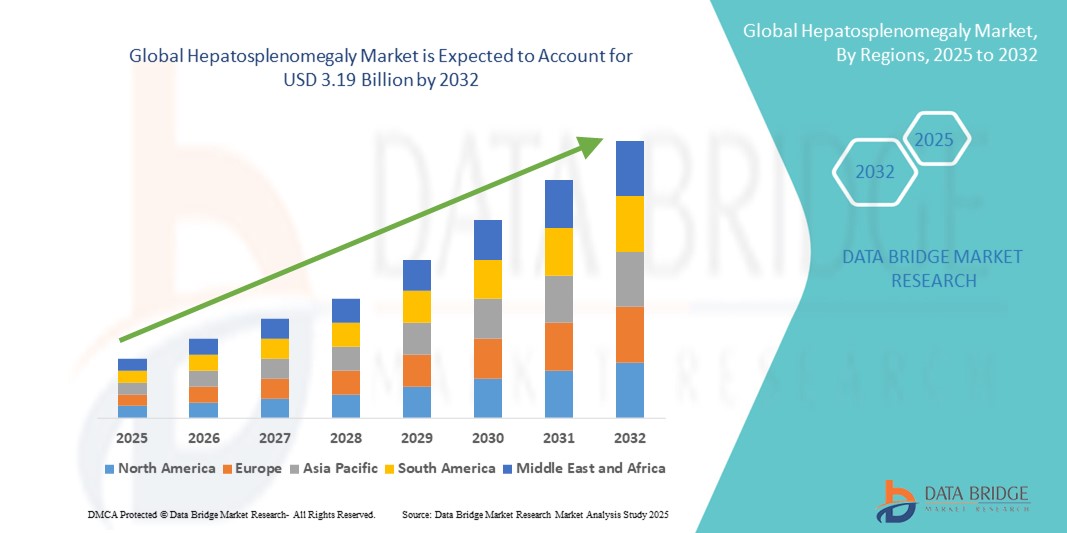
- The global Hepatosplenomegaly market size was valued at USD 2.60 billion in 2024 and is expected to reach USD 3.19 billion by 2032, at a CAGR of 2.60% during the forecast period
- The market growth is largely fueled by the increasing prevalence of liver and spleen-related disorders, such as Gaucher disease, Niemann-Pick disease, and autoimmune hepatitis, along with advancements in diagnostic technologies and targeted therapies
- Furthermore, rising awareness about rare diseases and the availability of specialized treatments are driving the demand for hepatosplenomegaly management solutions, thereby significantly boosting the industry's growth
Hepatosplenomegaly Market Analysis
- Hepatosplenomegaly, characterized by the abnormal enlargement of the liver and spleen, is increasingly recognized as a critical condition associated with metabolic, infectious, and inflammatory diseases, making timely diagnosis and management essential in both pediatric and adult patient populations
- The escalating demand for hepatosplenomegaly management solutions is primarily fueled by the rising prevalence of liver- and spleen-related disorders, such as Gaucher disease, Niemann-Pick disease, and autoimmune hepatitis, coupled with advancements in diagnostic technologies and targeted therapies
- North America is projected to be the largest market for hepatosplenomegaly management, accounting for a revenue share of 45.5% in 2024, driven by advanced healthcare infrastructure, early disease diagnosis, high awareness levels, and the presence of key pharmaceutical and biotechnology players actively developing treatment options
- Asia-Pacific is expected to be the fastest-growing region in the hepatosplenomegaly market during the forecast period, owing to increasing healthcare accessibility, rising awareness about rare diseases, and growing investment in healthcare infrastructure
- The medication segment dominated the hepatosplenomegaly market with a market share of 50.5% in 2024, driven by patient preference for pharmacological interventions, with enzyme replacement therapies, gene therapies, and symptom management approaches representing the leading treatment modalities
Report Scope and Hepatosplenomegaly Market Segmentation
|
Attributes |
Hepatosplenomegaly Key Market Insights |
|
Segments Covered |
|
|
Countries Covered |
North America
Europe
Asia-Pacific
Middle East and Africa
South America
|
|
Key Market Players |
|
|
Market Opportunities |
|
|
Value Added Data Infosets |
In addition to the insights on market scenarios such as market value, growth rate, segmentation, geographical coverage, and major players, the market reports curated by the Data Bridge Market Research also include in-depth expert analysis, pricing analysis, brand share analysis, consumer survey, demography analysis, supply chain analysis, value chain analysis, raw material/consumables overview, vendor selection criteria, PESTLE Analysis, Porter Analysis, and regulatory framework. |
Hepatosplenomegaly Market Trends
Advancements in Targeted and Gene Therapies
- A significant and accelerating trend in the global hepatosplenomegaly market is the development and adoption of targeted therapies and gene-based treatments, aimed at addressing the underlying causes of liver and spleen enlargement in rare diseases such as Gaucher and Niemann-Pick disease
- For instance, enzyme replacement therapies (ERT) and substrate reduction therapies (SRT) are increasingly integrated into treatment regimens to improve patient outcomes, reduce organ enlargement, and enhance quality of life. Similarly, emerging gene therapy approaches are being designed to provide long-term therapeutic effects with fewer side effects
- Targeted treatment integration enables personalized management plans, optimizing dosing and therapy timing based on patient-specific factors, improving efficacy, and minimizing adverse effects. Furthermore, advancements in diagnostic tools allow earlier detection and monitoring of disease progression, enabling timely intervention
- The seamless integration of these therapies with comprehensive patient care platforms, including digital health monitoring, telemedicine, and clinical follow-up systems, allows physicians and caregivers to manage treatment outcomes more effectively
- This trend toward more precise, individualized, and integrated treatment approaches is fundamentally reshaping expectations for hepatosplenomegaly care. Consequently, companies such as Sanofi Genzyme and Shire are expanding their portfolios with advanced ERT and gene therapy options for improved patient management
- The demand for innovative, effective, and patient-centric hepatosplenomegaly therapies is growing rapidly across both developed and emerging markets, as patients and healthcare providers increasingly prioritize long-term disease management and improved quality of life
Hepatosplenomegaly Market Dynamics
Driver
Increasing Prevalence of Rare Liver and Spleen Disorders
- The rising prevalence of liver- and spleen-related disorders, such as Gaucher disease, Niemann-Pick disease, and autoimmune hepatitis, coupled with growing awareness among patients and physicians, is a significant driver for the hepatosplenomegaly market
- For instance, recent initiatives by Sanofi Genzyme to expand access to enzyme replacement therapy in multiple regions are expected to boost market growth. Such strategies by key pharmaceutical companies are anticipated to drive adoption of hepatosplenomegaly therapies in the forecast period
- As early diagnosis improves and more patients are identified, demand for effective management options, including enzyme replacement and gene therapies, increases significantly
- Furthermore, government and non-government programs supporting rare disease treatment access, coupled with increasing healthcare expenditure, are making advanced therapies more widely available, expanding market penetration
- Patient preference for comprehensive care, improved safety profiles, and long-term efficacy of treatments is propelling the adoption of advanced hepatosplenomegaly therapies globally
Restraint/Challenge
High Treatment Costs and Limited Access in Emerging Regions
- The high cost of advanced therapies, including enzyme replacement and gene therapies, poses a significant challenge to broader market adoption, particularly in developing regions where healthcare funding and insurance coverage may be limited
- For instance, the annual cost of some enzyme replacement therapies can exceed hundreds of thousands of dollars per patient, limiting accessibility for many patients and constraining market growth in low- and middle-income countries
- Ensuring equitable access through reimbursement policies, patient assistance programs, and cost-effective therapy options is crucial to expanding market reach. In addition, the complexity of therapy administration and the need for specialized healthcare infrastructure can hinder adoption in resource-limited settings
- While ongoing efforts aim to develop more affordable and simplified treatment options, the high perceived cost and logistical challenges continue to restrict widespread uptake
- Overcoming these challenges through innovative pricing strategies, patient support programs, and broader healthcare infrastructure development will be vital for sustained growth in the global hepatosplenomegaly market
Hepatosplenomegaly Market Scope
The market is segmented on the basis of treatment, diagnosis, symptoms, dosage, route of administration, end-users, and distribution channels
- By Treatment
On the basis of treatment, the hepatosplenomegaly market is segmented into medication, chemotherapy, radiotherapy, liver transplant, and others. The medication segment dominated the market with the largest revenue share of 50.5% in 2024, driven by patient preference for pharmacological interventions such as enzyme replacement therapies (ERT) and substrate reduction therapies (SRT). Medications are favored for their ease of administration, reduced invasiveness, and suitability for long-term disease management. Pharmaceutical companies continue to invest in R&D to improve efficacy, minimize side effects, and provide personalized treatment plans. Medications also allow combination with supportive therapies, enhancing overall treatment outcomes. Hospitals and clinics prioritize medication-based therapies due to established treatment protocols and easier monitoring of patient response.
The liver transplant segment is anticipated to witness the fastest growth from 2025 to 2032, owing to improvements in surgical techniques, post-operative care, and organ availability. Liver transplantation offers a curative solution for severe liver dysfunction caused by hepatosplenomegaly. Rising awareness among healthcare providers and patients about transplant benefits is fueling adoption. Advancements in immunosuppressive therapies reduce post-transplant complications and improve patient survival. Developed countries are witnessing a higher uptake due to better healthcare infrastructure, while emerging markets are gradually adopting transplant procedures. The segment growth is further supported by increasing government and NGO initiatives to improve access to organ transplantation.
- By Diagnosis
On the basis of diagnosis, the hepatosplenomegaly market is segmented into MRI, X-ray, ultrasound, blood tests, CT scan, biopsy, and others. The ultrasound segment dominated the market in 2024, due to its affordability, non-invasive nature, and ease of use in both outpatient and hospital settings. Ultrasound allows real-time visualization of liver and spleen size, supporting early detection and disease monitoring. Its portability increases accessibility in remote or resource-limited areas. Ultrasound is often the first-line diagnostic tool for suspected hepatosplenomegaly cases. Clinicians rely on ultrasound for routine monitoring and treatment evaluation. Widespread availability of trained technicians further drives ultrasound adoption globally.
The MRI segment is expected to witness the fastest CAGR from 2025 to 2032, driven by its superior imaging resolution and ability to provide detailed anatomical and functional information. MRI is preferred in complex cases where precise assessment of organ structure and tissue characteristics is required. Its non-invasive nature and absence of radiation make it a safe option for repeated monitoring. Hospitals and specialty centers increasingly invest in MRI infrastructure to support accurate diagnosis. Rising awareness among clinicians about MRI’s diagnostic advantages supports its adoption. MRI-based diagnostics also enable better treatment planning and outcome prediction.
- By Symptoms
On the basis of symptoms, the hepatosplenomegaly market is segmented into fatigue, tenderness, fever, nausea and vomiting, abdominal pain in the upper-right region, swelling of the abdomen, persistent itching, brown urine, jaundice, clay-colored stool, pain, and others. The abdominal pain in the upper-right region segment dominated the market in 2024, as it is one of the primary symptoms prompting medical consultation. Persistent pain often leads to early diagnostic testing and treatment initiation. This symptom is common across multiple hepatosplenomegaly-related disorders, enhancing its relevance in clinical management. Physicians use pain severity to monitor disease progression and therapy effectiveness. Awareness campaigns targeting early recognition of pain improve patient outcomes. Diagnostic and treatment services for pain-related symptoms contribute substantially to market revenue.
The jaundice segment is expected to witness the fastest growth from 2025 to 2032, owing to its direct link with liver dysfunction severity. Jaundice often triggers comprehensive diagnostic evaluation, leading to timely intervention. Rising awareness of jaundice as a critical symptom encourages early healthcare seeking behavior. The segment is supported by advanced diagnostic tests to monitor bilirubin levels. Increasing patient education initiatives enhance detection rates, particularly in emerging markets. Jaundice-driven demand also accelerates the adoption of both pharmacological and supportive therapies.
- By Dosage
On the basis of dosage, the hepatosplenomegaly market is segmented into injections, tablets, and others. The injection segment dominated the market in 2024, largely due to the prevalence of enzyme replacement therapies and other parenteral treatments. Injections allow precise dosing and rapid therapeutic effect, critical for severe cases. Hospitals and specialized centers prefer injectable treatments to monitor patient response closely. Injectable therapies are often used in combination with supportive care to optimize outcomes. The segment benefits from ongoing development of improved formulations with reduced side effects. Healthcare providers emphasize injections for patients requiring long-term management under supervision.
The tablet segment is expected to witness the fastest growth from 2025 to 2032, driven by convenience, patient preference, and suitability for home administration. Oral therapies support outpatient care and improve adherence to long-term treatment plans. Pharmaceutical companies are investing in oral alternatives to previously injectable therapies. Tablets reduce the need for hospital visits and healthcare provider supervision. The segment growth is supported by rising patient awareness and education about self-administered treatments. Increasing availability of combination oral therapies further fuels market expansion.
- By Route of Administration
On the basis of route of administration, the hepatosplenomegaly market is segmented into oral, parenteral, and others. The parenteral segment dominated the market in 2024, owing to the use of intravenous enzyme replacement therapies requiring controlled dosing. Parenteral administration ensures accurate delivery of active compounds for optimal efficacy. Hospitals and clinics prefer this route to monitor treatment response and manage side effects. Parenteral therapies remain standard for severe and complex cases. Adoption is reinforced by established clinical protocols and healthcare provider experience. Technological advances in infusion devices improve safety and patient compliance.
The oral segment is expected to witness the fastest growth from 2025 to 2032, driven by development of patient-friendly oral formulations and homecare options. Oral administration enhances convenience, adherence, and quality of life for patients. Pharmaceutical innovations are expanding oral therapy options for previously injectable treatments. Digital health solutions support adherence monitoring for oral therapies. Rising outpatient treatment adoption further boosts oral therapy usage. Growth is particularly strong in emerging markets due to improved access and affordability.
- By End-Users
On the basis of end-users, the hepatosplenomegaly market is segmented into clinics, hospitals, and others. The hospitals segment dominated the market in 2024, due to the need for advanced diagnostics, specialized treatment administration, and multidisciplinary patient care. Hospitals provide comprehensive monitoring for enzyme and gene therapies, ensuring safety and efficacy. They house expert hepatologists and hematologists essential for complex cases. Hospital dominance is also supported by infrastructure for inpatient care and post-treatment observation. Government and private hospital initiatives further boost patient access. The segment captures the highest revenue share due to concentrated treatment volumes.
The clinics segment is expected to witness the fastest growth from 2025 to 2032, driven by outpatient care trends, early diagnosis, and routine monitoring of mild to moderate cases. Clinics provide convenient access for patients and reduce hospital congestion. Increasing investment in diagnostic and treatment capabilities enables clinics to manage hepatosplenomegaly effectively. Telemedicine integration with clinic services supports monitoring and follow-up. Awareness campaigns encourage patients to seek clinic-based evaluation early. Rapid expansion of specialty outpatient centers in emerging regions accelerates market growth.
- By Distribution Channel
On the basis of distribution channels, the hepatosplenomegaly market is segmented into hospital pharmacies, retail pharmacies, and online pharmacies. The hospital pharmacy segment dominated the market in 2024, as complex therapies such as injections and enzyme replacement treatments are dispensed under professional supervision. Hospital pharmacies ensure proper storage, handling, and patient counseling. They are integrated with hospital treatment protocols, improving compliance and safety. The segment benefits from high patient volumes and structured supply chains. Advanced therapies often require controlled distribution through hospital pharmacies. Hospitals remain a critical channel for delivering treatment to patients requiring intensive care.
The online pharmacy segment is expected to witness the fastest growth from 2025 to 2032, driven by increasing digital healthcare adoption, e-commerce penetration, and convenience for patients in remote locations. Online pharmacies enable home delivery of oral medications and provide prescription management support. Integration with telemedicine platforms improves accessibility and adherence. Patients increasingly prefer online channels to reduce travel and access medicines quickly. Growing trust in online services and secure payment options fuels adoption. The segment offers scalability and broader geographic coverage, supporting rapid market expansion.
Hepatosplenomegaly Market Regional Analysis
- North America is projected to be the largest market for hepatosplenomegaly management, accounting for a revenue share of 45.5% in 2024, driven by advanced healthcare infrastructure, early disease diagnosis, high awareness levels, and the presence of key pharmaceutical and biotechnology players actively developing treatment options
- Patients and healthcare providers in the region have high awareness of rare liver- and spleen-related disorders, leading to increased adoption of enzyme replacement therapies, gene therapies, and other advanced treatment options
- The market growth is further supported by well-established healthcare systems, high healthcare expenditure, and strong insurance coverage, enabling easier access to diagnostic services, specialized treatments, and continuous patient monitoring
U.S. Hepatosplenomegaly Market Insight
The U.S. hepatosplenomegaly market captured the largest revenue share of approximately 40% in 2024 within North America, fueled by advanced healthcare infrastructure and high awareness of rare liver- and spleen-related disorders. Patients and healthcare providers are increasingly prioritizing early diagnosis and the adoption of enzyme replacement therapies, gene therapies, and other advanced treatments. The growing presence of specialized clinics, hospitals, and research centers further supports market expansion. Moreover, the integration of digital health tools and telemedicine platforms is enhancing patient monitoring and follow-up care. Rising government initiatives and insurance coverage for rare disease management also contribute to the market’s growth. Overall, the combination of technological readiness, healthcare accessibility, and patient awareness strengthens the U.S. market position.
Europe Hepatosplenomegaly Market Insight
The Europe hepatosplenomegaly market is projected to expand at a substantial CAGR throughout the forecast period, driven by increasing prevalence of rare liver and spleen disorders and stringent healthcare regulations. The demand for timely diagnosis and effective treatment options is fostering the adoption of enzyme replacement therapies and gene-based interventions. European healthcare systems are investing in advanced diagnostic technologies, including MRI and ultrasound, for better disease management. Rising urbanization and improved healthcare access are supporting early detection and treatment. The market is witnessing strong growth across hospitals, clinics, and specialty centers. Awareness campaigns and patient support programs further enhance treatment uptake in the region.
U.K. Hepatosplenomegaly Market Insight
The U.K. hepatosplenomegaly market is anticipated to grow at a noteworthy CAGR during the forecast period, driven by increasing awareness of rare liver- and spleen-related disorders and rising demand for advanced treatment options. Patients and healthcare providers are increasingly prioritizing early diagnosis and long-term management strategies. Government initiatives and reimbursement programs for rare disease therapies are supporting market adoption. The U.K.’s well-developed healthcare infrastructure, combined with strong clinical research networks, promotes the availability of enzyme replacement and gene therapies. Rising patient education and advocacy programs further stimulate treatment uptake. In addition, the trend toward specialized outpatient care enhances accessibility and patient compliance.
Germany Hepatosplenomegaly Market Insight
The Germany hepatosplenomegaly market is expected to expand at a considerable CAGR during the forecast period, fueled by increasing awareness of rare liver- and spleen-related disorders and demand for advanced therapeutic solutions. Germany’s emphasis on healthcare innovation, precision medicine, and robust infrastructure encourages the adoption of enzyme replacement and gene therapies. Integration of advanced diagnostics, including MRI and ultrasound, supports early disease detection and treatment optimization. Hospitals and specialized clinics play a key role in administering complex therapies and monitoring patient outcomes. Government and insurance initiatives improve accessibility and affordability for patients. The focus on sustainable and effective treatment solutions aligns with local patient expectations, driving market growth.
Asia-Pacific Hepatosplenomegaly Market Insight
The Asia-Pacific hepatosplenomegaly market is poised to grow at the fastest CAGR during the forecast period of 2025 to 2032, driven by rising awareness of rare liver- and spleen-related disorders, increasing healthcare infrastructure, and growing adoption of advanced therapies. Countries such as China, Japan, and India are witnessing rapid expansion of specialized clinics and diagnostic facilities. Government programs promoting rare disease treatment access and improved reimbursement policies are enhancing market growth. Technological advancements in diagnostics and telemedicine are improving early detection and monitoring. The rising middle-class population and increasing healthcare expenditure further support adoption of enzyme replacement and gene therapies. Emerging healthcare hubs and domestic manufacturing of treatments are expanding availability and affordability in the region.
Japan Hepatosplenomegaly Market Insight
The Japan hepatosplenomegaly market is gaining momentum due to the country’s high awareness of rare diseases, strong healthcare infrastructure, and demand for convenience in treatment access. The adoption of enzyme replacement therapies and gene therapies is increasing in both residential outpatient centers and hospital settings. Integration with digital health monitoring and telemedicine supports better patient management. Japan’s aging population drives demand for safer, easier-to-use treatment options. Specialized hospitals and clinics focus on early diagnosis and comprehensive care. Government support and insurance coverage enhance accessibility and affordability, further stimulating market growth.
India Hepatosplenomegaly Market Insight
The India hepatosplenomegaly market accounted for the largest market revenue share in Asia-Pacific in 2024, attributed to increasing healthcare awareness, rapid urbanization, and rising adoption of advanced therapies. The expanding middle-class population and government initiatives for rare disease management are supporting growth. Hospitals, specialty clinics, and diagnostic centers are increasing accessibility to enzyme replacement therapies and gene therapies. The push toward improved healthcare infrastructure and telemedicine integration facilitates early diagnosis and long-term treatment management. Availability of affordable treatment options and domestic pharmaceutical manufacturing further propels the market. Overall, growing awareness, better access, and increasing healthcare expenditure are key factors driving market expansion in India.
Hepatosplenomegaly Market Share
The Hepatosplenomegaly industry is primarily led by well-established companies, including:
- Merck & Co., Inc. (U.S.)
- Bristol-Myers Squibb Company (U.S.)
- AstraZeneca (U.K.)
- Sanofi (France)
- Novartis AG (Switzerland)
- AbbVie Ltd (U.S.)
- Gilead Sciences, Inc. (U.S.)
- Johnson & Johnson Services, Inc. (U.S.)
- Pfizer Inc. (U.S.)
- Lilly USA, LLC (U.S.)
- Amgen Inc. (U.S.)
- Bayer AG (Germany)
- F. Hoffmann-La Roche Ltd (Switzerland)
- GSK plc (U.K.)
- Boehringer Ingelheim International GmbH (Germany)
- Abbott (U.S.)
- Baxter International Inc. (U.S.)
- Medtronic (Ireland)
- Stryker (U.S.)
- Boston Scientific Corporation (U.S.)
What are the Recent Developments in Global Hepatosplenomegaly Market?
- In February 2025, Gilead Sciences announced that the European Commission granted conditional marketing authorization for seladelpar (Livdelzi) for the treatment of primary biliary cholangitis (PBC). This approval provides a new therapeutic option for patients with PBC, a chronic liver disease that can lead to hepatosplenomegaly. Seladelpar has demonstrated efficacy in improving liver function and reducing pruritus in clinical trials
- In January 2025, Durham-based biotech firm Tune Therapeutics secured USD 175 million in funding to advance clinical trials of its gene therapy targeting chronic hepatitis B (HBV). This innovative approach utilizes epigenetic modulation to halt HBV replication, potentially offering a one-time cure. The upcoming trials in New Zealand and Hong Kong aim to assess the therapy's efficacy and safety, marking a significant step in HBV treatment development
- In November 2024, Vivet Therapeutics presented promising findings on its gene therapy program, VTX-806, at the American Association for the Study of Liver Diseases Annual Meeting. The therapy demonstrated normalization of toxic bile acid metabolites in various organs, including the liver, in a mouse model of cerebrotendinous xanthomatosis, a condition associated with hepatosplenomegaly
- In April 2025, Gilead Sciences presented its latest advancements in the treatment of primary biliary cholangitis and viral hepatitis, conditions that can lead to hepatosplenomegaly. The company's research focuses on developing therapies to address these liver diseases effectively
- In February 2023, the U.S. FDA approved Lamzede (velmanase alfa), the first enzyme replacement therapy for non-central nervous system manifestations of alpha-mannosidosis, a rare genetic disorder leading to hepatosplenomegaly. This approval provides a critical treatment option for patients with this condition

- Interactive Data Analysis Dashboard
- Company Analysis Dashboard for high growth potential opportunities
- Research Analyst Access for customization & queries
- Competitor Analysis with Interactive dashboard
- Latest News, Updates & Trend analysis
- Harness the Power of Benchmark Analysis for Comprehensive Competitor Tracking
Data collection and base year analysis are done using data collection modules with large sample sizes. The stage includes obtaining market information or related data through various sources and strategies. It includes examining and planning all the data acquired from the past in advance. It likewise envelops the examination of information inconsistencies seen across different information sources. The market data is analysed and estimated using market statistical and coherent models. Also, market share analysis and key trend analysis are the major success factors in the market report. To know more, please request an analyst call or drop down your inquiry.
The key research methodology used by DBMR research team is data triangulation which involves data mining, analysis of the impact of data variables on the market and primary (industry expert) validation. Data models include Vendor Positioning Grid, Market Time Line Analysis, Market Overview and Guide, Company Positioning Grid, Patent Analysis, Pricing Analysis, Company Market Share Analysis, Standards of Measurement, Global versus Regional and Vendor Share Analysis. To know more about the research methodology, drop in an inquiry to speak to our industry experts.
Data Bridge Market Research is a leader in advanced formative research. We take pride in servicing our existing and new customers with data and analysis that match and suits their goal. The report can be customized to include price trend analysis of target brands understanding the market for additional countries (ask for the list of countries), clinical trial results data, literature review, refurbished market and product base analysis. Market analysis of target competitors can be analyzed from technology-based analysis to market portfolio strategies. We can add as many competitors that you require data about in the format and data style you are looking for. Our team of analysts can also provide you data in crude raw excel files pivot tables (Fact book) or can assist you in creating presentations from the data sets available in the report.












