


High-Altitude Hypoxia Drug Market Size
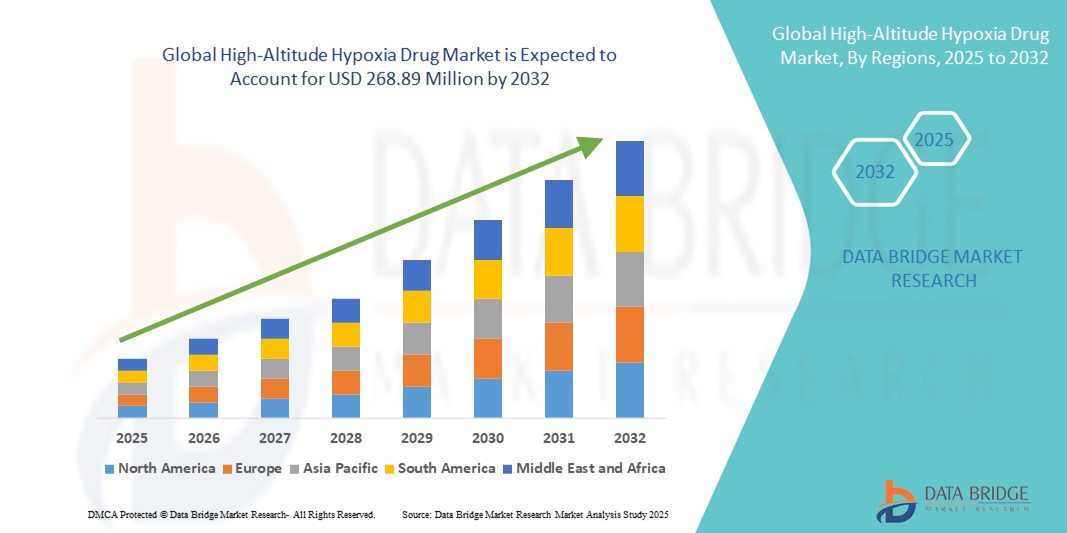
- The global high-altitude hypoxia drug market size was valued at USD 163.7 million in 2024 and is expected to reach USD 268.89 million by 2032, at a CAGR of 6.40% during the forecast period
- The market growth is largely fueled by the increasing awareness and adoption of pharmacological interventions to manage altitude-related illnesses, particularly among military personnel, high-altitude travelers, mountaineers, and residents of elevated regions. The demand is driven by the expanding use of these medications in both therapeutic and preventive applications for Acute Mountain Sickness (AMS), High-Altitude Pulmonary Edema (HAPE), and High-Altitude Cerebral Edema (HACE)
- Furthermore, rising consumer demand for safe, fast-acting, and clinically validated treatments is establishing high-altitude hypoxia drugs—such as acetazolamide, dexamethasone, and nifedipine—as preferred solutions for altitude adaptation and oxygen regulation. These converging factors are accelerating the uptake of high-altitude hypoxia drug solutions, thereby significantly boosting the industry's growth across both developed and developing nations
High-Altitude Hypoxia Drug Market Analysis
- High-altitude hypoxia drugs, such as acetazolamide, dexamethasone, and nifedipine, play a critical role in preventing and managing altitude-related illnesses including acute mountain sickness (AMS), high-altitude pulmonary edema (HAPE), and high-altitude cerebral edema (HACE). These drugs are becoming increasingly vital in supporting the health of mountaineers, soldiers, trekkers, athletes, and residents of elevated terrains
- The escalating demand for high-altitude hypoxia drugs is primarily fueled by the growing participation in adventure tourism, high-altitude military deployment, and increasing awareness among travelers and healthcare professionals regarding the risks of hypoxia at high elevations. In addition, the global rise in organized expeditions and medical preparedness protocols is supporting consistent pharmaceutical demand
- North America dominated the high-altitude hypoxia drug market, capturing the largest revenue share of 42.6% in 2024, supported by well-established healthcare infrastructure, active military operations in mountainous regions, and robust R&D initiatives. The U.S. contributes significantly to this share, with ongoing clinical studies and expanded use of preventive medications among professional climbers and military personnel
- Asia-Pacific is expected to be the fastest-growing region in the high-altitude hypoxia drug market during the forecast period, owing to the presence of major mountain ranges (e.g., Himalayas, Tibetan Plateau), growing domestic tourism, and rising government focus on healthcare in rural high-altitude communities
- The oral segment dominated the high-altitude hypoxia drug market with a market share of 58.3% in 2024, favored for its ease of administration, portability, and suitability for pre-acclimatization during travel
Report Scope and High-Altitude Hypoxia Drug Market Segmentation
|
Attributes |
High-Altitude Hypoxia Drug Key Market Insights |
|
Segments Covered |
|
|
Countries Covered |
North America
Europe
Asia-Pacific
Middle East and Africa
South America
|
|
Key Market Players |
|
|
Market Opportunities |
|
|
Value Added Data Infosets |
In addition to the insights on market scenarios such as market value, growth rate, segmentation, geographical coverage, and major players, the market reports curated by the Data Bridge Market Research also include in-depth expert analysis, pricing analysis, brand share analysis, consumer survey, demography analysis, supply chain analysis, value chain analysis, raw material/consumables overview, vendor selection criteria, PESTLE Analysis, Porter Analysis, and regulatory framework. |
High-Altitude Hypoxia Drug Market Trends
Enhanced Efficacy Through Advancements in Drug Formulation and Delivery
- A significant and accelerating trend in the global high-altitude hypoxia drug market is the advancement in drug formulation technologies and targeted delivery systems. These innovations are improving the bioavailability, onset time, and tolerability of medications used to prevent or treat altitude-related illnesses such as Acute Mountain Sickness (AMS), High-Altitude Pulmonary Edema (HAPE), and High-Altitude Cerebral Edema (HACE)
- For instance, recent developments in extended-release acetazolamide formulations have enabled better patient compliance and reduced the frequency of dosing, making it more effective for long-duration treks or expeditions. Novel formulations of dexamethasone and nifedipine, commonly used for HAPE and HACE, are also being tailored for use in austere environments where rapid symptom relief is critical
- The use of sublingual and transdermal delivery systems is being explored to provide faster relief and eliminate the need for water—a key advantage in high-altitude scenarios where dehydration is a risk. These methods also reduce gastrointestinal side effects, improving drug adherence during prolonged exposure at high elevations
- Furthermore, increased clinical research and military-backed studies in countries such as the U.S., China, and India are fueling the development of next-generation hypoxia drugs, some of which are being optimized to enhance oxygen utilization at the cellular level, particularly in elite climbers and soldiers deployed in high-altitude conflict zones
- This trend toward precision pharmacology and environment-specific drug design is fundamentally transforming the way high-altitude illnesses are managed, driving wider acceptance among healthcare providers, expedition leaders, and defense organizations
- As global adventure tourism, high-altitude living, and defense operations in mountainous regions grow, the demand for safe, effective, and rapidly acting hypoxia treatments is expected to rise substantially—creating strong incentives for both innovation and market expansion in the years ahead
High-Altitude Hypoxia Drug Market Dynamics
Driver
Growing Need Due to Rising High-Altitude Exposure and Health Awareness
- The increasing exposure of individuals to high altitudes due to expanding adventure tourism, military deployments, high-altitude labor, and athletic training is significantly driving the demand for effective pharmacological treatments against altitude-related illnesses such as Acute Mountain Sickness (AMS), High-Altitude Pulmonary Edema (HAPE), and High-Altitude Cerebral Edema (HACE)
- For instance, in April 2024, a new clinical program initiated by the U.S. Army Medical Research Institute of Infectious Diseases aimed to assess the efficacy of combination therapies (e.g., acetazolamide and dexamethasone) for rapid acclimatization among deployed troops operating in mountainous terrains. Such programs by key institutions are expected to accelerate drug innovation and adoption across both civilian and defense sectors
- As global awareness of altitude-related health risks rises, especially in areas such as Himalayan tourism, Andes expeditions, and remote construction projects, there is a growing emphasis on preventive and on-the-go treatment options. Oral medications that offer rapid action, extended relief, and better tolerance are seeing strong uptake among both travelers and physicians
- Furthermore, the increasing availability of these drugs through online pharmacies, travel clinics, and airport dispensaries has made them more accessible to the general public. The demand for over-the-counter and prescription solutions continues to grow as travelers seek to minimize health risks during high-altitude activities
- The need for rapid acclimatization and altitude readiness in extreme environments such as Everest base camps, mining operations in the Andes, and high-altitude airports such as Daocheng Yading underscores the importance of reliable pharmaceutical support, making high-altitude hypoxia drugs a key part of medical preparedness kits
Restraint/Challenge
Side Effects and Limited Awareness in Low-Penetration Regions
- While high-altitude hypoxia drugs such as acetazolamide and dexamethasone are clinically effective, their potential side effects—such as frequent urination, numbness, nausea, or mood changes—can limit patient adherence, particularly during physically demanding high-altitude exposure. This remains a concern among healthcare providers when recommending prophylactic use for non-critical climbers or travelers
- In addition, limited awareness and underdiagnosis of altitude-related illnesses in developing nations or among first-time travelers reduce the uptake of these treatments. Many people fail to prepare adequately for high elevations, leading to preventable symptoms and complications
- The lack of standardized dosing protocols and limited regional regulatory approvals for certain drug types (e.g., slow-release formulations or pediatric doses) further constrains the market, especially in countries without established high-altitude medical guidelines
- Overcoming these barriers will require increased physician training, expanded public health outreach, and the development of safer, better-tolerated alternatives with minimal side effects. Partnerships between healthcare providers, government agencies, and tourism operators can also help improve awareness and early intervention
High-Altitude Hypoxia Drug Market Scope
The market is segmented on the basis of type, route of administration, mechanism of action, application, end user, and distribution channel.
- By Type
On the basis of type, the high-altitude hypoxia drug market is segmented into acetazolamide, dexamethasone, nifedipine, phosphodiesterase (PDE) inhibitors, and others. The acetazolamide segment dominated the market with the largest revenue share of 42.6% in 2024, due to its effectiveness in preventing Acute Mountain Sickness (AMS) and its wide availability as a first-line treatment.
The phosphodiesterase (PDE) inhibitors (such as sildenafil) segment is expected to register the fastest CAGR of 9.7% from 2025 to 2032, owing to their increasing use in treating High-Altitude Pulmonary Edema (HAPE) and improving oxygenation at high altitudes.
- By Route of Administration
On the basis of route of administration, the high-altitude hypoxia drug market is segmented into oral, intravenous, and inhalation. The oral segment held the largest market share of 58.3% in 2024, favored for its ease of administration, portability, and suitability for pre-acclimatization during travel.
The intravenous segment is projected to witness the fastest growth at a CAGR of 10.4%, primarily used in emergency and hospital settings for treating severe HAPE and HACE symptoms.
- By Mechanism of Action
On the basis of mechanism of action, the high-altitude hypoxia drug market is segmented into carbonic anhydrase inhibitors, corticosteroids, calcium channel blockers, PDE inhibitors, and others. The carbonic anhydrase inhibitors segment, which includes Acetazolamide, dominated with a 38.9% market share in 2024, owing to its long-standing clinical use and proven efficacy in altitude sickness prevention.
The corticosteroids segment is expected to see a strong CAGR of 9.2% from 2025 to 2032 due to rising use of Dexamethasone for High-Altitude Cerebral Edema (HACE).
- By Application
On the basis of application, the high-altitude hypoxia drug market is segmented into acute mountain sickness (AMS), high-altitude pulmonary edema (HAPE), high-altitude cerebral edema (HACE), and others. The acute mountain sickness (AMS) segment captured the largest revenue share of 49.1% in 2024, driven by the growing number of recreational high-altitude travelers and mountaineers.
The high-altitude pulmonary edema (HAPE) segment is projected to witness the fastest growth at a CAGR of 10.9% from 2025 to 2032 due to increasing deployment of defense personnel and trekkers to high-risk elevations.
- By End User
On the basis of end user, the high-altitude hypoxia drug market is segmented into hospitals, clinics, military medical units, travel medicine centers, and others. Hospitals led the segment with 39.7% of revenue share in 2024, due to the increasing number of altitude-related emergencies treated in urban and rural healthcare facilities.
Military Medical Units are anticipated to grow at the highest CAGR of 11.3%, as nations strengthen preparedness for high-altitude defense missions in regions such as the Himalayas and Andes.
- By Distribution Channel
On the basis of distribution channel, the high-altitude hypoxia drug market is segmented into Hospital Pharmacies, Retail Pharmacies, and Online Pharmacies. Retail Pharmacies dominated the market with a 45.6% share in 2024, given their accessibility in both urban and semi-urban areas and growing traveler awareness.
Online Pharmacies are projected to grow at the fastest CAGR of 12.6%, supported by rising e-commerce penetration, availability of travel kits, and direct-to-consumer medical solutions.
High-Altitude Hypoxia Drug Market Regional Analysis
- The North America high‑altitude hypoxia drug market dominated with the largest revenue share of 42.6% in 2024, driven by high prevalence of altitude-related tourism, strong adoption of preventive medications such as acetazolamide, and robust pharmaceutical infrastructure. Widespread awareness among hikers, mountaineers, and military personnel contributed significantly to regional market leadership
- North America’s market growth is also supported by high-altitude military training programs and mountain-based athletic performance centers that routinely administer prophylactic drugs such as acetazolamide and dexamethasone to personnel and athletes. This institutional demand is further boosting overall consumption
- The increasing prevalence of high-altitude travel to destinations such as Colorado, Alaska, and Canadian Rockies is prompting more pre-travel medical consultations, during which altitude sickness prevention drugs are frequently prescribed. The rise in travel medicine clinics and mobile health apps offering altitude guidance is further fueling regional demand
U.S. High-Altitude Hypoxia Drug Market Insight
The U.S. high-altitude hypoxia drug market captured the largest revenue share of 65% in 2024 within North America, driven by a high volume of domestic and international travelers heading to mountainous destinations such as the Rocky Mountains, Sierra Nevada, and Alaska. The well-established network of travel medicine clinics, combined with growing awareness about acute mountain sickness (AMS) and related hypoxic conditions, is fueling the demand for prophylactic medications such as acetazolamide and dexamethasone. Additionally, the presence of top pharmaceutical manufacturers and increased distribution through telehealth services and retail pharmacies have significantly boosted market accessibility and consumer reach.
Europe High-Altitude Hypoxia Drug Market Insight
The Europe high-altitude hypoxia drug market is projected to grow at a healthy CAGR over the forecast period, supported by increasing travel to the Alps, Pyrenees, and other high-altitude regions. European healthcare providers are increasingly recommending altitude sickness prevention medication as part of standard travel health consultations. Regulatory support for preventive medicine, along with rising participation in endurance sports, mountaineering, and ski tourism, is further propelling demand. Moreover, the presence of strong pharmaceutical distribution networks across countries such as France, Germany, and Switzerland is supporting regional growth.
U.K. High-Altitude Hypoxia Drug Market Insight
The U.K. high-altitude hypoxia drug market is expected to expand steadily over the forecast period, fueled by a rising number of outbound tourists participating in trekking and adventure travel in high-altitude locations such as the Himalayas, Andes, and Kilimanjaro. Increased consumer awareness regarding AMS symptoms, coupled with access to over-the-counter and prescription-based altitude sickness medications, is contributing to market expansion. Additionally, growing interest in pre-travel medical consultations and online pharmacy platforms is enhancing access to prophylactic and therapeutic hypoxia drugs across the U.K.
Germany High-Altitude Hypoxia Drug Market Insight
The Germany high-altitude hypoxia drug market is growing steadily due to the country’s active population engaging in alpine tourism and international mountaineering expeditions. German travelers are increasingly incorporating altitude-related medications into their travel kits for destinations above 2,500 meters. Strong insurance and healthcare frameworks, along with awareness campaigns by healthcare providers, have led to a more informed consumer base. Furthermore, Germany’s robust pharmaceutical infrastructure ensures the availability of FDA and EMA-approved hypoxia drugs through both retail and online channels.
Asia-Pacific High-Altitude Hypoxia Drug Market Insight
The Asia-Pacific high-altitude hypoxia drug market is anticipated to grow at the fastest CAGR from 2025 to 2032, led by increasing travel to high-altitude regions such as the Himalayas (Nepal, India), Tibetan Plateau (China), and mountainous areas of Indonesia and the Philippines. Growing adventure tourism, along with improved medical awareness about AMS and HAPE (High-Altitude Pulmonary Edema), is accelerating drug adoption. Government support for mountain healthcare infrastructure and improved availability of medicines in remote regions are further boosting regional demand.
Japan High-Altitude Hypoxia Drug Market Insight
The Japan high-altitude hypoxia drug market is gaining momentum, driven by the popularity of domestic mountain destinations such as Mount Fuji and international trekking among Japanese tourists. The country’s strong pharmaceutical R&D ecosystem supports the development and domestic availability of effective altitude medications. Moreover, health-conscious travelers and sports enthusiasts are increasingly seeking preventive options before high-altitude trips, supported by national travel health guidelines and partnerships between pharmacies and travel clinics.
China High-Altitude Hypoxia Drug Market Insight
The China high-altitude hypoxia drug market accounted for the largest share in the Asia-Pacific market in 2024, due to its vast population, expanding middle class, and booming domestic tourism in high-altitude regions such as Tibet, Yunnan, and Qinghai. The market benefits from strong local production of AMS-related drugs and wide availability through retail, online pharmacies, and hospital networks. Rising awareness through government health campaigns, improved rural healthcare access, and an increase in organized group expeditions are further driving demand for high-altitude hypoxia drugs.
High-Altitude Hypoxia Drug Market Share
The high-altitude hypoxia drug industry is primarily led by well-established companies, including:
- Teva Pharmaceutical Industries Ltd. (Israel)
- Taro Pharmaceutical Industries Ltd. (Japan)
- Sun Pharmaceutical Industries Ltd. (India)
- Lannett Company, Inc. (U.S.)
- Heritage Pharmaceuticals Inc. (U.S.)
- Nostrum Laboratories, Inc. (U.S.)
- Strides Pharma Science Ltd. (India)
- X-Gen Pharmaceuticals, Inc. (U.S.)
- Viatris Inc. (U.S.)
- Accord Healthcare (U.K.)
- Alkem Laboratories Ltd. (India)
- Intas Pharmaceuticals Ltd. (India)
- Novartis AG (Switzerland)
- Merck & Co., Inc. (U.S.)
Latest Developments in Global High-Altitude Hypoxia Drug Market
- In February 2025, a team from Gladstone Institutes, UCSF, and Maze Therapeutics unveiled HypoxyStat—a novel drug that emulates the physiological effects of high-altitude, low-oxygen exposure. In preclinical trials using mice models of Leigh syndrome, HypoxyStat extended lifespan by more than threefold and reversed brain and muscle damage—even when administered at advanced disease stages. This breakthrough offers a potential paradigm shift in hypoxia-related drug design
- In March 2025, new research highlighted the critical role of the gut microbiota in high-altitude adaptation. Disruptions to intestinal barrier integrity and microbial composition—common in acute altitude exposure—were shown to trigger inflammation, contributing to symptoms of Acute Mountain Sickness (AMS). The findings suggest potential therapeutic avenues via probiotics, anti-inflammatory agents, and intestinal barrier reinforcement, which may support drug strategies for high-altitude illness

- Interactive Data Analysis Dashboard
- Company Analysis Dashboard for high growth potential opportunities
- Research Analyst Access for customization & queries
- Competitor Analysis with Interactive dashboard
- Latest News, Updates & Trend analysis
- Harness the Power of Benchmark Analysis for Comprehensive Competitor Tracking
Data collection and base year analysis are done using data collection modules with large sample sizes. The stage includes obtaining market information or related data through various sources and strategies. It includes examining and planning all the data acquired from the past in advance. It likewise envelops the examination of information inconsistencies seen across different information sources. The market data is analysed and estimated using market statistical and coherent models. Also, market share analysis and key trend analysis are the major success factors in the market report. To know more, please request an analyst call or drop down your inquiry.
The key research methodology used by DBMR research team is data triangulation which involves data mining, analysis of the impact of data variables on the market and primary (industry expert) validation. Data models include Vendor Positioning Grid, Market Time Line Analysis, Market Overview and Guide, Company Positioning Grid, Patent Analysis, Pricing Analysis, Company Market Share Analysis, Standards of Measurement, Global versus Regional and Vendor Share Analysis. To know more about the research methodology, drop in an inquiry to speak to our industry experts.
Data Bridge Market Research is a leader in advanced formative research. We take pride in servicing our existing and new customers with data and analysis that match and suits their goal. The report can be customized to include price trend analysis of target brands understanding the market for additional countries (ask for the list of countries), clinical trial results data, literature review, refurbished market and product base analysis. Market analysis of target competitors can be analyzed from technology-based analysis to market portfolio strategies. We can add as many competitors that you require data about in the format and data style you are looking for. Our team of analysts can also provide you data in crude raw excel files pivot tables (Fact book) or can assist you in creating presentations from the data sets available in the report.












