What is the High-Protein Cheese Chips Market Size and Growth Rate?
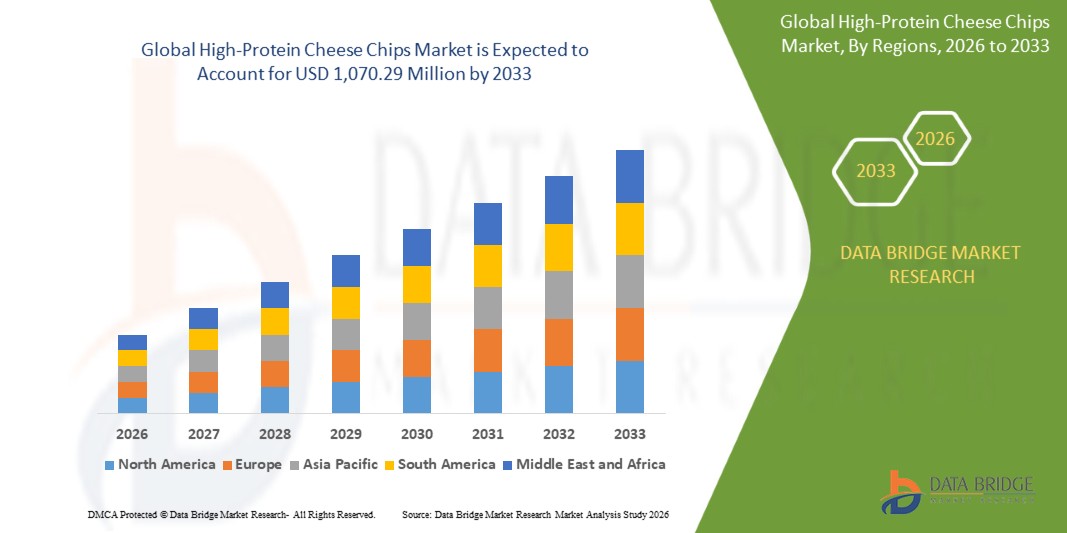
- As per Data Bridge Market Research analysis, the high-protein cheese chips market was valued at USD 517.83 million in 2025 and is projected to reach USD 1,070.29 million by 2033, growing at a CAGR of 9.50% from 2026 to 2033.
- The market is experiencing consistent growth driven by rising demand for protein-rich and low-carb snacks, increasing adoption of keto and clean-label diets, and expanding availability across supermarkets, convenience stores, and online retail platforms.
- The increasing shift toward healthier snacking, high-protein diets, and real-ingredient products, combined with growing demand for portable, shelf-stable alternatives to fried potato and tortilla chips, is supporting market adoption. Cheese-based crisps are being positioned across fitness nutrition, office snacking, school-safe lunchboxes, and keto lifestyles, offering consumers greater convenience in obtaining dense protein from cheese-based snacks, high-protein dairy snacks, and protein crisps.
Market Size & Forecast
- Global Market Value (2025): USD 517.83 Million
- Expected Market Value (2033): USD 1,070.29 Million
- Forecast CAGR (2026–2033): 9.50%
- Leading Region in 2025: North America
- Fastest Growing Region: Asia Pacific
What are the Major Takeaways of the High-Protein Cheese Chips Market?
- North America dominated the high-protein cheese chips market with the largest revenue share of 37.60% in 2025, supported by strong keto and protein-snacking culture, established retail infrastructure, and wide availability of premium cheese-based snacks.
- Asia-Pacific is expected to be the fastest-growing region at a CAGR of 12.30% from 2026 to 2033, fueled by rising disposable incomes, expanding modern retail, and growing awareness of protein-rich snacking.
- The baked cheese chips segment led the market with a 61.80% share in 2025, driven by clean-label positioning, simple ingredients, and a satisfying crunchy texture.
- Puffed cheese chips are the fastest-growing product type, projected to register a CAGR of 11.60%, reflecting rising demand for lighter textures, shelf-stable formats, and bolder flavor profiles.
- The parmesan segment dominated the cheese type category with a 41.20% revenue share in 2025, led by its aged, savory flavor and high protein content per serving.
- Supermarkets & hypermarkets accounted for 43.80% of the market share in 2025, preferred for wide brand selection, multipack availability, and in-store promotions.
- The online retail segment is the fastest-growing distribution channel, with a CAGR of 12.40%, driven by subscription models, marketplace convenience, and direct-to-consumer brand expansion.
Report Scope and High-Protein Cheese Chips Market Segmentation
|
Attributes |
High-Protein Cheese Chips Key Market Insights |
|
Segments Covered |
|
|
Countries Covered |
North America
Europe
Asia-Pacific
Middle East and Africa
South America
|
|
Key Market Players |
|
|
Market Opportunities |
|
|
Value Added Data Infosets |
In addition to the insights on market scenarios such as market value, growth rate, segmentation, geographical coverage, and major players, the market reports curated by the Data Bridge Market Research also include in-depth expert analysis, pricing analysis, brand share analysis, consumer survey, demography analysis, supply chain analysis, value chain analysis, raw material/consumables overview, vendor selection criteria, PESTLE Analysis, Porter Analysis, and regulatory framework. |
What is the Key Trend in the High-Protein Cheese Chips Market?
- High-protein cheese chips are increasingly evolving from niche keto indulgences into mainstream functional snacks, combining real-cheese simplicity, clean-label positioning, and dense protein delivery to replace conventional fried chips in everyday snacking occasions.
- For instance, in July 2026, according to Circana, U.S. snacking reached USD 231 billion in sales, up 3.2% year over year, with protein-rich options having gone fully mainstream, highlighting strong and growing consumer pull for functional snacks such as real-cheese protein chips, protein crisps, and other better-for-you alternatives to conventional fried snacks
- Baking, puffing, and vacuum-drying technologies are enabling manufacturers to deliver crunchy textures from 100% real cheese without refrigeration, artificial additives, or starch-based binders.
- Brands are increasingly printing protein content directly on front-of-pack, as consumers compare snack options on protein per serving, carbohydrate levels, and ingredient simplicity while shopping across physical and digital channels.
- For instance, in August 2026, according to FoodNavigator citing Mintel, 78% of consumers are actively trying to add more protein to their diets, while 45% are specifically seeking protein-forward snacks, demonstrating the expanding demand for protein-focused snacking products such as cheese crisps, and encouraging brands to launch new flavors, formats, and pack sizes
- As protein-forward snacking, clean-label formulation, flavor innovation, and e-commerce reach continue to advance, high-protein cheese chips are expected to expand beyond keto niches into mainstream snacking, meal toppings, and on-the-go nutrition.
What are the Key Drivers of the High-Protein Cheese Chips Market?
- The rapid shift toward protein-forward, low-carb, and clean-label snacking has significantly increased demand for crunchy alternatives to fried chips that deliver satisfying taste together with meaningful nutrition.
- For instance, in September 2025, according to the National Library of Medicine (NLM), a randomized clinical trial of 50 women with overweight or obesity found that a high-protein yogurt snack increased satiety 30 minutes after consumption compared with a high-fat peanut snack, supporting the role of protein-rich snacks in appetite control.
- Health-conscious consumers, fitness enthusiasts, working professionals, and students are adopting cheese-based protein snacks to satisfy cravings, manage hunger between meals, and avoid the carbohydrates and added sugars found in many conventional snacks.
- For instance, in July 2026, according to FoodNavigator citing Spins and Circana data, better-for-you snack sales rose 10% in the 52 weeks ending March 2026, compared with only 1% growth for conventional snacks, illustrating rising consumer preference for nutrition-forward products and supporting wider retail space for protein-rich snack categories.
- With retailers expanding protein snack sections and brands strengthening online distribution, high-protein cheese chips can gain wider visibility, trial, and repeat purchases across supermarkets, convenience stores, and e-commerce platforms.
What Factors Are Challenging the Growth of the High-Protein Cheese Chips Market?
- High-protein cheese chips depend on real cheese as the primary raw material, exposing manufacturers to dairy price fluctuations, milk supply variability, and higher ingredient costs.
- For instance, in June 2024, according to Eat This, Not That!, registered dietitians flagged a popular parmesan cheese crisp for containing 7 grams of saturated fat, equal to 35% of the daily value, and 350 milligrams of sodium per 28-gram serving, highlighting nutritional scrutiny.
- These nutritional considerations can create perception challenges among consumers monitoring saturated fat and sodium intake, while premium pricing per ounce compared with conventional chips may limit repeat purchases among price-sensitive households and value-oriented shoppers.
- Dairy allergens, lactose sensitivity, and vegan lifestyles further restrict the addressable consumer base, requiring manufacturers to invest in plant-based alternatives and clear allergen communication that may increase formulation and labeling costs.
- For instance, in July 2026, according to DairyReporter, cheddar prices declined 6.5% over the previous 12 months based on Global Dairy Trade data, while mozzarella prices rose 1.3% after heatwaves reduced European milk supplies, highlighting the uneven cheese price movements across regions that can complicate raw material procurement, pricing, contract negotiations, and margin planning for cheese snack manufacturers.
- The combination of volatile dairy input costs, nutritional scrutiny, allergen limitations, and intensifying competition from plant-based snacks, meat snacks, and protein crisps can constrain adoption among cost-sensitive consumers and smaller brands, particularly where conventional potato chips already satisfy basic snacking requirements.
How is the High-Protein Cheese Chips Market Segmented?
The high-protein cheese chips market is segmented on the basis of product type, cheese type, distribution channel, and end user.
- By Product Type
On the basis of product type, the high-protein cheese chips market is segmented into baked cheese chips and puffed cheese chips. The baked cheese chips segment dominated the market with 61.80% share in 2025, supported by clean-label positioning, simple ingredient lists, and strong consumer association with real cheese flavor. Baked cheese chips retain the natural taste of aged cheese while delivering a crunchy texture with high protein and minimal carbohydrates. They are increasingly used as standalone snacks, salad toppings, and charcuterie accompaniments. Gluten-free and keto-friendly positioning is further strengthening demand among health-conscious consumers. Expanding flavor portfolios and resealable packaging are also improving convenience and repeat purchase.
The puffed cheese chips segment is projected to register the fastest growth at a CAGR of 11.60% from 2026 to 2033, driven by increasing demand for lighter textures, bolder flavors, and shelf-stable crunchy cheese formats. Puffed and vacuum-dried products create an airy bite that appeals to consumers seeking an alternative to conventional cheese puffs. Their applications include on-the-go snacking, lunchboxes, travel packs, and office snacking. Increasing interest in portion-controlled and protein-dense snacks is creating additional demand among fitness, weight-management, and younger consumers. Innovations in drying and puffing technology are improving texture consistency and flavor intensity. Expansion into club stores, natural retailers, and online channels is also improving accessibility.
- By Cheese Type
On the basis of cheese type, the high-protein cheese chips market is segmented into cheddar, parmesan, and others. The parmesan segment dominated the market with 41.20% share in 2025, supported by its aged, savory flavor profile and naturally high protein content per serving. Parmesan crisps pair easily with salads, soups, dips, and appetizer boards, expanding consumption occasions beyond snacking. The segment also benefits from strong association with premium, artisanal, and keto-friendly positioning. Established brands and continuous flavor extensions further strengthen its leadership. Its long shelf life and minimal ingredient requirements also make it attractive for manufacturers seeking simple, scalable production.
The others segment, including gouda, asiago, pepper jack, and blended cheeses, is projected to register the fastest growth at a CAGR of 11.80% from 2026 to 2033, driven by rising consumer interest in bold and varied flavors. Multi-cheese blends and seasoned varieties allow brands to differentiate products in a crowded snack aisle. These formats are increasingly used in variety packs, lunchboxes, and snack mixes. Growing demand for novelty, regional flavors, and premium positioning is creating additional opportunities. Improvements in cheese sourcing and baking consistency are enhancing product quality, while limited-edition launches support trial and social media visibility.
- By Distribution Channel
On the basis of distribution channel, the high-protein cheese chips market is segmented into supermarkets & hypermarkets, convenience stores, online retail, and others. The supermarkets & hypermarkets segment dominated the distribution channel category with 43.80% share in 2025, supported by wide product assortment, multipack availability, and strong in-store visibility. Dedicated protein and better-for-you snack sections are improving product discovery for shoppers. Promotional programs, private-label offerings, and club-format packs further support volume sales. Retailers are also expanding shelf space for low-carb and keto-friendly snacks, which strengthens brand exposure. Established relationships between manufacturers and large retail chains continue to reinforce this channel's leadership.
The online retail segment is projected to register the fastest growth at a CAGR of 12.40% from 2026 to 2033, driven by increasing e-commerce adoption, subscription purchasing, and direct-to-consumer brand expansion. Online platforms allow consumers to compare protein content, flavors, and pack sizes easily while accessing variety packs and bulk options. Social media discovery and influencer-led marketing are also increasing awareness of cheese-based snacks. Digital channels enable smaller brands to reach niche keto, fitness, and wellness audiences without relying solely on physical shelf space. Improved delivery of shelf-stable snacks without cold-chain requirements further supports online growth. Bundled offers, loyalty programs, and recurring delivery options are also encouraging repeat purchases.
- By End User
On the basis of end user, the high-protein cheese chips market is segmented into health-conscious consumers, fitness enthusiasts, keto dieters, working professionals, students, and others. The health-conscious consumers segment dominated the end-user category with 38.60% share in 2025, supported by rising awareness of protein intake, clean-label ingredients, and balanced snacking. These consumers prefer snacks made from simple ingredients with transparent nutrition labeling. Cheese chips offer a convenient alternative to fried snacks without sacrificing flavor. Growing interest in gluten-free and low-sugar diets is creating further opportunities. Increasing availability across mainstream retail is also expanding reach among general wellness-oriented households.
The fitness enthusiasts segment is projected to register the fastest growth at a CAGR of 11.20% from 2026 to 2033, driven by increasing demand for portable, protein-dense snacks that support active lifestyles. Athletes and gym-goers use cheese chips as convenient between-meal snacks and post-workout options. Brands are promoting protein per serving, low carbohydrates, and zero sugar to appeal to this audience. Partnerships with fitness influencers, gyms, and sports nutrition retailers are supporting awareness. Portion-controlled packs and resealable pouches are improving convenience and on-the-go consumption. Taste, texture, and sodium levels remain important considerations for long-term adoption.
Which Region Holds the Largest Share of the High-Protein Cheese Chips Market?
- North America dominated the high-protein cheese chips market with the largest revenue share of 37.60% in 2025, supported by strong keto and protein-snacking culture, established retail infrastructure, and wide availability of premium cheese-based snacks.
- The region also benefits from high awareness of keto, low-carb, and protein-focused diets, along with the presence of established cheese snack brands, broad retail availability, and strong e-commerce adoption. Increasing use of cheese chips in fitness nutrition, school-safe lunchboxes, charcuterie, and everyday snacking continues to strengthen North America’s position in the global market.
U.S. High-Protein Cheese Chips Market Insight
The U.S. high-protein cheese chips market is witnessing strong growth due to rising demand for protein-rich snacks, low-carb diets, and clean-label products across retail and online channels. The country’s mature snack industry, along with increasing availability of baked and puffed cheese snacks in supermarkets, club stores, and e-commerce platforms, is driving demand for premium protein-forward options. In addition, growing emphasis on keto-friendly lifestyles, fitness nutrition, and better-for-you snacking is accelerating adoption of cheese-based chips across household and on-the-go consumption occasions.
Canada High-Protein Cheese Chips Market Insight
Canada’s high-protein cheese chips market is emerging alongside growing consumer interest in protein-rich, convenient, and low-carbohydrate snacks. Demand is supported by health-conscious consumers, active lifestyles, and increasing interest in cheese-based alternatives to conventional potato and corn snacks. The country’s established dairy industry provides access to cheese ingredients, while innovation in dehydration and cheese-processing technologies is enabling shelf-stable, high-protein snack formats. Expanding retail, e-commerce, and specialty health-food channels is creating additional opportunities for manufacturers of premium protein-focused snacks.
Asia-Pacific High-Protein Cheese Chips Market Insight
The Asia-Pacific high-protein cheese chips market is expected to witness rapid growth, driven by rising disposable incomes, expanding modern retail, and increasing awareness of protein-rich snacking across countries such as China, India, and Japan. Growing demand for western-style snacks, premium imported brands, and convenient packaged foods is supporting regional market expansion. In addition, the region’s growing dairy processing capacity, increasing adoption of online grocery platforms, and rising interest in fitness and weight management are accelerating availability and demand for cheese-based protein snacks.
Japan High-Protein Cheese Chips Market Insight
The Japan high-protein cheese chips market is witnessing consistent growth due to rising interest in functional snacks, health-focused eating, and premium convenience foods. Consumers, fitness enthusiasts, and working professionals are increasingly adopting cheese-based crisps as light, protein-rich snacks for office hours, commuting, and home consumption. Moreover, strong demand for quality, portion-controlled packaging, seasonal and innovative flavors, and compact formats suited to convenience stores is further contributing to market growth in Japan.
China High-Protein Cheese Chips Market Insight
The China high-protein cheese chips market is growing rapidly, driven by rising middle-class consumption, expanding e-commerce, and increasing interest in healthy and protein-enriched snacks. Growing popularity of dairy products among younger consumers, along with rising fitness participation, is significantly boosting market demand. In addition, strong online retail platforms, livestreaming and social media-driven product discovery, and expanding domestic dairy production are positioning China as a key growth market for cheese chips across Asia-Pacific.
Which are the Top Companies in High-Protein Cheese Chips Market?
The high-protein cheese chips industry is primarily led by well-established companies, including:
- Sonoma Creamery (U.S.)
- Whisps (U.S.)
- Moon Cheese (U.S.)
- ParmCrisps (U.S.)
- Just the Cheese (U.S.)
- LOVEPROTEIN (Italy)
- Tayto Group Ltd. (Ireland)
- Calbee America, Inc. (U.S.)
- Cabot Creamery Cooperative (U.S.)
- Bel Group (France)
- PepsiCo, Inc. (U.S.)
- Kellanova (U.S.)
- NISSIN FOODS HOLDINGS CO., LTD (Japan)
- Mondelez International, Inc. (U.S.)
- Lactalis Group (France)
- The Campbell’s Company (U.S.)
- Sargento Foods Inc. (U.S.)
- Kraft Heinz Company (U.S.)
- Saputo Inc. (Canada)
- Quest Nutrition, LLC (U.S.)
What are Latest Developments in High-Protein Cheese Chips Market?
- In June 2026, ParmCrisps unveiled updated packaging across its U.S. range that labels its products as “Real Cheese Protein Crisps” and displays 11–13 grams of protein per serving. The refresh is being rolled out nationwide and makes the protein benefit of its 100% real cheese crisps easier for shoppers to identify, supporting protein-forward cheese snacking.
- In February 2026, Utz Brands introduced its new Utz Protein Cheese Curls in Cheddar and Hot & Spicy Cheddar varieties at Natural Products Expo West, each delivering 10 grams of protein per one-ounce serving. Scheduled for retail rollout from April 2026, the launch marks the company’s entry into protein snacks and reflects mainstream snack makers moving into high-protein cheese snacks.
- In December 2022, John B. Sanfilippo & Son, Inc. acquired all assets of Just the Cheese from Specialty Cheese Company, a move intended to expand its portfolio into new snacking categories. Just the Cheese continued to offer its baked cheese bars and added Minis, bite-sized crisps made from the same 100% Wisconsin cheese formula, strengthening its presence in the segment.
- In May 2022, Moon Cheese launched Crunchy Cheese Sticks, described as the first shelf-stable cheese snack in a stick or puff format made from 100% real cheese, in five flavors at Whole Foods Market. The line provides 14–15 grams of protein, three grams of carbohydrates, and one gram or less of sugar per serving, and is gluten-free and keto-friendly.
- In December 2021, Whisps Snacks announced its first expansion beyond cheese crisps with the launch of Whisps Cheese Crumbs and Whisps Cheese Crisps & Nuts, available at Kroger, select Costco stores, and on Amazon. The Parmesan and cheddar based products were positioned as keto-friendly, low-carb, high-protein alternatives to breadcrumbs and snack mixes, extending the application of cheese crisps into new consumption occasions.

- Interactive Data Analysis Dashboard
- Company Analysis Dashboard for high growth potential opportunities
- Research Analyst Access for customization & queries
- Competitor Analysis with Interactive dashboard
- Latest News, Updates & Trend analysis
- Harness the Power of Benchmark Analysis for Comprehensive Competitor Tracking
Global High Protein Cheese Chips Market, Supply Chain Analysis and Ecosystem Framework
To support market growth and help clients navigate the impact of geopolitical shifts, DBMR has integrated in-depth supply chain analysis into its Global High Protein Cheese Chips Market research reports. This addition empowers clients to respond effectively to global changes affecting their industries. The supply chain analysis section includes detailed insights such as Global High Protein Cheese Chips Market consumption and production by country, price trend analysis, the impact of tariffs and geopolitical developments, and import and export trends by country and HSN code. It also highlights major suppliers with data on production capacity and company profiles, as well as key importers and exporters. In addition to research, DBMR offers specialized supply chain consulting services backed by over a decade of experience, providing solutions like supplier discovery, supplier risk assessment, price trend analysis, impact evaluation of inflation and trade route changes, and comprehensive market trend analysis.
Data collection and base year analysis are done using data collection modules with large sample sizes. The stage includes obtaining market information or related data through various sources and strategies. It includes examining and planning all the data acquired from the past in advance. It likewise envelops the examination of information inconsistencies seen across different information sources. The market data is analysed and estimated using market statistical and coherent models. Also, market share analysis and key trend analysis are the major success factors in the market report. To know more, please request an analyst call or drop down your inquiry.
The key research methodology used by DBMR research team is data triangulation which involves data mining, analysis of the impact of data variables on the market and primary (industry expert) validation. Data models include Vendor Positioning Grid, Market Time Line Analysis, Market Overview and Guide, Company Positioning Grid, Patent Analysis, Pricing Analysis, Company Market Share Analysis, Standards of Measurement, Global versus Regional and Vendor Share Analysis. To know more about the research methodology, drop in an inquiry to speak to our industry experts.
Data Bridge Market Research is a leader in advanced formative research. We take pride in servicing our existing and new customers with data and analysis that match and suits their goal. The report can be customized to include price trend analysis of target brands understanding the market for additional countries (ask for the list of countries), clinical trial results data, literature review, refurbished market and product base analysis. Market analysis of target competitors can be analyzed from technology-based analysis to market portfolio strategies. We can add as many competitors that you require data about in the format and data style you are looking for. Our team of analysts can also provide you data in crude raw excel files pivot tables (Fact book) or can assist you in creating presentations from the data sets available in the report.