


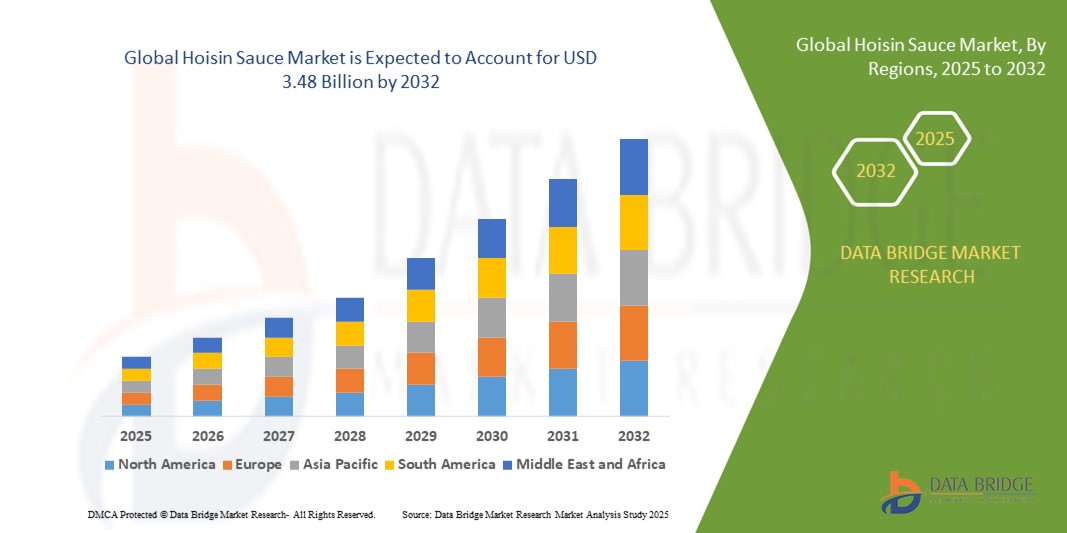
Hoisin Sauce Market Size
- The global hoisin sauce market size was valued at USD 2.06 billion in 2024 and is expected to reach USD 3.48 billion by 2032, at a CAGR of 6.80% during the forecast period
- The market growth is largely fuelled by the rising global popularity of Asian cuisine, increasing adoption of convenient ready-to-use sauces, and innovation in healthier and clean-label product variants
- Growing demand from both the foodservice sector and retail consumers, along with expanding online and offline distribution channels, is further supporting market expansion
Hoisin Sauce Market Analysis
- The growing popularity of Asian cuisine worldwide is driving demand for hoisin sauce as consumers seek authentic flavors and versatile cooking ingredients. Hoisin sauce is increasingly used in marinades, dipping sauces, and stir-fry dishes, boosting its adoption in both home kitchens and foodservice sectors
- Rising awareness of convenience foods and ready-to-use sauces is supporting market growth, as consumers prefer easy-to-use condiments that enhance flavor without extensive preparation. The expanding availability of pre-packaged hoisin sauce in supermarkets and online platforms is further facilitating accessibility
- Asia-Pacific dominated the hoisin sauce market with the largest revenue share in 2024, driven by the widespread popularity of Asian cuisine, growing urbanization, and increasing demand for convenient and authentic sauces in households and foodservice channels
- North America region is expected to witness the highest growth rate in the global hoisin sauce market, driven by rising demand for convenient cooking sauces, increasing restaurant penetration, and growing awareness of authentic Asian flavors
- The Conventional segment held the largest market revenue share in 2024, driven by its widespread availability, affordability, and consistent taste profile. Conventional hoisin sauces are widely used in households and foodservice outlets, offering a familiar flavor for Asian cuisine and fusion dishes, which supports strong market demand
Report Scope and Hoisin Sauce Market Segmentation
|
Attributes |
Hoisin Sauce Key Market Insights |
|
Segments Covered |
|
|
Countries Covered |
North America
Europe
Asia-Pacific
Middle East and Africa
South America
|
|
Key Market Players |
|
|
Market Opportunities |
Expansion Of Ready-To-Use And Organic Hoisin Sauce Variants |
|
Value Added Data Infosets |
In addition to the insights on market scenarios such as market value, growth rate, segmentation, geographical coverage, and major players, the market reports curated by the Data Bridge Market Research also include in-depth expert analysis, pricing analysis, brand share analysis, consumer survey, demography analysis, supply chain analysis, value chain analysis, raw material/consumables overview, vendor selection criteria, PESTLE Analysis, Porter Analysis, and regulatory framework. |
Hoisin Sauce Market Trends
Rising Popularity of Ready-to-Use and Fusion Cuisine Applications
- The growing preference for ready-to-use sauces and condiments is transforming the hoisin sauce market by offering consumers convenient, time-saving options for meal preparation. These products enable both home cooks and professional chefs to enhance flavor profiles with minimal effort, boosting adoption in households and commercial kitchens
- Increasing interest in fusion cuisine and international recipes is accelerating the demand for hoisin sauce across restaurants and foodservice chains. Its versatility in marinades, stir-fries, and dipping sauces makes it a preferred ingredient for chefs experimenting with Asian and global culinary styles
- The expansion of retail availability, including supermarkets, specialty stores, and online platforms, is making hoisin sauce more accessible to a wider audience. Consumers benefit from a variety of packaging sizes and flavors, supporting frequent use and encouraging trial of new variants
- For instance, in 2023, several North American and European foodservice chains incorporated hoisin sauce into their menu offerings, enhancing flavor options while promoting the adoption of Asian-inspired dishes
- While convenience and culinary versatility are fueling market growth, ongoing product innovation, quality improvements, and consumer education remain essential to sustain expansion. Manufacturers must continue to introduce novel formulations, organic variants, and attractive packaging to capture evolving consumer preferences
Hoisin Sauce Market Dynamics
Driver
Increasing Adoption of Asian Cuisine and Growing Consumer Awareness of Flavorful Condiments
- The rising popularity of Asian cuisine globally is driving demand for authentic hoisin sauce as a key ingredient in traditional and fusion dishes. Restaurants and home cooks are seeking convenient sauces to replicate restaurant-quality flavors, and this trend is further fueled by the growing interest in easy-to-use, ready-to-serve products. Consumer curiosity about international cuisines is also encouraging experimentation with hoisin sauce in various dishes, including sandwiches, wraps, and salads
- Consumers are increasingly aware of the ability of flavorful condiments to enhance meals, prompting higher consumption of hoisin sauce in home cooking and foodservice settings. This has accelerated market penetration, particularly among millennials and urban populations, who are more open to trying novel flavors. In addition, social media and cooking influencers are promoting its versatility, helping educate consumers and expand the user base
- Marketing campaigns and recipe promotions by food brands are educating consumers about hoisin sauce applications beyond stir-fries, such as marinades, glazes, and dipping sauces. This visibility is expanding its usage occasions and boosting sales, with brands highlighting convenient packaging and unique flavor combinations. Collaborations with culinary schools, recipe blogs, and food delivery platforms are also driving experimentation and repeat purchases
- For instance, in 2022, several major retail chains in Europe and North America launched cooking demonstrations and recipe kits featuring hoisin sauce, stimulating interest and driving product trials. These initiatives not only increased consumer awareness but also helped retailers cross-sell complementary Asian ingredients and sauces, strengthening the overall market ecosystem
- While culinary trends and awareness are supporting market growth, continuous engagement through marketing and recipe innovation is necessary to maintain adoption and drive sustained consumption. Companies are also investing in product differentiation through low-sodium, organic, and preservative-free variants to attract health-conscious consumers and expand market share globally
Restraint/Challenge
High Production Costs and Limited Penetration in Emerging Markets
- The production of premium hoisin sauces, including organic and ready-to-use variants, often involves higher ingredient and manufacturing costs, which can limit affordability and adoption in price-sensitive regions. The use of quality soy, spices, and natural sweeteners adds to the overall cost structure, making it challenging for small-scale producers to compete. This cost factor can also deter bulk procurement by foodservice providers in developing economies
- In several developing markets, consumer familiarity with hoisin sauce is low, and cultural preference for local sauces may restrict widespread acceptance. Educational efforts are required to encourage trial and repeat purchase, alongside targeted marketing campaigns that highlight convenience, taste, and versatility. Limited exposure to Asian cuisine in these regions further slows adoption, necessitating collaborations with restaurants, cooking shows, and online recipe platforms
- Supply chain challenges, including sourcing non-GMO soy, spices, and other quality ingredients, may lead to production bottlenecks and higher retail prices, affecting accessibility in remote or cost-conscious markets. Variability in raw material availability and fluctuating import tariffs can further disrupt supply chains, impacting consistent product quality and market stability. Companies must optimize logistics and local sourcing strategies to overcome these barriers
- For instance, in 2023, food manufacturers in Latin America highlighted that limited consumer awareness and higher import costs hindered the adoption of hoisin sauce in both retail and foodservice channels. The lack of localized production facilities and marketing support further restricted market penetration, making it a niche category in some regions
- While production and awareness challenges exist, localized manufacturing, competitive pricing strategies, and marketing campaigns focusing on taste, convenience, and authenticity can unlock growth potential and expand market reach. Companies are increasingly investing in partnerships with regional distributors, recipe promotions, and small packaging formats to attract first-time users and build brand loyalty
Hoisin Sauce Market Scope
The market is segmented on the basis of flavor, packaging, and distribution channel.
- By Flavor
On the basis of flavor, the hoisin sauce market is segmented into Conventional and Organic. The Conventional segment held the largest market revenue share in 2024, driven by its widespread availability, affordability, and consistent taste profile. Conventional hoisin sauces are widely used in households and foodservice outlets, offering a familiar flavor for Asian cuisine and fusion dishes, which supports strong market demand.
The Organic segment is expected to witness the fastest growth rate from 2025 to 2032, driven by increasing consumer preference for clean-label and health-conscious products. Organic hoisin sauces, made with non-GMO soy and natural ingredients, are gaining popularity among health-conscious and environmentally aware consumers, enhancing market growth opportunities.
- By Packaging
On the basis of packaging, the market is segmented into Glass Bottle, Plastic Bottle, and Pouches & Sachets. The Glass Bottle segment accounted for the largest revenue share in 2024, attributed to its premium positioning, product preservation, and consumer perception of quality. Glass bottles are preferred in retail settings and for gifting, strengthening brand visibility and consumer trust.
The Pouches & Sachets segment is expected to witness the fastest growth rate from 2025 to 2032, owing to convenience, portion control, and suitability for foodservice and ready-to-eat meal kits. These formats reduce storage space, enhance shelf life, and cater to on-the-go consumption, boosting adoption across various markets.
- By Distribution Channel
On the basis of distribution channel, the market is segmented into Supermarkets & Hypermarkets, Convenience Stores, Grocery Stores, Online, and Others. The Supermarkets & Hypermarkets segment held the largest market revenue share in 2024, driven by the extensive presence of organized retail, product variety, and promotional campaigns. These channels facilitate easy access for consumers, supporting mass adoption of hoisin sauce.
The Online segment is expected to witness the fastest growth rate from 2025 to 2032, fueled by the growth of e-commerce, digital grocery platforms, and direct-to-consumer sales. Online channels offer convenience, doorstep delivery, and access to a wider variety of flavors and packaging formats, enhancing market reach and penetration.
Hoisin Sauce Market Regional Analysis
- Asia-Pacific dominated the hoisin sauce market with the largest revenue share in 2024, driven by the widespread popularity of Asian cuisine, growing urbanization, and increasing demand for convenient and authentic sauces in households and foodservice channels
- Consumers in the region highly value the authentic flavors, versatility, and convenience offered by hoisin sauce, using it in a variety of culinary applications such as stir-fries, marinades, dipping sauces, and fusion dishes
- This widespread adoption is further supported by expanding retail networks, increasing disposable incomes, and the presence of local and regional manufacturers, establishing hoisin sauce as a staple condiment in both home and commercial kitchens
China Hoisin Sauce Market Insight
The China hoisin sauce market captured the largest revenue share in Asia-Pacific in 2024, fueled by rising consumer interest in traditional and modern Asian cuisine. The availability of both local and international brands, coupled with expanding retail and e-commerce channels, has strengthened market penetration. In addition, growing awareness of ready-to-use and convenient sauces in households and restaurants is boosting demand across the country.
Japan Hoisin Sauce Market Insight
The Japan hoisin sauce market is expected to witness the fastest growth rate from 2025 to 2032, driven by increasing adoption of international cuisines and fusion food trends. Japanese consumers are seeking high-quality, authentic, and convenient condiments to enhance meal preparation. The rising popularity of ready-to-eat and pre-prepared meals in urban areas is further encouraging the adoption of hoisin sauce in both home cooking and foodservice sectors.
North America Hoisin Sauce Market Insight
The North America hoisin sauce market is expected to witness the fastest growth rate from 2025 to 2032, supported by the rising popularity of Asian cuisine, increasing multicultural food adoption, and growing presence of retail chains and foodservice outlets offering authentic ingredients. Consumers are increasingly experimenting with global flavors at home, driving the demand for convenient, high-quality sauces. Marketing initiatives and recipe promotions by brands further enhance awareness and encourage product trials.
Europe Hoisin Sauce Market Insight
The Europe hoisin sauce market is expected to witness the fastest growth rate from 2025 to 2032, primarily driven by the increasing adoption of Asian cuisine and fusion food concepts in restaurants and households. Consumers are seeking authentic and convenient sauces to replicate restaurant-style flavors at home. The expansion of modern retail formats, e-commerce penetration, and marketing campaigns highlighting hoisin sauce applications across different recipes are contributing to the market’s growth.
U.K. Hoisin Sauce Market Insight
The U.K. hoisin sauce market is expected to witness the fastest growth rate from 2025 to 2032, supported by the growing trend of Asian cuisine consumption and increased consumer interest in ready-to-use condiments. The country’s strong retail infrastructure and e-commerce channels facilitate easy access to both conventional and premium hoisin sauce products. Awareness campaigns and cooking demonstrations promoting hoisin sauce for various culinary uses are further stimulating demand.
Germany Hoisin Sauce Market Insight
The Germany hoisin sauce market is expected to witness the fastest growth rate from 2025 to 2032, driven by rising adoption of international cuisines, growing multicultural population, and increasing consumer interest in convenient meal solutions. The presence of both domestic and international brands offering authentic sauces enhances market penetration. Retail promotions, recipe kits, and foodservice adoption are also supporting the market growth.
Hoisin Sauce Market Share
The Hoisin Sauce industry is primarily led by well-established companies, including:
- Lee Kum Kee (Hong Kong)
- HADAY (China)
- Koon Chun Sauce Factory Hong Kong (Hong Kong)
- PANOS brands (U.S.)
- San-J (U.S.)
- Allied Old English(U.S.)
- Iron Chef (U.S.)
- Ty Ling (U.S.)
- Hormel Foods Corporation (U.S.)
- Hormel Foods, LLC. (U.S.)
Latest Developments in Global Hoisin Sauce Market
- In August 2023, according to an article by foodtechbiz, in recent years, India's condiment industry has experienced a revolution, marked by a surge in diverse sauces, ketchups, and mayonnaises featuring unique flavors. A key trend is the focus on locally sourced ingredients that showcase traditional Indian spices and herbs, such as turmeric, coriander, and cumin. Brands are also emphasizing regional cuisines, reflecting the rich culinary diversity across the country
- In June 2024, according to an article by Harrisons, The article discusses innovations in fast-food sauces, moving beyond traditional ketchup and mustard. New flavors such as sriracha, chipotle, and avocado ranch are gaining popularity, reflecting consumer demand for bold tastes. Brands are also experimenting with unique blends and regional specialties, enhancing the overall dining experience in fast-food settings

- Interactive Data Analysis Dashboard
- Company Analysis Dashboard for high growth potential opportunities
- Research Analyst Access for customization & queries
- Competitor Analysis with Interactive dashboard
- Latest News, Updates & Trend analysis
- Harness the Power of Benchmark Analysis for Comprehensive Competitor Tracking
Global Hoisin Sauce Market, Supply Chain Analysis and Ecosystem Framework
To support market growth and help clients navigate the impact of geopolitical shifts, DBMR has integrated in-depth supply chain analysis into its Global Hoisin Sauce Market research reports. This addition empowers clients to respond effectively to global changes affecting their industries. The supply chain analysis section includes detailed insights such as Global Hoisin Sauce Market consumption and production by country, price trend analysis, the impact of tariffs and geopolitical developments, and import and export trends by country and HSN code. It also highlights major suppliers with data on production capacity and company profiles, as well as key importers and exporters. In addition to research, DBMR offers specialized supply chain consulting services backed by over a decade of experience, providing solutions like supplier discovery, supplier risk assessment, price trend analysis, impact evaluation of inflation and trade route changes, and comprehensive market trend analysis.
Data collection and base year analysis are done using data collection modules with large sample sizes. The stage includes obtaining market information or related data through various sources and strategies. It includes examining and planning all the data acquired from the past in advance. It likewise envelops the examination of information inconsistencies seen across different information sources. The market data is analysed and estimated using market statistical and coherent models. Also, market share analysis and key trend analysis are the major success factors in the market report. To know more, please request an analyst call or drop down your inquiry.
The key research methodology used by DBMR research team is data triangulation which involves data mining, analysis of the impact of data variables on the market and primary (industry expert) validation. Data models include Vendor Positioning Grid, Market Time Line Analysis, Market Overview and Guide, Company Positioning Grid, Patent Analysis, Pricing Analysis, Company Market Share Analysis, Standards of Measurement, Global versus Regional and Vendor Share Analysis. To know more about the research methodology, drop in an inquiry to speak to our industry experts.
Data Bridge Market Research is a leader in advanced formative research. We take pride in servicing our existing and new customers with data and analysis that match and suits their goal. The report can be customized to include price trend analysis of target brands understanding the market for additional countries (ask for the list of countries), clinical trial results data, literature review, refurbished market and product base analysis. Market analysis of target competitors can be analyzed from technology-based analysis to market portfolio strategies. We can add as many competitors that you require data about in the format and data style you are looking for. Our team of analysts can also provide you data in crude raw excel files pivot tables (Fact book) or can assist you in creating presentations from the data sets available in the report.













