


Global Hyaluronic Acid Market
Market Size in USD Billion
CAGR :
% 
 USD
10.12 Billion
USD
19.16 Billion
2024
2032
USD
10.12 Billion
USD
19.16 Billion
2024
2032
 Forecast Period Forecast Period |
2025 –2032 |
 Market Size (Base Year) Market Size (Base Year) |
USD 10.12 Billion |
 Market Size (Forecast Year) Market Size (Forecast Year) |
USD 19.16 Billion |
 CAGR CAGR |
% |
| Major Markets Players |
|
Hyaluronic Acid Market Size
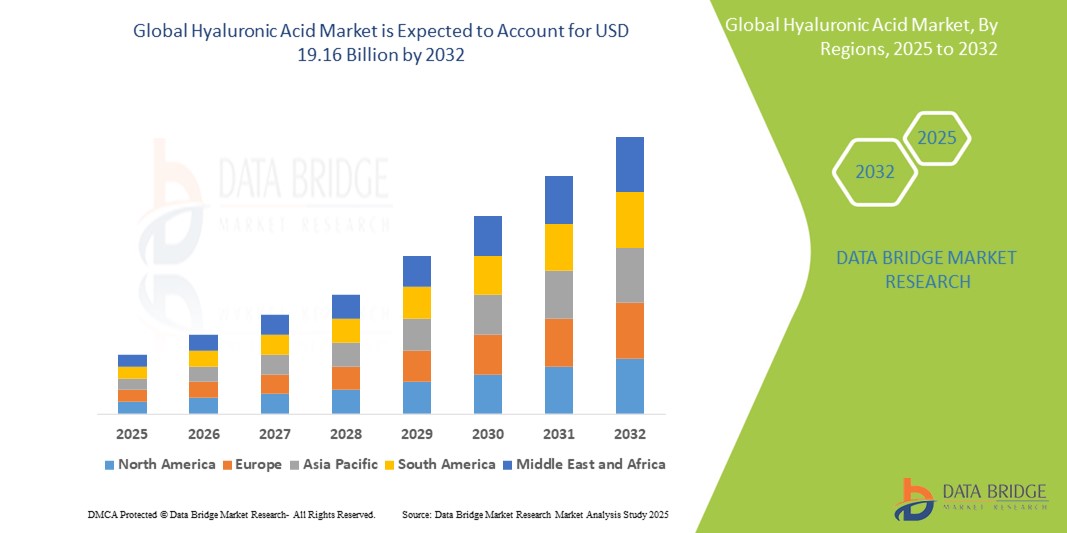
- The global hyaluronic acid market size was valued at USD 10.12 billion in 2024 and is expected to reach USD 19.16 billion by 2032, at a CAGR of 8.30% during the forecast period
- The market growth is largely fueled by the increasing demand for minimally invasive aesthetic procedures, expanding applications in orthopedics, ophthalmology, and dermatology, and the growing awareness about anti-aging and skincare treatments among the global population
- Furthermore, rising consumer preference for natural and biocompatible ingredients in personal care and pharmaceutical products is driving the adoption of hyaluronic acid across various end-use industries. These converging factors are accelerating the uptake of hyaluronic acid-based formulations, thereby significantly boosting the industry's growth
Hyaluronic Acid Market Analysis
- Hyaluronic acid, a naturally occurring polysaccharide known for its moisture-retaining and viscoelastic properties, is becoming an essential ingredient in modern healthcare and cosmetic applications, particularly in aesthetic medicine, orthopedics, ophthalmology, and dermatology, owing to its versatility, biocompatibility, and therapeutic efficacy
- The escalating demand for hyaluronic acid is primarily fueled by the rising popularity of minimally invasive aesthetic procedures, growing aging population globally, and increased awareness about skincare and joint health
- North America dominates the hyaluronic acid market with the largest revenue share of 44.5% in 2024, characterized by well-established aesthetic medicine infrastructure, high consumer awareness, and increasing demand for dermal fillers and viscosupplementation.
- Asia-Pacific is expected to be the fastest growing region in the hyaluronic acid market during the forecast period due to rapid urbanization, growing middle-class population, and a surge in aesthetic consciousness and medical tourism, particularly in countries such as China, South Korea, and India
- Osteoarthritis segment dominates the hyaluronic acid market with a market share of 34.5% in 2024, driven by its widespread use in viscosupplementation for joint pain relief and improved mobility, especially among the aging population and individuals with degenerative joint disorders
Report Scope and Hyaluronic Acid Market Segmentation
|
Attributes |
Hyaluronic Acid Key Market Insights |
|
Segments Covered |
|
|
Countries Covered |
North America
Europe
Asia-Pacific
Middle East and Africa
South America
|
|
Key Market Players |
|
|
Market Opportunities |
|
|
Value Added Data Infosets |
In addition to the insights on market scenarios such as market value, growth rate, segmentation, geographical coverage, and major players, the market reports curated by the Data Bridge Market Research also include in-depth expert analysis, pricing analysis, brand share analysis, consumer survey, demography analysis, supply chain analysis, value chain analysis, raw material/consumables overview, vendor selection criteria, PESTLE Analysis, Porter Analysis, and regulatory framework. |
Hyaluronic Acid Market Trends
“Growing Popularity of Non-Invasive Aesthetic and Anti-Aging Treatments”
- A significant and accelerating trend in the global hyaluronic acid market is the rising consumer inclination toward non-invasive aesthetic procedures and anti-aging treatments, driven by increased awareness of skincare, beauty enhancement, and overall wellness without the need for surgery. This trend is reshaping the cosmetics and dermatology industries, with hyaluronic acid emerging as a cornerstone ingredient due to its natural hydrating and plumping properties
- For instance, hyaluronic acid-based dermal fillers, such as Juvederm and Restylane, are increasingly preferred for facial volume restoration, wrinkle reduction, and lip enhancement. These procedures offer immediate results with minimal downtime, making them attractive to a growing demographic seeking youthful appearances without invasive methods
- Technological advancements have enabled the development of cross-linked and stabilized HA formulations, extending product longevity and enhancing performance in injectable applications. This has led to higher consumer satisfaction and broader acceptance of HA-based aesthetic solutions
- Beyond injectables, topical skincare products containing hyaluronic acid are witnessing widespread demand due to their perceived effectiveness in improving skin texture, elasticity, and hydration. Brands are innovating with multi-molecular weight HA formulations to deliver deeper skin penetration and longer-lasting effects
- The increasing adoption of hyaluronic acid in cosmeceuticals and functional beauty products has been amplified by the rise of wellness-conscious consumers seeking natural, biocompatible ingredients. In addition, the popularity of at-home skincare regimens and influencer-driven product awareness has further fueled the trend
- This growing preference for non-invasive, effective, and safe aesthetic solutions is expected to continue driving innovation and expansion in the hyaluronic acid market. Companies such as Allergan (AbbVie), Teoxane, and Revance Therapeutics are investing heavily in R&D and portfolio expansion to cater to the evolving demands of the global aesthetic and dermatological markets.
Hyaluronic Acid Market Dynamics
Driver
“Increasing Demand for Aesthetic Enhancements and Age-Related Treatments”
- The growing global demand for aesthetic enhancements and anti-aging treatments, coupled with rising consumer awareness around skincare and wellness, is a significant driver for the heightened demand for hyaluronic acid
- For instance, in March 2024, Revance Therapeutics, Inc. expanded its RHA Collection of hyaluronic acid-based dermal fillers into new markets, highlighting the growing emphasis on minimally invasive aesthetic solutions with advanced formulations. Such strategic moves by key players are expected to drive the hyaluronic acid industry growth in the forecast period
- As consumers become more conscious of maintaining youthful appearances and managing age-related skin concerns, hyaluronic acid offers advanced benefits such as deep hydration, volume restoration, and wrinkle reduction—positioning it as a compelling alternative to more invasive cosmetic procedures
- Furthermore, the growing popularity of non-surgical aesthetic treatments and the desire for safer, biocompatible ingredients are making hyaluronic acid an essential component in skincare and dermatological solutions, offering seamless integration with both professional treatments and at-home regimens
- The convenience of quick, non-invasive procedures, improved accessibility through medical spas and dermatology clinics, and the ability to personalize treatments based on individual needs are key factors propelling the adoption of hyaluronic acid in both cosmetic and medical sectors. The trend towards preventative aesthetics and increasing availability of advanced HA formulations further contribute to market growth
Restraint/Challenge
“Concerns Regarding Product Safety and High Treatment Costs”
- Concerns surrounding the safety and potential side effects of hyaluronic acid-based treatments pose a significant challenge to broader market penetration. As HA products are often used in injectable procedures and medical applications, apprehensions about allergic reactions, infections, or improper administration raise hesitations among potential consumers and practitioners
- For instance, reports of adverse effects in poorly administered dermal filler treatments have made some consumers cautious about opting for hyaluronic acid-based aesthetic procedures
- Addressing these safety concerns through stringent regulatory approvals, standardized clinical guidelines, and increased practitioner training is crucial for building consumer and medical professional trust. Companies such as Allergan (AbbVie) and Teoxane emphasize their rigorous quality control and safety profiles in marketing campaigns to reassure potential buyers.
- In addition, the relatively high cost of advanced hyaluronic acid treatments and products compared to traditional skincare or therapies can be a barrier to adoption for price-sensitive consumers, particularly in developing regions or among budget-conscious patients. While more affordable topical HA products have become widely available, premium injectable formulations and advanced therapeutic applications often come with a higher price tag
- While prices are gradually stabilizing with growing competition, the perceived premium for clinically approved HA products and procedures can still hinder widespread adoption, especially among those who do not immediately prioritize aesthetic or medical treatments.
Hyaluronic Acid Market Scope
The market is segmented on the basis of form, grade, type, route of administration, source, dosage form, application, end user, and distribution channel
- By Form
On the basis of form, the hyaluronic acid market is segmented into native/linear hyaluronic acid and cross-linked hyaluronic acid. The cross-linked segment dominates the largest market revenue share in 2024, driven by its enhanced durability and effectiveness in dermal fillers and intra-articular injections for osteoarthritis. Its slower degradation rate makes it a preferred choice for long-lasting aesthetic and therapeutic results.
The native/linear segment is anticipated to witness the fastest growth from 2025 to 2032, supported by its biocompatibility, ease of formulation in cosmetics and ophthalmic drops, and increasing use in natural skincare and anti-inflammatory treatments.
- By Grade
On the basis of grade, the hyaluronic acid market is segmented into cosmetic grade, pharmaceutical grade, and food grade. The cosmetic grade segment leads the market in 2024, fueled by strong demand for anti-aging, moisturizing, and skin-rejuvenating products. It remains a staple ingredient across serums, creams, and dermal fillers due to its hydration and volumizing properties.
The pharmaceutical grade segment is expected to grow at the fastest CAGR from 2025 to 2032, driven by expanding clinical applications in osteoarthritis, ophthalmic surgeries, and wound healing where purity and clinical safety are critical.
- By Type
On the basis of type, the hyaluronic acid market is segmented into sodium hyaluronate, hydrolyzed hyaluronic acid, and sodium acetylated hyaluronic acid. Sodium hyaluronate dominated the market in 2024 owing to its high water-binding capacity, stability, and broad usage across injectables, eye drops, and topical applications. Its ability to penetrate the skin and retain moisture drives its widespread use.
Hydrolyzed hyaluronic acid is projected to be the fastest-growing subsegment, benefiting from its lower molecular weight that allows deeper skin penetration and enhanced hydration, especially in advanced skincare and cosmetic formulations.
- By Route Of Administration
On the basis of route of administration, the hyaluronic acid market is segmented into parenteral, topical, and oral. The parenteral segment held the largest share in 2024, driven by its extensive use in dermal fillers, viscosupplementation for osteoarthritis, and ophthalmic surgery. Its direct application ensures faster, targeted therapeutic action.
The oral segment is expected to grow at the fastest pace from 2025 to 2032, driven by consumer shift toward nutricosmetics and joint health supplements, offering internal support for skin elasticity and joint lubrication.
- By Source
On the basis of source, the hyaluronic acid market is segmented into microbial fermentation, animal-based, and plant-based. Microbial fermentation dominated the market in 2024, attributed to its high safety profile, reduced risk of allergens, and scalable production. It is widely preferred in pharmaceutical and cosmetic formulations for its purity and consistency.
The plant-based segment is expected to be the fastest-growing from 2025 to 2032, reflecting rising demand for clean-label, vegan-friendly, and sustainable beauty and health products, especially in regions with strong ethical consumption trends.
- By Dosage Form
On the basis of dosage form, the hyaluronic acid market is segmented into powder, solution, and gel. The solution segment lead in revenue share in 2024, favored for its high applicability in injectables, eye drops, and serums. Its adaptability across various therapeutic and cosmetic uses underpins its dominance.
The gel segment is projected to register the fastest growth from 2025 to 2032, fueled by increasing use in dermatological and cosmetic products where spreadability, texture, and localized application are key benefits.
- By Application
On the basis of application, the hyaluronic acid market is segmented into aesthetics & cosmetics, osteoarthritis, pharmaceutical API, dietary supplements, ophthalmology, and others. Osteoarthritis segment dominated the market with a market share of 34.5% in 2024, driven by its widespread use in viscosupplementation for joint pain relief and improved mobility, especially among the aging population and individuals with degenerative joint disorders.
The dietary supplements segment is anticipated to grow the fastest from 2025 to 2032, driven by rising consumer awareness of beauty-from-within trends and the benefits of HA in improving joint health and skin hydration from oral intake.
- By End User
On the basis of end user, the hyaluronic acid market is segmented into dermatology clinics, cosmetic surgery centers, medical spas and beauty centers, and others. Dermatology clinics accounted for the largest revenue share in 2024, supported by rising demand for injectable HA procedures, personalized skin treatments, and clinical-grade skincare products.
Medical spas and beauty centers are expected to witness the fastest growth rate from 2025 to 2032, driven by growing consumer demand for aesthetic enhancements in accessible, non-clinical, and wellness-focused environments.
- By Distribution Channel
On the basis of distribution channel, the hyaluronic acid market is segmented into retail sales and direct tender. Retail sales dominated the largest market share in 2024, propelled by the wide availability of HA-based products through pharmacies, online platforms, and beauty retailers targeting both therapeutic and cosmetic buyers.
Direct tender is projected to be the fastest-growing segment from 2025 to 2032, reflecting increasing procurement by hospitals, specialty clinics, and government healthcare systems for bulk use in surgical, orthopedic, and ophthalmic procedures.
Hyaluronic Acid Market Regional Analysis
- North America dominates the hyaluronic acid market with the largest revenue share of 44.5% in 2024, driven by well-established aesthetic medicine infrastructure, high consumer awareness, and increasing demand for dermal fillers and viscosupplementation
- Consumers in the region exhibit strong preferences for minimally invasive cosmetic enhancements and joint health supplements, with a notable shift toward HA-based dermal fillers and dietary formulations
- This high uptake is further supported by advanced healthcare infrastructure, a robust cosmetic surgery industry, favorable reimbursement for viscosupplementation, and increased availability of over-the-counter HA products in the U.S. and Canada, making the region a key driver of global hyaluronic acid consumption
U.S. Hyaluronic Acid Market Insight
The U.S. hyaluronic acid market captured the largest revenue share in North America in 2024, driven by the strong demand for minimally invasive aesthetic procedures and a growing geriatric population seeking joint health solutions. Widespread consumer awareness of anti-aging skincare, coupled with high disposable income and easy access to dermatological treatments and orthopedic care, further boosts market expansion. The increasing adoption of HA-based injectables, topical formulations, and dietary supplements underscores the growing preference for non-surgical wellness and cosmetic enhancements
Europe Hyaluronic Acid Market Insight
The Europe hyaluronic acid market is projected to expand at a substantial CAGR during the forecast period, supported by a rapidly aging population, heightened demand for orthopedic care, and the growing appeal of natural skincare products. Regulatory approval for HA in diverse therapeutic and cosmetic applications contributes to broad market adoption. A strong inclination toward preventive healthcare and wellness, alongside the popularity of dermal fillers in countries such as France, Italy, and Spain, is fostering demand across both pharmaceutical and cosmetic segments.
U.K. Hyaluronic Acid Market Insight
The U.K. hyaluronic acid market is expected to grow at a noteworthy CAGR during the forecast period, fueled by increasing aesthetic awareness and rising demand for anti-aging and hydration-focused skincare. The expansion of dermatology clinics, medical spas, and aesthetic surgery centers, combined with growing acceptance of non-invasive HA-based procedures, is driving market growth. Moreover, consumer demand for clean-label, science-backed cosmetic products is further elevating the profile of hyaluronic acid across personal care and pharmaceutical use cases
Germany Hyaluronic Acid Market Insight
The Germany hyaluronic acid market is anticipated to expand at a considerable CAGR during the forecast period, driven by high consumer awareness of advanced dermatological treatments and increasing demand for orthopedic HA injectables. Germany’s reputation for pharmaceutical innovation and quality skincare fosters a strong market for both medical-grade and cosmetic-grade HA products. In addition, the integration of HA in preventive joint health treatments and the popularity of premium skincare formulations make Germany a key contributor to the regional market.
Asia-Pacific Hyaluronic Acid Market Insight
The Asia-Pacific hyaluronic acid market is poised to grow at the fastest CAGR of 25.1% from 2025 to 2032, supported by rapid urbanization, rising beauty consciousness, and increased healthcare spending in countries such as China, Japan, South Korea, and India. The market benefits from the region’s large population base, growing middle class, and expanding cosmetic and pharmaceutical industries. A strong focus on youthful appearance and anti-aging solutions is driving demand for HA-based skincare and injectable products, while orthopedic applications are also gaining ground amid an aging demographic.
Japan Hyaluronic Acid Market Insight
The Japan hyaluronic acid market is witnessing strong growth, owing to the country's leading-edge skincare industry, growing aging population, and cultural emphasis on aesthetic appearance and wellness. High demand for advanced, multifunctional HA-based products in both cosmetics and medical sectors contributes to sustained market expansion. Furthermore, Japan’s innovation-driven personal care market and widespread use of topical HA formulations reinforce the nation’s position as a major player in the Asia-Pacific market.
India Hyaluronic Acid Market Insight
The India hyaluronic acid market accounted for the largest revenue share in the Asia-Pacific region in 2024, fueled by rapid urbanization, an expanding middle class, and increasing interest in aesthetic dermatology and preventive health. The rising popularity of affordable skincare solutions, growing consumer awareness of HA’s benefits in hydration and joint health, and the surge in local HA manufacturing and exports are propelling market growth. India’s flourishing cosmetic procedures and dietary supplements sectors further contribute to the broadening adoption of HA products.
Hyaluronic Acid Market Share
The hyaluronic acid industry is primarily led by well-established companies, including:
- Contipro a.s. (Czech Republic)
- Bloomage Biotech Co., Ltd China)
- SEIKAGAKU CORPORATION (Japan)
- Anika Therapeutics, Inc. (U.S.)
- LG Chem (South Korea)
- Shiseido Company, Limited (Japan)
- Evonik Industries AG (Germany)
- AbbVie (U.S.)
- Kewpie Corporation (Japan)
- HTL (France)
- Fidia Farmaceutici S.p.A. (Italy)
- Nestlé Health Science (Switzerland)
- Zimmer Biomet (U.S.)
- Maruha Nichiro Corporation (Japan)
- Biotech (India)
- Medytox (South Korea)
- Meiji Holdings Co., Ltd. (Japan)
- TRB Chemedica AG (Switzerland)
- Tianjin Chasesun Pharmaceutical Co., Ltd. (China)
Latest Developments in Global Hyaluronic Acid Market
- In April 2023, Contipro a.s., a Czech biotechnology company specializing in hyaluronic acid production, announced the development of a new high-purity HA formulation designed for ophthalmic applications. This innovation aims to enhance the efficacy of eye drop solutions used in treating dry eye syndrome and post-surgical recovery, reflecting the company's commitment to advancing HA applications in specialized medical fields
- In March 2023, Bloomage Biotechnology Corporation Limited, a leading Chinese manufacturer of hyaluronic acid, expanded its production capacity by inaugurating a new manufacturing facility in Jinan, China. This expansion is intended to meet the growing global demand for HA in cosmetics, pharmaceuticals, and dietary supplements, reinforcing Bloomage's position in the international HA market
- In February 2023, Seikagaku Corporation, a Japanese pharmaceutical company, received regulatory approval in Japan for its new HA-based injectable treatment for knee osteoarthritis. The product, named HyLink, utilizes a novel cross-linking technology to provide longer-lasting relief from joint pain, marking a significant advancement in HA-based osteoarthritis therapies
- In January 2023, Anika Therapeutics, a U.S.-based company specializing in regenerative therapies, launched a new line of HA-based dermal fillers under the brand name Resilient HA. These fillers are designed to offer enhanced elasticity and longevity, catering to the increasing demand for non-surgical aesthetic treatments in the cosmetic industry.
- In December 2022, LG Chem, a South Korean chemical company, announced a strategic partnership with a European pharmaceutical firm to co-develop HA-based treatments for inflammatory skin diseases. This collaboration aims to leverage LG Chem's expertise in HA production and the partner's clinical development capabilities to address unmet needs in dermatological care
SKU-
Get online access to the report on the World's First Market Intelligence Cloud

- Interactive Data Analysis Dashboard
- Company Analysis Dashboard for high growth potential opportunities
- Research Analyst Access for customization & queries
- Competitor Analysis with Interactive dashboard
- Latest News, Updates & Trend analysis
- Harness the Power of Benchmark Analysis for Comprehensive Competitor Tracking
Research Methodology
Data collection and base year analysis are done using data collection modules with large sample sizes. The stage includes obtaining market information or related data through various sources and strategies. It includes examining and planning all the data acquired from the past in advance. It likewise envelops the examination of information inconsistencies seen across different information sources. The market data is analysed and estimated using market statistical and coherent models. Also, market share analysis and key trend analysis are the major success factors in the market report. To know more, please request an analyst call or drop down your inquiry.
The key research methodology used by DBMR research team is data triangulation which involves data mining, analysis of the impact of data variables on the market and primary (industry expert) validation. Data models include Vendor Positioning Grid, Market Time Line Analysis, Market Overview and Guide, Company Positioning Grid, Patent Analysis, Pricing Analysis, Company Market Share Analysis, Standards of Measurement, Global versus Regional and Vendor Share Analysis. To know more about the research methodology, drop in an inquiry to speak to our industry experts.
Customization Available
Data Bridge Market Research is a leader in advanced formative research. We take pride in servicing our existing and new customers with data and analysis that match and suits their goal. The report can be customized to include price trend analysis of target brands understanding the market for additional countries (ask for the list of countries), clinical trial results data, literature review, refurbished market and product base analysis. Market analysis of target competitors can be analyzed from technology-based analysis to market portfolio strategies. We can add as many competitors that you require data about in the format and data style you are looking for. Our team of analysts can also provide you data in crude raw excel files pivot tables (Fact book) or can assist you in creating presentations from the data sets available in the report.












