


What is the Hyperuricemia Drugs Market Size and Overview?
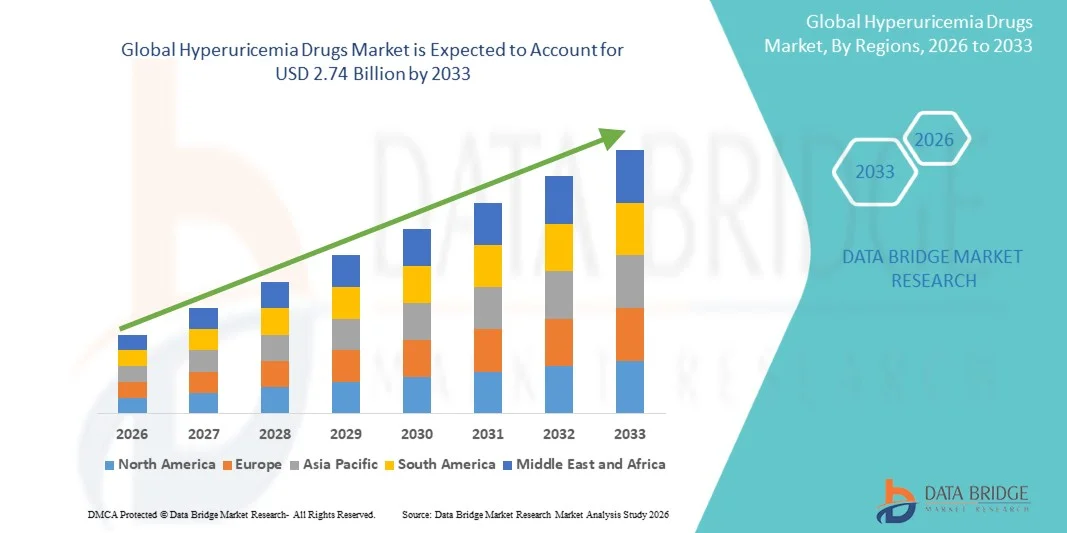
As per Data Bridge Market Research Analysis the Hyperuricemia Drugs Market was valued at USD 1.60 billion in 2025 and is projected to reach USD 2.74 billion by 2033, growing at a CAGR of 7.0% from 2026 to 2033. The market is witnessing steady growth driven by the rising prevalence of gout and hyperuricemia, increasing adoption of long-term urate-lowering therapies, and growing awareness regarding early diagnosis and chronic disease management.
The increasing burden of lifestyle-related disorders such as obesity, hypertension, metabolic syndrome, and chronic kidney disease is significantly contributing to elevated uric acid levels globally. This, combined with an aging population and improved access to diagnostic testing, is driving demand for xanthine oxidase inhibitors, uricosuric agents, and combination therapies. Pharmaceutical companies are also focusing on developing safer and more effective long-term treatment options, further supporting market expansion across both developed and emerging regions.
Market Size & Forecast
- Global Market Value (2025): USD 1.60 billion
- Expected Market Value (2033): USD 2.74 billion
- Forecast CAGR (2026–2033): 7.0%
What are the Major Takeaways of Hyperuricemia Drugs Market?
- North America dominated the Hyperuricemia Drugs Market with the largest revenue share of 38.62% in 2025, supported by high disease prevalence, strong healthcare expenditure, and widespread availability of advanced urate-lowering therapies.
- The Symptomatic Hyperuricemia segment led the market with a 56.2% share in 2025, driven by the high clinical burden of gout flares, severe joint inflammation, and immediate requirement for pharmacological intervention.
- Asia-Pacific is expected to be the fastest-growing region at a CAGR of 6.9% from 2026 to 2033, fueled by rising lifestyle-related disorders, improving diagnostic penetration, and expanding access to affordable treatment options in emerging economies.
- Asymptomatic Hyperuricemia are the fastest-growing type, projected to register a CAGR of 7.4%, reflecting the surge in increasing preventive screening and routine biochemical testing.
- The Gout segment dominated the diseases category with a 61.8% revenue share in 2025, led by strong clinical association with hyperuricemia and high recurrence rate.
- Xanthine Oxidase Inhibitors accounted for 38.5% of the market, preferred by their status as first-line urate-lowering therapy globally.
- The Selective Uric Acid Reabsorption Inhibitor (SURI) segment is the fastest-growing drug category, with a CAGR of 7.8%, driven by the increasing demand for the novel targeted therapies.
Report Scope and Hyperuricemia Drugs Market Segmentation
|
Attributes |
Hyperuricemia Drugs Key Market Insights |
|
Segments Covered |
|
|
Countries Covered |
North America
Europe
Asia-Pacific
Middle East and Africa
South America
|
|
Key Market Players |
|
|
Market Opportunities |
|
|
Value Added Data Infosets |
|
What is the Key Trend in the Hyperuricemia Drugs Market?
Trend: Shift Toward Safer and Targeted Long-Term Urate Lowering Therapies
The Hyperuricemia Drugs Market is witnessing a strong transition toward safer, more targeted, and patient-centric long-term urate-lowering therapies aimed at improving disease control and reducing recurrent gout flare-ups. Increasing clinical focus on cardiovascular safety, renal protection, and long-term tolerability is driving innovation in next-generation xanthine oxidase inhibitors and advanced uricosuric agents. Pharmaceutical companies are also prioritizing combination therapies and improved drug delivery formulations to enhance adherence in chronic patients requiring lifelong treatment.
For instance, ongoing development of next-generation urate-lowering molecules and improved fixed-dose combinations of existing therapies is aimed at reducing treatment discontinuation rates while maintaining stable serum uric acid levels in high-risk populations.
Hyperuricemia Drugs Market Dynamics
Key Market Driver: Rising Burden of Metabolic and Chronic Kidney Diseases
The increasing global prevalence of metabolic disorders such as obesity, diabetes, hypertension, and chronic kidney disease is significantly accelerating the incidence of hyperuricemia and gout. These interconnected conditions contribute to impaired uric acid metabolism and reduced renal excretion, resulting in a rapidly expanding patient pool requiring long-term pharmacological management. Improved awareness, better diagnostic rates, and expanding healthcare access are further strengthening treatment adoption across both developed and emerging economies.
For instance, the growing diagnosis of gout in aging populations with sedentary lifestyles and high purine diets is leading to a consistent rise in prescriptions for urate-lowering therapies in primary care and specialist settings.
Key Restraint/Challenge: Long-Term Therapy Dependency and Drug Safety Concerns
A major challenge in the hyperuricemia drugs market is the lifelong nature of treatment, which significantly impacts patient adherence and long-term therapeutic outcomes. Many patients discontinue medication once symptoms improve, leading to recurrent flare-ups and disease progression. In addition, safety concerns such as hypersensitivity reactions, hepatic effects, renal strain, and cardiovascular risks associated with certain drug classes limit their use in vulnerable patient populations. These challenges often require careful dose adjustment, monitoring, and alternative therapy selection, increasing treatment complexity.
For instance, restricted use and close monitoring of certain xanthine oxidase inhibitors in patients with pre-existing cardiovascular or renal conditions highlight the ongoing clinical need for safer and more tolerable long-term treatment options.
Key Market Opportunity: Expansion of Novel Therapies and Precision Uric Acid Management Approaches
The Hyperuricemia Drugs Market presents significant growth opportunities through the expansion of novel therapeutic classes and precision-based uric acid management strategies. Increasing R&D focus on next-generation urate-lowering agents, including selective uric acid reabsorption inhibitors and biologics targeting inflammatory pathways, is expected to reshape long-term disease management. In addition, rising demand for personalized treatment approaches based on patient comorbidities such as chronic kidney disease and cardiovascular risk is encouraging the development of tailored therapy regimens. Pharmaceutical companies are also investing in improved safety profiles and combination therapies to enhance long-term adherence and clinical outcomes.
For instance, ongoing clinical development of innovative uricosuric agents and biomarker-guided treatment strategies is creating new opportunities for more effective and individualized gout and hyperuricemia management across both developed and emerging healthcare markets.
How is the Hyperuricemia Drugs Market Segmented?
The hyperuricemia drugs market is segmented on the basis of type, diseases, drugs, end-users, and distribution channel.
- By Type
On the basis of type, the Hyperuricemia Drugs Market is segmented into asymptomatic hyperuricemia, symptomatic hyperuricemia, and others. The Symptomatic Hyperuricemia segment dominated the market with a 56.2% share in 2025, due to the high clinical burden of gout flares, severe joint inflammation, and immediate requirement for pharmacological intervention. Patients in this segment actively present with pain and mobility issues, leading to frequent hospital visits and higher prescription rates. Physicians prioritize rapid-acting therapies such as NSAIDs, corticosteroids, and urate-lowering drugs, reinforcing strong demand. Rising prevalence of obesity, metabolic syndrome, and chronic kidney disease further increases symptomatic cases. Continuous relapse patterns in gout patients ensure long-term drug dependency. The segment remains the largest revenue contributor due to consistent treatment intensity and high diagnosis rates.
The Asymptomatic Hyperuricemia segment is projected to be the fastest growing at a CAGR of 7.4% from 2026 to 2033, driven by increasing preventive screening and routine biochemical testing. Large populations with elevated uric acid levels are being identified before symptom onset. Physicians are increasingly focusing on early intervention to prevent progression to gout and kidney complications. Rising awareness of lifestyle-related disorders such as diabetes and hypertension is expanding the at-risk population. Growing adoption of preventive healthcare programs in both developed and emerging economies is accelerating diagnosis. Pharmaceutical companies are also exploring long-term prophylactic treatment approaches in high-risk individuals.
- By Diseases
On the basis of diseases, the Hyperuricemia Drugs Market is segmented into gout, kidney stone, and others. The Gout segment dominated the market with a 61.8% share in 2025, owing to its strong clinical association with hyperuricemia and high recurrence rate. Gout causes severe joint pain, swelling, and chronic disability, leading to continuous treatment demand. Long-term urate-lowering therapy is widely prescribed for disease management, ensuring sustained drug consumption. Aging populations and high prevalence of metabolic disorders significantly contribute to disease burden. Strong guideline-based treatment protocols across hospitals reinforce the dominance of this segment. Recurrent flare-ups further increase medication utilization, making gout the primary revenue-generating disease category.
The Kidney Stone segment is expected to be the fastest growing at a CAGR of 6.9% from 2026 to 2033, driven by rising incidence of uric acid nephrolithiasis globally. Poor dietary habits, dehydration, and sedentary lifestyles are major contributing factors. Increased use of imaging diagnostics is improving early detection rates. Uricosuric and alkalinizing agents are increasingly prescribed for prevention and treatment. Growing awareness of kidney health and rising urology consultations are boosting drug demand. The segment is further supported by increasing comorbidities such as chronic kidney disease and diabetes.
- By Drugs
On the basis of drugs, the Hyperuricemia Drugs Market is segmented into tropical nonsteroidal anti-inflammatory drugs, xanthine oxidase inhibitors, Selective Uric Acid Reabsorption Inhibitor (SURI), uricosuric agents, antigout agents, carbonic anhydrase inhibitors, glucocorticoids, urate oxidase enzyme (recombinant), alkalinizing agent, and others. The Xanthine Oxidase Inhibitors segment dominated the market with a 38.5% share in 2025, due to their status as first-line urate-lowering therapy globally. Drugs such as allopurinol and febuxostat are widely prescribed for long-term management of hyperuricemia and gout. Strong clinical efficacy, affordability, and guideline recommendations support widespread adoption. These drugs are available in both branded and generic forms, increasing accessibility in emerging markets. Physicians prefer them for sustained uric acid control and prevention of flare-ups. Their long-established safety and effectiveness profile ensures continued dominance.
The Selective Uric Acid Reabsorption Inhibitor (SURI) segment is projected to be the fastest growing at a CAGR of 7.8% from 2026 to 2033, driven by increasing demand for novel targeted therapies. These agents improve uric acid excretion through renal pathways, offering an alternative for patients resistant to conventional therapy. Growing focus on precision medicine and combination therapies is accelerating adoption. Pharmaceutical companies are investing heavily in R&D for next-generation uricosuric drugs. Rising intolerance to traditional therapies is further boosting demand. Expanding regulatory approvals and clinical pipeline expansion are supporting strong growth momentum.
- By End-Users
On the basis of end-users, the Hyperuricemia Drugs Market is segmented into hospitals, homecare, specialty clinics, and others. The Hospitals segment dominated the market with a 52.3% share in 2025, due to high patient inflow for acute gout attacks and severe hyperuricemia complications. Hospitals provide immediate diagnosis, emergency care, and intravenous treatment for severe flare-ups. Strong availability of specialists and diagnostic infrastructure supports effective disease management. Physicians in hospital settings drive high prescription volumes for combination therapies. Reimbursement coverage and institutional treatment protocols further strengthen hospital dominance. Acute care requirements make hospitals the primary treatment setting.
The Homecare segment is expected to be the fastest growing at a CAGR of 7.1% from 2026 to 2033, driven by increasing preference for chronic disease management outside hospital settings. Patients with gout and hyperuricemia prefer long-term oral medication adherence at home. Growth of telemedicine and digital prescription services is supporting home-based treatment. Aging populations and mobility challenges are further increasing homecare adoption. Cost-effectiveness compared to hospital visits is a key growth driver. Improved patient awareness and self-management practices are accelerating segment expansion.
- By Distribution Channel
On the basis of distribution channel, the Hyperuricemia Drugs Market is segmented into hospital pharmacy, online pharmacy, and retail pharmacy. The Hospital Pharmacy segment dominated the market with a 49.6% share in 2025, as most acute treatments and initial prescriptions are administered in hospital settings. Hospitals directly dispense medications during inpatient and emergency care. Strong integration between physicians and hospital pharmacies ensures consistent drug supply. High usage of injectable and acute care drugs further supports this channel. Institutional procurement systems enhance availability and cost efficiency. This channel remains central for severe and hospitalized patients.
The Online Pharmacy segment is projected to be the fastest growing at a CAGR of 8.2% from 2026 to 2033, driven by rapid digitalization of healthcare services. Patients increasingly prefer home delivery of maintenance medications for chronic conditions. Telemedicine platforms are directly connecting prescriptions with online dispensing systems. Competitive pricing, discounts, and subscription models are boosting adoption. Rising smartphone penetration and internet access are expanding reach in rural and semi-urban regions. Convenience and long-term affordability are key growth drivers for this segment.
Which Region Holds the Largest Share of the Hyperuricemia Drugs Market?
North America dominated the Hyperuricemia Drugs Market with the largest revenue share of 38.62% in 2025, supported by high disease prevalence, strong healthcare expenditure, and widespread availability of advanced urate-lowering therapies. The region benefits from advanced diagnostic capabilities, early disease detection, and high adoption of long-term urate-lowering therapies. Strong presence of key pharmaceutical companies and widespread availability of both branded and generic drugs further strengthen market leadership. Increasing obesity, diabetes, and chronic kidney disease cases continue to expand the patient pool requiring treatment. Favorable reimbursement policies and strong healthcare spending enhance patient access to advanced therapies. Continuous clinical research and guideline-based treatment adoption reinforce North America’s dominant position in the global market.
U.S. Hyperuricemia Drugs Market Insight
The U.S. hyperuricemia drugs market is witnessing strong growth due to rising prevalence of gout, obesity, diabetes, and chronic kidney disease across the population. The country’s advanced healthcare infrastructure, high diagnostic rates, and strong awareness of metabolic disorders are driving early detection and long-term treatment adoption. Widespread use of xanthine oxidase inhibitors and biologics, along with strong physician adherence to clinical guidelines, is supporting consistent drug demand. In addition, high healthcare spending, favorable reimbursement policies, and strong pharmaceutical presence are accelerating access to branded and generic therapies. Continuous clinical research and development of novel urate-lowering agents are further strengthening market expansion. Growing focus on preventive care and chronic disease management continues to reinforce the U.S. leadership in the global market.
Europe Hyperuricemia Drugs Market Insight
The Europe hyperuricemia drugs market remains a major contributor to global revenue, driven by high gout prevalence, aging population, and strong public healthcare systems. The region benefits from well-established diagnostic practices, early disease detection, and standardized treatment protocols for hyperuricemia management. Widespread adoption of urate-lowering therapies, particularly xanthine oxidase inhibitors, supports stable market demand. Increasing focus on lifestyle-related disorders and metabolic health is further expanding the patient pool. Strong government healthcare support, reimbursement coverage, and rising awareness of kidney-related complications are reinforcing treatment uptake. Continuous emphasis on preventive healthcare and chronic disease monitoring is sustaining market growth across the region.
U.K. Hyperuricemia Drugs Market Insight
The U.K. hyperuricemia drugs market is experiencing steady growth, supported by increasing cases of gout and rising awareness of early metabolic disorder diagnosis. The country’s strong public healthcare system and widespread access to prescription medications are driving consistent treatment adoption. General practitioners play a key role in early identification and long-term management of hyperuricemia patients. Growing use of urate-lowering therapies and anti-inflammatory drugs is supporting market expansion. In addition, increasing focus on digital healthcare services and telemedicine is improving patient access to treatment. Strong clinical guidelines and NHS-driven treatment pathways continue to support structured disease management.
Germany Hyperuricemia Drugs Market Insight
The Germany hyperuricemia drugs market is expanding steadily due to a high prevalence of metabolic disorders and a strong emphasis on preventive healthcare. The country’s advanced pharmaceutical infrastructure and strong clinical research ecosystem are supporting early diagnosis and effective disease management. Widespread adoption of xanthine oxidase inhibitors and combination therapies is driving stable drug demand. Increasing aging population and rising incidence of chronic kidney disease are further contributing to market growth. Strong healthcare reimbursement systems and physician adherence to treatment guidelines enhance therapy accessibility. Continuous innovation in pharmaceutical formulations and chronic disease management strategies is reinforcing market development.
Asia-Pacific Hyperuricemia Drugs Market Insight
The Asia-Pacific hyperuricemia drugs market is expected to witness rapid growth, driven by increasing urbanization, changing dietary habits, and rising prevalence of gout and kidney disorders. Expanding healthcare infrastructure and improving access to diagnostic services are supporting early disease detection. Growing awareness of lifestyle-related diseases such as obesity and diabetes is significantly increasing the patient base. Rising adoption of generic medications is improving affordability and market penetration. In addition, government initiatives focused on chronic disease management are accelerating treatment uptake. Rapid pharmaceutical expansion and increasing healthcare investments are positioning the region as the fastest-growing market globally.
Japan Hyperuricemia Drugs Market Insight
The Japan hyperuricemia drugs market is witnessing consistent growth due to a high aging population and strong focus on preventive healthcare. The country has a well-established healthcare system with high rates of routine medical checkups, enabling early diagnosis of hyperuricemia. Widespread use of urate-lowering therapies, particularly xanthine oxidase inhibitors, supports long-term disease management. Increasing awareness of gout-related complications is driving treatment adherence. Strong pharmaceutical innovation and adoption of advanced drug formulations are further enhancing market growth. In addition, integration of chronic disease monitoring programs is supporting sustained demand for hyperuricemia drugs.
China Hyperuricemia Drugs Market Insight
The China hyperuricemia drugs market is growing rapidly, driven by rising urbanization, changing dietary patterns, and increasing prevalence of metabolic disorders. Expanding healthcare infrastructure and improved access to diagnostic testing are supporting early identification of hyperuricemia patients. Growing awareness of gout and kidney stone complications is significantly boosting treatment demand. Strong adoption of both branded and generic urate-lowering therapies is supporting market expansion. Government focus on healthcare modernization and chronic disease prevention is further accelerating growth. Rapid pharmaceutical manufacturing capabilities and increasing healthcare spending are positioning China as one of the fastest-growing markets globally.
Which are the Top Companies in Hyperuricemia Drugs Market?
The hyperuricemia drugs industry is primarily led by well-established companies, including:
- Merck & Co., Inc. (U.S.)
- Bristol-Myers Squibb Company (U.S.)
- Pfizer Inc. (U.S.)
- AbbVie Inc. (U.S.)
- Amgen Inc. (U.S.)
- Novartis AG (Switzerland)
- Sanofi (France)
- AstraZeneca (U.K.)
- Takeda Pharmaceutical Company Limited (Japan)
- Teva Pharmaceutical Industries Ltd. (Israel)
- Sun Pharmaceutical Industries Ltd. (India)
- Reddy’s Laboratories Ltd. (India)
- Cipla Limited (India)
- Lupin Limited (India)
- Aurobindo Pharma Limited (India)
- Zydus Lifesciences Limited (India)
- Hikma Pharmaceuticals PLC (U.K.)
- Recordati S.p.A. (Italy)
- Sandoz Group AG (Switzerland)
- Ipsen S.A. (France)
What are Latest Developments in Hyperuricemia Drugs Market?
- In June 2024, Arthrosi Therapeutics reported positive Phase 2a clinical trial results for AR882, a selective uric acid reabsorption inhibitor (SURI) developed for gout and hyperuricemia. The drug demonstrated significant reductions in serum uric acid levels in patients with gout, supporting its potential as a next-generation oral uricosuric therapy. AR882 works by increasing renal excretion of uric acid, offering an alternative mechanism to xanthine oxidase inhibitors. Clinical findings indicated strong efficacy and favorable tolerability outcomes. This development strengthens the growing SURI pipeline in hyperuricemia therapeutics
- In December 2023, Amgen completed the acquisition of Horizon Therapeutics, significantly strengthening its position in rare disease and gout treatment, particularly through the inclusion of KRYSTEXXA (pegloticase), a biologic therapy used for chronic refractory gout. The acquisition enhances Amgen’s specialty drug portfolio in hyperuricemia management by expanding access to advanced biologics for patients who do not respond to conventional urate-lowering therapies. KRYSTEXXA plays a critical role in treating severe gout cases with persistently high uric acid levels. This strategic move also supports broader development of immunology-based combination therapies in gout management. It reflects increasing consolidation in the rare disease and specialty pharmaceutical sector
- In February 2023, Sobi and Selecta Biosciences announced positive clinical progress for SEL-212, an investigational therapy designed for chronic refractory gout and hyperuricemia management. SEL-212 combines pegadricase with an immune tolerance component to reduce anti-drug antibody formation and improve sustained uric acid control. Clinical studies demonstrated improved efficacy and reduced immunogenic response compared to traditional pegloticase therapy. The therapy is specifically designed for patients who are non-responsive to standard xanthine oxidase inhibitors. This development highlights the growing shift toward biologic and immune-modulating therapies in gout treatment
- In September 2022, Horizon Therapeutics released updated clinical evidence supporting the use of KRYSTEXXA (pegloticase) in combination with immunomodulators such as methotrexate for patients with refractory chronic gout. The study demonstrated improved treatment response rates and reduced infusion-related reactions when used in combination therapy. This approach significantly enhanced the durability and effectiveness of urate reduction in difficult-to-treat patients. The findings reinforced KRYSTEXXA’s position as a leading biologic therapy for severe hyperuricemia. It also expanded clinical acceptance of combination biologic-immunomodulator strategies in gout management
- In January 2021, Takeda highlighted ongoing global clinical relevance of febuxostat (Uloric), a xanthine oxidase inhibitor used in gout and hyperuricemia management, following regulatory updates and safety evaluations. Febuxostat continued to be used in patients intolerant to allopurinol, particularly in cases requiring alternative urate-lowering therapy. Regulatory agencies maintained cardiovascular safety monitoring while supporting its use under updated prescribing guidelines. The drug remained an important therapeutic option in long-term gout management strategies

- Interactive Data Analysis Dashboard
- Company Analysis Dashboard for high growth potential opportunities
- Research Analyst Access for customization & queries
- Competitor Analysis with Interactive dashboard
- Latest News, Updates & Trend analysis
- Harness the Power of Benchmark Analysis for Comprehensive Competitor Tracking
Data collection and base year analysis are done using data collection modules with large sample sizes. The stage includes obtaining market information or related data through various sources and strategies. It includes examining and planning all the data acquired from the past in advance. It likewise envelops the examination of information inconsistencies seen across different information sources. The market data is analysed and estimated using market statistical and coherent models. Also, market share analysis and key trend analysis are the major success factors in the market report. To know more, please request an analyst call or drop down your inquiry.
The key research methodology used by DBMR research team is data triangulation which involves data mining, analysis of the impact of data variables on the market and primary (industry expert) validation. Data models include Vendor Positioning Grid, Market Time Line Analysis, Market Overview and Guide, Company Positioning Grid, Patent Analysis, Pricing Analysis, Company Market Share Analysis, Standards of Measurement, Global versus Regional and Vendor Share Analysis. To know more about the research methodology, drop in an inquiry to speak to our industry experts.
Data Bridge Market Research is a leader in advanced formative research. We take pride in servicing our existing and new customers with data and analysis that match and suits their goal. The report can be customized to include price trend analysis of target brands understanding the market for additional countries (ask for the list of countries), clinical trial results data, literature review, refurbished market and product base analysis. Market analysis of target competitors can be analyzed from technology-based analysis to market portfolio strategies. We can add as many competitors that you require data about in the format and data style you are looking for. Our team of analysts can also provide you data in crude raw excel files pivot tables (Fact book) or can assist you in creating presentations from the data sets available in the report.












