


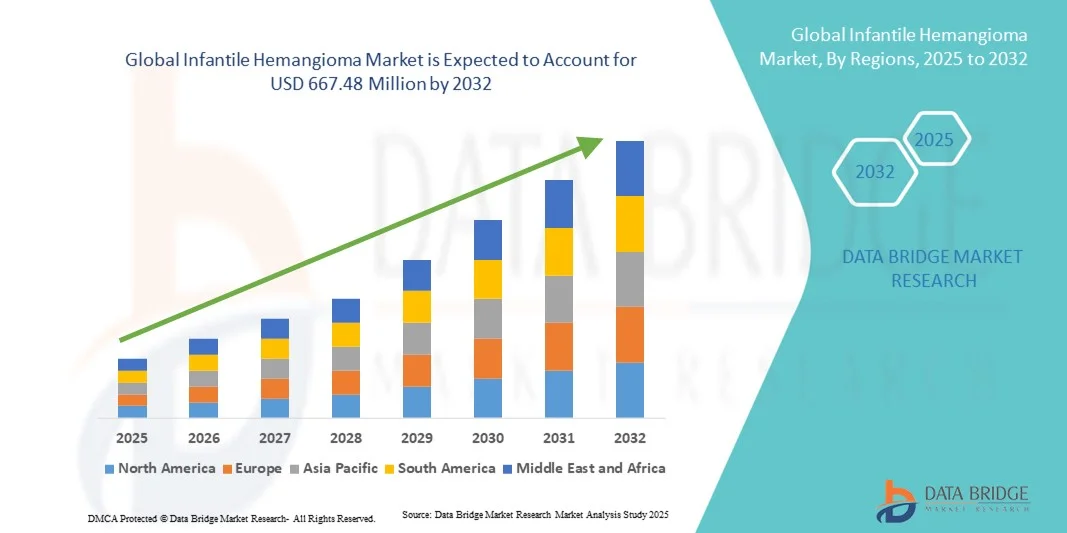
Infantile Hemangioma Market Size
- The global infantile hemangioma market size was valued at USD 502.71 million in 2024 and is expected to reach USD 667.48 million by 2032, at a CAGR of 3.20% during the forecast period
- The market growth is largely driven by increasing awareness among parents and healthcare providers regarding early diagnosis and treatment options, coupled with advancements in pharmacological and non-pharmacological therapies for infantile hemangiomas
- Furthermore, rising demand for safe, effective, and minimally invasive treatment options for infants and children is positioning modern therapeutic solutions as the preferred approach in pediatric care. These factors are collectively propelling the adoption of infantile hemangioma treatments, thereby substantially supporting market growth
Infantile Hemangioma Market Analysis
- Infantile hemangioma treatments, including pharmacological therapies such as beta-blockers and laser or surgical interventions, are increasingly vital components of pediatric healthcare due to their effectiveness in managing lesion growth, reducing complications, and improving cosmetic outcomes in infants and children
- The escalating demand for infantile hemangioma treatments is primarily fueled by growing awareness among parents and healthcare providers, early diagnosis initiatives, and increasing preference for safe, non-invasive, and targeted therapies
- North America dominated the infantile hemangioma market with the largest revenue share of 39% in 2024, driven by high awareness levels, advanced healthcare infrastructure, and strong adoption of novel therapies, with the U.S. showing substantial uptake of propranolol and other treatment modalities, supported by ongoing research and pediatric dermatology innovations
- Asia-Pacific is expected to be the fastest growing region in the infantile hemangioma market during the forecast period due to rising healthcare access, increasing awareness about early treatment, and growing investments in pediatric healthcare facilities
- Beta-blockers segment dominated the infantile hemangioma market with a market share of 45.6% in 2024, driven by their proven efficacy, non-invasive administration, and wide acceptance as the first-line treatment for complicated hemangiomas
Report Scope and Infantile Hemangioma Market Segmentation
|
Attributes |
Infantile Hemangioma Key Market Insights |
|
Segments Covered |
|
|
Countries Covered |
North America
Europe
Asia-Pacific
Middle East and Africa
South America
|
|
Key Market Players |
|
|
Market Opportunities |
|
|
Value Added Data Infosets |
In addition to the insights on market scenarios such as market value, growth rate, segmentation, geographical coverage, and major players, the market reports curated by the Data Bridge Market Research also include in-depth expert analysis, pricing analysis, brand share analysis, consumer survey, demography analysis, supply chain analysis, value chain analysis, raw material/consumables overview, vendor selection criteria, PESTLE Analysis, Porter Analysis, and regulatory framework. |
Infantile Hemangioma Market Trends
Emergence of Targeted and Non-Invasive Therapies
- A significant and accelerating trend in the global infantile hemangioma market is the adoption of targeted therapies such as oral beta-blockers, topical timolol, and laser interventions, which are improving treatment efficacy while minimizing invasive procedures
- For instance, oral propranolol has become the first-line therapy for complicated hemangiomas, providing rapid lesion regression with a favorable safety profile compared to traditional corticosteroid treatments
- Advances in treatment personalization, including dosing adjustments based on lesion size, location, and patient age, allow for more precise management and improved clinical outcomes
- Integration of telemedicine platforms enables pediatricians and dermatologists to monitor treatment progress remotely, offering real-time adjustments and consultations, which enhances accessibility and convenience for families
- This trend towards safer, targeted, and patient-friendly therapies is reshaping expectations for pediatric hemangioma care, prompting pharmaceutical companies to develop next-generation formulations and combination therapies
- The demand for minimally invasive, effective, and accessible hemangioma treatments is growing rapidly across developed and emerging markets, as parents and healthcare providers increasingly prioritize safety, efficacy, and convenience
Infantile Hemangioma Market Dynamics
Driver
Rising Awareness and Early Diagnosis Initiatives
- The increasing awareness among parents, caregivers, and healthcare professionals regarding the importance of early diagnosis and timely treatment is a significant driver for market growth
- For instance, campaigns by pediatric dermatology associations and hospitals are educating parents on identifying high-risk hemangiomas and seeking professional care promptly
- Early detection enables the initiation of effective therapies such as oral beta-blockers or laser interventions, reducing complications and improving cosmetic outcomes
- Growing investment in pediatric healthcare infrastructure, particularly in developed regions, is increasing the availability of specialized treatment centers for infantile hemangiomas
- The rising prevalence of hemangiomas and increasing outpatient visits for non-invasive management options are fueling demand for modern treatment modalities
- Parents’ preference for safe, convenient, and effective therapies, combined with healthcare provider recommendations, is accelerating adoption and driving market expansion globally
Restraint/Challenge
Treatment Side Effects and Regulatory Compliance Hurdles
- Concerns regarding potential side effects of pharmacological treatments, such as bradycardia, hypotension, or skin reactions, pose a challenge to broader market adoption
- For instance, infants undergoing oral propranolol therapy require close monitoring to prevent cardiovascular complications, which can limit widespread use in low-resource settings
- Regulatory approvals and stringent clinical guidelines for pediatric drugs can delay the introduction of novel therapies, affecting market entry timelines for new products
- High treatment costs, particularly for combination therapies or laser interventions, can be a barrier for price-sensitive consumers, especially in emerging economies
- Variability in treatment availability and accessibility across regions can restrict market penetration, with specialized care centers concentrated in urban areas
- Addressing safety concerns, streamlining regulatory pathways, and developing affordable, standardized treatment options will be crucial for sustained growth in the infantile hemangioma market
Infantile Hemangioma Market Scope
The market is segmented on the basis of treatment type, drug type, route of administration, diagnosis, end user, and distribution channel.
- By Treatment Type
On the basis of treatment type, the infantile hemangioma market is segmented into medication, surgery, and laser treatment. The medication segment dominated the market with the largest revenue share in 2024, primarily driven by the widespread adoption of oral beta-blockers, which are considered the first-line therapy for complicated hemangiomas. Medication offers a non-invasive and effective approach, minimizing the need for surgical interventions, and can be administered conveniently in outpatient settings or at home under medical supervision. The market is also supported by ongoing research for safer pharmacological options and enhanced treatment protocols that reduce side effects while improving efficacy. Pediatricians and dermatologists often recommend medication for early-stage hemangiomas due to rapid lesion regression and reduced scarring. Furthermore, the accessibility of oral and topical medications compared to hospital-based treatments reinforces its dominant position.
The laser treatment segment is expected to witness the fastest growth from 2025 to 2032, fueled by technological advancements in laser systems and increased demand for non-invasive cosmetic outcomes. Laser therapy is increasingly preferred for superficial or resistant hemangiomas where medication may be insufficient. Growing awareness of minimally invasive procedures and parental preference for reduced recovery time further drive adoption. Cosmetic improvements offered by laser therapy, particularly for facial hemangiomas, also contribute to its rising popularity. Healthcare providers are integrating laser systems in specialized pediatric and dermatology clinics, expanding access. Rising investments in advanced laser equipment and procedural training for clinicians are anticipated to support rapid market growth in this segment.
- By Drug Type
On the basis of drug type, the infantile hemangioma market is segmented into beta-blockers and steroids. The beta-blocker segment dominated the market in 2024 with a market share of 45.6% due to its proven efficacy in reducing hemangioma size and promoting faster regression. Propranolol, timolol, and related compounds have become the standard of care in many regions, supported by extensive clinical validation and safety profiles. Beta-blockers are non-invasive, can be administered orally or topically, and are increasingly preferred by healthcare providers over corticosteroids, which carry higher risks of systemic side effects. The dominance is further strengthened by awareness campaigns and guideline recommendations from pediatric and dermatology associations advocating beta-blockers as first-line therapy. In addition, improved formulations, such as liquid suspensions suitable for infants, enhance adherence and treatment outcomes.
The steroid segment is expected to witness the fastest growth in emerging markets from 2025 to 2032, driven by their continued use where beta-blockers are inaccessible or contraindicated. Steroids remain an option for complicated hemangiomas requiring rapid intervention, particularly in resource-limited settings. Advancements in targeted steroid delivery and combination therapies with minimal systemic exposure are boosting adoption. Physicians in developing regions still rely on corticosteroids due to cost-effectiveness and familiarity with clinical protocols. Awareness initiatives highlighting safe steroid use and monitoring practices further support market growth.
- By Route of Administration
On the basis of route of administration, the infantile hemangioma market is segmented into oral, injectables, and others. The oral segment dominated the market with the largest revenue share in 2024, largely due to the convenience, non-invasiveness, and proven effectiveness of oral beta-blockers. Oral therapy allows for home administration under medical guidance, reducing the need for hospital visits and enhancing patient compliance. Pediatricians often prefer oral administration for long-term treatment, as it facilitates gradual and controlled dosage adjustments. The accessibility and ease of monitoring make oral therapy the preferred option for early and moderate hemangiomas. In addition, the development of liquid formulations tailored for infants supports its market dominance.
The injectables segment is expected to witness the fastest growth from 2025 to 2032, driven by targeted interventions for complicated hemangiomas that do not respond adequately to oral medication. Injectable treatments, including corticosteroids or propranolol infusions, provide rapid therapeutic effects, particularly for high-risk or deep lesions. Increasing availability of advanced injection techniques, training programs for clinicians, and parental preference for fast-acting treatments contribute to growth. Hospitals and specialty clinics are adopting injectables for precision management, supporting the market’s expansion. Rising investment in device-assisted injection systems further accelerates adoption.
- By Diagnosis
On the basis of diagnosis, the infantile hemangioma market is segmented into X-ray, computerized tomography (CT) scans, biopsy, angiogram, and others. The angiogram segment dominated the market in 2024 due to its critical role in evaluating vascular structure and blood flow of complicated hemangiomas before planning treatment. Angiography provides precise imaging to guide interventions such as laser therapy, surgical excision, or targeted injections. Pediatric radiologists and dermatologists rely on angiograms for accurate assessment of lesion depth, size, and feeding vessels, enabling personalized treatment plans. The segment is also supported by technological advancements in imaging resolution and minimally invasive techniques. Increased awareness of diagnostic accuracy and early detection initiatives further reinforces the segment’s dominance.
The CT scan segment is expected to witness the fastest growth from 2025 to 2032, driven by improved imaging capabilities and rising adoption for deep or complex hemangiomas. CT scans enable detailed visualization of internal tissue involvement, guiding treatment selection and monitoring outcomes. Emerging markets are increasingly equipping pediatric hospitals with advanced imaging systems, expanding access. Integration with 3D imaging and computer-assisted planning tools also enhances diagnostic precision. Growing demand for non-invasive imaging and early-stage diagnosis fuels segment growth.
- By End User
On the basis of end user, the infantile hemangioma market is segmented into hospitals, homecare, specialty clinics, and others. The hospitals segment dominated the market in 2024 due to the availability of comprehensive pediatric care facilities, access to advanced diagnostics, and multidisciplinary teams managing infantile hemangiomas. Hospitals provide both inpatient and outpatient treatment, supporting administration of oral, injectable, and surgical therapies. High adoption is also driven by guideline-based treatment protocols, professional monitoring, and parental trust in hospital care. Moreover, hospitals serve as centers for research and clinical trials, reinforcing the use of innovative therapies. The presence of trained pediatric dermatologists and access to advanced laser or surgical equipment further consolidates dominance.
The specialty clinics segment is expected to witness the fastest growth from 2025 to 2032, fueled by increasing establishment of pediatric dermatology and cosmetic care centers. Specialty clinics offer focused care with minimally invasive procedures, telemedicine consultations, and personalized treatment plans. Parental preference for quicker access, convenience, and cosmetic outcomes drives adoption. These clinics are often equipped with the latest laser and imaging technologies, supporting early intervention. Expansion in urban regions and partnerships with hospitals for referral networks further accelerate growth.
- By Distribution Channel
On the basis of distribution channel, the infantile hemangioma market is segmented into hospital pharmacy, online pharmacy, retail pharmacy, and others. The hospital pharmacy segment dominated the market in 2024 due to direct access to prescribed medications for hemangioma treatment, ensuring correct dosage, adherence, and professional monitoring. Hospital pharmacies also facilitate integration with treatment protocols and follow-up consultations. The dominance is supported by partnerships between healthcare providers and pharmaceutical manufacturers, improving supply reliability. Availability of oral beta-blockers and injectables at hospital pharmacies ensures timely treatment initiation, reducing complications. Hospitals’ established trust and accessibility make this channel the preferred choice for parents.
The online pharmacy segment is expected to witness the fastest growth from 2025 to 2032, driven by increasing digital adoption, convenience, and the ability to deliver medications directly to patients’ homes. Online channels allow easy access to oral or topical medications, especially in regions with limited hospital infrastructure. Parental preference for home delivery and subscription-based medication supply services supports growth. Regulatory approvals for telemedicine prescriptions and expanding e-commerce networks are facilitating safe and reliable distribution. The convenience, cost-effectiveness, and broader reach of online pharmacies make this segment a rapidly growing channel in the infantile hemangioma market.
Infantile Hemangioma Market Regional Analysis
- North America dominated the infantile hemangioma market with the largest revenue share of 39% in 2024, driven by high awareness levels, advanced healthcare infrastructure, and strong adoption of novel therapies
- Families in the region highly value the safety, proven efficacy, and accessibility of modern therapies such as oral beta-blockers and laser treatments, supported by established treatment guidelines and specialist care networks
- This widespread adoption is further reinforced by robust healthcare infrastructure, high healthcare spending, and the presence of leading pharmaceutical and medical device companies, positioning North America as the most advanced regional market for infantile hemangioma management
U.S. Infantile Hemangioma Market Insight
The U.S. infantile hemangioma market captured the largest revenue share of 82% in 2024 within North America, fueled by the widespread adoption of oral beta-blockers as first-line therapy and a strong emphasis on early diagnosis. Parents are increasingly prioritizing safe and effective treatments for infants, supported by advanced pediatric dermatology practices and clinical guidelines. The growing use of telemedicine for follow-ups, combined with robust demand for minimally invasive therapies such as laser interventions, further propels the industry. Moreover, the presence of leading pharmaceutical companies and strong integration of research with clinical care significantly contribute to the market's expansion.
Europe Infantile Hemangioma Market Insight
The Europe infantile hemangioma market is projected to expand at a substantial CAGR throughout the forecast period, primarily driven by high awareness levels and the rising need for effective pediatric dermatology solutions. The increase in healthcare investments, coupled with the availability of advanced diagnostic imaging, is fostering the adoption of modern therapies. European families are also drawn to the safety, accessibility, and cosmetic benefits of targeted treatments such as propranolol and laser therapy. The region is experiencing significant uptake across hospitals, specialty clinics, and outpatient care settings, with therapies incorporated into both established treatment pathways and innovative clinical programs.
U.K. Infantile Hemangioma Market Insight
The U.K. infantile hemangioma market is anticipated to grow at a noteworthy CAGR during the forecast period, driven by rising awareness campaigns and a strong focus on pediatric care. In addition, concerns regarding visible facial hemangiomas and their psychological impact on children are encouraging families to seek timely interventions. The U.K.’s adoption of oral beta-blockers and access to specialized dermatology clinics is expected to continue to stimulate market growth. The presence of structured healthcare systems and coverage through the NHS further supports treatment adoption and accessibility.
Germany Infantile Hemangioma Market Insight
The Germany infantile hemangioma market is expected to expand at a considerable CAGR during the forecast period, fueled by rising demand for technologically advanced treatments and emphasis on safe pediatric care. Germany’s well-developed healthcare infrastructure, combined with its focus on innovation, promotes the adoption of therapies such as propranolol and laser interventions. Hospitals and specialty clinics are increasingly integrating standardized protocols, ensuring early and effective treatment. The strong preference for evidence-based and regulated therapies aligns with consumer expectations and drives adoption across both urban and regional healthcare systems.
Asia-Pacific Infantile Hemangioma Market Insight
The Asia-Pacific infantile hemangioma market is poised to grow at the fastest CAGR during the forecast period of 2025 to 2032, driven by increasing healthcare access, rising awareness among parents, and expanding pediatric care infrastructure in countries such as China, Japan, and India. The region’s growing inclination towards early intervention, supported by government programs and digital health initiatives, is driving treatment adoption. Furthermore, as APAC emerges as a hub for affordable pharmaceutical manufacturing and medical services, accessibility to cost-effective therapies is expanding for a wider patient base.
Japan Infantile Hemangioma Market Insight
The Japan infantile hemangioma market is gaining momentum due to the country’s advanced healthcare infrastructure, aging parental demographics, and strong demand for early intervention in pediatric care. The Japanese market places significant emphasis on safe and effective treatments, with oral beta-blockers and laser therapies becoming widely adopted in hospitals and clinics. The integration of hemangioma care with other pediatric dermatology services, supported by digital imaging and telehealth solutions, is fueling growth. Moreover, Japan’s culture of adopting high-quality medical innovations is such asly to spur continued demand for targeted treatment solutions.
India Infantile Hemangioma Market Insight
The India infantile hemangioma market accounted for the largest market revenue share in Asia-Pacific in 2024, attributed to the country’s expanding pediatric population, rising healthcare awareness, and rapid improvements in healthcare infrastructure. India stands as one of the fastest-developing markets for pediatric treatments, and hemangioma therapies are gaining attention in both public and private healthcare facilities. The push towards healthcare modernization, combined with affordable propranolol formulations and growing presence of domestic pharmaceutical manufacturers, are key factors propelling the market in India.
Infantile Hemangioma Market Share
The Infantile Hemangioma industry is primarily led by well-established companies, including:
- Pierre Fabre Laboratories (France)
- BIOLASE, Inc. (U.S.)
- Bausch Health Companies Inc. (Canada)
- Cutera, Inc. (U.S.)
- Teva Pharmaceutical Industries Ltd. (Israel)
- IRIDEX Corporation (U.S.)
- Alma Lasers Ltd (Israel)
- LINLINE Medical Systems (U.S.)
- Merck & Co., Inc. (U.S.)
- AbbVie Inc. (U.S.)
- Pfizer Inc. (U.S.)
- AstraZeneca (U.K.)
- F. Hoffmann-La Roche Ltd (Switzerland)
- Bayer AG (Germany)
- Cutting Edge Laser Technologies (U.S.)
What are the Recent Developments in Global Infantile Hemangioma Market?
- In September 2025 Zhang et al. published a study in BMC Pediatrics showing that starting oral propranolol before ~70 days of age significantly improves treatment success and shortens treatment duration in IH management
- In July 2025, a disproportionality (FAERS) analysis published in Scientific Reports examined cardiovascular adverse-event signals associated with propranolol oral solution for infantile hemangioma using FDA FAERS data, identifying peripheral vascular-type signals but not strong signals for severe cardiac arrhythmias an important post-marketing safety contribution to ongoing surveillance of beta-blocker use in infants
- In May 2025, a multicenter observational cohort published in Frontiers in Ophthalmology reported real-life efficacy and safety of oral propranolol for ocular-adnexal infantile hemangiomas, showing high response rates with low morbidity when managed by specialized multidisciplinary teams reinforcing propranolol’s practical effectiveness for vision-threatening periocular lesions
- In July 2023, a retrospective study (RAPID trial) presented at the Society for Pediatric Dermatology compared starting propranolol therapy for infantile hemangioma at 2 mg/kg per day (versus the usual 1 mg/kg up-titrate) and found no increase in adverse events suggesting that initiating at target dose may be safe
- In July 2021, a randomized clinical trial published in JAMA Otolaryngology Head & Neck Surgery reported that atenolol showed similar efficacy but fewer adverse events compared with propranolol for infants with problematic infantile hemangiomas supporting atenolol as a viable alternative systemic beta-blocker in clinical practice

- Interactive Data Analysis Dashboard
- Company Analysis Dashboard for high growth potential opportunities
- Research Analyst Access for customization & queries
- Competitor Analysis with Interactive dashboard
- Latest News, Updates & Trend analysis
- Harness the Power of Benchmark Analysis for Comprehensive Competitor Tracking
Data collection and base year analysis are done using data collection modules with large sample sizes. The stage includes obtaining market information or related data through various sources and strategies. It includes examining and planning all the data acquired from the past in advance. It likewise envelops the examination of information inconsistencies seen across different information sources. The market data is analysed and estimated using market statistical and coherent models. Also, market share analysis and key trend analysis are the major success factors in the market report. To know more, please request an analyst call or drop down your inquiry.
The key research methodology used by DBMR research team is data triangulation which involves data mining, analysis of the impact of data variables on the market and primary (industry expert) validation. Data models include Vendor Positioning Grid, Market Time Line Analysis, Market Overview and Guide, Company Positioning Grid, Patent Analysis, Pricing Analysis, Company Market Share Analysis, Standards of Measurement, Global versus Regional and Vendor Share Analysis. To know more about the research methodology, drop in an inquiry to speak to our industry experts.
Data Bridge Market Research is a leader in advanced formative research. We take pride in servicing our existing and new customers with data and analysis that match and suits their goal. The report can be customized to include price trend analysis of target brands understanding the market for additional countries (ask for the list of countries), clinical trial results data, literature review, refurbished market and product base analysis. Market analysis of target competitors can be analyzed from technology-based analysis to market portfolio strategies. We can add as many competitors that you require data about in the format and data style you are looking for. Our team of analysts can also provide you data in crude raw excel files pivot tables (Fact book) or can assist you in creating presentations from the data sets available in the report.












