


Intranasal Antidepressant Market Size
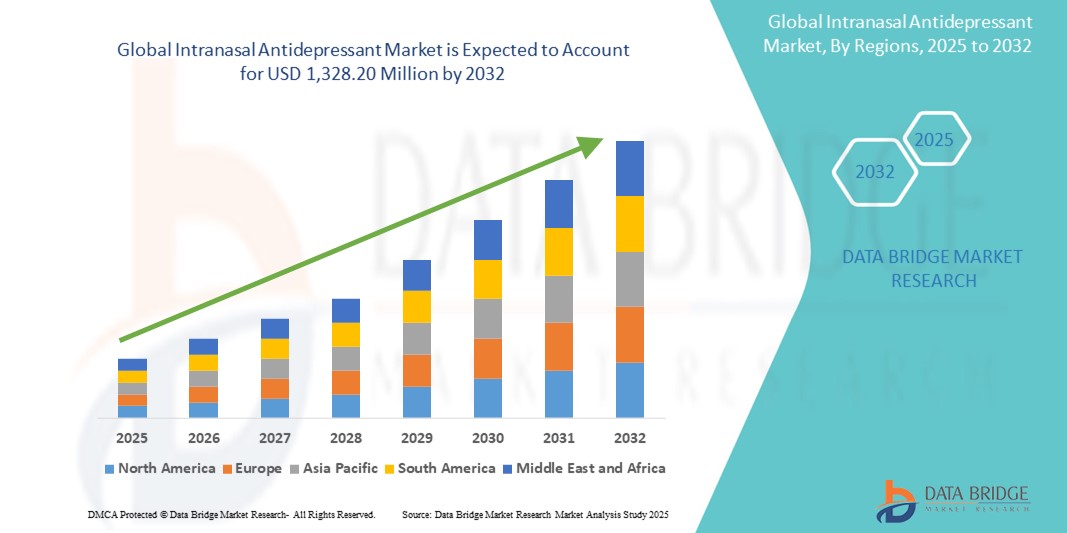
- The global intranasal antidepressant market size was valued at USD 780.00 million in 2024 and is expected to reach USD 1,328.20 million by 2032, at a CAGR of 6.88% during the forecast period
- The market growth is largely fueled by the growing prevalence of treatment-resistant depression and the urgent need for fast-acting therapies, which has driven demand for innovative delivery routes such as intranasal formulations. This shift is transforming the mental health treatment landscape by offering quicker onset of action compared to traditional oral antidepressants
- Furthermore, rising awareness and acceptance of novel psychiatric interventions among both patients and healthcare providers is positioning intranasal antidepressants as a modern alternative to conventional treatments. These converging factors are accelerating the adoption of intranasal antidepressant solutions, thereby significantly boosting the industry's growth
Intranasal Antidepressant Market Analysis
- Intranasal antidepressants, offering rapid-acting relief through direct nasal delivery to the central nervous system, are increasingly vital components in the management of major depressive disorder (MDD) and treatment-resistant depression due to their fast onset of action, improved bioavailability, and ease of administration
- The escalating demand for intranasal antidepressants is primarily fueled by the growing prevalence of depression, unmet clinical needs in treatment-resistant cases, and increasing awareness among healthcare providers about novel delivery methods that offer quicker symptom relief compared to oral formulations
- North America dominated the intranasal antidepressant market with the largest revenue share of 41.6% in 2024, supported by early adoption of innovative therapeutics, strong pharmaceutical R&D infrastructure, and favorable reimbursement policies. The U.S. particularly experienced substantial uptake due to rising mental health awareness, FDA approvals such as esketamine (Spravato), and expansion of mental health services post-COVID-19
- Asia-Pacific is expected to be the fastest-growing region in the Intranasal Antidepressant market during the forecast period, projected to grow at a CAGR of 20.3% from 2025 to 2032. This growth is driven by increasing urbanization, rising prevalence of depression and anxiety disorders, expanding healthcare access, and progressive regulatory frameworks in countries such as China, Japan, and India
- The adult segment dominated the intranasal antidepressant market with a market share of 74.3% in 2024, driven by the high prevalence of major depressive disorder and anxiety among adults. Increased workplace stress and lifestyle-related mental health issues contribute significantly to this dominance, making adults the primary target population for intranasal antidepressant therapies
Report Scope and Intranasal Antidepressant Market Segmentation
|
Attributes |
Intranasal Antidepressant Key Market Insights |
|
Segments Covered |
|
|
Countries Covered |
North America
Europe
Asia-Pacific
Middle East and Africa
South America
|
|
Key Market Players |
|
|
Market Opportunities |
|
|
Value Added Data Infosets |
In addition to the insights on market scenarios such as market value, growth rate, segmentation, geographical coverage, and major players, the market reports curated by the Data Bridge Market Research also include in-depth expert analysis, pricing analysis, brand share analysis, consumer survey, demography analysis, supply chain analysis, value chain analysis, raw material/consumables overview, vendor selection criteria, PESTLE Analysis, Porter Analysis, and regulatory framework. |
Intranasal Antidepressant Market Trends
“Increased Preference for Rapid-Acting Therapies and Non-Invasive Delivery”
- A significant and accelerating trend in the global intranasal antidepressant market is the growing preference for rapid-acting therapeutic options, especially for treatment-resistant depression (TRD) and major depressive disorder (MDD). This shift is driven by the need for fast relief in severe cases where conventional oral antidepressants are ineffective or too slow-acting
- For instance, the approval of esketamine nasal spray (Spravato) by regulatory bodies like the U.S. FDA has marked a pivotal advancement in depression treatment by offering relief within hours, compared to the several weeks required by traditional antidepressants
- The intranasal route bypasses the gastrointestinal tract and hepatic first-pass metabolism, enabling faster systemic absorption and onset of action. This makes it especially suitable for patients experiencing acute depressive episodes or suicidal ideation
- The non-invasive nature of nasal drug delivery also enhances patient compliance and ease of administration, especially in outpatient or emergency settings. It allows for self-administration under supervision, reducing the need for hospital-based interventions
- This trend toward faster, safer, and more convenient treatment modalities is fundamentally reshaping expectations in psychiatric care. As a result, pharmaceutical companies are increasingly investing in the development of novel intranasal formulations of existing and new antidepressants
- The demand for intranasal antidepressants is growing rapidly across both developed and developing regions as mental health becomes a prioritized public health issue. Government support, mental health awareness campaigns, and expanded insurance coverage are further accelerating adoption in clinical settings
Intranasal Antidepressant Market Dynamics
Driver
“Growing Need Due to Rising Prevalence of Depression and Demand for Rapid-Acting Therapies”
- The increasing global prevalence of major depressive disorder (MDD), treatment-resistant depression (TRD), and suicidal ideation is driving the need for innovative and rapid-acting therapeutic options, significantly boosting the demand for intranasal antidepressants
- For instance, in March 2024, Johnson & Johnson’s Janssen Pharmaceuticals continued expanding access to Spravato® (esketamine) nasal spray for TRD, with positive clinical outcomes supporting broader adoption across the U.S. and Europe. Such initiatives by key players are accelerating the growth of the intranasal antidepressant industry
- Unlike traditional oral antidepressants that take weeks to show effect, intranasal formulations such as esketamine provide a fast-acting alternative, often producing noticeable symptom relief within hours to days, addressing critical unmet needs in mental health care
- The growing mental health awareness, increased psychiatric diagnosis rates, and supportive regulatory environments (such as FDA Breakthrough Therapy Designation for esketamine) are encouraging both public and private investments in the sector
- In addition, the increasing demand for at-home care solutions and outpatient treatments is favoring the adoption of intranasal delivery methods, which are less invasive and more convenient, particularly in geriatric and non-hospital settings
Restraint/Challenge
“Safety Concerns, Risk of Misuse, and High Cost”
- Despite their potential, intranasal antidepressants face challenges such as concerns regarding dissociation, abuse potential, and long-term safety. The Schedule III classification of esketamine due to its psychoactive properties has led to hesitancy among healthcare providers and regulators
- For instance, strict Risk Evaluation and Mitigation Strategy (REMS) requirements for esketamine in the U.S. limit its distribution to certified healthcare settings under supervision, which can restrict accessibility for some patients
- Moreover, the high cost of intranasal antidepressants, often not fully covered by insurance in many countries, poses a barrier to widespread adoption, especially in low- and middle-income regions
- The potential for misuse and dependency, particularly in vulnerable populations, also necessitates cautious implementation and ongoing patient monitoring, adding to the operational complexity
- Addressing these issues through clearer clinical guidelines, post-marketing surveillance, insurance reimbursement strategies, and improved patient education will be essential for the sustainable growth of the intranasal antidepressant market
Intranasal Antidepressant Market Scope
The Intranasal Antidepressant market is segmented on the basis of molecule type, therapeutic class, patient population, and end user.
• By Molecule Type
On the basis of molecule type, the intranasal antidepressant market is segmented into Esketamine, Ketamine, and Others. The Esketamine segment dominated the largest market revenue share of 62.4% in 2024, primarily due to its FDA approval for treatment-resistant depression and its rapid onset of action. Esketamine is widely prescribed in clinical settings owing to its ability to deliver fast relief in patients unresponsive to traditional antidepressants.
The Ketamine segment is expected to witness the fastest CAGR of 23.1% from 2025 to 2032, driven by its expanding off-label use in depression management and ongoing clinical trials for intranasal delivery formats. The broader therapeutic potential of ketamine across various psychiatric disorders also supports its accelerated growth.
• By Therapeutic Class
On the basis of therapeutic class, the intranasal antidepressant market is segmented into NMDA Receptor Antagonists, SSRIs, and Others. The NMDA Receptor Antagonists segment held the largest market share of 66.8% in 2024, attributed to the rising adoption of novel fast-acting treatments like esketamine and ketamine. Their unique mechanism of action provides rapid symptom relief, especially in patients with suicidal ideation.
The SSRIs segment is projected to grow at the fastest CAGR of 18.5% from 2025 to 2032, supported by the development of intranasal formulations aimed at enhancing bioavailability and patient adherence.
• By Patient Population
On the basis of patient population, the intranasal antidepressant market is segmented into Adult, Geriatric, and Pediatric. The Adult segment captured the largest revenue share of 74.3% in 2024, driven by the high prevalence of major depressive disorder and anxiety among adults. Increased workplace stress and lifestyle-related mental health issues contribute significantly to this dominance.
The Geriatric segment is expected to witness the fastest growth at a CAGR of 20.6% during the forecast period, due to rising diagnosis rates and the demand for non-invasive treatment alternatives among elderly patients who may have difficulty swallowing oral medications.
• By End User
On the basis of end user, the intranasal antidepressant market is segmented into hospitals, specialty clinics, homecare, and others. The Hospitals segment accounted for the largest market share of 49.7% in 2024, as these institutions are the primary providers of supervised administration for drugs like esketamine, which require medical observation.
The Homecare segment is expected to grow at the highest CAGR of 25.4% from 2025 to 2032, driven by the increasing availability of patient-friendly intranasal devices and a growing shift toward home-based mental health treatment options.
Intranasal Antidepressant Market Regional Analysis
- North America dominated the intranasal antidepressant market with the largest revenue share of 41.6% in 2024, driven by the high prevalence of major depressive disorder (MDD), favorable reimbursement scenarios, and the early adoption of innovative treatments such as esketamine nasal spray
- The region benefits from strong clinical infrastructure, rapid FDA approvals, and significant awareness about treatment-resistant depression (TRD), which further fuels the demand for intranasal therapies
- In addition, supportive initiatives by pharmaceutical companies and mental health organizations contribute to high patient access and growing market traction
U.S. Intranasal Antidepressant Market Insight
The U.S. intranasal antidepressant market captured the largest revenue share of 81.0% in 2024 within North America, owing to the rapid commercialization of esketamine (Spravato), strong clinical uptake, and broad insurance coverage. High rates of MDD and TRD, along with an increasing focus on fast-acting antidepressants in outpatient and emergency psychiatric care, have made the U.S. the core market for intranasal treatments. Moreover, the presence of key players like Janssen Pharmaceuticals and growing investment in mental health initiatives are enhancing adoption across hospitals and specialty clinics.
Europe Intranasal Antidepressant Market Insight
The Europe intranasal antidepressant market accounted for 30.2% of the global intranasal antidepressant market revenue in 2024 and is expected to grow at a robust CAGR of 13.7% during the forecast period. Factors such as the rise in depression-related disorders, favorable regulatory frameworks (such as EMA approvals), and increasing awareness about the benefits of rapid-onset treatments are propelling market expansion. Ongoing clinical trials and partnerships between pharmaceutical companies and healthcare systems are also contributing to sustained growth.
U.K. Intranasal Antidepressant Market Insight
The U.K. intranasal antidepressant market is projected to register a CAGR of 12.5% from 2025 to 2032, driven by increasing diagnosis rates for depression, strong mental health initiatives under the NHS, and a growing preference for novel therapeutics. Rising demand for non-invasive alternatives, combined with active government support for innovative drug delivery systems, positions the U.K. as a significant contributor to the regional market.
Germany Intranasal Antidepressant Market Insight
The Germany intranasal antidepressant market is expected to expand at a CAGR of 13.1% during the forecast period, supported by the country's focus on digital health solutions and rising burden of treatment-resistant depression. Germany’s structured healthcare system, combined with expanding clinical use of esketamine in psychiatric care, is encouraging broader market penetration.
Asia-Pacific Intranasal Antidepressant Market Insight
The Asia-Pacific intranasal antidepressant market is projected to grow at the fastest CAGR of 20.3% during the forecast period (2025–2032), with increasing mental health awareness and rapid improvements in healthcare access across the region. Countries such as China, Japan, and India are seeing higher diagnosis rates of depression and are investing in innovative treatments through both public and private sectors. Government digital health initiatives and expanding distribution networks for intranasal formulations are making these therapies more accessible and affordable.
Japan Intranasal Antidepressant Market Insight
The Japan intranasal antidepressant market accounted for 18.7% of the Asia-Pacific intranasal antidepressant market revenue in 2024, owing to its aging population, high healthcare expenditure, and focus on advanced drug delivery systems. The country’s preference for home-based mental health care, alongside growing R&D activity in neurology, is fostering adoption of intranasal therapies for depression.
China Intranasal Antidepressant Market Insight
The China intranasal antidepressant market held the largest market revenue share of 39.4% within Asia-Pacific in 2024, driven by a growing middle class, mental health destigmatization, and rising investment in psychiatric care. The government’s strong push for digital health solutions and the availability of low-cost manufacturing have made intranasal antidepressants more widely available across both urban and rural areas. Collaborations between local pharmaceutical firms and global innovators are also accelerating market expansion.
Intranasal Antidepressant Market Share
The intranasal antidepressant industry is primarily led by well-established companies, including:
- Johnson & Johnson Services, Inc. (U.S.)
- Pfizer Inc. (U.S.)
- Bionomics Limited (Australia).
- Aytu BioPharma (U.S.)
- Takeda Pharmaceutical Company (Japan)
- Novartis AG (Switzerland)
- Otsuka Pharmaceutical Co., Ltd. (Japan)
- Hikma Pharmaceuticals PLC (U.K.)
- Dr. Reddy’s Laboratories (India)
- Viatris Inc. (U.S.)
- Cipla Limited (India)
- Lupin Limited (India)
- Teva Pharmaceuticals (Israel)
- Sun Pharmaceutical Industries Ltd. (India)
- Amneal Pharmaceuticals, Inc. (U.S.)
- Bristol Myers Squibb (U.S.)
- F. Hoffmann-La Roche AG (Switzerland)
Latest Developments in Global Intranasal Antidepressant Market
- In July 2025, Atai Life Sciences and Beckley Psytech announced promising results from a Phase 2 trial of mebufotenin benzoate nasal spray for treatment-resistant depression. The one-time dose delivered clinically meaningful symptom relief within a day and lasted up to eight weeks, while most patients were ready for discharge just 90 minutes post-treatment—a major advance toward more accessible and cost-effective intranasal therapies
- In August 2023, Johnson & Johnson announced that the U.S. FDA approved Spravato (esketamine) as the first and only monotherapy for adults with treatment-resistant depression (TRD). This expanded indication reflects Spravato’s clinically proven effectiveness in reducing depressive symptoms without the need for combination oral antidepressants, marking a major milestone in the evolution of intranasal therapies for mental health

- Interactive Data Analysis Dashboard
- Company Analysis Dashboard for high growth potential opportunities
- Research Analyst Access for customization & queries
- Competitor Analysis with Interactive dashboard
- Latest News, Updates & Trend analysis
- Harness the Power of Benchmark Analysis for Comprehensive Competitor Tracking
Data collection and base year analysis are done using data collection modules with large sample sizes. The stage includes obtaining market information or related data through various sources and strategies. It includes examining and planning all the data acquired from the past in advance. It likewise envelops the examination of information inconsistencies seen across different information sources. The market data is analysed and estimated using market statistical and coherent models. Also, market share analysis and key trend analysis are the major success factors in the market report. To know more, please request an analyst call or drop down your inquiry.
The key research methodology used by DBMR research team is data triangulation which involves data mining, analysis of the impact of data variables on the market and primary (industry expert) validation. Data models include Vendor Positioning Grid, Market Time Line Analysis, Market Overview and Guide, Company Positioning Grid, Patent Analysis, Pricing Analysis, Company Market Share Analysis, Standards of Measurement, Global versus Regional and Vendor Share Analysis. To know more about the research methodology, drop in an inquiry to speak to our industry experts.
Data Bridge Market Research is a leader in advanced formative research. We take pride in servicing our existing and new customers with data and analysis that match and suits their goal. The report can be customized to include price trend analysis of target brands understanding the market for additional countries (ask for the list of countries), clinical trial results data, literature review, refurbished market and product base analysis. Market analysis of target competitors can be analyzed from technology-based analysis to market portfolio strategies. We can add as many competitors that you require data about in the format and data style you are looking for. Our team of analysts can also provide you data in crude raw excel files pivot tables (Fact book) or can assist you in creating presentations from the data sets available in the report.












