Global Japanese Encephalitis Market
Market Size in USD Million
CAGR :
% 
 USD
265.12 Million
USD
422.56 Million
2025
2033
USD
265.12 Million
USD
422.56 Million
2025
2033
 Forecast Period Forecast Period |
2026 –2033 |
 Market Size (Base Year) Market Size (Base Year) |
USD 265.12 Million |
 Market Size (Forecast Year) Market Size (Forecast Year) |
USD 422.56 Million |
 CAGR CAGR |
% |
| Major Markets Players |
|
Japanese Encephalitis Market Size
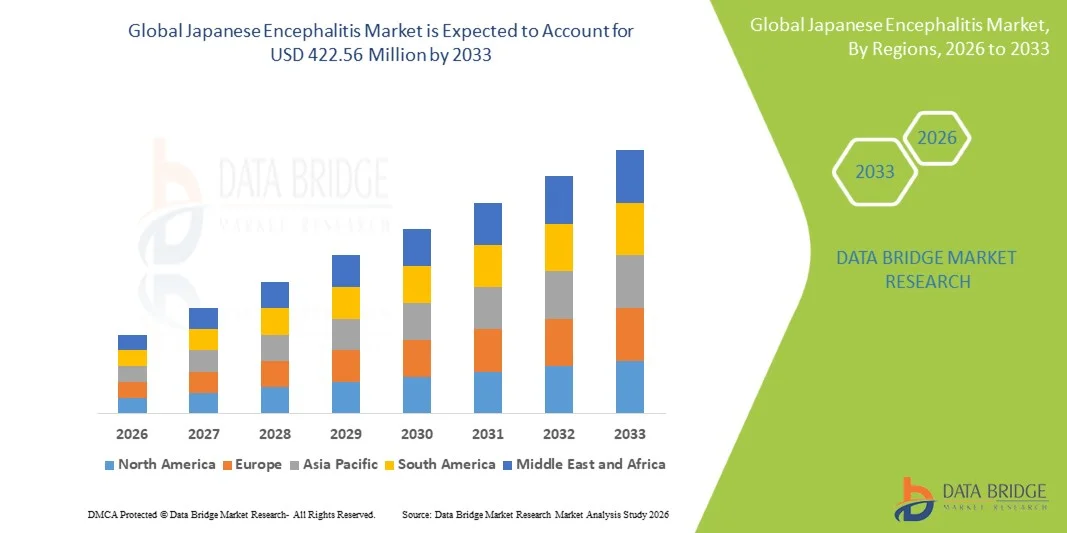
- The global Japanese Encephalitis market size was valued at USD 265.12 million in 2025 and is expected to reach USD 422.56 million by 2033, at a CAGR of 6.00% during the forecast period
- The market growth is largely fueled by the increasing burden of mosquito-borne infections across Asia-Pacific regions, coupled with expanding immunization programs and government-led vaccination initiatives targeting high-risk populations, particularly in endemic countries
- Furthermore, rising awareness regarding preventive healthcare, improvements in healthcare infrastructure, and growing adoption of pediatric and traveler vaccination protocols are strengthening demand for Japanese Encephalitis vaccines and diagnostics. These converging factors are accelerating the uptake of preventive and therapeutic solutions, thereby significantly boosting the industry's growth
Japanese Encephalitis Market Analysis
- Japanese Encephalitis, a mosquito-borne viral disease affecting the central nervous system, is a significant public health concern in endemic regions, with vaccines and preventive immunization strategies forming the cornerstone of disease control due to the absence of specific curative antiviral treatments
- The escalating demand in the Japanese Encephalitis market is primarily fueled by expanding government-led immunization programs, increasing awareness of vector-borne diseases, and rising investments in public health initiatives aimed at reducing disease burden, particularly among pediatric populations in high-risk regions
- North America dominated the Japanese Encephalitis market with the largest revenue share of 40.3% in 2025, supported by advanced healthcare systems, strong travel vaccination guidelines, and high awareness among outbound travelers visiting endemic countries
- Asia-Pacific is expected to be the fastest growing region in the Japanese Encephalitis market during the forecast period driven by high disease prevalence, large population at risk, expanding national immunization programs, and increasing government and global health organization support for mass vaccination campaigns
- The vaccination segment dominated the Japanese Encephalitis market in 2025, holding a market share of 75.2%, driven by widespread inclusion of JE vaccines in national immunization schedules, strong adoption of preventive healthcare measures, and continuous advancements in vaccine formulations improving accessibility and coverage in endemic and non-endemic regions
Report Scope and Japanese Encephalitis Market Segmentation
|
Attributes |
Japanese Encephalitis Key Market Insights |
|
Segments Covered |
|
|
Countries Covered |
North America
Europe
Asia-Pacific
Middle East and Africa
South America
|
|
Key Market Players |
|
|
Market Opportunities |
|
|
Value Added Data Infosets |
In addition to the insights on market scenarios such as market value, growth rate, segmentation, geographical coverage, and major players, the market reports curated by the Data Bridge Market Research also include in-depth expert analysis, patient epidemiology, pipeline analysis, pricing analysis, and regulatory framework |
Japanese Encephalitis Market Trends
“Expansion of Vaccination Programs and Preventive Immunization Initiatives”
- A significant and accelerating trend in the global Japanese Encephalitis market is the expansion of national immunization programs and preventive vaccination campaigns across endemic regions, supported by global health organizations and government-led initiatives aimed at reducing disease burden
- For instance, mass vaccination drives in countries such as India and China have significantly increased coverage among pediatric populations, improving disease control and reducing incidence rates in high-risk areas
- Integration of Japanese Encephalitis vaccines into routine childhood immunization schedules enables early protection, while international travel vaccination guidelines are further driving demand among travelers visiting endemic regions
- Furthermore, advancements in vaccine development, including safer and more effective inactivated and live attenuated vaccines, are enhancing immunization accessibility and compliance across both urban and rural healthcare systems
- This trend toward large-scale immunization and preventive healthcare is strengthening disease management strategies and reshaping expectations for infectious disease control
- The demand for Japanese Encephalitis vaccines is growing steadily across both endemic and non-endemic regions, as governments and healthcare providers increasingly prioritize prevention over treatment
- Increasing focus on strengthening disease surveillance systems and early outbreak detection through digital health tools and reporting networks is further supporting timely vaccination responses in high-risk regions
Japanese Encephalitis Market Dynamics
Driver
“Rising Disease Burden and Strengthening Government Immunization Efforts”
- The increasing prevalence of Japanese Encephalitis in endemic regions, coupled with expanding government-led vaccination initiatives, is a major driver for the growing demand for vaccines and preventive healthcare solutions
- For instance, large-scale immunization campaigns supported by organizations such as WHO and national health ministries are being implemented to reduce transmission and protect vulnerable populations in rural and high-risk areas
- As awareness of vector-borne diseases increases among populations, governments are prioritizing funding for surveillance programs, vaccination drives, and public health education to mitigate outbreaks
- Furthermore, the integration of Japanese Encephalitis vaccines into national immunization schedules and the availability of subsidized or free vaccination programs are significantly improving accessibility
- The growing focus on preventive healthcare, combined with rising healthcare expenditure in emerging economies, is encouraging wider adoption of JE vaccines and strengthening market growth
- The convenience of routine immunization, combined with increased awareness of long-term neurological complications associated with the disease, is further propelling demand in both pediatric and adult populations
- Increasing collaborations between public health agencies and vaccine manufacturers to ensure consistent supply and distribution in endemic regions are further supporting market expansion
Restraint/Challenge
“Limited Awareness in Rural Regions and Vaccine Accessibility Barriers”
- Concerns surrounding limited awareness of Japanese Encephalitis in remote and rural populations, along with gaps in healthcare infrastructure, pose a significant challenge to broader market penetration
- For instance, low awareness levels in certain endemic regions result in delayed diagnosis and lower vaccination uptake, increasing vulnerability to outbreaks among underprivileged communities
- Addressing these challenges requires strengthening healthcare delivery systems, improving cold chain logistics for vaccine distribution, and enhancing public health education campaigns to promote preventive vaccination
- In addition, the relatively high cost of vaccines in some regions and dependency on government funding or international aid can limit widespread adoption in low-income populations
- While global organizations and governments are working to improve accessibility through subsidies and outreach programs, logistical constraints and uneven healthcare access remain barriers in certain geographies
- Overcoming these challenges through improved awareness, better infrastructure, and cost-effective vaccine distribution strategies will be vital for sustained market growth
- Variability in regulatory approval processes across different countries can also delay vaccine availability and market entry, further impacting timely access in certain regions
Japanese Encephalitis Market Scope
The market is segmented on the basis of diagnosis, treatment, route of administration, end-users, and distribution channel.
- By Diagnosis
On the basis of diagnosis, the Japanese Encephalitis market is segmented into blood test, IgM-capture ELISA, cerebrospinal fluid (CSF) test, and others. The IgM-capture ELISA segment dominated the market with the largest market share in 2025, driven by its status as the standard confirmatory diagnostic method recommended by global health authorities such as WHO. This test is widely used due to its high sensitivity and specificity in detecting JE-specific antibodies, making it essential for accurate and early diagnosis. Its adoption is further supported by availability in well-equipped laboratories and integration into surveillance programs across endemic regions. In addition, the cost-effectiveness and reliability of IgM-capture ELISA contribute to its widespread use in both public and private healthcare settings. Increasing investments in laboratory infrastructure and diagnostic awareness further reinforce its dominance in disease detection. The growing emphasis on accurate epidemiological tracking also supports continued reliance on this diagnostic method.
The cerebrospinal fluid (CSF) test segment is expected to witness the fastest growth during the forecast period, driven by its increasing use in severe and clinically suspected neurological cases. CSF testing provides critical insights into central nervous system involvement, enabling clinicians to differentiate Japanese Encephalitis from other forms of encephalitis. Rising hospitalization rates for acute encephalitis cases and improved access to advanced diagnostic procedures are contributing to the adoption of CSF testing. Furthermore, advancements in laboratory techniques and increasing availability of neurology-focused healthcare facilities are supporting segment growth. The growing need for precise diagnosis in complicated cases, especially in tertiary care centers, is further accelerating demand. Increasing awareness among healthcare professionals regarding early and accurate diagnosis of neurological infections is also boosting this segment.
- By Treatment
On the basis of treatment, the Japanese Encephalitis market is segmented into vaccination, supportive care, and others. The vaccination segment dominated the market with the largest share of 75.2% in 2025, driven by large-scale immunization programs and inclusion of JE vaccines in national immunization schedules in endemic countries. Vaccination remains the most effective preventive measure, as there is no specific antiviral cure for Japanese Encephalitis. Governments and global organizations actively promote vaccination campaigns to reduce disease incidence, particularly among children in rural and high-risk areas. The availability of both live attenuated and inactivated vaccines has improved accessibility and coverage. In addition, increasing awareness about preventive healthcare and travel vaccination requirements further supports demand. Continuous public health initiatives and funding from international agencies also contribute to the dominance of this segment.
The supportive care segment is expected to witness the fastest growth during the forecast period, driven by the rising number of hospitalized patients requiring symptomatic and intensive care management. Supportive care includes respiratory support, fluid management, seizure control, and neurological monitoring, which are critical in severe JE cases. Increasing hospitalization rates due to complications such as encephalitis and neurological damage are fueling demand for advanced supportive care services. Improvements in critical care infrastructure and expanding access to intensive care units in emerging economies are further supporting this segment. In addition, growing awareness among healthcare providers about the importance of early intervention and patient management is enhancing treatment outcomes. The rising burden of severe cases in endemic regions is also contributing to the growth of this segment.
- By Route of Administration
On the basis of route of administration, the Japanese Encephalitis market is segmented into oral, parenteral, and others. The parenteral segment dominated the market with the largest share in 2025, primarily due to the fact that most Japanese Encephalitis vaccines are administered via injectable routes. Parenteral administration ensures higher bioavailability and effective immune response, making it the preferred method for vaccines used in immunization programs. This route is widely adopted in both routine immunization schedules and travel vaccination settings. Healthcare providers favor parenteral delivery for its proven efficacy and standardized dosing protocols. The availability of trained healthcare professionals and established vaccination infrastructure further supports the dominance of this segment. In addition, regulatory approvals for injectable JE vaccines reinforce their widespread use across endemic and non-endemic regions.
The oral segment is expected to witness the fastest growth during the forecast period, driven by ongoing research and development efforts aimed at improving patient compliance and ease of administration. Oral formulations, though currently limited, are gaining attention due to their non-invasive nature and suitability for mass immunization in remote areas. Increasing focus on innovative vaccine delivery methods and needle-free technologies is supporting the development of oral alternatives. These formulations have the potential to simplify logistics, reduce administration costs, and improve vaccination coverage in underserved populations. Growing investments in biotechnology and vaccine innovation are further accelerating advancements in this segment.
- By End-Users
On the basis of end-users, the Japanese Encephalitis market is segmented into hospitals, homecare, specialty clinics, and others. The hospitals segment dominated the market with the largest share in 2025, driven by the high number of patients requiring diagnosis, vaccination, and supportive care in clinical settings. Hospitals are the primary centers for administering JE vaccines, conducting diagnostic tests, and managing severe neurological cases. Availability of advanced diagnostic equipment, skilled healthcare professionals, and emergency care facilities contributes to the dominance of this segment. Hospitals also serve as key points for government-supported immunization programs and outbreak response initiatives. Increasing patient admissions for encephalitis-related complications further strengthens the role of hospitals in the market.
The specialty clinics segment is expected to witness the fastest growth during the forecast period, driven by the rising demand for specialized care and preventive vaccination services. Specialty clinics offer focused services such as travel vaccinations, neurology consultations, and infectious disease management, making them important contributors to JE market growth. Increasing patient preference for outpatient and specialized care settings, along with shorter waiting times and personalized services, is supporting this segment. The expansion of private healthcare infrastructure and growing number of specialty clinics in urban areas are further accelerating growth. In addition, increasing awareness of preventive healthcare and accessibility of vaccination services in clinics are contributing to the rising demand.
- By Distribution Channel
On the basis of distribution channel, the Japanese Encephalitis market is segmented into hospital pharmacy, online pharmacy, and retail pharmacy. The hospital pharmacy segment dominated the market with the largest share in 2025, driven by the direct procurement of vaccines and medications through hospital-based healthcare systems. Hospital pharmacies play a critical role in vaccine storage, distribution, and administration, particularly in government immunization programs and inpatient care. The presence of cold chain infrastructure and controlled handling of vaccines ensures their efficacy and safety. Hospitals also act as primary distribution points for patients undergoing diagnosis and treatment for Japanese Encephalitis. Strong integration with healthcare providers and centralized procurement systems further support the dominance of this segment.
The online pharmacy segment is expected to witness the fastest growth during the forecast period, driven by increasing digitalization of healthcare services and rising adoption of e-commerce platforms for pharmaceutical products. Online pharmacies offer convenience, doorstep delivery, and wider access to vaccines and related medications, especially in urban areas. Growing internet penetration and smartphone usage are facilitating the expansion of digital healthcare platforms. In addition, increasing consumer preference for contactless services and home delivery options is supporting segment growth. Regulatory advancements and improved logistics for temperature-sensitive products are also enhancing the reliability of online distribution channels.
Japanese Encephalitis Market Regional Analysis
- North America dominated the Japanese Encephalitis market with the largest revenue share of 40.3% in 2025, supported by advanced healthcare systems, strong travel vaccination guidelines, and high awareness among outbound travelers visiting endemic countries
- Consumers and healthcare providers in the region prioritize access to advanced vaccines, travel health services, and preventive care for individuals traveling to endemic regions, contributing to steady market demand
- This widespread adoption is further supported by high healthcare expenditure, strong awareness regarding vector-borne diseases among travelers, and the availability of specialized vaccination centers, establishing preventive immunization as a key driver of market growth
U.S. Japanese Encephalitis Market Insight
The U.S. Japanese Encephalitis market captured the largest revenue share within North America in 2025, driven by the strong demand for travel vaccination and well-established healthcare infrastructure supporting preventive immunization services. Consumers are increasingly prioritizing protection against vector-borne diseases when traveling to endemic regions, leading to higher uptake of JE vaccines. The growing awareness among travelers, expatriates, and military personnel, combined with recommendations from healthcare providers, further supports market growth. Moreover, the presence of advanced vaccination centers, high healthcare expenditure, and easy access to specialized travel clinics contribute significantly to the expansion of the market in the U.S.
Europe Japanese Encephalitis Market Insight
The Europe Japanese Encephalitis market is projected to expand at a substantial CAGR throughout the forecast period, primarily driven by increasing international travel to endemic regions and stringent health advisory guidelines recommending JE vaccination for travelers. Rising awareness of preventive healthcare and vector-borne diseases is encouraging individuals to opt for vaccination before traveling. The region is also witnessing growing adoption of travel medicine services across hospitals and specialty clinics. In addition, the presence of well-developed healthcare systems and strong regulatory frameworks supporting vaccine safety and accessibility are contributing to steady market growth across residential and commercial traveler segments.
U.K. Japanese Encephalitis Market Insight
The U.K. Japanese Encephalitis market is anticipated to grow at a noteworthy CAGR during the forecast period, driven by increasing outbound travel to Asia-Pacific regions where the disease is endemic. Growing awareness regarding travel-related health risks and the availability of specialized travel clinics are encouraging vaccination adoption among travelers. In addition, recommendations from public health authorities and healthcare providers are influencing consumer decisions toward preventive immunization. The U.K.’s robust healthcare infrastructure, combined with strong access to vaccination services through private clinics and pharmacies, is expected to continue supporting market growth.
Germany Japanese Encephalitis Market Insight
The Germany Japanese Encephalitis market is expected to expand at a considerable CAGR during the forecast period, fueled by rising awareness of travel-related infectious diseases and increasing demand for preventive vaccination among international travelers. Germany’s strong healthcare system and emphasis on preventive medicine encourage the uptake of vaccines prior to travel to endemic regions. The availability of well-established travel clinics and healthcare professionals specializing in infectious diseases further supports market growth. In addition, growing emphasis on health awareness campaigns and the integration of vaccination into pre-travel consultation services are enhancing adoption across the country.
Asia-Pacific Japanese Encephalitis Market Insight
The Asia-Pacific Japanese Encephalitis market is poised to grow at the fastest CAGR during the forecast period, driven by the high endemic prevalence of the disease, large at-risk population, and increasing government-led immunization programs. Countries such as India, China, and Southeast Asian nations are actively implementing mass vaccination campaigns to control outbreaks and reduce disease burden. Rapid urbanization, improving healthcare infrastructure, and rising awareness of preventive healthcare are further accelerating market adoption. In addition, support from global health organizations and continuous investments in public health initiatives are strengthening vaccine accessibility and coverage across the region.
Japan Japanese Encephalitis Market Insight
The Japan Japanese Encephalitis market is gaining momentum due to the country’s advanced healthcare infrastructure, strong immunization programs, and continued focus on preventive healthcare. Although the incidence of the disease is relatively low due to effective control measures, vaccination remains an important preventive strategy, especially for travelers and at-risk populations. The integration of JE vaccines into healthcare services, along with high awareness among the population, supports steady market demand. In addition, Japan’s emphasis on research and development in vaccine technologies and infectious disease management contributes to the sustained growth of the market.
India Japanese Encephalitis Market Insight
The India Japanese Encephalitis market accounted for a significant share within Asia-Pacific in 2025, attributed to the high disease burden, large population at risk, and strong government-led immunization initiatives. India has implemented extensive vaccination campaigns targeting vulnerable populations, particularly children in rural and endemic regions. Increasing awareness about vector-borne diseases, along with support from public health organizations, is driving vaccine uptake. Furthermore, expanding healthcare infrastructure, improved access to immunization services, and continuous government efforts to reduce mortality and morbidity are key factors propelling the growth of the Japanese Encephalitis market in the country.
Japanese Encephalitis Market Share
The Japanese Encephalitis industry is primarily led by well-established companies, including:
- Valneva SE (France)
- Bharat Biotech International Ltd (India)
- Meiji Holdings Co., Ltd (Japan)
- Green Cross Corporation (South Korea)
- Sanofi (France)
- Biological E. Limited (India)
- Medigen Vaccine Biologics Corp (Taiwan)
- Panacea Biotec Ltd (India)
- Adimmune Corporation (Taiwan)
- Indian Immunologicals Ltd (India)
- Chengdu Institute of Biological Products (China)
- Hualan Biological Engineering Inc (China)
- Jiangsu Hengrui Medicine Co., Ltd (China)
- GSK plc (U.K.)
- Merck & Co., Inc. (U.S.)
- Pfizer Inc. (U.S.)
- Seqirus (Australia)
- CSL Limited (Australia)
- Takeda Pharmaceutical Company Limited (Japan)
- Novavax, Inc. (U.S.)
What are the Recent Developments in Global Japanese Encephalitis Market?
- In October 2025, a comprehensive review emphasized the cost-effective protection offered by Japanese encephalitis vaccines and recommended integrating JE immunization into routine health services, strengthening pharmacovigilance and mixed vaccine schedules in endemic regions
- In May 2025, research published in a regional public health journal revealed a concerning rise in Japanese encephalitis cases in urban and peri-urban areas of Tamil Nadu, indicating a shift from traditional rural patterns and emphasizing the need for broader vaccination and mosquito control strategies
- In May 2025, India reported a significant rise in Japanese encephalitis cases across 24 states and union territories, with 1,548 confirmed cases in 2024, highlighting the urgent need for expanded vaccination and public health efforts to control the disease
- In January 2025, Valneva SE announced a new contract with the U.S. Department of Defense worth a minimum of USD 32.8 million for the supply of its Japanese encephalitis vaccine IXIARO®, reinforcing ongoing demand for JE vaccination among military personnel and travelers to endemic regions
- In August 2024, the World Health Organization reaffirmed that safe and effective Japanese encephalitis vaccines are available and recommended integrating JE vaccination into national immunization schedules in all areas where the disease is recognized as a public health issue
SKU-
Get online access to the report on the World's First Market Intelligence Cloud

- Interactive Data Analysis Dashboard
- Company Analysis Dashboard for high growth potential opportunities
- Research Analyst Access for customization & queries
- Competitor Analysis with Interactive dashboard
- Latest News, Updates & Trend analysis
- Harness the Power of Benchmark Analysis for Comprehensive Competitor Tracking
Research Methodology
Data collection and base year analysis are done using data collection modules with large sample sizes. The stage includes obtaining market information or related data through various sources and strategies. It includes examining and planning all the data acquired from the past in advance. It likewise envelops the examination of information inconsistencies seen across different information sources. The market data is analysed and estimated using market statistical and coherent models. Also, market share analysis and key trend analysis are the major success factors in the market report. To know more, please request an analyst call or drop down your inquiry.
The key research methodology used by DBMR research team is data triangulation which involves data mining, analysis of the impact of data variables on the market and primary (industry expert) validation. Data models include Vendor Positioning Grid, Market Time Line Analysis, Market Overview and Guide, Company Positioning Grid, Patent Analysis, Pricing Analysis, Company Market Share Analysis, Standards of Measurement, Global versus Regional and Vendor Share Analysis. To know more about the research methodology, drop in an inquiry to speak to our industry experts.
Customization Available
Data Bridge Market Research is a leader in advanced formative research. We take pride in servicing our existing and new customers with data and analysis that match and suits their goal. The report can be customized to include price trend analysis of target brands understanding the market for additional countries (ask for the list of countries), clinical trial results data, literature review, refurbished market and product base analysis. Market analysis of target competitors can be analyzed from technology-based analysis to market portfolio strategies. We can add as many competitors that you require data about in the format and data style you are looking for. Our team of analysts can also provide you data in crude raw excel files pivot tables (Fact book) or can assist you in creating presentations from the data sets available in the report.