


Keshan Disease Treatment Market Size
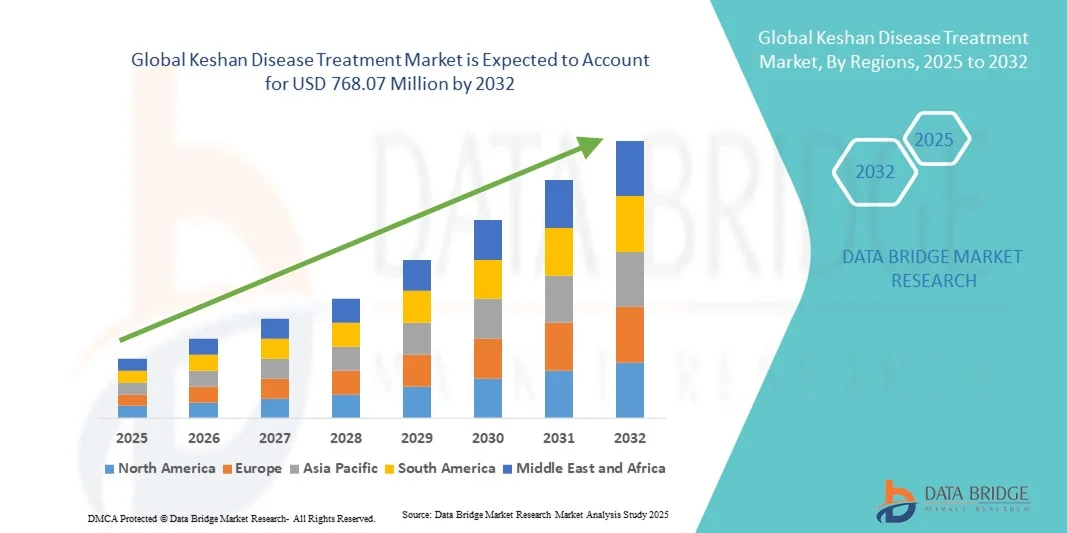
- The global Keshan disease treatment market size was valued at USD 443.70 million in 2024 and is expected to reach USD 768.07 million by 2032, at a CAGR of 7.10% during the forecast period
- The market growth is largely fueled by the rising incidence of cardiac disorders, increasing demand for cardiac myopathy treatment drugs, and poor dietary choices in various populations, which are driving the adoption of disease-specific treatments such as selenium supplementation
- Furthermore, the focus on effective management of Keshan disease induced cardiomyopathy and heart failure through medical therapies and guidelines-directed interventions is creating opportunities for pharmaceutical companies and healthcare providers. These converging factors are accelerating the uptake of Keshan disease treatment solutions, thereby significantly boosting the industry's growth
Keshan Disease Treatment Market Analysis
- Keshan disease treatments, focused on managing selenium deficiency induced cardiomyopathy and related heart complications, are increasingly vital components of cardiac healthcare due to their effectiveness in preventing disease progression, improving heart function, and reducing mortality risk in affected populations
- The escalating demand for Keshan disease treatments is primarily fueled by the rising incidence of cardiac disorders, poor dietary selenium intake in endemic regions, and growing awareness of preventive supplementation, particularly in high-risk populations
- North America dominated the Keshan disease treatment market in 2024 with the largest revenue share of 43%, characterized by early adoption of advanced cardiac therapies, strong healthcare infrastructure, high patient awareness, and a significant presence of key pharmaceutical companies focusing on selenium-based interventions
- Asia-Pacific is expected to be the fastest-growing region in the Keshan disease treatment market during the forecast period due to rising awareness of selenium supplementation, increasing healthcare access, and government-supported nutrition programs in endemic regions
- The Medication segment dominated the market in 2024 with a market share of 61.2%, due to its effectiveness in managing selenium deficiency and associated cardiomyopathy
Report Scope and Keshan Disease Treatment Market Segmentation
|
Attributes |
Keshan Disease Treatment Key Market Insights |
|
Segments Covered |
|
|
Countries Covered |
North America
Europe
Asia-Pacific
Middle East and Africa
South America
|
|
Key Market Players |
|
|
Market Opportunities |
|
|
Value Added Data Infosets |
In addition to the insights on market scenarios such as market value, growth rate, segmentation, geographical coverage, and major players, the market reports curated by the Data Bridge Market Research also include in-depth expert analysis, patient epidemiology, pipeline analysis, pricing analysis, and regulatory framework |
Keshan Disease Treatment Market Trends
Rising Adoption of Integrated Cardiac Therapies
- A significant and accelerating trend in the global Keshan disease treatment market is the integration of selenium supplementation with conventional cardiac therapies, improving overall patient outcomes and reducing disease progression
- For instance, combining selenium with standard heart failure medications has been shown to enhance survival rates and reduce complications in chronic Keshan disease patients
- Integrated treatment approaches are increasingly supported by hospitals and specialty clinics, enabling clinicians to offer a combination of pharmacological therapy and lifestyle guidance for more comprehensive management
- The use of digital health monitoring tools to track selenium levels and cardiac function is facilitating personalized treatment plans and improving adherence to therapy
- This trend towards multi-modal treatment strategies is reshaping clinical practice guidelines for Keshan disease, prompting pharmaceutical companies and healthcare providers to develop integrated care programs
- The demand for combined therapeutic approaches is growing rapidly across both endemic regions and developed markets, as healthcare providers increasingly prioritize efficacy and patient safety
- Research on novel drug formulations and sustained-release selenium supplements is expanding treatment options, providing opportunities for improved patient compliance and market growth
Keshan Disease Treatment Market Dynamics
Driver
Growing Need Due to Rising Cardiac Disorders and Preventive Awareness
- The increasing prevalence of cardiac disorders and selenium deficiency, coupled with growing awareness of preventive supplementation, is a significant driver for the heightened demand for Keshan disease treatments
- For instance, in 2024, several hospitals in China launched programs to provide routine selenium supplementation to high-risk populations, aiming to reduce Keshan disease incidence
- As populations become more aware of nutritional deficiencies and associated cardiac risks, treatment adoption rises, supported by government initiatives and public health campaigns
- Furthermore, the focus on proactive cardiac care and early intervention is making Keshan disease treatments an integral component of standard cardiology practice
- The convenience of combining medication with lifestyle changes and monitoring programs is propelling adoption in both hospitals and specialty clinics, with clinicians emphasizing comprehensive disease management
- Increasing collaborations between pharmaceutical companies and local governments to promote preventive programs is boosting market expansion
- Clinical studies highlighting the efficacy of selenium supplementation in reducing cardiomyopathy incidence are enhancing physician confidence and driving adoption in both private and public healthcare sectors
Restraint/Challenge
Limited Awareness and Accessibility in Endemic Region
- Low public awareness of selenium deficiency and Keshan disease in rural or underserved areas poses a significant challenge to broader market penetration
- For instance, despite government programs, many remote populations remain uninformed about preventive supplementation, limiting treatment uptake
- Addressing this knowledge gap through educational campaigns and community health initiatives is crucial for increasing adoption rates
- In addition, limited access to healthcare infrastructure and trained specialists in endemic regions can hinder timely diagnosis and treatment, reducing overall market growth potential
- Overcoming these challenges through targeted awareness programs, mobile health initiatives, and improved distribution of supplementation can help expand the market and reach underserved populations
- Regulatory hurdles and the need for approvals in emerging markets can delay product launches and restrict growth for new treatment options
- Socioeconomic factors, including low disposable incomes and healthcare affordability issues in certain regions, can limit the adoption of Keshan disease treatments despite their proven benefits
Keshan Disease Treatment Market Scope
The market is segmented on the basis of treatment type, gender, drug type, and end user.
- By Treatment Type
On the basis of treatment type, the Keshan disease treatment market is segmented into medication and lifestyle changes. The Medication segment dominated the market with the largest revenue share of 61.2% in 2024, driven by its established efficacy in managing selenium deficiency and associated cardiomyopathy. Medication is often prioritized by healthcare providers for its ability to deliver measurable therapeutic outcomes and prevent disease progression. The segment also benefits from the availability of both branded and generic formulations, which allows flexible adoption in hospitals and specialty clinics. Patient adherence is further supported by structured dosing regimens and monitoring through routine clinical visits. In addition, ongoing research into improved formulations and combined therapies reinforces the dominance of medication over lifestyle interventions.
The Lifestyle Changes segment is anticipated to witness the fastest growth rate of 8.5% CAGR from 2025 to 2032, fueled by increasing awareness of nutrition, diet, and exercise in the management of Keshan disease. Lifestyle interventions, such as selenium-rich diets and cardiac rehabilitation programs, complement pharmacological treatment and are becoming more accepted among patients seeking holistic care. Public health campaigns promoting preventive nutrition and patient education programs are expanding the reach of lifestyle-based approaches. The segment’s growth is also supported by telemedicine and remote monitoring tools, which allow clinicians to guide patients on dietary and lifestyle modifications effectively. Moreover, the rising demand for non-invasive and adjunct treatment options in developed and emerging markets is contributing to its rapid adoption.
- By Gender
On the basis of gender, the market is segmented into male and female patients. The Male segment dominated the market in 2024 with a market share of 51%, reflecting a slightly higher prevalence or treatment uptake among males due to dietary patterns, occupational factors, and higher incidence of cardiac complications linked to Keshan disease. Male patients are more such asly to be prescribed selenium supplementation and monitored through hospital programs, driving revenue in this segment. Clinical studies often highlight male susceptibility in endemic regions, encouraging healthcare providers to prioritize treatment for this group. The segment’s dominance is also supported by government and private screening initiatives targeting high-risk male populations. In addition, health awareness campaigns and male-focused preventive programs are further increasing adoption rates.
The Female segment is expected to witness the fastest growth rate of 7.8% CAGR from 2025 to 2032, driven by increasing recognition of cardiac risks and selenium deficiency among women. Rising female participation in health check-ups, nutritional awareness programs, and preventive care initiatives is boosting demand. The integration of lifestyle interventions, such as diet modification and counseling, is particularly appealing for female patients seeking holistic management. Growing education on maternal and child health also emphasizes the importance of selenium supplementation, further contributing to market growth in this segment.
- By Drug Type
On the basis of drug type, the market is segmented into branded and generic drugs. The Branded drugs segment dominated the market in 2024 with a revenue share of 54%, supported by strong brand recognition, physician trust, and consistent quality assurance. Branded formulations often offer enhanced bioavailability and standardized selenium dosing, encouraging their adoption in hospitals and specialty clinics. Marketing initiatives and clinical endorsements reinforce prescriber preference for branded products. The dominance is also maintained through research-backed efficacy, regulatory approvals, and better patient adherence programs. In addition, branded products benefit from established distribution networks and partnerships with healthcare providers.
The Generic drugs segment is expected to witness the fastest CAGR of 9.2% from 2025 to 2032, driven by affordability and increasing adoption in cost-sensitive regions. Generics provide accessible treatment options for large patient populations, particularly in developing countries. Their growth is supported by government initiatives to increase healthcare access and reduce treatment costs. The rise of local pharmaceutical manufacturing and patent expirations of key branded drugs is further fueling generic adoption. Patients and hospitals seeking budget-friendly options without compromising efficacy are driving this rapid growth.
- By End User
On the basis of end user, the market is segmented into hospitals, specialty clinics, and others. The Hospitals segment dominated the market in 2024 with a market share of 57%, due to the high volume of patients requiring specialized cardiac care and the adoption of standardized treatment protocols. Hospitals offer structured medication administration, monitoring of selenium levels, and integration with cardiac care units, ensuring better patient outcomes. The segment also benefits from government healthcare programs and large-scale supplementation initiatives targeting endemic regions. Hospitals’ ability to provide combined pharmacological and lifestyle interventions further reinforces their dominance. In addition, advanced diagnostic and monitoring infrastructure in hospitals enhances treatment adherence and efficacy.
The Specialty Clinics segment is expected to witness the fastest growth rate of 10% CAGR from 2025 to 2032, fueled by increasing patient preference for personalized care and dedicated cardiology services. Specialty clinics offer focused management of Keshan disease, often combining medication, lifestyle counseling, and remote monitoring. Their rapid adoption is supported by private healthcare expansion, rising awareness among patients, and flexible treatment protocols. Clinics also cater to outpatient care, follow-up, and community outreach programs, which are gaining traction in urban and semi-urban regions. The segment’s growth is accelerated by telemedicine integration and specialized preventive care programs targeting high-risk populations
Keshan Disease Treatment Market Regional Analysis
- North America dominated the Keshan disease treatment market in 2024 with the largest revenue share of 43%, characterized by early adoption of advanced cardiac therapies, strong healthcare infrastructure, high patient awareness, and a significant presence of key pharmaceutical companies focusing on selenium-based interventions
- Patients and healthcare providers in the region highly value the effectiveness of selenium supplementation combined with standard cardiac treatments, as well as the structured monitoring programs provided in hospitals and specialty clinics
- This widespread adoption is further supported by government health initiatives, strong presence of key pharmaceutical companies, and growing preventive healthcare awareness, establishing Keshan disease treatment as a favored solution for both endemic and high-risk populations
U.S. Keshan Disease Treatment Market Insight
The U.S. Keshan disease treatment market captured the largest revenue share of 83% in North America in 2024, fueled by high awareness of selenium deficiency, strong healthcare infrastructure, and widespread adoption of cardiac therapies. Patients and clinicians increasingly prioritize preventive supplementation and integrated treatment approaches for cardiomyopathy. The growing preference for hospital-based monitoring programs, coupled with advanced cardiac care facilities, further propels the market. Moreover, collaborations between pharmaceutical companies and healthcare providers to expand preventive programs are significantly contributing to market growth. The presence of branded and generic treatment options enhances accessibility and adoption across both urban and rural populations.
Europe Keshan Disease Treatment Market Insight
The Europe Keshan disease treatment market is projected to expand at a substantial CAGR throughout the forecast period, primarily driven by rising awareness of cardiac health, government-supported nutrition programs, and the increasing prevalence of selenium deficiency in certain regions. The integration of treatment protocols in hospitals and specialty clinics is fostering adoption. European patients are also drawn to comprehensive care solutions combining medication and lifestyle interventions. The region is experiencing significant growth across urban and semi-urban populations, with treatments being incorporated into preventive health programs and research initiatives.
U.K. Keshan Disease Treatment Market Insight
The U.K. Keshan disease treatment market is anticipated to grow at a noteworthy CAGR during the forecast period, driven by increasing awareness of selenium deficiency and proactive cardiac care. Concerns regarding cardiomyopathy and chronic heart failure are encouraging both patients and healthcare providers to adopt preventive supplementation. In addition, the U.K.’s robust healthcare infrastructure, supportive public health policies, and growing emphasis on preventive care are expected to continue stimulating market growth. The availability of branded and generic treatments enhances accessibility across hospitals and specialty clinics.
Germany Keshan Disease Treatment Market Insight
The Germany Keshan disease treatment market is expected to expand at a considerable CAGR during the forecast period, fueled by rising awareness of nutritional deficiencies and the importance of preventive cardiac care. Germany’s advanced healthcare system, focus on medical research, and increasing adoption of integrated therapy approaches promote the uptake of Keshan disease treatments, particularly in hospitals. The use of structured supplementation programs combined with lifestyle guidance is becoming more prevalent, reflecting local patient expectations for effective and comprehensive care. The market growth is also supported by collaborations between healthcare providers and pharmaceutical companies.
Asia-Pacific Keshan Disease Treatment Market Insight
The Asia-Pacific Keshan disease treatment market is poised to grow at the fastest CAGR of 8.7% during 2025–2032, driven by high prevalence of selenium deficiency, rising awareness of cardiac complications, and increasing healthcare access in countries such as China, Japan, and India. Government-led supplementation programs and public health initiatives are driving adoption. Furthermore, the expansion of hospital infrastructure and specialty clinics, combined with increasing patient awareness of preventive care, is broadening market reach. The availability of affordable generic and branded treatment options is also improving accessibility for both urban and rural populations.
Japan Keshan Disease Treatment Market Insight
The Japan Keshan disease treatment market is gaining momentum due to rising awareness of selenium deficiency and preventive cardiac care. The country’s advanced healthcare infrastructure, high patient literacy, and focus on early intervention are driving growth. Integration of supplementation programs with routine cardiac monitoring is enhancing patient outcomes. Moreover, Japan’s aging population is such likely to spur demand for treatments addressing cardiomyopathy and chronic heart failure. Both hospitals and specialty clinics are increasingly adopting integrated treatment approaches combining medication and lifestyle guidance.
India Keshan Disease Treatment Market Insight
The India Keshan disease treatment market accounted for the largest market revenue share in Asia-Pacific in 2024, attributed to the high prevalence of selenium deficiency, expanding healthcare access, and rising awareness of preventive supplementation. India’s growing middle class and rapid urbanization are driving demand for hospital- and clinic-based treatments. Government initiatives promoting nutrition and cardiac health further accelerate adoption. Affordable branded and generic medications, coupled with expanding hospital and specialty clinic networks, are key factors propelling market growth. Public awareness campaigns and community health programs are also contributing to the rising uptake of Keshan disease treatments across urban and semi-urban regions.
Keshan Disease Treatment Market Share
The Keshan Disease Treatment industry is primarily led by well-established companies, including:
- Merck & Co., Inc. (U.S.)
- Eli Lilly and Company (U.S.)
- AstraZeneca (U.K.)
- Pfizer Inc. (U.S.)
- Sanofi. (France)
- Novartis AG (Switzerland)
- Takeda Pharmaceutical Company Limited (Japan)
- Sun Pharmaceutical Industries Ltd. (India)
- Bristol Myers Squibb Company (U.S.)
- GSK plc (U.K.)
- Teva Pharmaceutical Industries Ltd. (Israel)
- Johnson & Johnson Services, Inc. (U.S.)
- Pharma Nord A/S (Denmark)
- Salvi Chemical Industries Ltd. (India)
- Novus Biologicals, LLC (U.S.)
- Angel Yeast Co., Ltd. (China)
- Biorigin (Brazil)
- Lallemand Inc. (Canada)
- BEHN MEYER (Germany)
- ADM (U.S.)
What are the Recent Developments in Global Keshan Disease Treatment Market?
- In August 2025, a systematic review and meta-analysis published in Frontiers in Nutrition concluded that moderate dietary selenium supplementation significantly reduced the risk of cardiovascular diseases and mortality among U.S. adults aged 50 and older. This finding underscores the broader public health implications of selenium intake, which may indirectly benefit populations at risk for Keshan disease
- In April 2025, a systematic review and meta-analysis published in Frontiers in Nutrition indicated that moderate dietary selenium supplementation decreased the risk of cardiovascular disease and displayed a nonlinear trend in association with the risk of all-cause and diabetes-specific mortality among U.S. adults aged 50 and older
- In September 2024, a review article published in MDPI Antioxidants discussed the potential applications and risks of supranutritional selenium supplementation, highlighting its role in alleviating metabolic-associated fatty liver disease (MASLD) and associated hepatic disorders, while cautioning against excessive consumption leading to insulin resistance or selenosis
- In October 2024, an article on HealthMatters.io emphasized the importance of selenium supplementation as the primary treatment for Keshan disease, noting that restoring selenium levels can help reverse early-stage symptoms and prevent further heart damage, particularly in regions with selenium-deficient soils
- In June 2024, Fujimoto Pharmaceutical Co., Ltd. (Matsubara, Japan) completed a Phase III clinical trial for an oral selenium supplement aimed at pediatric patients with Keshan disease. This trial, registered under jRCT2031220210, involved children aged six months and older, marking a significant step in expanding treatment options for younger populations affected by selenium deficiency-related cardiomyopathy

- Interactive Data Analysis Dashboard
- Company Analysis Dashboard for high growth potential opportunities
- Research Analyst Access for customization & queries
- Competitor Analysis with Interactive dashboard
- Latest News, Updates & Trend analysis
- Harness the Power of Benchmark Analysis for Comprehensive Competitor Tracking
Data collection and base year analysis are done using data collection modules with large sample sizes. The stage includes obtaining market information or related data through various sources and strategies. It includes examining and planning all the data acquired from the past in advance. It likewise envelops the examination of information inconsistencies seen across different information sources. The market data is analysed and estimated using market statistical and coherent models. Also, market share analysis and key trend analysis are the major success factors in the market report. To know more, please request an analyst call or drop down your inquiry.
The key research methodology used by DBMR research team is data triangulation which involves data mining, analysis of the impact of data variables on the market and primary (industry expert) validation. Data models include Vendor Positioning Grid, Market Time Line Analysis, Market Overview and Guide, Company Positioning Grid, Patent Analysis, Pricing Analysis, Company Market Share Analysis, Standards of Measurement, Global versus Regional and Vendor Share Analysis. To know more about the research methodology, drop in an inquiry to speak to our industry experts.
Data Bridge Market Research is a leader in advanced formative research. We take pride in servicing our existing and new customers with data and analysis that match and suits their goal. The report can be customized to include price trend analysis of target brands understanding the market for additional countries (ask for the list of countries), clinical trial results data, literature review, refurbished market and product base analysis. Market analysis of target competitors can be analyzed from technology-based analysis to market portfolio strategies. We can add as many competitors that you require data about in the format and data style you are looking for. Our team of analysts can also provide you data in crude raw excel files pivot tables (Fact book) or can assist you in creating presentations from the data sets available in the report.












