


Kidney Disease Market Size
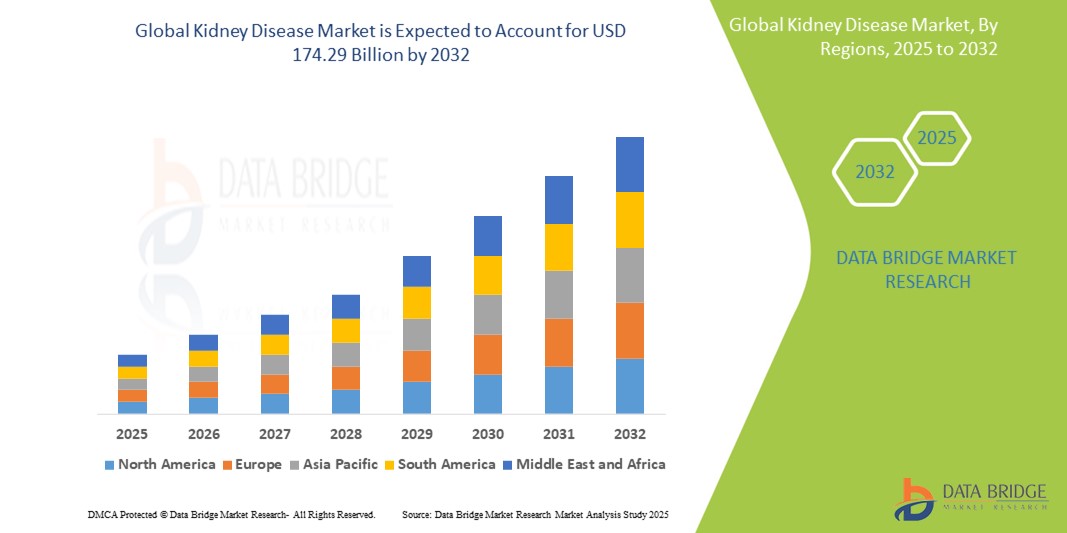
- The global kidney disease market was valued at USD 113.57 billion in 2024 and is expected to reach USD 174.29 billion by 2032
- During the forecast period of 2025 to 2032 the market is likely to grow at a CAGR of 5.50%, primarily driven by aging population
- This growth is driven by factors such as natural kidney decline, more comorbidities and medication use
Kidney Disease Market Analysis
- Kidney disease refers to a group of medical conditions that impair the kidneys’ ability to filter blood, maintain fluid balance, and regulate essential bodily functions. It includes chronic kidney disease (CKD), acute kidney injury (AKI), and end-stage renal disease (ESRD). These conditions often result from underlying issues such as diabetes, hypertension, genetic disorders, or aging, and can lead to serious health complications without proper management
- The market is witnessing strong growth due to the rising prevalence of diabetes and hypertension, increasing awareness about early diagnosis, and the expanding geriatric population. In addition, advancements in dialysis technology, growing organ transplant procedures, and supportive government healthcare initiatives are contributing to market expansion
- The kidney disease market is evolving through technological advancements, precision diagnostics, and home-based care models. Innovations in wearable health monitoring, improved dialysis equipment, and biomarker-based early detection are reshaping treatment paradigms
- For instance, companies such as Baxter and Fresenius Medical Care are developing next-generation dialysis systems, while pharmaceutical firms such as AstraZeneca and Bayer are launching targeted therapies that slow disease progression in diabetic kidney disease patients
- The kidney disease market is expected to maintain steady growth, driven by the increasing global burden of chronic conditions, rising healthcare spending, and growing demand for integrated renal care solutions. With ongoing research into regenerative medicine, artificial kidneys, and novel drug therapies, along with regulatory support for early screening programs, the market is poised for continued innovation and expansion in the years ahead
Report Scope and Kidney Disease Market Segmentation
|
Attributes |
Kidney Disease Key Market Insights |
|
Segments Covered |
|
|
Countries Covered |
North America
Europe
Asia-Pacific
Middle East and Africa
South America
|
|
Key Market Players |
|
|
Market Opportunities |
|
|
Value Added Data Infosets |
In addition to the insights on market scenarios such as market value, growth rate, segmentation, geographical coverage, and major players, the market reports curated by the Data Bridge Market Research also include depth expert analysis, patient epidemiology, pipeline analysis, pricing analysis, and regulatory framework. |
Kidney Disease Market Trends
Increasing Prevalence of Risk Factors
- One prominent trend in the global kidney disease market is the increasing prevalence of risk factors
- This trend is driven by the lifestyle changes, aging populations, and poor dietary habits, all of which significantly contribute to the development and progression of chronic kidney conditions
- For instance, International Diabetes Federation reports a steady global rise in diabetes cases, a major contributor to diabetic kidney disease, prompting healthcare providers to integrate renal screening into chronic disease management protocols
- The growing burden of comorbidities is expected to further drive early diagnosis initiatives, patient monitoring programs, and the adoption of preventative therapeutics across healthcare systems
- As the global health landscape shifts, stakeholders are prioritizing holistic care models, cross-specialty collaboration, and community health programs. The escalating incidence of metabolic and cardiovascular risk factors will continue to shape clinical strategies and expand opportunities in the kidney disease market in the coming years
Kidney Disease Market Dynamics
Driver
Technological Advancements in Diagnostics and Treatment
- Technological advancements in diagnostics and treatment are a key driver of growth in the kidney disease market. Innovations in imaging techniques, biomarker-based diagnostics, and digital health tools have significantly enhanced early detection, disease monitoring, and personalized treatment planning
- This impact is especially notable in nephrology, where advanced tools enable the identification of kidney dysfunction at earlier stages, allowing for timely intervention and reduced progression to end-stage renal disease
- With healthcare systems focusing on improving patient outcomes and reducing long-term costs, the integration of AI-powered diagnostic platforms, wearable monitoring devices, and tele-nephrology solutions has accelerated the adoption of technology-driven care models
- Features such as real-time glomerular filtration rate tracking, genetic screening, and remote dialysis management are transforming how clinicians diagnose and treat kidney disease, fueling investment in smart healthcare infrastructure and innovation
- Healthcare companies are increasingly collaborating with medtech firms and research institutions to develop next-generation renal care tools and expand access to high-quality diagnostics and therapies
For instance
- Fresenius Medical Care is investing in digital platforms for home dialysis and real-time patient data monitoring
- Roche has introduced advanced biomarker assays that support early CKD detection and progression tracking
- With ongoing R&D, digital integration, and a growing emphasis on precision medicine, technological innovation is expected to remain a primary growth driver in the kidney disease market for years to come
Opportunity
Expansion of Early Detection Programs
- The expansion of early detection programs presents a significant opportunity for growth in the kidney disease market. As global healthcare systems shift toward preventive care, there is a growing focus on identifying kidney dysfunction at earlier stages to improve outcomes and reduce long-term treatment costs
- Kidney disease screening, particularly among high-risk populations such as those with diabetes, hypertension, and cardiovascular conditions, is gaining momentum through both public health initiatives and private sector engagement
- The integration of point-of-care diagnostics, urine and blood biomarker tests, and digital health tools is improving accessibility and accuracy of early detection, enabling timely intervention and slowing disease progression
For instance
- The National Kidney Foundation is promoting widespread eGFR testing and awareness campaigns in collaboration with healthcare providers
- Roche and Siemens Healthineers are investing in next-generation diagnostic platforms that support scalable and automated kidney function testing in both clinical and primary care settings
- As policy frameworks prioritize chronic disease management and value-based care, investments in early diagnosis infrastructure, public awareness, and screening technologies are expected to increase. These efforts will enhance the early-stage treatment landscape and support long-term growth in the kidney disease market
Restraint/Challenge
Side Effects of Kidney Disease Drugs
- The side effects associated with kidney disease drugs present a significant challenge for the kidney disease market. While pharmacological treatments play a critical role in managing symptoms and slowing disease progression, many of these drugs carry adverse effects that limit long-term patient adherence and overall effectiveness
- Medications such as phosphate binders, immunosuppressants, and erythropoiesis-stimulating agents often lead to complications including gastrointestinal discomfort, cardiovascular risks, mineral imbalances, and increased susceptibility to infections, especially among patients with advanced-stage renal conditions
- The complexity of managing comorbid conditions further compounds these issues, as patients may be prescribed multiple drugs that interact negatively or exacerbate underlying health risks. These concerns hinder therapeutic optimization and patient quality of life
For instance
- Calcimimetics used to manage secondary hyperparathyroidism can cause nausea and hypocalcemia, while long-term use of corticosteroids in nephrotic syndrome patients increases the risk of osteoporosis and glucose intolerance
- The lack of safer, well-tolerated alternatives continues to pose a barrier to effective treatment, as healthcare providers must balance efficacy with side effect profiles. As demand grows for next-generation therapeutics with fewer adverse outcomes, the market faces pressure to innovate without compromising safety or accessibility
Kidney Disease Market Scope
The market is segmented on the basis of indication, treatment, route of administration, end users, and distribution channel.
|
Segmentation |
Sub-Segmentation |
|
By Indication |
|
|
By Treatment |
|
|
By Route of Administration |
|
|
By End Users
|
|
|
By Distribution Channel |
|
Kidney Disease Market Regional Analysis
North America is the Dominant Region in the Kidney Disease Market
- North America dominates the kidney disease market, driven by the advanced healthcare infrastructure, strong presence of leading pharmaceutical companies, and continuous technological advancements in diagnostics and treatment methods
- The U.S. holds a significant share due to its high prevalence of chronic conditions such as diabetes and hypertension, which are major risk factors for kidney disease, along with widespread access to early screening and specialty care
- Ongoing R&D efforts, coupled with FDA support for drug development and fast-track approvals, contribute to the region’s leadership in introducing novel therapeutics and diagnostic tools for kidney-related conditions. Major pharmaceutical companies and biotech firms in the region are actively investing in innovation, including AI-enabled diagnostics, home dialysis systems, and precision therapies tailored to CKD and ESRD patients
- With rising awareness campaigns, strategic collaborations, and the expansion of tele-nephrology services, North America is expected to maintain its dominance in the global kidney disease market throughout the forecast period
Europe is Projected to Register the Highest Growth Rate
- The Europe region is expected to witness the highest growth rate in the kidney disease market, driven by strong public health policies, government-supported awareness programs, and increasing investments in renal care infrastructure
- Countries such as Germany, France, and the U.K. are leading the regional market, supported by growing healthcare expenditures, supportive reimbursement frameworks, and a rising geriatric population at risk of developing kidney disorders
- The region benefits from a robust network of generic drug manufacturers and academic research institutions, accelerating the development and affordability of kidney disease therapeutics. The European Medicines Agency (EMA) and national health agencies are enhancing focus on early diagnosis and chronic disease management, resulting in wider adoption of screening tools and nephrology services
- With the presence of strategic partnerships, increased funding for clinical trials, and growing public-private initiatives, Europe is set to emerge as the fastest-growing region in the kidney disease market over the forecast period
Kidney Disease Market Share
The market competitive landscape provides details by competitor. Details included are company overview, company financials, revenue generated, market potential, investment in research and development, new market initiatives, global presence, production sites and facilities, production capacities, company strengths and weaknesses, product launch, product width and breadth, application dominance. The above data points provided are only related to the companies' focus related to market.
The Major Market Leaders Operating in the Market Are:
- Pfizer Inc. (U.S.)
- AstraZeneca plc (U.K.)
- Bristol-Myers Squibb Company (U.S.)
- Dr. Reddy's Laboratories Ltd. (India)
- Teva Pharmaceutical Industries Ltd. (Israel)
- Sun Pharmaceutical Industries Ltd. (India)
- Novartis AG (Switzerland)
- Lupin (India)
- Cipla (India)
- Aurobindo Pharma Limited (India)
- Fresenius SE & Co. KGaA (Germany)
- Sanofi (France)
- Takeda Pharmaceutical Company Limited (Japan)
- F. Hoffmann-La Roche Ltd (Switzerland)
- Abbott (U.S.)
Latest Developments in Global Kidney Disease Market
- In April 2025, UC Davis Health launched a new cell therapy trial targeting chronic kidney disease in patients with type 2 diabetes. This novel approach, aimed at restoring kidney function, highlights growing innovation in regenerative medicine and is expected to create new growth opportunities within the kidney disease market by advancing alternative, potentially curative treatment options
- In September 2023, the FDA approved empagliflozin (Jardiance) for treating kidney disease in adults. As a once-daily 10 mg pill, it significantly reduced the risk of eGFR decline, kidney failure, hospitalization, and cardiovascular death in trials. This approval is expected to strengthen the kidney disease market by expanding effective treatment options and driving growth in the SGLT2 inhibitor segment

- Interactive Data Analysis Dashboard
- Company Analysis Dashboard for high growth potential opportunities
- Research Analyst Access for customization & queries
- Competitor Analysis with Interactive dashboard
- Latest News, Updates & Trend analysis
- Harness the Power of Benchmark Analysis for Comprehensive Competitor Tracking
Data collection and base year analysis are done using data collection modules with large sample sizes. The stage includes obtaining market information or related data through various sources and strategies. It includes examining and planning all the data acquired from the past in advance. It likewise envelops the examination of information inconsistencies seen across different information sources. The market data is analysed and estimated using market statistical and coherent models. Also, market share analysis and key trend analysis are the major success factors in the market report. To know more, please request an analyst call or drop down your inquiry.
The key research methodology used by DBMR research team is data triangulation which involves data mining, analysis of the impact of data variables on the market and primary (industry expert) validation. Data models include Vendor Positioning Grid, Market Time Line Analysis, Market Overview and Guide, Company Positioning Grid, Patent Analysis, Pricing Analysis, Company Market Share Analysis, Standards of Measurement, Global versus Regional and Vendor Share Analysis. To know more about the research methodology, drop in an inquiry to speak to our industry experts.
Data Bridge Market Research is a leader in advanced formative research. We take pride in servicing our existing and new customers with data and analysis that match and suits their goal. The report can be customized to include price trend analysis of target brands understanding the market for additional countries (ask for the list of countries), clinical trial results data, literature review, refurbished market and product base analysis. Market analysis of target competitors can be analyzed from technology-based analysis to market portfolio strategies. We can add as many competitors that you require data about in the format and data style you are looking for. Our team of analysts can also provide you data in crude raw excel files pivot tables (Fact book) or can assist you in creating presentations from the data sets available in the report.












