


Laparoscopic Surgical Robotic Devices Market Size
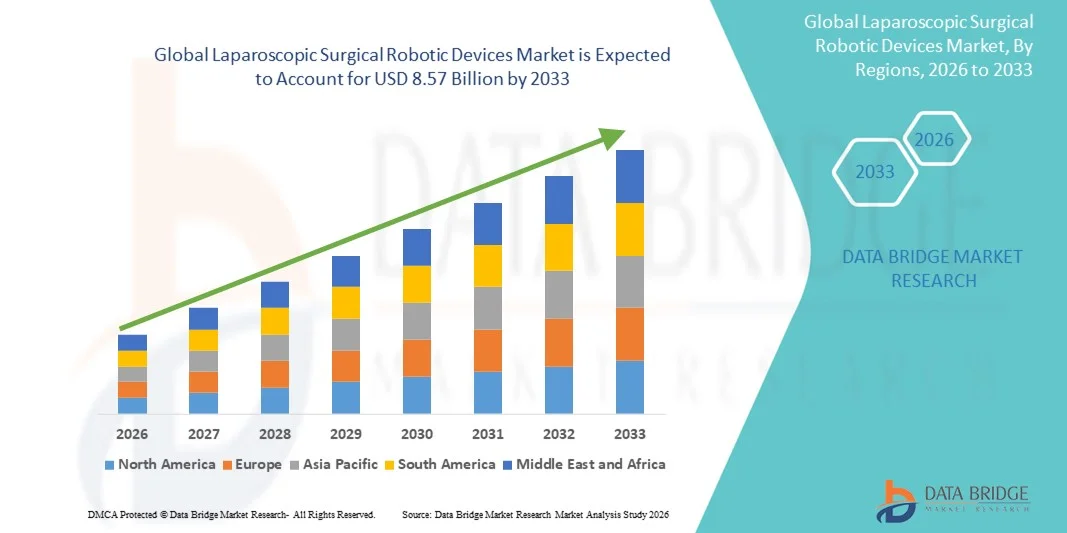
- The global laparoscopic surgical robotic devices market size was valued at USD 4.70 billion in 2025 and is expected to reach USD 8.57 billion by 2033, at a CAGR of 7.8% during the forecast period
- The market growth is largely fueled by the increasing adoption of minimally invasive surgical procedures and continuous technological advancements in robotic systems that enhance precision, reduce recovery times, and improve clinical outcomes
- Furthermore, rising demand for sophisticated surgical tools that offer enhanced ergonomics, greater surgeon control, and integration with AI‑assisted imaging is driving broader clinical uptake, positioning laparoscopic surgical robotic devices as a preferred solution in modern operating rooms
Laparoscopic Surgical Robotic Devices Market Analysis
- Laparoscopic surgical robotic devices, providing advanced robotic assistance for minimally invasive procedures, are increasingly essential in modern operating rooms due to their enhanced precision, reduced surgeon fatigue, and improved patient outcomes in both general and specialized surgeries
- The escalating demand for these devices is primarily driven by the growing adoption of minimally invasive surgeries, continuous technological innovations in robotic systems, and the rising preference for procedures that reduce hospital stays and post-operative complications
- North America dominated the laparoscopic surgical robotic devices market with the largest revenue share of 40.2% in 2025, characterized by early adoption of robotic surgical systems, high healthcare expenditure, and a strong presence of leading medical device manufacturers, with the U.S. experiencing substantial growth in robotic-assisted procedures across hospitals and specialized surgical centers
- Asia-Pacific is expected to be the fastest-growing region in the laparoscopic surgical robotic devices market during the forecast period due to increasing healthcare infrastructure investments, growing awareness of minimally invasive procedures, and rising availability of skilled surgeons trained in robotic-assisted techniques
- General surgery segment dominated the market with a share of 44.9% in 2025, driven by the widespread use of robotic systems for procedures such as cholecystectomy, bariatric surgery, and colorectal surgeries, benefiting from enhanced precision and reduced recovery times
Report Scope and Laparoscopic Surgical Robotic Devices Market Segmentation
|
Attributes |
Laparoscopic Surgical Robotic Devices Key Market Insights |
|
Segments Covered |
|
|
Countries Covered |
North America
Europe
Asia-Pacific
Middle East and Africa
South America
|
|
Key Market Players |
|
|
Market Opportunities |
|
|
Value Added Data Infosets |
In addition to the insights on market scenarios such as market value, growth rate, segmentation, geographical coverage, and major players, the market reports curated by the Data Bridge Market Research also include in-depth expert analysis, patient epidemiology, pipeline analysis, pricing analysis, and regulatory framework |
Laparoscopic Surgical Robotic Devices Market Trends
Advancements in AI-Assisted and Image-Guided Surgery
- A significant and accelerating trend in the global laparoscopic surgical robotic devices market is the growing integration of artificial intelligence (AI) and advanced imaging technologies, enhancing precision, real-time guidance, and decision-making during complex procedures
- For instance, the da Vinci Xi Surgical System incorporates AI-assisted visualization to help surgeons navigate delicate tissues and optimize procedural accuracy
- AI integration in robotic systems enables predictive analytics for procedure planning, improves instrument motion control, and allows adaptive responses to intraoperative changes. For instance, some Medtronic robotic platforms utilize AI algorithms to enhance dexterity and instrument positioning while monitoring surgeon inputs
- The seamless integration of robotics with imaging platforms such as 3D laparoscopic cameras and intraoperative MRI enables surgeons to centralize control and improve operative workflow efficiency
- This trend towards more intelligent, precise, and image-guided robotic systems is redefining surgical standards, consequently driving innovation among companies such as Intuitive Surgical and Medtronic, which are developing AI-enhanced robotic platforms for minimally invasive procedures
- The demand for robotic surgical systems with advanced AI and imaging capabilities is growing rapidly across hospitals and specialized surgical centers, as healthcare providers increasingly prioritize improved patient outcomes, reduced complications, and operational efficiency
- Increased focus on tele-surgery and remote surgical assistance is also emerging, allowing expert surgeons to guide procedures across geographies using robotic systems
- Integration with augmented reality (AR) platforms is enabling surgeons to visualize patient anatomy overlaid with preoperative imaging data, improving intraoperative decision-making and precision
Laparoscopic Surgical Robotic Devices Market Dynamics
Driver
Rising Adoption of Minimally Invasive Surgeries and Technological Advancements
- The increasing prevalence of minimally invasive procedures, coupled with continuous innovations in robotic systems, is a significant driver for the heightened demand for laparoscopic surgical robotic devices
- For instance, in March 2025, Medtronic launched its Hugo™ RAS system with advanced AI-enabled surgical guidance, aiming to expand robotic-assisted procedures in general and specialized surgeries
- As hospitals seek to reduce patient recovery times, minimize surgical risks, and enhance clinical outcomes, robotic systems provide superior precision and repeatability compared with traditional laparoscopic tools
- Furthermore, the growing popularity of robotic-assisted surgeries in multi-specialty centers and academic hospitals is driving adoption, as these platforms integrate seamlessly with existing operating room infrastructure
- The ability to perform complex procedures with smaller incisions, enhanced ergonomics for surgeons, and real-time intraoperative data monitoring are key factors propelling the use of robotic systems in both developed and emerging markets
- Increased collaborations between hospitals, research institutions, and robotics companies are accelerating the adoption of next-generation systems and facilitating clinical validation of new procedures
- The rising incidence of chronic and complex surgical conditions, such as gastrointestinal and gynecological disorders, is driving demand for precision-guided robotic interventions
- Government and private investments in healthcare infrastructure, particularly in Asia-Pacific and Middle East regions, are enabling wider deployment of robotic surgery solution
Restraint/Challenge
High Cost and Regulatory Approval Barriers
- The high capital investment required for robotic surgical systems and associated consumables poses a significant challenge to broader adoption, particularly in budget-constrained hospitals
- For instance, smaller hospitals and clinics in developing regions may delay adoption due to limited budgets and competing healthcare priorities
- Addressing these cost challenges requires cost-effective financing models, leasing options, and the development of modular robotic platforms. In addition, stringent regulatory requirements for device approval and clinical validation can delay market entry and adoption
- While advancements are ongoing, the complexity of training surgeons and surgical staff on robotic platforms also represents a barrier to widespread implementation
- Overcoming these challenges through innovative pricing strategies, regulatory support, and expanded surgical training programs will be vital for sustained growth of the laparoscopic surgical robotic devices market
- Potential technical failures and maintenance requirements of robotic systems may raise operational costs and reduce confidence among hospitals in adopting high-volume robotic procedures
- Limited awareness and resistance to changing from conventional surgical methods among some surgeons and healthcare institutions can slow the adoption of robotic-assisted surgeries
- Ensuring robust post-market surveillance, continuous technical support, and effective surgeon training are essential to mitigate these challenges and boost market confidence
Laparoscopic Surgical Robotic Devices Market Scope
The market is segmented on the basis of product, equipment, application, and end user.
- By Product
On the basis of product, the laparoscopic surgical robotic devices market is segmented into robotic systems, instruments and accessories, and system services. The robotic systems segment dominated the market with the largest revenue share in 2025, driven by the high cost and critical role of core robotic platforms in surgical procedures. Hospitals and specialty surgical centers prioritize investment in advanced robotic systems due to their ability to enhance precision, improve dexterity, and enable complex minimally invasive surgeries. These systems form the foundation of robotic-assisted surgery, making them indispensable for clinical adoption. Continuous technological advancements, including AI integration and improved visualization, further reinforce their dominant position.
The instruments and accessories segment is expected to witness the fastest growth from 2026 to 2033, fueled by the recurring demand for disposable and reusable surgical tools. As robotic-assisted procedure volumes increase globally, hospitals require frequent replacement and upgrading of instruments, significantly boosting this segment’s growth. The expansion of procedure-specific instruments for gynecological, urological, and general surgeries further accelerates adoption. In addition, innovations in ergonomic and precision-engineered accessories are enhancing surgical efficiency, supporting rapid segment expansion.
- By Equipment
On the basis of equipment, the market is segmented into robot machines, navigation systems, and planners and simulators. The robot machines segment dominated the market in 2025 due to their central role in performing robotic-assisted laparoscopic surgeries. These machines represent the most capital-intensive component of robotic surgery systems and are essential for enabling surgeon-controlled precision and stability. High adoption rates across tertiary hospitals and academic medical centers contribute significantly to revenue dominance. Continuous upgrades in robotic arms, imaging, and control systems further sustain strong demand for robot machines.
The planners and simulators segment is projected to grow at the fastest rate during the forecast period, driven by increasing emphasis on surgeon training and preoperative planning. Simulation-based training tools are gaining traction as hospitals seek to reduce surgical errors and improve clinical outcomes. These systems allow surgeons to practice complex procedures in a risk-free environment, enhancing proficiency and confidence. Growing regulatory focus on standardized training for robotic surgery further supports rapid adoption of planners and simulators.
- By Application
On the basis of application, the market is segmented into gynecological surgery, urological surgery, neurosurgery, orthopedic surgery, general surgery, and others. The general surgery segment dominated the market in 2025 with a market share of 44.9%, driven by the high volume of laparoscopic procedures such as colorectal surgery, bariatric surgery, and cholecystectomy. Robotic assistance enhances precision and reduces complication rates in these commonly performed procedures, leading to widespread adoption. Hospitals increasingly prefer robotic platforms for general surgery due to improved patient outcomes and shorter recovery times. The broad applicability of robotic systems across multiple general surgical procedures supports this segment’s leadership.
The urological surgery segment is expected to experience the fastest growth during the forecast period, fueled by the rising prevalence of prostate and kidney disorders. Robotic-assisted systems are widely adopted in procedures such as prostatectomy due to their superior precision and nerve-sparing capabilities. Increasing patient preference for minimally invasive urological procedures and growing surgeon expertise further accelerate segment growth. Technological advancements tailored specifically for urological applications continue to strengthen adoption.
- By End User
On the basis of end user, the market is segmented into hospitals and ambulatory surgical centers. The hospitals segment dominated the market with the largest revenue share in 2025, attributed to their advanced infrastructure and higher surgical volumes. Large hospitals and academic medical centers are early adopters of robotic surgical systems due to their financial capacity and access to skilled surgeons. Hospitals also perform a wide range of complex procedures requiring robotic assistance, reinforcing their dominant position. In addition, favorable reimbursement structures in developed regions further support hospital-based adoption.
The ambulatory surgical centers (ASCs) segment is anticipated to witness the fastest growth from 2026 to 2033, driven by the increasing shift toward outpatient minimally invasive procedures. ASCs are increasingly adopting compact and cost-effective robotic systems to improve efficiency and patient throughput. The growing demand for same-day surgeries and reduced hospital stays supports this trend. As robotic platforms become more affordable and scalable, adoption among ASCs is expected to accelerate significantly.
Laparoscopic Surgical Robotic Devices Market Regional Analysis
- North America dominated the laparoscopic surgical robotic devices market with the largest revenue share of 40.2% in 2025, characterized by early adoption of robotic surgical systems, high healthcare expenditure, and a strong presence of leading medical device manufacturers, with the U.S. experiencing substantial growth in robotic-assisted procedures across hospitals and specialized surgical centers
- Healthcare providers in the region place strong emphasis on improved surgical precision, reduced patient recovery times, and enhanced clinical outcomes, which has accelerated the adoption of robotic-assisted laparoscopic systems across hospitals and specialized surgical centers
- This widespread adoption is further supported by high healthcare expenditure, strong reimbursement frameworks, and the presence of leading robotic surgery manufacturers, establishing laparoscopic surgical robotic devices as a preferred solution for complex surgical procedures in both public and private healthcare settings
U.S. Laparoscopic Surgical Robotic Devices Market Insight
The U.S. laparoscopic surgical robotic devices market captured the largest revenue share within North America in 2025, driven by the early adoption of advanced robotic technologies and a high volume of minimally invasive surgical procedures. Healthcare providers increasingly prioritize robotic-assisted surgery to improve precision, reduce patient recovery time, and enhance clinical outcomes. The strong presence of leading robotic surgery manufacturers, coupled with favorable reimbursement policies, continues to propel market growth. Moreover, rising investments in hospital infrastructure and surgeon training programs further support widespread adoption across the country.
Europe Laparoscopic Surgical Robotic Devices Market Insight
The Europe laparoscopic surgical robotic devices market is projected to expand at a notable CAGR during the forecast period, primarily driven by increasing adoption of minimally invasive surgical techniques and supportive regulatory frameworks. Growing healthcare modernization, coupled with rising surgical volumes across aging populations, is fostering demand for robotic-assisted procedures. European healthcare systems are increasingly focusing on improving surgical efficiency and patient safety, which supports robotic system adoption. The region is witnessing steady growth across public and private hospitals, particularly in Western Europe.
U.K. Laparoscopic Surgical Robotic Devices Market Insight
The U.K. laparoscopic surgical robotic devices market is anticipated to grow at a steady CAGR during the forecast period, driven by rising demand for minimally invasive surgeries and continued investments in advanced healthcare technologies. The National Health Service (NHS) and private healthcare providers are increasingly adopting robotic systems to improve surgical outcomes and reduce hospital stays. In addition, growing awareness among surgeons and patients regarding the benefits of robotic-assisted procedures is supporting market expansion. The U.K.’s focus on innovation and clinical efficiency is expected to sustain long-term growth.
Germany Laparoscopic Surgical Robotic Devices Market Insight
The Germany laparoscopic surgical robotic devices market is expected to expand at a considerable CAGR during the forecast period, fueled by the country’s strong healthcare infrastructure and emphasis on medical technology innovation. Germany’s advanced hospital systems and high surgical standards encourage the adoption of robotic-assisted laparoscopic procedures. Increasing investments in digital healthcare solutions and surgical training programs further support market growth. The demand for precision-driven and technologically advanced surgical tools aligns well with Germany’s focus on quality and efficiency in healthcare delivery.
Asia-Pacific Laparoscopic Surgical Robotic Devices Market Insight
The Asia-Pacific laparoscopic surgical robotic devices market is poised to grow at the fastest CAGR during the forecast period, driven by expanding healthcare infrastructure, rising healthcare expenditure, and increasing awareness of minimally invasive surgical techniques. Countries such as China, Japan, and India are witnessing growing adoption of robotic-assisted surgeries across public and private hospitals. Government initiatives to modernize healthcare systems and improve access to advanced surgical technologies are further accelerating market growth. In addition, the increasing availability of trained surgeons is supporting wider regional adoption.
Japan Laparoscopic Surgical Robotic Devices Market Insight
The Japan laparoscopic surgical robotic devices market is gaining momentum due to the country’s advanced medical technology landscape and rapidly aging population. Japan places strong emphasis on precision, safety, and efficiency in surgical procedures, driving the adoption of robotic-assisted systems. The growing prevalence of age-related conditions requiring surgical intervention further supports demand. Integration of robotic systems with advanced imaging and navigation technologies is enhancing surgical outcomes, contributing to steady market growth.
India Laparoscopic Surgical Robotic Devices Market Insight
The India laparoscopic surgical robotic devices market accounted for a significant share within Asia-Pacific in 2025, driven by rapid expansion of private hospitals, rising medical tourism, and increasing adoption of advanced surgical technologies. Growing awareness of minimally invasive procedures among patients and surgeons is accelerating demand for robotic systems. Investments in healthcare infrastructure and surgeon training, along with increasing affordability of robotic platforms, are further propelling market growth. India’s focus on improving surgical care quality positions it as a key growth market in the region.
Laparoscopic Surgical Robotic Devices Market Share
The Laparoscopic Surgical Robotic Devices industry is primarily led by well-established companies, including:
- Intuitive Surgical, Inc. (U.S.)
- Medtronic (Ireland)
- Johnson & Johnson Services, Inc. (U.S.)
- CMR Surgical Ltd. (U.K.)
- SS Innovations International, Inc. (India)
- Asensus Surgical, Inc. (U.S.)
- Zimmer Biomet (U.S.)
- Stryker (U.S.)
- Smith & Nephew (U.K.)
- B. Braun SE (Germany)
- Titan Medical Inc. (Canada)
- Momentis Surgical Ltd. (Israel)
- MicroPort Scientific Corporation (China)
- TransEnterix Surgical, Inc. (U.S.)
- Avateramedical GmbH (Germany)
- Medicaroid Corporation (Japan)
- Renishaw plc (U.K.)
- Cambridge Medical Robotics Limited (U.K.)
- Rob Surgical Systems S.L. (Spain)
- Distalmotion SA (Switzerland)
What are the Recent Developments in Global Laparoscopic Surgical Robotic Devices Market?
- In September 2025, Beijing-based Surgerii Robotics’ SHURUI® single-port surgical robot received CE certification in Europe, becoming one of the first single-port robotic platforms approved for both adult and pediatric laparoscopic procedures with snake-such as instruments that can potentially reduce surgical trauma
- In September 2025, SS Innovations International announced the successful completion of the world’s first pediatric pyeloplasty telesurgery using its SSi Mantra surgical robotic system, demonstrating early real-world telesurgery applications of laparoscopic robotics and advancing remote access surgical care
- In July 2025, Intuitive’s da Vinci 5 surgical system received CE mark approval for clinical use in Europe, enabling its deployment across a range of laparoscopic and thoracoscopic procedures in European healthcare systems and expanding the geographic footprint of advanced robotic surgery
- In October 2024, Momentis Surgical Ltd. secured U.S. FDA 510(k) clearance for its Anovo™ robotic surgical platform, a single-site laparoscopic robotic system designed for procedures such as ventral hernia repair, broadening the competitive landscape of surgical robotics and enabling new minimally invasive applications
- In March 2024, Intuitive Surgical announced that the U.S. Food and Drug Administration (FDA) granted 510(k) clearance for its next-generation da Vinci 5 surgical system, paving the way for enhanced precision, force-feedback technology, and improved 3D imaging in minimally invasive robotic procedures and marking a significant upgrade in laparoscopic robotic surgery hardware

- Interactive Data Analysis Dashboard
- Company Analysis Dashboard for high growth potential opportunities
- Research Analyst Access for customization & queries
- Competitor Analysis with Interactive dashboard
- Latest News, Updates & Trend analysis
- Harness the Power of Benchmark Analysis for Comprehensive Competitor Tracking
Data collection and base year analysis are done using data collection modules with large sample sizes. The stage includes obtaining market information or related data through various sources and strategies. It includes examining and planning all the data acquired from the past in advance. It likewise envelops the examination of information inconsistencies seen across different information sources. The market data is analysed and estimated using market statistical and coherent models. Also, market share analysis and key trend analysis are the major success factors in the market report. To know more, please request an analyst call or drop down your inquiry.
The key research methodology used by DBMR research team is data triangulation which involves data mining, analysis of the impact of data variables on the market and primary (industry expert) validation. Data models include Vendor Positioning Grid, Market Time Line Analysis, Market Overview and Guide, Company Positioning Grid, Patent Analysis, Pricing Analysis, Company Market Share Analysis, Standards of Measurement, Global versus Regional and Vendor Share Analysis. To know more about the research methodology, drop in an inquiry to speak to our industry experts.
Data Bridge Market Research is a leader in advanced formative research. We take pride in servicing our existing and new customers with data and analysis that match and suits their goal. The report can be customized to include price trend analysis of target brands understanding the market for additional countries (ask for the list of countries), clinical trial results data, literature review, refurbished market and product base analysis. Market analysis of target competitors can be analyzed from technology-based analysis to market portfolio strategies. We can add as many competitors that you require data about in the format and data style you are looking for. Our team of analysts can also provide you data in crude raw excel files pivot tables (Fact book) or can assist you in creating presentations from the data sets available in the report.













