


Laurence Moon Biedl Syndrome Market Size
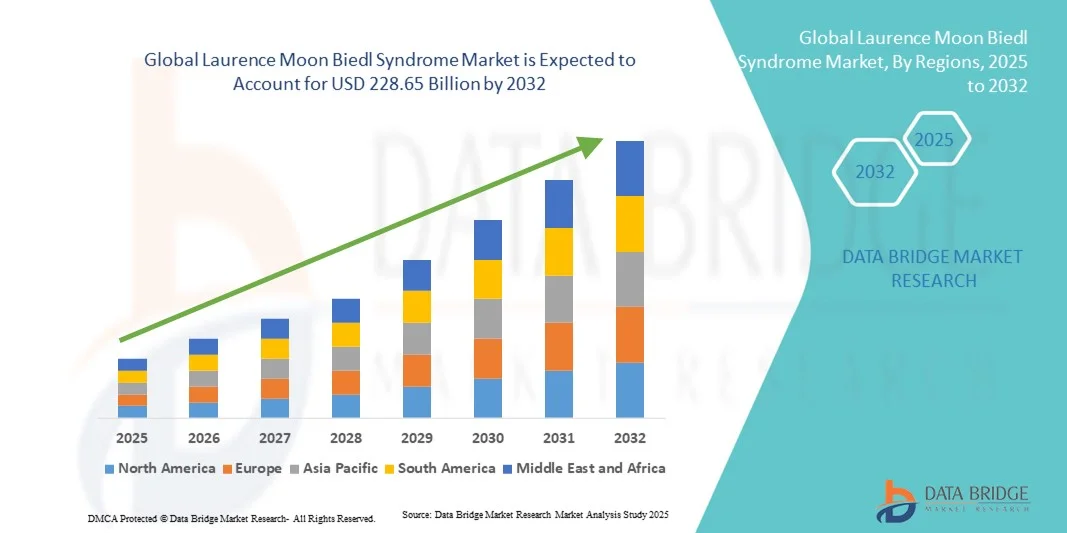
- The global Laurence Moon Biedl Syndrome market size was valued at USD 180.5 billion in 2024 and is expected to reach USD 228.65 billion by 2032, at a CAGR of 3.00% during the forecast period
- The market growth is largely fueled by the increasing advancements in genetic testing technologies and the rising adoption of precision medicine approaches, leading to improved diagnosis and management of rare inherited disorders such as Laurence-Moon-Biedl Syndrome (LMBS). The growing availability of next-generation sequencing (NGS) and whole-exome sequencing (WES) has significantly enhanced early detection accuracy, supporting timely medical interventions and patient monitoring
- Furthermore, the rising focus on personalized treatment options, along with expanding research collaborations among pharmaceutical and biotechnology companies, is establishing targeted therapies and gene-based treatments as key growth drivers in the LMBS market. These converging factors are accelerating the development of innovative diagnostic and therapeutic solutions, thereby significantly boosting the industry's growth and improving patient outcomes across global healthcare systems
Laurence Moon Biedl Syndrome Market Analysis
- Laurence-Moon-Biedl Syndrome (LMBS), a rare multisystem genetic disorder, is gaining growing attention due to advancements in genetic diagnostics and the rising availability of precision medicine approaches. Increasing awareness among clinicians and patients, coupled with improved access to genomic sequencing, is enhancing early detection and accurate diagnosis across healthcare systems globally
- The escalating demand for advanced genetic counseling, personalized treatment options, and multidisciplinary care for LMBS is primarily fueled by increasing investments in rare disease research, supportive government initiatives, and collaborations between biotech and pharmaceutical companies to develop novel therapeutic strategies
- North America dominated the Laurence-Moon-Biedl Syndrome market with the largest revenue share of 42.8% in 2024, driven by a well-established healthcare infrastructure, strong presence of genetic testing laboratories, and favorable reimbursement policies for rare disease diagnostics. The U.S. leads regional growth, supported by active participation of leading biopharmaceutical firms and academic research centers working toward gene-based and symptom-specific therapies for LMBS
- Asia-Pacific is expected to be the fastest-growing region, registering a CAGR of 9.2% during the forecast period (2025–2032), owing to increasing awareness about genetic disorders, expanding healthcare access, and government funding initiatives to improve early diagnosis and management of rare diseases. Rising collaborations with Western biotech companies and growing investments in genomic medicine are further propelling market expansion in the region
- The male segment dominated the market with a revenue share of 59.4% in 2024, mainly due to the higher frequency and severity of clinical manifestations observed in males compared to females
Report Scope and Laurence Moon Biedl Syndrome Market Segmentation
|
Attributes |
Laurence Moon Biedl Syndrome Key Market Insights |
|
Segments Covered |
|
|
Countries Covered |
North America
Europe
Asia-Pacific
Middle East and Africa
South America
|
|
Key Market Players |
|
|
Market Opportunities |
|
|
Value Added Data Infosets |
In addition to the insights on market scenarios such as market value, growth rate, segmentation, geographical coverage, and major players, the market reports curated by the Data Bridge Market Research also include in-depth expert analysis, patient epidemiology, pipeline analysis, pricing analysis, and regulatory framework. |
Laurence Moon Biedl Syndrome Market Trends
Technological Advances in Genetic Diagnostics and Personalized Care
- A growing trend in the global LMBS market is the increasing adoption of advanced genetic sequencing technologies and multi-omics diagnostics, enabling earlier identification of disease-causing mutations and improved patient stratification and individualized management
- For instance, next-generation sequencing panels now routinely include BBS genes (BBS1-BBS21) associated with LMBS and related ciliopathies, significantly improving diagnostic accuracy
- The use of digital health tools and tele-genetics services is increasingly providing remote access to specialist counselling and monitoring for patients in geographically underserved regions, facilitating broader care coverage
- These capabilities support a shift from solely symptomatic management toward earlier intervention, tailored therapeutic planning, and longitudinal spectrums of care in LMBS
- As awareness among healthcare providers and patient advocacy increases, more individuals with subtle or atypical phenotypes of LMBS are being diagnosed, expanding the treated population base
- In addition to diagnostics, there is rising interest in gene-targeted research and translational science focused on ciliary dysfunction, which underpins LMBS pathology — further enhancing the market’s potential scope
- Overall, the trend reflects a transition from ad-hoc symptomatic care toward precision medicine, diagnostic clarity, and integrated patient pathways in the LMBS landscape
Laurence Moon Biedl Syndrome Market Dynamics
Driver
Growing Research Investment and Expanding Rare Disease Awareness
- The global LMBS market is being propelled by increasing research investments into rare disease gene therapies and diagnostics, with academic-industry collaborations focusing on ciliopathy pathways and metabolic complications associated with LMBS
- For instance, in June 2021, a major rare-disease consortium announced funding of a multi-centre LMBS gene-variant registry aimed at advancing genotype-phenotype correlations and therapeutic target discovery, contributing to broader market progression
- Furthermore, rising healthcare expenditure in emerging economies, improved access to genetic testing, and growing patient advocacy are raising awareness about LMBS, thereby increasing diagnosis and management rates
- The growing number of clinical studies and pre-clinical programs targeting obesity, retinal degeneration, renal complications, and metabolic sequelae in LMBS is also enabling new therapeutic pipelines to emerge
- In addition, the introduction of novel diagnostics and supportive care protocols for multi-system conditions associated with LMBS are enabling more comprehensive care models, supporting market growth
- Altogether, these factors are driving expansion of the LMBS market as more patients are diagnosed early and require multidisciplinary management and ongoing monitoring
Restraint/Challenge
Limited Therapeutic Options, Fragmented Diagnosis, and High Cost Burden
- A major challenge in the LMBS market remains the lack of approved disease-modifying therapies, as most management is symptomatic (e.g., obesity control, renal monitoring, vision support) rather than curative, which constrains market growth
- For instance, in September 2023, a report from a tertiary-care centre noted that patients with LMBS often face delays of several years before receiving a definitive genetic diagnosis, which limits early intervention opportunities
- In addition, diagnosis is often fragmented across specialties (endocrinology, ophthalmology, nephrology, genetics), leading to care silos and variable management standards across regions
- The high cost of genetic testing, life-long multidisciplinary follow-up, and limited access in low-resource settings further restricts uptake of advanced diagnostics and comprehensive care pathways
- Reimbursement policies for rare disease diagnostics and specialist genetic counselling vary widely across countries, creating access disparities
- In many regions, the rarity of LMBS leads to low awareness among front-line clinicians, reducing referrals and suitable treatment initiation; tackling this requires substantial educational investment.
Laurence Moon Biedl Syndrome Market Scope
The Laurence Moon Biedl Syndrome market is segmented on the basis of symptoms, gender, and end users.
- By Symptoms
On the basis of symptoms, the Laurence Moon Biedl Syndrome market is segmented into obesity, atypical retinitis pigmentosa, mental deficiency, genital dystrophy, polydactylism, and familial occurrence. The obesity segment dominated the market with the largest revenue share of 37.5% in 2024, primarily attributed to the fact that obesity is the most common and early clinical manifestation of Laurence Moon Biedl Syndrome (LMBBS). Patients often develop obesity in childhood, necessitating early and continuous medical supervision. Increasing awareness about rare genetic obesity disorders, coupled with rising availability of diagnostic genetic panels, has improved detection rates. Hospitals and clinics are increasingly offering specialized weight management programs tailored to patients with syndromic obesity. In addition, obesity in LMBBS patients is often associated with comorbid conditions such as diabetes and hypertension, which require multidisciplinary care. The growing prevalence of obesity-related complications has therefore solidified this segment’s market dominance.
The atypical retinitis pigmentosa segment is projected to grow at the fastest CAGR of 21.3% from 2025 to 2032, driven by the rising focus on ocular health and advances in gene-based therapy for retinal disorders. Increasing investments in ophthalmic research and precision medicine have enabled earlier diagnosis and intervention for visual impairments in LMBBS patients. Moreover, technological innovations in retinal imaging and optical coherence tomography (OCT) have enhanced disease monitoring and progression assessment. Research into retinal cell regeneration and neuroprotective treatments is also propelling growth. With global clinical trials exploring gene replacement and CRISPR-based therapies, this segment is poised for rapid development throughout the forecast period.
- By Gender
On the basis of gender, the Laurence Moon Biedl Syndrome market is segmented into male and female. The male segment dominated the market with a revenue share of 59.4% in 2024, mainly due to the higher frequency and severity of clinical manifestations observed in males compared to females. Males exhibit more pronounced symptoms such as genital dystrophy and visual impairment, leading to earlier diagnosis and treatment. In addition, the prevalence of endocrine dysfunction and obesity-related complications is typically higher in male patients. Hospitals and research institutes have reported a greater number of male-focused genetic case studies, further highlighting their predominance in clinical data. The availability of tailored hormonal and metabolic therapies for males has also supported the segment’s dominance. Continued focus on early detection and gender-based intervention programs sustains the strong position of this category in the market.
The female segment is expected to witness the fastest CAGR of 19.8% from 2025 to 2032, primarily driven by increasing awareness, improved access to genetic testing, and better understanding of phenotypic variations in women. In the past, female LMBBS cases were underdiagnosed due to subtler symptom presentation; however, advancements in genetic sequencing technologies have improved diagnostic accuracy. Growing focus on reproductive health and hormonal management in female patients is also contributing to market growth. In addition, expanding healthcare infrastructure and targeted awareness campaigns promoting rare disease identification in women are helping close the diagnosis gap. As more women seek early genetic screening and supportive therapies, this segment is projected to accelerate rapidly during the forecast period.
- By End Users
On the basis of end users, the Laurence Moon Biedl Syndrome market is segmented into hospitals, homecare, specialty clinics, and others. The hospitals segment captured the largest market revenue share of 48.6% in 2024, driven by the concentration of advanced diagnostic technologies, multidisciplinary care teams, and genetic counseling facilities. Hospitals serve as the primary centers for complex case management due to the multisystemic nature of LMBBS, which often requires collaboration across endocrinology, neurology, ophthalmology, and cardiology departments. The presence of specialized rare disease units in tertiary hospitals has further enhanced access to high-quality care. Hospitals also play a crucial role in early diagnosis through genetic screening, ensuring timely intervention and long-term patient monitoring. Moreover, partnerships between hospitals and research organizations for clinical trials of novel therapies have boosted patient outcomes and market dominance.
The specialty clinics segment is anticipated to record the fastest CAGR of 22.5% from 2025 to 2032, driven by the increasing establishment of dedicated rare disease and genetic disorder clinics. These clinics provide focused, patient-centric care models offering personalized treatment plans and long-term management. The growing popularity of outpatient and telemedicine services in rare disease care has also accelerated this segment’s growth. Specialty clinics often collaborate with academic and research institutions to access novel gene therapies and clinical innovations. Enhanced awareness among patients and families about the benefits of continuous follow-up care further supports segment expansion. As healthcare systems worldwide prioritize rare disease management infrastructure, the specialty clinics segment is projected to experience robust growth through 2032.
Laurence Moon Biedl Syndrome Market Regional Analysis
- North America dominated the Laurence Moon Biedl Syndrome market with the largest revenue share of 42.8% in 2024, driven by a well-established healthcare infrastructure, strong presence of genetic testing laboratories, and favorable reimbursement policies for rare disease diagnostics
- The region benefits from robust investments in genomics and clinical research, coupled with the presence of leading biopharmaceutical companies focused on developing novel treatments for ciliopathies and related genetic disorders
- Furthermore, growing public and private funding for rare disease research, as well as government support programs for orphan drug development, continue to strengthen the regional market position. Increasing awareness among healthcare professionals and the availability of advanced sequencing platforms further enhance early detection and disease management for LMBS
U.S. Laurence Moon Biedl Syndrome Market Insight
The U.S. Laurence Moon Biedl Syndrome market captured the largest revenue share within North America in 2024, supported by a strong clinical research ecosystem, presence of prominent genetic testing providers, and rising number of clinical trials targeting ciliopathy-related pathways. Active participation of academic institutions and biopharmaceutical firms in developing targeted and gene-based therapies for LMBS is significantly driving growth. In addition, favorable healthcare policies such as the Orphan Drug Act, combined with the availability of advanced diagnostic panels and improved patient registries, contribute to the U.S. market’s dominance.
Europe Laurence Moon Biedl Syndrome Market Insight
The Europe Laurence Moon Biedl Syndrome market is expected to grow steadily throughout the forecast period, driven by increased emphasis on early genetic diagnosis, expanded reimbursement for rare disease testing, and strong support from European Union healthcare initiatives. The growing adoption of next-generation sequencing (NGS) technologies, along with collaboration between clinical centers and genetic laboratories, is enhancing diagnosis rates across the continent. In addition, patient advocacy organizations and rare disease registries are playing a pivotal role in promoting awareness and facilitating cross-border research.
U.K. Laurence Moon Biedl Syndrome Market Insight
The U.K. Laurence Moon Biedl Syndrome market is projected to grow at a noteworthy CAGR over the forecast period, supported by the expansion of genomic medicine initiatives under the National Health Service (NHS). Increased awareness of ciliopathies and the integration of genetic testing into clinical care pathways are driving earlier identification and better management of LMBS cases. The U.K.’s leadership in genomic research, such as the 100,000 Genomes Project, continues to strengthen diagnostic infrastructure and foster innovation in rare disease management.
Germany Laurence Moon Biedl Syndrome Market Insight
The Germany Laurence Moon Biedl Syndrome market is expected to expand at a considerable pace due to the country’s focus on rare disease research, robust biopharmaceutical manufacturing capacity, and advanced healthcare infrastructure. Government-backed programs promoting innovation in genetic and metabolic disorder research, along with collaboration between hospitals, universities, and research institutions, are fueling growth. In addition, the strong presence of precision medicine startups and ongoing integration of digital health solutions are further enhancing accessibility to LMBS diagnostics and care services.
Asia-Pacific Laurence Moon Biedl Syndrome Market Insight
The Asia-Pacific Laurence Moon Biedl Syndrome market is expected to be the fastest-growing region, registering a CAGR of 9.2% from 2025 to 2032, driven by increasing awareness about genetic disorders, improving healthcare access, and expanding diagnostic capabilities across countries such as China, Japan, and India. Government initiatives supporting rare disease registries and early screening programs are accelerating diagnosis rates. Moreover, growing collaborations between regional research institutions and Western biotechnology firms are promoting innovation in LMBS-related studies. Expanding genomic sequencing programs, rising healthcare expenditure, and the availability of more affordable diagnostic technologies are also contributing to the rapid regional expansion.
Japan Laurence Moon Biedl Syndrome Market Insight
The Japan Laurence Moon Biedl Syndrome market is gaining traction owing to strong national initiatives in genomic medicine and precision healthcare. The country’s well-established research ecosystem, combined with technological advancements in genetic testing, is facilitating better disease identification and patient tracking. Japan’s aging population and focus on healthcare modernization are further driving investments in rare disease infrastructure, with government-funded programs supporting data sharing and clinical collaboration among hospitals and universities.
China Laurence Moon Biedl Syndrome Market Insight
The China Laurence Moon Biedl Syndrome market accounted for the largest share in the Asia-Pacific region in 2024, supported by rapid healthcare modernization, growing genomic testing capacity, and a rising middle-class population seeking advanced rare disease care. Government-backed initiatives for rare disease management, including inclusion of genetic testing in national insurance schemes, are improving accessibility. In addition, the country’s strategic collaborations with global biotech firms and increased participation in regional rare disease research consortia are boosting the availability of diagnostic and therapeutic resources for LMBS.
Laurence Moon Biedl Syndrome Market Share
The Laurence Moon Biedl Syndrome industry is primarily led by well-established companies, including:
• F. Hoffmann-La Roche Ltd (Switzerland)
• Pfizer Inc. (U.S.)
• Novartis AG (Switzerland)
• AstraZeneca plc (U.K.)
• GSK plc (U.K.)
• Sanofi S.A. (France)
• Takeda Pharmaceutical Company Limited (Japan)
• Regeneron Pharmaceuticals, Inc. (U.S.)
• Bayer AG (Germany)
• Bristol Myers Squibb (U.S.)
• Johnson & Johnson and its affiliates (U.S.)
• Eli Lilly and Company (U.S.)
• AbbVie Inc. (U.S.)
• Amgen Inc. (U.S.)
• Vertex Pharmaceuticals Incorporated (U.S.)
• Genentech, Inc. (U.S.)
• Merck & Co., Inc. (U.S.)
• Biogen Inc. (U.S.)
• Teva Pharmaceutical Industries Ltd. (Israel)
• Alexion Pharmaceuticals, Inc. (U.S.)
Latest Developments in Global Laurence Moon Biedl Syndrome Market
- In September 2021, global research networks and rare disease foundations expanded natural-history registries for Laurence-Moon–Bardet-Biedl Syndrome. The registries strengthened genotype–phenotype correlations and supported clinical trial readiness for both gene therapy and pharmacologic interventions, improving patient recruitment and longitudinal data tracking
- In June 2022, the U.S. Food and Drug Administration (FDA) approved and announced the commercial launch of setmelanotide (IMCIVREE) for chronic weight management in patients with genetically confirmed Bardet-Biedl syndrome (BBS). This was the first disease-specific pharmacologic therapy for BBS-related obesity, allowing clinicians to address hyperphagia and severe obesity symptoms in affected individuals
- In March 2023, several biotechnology and academic collaborations announced positive preclinical findings for AAV-based gene therapy candidates targeting BBS1 and BBS10 genes. These studies demonstrated promising vision and metabolic restoration in animal models, prompting preparations for first-in-human trials for retinal and systemic manifestations of the disease
- In December 2024, the manufacturer expanded the indication of IMCIVREE to include younger pediatric patients with Bardet-Biedl syndrome following additional clinical data supporting safety and efficacy. This update enhanced accessibility and treatment options, reinforcing continued growth in targeted metabolic therapies for rare syndromes like LMBS/BBS
- In May 2025, ongoing gene therapy development programs by multiple biotech firms are progressing toward IND-enabling stages, reflecting the industry’s growing focus on precision medicine approaches for LMBS/BBS. These developments mark a shift toward curative strategies beyond symptomatic treatment

- Interactive Data Analysis Dashboard
- Company Analysis Dashboard for high growth potential opportunities
- Research Analyst Access for customization & queries
- Competitor Analysis with Interactive dashboard
- Latest News, Updates & Trend analysis
- Harness the Power of Benchmark Analysis for Comprehensive Competitor Tracking
Data collection and base year analysis are done using data collection modules with large sample sizes. The stage includes obtaining market information or related data through various sources and strategies. It includes examining and planning all the data acquired from the past in advance. It likewise envelops the examination of information inconsistencies seen across different information sources. The market data is analysed and estimated using market statistical and coherent models. Also, market share analysis and key trend analysis are the major success factors in the market report. To know more, please request an analyst call or drop down your inquiry.
The key research methodology used by DBMR research team is data triangulation which involves data mining, analysis of the impact of data variables on the market and primary (industry expert) validation. Data models include Vendor Positioning Grid, Market Time Line Analysis, Market Overview and Guide, Company Positioning Grid, Patent Analysis, Pricing Analysis, Company Market Share Analysis, Standards of Measurement, Global versus Regional and Vendor Share Analysis. To know more about the research methodology, drop in an inquiry to speak to our industry experts.
Data Bridge Market Research is a leader in advanced formative research. We take pride in servicing our existing and new customers with data and analysis that match and suits their goal. The report can be customized to include price trend analysis of target brands understanding the market for additional countries (ask for the list of countries), clinical trial results data, literature review, refurbished market and product base analysis. Market analysis of target competitors can be analyzed from technology-based analysis to market portfolio strategies. We can add as many competitors that you require data about in the format and data style you are looking for. Our team of analysts can also provide you data in crude raw excel files pivot tables (Fact book) or can assist you in creating presentations from the data sets available in the report.












