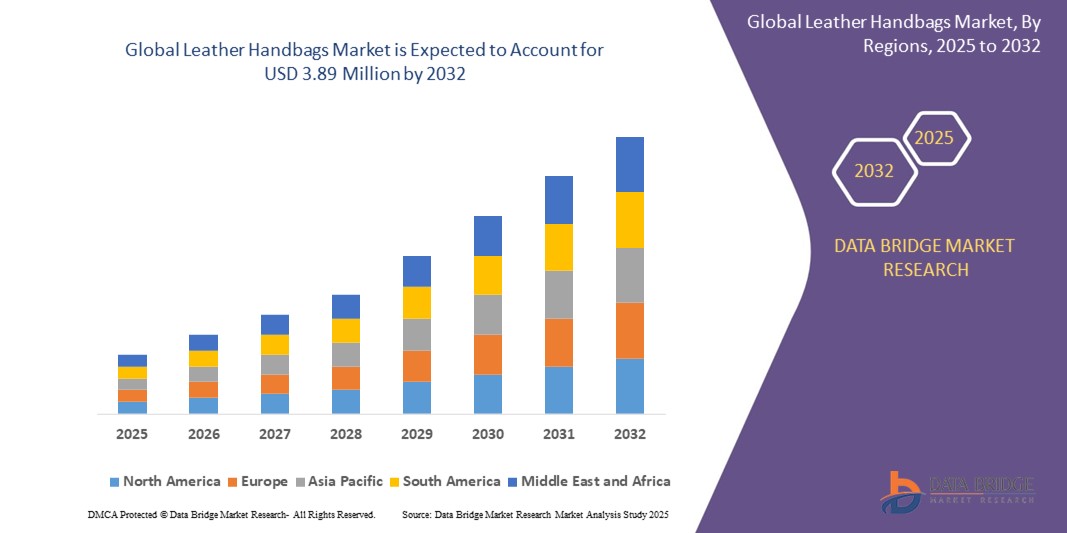
What is the Global Leather Handbags Market Size and Growth Rate?
- The global leather handbags market size was valued at USD 2.61 million in 2024 and is expected to reach USD 3.89 million by 2032, at a CAGR of 5.10% during the forecast period
- This growth is primarily driven by rising fashion consciousness, increasing disposable incomes, and the surging demand for premium and luxury fashion accessories globally
- The market is also benefiting from the growing influence of social media, celebrity endorsements, and digital retail platforms that boost consumer engagement and drive product visibility
What are the Major Takeaways of Leather Handbags Market?
- Leather handbags remain an essential fashion staple across global markets, reflecting lifestyle, status, and individual style preferences for both formal and casual use
- The market is evolving with trends such as sustainable materials, digitally driven customization, and collaborations with artists and designers, reinforcing brand identity and consumer loyalty
- Innovations in design versatility, inclusion of tech-integrated features, and a push toward gender-neutral and multifunctional handbags are expanding the appeal and encouraging more frequent purchases, making the leather handbags market a dynamic segment of the fashion industry
- North America dominated the leather handbags market with the largest revenue share of 38.6% in 2024, driven by high consumer spending on fashion accessories, growing demand for luxury goods, and strong brand presence of key players like Coach, Michael Kors, and Kate Spade
- Asia-Pacific leather handbags market is projected to grow at the fastest CAGR of 22.8% during 2025 to 2032, fueled by expanding middle-class populations, rapid urbanization, and increased brand awareness in countries such as China, India, and Japan
- The Casual segment dominated the market with a revenue share of 57.2% in 2024, driven by the demand for versatile, everyday bags among millennials and Gen Z. Casual handbags are favored for their comfort, practicality, and trendy designs that suit work, travel, and leisure activities
Report Scope and Leather Handbags Market Segmentation
|
Attributes |
Leather Handbags Key Market Insights |
|
Segments Covered |
|
|
Countries Covered |
North America
Europe
Asia-Pacific
Middle East and Africa
South America
|
|
Key Market Players |
|
|
Market Opportunities |
|
|
Value Added Data Infosets |
In addition to the insights on market scenarios such as market value, growth rate, segmentation, geographical coverage, and major players, the market reports curated by the Data Bridge Market Research also include in-depth expert analysis, pricing analysis, brand share analysis, consumer survey, demography analysis, supply chain analysis, value chain analysis, raw material/consumables overview, vendor selection criteria, PESTLE Analysis, Porter Analysis, and regulatory framework. |
What is the Key Trend in the Leather Handbags Market?
“Rising Demand for Sustainable and Customizable Handbags”
- A major trend shaping the leather handbags market is the increasing demand for eco-friendly materials, ethical sourcing, and customizable designs, especially among millennial and Gen Z consumers
- Brands are shifting toward vegan leather, plant-based dyes, and carbon-neutral production, responding to the growing sustainability concerns and ethical fashion movement
- For example, in February 2024, Stella McCartney launched a new collection made from MIRUM, a plastic-free, plant-based leather alternative, promoting zero-waste luxury fashion
- Personalization options, such as monogramming and modular add-ons, are also gaining popularity, allowing customers to express individuality
- This trend is driving innovation in materials and design, enhancing brand loyalty, and opening new premium market opportunities across developed and emerging regions
What are the Key Drivers of the Leather Handbags Market?
- Rising disposable incomes, fashion consciousness, and the growth of organized retail and e-commerce are boosting demand for premium leather handbags globally
- For instance, in March 2024, Coach (Tapestry Inc.) reported a 12% year-over-year increase in Asia-Pacific sales, driven by growing urban middle-class consumers seeking luxury lifestyle accessories
- The influence of social media and celebrity endorsements is significantly increasing consumer engagement and accelerating product adoption
- Consumers are gravitating toward multifunctional and durable handbags, which align with both fashion trends and utility preferences
- Increasing travel and tourism, especially in luxury shopping destinations, are also contributing to handbag sales, particularly for designer and limited-edition collections
Which Factor is challenging the Growth of the Leather Handbags Market?
- A key challenge in the leather handbags market is the high cost of premium raw materials, such as full-grain leather and metal hardware, which raises retail prices and limits affordability
- For instance, in 2023, luxury brands like Hermès and Gucci announced price hikes due to rising leather sourcing costs and global inflation pressures
- Additionally, counterfeit products continue to undermine brand reputation and revenue, particularly across online marketplaces lacking stringent verification protocols
- Changing consumer attitudes toward animal-derived products and increased regulatory scrutiny on carbon footprints are pushing brands to overhaul traditional manufacturing practices
- To counter these challenges, leading brands are investing in supply chain transparency, sustainable materials, and direct-to-consumer models to reduce dependency on third-party retailers and improve profit margins
How is the Leather Handbags Market Segmented?
The market is segmented on the basis of type, product type, bag size, price range, distribution channel and end user.
By Type
On the basis of type the leather handbags market is segmented into Formal and Casual types. The Casual segment dominated the market with a revenue share of 57.2% in 2024, driven by the demand for versatile, everyday bags among millennials and Gen Z. Casual handbags are favored for their comfort, practicality, and trendy designs that suit work, travel, and leisure activities.
The Formal segment is projected to witness the fastest CAGR from 2025 to 2032, as corporate fashion and demand for premium handbags for special occasions rise globally. Formal bags benefit from increasing professionalization and luxury brand expansions.
By Product Type
On the basis of product type the market is segmented by product type into Handheld Bags, Satchel Bags, Shoulder Bags, Sling Bags, Tote Bags, and Others. Shoulder Bags dominated with a 35.8% market share in 2024, favored for their style and functionality. These bags appeal broadly across demographics and occasions. The
Tote Bags segment is expected to register the fastest growth between 2025 and 2032, due to their spacious design, adaptability for work and shopping, and rising popularity among urban female consumers seeking practicality paired with style.
By Bag Size
On the basis of Bag Size the leather handbags market is divided into Small, Regular, and Oversized bag sizes. The Regular size segment led with 48.5% market share in 2024, offering a practical balance of storage and style suitable for daily use.
The Small bag segment is anticipated to grow the fastest during 2025-2032, propelled by fashion trends favoring compact, lightweight bags for social events and urban commuting. Small bags are especially popular among younger consumers prioritizing aesthetics over capacity.
By Price Range
On the basis price range the market is segmented into Low, Mid, and High price ranges. The Mid-price range segment held the largest share of 42.3% in 2024, balancing affordability and quality, appealing especially to the growing middle class in emerging economies.
The High-price range segment is forecasted to experience the fastest CAGR, supported by luxury brand expansion, rising disposable incomes in developed markets, and increasing consumer demand for premium and exclusive handbags that emphasize craftsmanship and status.
By Distribution Channel
On the basis of distribution channel the leather handbags market includes Direct, Retail, and E-Commerce channels. The Retail segment dominated in 2024 with a 50.6% revenue share, favored by customers wanting to physically inspect handbags and access personalized services.
The E-Commerce segment is expected to grow at the fastest CAGR from 2025 to 2032, fueled by increasing internet penetration, smartphone usage, and consumer preference for convenient, contactless shopping along with attractive online promotions and wider product selections.
By End-User
On the basis end-user, the market is segmented into Men and Women end-users. The Women’s segment dominated with 72.4% market share in 2024 due to wider variety, frequent purchases, and stronger fashion engagement.
The Men’s segment is projected to witness the fastest growth over the forecast period, as evolving fashion norms encourage men to adopt stylish, functional bags for work and lifestyle use. Brands are launching more men-focused collections, driving increased market penetration in this segment.
Which Region Holds the Largest Share of the Leather Handbags Market?
- North America dominated the leather handbags market with the largest revenue share of 38.6% in 2024, driven by high consumer spending on fashion accessories, growing demand for luxury goods, and strong brand presence of key players like Coach, Michael Kors, and Kate Spade
- Consumers in the region prioritize quality, craftsmanship, and brand recognition, fueling steady demand for both premium and mid-range leather handbags across urban centers
- The region's mature retail infrastructure, rising e-commerce penetration, and frequent product launches through designer collaborations further bolster the market’s stronghold in both the U.S. and Canada
U.S. Leather Handbags Market Insight
The U.S. leather handbags market captured 83% of the North American revenue in 2024, supported by affluent consumer demographics and a strong inclination toward personal style and premium fashion. The rise in work-related travel, gifting culture, and social media influence is increasing demand for varied bag styles. Leading brands continue to innovate through sustainable materials, seasonal collections, and limited editions to maintain consumer engagement. Furthermore, the popularity of omnichannel shopping, with seamless integration between in-store and online experiences, is significantly influencing purchase decisions in the U.S.
Europe Leather Handbags Market Insight
The Europe leather handbags market is projected to expand steadily, fueled by the region’s deep-rooted luxury fashion culture and high demand for designer handbags in countries such as France, Italy, and Germany. The market benefits from a strong heritage in leather craftsmanship and tourism-driven sales. Consumers in the region prefer timeless, durable designs that align with sustainability values. Regulatory emphasis on ethical sourcing and the growing appeal of European artisanal brands contribute to strong demand across retail and boutique channels, especially in metropolitan and tourist-heavy cities.
U.K. Leather Handbags Market Insight
The U.K. leather handbags market is expected to grow at a healthy pace, supported by changing fashion trends, increasing female workforce participation, and demand for multifunctional bags. The popularity of crossbody and tote bags among urban professionals, along with rising interest in eco-conscious leather alternatives, is shaping consumer preferences. Online platforms and department stores remain key sales drivers, while collaborations with influencers and celebrities continue to boost brand visibility and drive higher engagement among younger consumers.
Germany Leather Handbags Market Insight
The Germany leather handbags market is anticipated to register notable growth, driven by the country’s reputation for high-quality products and consumer preference for functional yet elegant designs. German shoppers value durable craftsmanship and increasingly seek eco-friendly and ethically sourced handbags. The market is benefiting from increased tourism and the expansion of international fashion brands in premium malls and retail districts. Furthermore, the rise in online shopping and discount luxury platforms is making leather handbags more accessible to a wider range of consumers.
Which Region is the Fastest Growing Region in the Leather Handbags Market?
Asia-Pacific leather handbags market is projected to grow at the fastest CAGR of 22.8% during 2025 to 2032, fueled by expanding middle-class populations, rapid urbanization, and increased brand awareness in countries such as China, India, and Japan. Growing fashion consciousness, rising disposable incomes, and the influence of Western lifestyles are driving demand for both luxury and affordable handbags. The region also benefits from strong local manufacturing capabilities and retail expansion. Social media, celebrity endorsements, and e-commerce platforms are significantly amplifying market visibility and consumer adoption.
Japan Leather Handbags Market Insight
The Japan leather handbags market is experiencing strong growth, supported by a culture of refined fashion, minimalism, and high product quality expectations. The demand is driven by a blend of traditional craftsmanship and innovative designs catering to both men and women. Japanese consumers prioritize premium aesthetics and durability, making the market lucrative for luxury brands and high-end domestic labels. Additionally, Japan’s aging yet affluent population seeks lightweight, functional handbags, while younger generations gravitate toward contemporary and limited-edition styles.
China Leather Handbags Market Insight
The China leather handbags market held the largest revenue share in Asia-Pacific in 2024, underpinned by the country’s vast consumer base, booming fashion industry, and growing appetite for international and domestic brands. Increasing urbanization, higher spending on lifestyle goods, and the rise of fashion-forward Gen Z and millennials are key growth drivers. Local production advantages and digital-first retail strategies are allowing brands to quickly scale. Smart integration of livestream shopping, influencer marketing, and luxury e-commerce platforms continues to shape the market’s rapid expansion.
Which are the Top Companies in Leather Handbags Market?
The leather handbags industry is primarily led by well-established companies, including:
- Burberry Group Plc (U.K.)
- CAPRI HOLDINGS LIMITED (U.K.)
- CHANEL (U.K.)
- Dolce and Gabbana Srl (Italy)
- Double R Bags (India)
- Giorgio Armani S.p.A (Italy)
- Hermès International SA (France)
- KERING (France)
- LVMH (France)
- Mulberry (U.K.)
- PRADA Group (Italy)
- Ralph Lauren (U.S.)
- Samsonite IP Holdings S.à r.l. (China)
- Tapestry Inc. (U.S.)
- Frontier Bag Company (U.S.)
- Casco Manufacturing Solutions, Inc. (U.S.)
- Earthyy Bags (India)
What are the Recent Developments in Global Leather Handbags Market?
- In September 2024, Gucci unveiled its latest leather handbag, the Gucci Blondie, accompanied by a nostalgic campaign titled We Will Always Have London. Featuring rock legend Debbie Harry and artist Kelsey Lu, the campaign highlighted the city’s enduring cultural charm and added a musical edge to the brand’s refined style. This move reaffirmed Gucci’s blend of heritage and contemporary appeal in the evolving leather handbag landscape
- In June 2023, Michael Kors introduced a Pride capsule collection including the Elliot backpack, Slater sling pack, and Raquel pavé watch. The brand also collaborated with the Stonewall National Monument Visitor Center (SNMVC) to release a cobranded tote bag, featuring a rainbow MK logo and a portion of proceeds supporting the LGBTQ+ community. This initiative demonstrated Michael Kors’ commitment to inclusive fashion and social responsibility
- In November 2022, Louis Vuitton reimagined its iconic Capucines handbag through the creative lens of six contemporary artists, giving each piece unique packaging and an exclusive identity. The collaborative redesign combined heritage with modern artistic expression, reinforcing Louis Vuitton’s innovative spirit. This bold artistic partnership strengthened the brand’s reputation as a trendsetter in luxury handbags
- In July 2022, Burberry marked its entrance into the digital accessories realm with the Lola collection on Roblox, offering limited-edition virtual handbags. This venture catered to tech-savvy and fashion-forward audiences interested in digital luxury experiences. This strategic expansion illustrated Burberry’s agility in embracing digital fashion and virtual markets
- In August 2021, HIDESIGN launched a range of interchangeable and multi-functional bags, featuring versatile designs that transition effortlessly from day to night. The line included wallets and purses designed for both men and women, meeting the practical needs of today’s dynamic lifestyles. This launch showcased HIDESIGN’s focus on functionality, adaptability, and consumer-centric design

- Interactive Data Analysis Dashboard
- Company Analysis Dashboard for high growth potential opportunities
- Research Analyst Access for customization & queries
- Competitor Analysis with Interactive dashboard
- Latest News, Updates & Trend analysis
- Harness the Power of Benchmark Analysis for Comprehensive Competitor Tracking
Data collection and base year analysis are done using data collection modules with large sample sizes. The stage includes obtaining market information or related data through various sources and strategies. It includes examining and planning all the data acquired from the past in advance. It likewise envelops the examination of information inconsistencies seen across different information sources. The market data is analysed and estimated using market statistical and coherent models. Also, market share analysis and key trend analysis are the major success factors in the market report. To know more, please request an analyst call or drop down your inquiry.
The key research methodology used by DBMR research team is data triangulation which involves data mining, analysis of the impact of data variables on the market and primary (industry expert) validation. Data models include Vendor Positioning Grid, Market Time Line Analysis, Market Overview and Guide, Company Positioning Grid, Patent Analysis, Pricing Analysis, Company Market Share Analysis, Standards of Measurement, Global versus Regional and Vendor Share Analysis. To know more about the research methodology, drop in an inquiry to speak to our industry experts.
Data Bridge Market Research is a leader in advanced formative research. We take pride in servicing our existing and new customers with data and analysis that match and suits their goal. The report can be customized to include price trend analysis of target brands understanding the market for additional countries (ask for the list of countries), clinical trial results data, literature review, refurbished market and product base analysis. Market analysis of target competitors can be analyzed from technology-based analysis to market portfolio strategies. We can add as many competitors that you require data about in the format and data style you are looking for. Our team of analysts can also provide you data in crude raw excel files pivot tables (Fact book) or can assist you in creating presentations from the data sets available in the report.