


Long-Acting Antiviral Drug Therapies Market Size
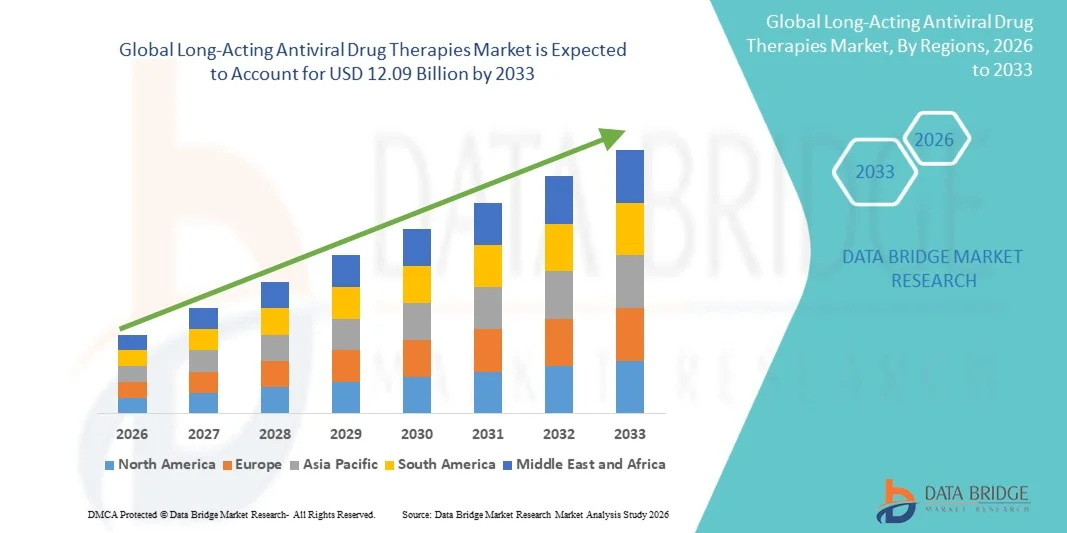
- The global long-acting antiviral drug therapies market size was valued at USD 4.18 billion in 2025 and is expected to reach USD 12.09 billion by 2033, at a CAGR of 14.20% during the forecast period
- The market growth is largely fueled by the increasing prevalence of chronic viral infections such as HIV and hepatitis, along with growing advancements in long-acting drug delivery technologies that enable extended dosing intervals and improved treatment adherence
- Furthermore, rising demand for effective, convenient, and long-term antiviral treatment options, coupled with ongoing pharmaceutical research and development activities, is establishing long-acting antiviral therapies as a preferred solution in modern infectious disease management. These converging factors are accelerating the adoption of long-acting antiviral treatments, thereby significantly boosting the industry’s growth
Long-Acting Antiviral Drug Therapies Market Analysis
- Long-acting antiviral drug therapies, designed to deliver sustained therapeutic effects through extended-release formulations such as injectables, implants, or depot systems, are becoming increasingly important in the treatment of chronic viral infections, particularly in conditions where consistent medication adherence is critical for effective disease management
- The growing demand for long-acting antiviral therapies is primarily driven by the increasing global prevalence of viral infections such as HIV and hepatitis, rising focus on improving patient adherence to treatment regimens, and ongoing advancements in pharmaceutical drug delivery technologies
- North America dominated the long-acting antiviral drug therapies market with the largest revenue share of 38.7% in 2025, characterized by strong pharmaceutical research and development capabilities, early adoption of innovative antiviral treatments, and the presence of major biopharmaceutical companies supporting advanced HIV and hepatitis treatment programs
- Asia-Pacific is expected to be the fastest growing region in the long-acting antiviral drug therapies market during the forecast period due to increasing healthcare investments, expanding access to antiviral treatment programs, and a rising burden of viral diseases across emerging economies
- Long-acting injectable antivirals segment dominated the long-acting antiviral drug therapies market with a market share of 41.5% in 2025, supported by increasing adoption of extended-release injectable therapies that reduce dosing frequency and significantly improve patient adherence compared with conventional treatment approaches
Report Scope and Long-Acting Antiviral Drug Therapies Market Segmentation
|
Attributes |
Long-Acting Antiviral Drug Therapies Key Market Insights |
|
Segments Covered |
|
|
Countries Covered |
North America
Europe
Asia-Pacific
Middle East and Africa
South America
|
|
Key Market Players |
|
|
Market Opportunities |
|
|
Value Added Data Infosets |
In addition to the insights on market scenarios such as market value, growth rate, segmentation, geographical coverage, and major players, the market reports curated by the Data Bridge Market Research also include in-depth expert analysis, patient epidemiology, pipeline analysis, pricing analysis, and regulatory framework |
Long-Acting Antiviral Drug Therapies Market Trends
“Advancement of Long-Acting Drug Delivery Technologies in Antiviral Treatment”
- A significant and rapidly expanding trend in the global long-acting antiviral drug therapies market is the advancement of extended-release drug delivery technologies such as injectable depots, implants, and nanoparticle-based formulations, which are transforming the management of chronic viral infections. This technological evolution is significantly improving treatment adherence and therapeutic outcomes
- For instance, Cabenuva, developed by ViiV Healthcare, provides a long-acting injectable regimen administered once every one or two months for HIV treatment, reducing the need for daily oral medication. Similarly, Gilead Sciences, Inc. has been advancing long-acting antiviral formulations such as Lenacapavir, which can be administered only twice per year for HIV management
- Integration of advanced pharmaceutical technologies enables sustained antiviral drug release and prolonged therapeutic activity. For instance, innovative delivery platforms utilize lipid nanoparticles and depot formulations to maintain consistent drug concentrations in the bloodstream over extended periods, reducing the frequency of dosing and improving patient adherence. Furthermore, these technologies also help minimize fluctuations in drug levels that may otherwise lead to treatment failure or resistance development
- The growing integration of long-acting antivirals with modern infectious disease treatment programs supports coordinated disease management strategies. Through specialized treatment centers and digital health monitoring systems, healthcare providers can effectively track patient adherence, schedule long-interval dosing, and optimize therapy outcomes across different patient populations
- This trend toward more efficient, durable, and patient-friendly antiviral treatment solutions is fundamentally reshaping expectations in infectious disease management. Consequently, companies such as Gilead Sciences, Inc. and ViiV Healthcare are actively developing ultra-long-acting antiviral therapies capable of maintaining viral suppression for extended durations while improving treatment convenience and patient quality of life
- The demand for antiviral therapies that offer sustained efficacy and reduced dosing frequency is increasing rapidly across healthcare systems, as clinicians and patients increasingly prioritize long-term disease control, improved adherence, and simplified treatment regimens for chronic viral infections
- The expanding collaboration between pharmaceutical companies, biotechnology firms, and global health organizations is further driving innovation in long-acting antiviral drug development, enabling faster regulatory approvals and broader access to advanced antiviral therapies worldwide
Long-Acting Antiviral Drug Therapies Market Dynamics
Driver
“Rising Prevalence of Chronic Viral Infections and Demand for Better Treatment Adherence”
- The increasing global burden of chronic viral infections such as HIV and hepatitis, combined with the need to improve long-term treatment adherence among patients, is a significant driver for the growing demand for long-acting antiviral drug therapies
- For instance, in June 2023, Gilead Sciences, Inc. announced expanded regulatory approvals and global access initiatives for Lenacapavir, a long-acting HIV treatment designed to be administered every six months, supporting the transition toward extended-interval antiviral therapies. Such strategies by key companies are expected to drive the long-acting antiviral drug therapies industry growth in the forecast period
- As healthcare providers seek to improve patient adherence and reduce the challenges associated with daily antiviral medication, long-acting therapies provide advantages such as reduced dosing frequency, sustained viral suppression, and improved quality of life for patients living with chronic infections
- Furthermore, the increasing focus on innovative drug delivery technologies and the expansion of global HIV and hepatitis treatment programs are making long-acting antivirals an essential component of modern infectious disease management strategies
- The convenience of less frequent dosing schedules, improved treatment adherence, and reduced risk of missed medication doses are key factors accelerating the adoption of long-acting antiviral therapies in healthcare systems worldwide. Continued investments in pharmaceutical research and clinical trials further support the development of next-generation long-acting antiviral formulations, contributing significantly to market growth
- In addition, increasing government initiatives and international health programs aimed at controlling HIV and viral hepatitis are encouraging the adoption of innovative long-acting antiviral therapies to enhance treatment accessibility and improve global disease management outcomes
- Growing investments by pharmaceutical companies in advanced antiviral research and development, particularly in long-duration injectable and implant-based therapies, are further accelerating innovation and expanding the availability of next-generation antiviral treatment solutions
Restraint/Challenge
“High Development Costs and Complex Regulatory Approval Processes”
- The high research and development costs associated with developing advanced long-acting antiviral drug formulations pose a significant challenge to broader market expansion. The complexity of designing safe and effective long-duration drug delivery systems increases development timelines and overall pharmaceutical investment requirements
- For instance, extensive clinical trials and regulatory evaluations are required to ensure the long-term safety and efficacy of innovative antiviral therapies such as Cabenuva developed by ViiV Healthcare, which can increase the time required for regulatory approval and market entry
- Addressing these regulatory and development challenges requires substantial financial investment and scientific expertise. Pharmaceutical companies must conduct long-term safety studies, optimize drug delivery mechanisms, and demonstrate sustained therapeutic effectiveness before gaining approval from global regulatory authorities
- In addition, the relatively high cost of advanced long-acting antiviral therapies compared with conventional daily antiviral medications can limit accessibility in low- and middle-income regions where healthcare budgets are constrained and access to innovative treatments remains limited
- While ongoing innovation and increasing manufacturing efficiencies are expected to gradually reduce costs, the perceived high price of advanced antiviral therapies may continue to slow adoption in certain healthcare systems. Strategic collaborations between pharmaceutical companies, healthcare organizations, and global health programs will be essential to improve affordability and expand global access to these treatments
- Furthermore, the complex manufacturing processes involved in producing long-acting injectable and implantable antiviral formulations can present supply chain and scalability challenges, particularly during the early commercialization stages
- Limited awareness and clinical familiarity with newly introduced long-acting antiviral therapies among healthcare providers in certain regions may also slow early adoption, requiring continued medical education and training initiatives to support widespread clinical implementation
Long-Acting Antiviral Drug Therapies Market Scope
The market is segmented on the basis of drug class, indication, therapy type, and end user.
- By Drug Class
On the basis of drug class, the long-acting antiviral drug therapies market is segmented into reverse transcriptase inhibitors, protease inhibitors, integrase inhibitors, fusion inhibitors, DNA polymerase inhibitors, neuraminidase inhibitors, capsid inhibitors, host-targeting antivirals, and others. The integrase inhibitors segment dominated the market with the largest market revenue share in 2025, driven by their high effectiveness in suppressing viral replication, particularly in HIV treatment. Integrase inhibitors are widely used in modern antiretroviral therapy due to their strong antiviral activity, improved safety profile, and lower resistance rates compared to older drug classes. Pharmaceutical companies are increasingly focusing on developing long-acting integrase inhibitor formulations to reduce dosing frequency and enhance treatment adherence. These therapies are also being incorporated into combination regimens that improve overall treatment outcomes for patients living with chronic viral infections. Growing clinical adoption of integrase inhibitor-based long-acting therapies continues to strengthen this segment’s market leadership.
The capsid inhibitors segment is anticipated to witness the fastest growth rate from 2026 to 2033, fueled by ongoing innovation in antiviral drug development and the introduction of next-generation therapies targeting viral capsid proteins. Capsid inhibitors represent a novel mechanism of action that interferes with viral replication processes, making them particularly valuable for treating drug-resistant viral strains. Increasing investment in research and development activities by biopharmaceutical companies is accelerating the clinical advancement of capsid inhibitor-based therapies. These drugs are gaining attention for their potential to offer extended dosing intervals and improved antiviral efficacy. As new capsid-targeting therapies receive regulatory approvals and enter global treatment guidelines, this segment is expected to experience strong growth during the forecast period.
- By Indication
On the basis of indication, the long-acting antiviral drug therapies market is segmented into human immunodeficiency virus, hepatitis B virus, hepatitis C virus, herpes simplex virus, cytomegalovirus, influenza, respiratory syncytial virus, coronavirus infections, and others. The human immunodeficiency virus segment dominated the market with the largest revenue share in 2025, supported by the widespread global prevalence of HIV and the growing adoption of long-acting antiretroviral therapies. Long-acting injectable treatments have emerged as a transformative option for HIV management by reducing the need for daily oral medication. These therapies significantly improve patient adherence and reduce the risk of treatment interruptions. Global health initiatives and government-supported HIV treatment programs are also promoting the adoption of innovative antiviral therapies. The continuous development of advanced long-acting HIV drugs is further reinforcing the dominance of this segment.
The hepatitis B virus segment is expected to witness the fastest growth rate from 2026 to 2033, driven by the increasing global burden of chronic hepatitis infections and the growing need for long-term disease management solutions. Researchers are actively developing long-acting antiviral therapies aimed at achieving sustained viral suppression and reducing the progression of liver disease. Pharmaceutical companies are investing heavily in clinical trials focused on innovative treatment options for hepatitis B patients. In addition, expanding screening programs and improved awareness of hepatitis-related complications are increasing diagnosis rates worldwide. These factors are expected to accelerate the adoption of long-acting antiviral therapies for hepatitis management during the forecast period.
- By Therapy Type
On the basis of therapy type, the long-acting antiviral drug therapies market is segmented into long-acting injectable antivirals, long-acting oral antivirals, implant-based antiviral delivery, and long-acting combination therapies. The long-acting injectable antivirals segment dominated the market with the largest revenue share of 41.5% in 2025, driven by their ability to maintain sustained therapeutic drug levels and significantly reduce dosing frequency. Injectable antiviral therapies offer improved patient convenience compared with traditional daily oral regimens. Healthcare providers increasingly recommend injectable treatments for chronic viral infections such as HIV due to their ability to enhance adherence and reduce the risk of missed doses. Technological advancements in drug formulation and delivery systems are also supporting the development of next-generation injectable antivirals with longer dosing intervals. As healthcare systems prioritize patient-centric treatment solutions, injectable antivirals continue to gain strong market acceptance.
The implant-based antiviral delivery segment is anticipated to witness the fastest growth rate from 2026 to 2033, supported by increasing research into ultra-long-acting drug delivery technologies. Implantable antiviral devices are designed to release medication gradually over several months or even years, offering a highly convenient treatment approach. These technologies are particularly promising for HIV prevention and long-term viral suppression. Pharmaceutical and biotechnology companies are actively exploring implant-based solutions that can minimize treatment burden while maintaining consistent antiviral efficacy. In addition, the growing demand for innovative drug delivery methods that improve patient adherence and long-term outcomes is contributing to the rapid expansion of this segment.
- By End User
On the basis of end user, the long-acting antiviral drug therapies market is segmented into hospitals, specialty clinics, ambulatory surgical centers, home healthcare, and research & academic institutes. The hospitals segment dominated the market with the largest revenue share in 2025, driven by the availability of advanced healthcare infrastructure and specialized medical professionals capable of administering long-acting antiviral therapies. Hospitals often serve as the primary centers for the diagnosis and treatment of complex viral infections such as HIV and hepatitis. They also provide comprehensive monitoring and follow-up care for patients receiving long-acting injectable antiviral treatments. The presence of multidisciplinary healthcare teams and access to advanced diagnostic tools further support the widespread use of antiviral therapies in hospital settings. As a result, hospitals continue to account for a substantial share of the overall market.
The specialty clinics segment is expected to witness the fastest growth rate from 2026 to 2033, fueled by the increasing establishment of dedicated infectious disease treatment centers and outpatient care facilities. Specialty clinics provide focused care for patients with chronic viral infections and often offer personalized treatment programs. These facilities are increasingly adopting long-acting antiviral therapies due to their effectiveness in improving patient adherence and simplifying treatment schedules. In addition, specialty clinics play a critical role in managing large patient populations receiving antiviral therapy through structured treatment programs. Growing investments in specialized healthcare services and infectious disease management are expected to drive the rapid expansion of this segment during the forecast period.
Long-Acting Antiviral Drug Therapies Market Regional Analysis
- North America dominated the long-acting antiviral drug therapies market with the largest revenue share of 38.7% in 2025, characterized by strong pharmaceutical research and development capabilities, early adoption of innovative antiviral treatments
- Healthcare providers in the region highly prioritize effective treatment adherence, improved patient outcomes, and the use of advanced drug delivery systems such as long-acting injectables for managing chronic viral infections including HIV and hepatitis
- This widespread adoption is further supported by significant investments in pharmaceutical research and development, favorable regulatory support for innovative therapies, and the growing focus on improving long-term disease management, establishing long-acting antiviral therapies as a preferred solution for modern infectious disease treatment programs
U.S. Long-Acting Antiviral Drug Therapies Market Insight
The U.S. long-acting antiviral drug therapies market captured the largest revenue share in 2025 within North America, fueled by the strong presence of leading biopharmaceutical companies and the rapid adoption of innovative antiviral treatments. Healthcare providers are increasingly prioritizing improved treatment adherence through long-acting antiviral formulations that reduce the need for daily medication. The growing prevalence of chronic viral infections such as HIV and hepatitis is further supporting demand for advanced treatment solutions. Moreover, continuous investments in pharmaceutical research and favorable regulatory approvals for innovative antiviral drugs are significantly contributing to the market's expansion.
Europe Long-Acting Antiviral Drug Therapies Market Insight
The Europe long-acting antiviral drug therapies market is projected to expand at a substantial CAGR throughout the forecast period, primarily driven by strong healthcare infrastructure and increasing initiatives to control viral infections. The growing emphasis on improving patient adherence to antiviral treatments is fostering the adoption of long-acting therapies across the region. European healthcare systems are increasingly incorporating innovative antiviral treatments into disease management programs. The region is experiencing notable growth across hospitals and specialty treatment centers, with long-acting antiviral drugs being integrated into modern infectious disease treatment strategies.
U.K. Long-Acting Antiviral Drug Therapies Market Insight
The U.K. long-acting antiviral drug therapies market is anticipated to grow at a noteworthy CAGR during the forecast period, driven by increasing awareness regarding effective management of chronic viral infections and the need for improved patient adherence. In addition, rising healthcare investments and the expansion of national disease control programs are encouraging the adoption of advanced antiviral therapies. The country’s well-established healthcare system, along with its strong pharmaceutical research capabilities, is expected to continue stimulating market growth.
Germany Long-Acting Antiviral Drug Therapies Market Insight
The Germany long-acting antiviral drug therapies market is expected to expand at a considerable CAGR during the forecast period, fueled by growing investments in pharmaceutical innovation and increasing focus on advanced infectious disease treatment solutions. Germany’s strong biotechnology and pharmaceutical sectors are encouraging the development and adoption of innovative antiviral therapies. The increasing integration of long-acting drug delivery technologies into treatment programs is also becoming more prevalent, with healthcare providers emphasizing improved therapeutic outcomes and patient adherence.
Asia-Pacific Long-Acting Antiviral Drug Therapies Market Insight
The Asia-Pacific long-acting antiviral drug therapies market is poised to grow at the fastest CAGR during the forecast period of 2026 to 2033, driven by increasing healthcare expenditures, rising awareness of viral diseases, and expanding access to antiviral treatment programs in countries such as China, Japan, and India. The region's growing focus on strengthening healthcare infrastructure and improving infectious disease management is supporting the adoption of advanced antiviral therapies. Furthermore, the increasing presence of pharmaceutical manufacturing and clinical research activities across APAC is expanding the accessibility of long-acting antiviral treatments to a broader patient population.
Japan Long-Acting Antiviral Drug Therapies Market Insight
The Japan long-acting antiviral drug therapies market is gaining momentum due to the country’s advanced healthcare infrastructure, growing focus on innovative pharmaceutical technologies, and rising awareness regarding chronic viral infection management. The Japanese healthcare system places strong emphasis on effective and long-term disease control, which supports the adoption of long-acting antiviral treatments. The integration of advanced drug delivery systems and ongoing clinical research initiatives is further contributing to market expansion.
India Long-Acting Antiviral Drug Therapies Market Insight
The India long-acting antiviral drug therapies market accounted for a significant market share in Asia Pacific in 2025, attributed to the country's large patient population and increasing burden of viral infections such as HIV and hepatitis. India represents a rapidly expanding pharmaceutical market where innovative antiviral therapies are gradually gaining acceptance in healthcare institutions. Government initiatives aimed at strengthening infectious disease control programs, combined with expanding healthcare access, are driving market growth. In addition, the presence of a strong domestic pharmaceutical manufacturing base is supporting the availability and affordability of antiviral treatments across the country.
Long-Acting Antiviral Drug Therapies Market Share
The Long-Acting Antiviral Drug Therapies industry is primarily led by well-established companies, including:
- Gilead Sciences, Inc. (U.S.)
- ViiV Healthcare Limited (U.K.)
- GSK plc (U.K.)
- Merck & Co., Inc. (U.S.)
- Johnson & Johnson Services, Inc. (U.S.)
- F. Hoffmann-La Roche Ltd (Switzerland)
- AbbVie Inc. (U.S.)
- Bristol Myers Squibb (U.S.)
- Pfizer Inc. (U.S.)
- AstraZeneca (U.K.)
- Novartis AG (Switzerland)
- Shionogi & Co., Ltd. (Japan)
- Dr. Reddy’s Laboratories Ltd. (India)
- Cipla Limited (India)
- Teva Pharmaceutical Industries Ltd. (Israel)
- Aurobindo Pharma Limited (India)
- Sun Pharmaceutical Industries Ltd. (India)
- Vir Biotechnology, Inc. (U.S.)
- Enanta Pharmaceuticals, Inc. (U.S.)
What are the Recent Developments in Global Long-Acting Antiviral Drug Therapies Market?
- In October 2025, ViiV Healthcare presented results from the CLARITY study evaluating long-acting injectable antiretroviral therapies such as Cabotegravir and Lenacapavir. The randomized crossover study demonstrated strong patient acceptance and tolerability for long-acting injectable antiviral regimens. These results highlight increasing patient preference for extended-interval treatments compared with daily oral therapies. The findings also support the continued development of next-generation long-acting HIV treatments aimed at improving adherence and long-term viral suppression
- In July 2025, the World Health Organization issued new global guidelines recommending injectable Lenacapavir as an additional pre-exposure prophylaxis option for HIV prevention. The therapy is administered twice yearly and represents one of the longest-acting antiviral prevention options currently available. The recommendation was announced during the International AIDS Society Conference and is expected to support global HIV prevention programs
- In June 2025, Gilead Sciences, Inc. announced that the U.S. Food and Drug Administration (FDA) approved Lenacapavir (Yeztugo) as the first twice-yearly injectable HIV prevention therapy (PrEP) for adults and adolescents at risk of HIV infection. The long-acting capsid inhibitor provides up to six months of protection per dose, representing a major breakthrough in HIV prevention by reducing reliance on daily oral medication. Clinical trials showed very high efficacy in preventing HIV infection among high-risk populations
- In March 2025, ViiV Healthcare announced new clinical and real-world data showcasing the impact of its long-acting injectable HIV treatment portfolio, including Cabenuva, at the Conference on Retroviruses and Opportunistic Infections (CROI) 2025. The data highlighted sustained viral suppression and improved patient adherence with long-acting injectable therapies compared with traditional daily regimens. Researchers also shared early pipeline results for next-generation long-acting antiviral candidates
- In December 2022, Gilead Sciences, Inc. received FDA approval for Sunlenca (Lenacapavir), the first-in-class long-acting HIV capsid inhibitor for the treatment of adults with multidrug-resistant HIV-1 infection. The therapy is administered only twice per year, offering a novel mechanism of action and a significant advancement for patients with limited treatment options. The approval marked a major milestone in the development of ultra-long-acting antiviral therapies targeting HIV. It also paved the way for further research into extended-duration antiviral treatment strategies

- Interactive Data Analysis Dashboard
- Company Analysis Dashboard for high growth potential opportunities
- Research Analyst Access for customization & queries
- Competitor Analysis with Interactive dashboard
- Latest News, Updates & Trend analysis
- Harness the Power of Benchmark Analysis for Comprehensive Competitor Tracking
Data collection and base year analysis are done using data collection modules with large sample sizes. The stage includes obtaining market information or related data through various sources and strategies. It includes examining and planning all the data acquired from the past in advance. It likewise envelops the examination of information inconsistencies seen across different information sources. The market data is analysed and estimated using market statistical and coherent models. Also, market share analysis and key trend analysis are the major success factors in the market report. To know more, please request an analyst call or drop down your inquiry.
The key research methodology used by DBMR research team is data triangulation which involves data mining, analysis of the impact of data variables on the market and primary (industry expert) validation. Data models include Vendor Positioning Grid, Market Time Line Analysis, Market Overview and Guide, Company Positioning Grid, Patent Analysis, Pricing Analysis, Company Market Share Analysis, Standards of Measurement, Global versus Regional and Vendor Share Analysis. To know more about the research methodology, drop in an inquiry to speak to our industry experts.
Data Bridge Market Research is a leader in advanced formative research. We take pride in servicing our existing and new customers with data and analysis that match and suits their goal. The report can be customized to include price trend analysis of target brands understanding the market for additional countries (ask for the list of countries), clinical trial results data, literature review, refurbished market and product base analysis. Market analysis of target competitors can be analyzed from technology-based analysis to market portfolio strategies. We can add as many competitors that you require data about in the format and data style you are looking for. Our team of analysts can also provide you data in crude raw excel files pivot tables (Fact book) or can assist you in creating presentations from the data sets available in the report.












