


What is the Lymphocytic Choriomeningitis Market Size and Growth Rate ?
As per Data Bridge Market Research Analysis the global lymphocytic choriomeningitis market was valued at USD 866.60 million in 2025 and is projected to reach USD 1,280.36 million by 2033, growing at a CAGR of 5.00% from 2026 to 2033. The market is witnessing steady growth driven by increasing awareness of zoonotic viral infections, rising demand for advanced infectious disease diagnostics, and expanding research activities in virology and epidemiology.
The growing focus on early disease detection, improved laboratory surveillance systems, and strengthened public health initiatives is significantly supporting market expansion. In addition, the increasing use of molecular diagnostic techniques such as PCR-based assays, along with advancements in immunodiagnostics, is enhancing detection accuracy and accelerating adoption across clinical laboratories, research institutes, and public health organizations.
Key Market Trends & Insights
- North America dominated the global lymphocytic choriomeningitis market with the largest revenue share of 38.12% in 2025, supported by advanced diagnostic infrastructure, strong disease surveillance systems, and high research activity in virology and infectious diseases.
- The Anti-Inflammatory Drugs segment led the market with a 60.5% share in 2025, driven by wide use to manage neurological inflammation such as meningitis and encephalitis symptoms associated with LCMV
- Asia-Pacific is expected to be the fastest-growing region at a CAGR of 6.1% from 2026 to 2033, fueled by improving healthcare infrastructure, rising awareness of zoonotic diseases, and expanding laboratory testing capabilities in China and India.
- PCR is the fastest-growing diagnosis type, projected to register a CAGR of 7.4%, reflecting the surge in demand for its high sensitivity and early detection capability. It can identify viral RNA even in the early infection stage.
- The Droppings segment dominated the source of transmission category with a 46.8% revenue share in 2025, led by high prevalence of rodent infestation in residential, agricultural, and laboratory environments, where contaminated aerosolized feces remain the primary infection pathway for LCMV.
- Injection accounted for 52.3 % of the market, preferred by hospitals, emergency departments, and intensive care units due to its rapid onset of action and ability to deliver immediate therapeutic effects in severe LCMV cases involving neurological complications.
- The Saliva segment is the fastest-growing source of transmission category, with a CAGR of 6.2%, driven by the rising awareness of direct rodent-to-human transmission. Increased pet rodent handling is contributing to exposure detection.
Market Size & Forecast
- Global Market Value (2025): USD 866.60 Million
- Expected Market Value (2033): USD 1,280.36 Million
- Forecast CAGR (2026–2033): 5.00%
- Leading Region in 2025: North America
- Fastest Growing Region: Asia Pacific
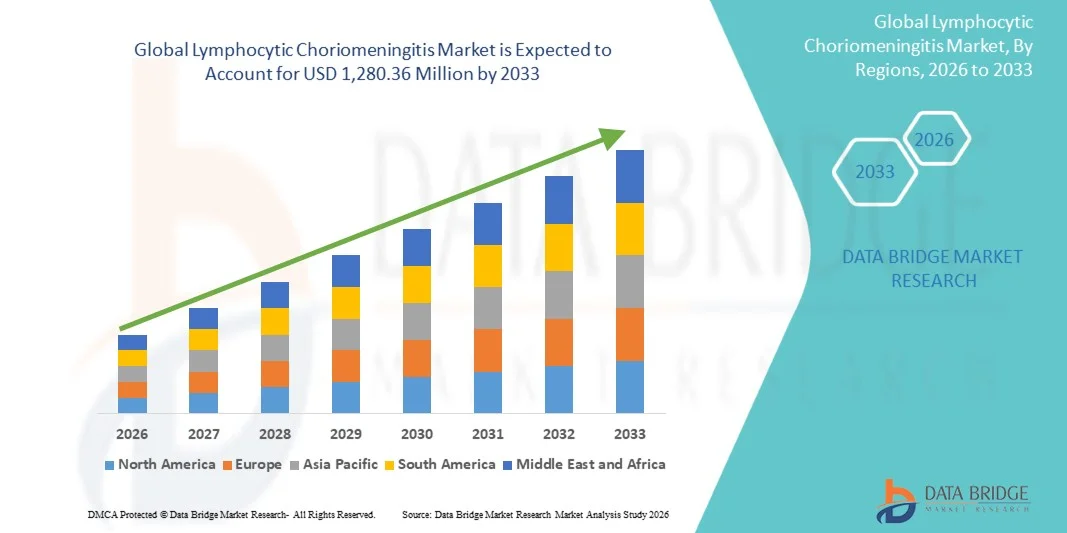
Report Scope and Global Lymphocytic Choriomeningitis Market Segmentation
|
Attributes |
Lymphocytic Choriomeningitis Key Market Insights |
|
Segments Covered |
|
|
Countries Covered |
North America · U.S. · Canada · Mexico Europe · Germany · France · U.K. · Netherlands · Switzerland · Belgium · Russia · Italy · Spain · Turkey · Rest of Europe Asia-Pacific · China · Japan · India · South Korea · Singapore · Malaysia · Australia · Thailand · Indonesia · Philippines · Rest of Asia-Pacific Middle East and Africa · Saudi Arabia · U.A.E. · South Africa · Egypt · Israel · Rest of Middle East and Africa South America · Brazil · Argentina · Rest of South America |
|
Key Market Players |
· Merck & Co., Inc. (U.S.) · Thermo Fisher Scientific Inc. (U.S.) · Bio-Rad Laboratories, Inc. (U.S.) · QIAGEN (Germany) · Abbott (U.S.) · BD (U.S.) · Agilent Technologies, Inc. (U.S.) · Danaher (U.S.) · Takara Bio Inc. (Japan) · Promega Corporation (U.S.) · Hologic, Inc. (U.S.) · Charles (U.S.) · Sartorius AG (Germany) · Illumina, Inc. (U.S.) · PerkinElmer Inc. (U.S.) · Luminex Corporation (U.S.) · Eurofins Scientific SE (Luxembourg) · Lonza Group AG (Switzerland) · ATCC (U.S.) |
|
Market Opportunities |
· Expansion of multiplex PCR and next-generation molecular panels · Growing integration of environmental and wildlife surveillance programs · Increasing demand for point-of-care and rapid diagnostic kits in remote and resource-limited regions |
|
Value Added Data Infosets |
In addition to the insights on market scenarios such as market value, growth rate, segmentation, geographical coverage, and major players, the market reports curated by the Data Bridge Market Research also include in-depth expert analysis, patient epidemiology, pipeline analysis, pricing analysis, and regulatory framework. |
What is the Key Trend in the Lymphocytic Choriomeningitis Market?
Trend: Rising Adoption of Advanced Molecular and Serological Diagnostics
Healthcare laboratories are increasingly adopting advanced molecular and serological diagnostic techniques to improve the detection accuracy of lymphocytic choriomeningitis virus, particularly in high-risk and immunocompromised populations. PCR-based assays, real-time amplification technologies, and automated immunoassay platforms are significantly improving sensitivity, reducing diagnostic delays, and enabling more reliable differentiation from other viral infections with similar clinical symptoms. This shift is also being supported by expanding laboratory automation and integration of digital reporting systems, which enhance workflow efficiency and disease surveillance capabilities.
For instance, several diagnostic laboratories are incorporating expanded multiplex respiratory and neurotropic virus panels that include LCMV testing alongside other rodent-borne pathogens to improve early identification and outbreak tracking.
Global Lymphocytic Choriomeningitis Market Dynamics
Key Market Driver: Rising Focus on Zoonotic Disease Surveillance and Early Detection Programs
Growing global concern regarding zoonotic spillover events and rodent-borne viral infections is driving governments and healthcare institutions to strengthen surveillance frameworks for early detection of lymphocytic choriomeningitis. Investments are increasing in epidemiological monitoring systems, laboratory networks, and wildlife disease tracking programs to better understand transmission pathways and reduce outbreak risks. Enhanced funding for infectious disease research is also accelerating the development and deployment of more precise diagnostic tools across hospitals, public health agencies, and research institutions.
For instance, national public health agencies in several countries are expanding integrated rodent surveillance and viral testing programs that combine field sampling, genomic sequencing, and laboratory confirmation to improve early warning systems for LCMV and related infections.
Key Restraint/Challenge: Limited Awareness and Underdiagnosis of LCMV Infections
A major challenge limiting market growth is the relatively low clinical awareness of lymphocytic choriomeningitis among healthcare professionals, which often results in underdiagnosis or misdiagnosis due to symptom overlap with other viral or neurological infections. In many healthcare systems, routine diagnostic protocols do not specifically include LCMV testing, leading to a lack of accurate prevalence data and delayed treatment decisions. In addition, limited availability of specialized testing facilities in low- and middle-income regions further restricts widespread detection and reporting of cases.
For instance, in several regional hospitals, patients presenting with aseptic meningitis symptoms are typically tested for common viral pathogens only, while LCMV-specific assays are ordered only in advanced reference laboratories, contributing to significant diagnostic underreporting.
Key Market Opportunity: Expansion of Next-Generation Molecular Testing and Integrated Infectious Disease Panels
The growing shift toward highly sensitive next-generation molecular diagnostics presents a major opportunity for the lymphocytic choriomeningitis market, as laboratories increasingly adopt broad infectious disease panels capable of detecting multiple viral pathogens in a single test. This integration improves diagnostic efficiency, reduces turnaround time, and enhances clinical decision-making, particularly in cases of unexplained neurological or febrile illness. Advancements in automated PCR systems and digital pathology platforms are further supporting scalability and wider adoption across hospitals and reference laboratories.
For instance, several diagnostic companies are developing multiplex encephalitis and meningitis panels that include LCMV alongside other neurotropic viruses, enabling faster and more comprehensive differential diagnosis in suspected central nervous system infection cases.
How is the Lymphocytic Choriomeningitis Market Segmented ?
The lymphocytic choriomeningitis market is segmented on the basis of treatment, diagnosis, symptoms, source of transmission, dosage, route of administration, end-users, and distribution channel.
- By Treatment
On the basis of treatment, the global LCMV market is segmented into anti-inflammatory drugs and others. The Anti-Inflammatory Drugs segment dominated the market with an estimated highest share of 60.5% in 2025, primarily because LCMV is a viral infection where treatment is largely supportive rather than curative. These drugs are widely used to manage neurological inflammation such as meningitis and encephalitis symptoms associated with LCMV. They help reduce fever, headache, and CNS-related complications, making them the first-line therapeutic approach in clinical practice. Hospitals prefer these drugs due to their immediate symptom-relief effect in acute cases. Their availability in both generic and hospital-grade formulations further strengthens adoption. The absence of specific antiviral therapy continues to reinforce dominance of this segment.
The Others segment is projected to be the fastest growing with a CAGR of 6.8% from 2026 to 2033, driven by increasing research into antiviral candidates and immunomodulatory therapies. Experimental treatments, supportive biologics, and advanced neuroprotective agents are gaining attention in rare viral disease management. Rising focus on zoonotic infections and emerging infectious disease preparedness is accelerating clinical trials. Government and academic funding for rare viral disease research is also expanding. Increased awareness among healthcare providers is improving diagnosis-linked treatment escalation. These factors collectively contribute to faster growth in alternative therapeutic approaches.
- By Diagnosis
On the basis of diagnosis, the market is segmented into PCR, antibody detection, cerebrospinal fluid analysis, viral culture, and others. The Cerebrospinal Fluid (CSF) Analysis segment dominated the market in 2025 with a market share of 34.2%, as LCMV primarily affects the central nervous system, making CSF examination critical for confirming meningitis or encephalitis. CSF analysis provides immediate indicators such as elevated white blood cells and protein levels, which are key markers in suspected cases. It is widely used in hospital emergency settings for rapid clinical decision-making. Physicians rely on CSF results in combination with clinical symptoms for early intervention. Its established use in neurology departments makes it a standard diagnostic procedure. High diagnostic reliability in acute neurological infections supports its dominance.
The PCR (Polymerase Chain Reaction) segment is expected to be the fastest growing with a CAGR of 7.4% from 2026 to 2033, due to its superior sensitivity and specificity in detecting viral RNA. PCR enables early-stage detection even before antibody development, improving clinical outcomes. Advancements in molecular diagnostics and automation are increasing accessibility across laboratories. Expanding adoption of multiplex PCR panels for meningitis/encephalitis is further driving demand. Declining costs of molecular testing are encouraging wider use in emerging healthcare systems. Continuous improvements in real-time PCR technologies are strengthening its role in infectious disease diagnostics.
- By Symptoms
On the basis of symptoms, the market is segmented into fever, sensitivity to light, tiredness, nausea, headache, stiff neck, loss of appetite, muscle aches, and others. The Headache segment dominated the market in 2025 with a market share of 28.7%, as it is one of the most commonly reported and early-presenting symptoms of LCMV infection. Headache is strongly associated with meningitis-related inflammation, making it a key diagnostic indicator. It is often accompanied by fever and neck stiffness, prompting early medical consultation. High prevalence across both mild and severe cases increases clinical reporting frequency. Emergency departments frequently prioritize headache-based neurological evaluation. Its universal presence in CNS viral infections supports its dominance.
The Sensitivity to Light (Photophobia) segment is projected to be the fastest growing with a CAGR of 6.5% from 2026 to 2033, driven by improved clinical recognition of neurological symptom clusters. Increased awareness among healthcare professionals is leading to more accurate symptom reporting. Photophobia is increasingly being documented as part of standardized meningitis diagnostic protocols. Rising use of neurological assessment tools in emergency care is improving detection rates. Better patient screening in infectious disease outbreaks is also contributing to growth. Enhanced clinical training programs are further supporting recognition of this symptom.
- By Source of Transmission
On the basis of transmission, the market is segmented into droppings, urine, saliva, blood, and nesting materials of infected rodents. The Droppings segment dominated the market in 2025 with a market share of 46.8%, as rodent feces remain the primary and most common transmission source of LCMV infection. Human exposure typically occurs through inhalation of aerosolized particles in contaminated environments. This transmission route is highly prevalent in household, laboratory, and storage settings. Rodent infestation in urban and semi-urban areas further increases risk exposure. Public health monitoring frequently identifies droppings as the major contamination source. Its consistent role in outbreak patterns reinforces dominance.
The Saliva segment is expected to be the fastest growing with a CAGR of 6.2% from 2026 to 2033, due to increasing recognition of direct contact transmission pathways. Growing awareness of pet rodent handling risks is improving case identification linked to saliva exposure. Laboratory research environments are also reporting higher monitoring of saliva-based contamination. Improved diagnostic tracing in outbreak investigations is highlighting this route more frequently. Expanding public health education campaigns are increasing reporting rates. Enhanced zoonotic surveillance systems are contributing to faster growth of this segment.
- By Dosage
On the basis of dosage, the market is segmented into injection, tablets, and others. The Injection segment dominated the market in 2025 with a market share of 52.3%, as hospitalized LCMV cases often require rapid symptom management and intravenous supportive therapies. Injectable formulations are preferred in severe neurological cases where oral administration is not feasible. They provide faster drug absorption and controlled dosing in critical care settings. Emergency departments rely heavily on injectable anti-inflammatory and supportive agents. Hospital protocols for acute viral meningitis favor parenteral administration. This clinical necessity reinforces dominance of injections.
The Tablets segment is expected to be the fastest growing with a CAGR of 6.9% from 2026 to 2033, driven by increasing outpatient management of mild LCMV cases. Oral medications are preferred for symptom control in non-severe infections. Rising availability of supportive oral therapies is improving accessibility. Growth in home-based care and ambulatory treatment is further supporting adoption. Pharmaceutical advancements in oral formulations are enhancing bioavailability. Cost-effectiveness and patient convenience are key growth drivers.
- By Route of Administration
On the basis of route of administration, the market is segmented into oral, intravenous, and others. The Intravenous segment dominated the market in 2025 with a market share of 57.6%, as severe LCMV infections involving the central nervous system require rapid therapeutic intervention. IV administration ensures immediate drug delivery, especially in hospitalized patients. It is widely used in intensive care units for managing neurological complications. High bioavailability and controlled dosing make it essential in acute cases. Clinical protocols for viral meningitis strongly favor IV treatment. Its effectiveness in emergency settings supports dominance.
The Oral segment is expected to be the fastest growing with a CAGR of 6.7 from 2026 to 2033, driven by increasing preference for non-invasive treatment methods. Oral therapies are widely used in mild and recovering patients. Expanding outpatient care and early diagnosis are supporting this shift. Improvements in drug formulation are enhancing absorption and efficacy. Rising healthcare accessibility in emerging regions is further boosting adoption. Patient convenience and lower cost are key growth drivers.
- By End Users
On the basis of end users, the market is segmented into clinics, hospitals, and others. The Hospitals segment dominated the market in 2025 with a market share of 61.9%, as most LCMV cases requiring neurological evaluation and supportive care are treated in hospital settings. Hospitals have advanced diagnostic infrastructure such as PCR labs and CSF analysis facilities. They also provide intensive care support for severe meningitis or encephalitis cases. Availability of multidisciplinary specialists strengthens hospital-based treatment dominance. Emergency admission of acute viral infections further increases hospital utilization. High patient inflow for infectious diseases reinforces leadership of this segment.
The Clinics segment is projected to be the fastest growing with a CAGR of 6.4% from 2026 to 2033, driven by increased early-stage diagnosis and outpatient consultations. Growing awareness of zoonotic infections is encouraging patients to seek early medical attention. Clinics are increasingly equipped with rapid diagnostic tools and referral systems. Expansion of primary healthcare networks is supporting growth. Cost-effective care in clinics is improving accessibility in rural and semi-urban regions. Telemedicine integration is also enhancing clinic-based disease management.
- By Distribution Channel
On the basis of distribution channel, the market is segmented into hospital pharmacy, retail pharmacy, and online pharmacy. The Hospital Pharmacy segment dominated the market in 2025 with a market share of 48.5%, as most LCMV treatments are administered in inpatient settings. Hospital pharmacies ensure immediate availability of injectable and critical care medications. They are closely integrated with emergency and ICU departments. Controlled dispensing for neurological infections supports this channel’s dominance. Institutional procurement policies further strengthen hospital pharmacy usage. High dependence on hospital-based treatment reinforces its leadership.
The Online Pharmacy segment is expected to be the fastest growing with a CAGR of 7.1 from 2026 to 2033, driven by increasing digitalization of healthcare services. Rising adoption of e-pharmacy platforms is improving access to supportive medications. Convenience of home delivery is attracting patients in non-critical cases. Expansion of telemedicine consultations is boosting online prescription fulfillment. Growing smartphone penetration and digital payment systems are supporting adoption. Regulatory improvements in online drug distribution are further accelerating growth.
Which Region Holds the Largest Share of the Lymphocytic Choriomeningitis Market?
North America dominated the global lymphocytic choriomeningitis market with the largest revenue share of 38.12% in 2025, supported by advanced diagnostic infrastructure, strong disease surveillance systems, and high research activity in virology and infectious diseases. The region benefits from widespread availability of molecular diagnostics such as PCR and CSF analysis in hospital settings, enabling early and accurate detection of cases. Increased research funding for rare viral and neurological infections further strengthens market growth. The presence of well-established healthcare facilities and skilled neurology specialists also contributes to higher diagnosis and treatment rates. Growing emphasis on laboratory safety and rodent control measures continues to reduce but still monitor transmission risks.
U.S. Lymphocytic Choriomeningitis Market Insight
The U.S. LCMV market is witnessing steady growth due to advanced infectious disease surveillance systems, strong diagnostic infrastructure, and high awareness of rare zoonotic infections. The country benefits from widespread availability of PCR-based molecular diagnostics and cerebrospinal fluid (CSF) analysis in hospital and laboratory settings, enabling early and accurate detection of cases. Strong research funding for viral encephalitis and emerging pathogens further supports market expansion. Increasing focus on laboratory biosafety and rodent control programs is helping reduce transmission risks. The presence of well-established neurology care facilities and specialized infectious disease centers strengthens treatment capabilities. Growing adoption of supportive care therapies continues to drive market development in the U.S.
Europe Lymphocytic Choriomeningitis Market Insight
The Europe LCMV market remains a key contributor globally, supported by strong public health systems, advanced diagnostic capabilities, and increasing awareness of zoonotic diseases. The region benefits from widespread adoption of molecular testing technologies such as PCR and structured disease surveillance programs. Rising investments in infectious disease research and neurological disorder management are strengthening market growth. Strict biosafety regulations and laboratory standards are improving early detection and containment of cases. Expanding use of hospital-based diagnostic workflows further supports market development. Continuous focus on infectious disease preparedness and research innovation enhances Europe’s position in the global LCMV market.
U.K. Lymphocytic Choriomeningitis Market Insight
The U.K. LCMV market is experiencing moderate growth, driven by strong healthcare infrastructure, active disease monitoring systems, and increasing awareness of rare viral infections. Hospitals and diagnostic laboratories are increasingly adopting PCR and CSF analysis for rapid identification of neurological infections. Government-supported public health agencies are strengthening surveillance and outbreak response capabilities. Growing emphasis on laboratory safety and infection control practices is reducing occupational exposure risks. Academic and clinical research institutions are actively studying zoonotic virus behavior and transmission patterns. Continued investment in infectious disease diagnostics and neurology care is supporting market expansion in the U.K.
Germany Lymphocytic Choriomeningitis Market Insight
The Germany LCMV market is expanding steadily due to its advanced healthcare system, strong biomedical research ecosystem, and high diagnostic accuracy standards. Hospitals and research institutes are increasingly using molecular diagnostics and cerebrospinal fluid testing for early detection of viral infections. Strong focus on infectious disease research and virology studies is driving innovation in diagnostic techniques. Government emphasis on biosafety and disease prevention is improving laboratory practices and surveillance systems. Increasing collaboration between academic institutions and healthcare providers is strengthening clinical understanding of LCMV. Continuous improvements in neurological care infrastructure further support market growth in Germany.
Asia-Pacific Lymphocytic Choriomeningitis Market Insight
The Asia-Pacific LCMV market is expected to witness steady growth, driven by improving healthcare infrastructure, rising awareness of zoonotic diseases, and expanding diagnostic capabilities. Increasing adoption of molecular diagnostics such as PCR in urban hospitals is enhancing early disease detection. Growing investments in infectious disease surveillance and public health systems are strengthening regional preparedness. Rapid urbanization and changing environmental conditions are contributing to increased rodent exposure risks. Expanding access to neurological care and laboratory services is supporting market penetration. Rising government initiatives for disease control and healthcare modernization are accelerating regional market growth.
Japan Lymphocytic Choriomeningitis Market Insight
The Japan LCMV market is witnessing stable growth due to advanced healthcare systems, strong diagnostic precision, and high investment in infectious disease research. Hospitals and research centers are increasingly using PCR and CSF analysis for accurate detection of neurological infections. The country’s strong focus on biosafety and laboratory standards helps minimize occupational exposure risks. Continuous advancements in molecular diagnostics and virology research are improving disease detection efficiency. Integration of advanced healthcare technologies supports early diagnosis and better patient outcomes. Ongoing research into rare viral infections further contributes to market development in Japan.
China Lymphocytic Choriomeningitis Market Insight
The China LCMV market is growing steadily, driven by rapid healthcare infrastructure expansion, increasing awareness of infectious diseases, and rising adoption of advanced diagnostic technologies. Hospitals are increasingly using PCR-based testing and CSF analysis for neurological infection diagnosis. Government initiatives focused on public health surveillance and zoonotic disease control are strengthening disease monitoring systems. Expanding research in virology and infectious diseases is supporting innovation in diagnostics. Increasing urbanization and rodent exposure risks are contributing to higher awareness and testing rates. Continued healthcare modernization and investment in laboratory facilities are driving market growth in China.
Which are the Top Companies in Lymphocytic Choriomeningitis Market?
The Lymphocytic Choriomeningitis industry is primarily led by well-established companies, including:
- Merck & Co., Inc. (U.S.)
- Thermo Fisher Scientific Inc. (U.S.)
- Bio-Rad Laboratories, Inc. (U.S.)
- QIAGEN (Germany)
- Abbott (U.S.)
- BD (U.S.)
- Agilent Technologies, Inc. (U.S.)
- Danaher (U.S.)
- Takara Bio Inc. (Japan)
- Promega Corporation (U.S.)
- Hologic, Inc. (U.S.)
- Charles (U.S.)
- Sartorius AG (Germany)
- Illumina, Inc. (U.S.)
- PerkinElmer Inc. (U.S.)
- Luminex Corporation (U.S.)
- Eurofins Scientific SE (Luxembourg)
- Lonza Group AG (Switzerland)
- ATCC (U.S.)
What are Latest Developments in Lymphocytic Choriomeningitis Market?
- In February 2026, researchers associated with the U.S. Centers for Disease Control and Prevention (CDC) published findings in Emerging Infectious Diseases highlighting expanded serological evidence of LCMV exposure in urban population samples collected in previous years. The study used advanced ELISA-based antibody detection to identify both recent and past infections, suggesting that LCMV circulation in humans may be significantly underreported. The findings reinforced the need for broader diagnostic screening and improved surveillance in non-endemic regions
- In December 2025, researchers publishing in China CDC Weekly documented serological evidence of prior LCMV infection in human populations in Gansu Province, China. This marked one of the first documented confirmations of LCMV exposure in the region. The study suggested that the virus may have a wider global distribution than previously assumed and that many infections likely remain undiagnosed due to mild or nonspecific symptoms. The findings emphasized the importance of expanding laboratory surveillance in rodent-associated zoonoses
- In December 2025, scientists published a study in Frontiers in Veterinary Science introducing an improved quantitative RT-PCR assay for more sensitive detection of LCMV in clinical and animal samples. The new diagnostic method enhances detection accuracy compared to conventional PCR approaches and supports faster identification of viral RNA in laboratory settings. The study also reinforced that no approved vaccine or specific antiviral treatment exists for LCMV, making early detection critical for outbreak control
- In November 2025, a peer-reviewed epidemiological study reported the first confirmed serological evidence of human LCMV exposure in Brandenburg, Germany. The research indicated previously unrecognized viral circulation in Central Europe, expanding the known geographic distribution of LCMV. The study emphasized the role of rodent reservoirs in urban and peri-urban environments and highlighted gaps in routine diagnostic testing. It also called for stronger public health monitoring of zoonotic viral infections
- In June 2023, researchers highlighted in a La Jolla Institute for Immunology (LJI) publication that LCMV remains an under-recognized cause of congenital neurological disorders, including brain malformations and vision impairment in newborns. The report emphasized that maternal infection is often asymptomatic, leading to underdiagnosis during pregnancy. It further stressed the importance of rodent exposure prevention and improved awareness among healthcare providers. The findings renewed interest in LCMV’s impact on fetal health outcomes

- Interactive Data Analysis Dashboard
- Company Analysis Dashboard for high growth potential opportunities
- Research Analyst Access for customization & queries
- Competitor Analysis with Interactive dashboard
- Latest News, Updates & Trend analysis
- Harness the Power of Benchmark Analysis for Comprehensive Competitor Tracking
Data collection and base year analysis are done using data collection modules with large sample sizes. The stage includes obtaining market information or related data through various sources and strategies. It includes examining and planning all the data acquired from the past in advance. It likewise envelops the examination of information inconsistencies seen across different information sources. The market data is analysed and estimated using market statistical and coherent models. Also, market share analysis and key trend analysis are the major success factors in the market report. To know more, please request an analyst call or drop down your inquiry.
The key research methodology used by DBMR research team is data triangulation which involves data mining, analysis of the impact of data variables on the market and primary (industry expert) validation. Data models include Vendor Positioning Grid, Market Time Line Analysis, Market Overview and Guide, Company Positioning Grid, Patent Analysis, Pricing Analysis, Company Market Share Analysis, Standards of Measurement, Global versus Regional and Vendor Share Analysis. To know more about the research methodology, drop in an inquiry to speak to our industry experts.
Data Bridge Market Research is a leader in advanced formative research. We take pride in servicing our existing and new customers with data and analysis that match and suits their goal. The report can be customized to include price trend analysis of target brands understanding the market for additional countries (ask for the list of countries), clinical trial results data, literature review, refurbished market and product base analysis. Market analysis of target competitors can be analyzed from technology-based analysis to market portfolio strategies. We can add as many competitors that you require data about in the format and data style you are looking for. Our team of analysts can also provide you data in crude raw excel files pivot tables (Fact book) or can assist you in creating presentations from the data sets available in the report.












