


What is the McCune–Albright Syndrome Market Size and Growth Rate?
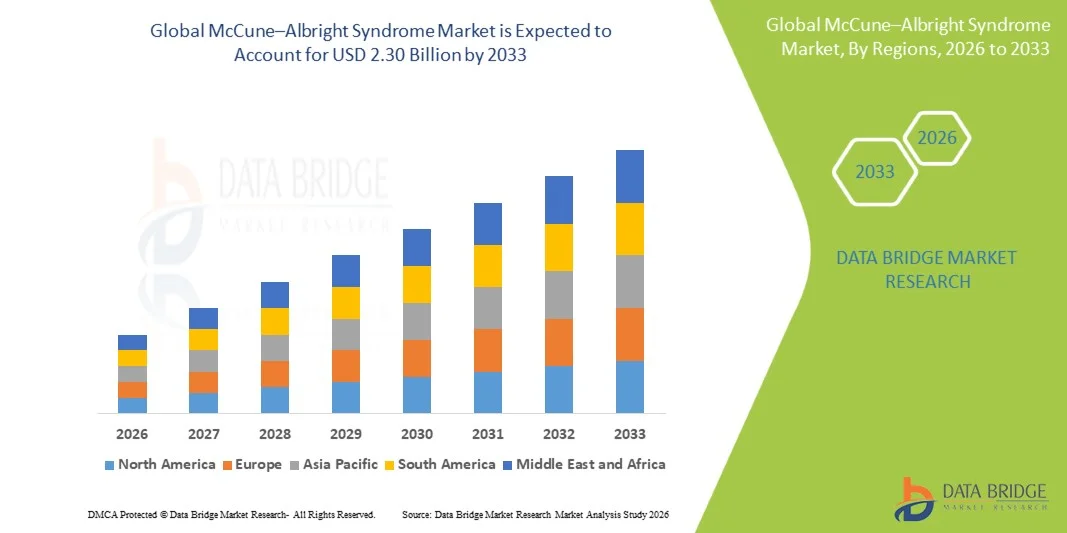
- As per Data Bridge Market Research Analysis the global McCune–Albright Syndrome market size was valued at USD 1.62 billion in 2025and is expected to reach USD 2.30 billion by 2033, at a CAGR of 4.50% during the forecast period
- The market growth is largely fueled by increasing awareness of rare endocrine and genetic disorders, along with advancements in molecular diagnostics and imaging technologies, leading to earlier identification and improved clinical management of McCune–Albright Syndrome across specialized healthcare settings. Rising investments in rare disease research and endocrinology care programs are further supporting market expansion
- Furthermore, growing demand for targeted treatment approaches, hormone regulation therapies, bone disorder management solutions, and multidisciplinary care services is establishing McCune–Albright Syndrome solutions as essential components of modern rare disease treatment. These converging factors are accelerating the uptake of McCune–Albright Syndrome diagnostics and therapeutic solutions, thereby significantly boosting the industry's growth
Market Size & Forecast
- Global Market Value (2025): USD 1.62 billion
- Expected Market Value (2033): USD 2.30 billion
- Forecast CAGR (2026–2033): 4.50%
McCune–Albright Syndrome Market Analysis
- McCune–Albright Syndrome, a rare genetic disorder characterized by endocrine abnormalities, fibrous dysplasia of bone, and café-au-lait skin pigmentation, is increasingly gaining attention within specialized healthcare systems due to the growing need for early diagnosis, hormonal management, and multidisciplinary treatment approaches
- The escalating demand for McCune–Albright Syndrome diagnostic and treatment solutions is primarily fueled by advancements in genetic testing, increasing awareness of rare endocrine disorders, improved access to pediatric endocrinology services, and rising adoption of targeted therapies for hormone excess and skeletal complications
- North America dominated the McCune–Albright Syndrome market with the largest revenue share of 37.90% in 2025, supported by advanced rare disease healthcare infrastructure, strong presence of specialty treatment centers, favorable reimbursement systems, and increasing research initiatives, with the U.S. witnessing substantial growth in early diagnosis, endocrine treatment programs, and long-term disease management services
- Asia-Pacific is expected to be the fastest growing region in the McCune–Albright Syndrome market during the forecast period due to expanding healthcare infrastructure, improving access to genetic screening, rising awareness of rare disorders, and increasing healthcare expenditure across countries such as China, India, Japan, and South Korea
- The C.T. Scans segment held the largest market revenue share of 42.7% in 2025, driven by extensive use in identifying fibrous dysplasia, skeletal abnormalities, craniofacial lesions, and organ-related complications associated with the syndrome
Report Scope and McCune–Albright Syndrome Market Segmentation
|
Attributes |
McCune–Albright Syndrome Key Market Insights |
|
Segments Covered |
|
|
Countries Covered |
North America
Europe
Asia-Pacific
Middle East and Africa
South America
|
|
Key Market Players |
|
|
Market Opportunities |
|
|
Value Added Data Infosets |
|
What is the Key Trend in the McCune–Albright Syndrome Market?
“Advancements in Precision Diagnosis and Multidisciplinary Disease Management”
- A significant and accelerating trend in the global McCune–Albright Syndrome market is the growing focus on precision diagnostics, targeted endocrine management, and multidisciplinary treatment approaches aimed at improving outcomes for patients affected by this rare genetic disorder. These advancements are supporting earlier diagnosis, better symptom control, and enhanced quality of life
- For instance, specialized endocrine centers and pediatric hospitals are increasingly using advanced imaging, hormonal profiling, and molecular testing to identify McCune–Albright Syndrome earlier in patients presenting with fibrous dysplasia, precocious puberty, or café-au-lait skin pigmentation
- Expanding use of personalized hormone therapies and bone health management strategies is helping clinicians better control endocrine hyperfunction and skeletal complications associated with the syndrome
- Multidisciplinary care models involving endocrinologists, orthopedic surgeons, dermatologists, and radiologists are becoming more common to manage the condition’s multi-organ manifestations more effectively
- Increased research into GNAS gene mutations and related signaling pathways is encouraging the future development of targeted therapies for disease-specific treatment
- This trend toward earlier detection and integrated specialist care is reshaping expectations for the management of rare endocrine and skeletal disorders worldwide
McCune–Albright Syndrome Market Dynamics
Driver
“Rising Awareness of Rare Endocrine Disorders and Improved Access to Specialized Care”
- Increasing awareness of rare endocrine disorders and improved access to specialized healthcare services are major drivers supporting the growth of the McCune–Albright Syndrome market. Earlier recognition enables faster intervention and better long-term disease management
- For instance, pediatric endocrinology clinics and tertiary care hospitals are expanding evaluation programs for children with early puberty symptoms, unexplained fractures, or hormonal imbalances, helping detect McCune–Albright Syndrome cases sooner
- Growing availability of diagnostic imaging, laboratory hormone testing, and genetic consultation services is improving diagnostic confidence across developed and emerging healthcare markets
- Rising investments in rare disease research and orphan drug development are also supporting innovation in treatment approaches for endocrine and skeletal complications
- In addition, patient advocacy organizations and awareness campaigns are helping families access specialist networks and treatment resources more efficiently
Restraint/Challenge
“Limited Patient Population, Complex Disease Presentation, and High Long-Term Treatment Costs”
- The relatively low prevalence of McCune–Albright Syndrome limits the commercial incentive for extensive therapy development, which can slow innovation and restrict treatment availability
- For instance, many patients require repeated consultations with multiple specialists, imaging scans, surgeries, and hormone therapies over several years, creating a substantial financial burden for families and healthcare systems
- The syndrome’s variable and complex presentation across endocrine, skeletal, and dermatological systems can delay diagnosis or lead to misdiagnosis in non-specialized settings
- Limited awareness among general healthcare providers and unequal access to expert centers further restrict timely management, especially in low-resource regions
- Overcoming these challenges through broader clinician education, expanded reimbursement support, and collaborative rare disease research initiatives will be essential for long-term market growth
McCune–Albright Syndrome Market Scope
The market is segmented on the basis of drug type, diagnosis, and distribution channel.
- By Drug Type
On the basis of drug type, the McCune–Albright Syndrome market is segmented into Glucocorticoid Receptor Inhibitors, Somatostatin, Ketoconazole HRA, and Others. The Somatostatin segment dominated the largest market revenue share of 36.8% in 2025, driven by its widespread use in managing endocrine abnormalities such as growth hormone excess and pituitary hyperfunction commonly associated with McCune–Albright Syndrome. Somatostatin analogs are increasingly preferred due to their proven efficacy in hormone regulation and long-term symptom control. Physicians frequently prescribe these therapies for patients presenting with acromegaly-related manifestations and abnormal hormone secretion. Rising diagnosis of endocrine complications is significantly boosting demand. Availability of long-acting injectable formulations further supports patient compliance. Increasing awareness among endocrinologists and rare disease specialists strengthens segment adoption. Expanding specialty treatment centers globally is also contributing to growth. Favorable reimbursement in developed markets further reinforces commercial leadership. Overall, Somatostatin remains the dominant drug category in 2025.
The Ketoconazole HRA segment is expected to witness the fastest growth rate of 10.3% CAGR from 2026 to 2033, driven by increasing use in controlling hypercortisolism and hormone-related complications linked to McCune–Albright Syndrome. Ketoconazole HRA is gaining traction as a targeted steroidogenesis inhibitor in complex endocrine cases. Rising awareness regarding cortisol-related metabolic complications is supporting demand. Physicians are increasingly adopting multi-therapy approaches that include Ketoconazole for better hormonal balance. Improved regulatory approvals and orphan drug focus are also accelerating market expansion. Growing clinical studies exploring broader endocrine applications contribute to confidence in use. Expansion of specialty endocrinology centers is another key factor. Better monitoring protocols are improving treatment safety. Increased rare disease funding supports wider accessibility. These factors collectively make Ketoconazole HRA the fastest-growing drug type segment.
- By Diagnosis
On the basis of diagnosis, the McCune–Albright Syndrome market is segmented into C.T. Scans, Baseline Bone Scans, and Oral Glucose Tolerance Test. The C.T. Scans segment held the largest market revenue share of 42.7% in 2025, driven by extensive use in identifying fibrous dysplasia, skeletal abnormalities, craniofacial lesions, and organ-related complications associated with the syndrome. CT imaging provides high-resolution anatomical detail essential for treatment planning and disease monitoring. Hospitals and specialty centers rely heavily on CT scans for evaluating progressive bone lesions and fractures. Increasing access to advanced imaging infrastructure globally is supporting adoption. Rising demand for early and accurate diagnosis of rare bone disorders is further boosting growth. Physicians also use CT scans to assess complications affecting the skull and facial structures. Technological advancements in low-radiation imaging systems improve patient safety. Strong referral rates from endocrinologists and orthopedic specialists contribute to demand. Overall, C.T. Scans remain the leading diagnostic segment.
The Baseline Bone Scans segment is anticipated to witness the fastest growth rate of 9.8% CAGR from 2026 to 2033, driven by increasing emphasis on early detection and long-term monitoring of fibrous dysplasia progression. Bone scans help identify metabolic bone activity and lesion spread more effectively than conventional imaging in many cases. Growing awareness among orthopedic and endocrine specialists is boosting procedure demand. Rising need for periodic skeletal assessment in pediatric patients is supporting adoption. Advances in nuclear imaging technologies are improving scan precision and workflow efficiency. Expansion of specialty diagnostic centers is another major growth factor. Better reimbursement support for rare disease diagnostics is aiding accessibility. Physicians increasingly recommend bone scans for treatment response monitoring. Increased patient follow-up programs are further strengthening usage. These factors position Baseline Bone Scans as the fastest-growing diagnosis segment.
- By Distribution Channel
On the basis of distribution channel, the McCune–Albright Syndrome market is segmented into Hospital Pharmacy, Retail Pharmacy, Online Pharmacies, and Others. The Hospital Pharmacy segment dominated the largest market revenue share of 48.5% in 2025, driven by the concentration of treatment within tertiary hospitals, endocrine specialty centers, and rare disease clinics. Hospital pharmacies are the primary dispensing channel for injectable hormone therapies, specialty endocrine drugs, and monitored medications. Physicians prefer hospital-based dispensing for complex treatment regimens requiring dose adjustments and close supervision. Rising hospitalization for diagnostic workups and surgical interventions further supports demand. Institutional procurement systems ensure reliable availability of specialty medicines. Increasing expansion of multidisciplinary care centers is strengthening segment leadership. Hospitals also provide patient counseling and therapy monitoring services. Reimbursement systems often favor hospital-administered treatments in developed regions. Overall, hospital pharmacies remain the dominant distribution channel.
The Online Pharmacies segment is expected to witness the fastest growth rate of 11.4% CAGR from 2026 to 2033, driven by rising digital healthcare adoption and demand for convenient access to long-term endocrine medications. Patients managing chronic symptoms increasingly prefer home delivery of prescription therapies and refill medications. Growth in tele-endocrinology consultations is significantly supporting e-prescription volumes. Competitive pricing and broader product availability are attracting patients and caregivers. Expansion of internet penetration and digital payment systems in emerging economies is improving accessibility. Secure cold-chain logistics for specialty medicines are further strengthening confidence in online purchases. Online pharmacies are particularly beneficial for patients in remote areas lacking specialty retail access. Subscription refill models are increasing recurring demand. Rising trust in regulated e-pharmacy platforms is another major driver. These factors collectively make Online Pharmacies the fastest-growing distribution channel segment.
McCune–Albright Syndrome Market Regional Analysis
- North America dominated the McCune–Albright Syndrome market with the largest revenue share of 37.90% in 2025, supported by advanced rare disease healthcare infrastructure, strong presence of specialty treatment centers, favorable reimbursement systems, and increasing research initiatives. The region benefits from established referral networks, access to multidisciplinary specialists, and growing adoption of precision diagnostic pathways for managing complex endocrine and skeletal disorders
- Healthcare providers in the region highly prioritize integrated treatment approaches that combine endocrinology care, orthopedic management, pain control, imaging surveillance, and long-term disease monitoring. Rising awareness regarding rare metabolic and hormonal disorders, along with improved physician recognition of early symptoms, is further supporting market growth
- This widespread adoption is further strengthened by robust patient support programs, continued innovation in targeted therapies, and expanding investments in rare disease clinical research, establishing North America as a leading region for McCune–Albright Syndrome diagnosis and treatment
U.S. McCune–Albright Syndrome Market Insight
The U.S. McCune–Albright Syndrome market captured the largest revenue share within North America in 2025, driven by substantial growth in early diagnosis, endocrine treatment programs, and long-term disease management services. The country is witnessing increased use of advanced imaging, hormonal testing, and genetic evaluation to support timely diagnosis and individualized treatment planning. Specialty hospitals, academic medical centers, and endocrine clinics are increasingly adopting multidisciplinary care models involving endocrinologists, orthopedic surgeons, pain specialists, and rehabilitation experts. Continued investment in precision medicine and rare disease support services is further propelling market growth in the U.S.
Europe McCune–Albright Syndrome Market Insight
The Europe McCune–Albright Syndrome market is projected to expand at a substantial CAGR throughout the forecast period, primarily driven by strong public healthcare systems, growing focus on rare disease registries, and increasing access to specialist endocrine care. European countries are actively supporting early detection initiatives and coordinated treatment programs for rare multisystem disorders. Rising demand for multidisciplinary centers offering bone disease management, hormonal therapy, and long-term follow-up care is contributing to market expansion across the region.
U.K. McCune–Albright Syndrome Market Insight
The U.K. McCune–Albright Syndrome market is anticipated to grow at a noteworthy CAGR during the forecast period, supported by increasing awareness of rare endocrine disorders and expanding genomic medicine programs through the National Health Service (NHS). The growing availability of specialty clinics, advanced diagnostics, and individualized treatment pathways is improving diagnosis and disease management. Continued emphasis on patient-centered care and early intervention services is expected to stimulate market growth in the U.K.
Germany McCune–Albright Syndrome Market Insight
The Germany McCune–Albright Syndrome market is expected to expand at a considerable CAGR during the forecast period, fueled by advanced healthcare infrastructure, strong adoption of precision diagnostics, and high standards of endocrine and orthopedic care. Germany’s well-developed medical ecosystem and focus on innovation are promoting access to tailored treatment strategies for rare disorders. Integration of diagnostics with hormonal therapy, skeletal monitoring, and rehabilitative care is becoming increasingly common, supporting overall market growth.
Asia-Pacific McCune–Albright Syndrome Market Insight
The Asia-Pacific McCune–Albright Syndrome market is poised to grow at the fastest CAGR during the forecast period, driven by expanding healthcare infrastructure, improving access to genetic screening, rising awareness of rare disorders, and increasing healthcare expenditure across countries such as China, India, Japan, and South Korea. The region is witnessing growing investments in specialty hospitals, endocrine treatment programs, and advanced diagnostic laboratories. Rising awareness regarding rare bone and hormonal disorders, combined with improving access to specialist consultations, is accelerating treatment adoption across emerging healthcare markets.
Japan McCune–Albright Syndrome Market Insight
The Japan McCune–Albright Syndrome market is gaining momentum due to the country’s advanced healthcare system, strong precision medicine capabilities, and increasing focus on rare endocrine disorder management.
Japanese healthcare providers emphasize early diagnosis, specialist coordination, and long-term supportive treatment strategies. The growing use of imaging technologies, hormonal monitoring, and rehabilitation services is supporting market growth across pediatric and adult patient populations.
China McCune–Albright Syndrome Market Insight
The China McCune–Albright Syndrome market accounted for the largest market revenue share in Asia Pacific in 2025, attributed to expanding healthcare infrastructure, rising adoption of genetic and hormonal testing, and increasing government support for rare disease awareness programs.
China is witnessing rapid growth in tertiary hospitals, specialty endocrine centers, and advanced diagnostic facilities. Improved affordability of testing services, alongside broader access to supportive therapies and specialist care, is expected to significantly propel the market in the country.
Which are the Top Companies in McCune–Albright Syndrome Market?
The McCune–Albright Syndrome industry is primarily led by well-established companies, including:
- Pfizer Inc. (U.S.)
- Novartis AG (Switzerland)
- F. Hoffmann-La Roche Ltd. (Switzerland)
- Sanofi S.A. (France)
- Takeda Pharmaceutical Company Limited (Japan)
- Merck & Co., Inc. (U.S.)
- AstraZeneca plc (U.K.)
- Johnson & Johnson (U.S.)
- Bristol Myers Squibb (U.S.)
- Amgen Inc. (U.S.)
- Ipsen S.A. (France)
- Recordati Rare Diseases Inc. (Italy)
- BioMarin Pharmaceutical Inc. (U.S.)
- Ultragenyx Pharmaceutical Inc. (U.S.)
- Teva Pharmaceutical Industries Ltd. (Israel)
- Sun Pharmaceutical Industries Ltd. (India)
- Dr. Reddy’s Laboratories Ltd. (India)
- Viatris Inc. (U.S.)
- Novo Nordisk A/S (Denmark)
- Eli Lilly and Company (U.S.)
Latest Developments in Global McCune–Albright Syndrome Market
- In February 2021, clinicians and researchers continued expanding the use of multidisciplinary management protocols for McCune–Albright Syndrome (MAS), combining endocrinology, orthopedics, pain care, and imaging surveillance to improve outcomes for patients with complex skeletal and hormonal manifestations. This reflected growing adoption of coordinated care models for rare endocrine disorders
- In November 2021, rare disease centers increased utilization of advanced genetic testing and mosaic mutation analysis for GNAS variants associated with McCune–Albright Syndrome, helping physicians confirm diagnosis earlier in patients with fibrous dysplasia, precocious puberty, and endocrine abnormalities
- In January 2023, researchers published a major review titled Pharmacological Interventions Targeting Pain in Fibrous Dysplasia/McCune–Albright Syndrome, highlighting progress in the use of bisphosphonates, denosumab, and emerging pain-management approaches for chronic skeletal pain in MAS patients. This development supported broader therapeutic interest beyond symptom monitoring alone
- In September 2023, the U.S. National Institutes of Health hosted the symposium “Fibrous Dysplasia/McCune-Albright Syndrome: Celebrating 25 Years of NIDCR Research,” showcasing advances in disease understanding, clinical management, and future treatment pathways for MAS and related fibrous dysplasia conditions
- In July 2024, GeneReviews released a comprehensive update to its Fibrous Dysplasia / McCune-Albright Syndrome clinical reference, providing physicians and genetic specialists with updated guidance on diagnosis, surveillance, endocrine complications, and treatment management
- In January 2025, the Phase IV clinical study DeFiD (Denosumab for the Treatment of Fibrous Dysplasia/McCune-Albright Syndrome in Adults) remained active and recruiting, evaluating denosumab as a potential therapy to reduce pain, improve imaging outcomes, and manage progressive skeletal disease in adult patients. This represented one of the most significant active treatment developments in the MAS market
- In August 2025, researchers published a state-of-the-art review in Orphanet Journal of Rare Diseases summarizing the latest advances in pathogenesis, translational research, and future therapies for Fibrous Dysplasia/McCune-Albright Syndrome. The paper highlighted growing momentum toward targeted molecular treatments and improved disease-modifying strategies

- Interactive Data Analysis Dashboard
- Company Analysis Dashboard for high growth potential opportunities
- Research Analyst Access for customization & queries
- Competitor Analysis with Interactive dashboard
- Latest News, Updates & Trend analysis
- Harness the Power of Benchmark Analysis for Comprehensive Competitor Tracking
Data collection and base year analysis are done using data collection modules with large sample sizes. The stage includes obtaining market information or related data through various sources and strategies. It includes examining and planning all the data acquired from the past in advance. It likewise envelops the examination of information inconsistencies seen across different information sources. The market data is analysed and estimated using market statistical and coherent models. Also, market share analysis and key trend analysis are the major success factors in the market report. To know more, please request an analyst call or drop down your inquiry.
The key research methodology used by DBMR research team is data triangulation which involves data mining, analysis of the impact of data variables on the market and primary (industry expert) validation. Data models include Vendor Positioning Grid, Market Time Line Analysis, Market Overview and Guide, Company Positioning Grid, Patent Analysis, Pricing Analysis, Company Market Share Analysis, Standards of Measurement, Global versus Regional and Vendor Share Analysis. To know more about the research methodology, drop in an inquiry to speak to our industry experts.
Data Bridge Market Research is a leader in advanced formative research. We take pride in servicing our existing and new customers with data and analysis that match and suits their goal. The report can be customized to include price trend analysis of target brands understanding the market for additional countries (ask for the list of countries), clinical trial results data, literature review, refurbished market and product base analysis. Market analysis of target competitors can be analyzed from technology-based analysis to market portfolio strategies. We can add as many competitors that you require data about in the format and data style you are looking for. Our team of analysts can also provide you data in crude raw excel files pivot tables (Fact book) or can assist you in creating presentations from the data sets available in the report.












