What is the Metaverse in Entertainment Market Size and Growth Rate?
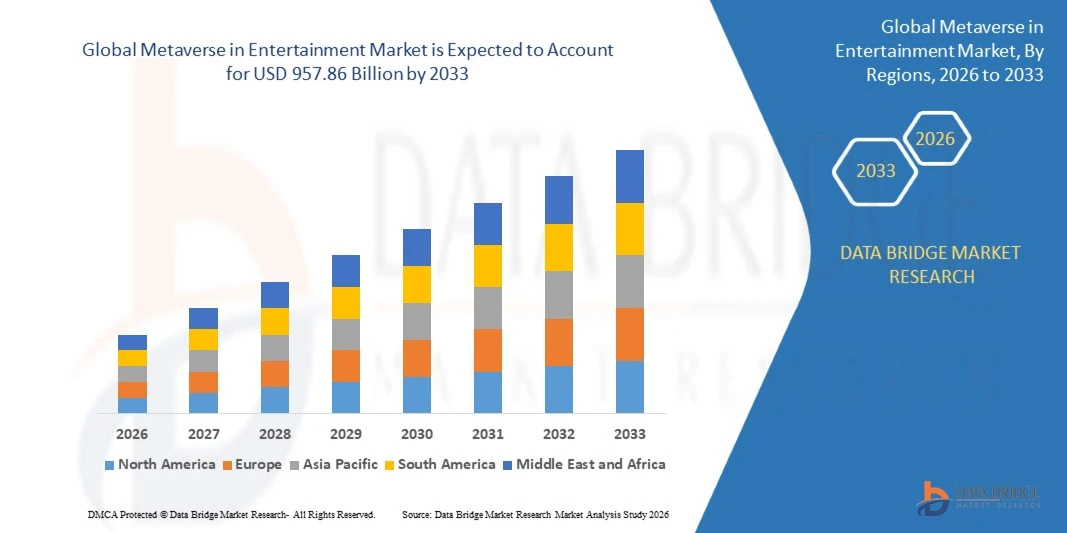
- As per Data Bridge Market Research analysis, the metaverse in entertainment market was valued at USD 29.20 billion in 2025 and is projected to reach USD 957.86 billion by 2033, growing at a CAGR of 54.70% from 2026 to 2033.
- The market is experiencing rapid growth driven by rising demand for immersive gaming and virtual entertainment experiences, advancements in virtual and augmented reality technologies, and expanding applications across virtual concerts, digital events, esports, and interactive social platforms.
- The growing popularity of immersive digital content, increasing investment in metaverse platforms, and rising consumer engagement with virtual experiences are encouraging entertainment companies to adopt metaverse technologies. Gaming studios, music labels, film production companies, and event organizers are increasingly leveraging virtual worlds, digital avatars, and interactive environments to create personalized entertainment experiences, expand audience reach, and develop new revenue streams through virtual goods, subscriptions, and digital event ticketing.
Market Size & Forecast
- Global Market Value (2025): USD 29.20 Billion
- Expected Market Value (2033): USD 957.86 Billion
- Forecast CAGR (2026–2033): 54.70%
- Leading Region in 2025: North America
- Fastest Growing Region: Asia Pacific
What are the Major Takeaways of the Metaverse in Entertainment Market?
- North America dominated the metaverse in entertainment market with an estimated revenue share of 38.5% in 2025, supported by strong investments in immersive technologies, established gaming companies, and widespread adoption of virtual entertainment platforms.
- Asia-Pacific is expected to be the fastest-growing region at a CAGR of 57.2% from 2026 to 2033, fueled by rising internet penetration, increasing smartphone adoption, expanding gaming communities, and growing investments in virtual reality and digital entertainment across China, India, Japan, and South Korea.
- The desktop segment led the market with a 41.3% share in 2025, driven by high-performance computing capabilities and established gaming ecosystems
- Mobile are the fastest-growing platform type, projected to register a CAGR of 36%, reflecting the surge in smartphone availability and improving mobile connectivity.
- The virtual reality (VR) segment dominated the technology category with a 38.2% revenue share in 2025, led by its established role in immersive gaming and virtual entertainment
- Gaming accounted for 39.7% of the market share in 2025, preferred by widespread adoption of immersive games, multiplayer virtual worlds, and interactive digital experiences.
- The sports and esports segment is the fastest-growing application category, with a CAGR of 34%, driven by rising demand for immersive fan engagement and interactive sports experiences.
Report Scope and Metaverse in Entertainment Market Segmentation
|
Attributes |
Metaverse in Entertainment Key Market Insights |
|
Segments Covered |
|
|
Countries Covered |
North America
Europe
Asia-Pacific
Middle East and Africa
South America
|
|
Key Market Players |
|
|
Market Opportunities |
|
|
Value Added Data Infosets |
In addition to the market insights such as market value, growth rate, market segments, geographical coverage, market players, and market scenario, the market report curated by the Data Bridge Market Research team includes in-depth expert analysis, import/export analysis, pricing analysis, production consumption analysis, and pestle analysis. |
What is the Key Trend in the Metaverse in Entertainment Market?
- Entertainment companies are increasingly adopting immersive metaverse platforms to deliver interactive gaming, virtual concerts, and social entertainment experiences while expanding audience engagement beyond traditional digital channels.
- For instance, in April 2025, Sony Music and RCA Records announced The Hallow Heist, an immersive virtual concert experience featuring Sleepy Hallow in Fortnite, combining music performances, interactive gameplay, and virtual storytelling to engage gaming audiences
- Real-time rendering, customizable avatars, and spatial audio enable entertainment providers to create more personalized and interactive virtual experiences.
- Music artists and entertainment brands are leveraging virtual events and digital worlds to reach international audiences without the geographical limitations of physical venues.
- For instance, in July 2025, Sony Music announced an immersive PARTYNEXTDOOR music experience in Fortnite, allowing players to explore virtual locations inspired by Toronto and Miami, attend a virtual performance, and experience an interactive after-party.
- As audiences increasingly seek personalized and participatory digital experiences, metaverse-based entertainment is expected to expand, strengthening the role of immersive platforms in gaming, live events, and social interaction.
What are the Key Drivers of the Metaverse in Entertainment Market?
- The growing demand for immersive digital entertainment and interactive gaming has significantly increased investments in metaverse platforms that enable audiences to play, socialize, watch content, and participate in virtual experiences.
- For instance, in February 2024, The Walt Disney Company and Epic Games announced a collaboration to develop an interconnected games and entertainment universe linked to Fortnite. Disney committed USD 1.5 billion to acquire an equity stake in Epic Games, supporting the development of interactive experiences featuring Disney, Pixar, Marvel, Star Wars, and Avatar franchise
- Entertainment companies, gaming developers, and media brands are integrating virtual environments into their business models to expand audience reach, strengthen fan engagement, and diversify digital revenue streams.
- For instance, in February 2025, Roblox reported 85.3 million average daily active users in the fourth quarter of 2024, representing a 19% year-over-year increase, alongside 18.7 billion hours engaged. These figures demonstrate strong consumer engagement with shared digital experiences and support demand for interactive entertainment platforms.
- With entertainment providers increasingly prioritizing immersive content, interactive communities, and digital monetization, metaverse platforms are becoming an important channel for expanding entertainment offerings and audience participation.
What Factors are Challenging the Growth of the Metaverse in Entertainment Market?
- Metaverse entertainment platforms require substantial investment in virtual reality hardware, advanced graphics, cloud infrastructure, cybersecurity, and continuous content development
- For instance, in February 2025, Meta Platforms reported that its Reality Labs segment recorded an operating loss of USD 17.73 billion in 2024, highlighting the substantial costs associated with developing virtual reality hardware, software, and immersive digital experiences
- These high development and operating costs can limit adoption among smaller entertainment companies, independent developers, and users who lack access to compatible devices or high-speed internet.
- Interoperability limitations, privacy concerns, cybersecurity risks, and inconsistent user experiences across platforms further complicate the development of connected entertainment ecosystems.
- For instance, in September 2024, the U.S. Federal Trade Commission published findings that major social media and video-streaming companies engaged in extensive user-data collection and had inadequate privacy safeguards for children and teenagers. These concerns highlight privacy and data-protection challenges for entertainment platforms that rely on personalized digital interactions.
- The substantial capital requirements, uncertain monetization potential, and fragmented technology standards continue to challenge widespread adoption, particularly among smaller developers and cost-sensitive consumers, despite growing interest in immersive digital entertainment.
How is the Metaverse in Entertainment Market Segmented?
The metaverse in entertainment market is segmented on the basis of platform, technology, application, and end user.
- By Platform
On the basis of platform, the metaverse in entertainment market is segmented into desktop, mobile, virtual reality headsets, and augmented and mixed reality headsets. The desktop segment dominated the market with an estimated revenue share of 41.3% in 2025, supported by high-performance computing capabilities and established gaming ecosystems. Desktop platforms enable users to access detailed virtual environments, multiplayer games, and interactive entertainment experiences. Powerful graphics processors support real-time rendering and complex digital worlds. Gaming platforms benefit from established desktop audiences and extensive content libraries. Desktop systems also support creator tools used to build and manage virtual experiences. These advantages continue to support desktop adoption across metaverse entertainment applications.
The mobile segment is projected to register the fastest growth at an estimated CAGR of 36% from 2026 to 2033, driven by widespread smartphone availability and improving mobile connectivity. Smartphones allow users to access virtual entertainment without purchasing dedicated headsets. Improvements in mobile processors and graphics are supporting increasingly interactive experiences. Mobile applications enable convenient access to gaming, social worlds, and virtual events. In-app purchases and digital merchandise provide monetization opportunities for platform operators. Expanding mobile internet access is expected to accelerate adoption across emerging and established markets.
- By Technology
On the basis of technology, the metaverse in entertainment market is segmented into virtual reality (VR), augmented reality (AR), mixed reality (MR), blockchain, artificial intelligence (AI), and digital twins. The virtual reality (VR) segment dominated the market with an estimated revenue share of 38.2% in 2025, supported by its established role in immersive gaming and virtual entertainment. VR enables users to experience simulated environments through head-mounted displays and motion tracking. Gaming studios use the technology to create interactive worlds and realistic digital experiences. Spatial audio and improved graphics contribute to a greater sense of presence. Virtual reality is also being used in digital events and immersive storytelling. These capabilities make VR an important technology within metaverse entertainment.
The artificial intelligence (AI) segment is expected to witness rapid growth, with an estimated CAGR of 35% from 2026 to 2033, driven by growing demand for personalized and interactive digital experiences. AI supports intelligent virtual characters, adaptive storytelling, and automated content generation. Entertainment platforms can use AI to personalize recommendations and avatar interactions. Generative tools can accelerate the creation of virtual environments and digital assets. AI-powered characters can respond dynamically to user actions, making experiences more interactive. Increasing integration of AI into entertainment development is expected to support segment expansion.
- By Application
On the basis of application, the metaverse in entertainment market is segmented into gaming, virtual concerts and live events, movies and virtual cinemas, sports and esports, social entertainment, interactive storytelling and virtual experiences, and theme parks and virtual attractions. The gaming segment dominated the market with an estimated revenue share of 39.7% in 2025, driven by widespread adoption of immersive games, multiplayer virtual worlds, and interactive digital experiences. Gaming platforms enable users to socialize, customize avatars, and participate in persistent virtual environments. The integration of digital assets and in-game purchases creates additional monetization opportunities. Developers are incorporating VR, AR, and AI technologies to enhance gameplay. User-generated content is expanding the variety of experiences available to players.
The sports and esports segment is projected to register the fastest growth at an estimated CAGR of 34% from 2026 to 2033, driven by rising demand for immersive fan engagement and interactive sports experiences. Metaverse platforms enable virtual stadiums, digital fan communities, and interactive match-viewing environments. Esports organizations can host virtual competitions and connect players with global audiences. Sports brands are exploring virtual merchandise and digital collectibles to diversify revenue streams. Immersive viewing technologies can provide more engaging alternatives to conventional broadcasts. Increasing investment in digital sports experiences is expected to accelerate segment growth.
- By End User
On the basis of end user, the metaverse in entertainment market is segmented into film production studios, music labels, over-the-top (OTT) platforms, television broadcasters, gaming studios, content creators and digital entertainment companies, and event organizers and sports organizations. The gaming studios segment is expected to account for an estimated revenue share of 30% in 2025, supported by established virtual gaming ecosystems and strong consumer engagement. Gaming studios possess the technical expertise to develop persistent digital worlds, customizable avatars, and multiplayer experiences. They integrate social interaction and virtual commerce into gaming environments. Revenue from digital items, in-game purchases, and premium content supports continued platform development. Collaborations with entertainment franchises and consumer brands expand audience reach.
The content creators and digital entertainment companies segment is projected to witness strong growth at an estimated CAGR of 28% from 2026 to 2033, driven by rising demand for user-generated content and personalized virtual experiences. Creators can develop interactive stories, virtual performances, digital merchandise, and avatar-based entertainment. Metaverse platforms provide monetization opportunities through subscriptions, digital asset sales, and audience-supported experiences. AI-powered creative tools are simplifying the production of virtual environments and interactive content. Partnerships with brands, artists, and gaming platforms help creators reach broader audiences. Growing demand for participatory digital entertainment is expected to support segment expansion.
Which Region Holds the Largest Share of the Metaverse in Entertainment Market?
- North America dominated the metaverse in entertainment market with an estimated revenue share of 38.5% in 2025, supported by strong investments in immersive technologies, established gaming companies, and widespread adoption of virtual entertainment platforms.
- The region also benefits from advanced digital infrastructure, high consumer spending on gaming and virtual content, and growing integration of VR-, AR-, and AI-enabled entertainment experiences. Increasing investments in virtual worlds, interactive gaming, and digital content monetization continue to strengthen North America's leadership position in the global market.
U.S. Metaverse in Entertainment Market Insight
The U.S. metaverse in entertainment market is witnessing strong growth due to rising investments in immersive gaming, virtual entertainment platforms, and interactive digital experiences. The country's established gaming industry, presence of major technology companies, and increasing adoption of VR-, AR-, and AI-powered entertainment systems are driving demand across gaming, virtual concerts, and digital social platforms. In addition, growing consumer interest in personalized virtual experiences and digital content monetization is accelerating metaverse adoption across entertainment companies and content creators.
Asia-Pacific Metaverse in Entertainment Market Insight
The Asia-Pacific metaverse in entertainment market is expected to witness rapid growth, driven by increasing smartphone penetration, expanding gaming communities, and rising investments in digital entertainment across countries such as China, India, Japan, and South Korea. Growing demand for immersive gaming, virtual events, and interactive social platforms is supporting regional market expansion. In addition, increasing internet accessibility, advancements in virtual reality technologies, and the growing presence of digital content creators are accelerating metaverse adoption across entertainment applications.
Japan Metaverse in Entertainment Market Insight
The Japan metaverse in entertainment market is witnessing consistent growth due to rising investments in immersive gaming, digital content creation, and interactive virtual experiences. Gaming companies, animation studios, and entertainment providers are increasingly exploring virtual environments for character-based experiences, digital events, and audience engagement. Moreover, increasing integration of VR, AR, and AI technologies, alongside the country's established gaming and anime industries, is contributing to the expansion of metaverse entertainment applications.
China Metaverse in Entertainment Market Insight
The China metaverse in entertainment market is growing rapidly, driven by a large digital consumer base, expanding online gaming industry, and increasing adoption of immersive entertainment technologies. Growing investments in virtual environments, digital avatars, and interactive content across gaming and social entertainment platforms are supporting market demand. In addition, advancements in artificial intelligence, mobile technologies, and virtual reality, combined with the expansion of digital content ecosystems, are positioning China as an important market for metaverse-based entertainment
U.K. Metaverse in Entertainment Market Insight
The U.K. metaverse in entertainment market is experiencing steady growth, supported by increasing adoption of immersive gaming, virtual events, and interactive digital content. The country's established creative industries, gaming developers, and digital media companies are exploring metaverse platforms to expand audience engagement and develop new monetization models. Furthermore, growing investments in VR, AR, and AI-enabled experiences are improving content development capabilities and supporting the U.K.'s position in the global digital entertainment industry.
Germany Metaverse in Entertainment Market Insight
The Germany metaverse in entertainment market is expanding steadily due to increasing investments in immersive technologies, interactive gaming, and digital entertainment infrastructure. Gaming studios, media companies, and event organizers are increasingly exploring virtual environments to deliver engaging experiences and reach broader audiences. Continuous advancements in VR, AR, AI, and real-time graphics, together with growing interest in virtual events and digital communities, are further supporting market development in Germany.
Which are the Top Companies in Metaverse in Entertainment Market?
The metaverse in entertainment industry is primarily led by well-established companies, including:
- Roblox Corporation (U.S.)
- Epic Games, Inc. (U.S.)
- Meta Platforms, Inc. (U.S.)
- NVIDIA Corporation (U.S.)
- Microsoft Corporation (U.S.)
- Unity Software Inc. (U.S.)
- The Walt Disney Company (U.S.)
- Sony Group Corporation (Japan)
- Sony Interactive Entertainment LLC (U.S.)
- Electronic Arts Inc. (U.S.)
- Take-Two Interactive Software, Inc. (U.S.)
- Bandai Namco Holdings Inc. (Japan)
- Nintendo Co., Ltd. (Japan)
- Tencent Holdings Limited (China)
- NetEase, Inc. (China)
- Animoca Brands Corporation Limited (Hong Kong)
- HTC Corporation (Taiwan)
- Samsung Electronics Co., Ltd. (South Korea)
- ByteDance Ltd. (China)
- Brave group Inc. (Japan)
What are Latest Developments in Metaverse in Entertainment Market?
- In April 2025, Sony Music and RCA Records announced the launch of The Hallow Heist, an immersive virtual concert experience featuring Sleepy Hallow in Fortnite. Developed by Sony Immersive Music Studios, the experience combined musical performances, interactive gameplay, and virtual storytelling, allowing fans to explore a customized digital environment while discovering the artist's music. The launch highlighted the growing integration of gaming platforms and music entertainment to create interactive experiences and expand artists' engagement with digital audiences.
- In May 2024, ITV Studios partnered with The Sandbox and Virtual Brand Group to introduce The Voice Coach Battle, an immersive gaming experience based on the internationally recognized television talent show. The virtual experience allowed users to take on the role of celebrity coaches, interact with the show's signature red chair, and guide virtual talent through a choice-driven gaming environment. The initiative demonstrated how established television franchises can extend their entertainment offerings into interactive metaverse platforms.
- In January 2024, Meta announced Doja Cat: The Scarlet Tour in VR, an immersive virtual reality concert produced in partnership with The Diamond Bros. The experience premiered in Meta Horizon Worlds' Music Valley and featured performances filmed during the artist's arena tour, bringing concert visuals, live-band performances, and stage effects into a virtual environment. The initiative demonstrated how VR entertainment platforms can extend access to live music experiences beyond physical venues.
- In August 2022, iHeartMedia launched iHeartLand in Fortnite, an always-on virtual entertainment space combining concerts, podcasts, gaming, and interactive fan experiences. The company announced plans to host 20 major events at State Farm Park over the following year, beginning with a virtual performance by Charlie Puth. Built using Fortnite Creative tools, the platform illustrated how media companies can combine gaming environments with music programming and branded entertainment experiences.
- In July 2021, Roblox and Sony Music Entertainment announced a strategic partnership to bring more Sony Music artists into the Roblox metaverse. The collaboration aimed to develop interactive music experiences, virtual launch parties, concerts, artist-focused digital environments, and virtual merchandise opportunities. Building on earlier events, including the Lil Nas X virtual concert, the partnership demonstrated the potential of shared digital worlds to connect artists with global audiences and generate new commercial opportunities for the music industry.

- Interactive Data Analysis Dashboard
- Company Analysis Dashboard for high growth potential opportunities
- Research Analyst Access for customization & queries
- Competitor Analysis with Interactive dashboard
- Latest News, Updates & Trend analysis
- Harness the Power of Benchmark Analysis for Comprehensive Competitor Tracking
Data collection and base year analysis are done using data collection modules with large sample sizes. The stage includes obtaining market information or related data through various sources and strategies. It includes examining and planning all the data acquired from the past in advance. It likewise envelops the examination of information inconsistencies seen across different information sources. The market data is analysed and estimated using market statistical and coherent models. Also, market share analysis and key trend analysis are the major success factors in the market report. To know more, please request an analyst call or drop down your inquiry.
The key research methodology used by DBMR research team is data triangulation which involves data mining, analysis of the impact of data variables on the market and primary (industry expert) validation. Data models include Vendor Positioning Grid, Market Time Line Analysis, Market Overview and Guide, Company Positioning Grid, Patent Analysis, Pricing Analysis, Company Market Share Analysis, Standards of Measurement, Global versus Regional and Vendor Share Analysis. To know more about the research methodology, drop in an inquiry to speak to our industry experts.
Data Bridge Market Research is a leader in advanced formative research. We take pride in servicing our existing and new customers with data and analysis that match and suits their goal. The report can be customized to include price trend analysis of target brands understanding the market for additional countries (ask for the list of countries), clinical trial results data, literature review, refurbished market and product base analysis. Market analysis of target competitors can be analyzed from technology-based analysis to market portfolio strategies. We can add as many competitors that you require data about in the format and data style you are looking for. Our team of analysts can also provide you data in crude raw excel files pivot tables (Fact book) or can assist you in creating presentations from the data sets available in the report.