


Minimally Invasive Cataract Surgery Devices Market Size
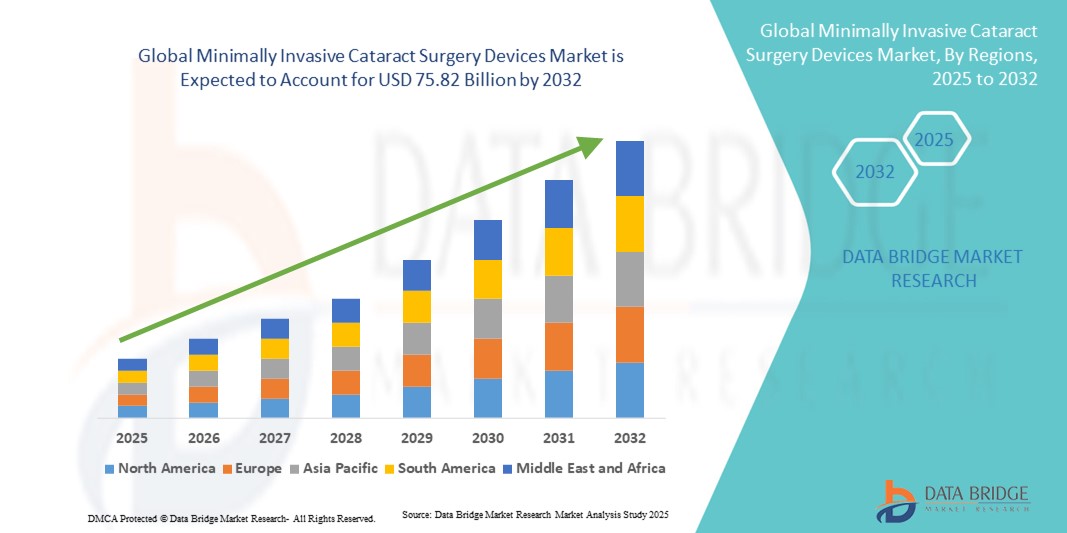
- The global minimally invasive cataract surgery devices market size was valued at USD 9.29 billion in 2024 and is expected to reach USD 75.82 billion by 2032, at a CAGR of 30.00% during the forecast period
- The market growth is largely fueled by the rising prevalence of cataracts, increasing geriatric population, and rapid adoption of advanced surgical technologies that enhance precision and recovery outcomes
- Furthermore, the growing demand for safer, faster, and minimally invasive procedures, along with continuous innovation in femtosecond lasers, phacoemulsification systems, and intraocular lenses, is establishing minimally invasive cataract surgery devices as the standard of care. These converging factors are accelerating the uptake of such solutions, thereby significantly boosting the industry’s growth
Minimally Invasive Cataract Surgery Devices Market Analysis
- Minimally invasive cataract surgery devices, including phacoemulsification systems, femtosecond lasers, and advanced intraocular lenses, are increasingly vital in ophthalmology due to their ability to enhance surgical precision, reduce recovery time, and improve patient outcomes compared to conventional techniques
- The escalating demand for these devices is primarily fueled by the rising global prevalence of cataracts, rapid growth in the aging population, and continuous advancements in surgical technologies that prioritize safety, efficiency, and minimally invasive approaches
- North America dominated the minimally invasive cataract surgery devices market with the largest revenue share of 40.1% in 2024, driven by high healthcare expenditure, early adoption of advanced ophthalmic technologies, and the strong presence of leading manufacturers, with the U.S. seeing substantial growth in surgical volumes supported by favorable reimbursement policies
- Asia-Pacific is expected to be the fastest growing region in the minimally invasive cataract surgery devices market during the forecast period, owing to increasing cataract incidence, expanding medical tourism, and rising investments in healthcare infrastructure
- The phacoemulsification system segment dominated the minimally invasive cataract surgery devices market with a market share of 44.6% in 2024, attributed to their established effectiveness, surgeon familiarity, and ability to deliver consistent, safe, and efficient cataract removal
Report Scope and Minimally Invasive Cataract Surgery Devices Market Segmentation
|
Attributes |
Minimally Invasive Cataract Surgery Devices Key Market Insights |
|
Segments Covered |
|
|
Countries Covered |
North America
Europe
Asia-Pacific
Middle East and Africa
South America
|
|
Key Market Players |
|
|
Market Opportunities |
|
|
Value Added Data Infosets |
In addition to the insights on market scenarios such as market value, growth rate, segmentation, geographical coverage, and major players, the market reports curated by the Data Bridge Market Research also include in-depth expert analysis, pricing analysis, brand share analysis, consumer survey, demography analysis, supply chain analysis, value chain analysis, raw material/consumables overview, vendor selection criteria, PESTLE Analysis, Porter Analysis, and regulatory framework. |
Minimally Invasive Cataract Surgery Devices Market Trends
Adoption of Advanced Technologies to Improve Surgical Precision
- A significant and accelerating trend in the global minimally invasive cataract surgery devices market is the integration of femtosecond laser-assisted cataract surgery (FLACS), micro-incision techniques, and AI-driven surgical planning tools that enhance precision and improve patient safety. This fusion of technologies is transforming cataract surgery into a faster, safer, and more predictable procedure
- For instance, femtosecond laser systems such as the LenSx Laser (Alcon) and Catalys Precision Laser System (Johnson & Johnson Vision) allow surgeons to automate critical steps such as corneal incisions and lens fragmentation, significantly reducing manual variability
- AI-powered platforms are being introduced to support real-time intraoperative guidance, predictive analytics for lens placement, and automated imaging interpretation, enabling surgeons to achieve better visual outcomes. For instance, ZEISS ARTEVO 800 incorporates digital visualization and AI-enabled insights to support precision surgeries
- The adoption of premium intraocular lenses (IOLs), including multifocal and toric IOLs, is also rising as patients increasingly demand spectacle independence and improved quality of life post-surgery
- This trend towards technologically advanced, patient-centric, and outcome-driven devices is fundamentally reshaping ophthalmic surgical practices. Consequently, companies such as Bausch + Lomb and Alcon are focusing on next-generation devices that integrate AI-assisted surgical platforms, micro-incision phacoemulsification, and premium IOL offerings
- The demand for devices that combine safety, precision, and shorter recovery times is growing rapidly across both developed and emerging markets, as cataract procedures shift toward minimally invasive solutions with higher patient satisfaction
Minimally Invasive Cataract Surgery Devices Market Dynamics
Driver
Rising Cataract Burden and Growing Geriatric Population
- The increasing global burden of cataracts, which remain the leading cause of blindness, coupled with the rapid rise in the elderly population, is a key driver fueling demand for minimally invasive cataract surgery devices
- For instance, according to the World Health Organization (WHO), over 94 million people worldwide live with cataracts, and with populations aging, this number is expected to rise significantly, creating a sustained need for advanced surgical interventions
- The shift toward minimally invasive surgeries is supported by benefits such as reduced surgical trauma, shorter recovery periods, fewer complications, and enhanced visual outcomes, making these devices highly attractive for both surgeons and patients
- Moreover, government-backed initiatives such as VISION 2025 programs in developing countries are driving cataract surgical rates, accelerating the adoption of advanced phacoemulsification systems and femtosecond laser platforms
- The combination of increasing patient awareness, improved access to ophthalmic care, and technological innovations positions the market for strong growth globally
Restraint/Challenge
High Device Costs and Limited Access in Developing Regions
- The high cost associated with advanced cataract surgery devices, such as femtosecond lasers and premium intraocular lenses, presents a major challenge to broader adoption, particularly in low- and middle-income countries where affordability remains a critical barrier
- For instance, the cost of femtosecond laser-assisted procedures is significantly higher than conventional phacoemulsification, often limiting its accessibility to patients in regions without robust insurance coverage or government subsidies
- In addition, the need for skilled surgeons, training, and infrastructure to support advanced devices restricts adoption in underdeveloped healthcare systems. The lack of specialized ophthalmic training programs further compounds this issue
- While companies such as Alcon and Johnson & Johnson Vision are working to introduce cost-effective phacoemulsification, systems tailored for emerging markets, the affordability gap and uneven distribution of advanced surgical technologies remain hurdles to global market penetration
- Overcoming these challenges through scalable pricing models, government partnerships, mobile surgical units, and surgeon training programs will be crucial for expanding access and sustaining long-term market growth
Minimally Invasive Cataract Surgery Devices Market Scope
The market is segmented on the basis of product type, surgery type, and end-user.
- By Product Type
On the basis of product type, the minimally invasive cataract surgery devices market is segmented into implant and stent, glaucoma drainage, glaucoma laser device, intraocular lens, ophthalmic viscoelastic device, and phacoemulsification system. Phacoemulsification System dominated the market in 2024, holding the largest revenue share of 44.6%. This dominance is attributed to its widespread adoption as the gold-standard procedure for cataract removal. Surgeons favor phacoemulsification systems due to their ability to provide smaller incisions, reduced healing times, and minimal post-operative complications. Moreover, the continuous innovation by market leaders, such as enhanced fluidics, improved tip designs, and automated control systems, has strengthened its clinical reliability. Hospitals and clinics also prefer these systems for their versatility across patient demographics, further reinforcing their leadership.
Femtosecond Laser Devices are expected to witness the fastest growth from 2025 to 2032. Their ability to automate critical surgical steps such as lens fragmentation and corneal incisions significantly enhances surgical precision. The demand is further driven by patient preference for premium procedures that improve safety and outcomes, along with growing adoption of laser-assisted cataract surgery in developed healthcare markets. In addition, the integration of imaging-guided systems and AI-enabled planning tools with femtosecond lasers is fueling their adoption globally, particularly in regions with increasing healthcare investments.
- By Surgery Type
On the basis of surgery type, the minimally invasive cataract surgery devices market is segmented into glaucoma in conjunction with cataract, femtosecond laser surgery, phacoemulsification, extracapsular cataract extraction surgery, and stand-alone glaucoma. Phacoemulsification Surgery dominated the market in 2024, as it remains the most widely performed cataract procedure worldwide. Its dominance is driven by strong surgeon familiarity, reduced complication risks, and consistent patient outcomes. In addition, the ability to perform cataract removal with minimal incisions and quick recovery aligns with the growing demand for minimally invasive approaches. The high adoption rate in both developed and developing markets reinforces its position, supported by government initiatives that subsidize cataract operations using phacoemulsification techniques.
Femtosecond Laser-Assisted Cataract Surgery (FLACS) is anticipated to be the fastest-growing segment during forecast period. Its adoption is fueled by the increasing preference for premium cataract surgery that improves precision and reduces variability compared to manual techniques. The integration of real-time imaging and AI-based guidance further enhances outcomes, making it attractive for both surgeons and patients. Growing awareness in emerging markets, coupled with rising disposable incomes and insurance coverage for advanced cataract surgeries, is accelerating its uptake during the forecast period.
- By End-User
On the basis of end-user, the minimally invasive cataract surgery devices market is segmented into hospitals, outpatient surgery centers, ophthalmology clinics, and others. Hospitals dominated the market in 2024, holding the largest revenue share. Hospitals remain the primary centers for cataract surgeries due to their comprehensive infrastructure, access to advanced surgical devices, and availability of skilled ophthalmologists. In addition, hospitals benefit from favorable reimbursement frameworks, making them the preferred setting for patients undergoing minimally invasive cataract procedures. The increasing trend of multi-specialty hospitals investing in high-end ophthalmic equipment further strengthens this segment’s leadership.
Outpatient Surgery Centers are expected to witness the fastest growth during the forecast period. Their growth is driven by the shift toward ambulatory care, where minimally invasive cataract surgeries are performed in cost-effective and patient-friendly environments. These centers offer shorter wait times, faster turnover, and lower costs compared to hospitals, making them attractive to both patients and insurers. In addition, the expansion of specialized eye care chains and increasing adoption of advanced phacoemulsification systems in ambulatory settings are fueling this segment’s rapid growth.
Minimally Invasive Cataract Surgery Devices Market Regional Analysis
- North America dominated the minimally invasive cataract surgery devices market with the largest revenue share of 40.1% in 2024, driven by high healthcare expenditure, early adoption of advanced ophthalmic technologies, and the strong presence of leading manufacturers
- Patients in the region highly value the benefits of minimally invasive cataract procedures, including faster recovery, reduced surgical risks, and improved visual outcomes, which align with rising expectations for premium eye care
- This widespread adoption is further supported by favorable reimbursement policies, high healthcare expenditure, and a large base of skilled ophthalmic surgeons, establishing minimally invasive cataract surgery devices as the standard of care across hospitals, outpatient centers, and specialized eye clinics
U.S. Minimally Invasive Cataract Surgery Devices Market Insight
The U.S. minimally invasive cataract surgery devices market captured the largest revenue share of 83% in 2024 within North America, fueled by a high cataract surgery volume and strong adoption of advanced phacoemulsification and femtosecond laser systems. Patients increasingly prioritize minimally invasive procedures for faster recovery, improved visual outcomes, and reduced surgical complications. The growing preference for premium intraocular lenses (IOLs) such as multifocal and toric types is further propelling demand. Moreover, favorable reimbursement frameworks, a large pool of skilled ophthalmologists, and strong investments in healthcare infrastructure are significantly contributing to market expansion in the U.S.
Europe Minimally Invasive Cataract Surgery Devices Market Insight
The Europe minimally invasive cataract surgery devices market is projected to expand at a substantial CAGR throughout the forecast period, primarily driven by an aging population and the high prevalence of cataracts. Stringent clinical standards, strong regulatory oversight, and early adoption of innovative surgical systems are accelerating market growth. European consumers and healthcare providers value the safety, accuracy, and long-term outcomes offered by phacoemulsification and femtosecond laser surgeries. Increasing government support for vision-restoring procedures, alongside rising demand in both public and private hospitals, is fostering widespread adoption across the region.
U.K. Minimally Invasive Cataract Surgery Devices Market Insight
The U.K. minimally invasive cataract surgery devices market is anticipated to grow at a noteworthy CAGR during the forecast period, driven by rising cataract prevalence and growing awareness of advanced treatment options. Concerns regarding vision loss and an emphasis on early surgical intervention are encouraging both public hospitals and private clinics to adopt minimally invasive techniques. In addition, favorable National Health Service (NHS) cataract programs and collaborations with medical device companies are promoting accessibility. The U.K.’s embrace of innovative healthcare technologies and expanding outpatient surgical centers are expected to further stimulate market growth.
Germany Minimally Invasive Cataract Surgery Devices Market Insight
The Germany minimally invasive cataract surgery devices market is expected to expand at a considerable CAGR during the forecast period, fueled by the country’s aging population and rising demand for advanced ophthalmic procedures. Germany’s strong healthcare infrastructure, combined with its focus on innovation and precision-driven medicine, supports the adoption of femtosecond laser systems and premium intraocular lenses. Increasing demand for outpatient procedures and day-care cataract surgeries is also accelerating device usage. The country’s emphasis on patient safety, sustainability, and advanced medical technologies aligns with the growing preference for minimally invasive surgical solutions.
Asia-Pacific Minimally Invasive Cataract Surgery Devices Market Insight
The Asia-Pacific minimally invasive cataract surgery devices market is poised to grow at the fastest CAGR of 24% during 2025 to 2032, driven by rising cataract incidence, expanding medical tourism, and increasing healthcare investments in countries such as China, Japan, and India. The region’s large aging population and ongoing government-led blindness prevention initiatives are fostering demand for advanced cataract procedures. Moreover, APAC’s emergence as a manufacturing hub for ophthalmic devices enhances affordability and accessibility. As disposable incomes rise, patients are increasingly opting for premium IOLs and advanced minimally invasive surgeries, driving robust market expansion.
Japan Minimally Invasive Cataract Surgery Devices Market Insight
The Japan minimally invasive cataract surgery devices market is gaining momentum due to the country’s aging population, high prevalence of cataracts, and strong preference for precision-driven treatments. Japanese healthcare facilities are early adopters of cutting-edge technologies, including AI-integrated femtosecond lasers and premium intraocular lenses. The country places significant emphasis on surgical efficiency and safety, driving uptake of minimally invasive cataract surgeries. Moreover, the rising number of smart hospitals and connected healthcare ecosystems is further propelling demand, with cataract surgeries increasingly performed in outpatient and ambulatory care settings.
India Minimally Invasive Cataract Surgery Devices Market Insight
The India minimally invasive cataract surgery devices market accounted for the largest market revenue share in Asia-Pacific in 2024, attributed to its large cataract patient pool, expanding middle-class population, and rapid growth in healthcare infrastructure. India is one of the leading markets for cataract procedures, with strong government support under National Programme for Control of Blindness and Visual Impairment (NPCBVI). Affordable phacoemulsification systems, mobile cataract surgery units, and increasing medical tourism are propelling adoption. The presence of domestic device manufacturers, along with rising demand for premium IOLs among urban populations, is expected to drive strong market growth across both public and private healthcare sectors.
Minimally Invasive Cataract Surgery Devices Market Share
The minimally invasive cataract surgery devices industry is primarily led by well-established companies, including:
- Alcon Inc. (Switzerland)
- Johnson & Johnson and its affiliates (U.S.)
- Bausch + Lomb (U.S.)
- Carl Zeiss AG (Germany)
- HOYA SURGICAL OPTICS (Japan)
- Glaukos Corporation (U.S.)
- Sight Sciences (U.S.)
- STAAR Surgical Company (U.S.)
- NIDEK CO., LTD. (Japan)
- Topcon Corporation (Japan)
- Santen Pharmaceutical Co., Ltd. (Japan)
- LENSAR, Inc. (U.S.)
- Lumenis Be Ltd. (Israel)
- MicroSurgical Technology. (U.S.)
- Ellex Medical Lasers Pty Ltd (Australia)
- Ziemer Ophthalmic Systems AG (Switzerland)
- Oertli Instrumente AG (Switzerland)
- Rayner Group (U.K.)
- AcuFocus, Inc. (U.S.)
- Quantel Medical (France)
What are the Recent Developments in Global Minimally Invasive Cataract Surgery Devices Market?
- In July 2025, BVI (Bausch & Lomb Surgical) announced the FDA-cleared Leos Laser Endoscopy Ophthalmic System the first-of-its-kind laser-based endoscopic device for minimally invasive glaucoma surgery. Its groundbreaking design enables ab interno intraocular pressure reduction with advanced digital visualization, marking a new standard in glaucoma-related cataract adjunctive procedures
- In June 2025, Johnson & Johnson expanded the rollout of its presbyopia-correcting TECNIS Odyssey Intraocular Lens (IOL) across Europe, the Middle East, and Canada. This full visual-range IOL delivers clear vision at all distances and in any lighting condition, enhancing spectacle independence for cataract patients
- In October 2024, ZEISS introduced a suite of AI-powered and digital innovations at the American Academy of Ophthalmology (AAO) conference, designed to enhance cataract and refractive surgery. The portfolio included VisioGen, an AI tool to improve refractive patient communication; MICOR 700, the first handheld, ultrasound-free lens extraction device with FDA clearance; and advanced lasers with expanded workflow solutions, underscoring ZEISS’s commitment to integrating digital intelligence in ophthalmic surgery
- In August 2024, Alcon unveiled two CE-marked digital surgery innovations at the European Society of Cataract and Refractive Surgeons (ESCRS) meeting. The launch included SMARTCataract DX, a smart planning solution for guided cataract surgery set for pilot rollout in late 2024 and broader availability in 2025, and NGENUITY 1.5, a 3D visualization platform integrating with image-guided devices to improve incision planning and IOL alignment. This demonstrates Alcon’s focus on advancing precision and visualization in ophthalmic surgery
- In May 2023, Sight Sciences featured its OMNI Surgical System an FDA-cleared, handheld MIGS (minimally invasive glaucoma surgery) device in presentations at the ASCRS annual meeting. The system offers a less invasive option for IOP control, expanding procedural choices beyond traditional techniques during cataract surgeries

- Interactive Data Analysis Dashboard
- Company Analysis Dashboard for high growth potential opportunities
- Research Analyst Access for customization & queries
- Competitor Analysis with Interactive dashboard
- Latest News, Updates & Trend analysis
- Harness the Power of Benchmark Analysis for Comprehensive Competitor Tracking
Data collection and base year analysis are done using data collection modules with large sample sizes. The stage includes obtaining market information or related data through various sources and strategies. It includes examining and planning all the data acquired from the past in advance. It likewise envelops the examination of information inconsistencies seen across different information sources. The market data is analysed and estimated using market statistical and coherent models. Also, market share analysis and key trend analysis are the major success factors in the market report. To know more, please request an analyst call or drop down your inquiry.
The key research methodology used by DBMR research team is data triangulation which involves data mining, analysis of the impact of data variables on the market and primary (industry expert) validation. Data models include Vendor Positioning Grid, Market Time Line Analysis, Market Overview and Guide, Company Positioning Grid, Patent Analysis, Pricing Analysis, Company Market Share Analysis, Standards of Measurement, Global versus Regional and Vendor Share Analysis. To know more about the research methodology, drop in an inquiry to speak to our industry experts.
Data Bridge Market Research is a leader in advanced formative research. We take pride in servicing our existing and new customers with data and analysis that match and suits their goal. The report can be customized to include price trend analysis of target brands understanding the market for additional countries (ask for the list of countries), clinical trial results data, literature review, refurbished market and product base analysis. Market analysis of target competitors can be analyzed from technology-based analysis to market portfolio strategies. We can add as many competitors that you require data about in the format and data style you are looking for. Our team of analysts can also provide you data in crude raw excel files pivot tables (Fact book) or can assist you in creating presentations from the data sets available in the report.













