


Morvan Syndrome Market Size
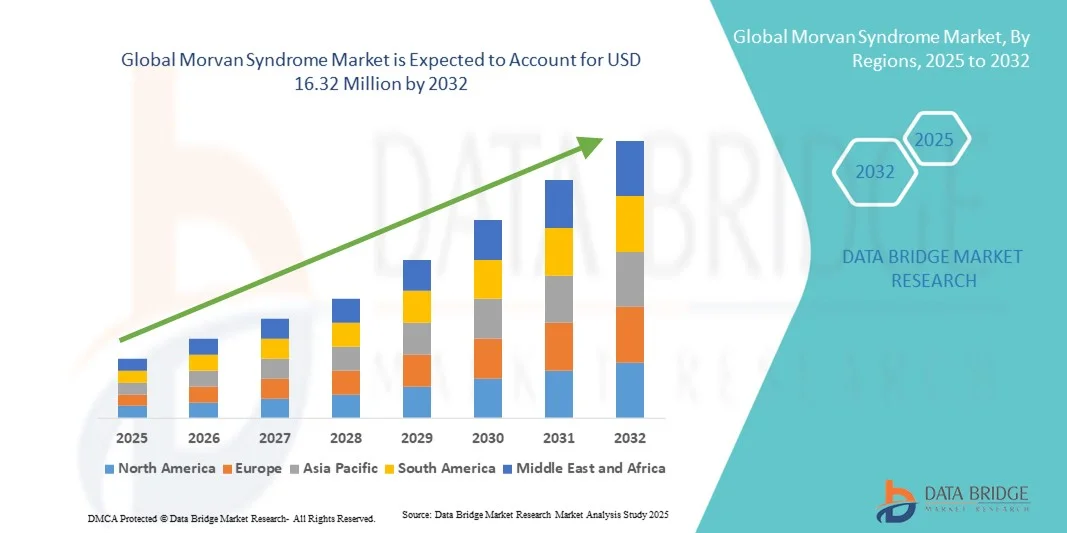
- The global Morvan Syndrome market size was valued at USD 10.56 million in 2024 and is expected to reach USD 16.32 million by 2032, at a CAGR of 5.60% during the forecast period
- The market growth is largely fueled by increasing awareness of autoimmune disorders, advancements in diagnostic technologies, and ongoing research into novel treatment options, leading to better detection and management of Morvan Syndrome
- Furthermore, rising demand for effective treatment solutions and the involvement of key pharmaceutical companies in research and development are establishing innovative therapies as the standard of care. These converging factors are accelerating the development of treatment options, thereby significantly boosting the industry's growth
Morvan Syndrome Market Analysis
- Morvan Syndrome, a rare autoimmune neurological disorder characterized by muscle twitching, severe insomnia, and autonomic dysfunction, is increasingly gaining attention in the healthcare sector due to advancements in diagnostics and growing awareness of autoimmune disorders in both clinical and research settings
- The escalating focus on Morvan Syndrome is primarily fueled by increasing investment in pharmaceutical R&D, rising awareness among healthcare professionals and patients, and the demand for effective treatment solutions for autoimmune and rare neurological conditions
- North America dominated the Morvan Syndrome market with the largest revenue share of 42.9% in 2024, driven by early adoption of advanced diagnostic technologies, well-established healthcare infrastructure, high healthcare expenditure, and the presence of key pharmaceutical companies actively engaged in R&D and clinical trials for novel therapies
- Asia-Pacific is expected to be the fastest-growing region in the Morvan Syndrome market during the forecast period due to rising healthcare awareness, expanding healthcare infrastructure, and increased investments in rare disease research
- Cerebrospinal Fluid (CSF) Analysis and Brain MRI dominated the Morvan Syndrome market in 2024 with a market share of 28.9%, supported by their accuracy in detecting neurological abnormalities
Report Scope and Morvan Syndrome Market Segmentation
|
Attributes |
Morvan Syndrome Key Market Insights |
|
Segments Covered |
|
|
Countries Covered |
North America
Europe
Asia-Pacific
Middle East and Africa
South America
|
|
Key Market Players |
|
|
Market Opportunities |
|
|
Value Added Data Infosets |
In addition to the insights on market scenarios such as market value, growth rate, segmentation, geographical coverage, and major players, the market reports curated by the Data Bridge Market Research also include in-depth expert analysis, pricing analysis, brand share analysis, consumer survey, demography analysis, supply chain analysis, value chain analysis, raw material/consumables overview, vendor selection criteria, PESTLE Analysis, Porter Analysis, and regulatory framework. |
Morvan Syndrome Market Trends
Advancements in Diagnostic and Monitoring Technologies
- A significant and accelerating trend in the global Morvan Syndrome market is the growing adoption of advanced diagnostic techniques such as cerebrospinal fluid (CSF) analysis, brain MRI, and antibody detection, enhancing early detection and patient management
- For instance, specialized laboratories and hospitals are increasingly using PET and electromyography tests to accurately identify neurological abnormalities associated with Morvan Syndrome, enabling timely and targeted interventions
- Integration of digital health platforms and wearable monitoring devices allows for real-time tracking of patient symptoms and treatment responses, supporting more personalized and precise therapy plans
- These advanced diagnostic tools, combined with ongoing research and clinical studies, facilitate centralized management of treatment protocols across hospitals and research institutes, improving care coordination and outcomes
- Growing collaboration between pharmaceutical companies and research institutes is enabling more robust clinical studies and monitoring systems, accelerating the understanding of disease progression and treatment efficacy
- This trend toward more precise, data-driven, and interconnected diagnostic and monitoring solutions is reshaping physician and patient expectations, with companies focusing on AI-assisted imaging and antibody detection systems for enhanced accuracy
- The demand for innovative, integrated diagnostic technologies is growing rapidly across hospitals and research institutes, as healthcare providers increasingly prioritize early detection, personalized treatment, and comprehensive patient management
Morvan Syndrome Market Dynamics
Driver
Increasing Awareness and Investment in Rare Autoimmune Disorders
- The rising awareness of rare autoimmune neurological disorders, combined with growing investments in pharmaceutical R&D, is a key driver for increased focus on Morvan Syndrome therapies and diagnostics
- For instance, several pharmaceutical companies are allocating resources toward clinical trials and new therapy development for rare neurological conditions, aiming to introduce innovative treatment options
- As healthcare providers and patients become more informed about Morvan Syndrome, demand for effective therapies, including antiepileptic agents and gold therapy, is increasing significantly
- Furthermore, the expansion of healthcare infrastructure and research institutes globally supports access to advanced diagnostics and specialized treatment, fostering broader adoption of Morvan Syndrome therapies
- Increasing adoption of telemedicine and digital health monitoring tools enables continuous patient management, particularly for rare conditions such as Morvan Syndrome, improving treatment adherence and outcomes
- The availability of targeted treatment options, growing patient advocacy, and increased funding for rare disease research are key factors propelling market growth, enhancing patient outcomes and awareness
- Collaboration between government health agencies and private organizations to support rare disease research is providing additional opportunities for innovation and therapeutic development
Restraint/Challenge
Limited Understanding and High Treatment Costs
- The rarity of Morvan Syndrome and limited understanding of its pathophysiology pose significant challenges to wider market penetration and therapy development
- For instance, low prevalence rates result in fewer diagnosed cases, making it difficult for pharmaceutical companies to conduct large-scale clinical trials and justify high R&D investments
- High costs associated with advanced diagnostics and treatment options, such as immunotherapies and specialized procedures, can restrict accessibility, particularly in developing regions
- While hospitals and research institutes are adopting advanced diagnostic and treatment protocols, the overall market growth is constrained by limited patient pools and reimbursement challenges
- Limited awareness among general practitioners and regional healthcare providers can delay diagnosis, limiting the effectiveness of early intervention strategies.
- Overcoming these challenges through enhanced awareness campaigns, government support, and cost-effective therapy development will be vital for sustained growth and broader adoption of Morvan Syndrome treatments
- Strict regulatory requirements for rare disease therapies and clinical trial approvals can slow down the introduction of innovative treatments, further challenging market expansion
Morvan Syndrome Market Scope
The market is segmented on the basis of diagnosis, treatment, end-user, and distribution channel.
- By Diagnosis
On the basis of diagnosis, the Morvan Syndrome market is segmented into Cerebrospinal Fluid (CSF) Analysis, Brain MRI, Electroencephalogram, Positron Emission Tomography (PET), Electromyography, and Antibodies Detection. The Cerebrospinal Fluid (CSF) Analysis segment dominated the market with the largest market revenue share of 28.9% in 2024, driven by its high accuracy in detecting neurological and autoimmune biomarkers associated with Morvan Syndrome. CSF analysis is often prioritized by hospitals and research institutes as it provides reliable confirmation of disease presence, aiding in timely treatment planning. Its established use in clinical protocols and widespread acceptance among neurologists make it the preferred diagnostic method. The availability of standardized procedures for CSF collection and testing further supports its dominance. In addition, the segment benefits from ongoing advancements in biomarker detection, enhancing sensitivity and specificity. The adoption of CSF analysis in multi-disciplinary treatment centers reinforces its market leadership.
The Brain MRI segment is anticipated to witness the fastest growth rate from 2025 to 2032, fueled by increasing demand for non-invasive and highly detailed neurological imaging. Brain MRI offers precise visualization of structural abnormalities and lesions associated with Morvan Syndrome, facilitating early diagnosis. Its non-invasive nature and compatibility with digital health records make it highly suitable for longitudinal patient monitoring. The segment growth is also supported by the integration of advanced MRI techniques, such as functional MRI and high-resolution imaging, which improve diagnostic accuracy. Hospitals and specialty research centers are increasingly adopting Brain MRI due to its ability to guide targeted therapies. The growing awareness among neurologists and patients about the benefits of MRI over traditional methods further accelerates its adoption.
- By Treatment
On the basis of treatment, the Morvan syndrome market is segmented into gold therapy, antiepileptic agents, and procedures. The Antiepileptic Agents segment dominated the market with the largest revenue share in 2024, as these drugs are highly effective in controlling the muscle twitching, seizures, and neurological symptoms associated with Morvan Syndrome. Antiepileptic agents are widely prescribed across hospitals and specialized clinics due to their established efficacy and availability in multiple formulations. Their integration into standard treatment protocols for autoimmune neurological disorders ensures steady adoption. In addition, clinical studies highlighting symptom management and reduced progression risks support physician confidence in prescribing these agents. The segment also benefits from continued R&D, improving drug formulations and minimizing side effects. Hospitals and research institutes favor antiepileptic agents for consistent therapeutic outcomes and patient compliance.
The Procedures segment is expected to witness the fastest CAGR from 2025 to 2032, driven by increasing adoption of thymectomy and other surgical interventions in specialized cases. These procedures provide targeted treatment for patients with severe or refractory symptoms. The segment growth is supported by advancements in minimally invasive surgical techniques, which reduce recovery time and improve safety. Increased awareness among physicians and patients about procedural options contributes to adoption. The rise in specialized neurological centers equipped with advanced surgical facilities also accelerates market growth. Patients are increasingly seeking combined pharmacological and procedural interventions for better symptom management.
- By End-User
On the basis of end-user, the Morvan syndrome market is segmented into research institutes, hospitals, and others. The Hospitals segment dominated the market with the largest revenue share in 2024, due to their comprehensive facilities for diagnosis, treatment, and ongoing monitoring of Morvan Syndrome patients. Hospitals offer access to advanced imaging technologies, CSF testing, and therapeutic management, making them the primary choice for patients. Their structured care pathways and integration of multidisciplinary teams ensure better patient outcomes. Hospitals also benefit from collaborations with pharmaceutical companies and research institutes for clinical trials. The growing number of neurology and autoimmune disorder centers within hospitals further supports market dominance. Continuous training and awareness programs for healthcare professionals enhance the adoption of advanced diagnostic and treatment options.
The Research Institutes segment is expected to witness the fastest growth from 2025 to 2032, fueled by increasing investment in rare disease research and clinical trials for innovative therapies. Research institutes are at the forefront of exploring novel diagnostic biomarkers, immunotherapies, and precision medicine approaches. They often collaborate with hospitals and pharmaceutical companies, accelerating drug development and treatment protocols. The adoption of AI and data analytics in research institutes enhances diagnostic and treatment accuracy. Awareness campaigns and rare disease programs also drive institutional focus on Morvan Syndrome. This growth is further supported by government and private funding initiatives targeting rare autoimmune neurological disorders.
- By Distribution Channel
On the basis of distribution channel, the Morvan syndrome market is segmented into hospital pharmacy and others. The Hospital Pharmacy segment dominated the market with the largest revenue share in 2024, as these pharmacies provide direct access to prescribed treatments such as antiepileptic agents and gold therapy for Morvan Syndrome patients. Hospital pharmacies ensure drug authenticity, proper dosage management, and patient counseling, which improves compliance. Their integration with hospital treatment protocols enables timely and consistent therapy delivery. The segment benefits from established partnerships with pharmaceutical companies for steady supply chains. Patients prefer hospital pharmacies due to accessibility during hospital visits. The availability of rare disease-specific medications in hospital pharmacies further reinforces their market leadership.
The Others segment is expected to witness the fastest CAGR from 2025 to 2032, driven by the growth of specialty online pharmacies and retail pharmacies offering rare disease therapies. Digital pharmacy platforms provide convenience and reach to patients in remote areas, enhancing treatment accessibility. The segment growth is supported by improved logistics, cold-chain management, and teleconsultation services for rare neurological conditions. Partnerships between pharmaceutical companies and online platforms expand distribution networks. Patient preference for home delivery and subscription-based therapy models further accelerates adoption. The segment also benefits from awareness campaigns highlighting availability and accessibility of Morvan Syndrome treatments outside hospital settings.
Morvan Syndrome Market Regional Analysis
- North America dominated the Morvan syndrome market with the largest revenue share of 42.9% in 2024, driven by early adoption of advanced diagnostic technologies, well-established healthcare infrastructure, high healthcare expenditure, and the presence of key pharmaceutical companies actively engaged in R&D and clinical trials for novel therapies
- Patients and healthcare providers in the region highly value accurate diagnostics, access to specialized treatments such as antiepileptic agents and gold therapy, and the integration of multidisciplinary care, improving patient outcomes and disease management
- This widespread adoption is further supported by the presence of key pharmaceutical companies actively engaged in R&D, well-equipped hospitals and research institutes, and increasing awareness about rare autoimmune neurological disorders, establishing North America as a leading region for Morvan Syndrome diagnosis and treatment
U.S. Morvan Syndrome Market Insight
The U.S. Morvan Syndrome market captured the largest revenue share of 83% in 2024 within North America, fueled by the widespread availability of advanced diagnostic technologies and specialized treatment facilities. Patients and healthcare providers prioritize early and accurate diagnosis through CSF analysis, Brain MRI, and antibody detection. The growing number of hospitals and research institutes focused on rare autoimmune neurological disorders further propels market growth. Moreover, increasing awareness among physicians and patient advocacy initiatives is significantly contributing to the market's expansion. Telemedicine and digital health monitoring platforms also enhance patient management and follow-up care.
Europe Morvan Syndrome Market Insight
The Europe Morvan Syndrome market is projected to expand at a substantial CAGR throughout the forecast period, primarily driven by strong healthcare infrastructure and government support for rare disease research. Increasing urbanization and higher healthcare spending are fostering adoption of advanced diagnostics and therapies. European healthcare providers are also emphasizing personalized treatment approaches, integrating antiepileptic agents and gold therapy. The region is experiencing significant growth across hospitals, research institutes, and specialty clinics. Collaborative initiatives between pharmaceutical companies and research institutes further accelerate clinical trials. Patient education programs highlighting early diagnosis and treatment benefits are boosting market adoption.
U.K. Morvan Syndrome Market Insight
The U.K. Morvan Syndrome market is anticipated to grow at a noteworthy CAGR during the forecast period, driven by increasing awareness of autoimmune neurological disorders and early diagnosis. Concerns regarding disease progression and symptom management are encouraging both patients and healthcare providers to seek advanced therapies. The U.K.’s well-established healthcare system, coupled with increasing clinical research, is expected to stimulate market growth. Hospitals and research institutes are adopting innovative diagnostics and treatment protocols to improve patient outcomes. Government initiatives supporting rare disease treatment accessibility are further encouraging adoption. Awareness campaigns and professional training programs contribute to improved disease recognition.
Germany Morvan Syndrome Market Insight
The Germany Morvan Syndrome market is expected to expand at a considerable CAGR during the forecast period, fueled by increasing awareness of rare neurological conditions and growing demand for specialized treatment. Germany’s advanced healthcare infrastructure, combined with a focus on research and innovation, promotes adoption of diagnostic and therapeutic solutions. Hospitals are increasingly integrating multidisciplinary care for Morvan Syndrome patients. Specialized treatment protocols, including antiepileptic therapy and procedures, are gaining traction. Research collaborations with pharmaceutical companies strengthen access to novel therapies. Patient-centric initiatives emphasizing early detection and monitoring further support market growth.
Asia-Pacific Morvan Syndrome Market Insight
The Asia-Pacific Morvan Syndrome market is poised to grow at the fastest CAGR of 22% during 2025 to 2032, driven by rising healthcare awareness, expanding medical infrastructure, and increasing government initiatives promoting rare disease research. Countries such as China, Japan, and India are witnessing growing adoption of advanced diagnostics and therapeutic protocols. The region’s urbanization and rising disposable incomes enable broader access to healthcare facilities. Moreover, increasing collaboration between hospitals and research institutes is facilitating clinical trials and treatment innovations. Public health campaigns are raising awareness about rare autoimmune neurological disorders. The growth of telemedicine and digital patient monitoring solutions is enhancing diagnosis and care management.
Japan Morvan Syndrome Market Insight
The Japan Morvan Syndrome market is gaining momentum due to the country’s high emphasis on healthcare technology, early disease detection, and personalized treatment approaches. Hospitals and research institutes are adopting advanced diagnostics such as PET, MRI, and antibody detection. Increasing awareness among patients and caregivers is driving demand for symptom management therapies, including antiepileptic agents. Integration of digital health monitoring for longitudinal patient tracking is fueling growth. Moreover, Japan’s aging population is such asly to increase the need for specialized neurological care. Government support for rare disease research and clinical trials further strengthens market expansion.
India Morvan Syndrome Market Insight
The India Morvan Syndrome market accounted for the largest market revenue share in Asia-Pacific in 2024, attributed to increasing healthcare awareness, rapid urbanization, and expanding medical infrastructure. Hospitals and research institutes are enhancing diagnostic and treatment facilities for rare autoimmune neurological disorders. The push towards digital health and telemedicine services is improving patient accessibility and follow-up care. Availability of cost-effective diagnostic tests and therapies is driving adoption across residential and clinical settings. Government initiatives promoting rare disease awareness and support programs further propel market growth. Growing patient advocacy and partnerships with pharmaceutical companies are key factors enhancing market development in India.
Morvan Syndrome Market Share
The Morvan Syndrome industry is primarily led by well-established companies, including:
- Pfizer Inc. (U.S.)
- Lilly USA, LLC. (U.S.)
- Novartis AG (Switzerland)
- F. Hoffmann-La Roche Ltd (Switzerland)
- Eisai Co., Ltd. (Japan)
- Teva Pharmaceutical Industries Ltd. (Israel)
- Bristol-Myers Squibb Company (U.S.)
- Takeda Pharmaceutical Company Limited (Japan)
- Endo International plc (Ireland)
- Sun Pharmaceutical Industries Ltd. (India)
- Lupin (U.S.)
- Cipla Inc. (India)
- Aurobindo Pharma (U.S.)
- Torrent Pharmaceuticals Ltd. (India)
- Sanofi (France)
- Merck & Co., Inc. (U.S.)
- Apotex Inc. (Canada)
- Mayne Pharma Group Limited (Australia)
What are the Recent Developments in Global Morvan Syndrome Market?
- In September 2025, a case report published in Cureus emphasized the importance of early immunotherapy in managing Morvan Syndrome. The patient, who presented with a constellation of autonomic, central, and peripheral nervous system involvement, showed significant improvement after initiating immunosuppressive treatment early in the disease course, underscoring the critical role of timely intervention
- In August 2025, a case study published in Frontiers in Neurology reported the successful use of Telitacicept, a recombinant TACI-Fc fusion protein, in treating a 54-year-old male patient with refractory Morvan Syndrome. After conventional immunotherapy failed, the patient achieved complete clinical remission over six months, allowing for the discontinuation of corticosteroids without recurrence of symptoms
- In November 2024, a study published in Neurology Clinical Practice detailed the use of Rituximab in treating a case of paraneoplastic Morvan Syndrome. The patient, who had severe painful neuropathy unresponsive to immunoglobulins and steroids, showed dramatic improvement following Rituximab treatment. This highlights the potential of targeted B-cell depletion therapies in managing the disease
- In October 2024, a case series published in Medicine (Baltimore) explored the use of Traditional Chinese Medicine (TCM) in treating three anti-CASPR2 antibody-positive patients with Morvan Syndrome. The patients experienced significant improvement in neuropsychiatric symptoms, including muscle tremors and severe insomnia, and achieved normalized antibody levels, suggesting TCM as a complementary treatment approach
- In February 2024, a report in StatPearls discussed the effectiveness of plasma exchange in treating Morvan Syndrome. The procedure, which involves removing and replacing the liquid part of the blood, has been shown to be one of the most effective treatments, especially when combined with immunosuppressive medications such as corticosteroids

- Interactive Data Analysis Dashboard
- Company Analysis Dashboard for high growth potential opportunities
- Research Analyst Access for customization & queries
- Competitor Analysis with Interactive dashboard
- Latest News, Updates & Trend analysis
- Harness the Power of Benchmark Analysis for Comprehensive Competitor Tracking
Data collection and base year analysis are done using data collection modules with large sample sizes. The stage includes obtaining market information or related data through various sources and strategies. It includes examining and planning all the data acquired from the past in advance. It likewise envelops the examination of information inconsistencies seen across different information sources. The market data is analysed and estimated using market statistical and coherent models. Also, market share analysis and key trend analysis are the major success factors in the market report. To know more, please request an analyst call or drop down your inquiry.
The key research methodology used by DBMR research team is data triangulation which involves data mining, analysis of the impact of data variables on the market and primary (industry expert) validation. Data models include Vendor Positioning Grid, Market Time Line Analysis, Market Overview and Guide, Company Positioning Grid, Patent Analysis, Pricing Analysis, Company Market Share Analysis, Standards of Measurement, Global versus Regional and Vendor Share Analysis. To know more about the research methodology, drop in an inquiry to speak to our industry experts.
Data Bridge Market Research is a leader in advanced formative research. We take pride in servicing our existing and new customers with data and analysis that match and suits their goal. The report can be customized to include price trend analysis of target brands understanding the market for additional countries (ask for the list of countries), clinical trial results data, literature review, refurbished market and product base analysis. Market analysis of target competitors can be analyzed from technology-based analysis to market portfolio strategies. We can add as many competitors that you require data about in the format and data style you are looking for. Our team of analysts can also provide you data in crude raw excel files pivot tables (Fact book) or can assist you in creating presentations from the data sets available in the report.












