


What is the Motor Neurone Disease (MND) Market Size and Growth Rate?
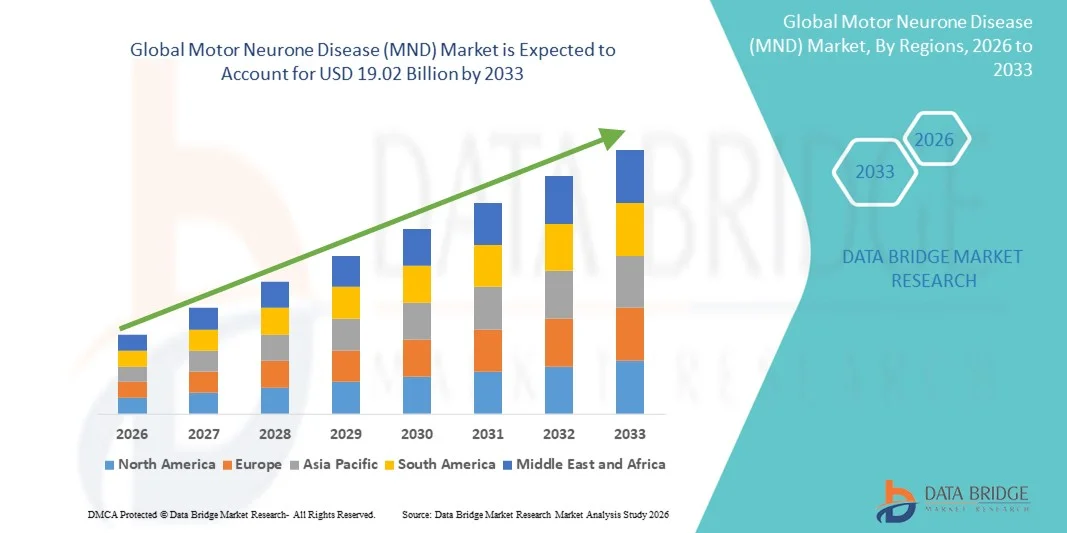
- As per Data Bridge Market Research analysis that the global Motor Neurone Disease (MND) market size was valued at USD 11.07 billion in 2025 and is expected to reach USD 19.02 billion by 2033, at a CAGR of 7.0% during the forecast period
- The market growth is largely fueled by increasing prevalence of MND, rising awareness, and improved diagnostic capabilities, leading to greater adoption of therapies and supportive care in both developed and emerging regions
- Furthermore, advances in medical research, including emerging therapies such as gene therapy, stem-cell–based approaches, and improved symptomatic treatments, are expanding treatment options for patients
Market Size & Forecast
- Global Market Value (2025): USD 11.07 Billion
- Expected Market Value (2033): USD 19.02 Billion
- Forecast CAGR (2026–2033): 7.0%
What are the Major Takeaways of Motor Neurone Disease (MND) Market?
- Motor Neurone Disease (MND), including disorders such as ALS, PBP, PMA, and PLS, represents an increasingly significant market for treatments, diagnosis, and management solutions worldwide due to rising disease prevalence, improved diagnostics, and growing awareness among patients and healthcare providers
- The escalating demand for Motor Neurone Disease (MND) treatments is primarily fueled by advances in medical research, including medications, physiotherapy, palliative care, and supportive care options, as well as increased investments in neuroscience R&D
- North America dominated the Motor Neurone Disease (MND) market with the largest revenue share of 42.6% in 2025, driven by well-developed healthcare infrastructure, high diagnosis and treatment rates, and a strong presence of key industry players conducting research and launching therapies
- Asia-Pacific is expected to be the fastest-growing region in the Motor Neurone Disease (MND) market during the forecast period due to increasing healthcare investments, rising awareness, and improving access to neurologic care and advanced diagnostic solutions such as blood tests, EMG, MRI scans, and TMS
- Amyotrophic lateral sclerosis (ALS) segment dominated the Motor Neurone Disease (MND) market in 2025 with a market share of 78.5%, driven by its high prevalence, established treatment protocols, and increasing adoption of medications and physiotherapy
Report Scope and Motor Neurone Disease (MND) Market Segmentation
|
Attributes |
Motor Neurone Disease (MND) Key Market Insights |
|
Segments Covered |
|
|
Countries Covered |
North America
Europe
Asia-Pacific
Middle East and Africa
South America
|
|
Key Market Players |
|
|
Market Opportunities |
|
|
Value Added Data Infosets |
In addition to the insights on market scenarios such as market value, growth rate, segmentation, geographical coverage, and major players, the market reports curated by the Data Bridge Market Research also include in-depth expert analysis, patient epidemiology, pipeline analysis, pricing analysis, and regulatory framework |
What is the Key Trend in the Motor Neurone Disease (MND) Market?
Advancements in Gene Therapy and Personalized Medicine
- A significant and accelerating trend in the global MND market is the increasing focus on gene therapies and personalized medicine approaches, enabling targeted treatment based on patient-specific genetic and molecular profiles
- For instance, recent clinical trials of tofersen for SOD1-ALS mutation patients have demonstrated targeted reduction of disease progression, highlighting the potential of mutation-specific therapies to change the treatment paradigm
- Personalized medicine approaches in MND allow clinicians to optimize therapy selection, monitor patient response closely, and potentially slow disease progression more effectively than standard treatment
- The integration of precision diagnostics, biomarkers, and patient-specific therapy plans facilitates early intervention and more tailored disease management, improving patient outcomes and quality of life
- This trend towards gene-targeted and individualized therapies is reshaping research priorities, encouraging pharmaceutical companies such as Biogen and Ionis Pharmaceuticals to invest heavily in mutation-specific MND treatments
- The demand for innovative, targeted, and precision-based therapies is growing rapidly as patients and healthcare providers increasingly seek solutions that go beyond symptomatic care to address underlying disease mechanisms
- Increasing use of digital health solutions, including wearable devices and remote monitoring platforms, is enabling continuous patient tracking and early detection of symptom progression
- Collaborations between biotech companies and academic research institutions are accelerating the development of novel therapeutics, fostering faster clinical translation of promising MND treatments
Motor Neurone Disease (MND) Market Dynamics
Driver
Rising Prevalence and Growing Awareness Among Patients and Healthcare Providers
- The increasing prevalence of MND globally, coupled with greater awareness among clinicians and patients, is a significant driver for the heightened demand for therapies and care solutions
- For instance, in March 2025, Biogen announced expanded access programs for tofersen in multiple countries to support patients with SOD1-ALS, signaling greater availability of advanced therapies for high-need patient populations
- As more patients are diagnosed earlier due to improved screening and diagnostic protocols, the need for comprehensive care including medications, physiotherapy, and palliative services is growing
- Furthermore, increased public and professional awareness about MND is driving adoption of advanced treatment regimens and encouraging clinical trial participation, accelerating market expansion
- The development of patient registries and support networks is helping connect patients to available therapies and research, making MND treatment and management more accessible
- Improved access to specialized care centers and growing investment in MND research by pharmaceutical and biotech companies are key factors propelling the market growth worldwide
- Increasing advocacy campaigns and patient education programs are driving earlier diagnosis and better treatment adherence, expanding the potential patient pool for advanced therapies
- Government initiatives supporting rare disease research and funding for clinical trials are further facilitating market expansion and faster availability of innovative therapies
Restraint/Challenge
High Treatment Costs and Limited Accessibility in Developing Regions
- The high cost of advanced therapies, including gene therapy and biologics, poses a significant challenge to broad adoption, especially in low- and middle-income regions
- For instance, limited reimbursement policies and high out-of-pocket expenses can make innovative MND treatments inaccessible to many patients despite proven clinical benefits
- Addressing cost barriers through insurance coverage expansion, government funding, and patient assistance programs is critical to increase treatment uptake
- In addition, the scarcity of specialized neurologists and MND care centers in certain regions limits patient access to optimal management and therapeutic monitoring
- While efforts to improve healthcare infrastructure are ongoing, uneven distribution of resources and lack of trained personnel continue to challenge market growth
- Overcoming these challenges through strategic partnerships, global access programs, and education initiatives will be vital for sustained adoption and market expansion
- Regulatory hurdles and lengthy approval timelines for novel gene therapies can delay market entry, restricting availability to patients in urgent need
- Limited awareness about treatment options among patients in rural and underserved areas may further restrict adoption despite the availability of effective therapies
How is the Motor Neurone Disease (MND) Market Segmented?
The market is segmented on the basis of type, treatment, diagnosis, dosage, route of administration, symptoms, end-users, and distribution channel.
- By Type
On the basis of type, the Motor Neurone Disease (MND) market is segmented into Amyotrophic Lateral Sclerosis (ALS), Progressive Bulbar Palsy (PBP), Progressive Muscular Atrophy (PMA), and Primary Lateral Sclerosis (PLS). The ALS segment dominated the market with a market share of 78.5% in 2025, driven by its high prevalence among MND subtypes and established treatment protocols. ALS patients have a greater demand for medications, physiotherapy, and palliative care, which fuels market growth. In addition, awareness campaigns and patient registries largely focus on ALS, increasing diagnosis rates and therapy adoption. Pharmaceutical companies are prioritizing ALS in clinical trials, leading to more therapeutic options compared to other MND types. The segment benefits from the presence of approved drugs such as riluzole and edaravone, along with emerging gene-targeted therapies. ALS dominance is also supported by strong research funding and early diagnosis programs.
The PBP segment is anticipated to witness the fastest growth rate from 2026 to 2033, as it is increasingly being diagnosed due to improved clinical awareness and advanced diagnostic techniques. PBP patients require targeted care and supportive therapies, creating a rising demand for specialized treatment protocols. Emerging treatments addressing bulbar symptoms are contributing to this growth. Furthermore, the expansion of neurology clinics and dedicated care centers enhances treatment access. Improved symptomatic management, such as speech therapy and swallowing support, further accelerates adoption. PBP is gaining focus in clinical research, which is expected to propel its market share in the coming years.
- By Treatment
On the basis of treatment, the Motor Neurone Disease (MND) market is segmented into medication, physiotherapy, palliative care, and others. The medication segment dominated the market in 2025 with a share of 54%, driven by the availability of FDA-approved drugs and increasing prescription rates for ALS and related subtypes. Medications such as riluzole, edaravone, and emerging gene therapies are widely adopted due to their potential to slow disease progression. Pharmaceutical companies are actively investing in new drug development for various MND types. Medication dominance is reinforced by higher awareness among neurologists and patients regarding treatment benefits. In addition, regulatory approvals and expanded access programs support broad adoption. The segment also benefits from reimbursement schemes in developed countries, making therapies accessible to a larger patient base.
Physiotherapy is expected to witness the fastest growth during the forecast period, as it provides essential symptomatic relief and functional support to MND patients. With rising awareness of physiotherapy’s role in improving quality of life, adoption is increasing in hospitals and clinics. Home-based physiotherapy programs and tele-rehabilitation are further boosting uptake. Integration of physiotherapy with multidisciplinary care models enhances patient outcomes. Governments and NGOs are supporting rehabilitation programs, particularly in emerging markets. Physiotherapy is also gaining prominence due to patient preference for non-pharmacological interventions.
- By Diagnosis
On the basis of diagnosis, the Motor Neurone Disease (MND) market is segmented into blood tests, electromyography (EMG), MRI scans, transcranial magnetic stimulation (TMS), and others. EMG dominated the market in 2025 with the largest share of 38%, due to its critical role in confirming MND diagnosis and differentiating between subtypes. EMG is widely used in both hospitals and clinics, providing real-time nerve and muscle activity assessment. Its high diagnostic accuracy and availability in neurology centers contribute to dominance. Physicians rely on EMG results for treatment planning and monitoring disease progression. EMG adoption is further supported by training programs for neurologists and technologists. Advanced EMG devices with digital outputs are increasingly used for research and clinical trials.
MRI scans are expected to witness the fastest growth rate from 2026 to 2033, as imaging plays a key role in excluding other neurological disorders and detecting early structural changes. Rising investments in advanced MRI technology and increased access to imaging centers contribute to growth. MRI also aids in monitoring disease progression and evaluating therapeutic effects. Integration of MRI with AI and imaging analytics is enhancing diagnostic precision. The growth of neuroimaging awareness programs is boosting adoption in both developed and emerging markets. MRI’s non-invasive nature and ability to support early intervention strategies make it increasingly preferred.
- By Dosage
On the basis of dosage, the Motor Neurone Disease (MND) market is segmented into tablets, injections, and others. Tablets dominated the market in 2025 with a share of 62%, driven by their ease of administration, patient compliance, and wide use in ALS management. Medications such as riluzole are primarily administered orally, making tablets the preferred dosage form for long-term therapy. Tablets are also convenient for home administration, reducing hospital visits. Pharmaceutical companies focus on oral formulations to improve accessibility and adherence. Tablet dominance is further supported by cost-effectiveness compared to injectable therapies. Regulatory approvals for oral medications enhance market penetration.
Injection segment is expected to witness the fastest growth rate from 2026 to 2033, due to emerging biologics, gene therapies, and targeted molecular treatments requiring parenteral administration. Injectable therapies provide precise dosing and improved bioavailability. Hospitals and specialized care centers are increasingly adopting injectable regimens. Biotech innovations in injection formulations are expanding treatment options. Clinical trials for new injectable therapies are driving future market growth. Injectable administration is particularly important for advanced-stage MND patients needing high-potency therapies.
- By Route of Administration
On the basis of route of administration, the market is segmented into oral, intravenous (IV), and others. Oral route dominated in 2025 with the largest share, given the convenience, patient preference, and wide availability of oral medications. Oral therapies allow continuous treatment at home and reduce healthcare resource dependency. Oral administration is supported by strong patient adherence and minimal training requirements. Pharmaceutical companies prioritize oral drug development for market acceptance. Oral therapy dominance is reinforced by insurance coverage and reimbursement policies. Oral medications are widely used across all MND subtypes.
IV administration is expected to witness the fastest growth rate from 2026 to 2033, due to increasing adoption of gene therapies and biologics requiring systemic delivery. IV treatments are critical for targeted delivery and high-efficacy therapies. Hospitals and specialty clinics are key adoption points for IV therapy. Emerging IV therapies are entering clinical trials, expanding options for patients with advanced disease. IV route ensures controlled administration under medical supervision. Regulatory approvals for IV biologics contribute to rapid market expansion.
- By Symptoms
On the basis of symptoms, the market is segmented into muscle wasting, muscle weakness, fasciculations, speech problems, swallowing problems and excessive saliva, cramps and muscle spasms, and others. Muscle weakness dominated the market in 2025 with the largest share, as it is the most prevalent symptom across all MND subtypes and drives demand for treatment and supportive care. Muscle weakness significantly affects patient mobility and daily functioning, increasing the need for therapies and physiotherapy. Pharmaceutical and rehabilitation interventions are largely guided by symptom severity. Symptom-focused care plans enhance patient quality of life. Muscle weakness drives early diagnosis and therapy initiation.
Swallowing problems and excessive saliva are expected to witness the fastest growth rate from 2026 to 2033, due to increasing recognition of their impact on nutrition and quality of life. Specialized care, palliative interventions, and supportive devices are increasingly adopted. Awareness campaigns emphasize early symptom management. Hospitals and clinics are providing targeted swallowing therapy programs. Innovations in non-invasive management are fueling adoption. Symptom-focused care is becoming a key growth driver in emerging markets.
- By End-Users
On the basis of end-users, the market is segmented into clinics, hospitals, and others. Hospitals dominated the market in 2025 with the largest share of 57%, owing to their capability to provide comprehensive care including medications, physiotherapy, and palliative services. Hospitals also host advanced diagnostics and clinical trials, further increasing adoption. Hospitals are preferred for complex cases and advanced-stage patients. Integrated care centers in hospitals allow multidisciplinary management. Hospital dominance is reinforced by collaborations with pharmaceutical companies for therapy access.
Clinics are expected to witness the fastest growth rate from 2026 to 2033, due to the rise of outpatient and specialized neurology clinics providing early diagnosis, ongoing monitoring, and rehabilitation services. Clinics are increasingly adopting telehealth and home-based physiotherapy programs. Growing awareness and easier access in urban and semi-urban areas drive adoption. Clinics offer personalized care plans, increasing patient satisfaction. Expansion of clinic networks in emerging regions supports rapid growth.
- By Distribution Channel
On the basis of distribution channel, the market is segmented into hospital pharmacy, retail pharmacy, and online pharmacy. Hospital pharmacies dominated the market in 2025 with the largest share, due to direct supply to patients receiving treatment in hospitals and specialty care centers. Hospital pharmacies ensure immediate availability and proper counseling for MND therapies. Collaboration with healthcare providers increases patient access. Hospital pharmacy dominance is supported by insurance reimbursement mechanisms. Hospital pharmacies facilitate adherence and continuity of therapy.
Online pharmacy segment is expected to witness the fastest growth rate from 2026 to 2033, due to increasing adoption of e-pharmacy platforms, home delivery services, and patient preference for convenient access to medications. Online channels improve accessibility in remote regions. Digital platforms also provide patient education and reminders for therapy adherence. Expansion of online pharmacy networks enhances treatment availability. Regulatory acceptance and growing trust in online health services fuel rapid growth.
Which Region Holds the Largest Share of the Motor Neurone Disease (MND) Market?
- North America dominated the Motor Neurone Disease (MND) market with the largest revenue share of 42.6% in 2025, driven by well-developed healthcare infrastructure, high diagnosis and treatment rates, and a strong presence of key industry players conducting research and launching therapies
- Patients and healthcare providers in the region highly value access to FDA-approved medications, specialized neurologists, and multidisciplinary care centers, which together enhance disease management and treatment outcomes
- This widespread adoption is further supported by strong healthcare funding, government and insurance reimbursement policies, and increasing awareness programs, establishing North America as a leading market for MND therapeutics, physiotherapy, and diagnostic solutions for both residential and hospital-based care
U.S. Motor Neurone Disease (MND) Market Insight
The U.S. Motor Neurone Disease (MND) market captured the largest revenue share of 44% in 2025 within North America, fueled by the high prevalence of ALS, advanced healthcare infrastructure, and early adoption of novel therapies. Patients and healthcare providers prioritize access to FDA-approved medications, multidisciplinary care centers, and advanced diagnostic tools. The growing awareness of MND among clinicians and patients, combined with government reimbursement policies and patient support programs, further propels the market. Moreover, the integration of telehealth, remote monitoring, and home-based physiotherapy solutions is significantly contributing to the market’s expansion.
Europe Motor Neurone Disease (MND) Market Insight
The Europe Motor Neurone Disease (MND) market is projected to expand at a substantial CAGR throughout the forecast period, primarily driven by well-established healthcare systems, rare disease policies, and growing access to specialized care centers. Early diagnosis through advanced EMG and MRI facilities, combined with rising patient awareness, is fostering the adoption of therapies. European patients are increasingly seeking comprehensive care, including medications, physiotherapy, and palliative interventions. The region is witnessing significant growth across residential, hospital, and clinic-based care, with MND treatment being integrated into multidisciplinary care programs.
U.K. Motor Neurone Disease (MND) Market Insight
The U.K. Motor Neurone Disease (MND) market is anticipated to grow at a noteworthy CAGR during the forecast period, driven by increasing awareness of MND, advancements in treatment options, and the demand for improved patient care. In addition, government initiatives, rare disease funding, and patient advocacy programs are encouraging both early diagnosis and therapy adoption. The U.K.’s strong healthcare infrastructure and advanced neurology clinics, alongside accessible telehealth services, are expected to continue stimulating market growth.
Germany Motor Neurone Disease (MND) Market Insight
The Germany Motor Neurone Disease (MND) market is expected to expand at a considerable CAGR during the forecast period, fueled by high healthcare expenditure, growing patient awareness, and the availability of advanced diagnostic and therapeutic options. Germany’s well-developed healthcare system, combined with emphasis on research and innovation, promotes adoption of MND therapies, including medications, physiotherapy, and palliative care. Integration of digital health solutions, patient monitoring platforms, and multidisciplinary care programs is becoming increasingly prevalent, with a strong preference for evidence-based and patient-centered treatment approaches.
Asia-Pacific Motor Neurone Disease (MND) Market Insight
The Asia-Pacific Motor Neurone Disease (MND) market is poised to grow at the fastest CAGR during the forecast period of 2026 to 2033, driven by increasing healthcare investments, rising awareness of rare diseases, and improving access to neurology specialists and diagnostic facilities in countries such as China, Japan, and India. The region’s growing adoption of advanced therapies, hospital-based multidisciplinary care, and telehealth solutions is driving market expansion. Furthermore, government initiatives supporting rare disease research and increasing participation in clinical trials are enhancing accessibility to MND treatments across the region.
Japan Motor Neurone Disease (MND) Market Insight
The Japan Motor Neurone Disease (MND) market is gaining momentum due to the country’s advanced healthcare system, high patient awareness, and strong adoption of novel therapies and diagnostics. Early diagnosis and timely intervention are prioritized, with a growing number of specialized neurology centers offering comprehensive care. Integration of digital health platforms and remote monitoring solutions is fueling growth. Moreover, Japan’s aging population is expected to increase demand for easier-to-administer treatments, home-based care, and supportive therapies for both residential and hospital-based patients.
India Motor Neurone Disease (MND) Market Insight
The India Motor Neurone Disease (MND) market accounted for the largest market revenue share in Asia-Pacific in 2025, attributed to rising awareness of rare neurological disorders, increasing healthcare access, and government support for rare disease programs. India is witnessing growing adoption of therapies, physiotherapy, and palliative care in hospitals, clinics, and home care settings. Expansion of specialized neurology centers, availability of affordable medications, and telemedicine solutions are key factors propelling market growth. The push for better healthcare infrastructure and increasing patient support initiatives are enhancing accessibility and treatment adherence in India.
Which are the Top Companies in Motor Neurone Disease (MND) Market?
The Motor Neurone Disease (MND) industry is primarily led by well-established companies, including:
- Biogen Inc. (U.S.)
- Ionis Pharmaceuticals, Inc. (U.S.)
- Mitsubishi Tanabe Pharma Corporation (Japan)
- Genervon Biopharmaceuticals, LLC (U.S.)
- Sanofi (France)
- SOM Innovation Biotech, S.A. (Spain)
- Novartis AG (Switzerland)
- Astellas Pharma Inc. (Japan)
- Cytokinetics, Incorporated (U.S.)
- Biohaven Ltd. (U.S.)
- Prilenia Therapeutics Development Ltd. (U.S.)
- Seelos Therapeutics, Inc. (U.S.)
- Aquestive Therapeutics, Inc. (U.S.)
- Avanir Pharmaceuticals, Inc. (U.S.)
- Orphazyme A/S (Denmark)
- Orion Corporation (Finland)
- Sun Pharmaceutical Industries Ltd. (India)
- ITF Pharma, Inc. (U.S.)
- Clene Nanomedicine, Inc. (U.S.)
What are the Recent Developments in Global Motor Neurone Disease (MND) Market?
- In May 2025, researchers announced detailed results from the MIROCALS clinical trial, revealing that low-dose Interleukin-2 (IL-2 LD) is safe and demonstrated significant survival benefits in a biomarker-defined subgroup of MND patients. The trial provided crucial insights into the role of immune regulation in slowing ALS progression, supporting a growing shift toward immunotherapy-based treatments
- In March 2025, new preclinical data presented at the Muscular Dystrophy Association (MDA) conference revealed that a single dose of INS1202 gene therapy preserved motor function and significantly extended survival in SOD1-ALS mouse models. These findings highlight the rising potential of single-administration gene therapies in MND, opening the door for future human studies that aim to correct disease-causing mutations at the source
- In May 2024, the European Commission granted marketing authorisation for Qalsody in the EU, under “exceptional circumstances.” This extended global access to the first genetically targeted ALS therapy, enabling European patients with SOD1-mutation ALS to benefit from a treatment that directly targets the underlying cause of the disease. The approval further underscores the EU’s support for personalised neurology therapeutics
- In April 2023, the U.S. Food and Drug Administration (FDA) granted accelerated approval for Qalsody (tofersen), the first therapy designed to treat ALS caused by SOD1 genetic mutations. This approval marked a major milestone, introducing a precision-medicine approach in the MND market. Qalsody demonstrated its ability to reduce neurofilament light (NfL), a key marker of neuronal injury, offering new hope for a subset of ALS patients with limited treatment options
- In December 2022, early findings from a new immune-based therapy for MND/ALS reported an encouraging 40% increase in survival at 21 months for a subset of treated participants. Although still investigational, the therapy has added momentum to the exploration of immune-modulating strategies, supporting an expanding pipeline of innovative MND therapeutics aimed at slowing disease progression

- Interactive Data Analysis Dashboard
- Company Analysis Dashboard for high growth potential opportunities
- Research Analyst Access for customization & queries
- Competitor Analysis with Interactive dashboard
- Latest News, Updates & Trend analysis
- Harness the Power of Benchmark Analysis for Comprehensive Competitor Tracking
Data collection and base year analysis are done using data collection modules with large sample sizes. The stage includes obtaining market information or related data through various sources and strategies. It includes examining and planning all the data acquired from the past in advance. It likewise envelops the examination of information inconsistencies seen across different information sources. The market data is analysed and estimated using market statistical and coherent models. Also, market share analysis and key trend analysis are the major success factors in the market report. To know more, please request an analyst call or drop down your inquiry.
The key research methodology used by DBMR research team is data triangulation which involves data mining, analysis of the impact of data variables on the market and primary (industry expert) validation. Data models include Vendor Positioning Grid, Market Time Line Analysis, Market Overview and Guide, Company Positioning Grid, Patent Analysis, Pricing Analysis, Company Market Share Analysis, Standards of Measurement, Global versus Regional and Vendor Share Analysis. To know more about the research methodology, drop in an inquiry to speak to our industry experts.
Data Bridge Market Research is a leader in advanced formative research. We take pride in servicing our existing and new customers with data and analysis that match and suits their goal. The report can be customized to include price trend analysis of target brands understanding the market for additional countries (ask for the list of countries), clinical trial results data, literature review, refurbished market and product base analysis. Market analysis of target competitors can be analyzed from technology-based analysis to market portfolio strategies. We can add as many competitors that you require data about in the format and data style you are looking for. Our team of analysts can also provide you data in crude raw excel files pivot tables (Fact book) or can assist you in creating presentations from the data sets available in the report.












