


Multicentric Reticulohistiocytosis Market Size
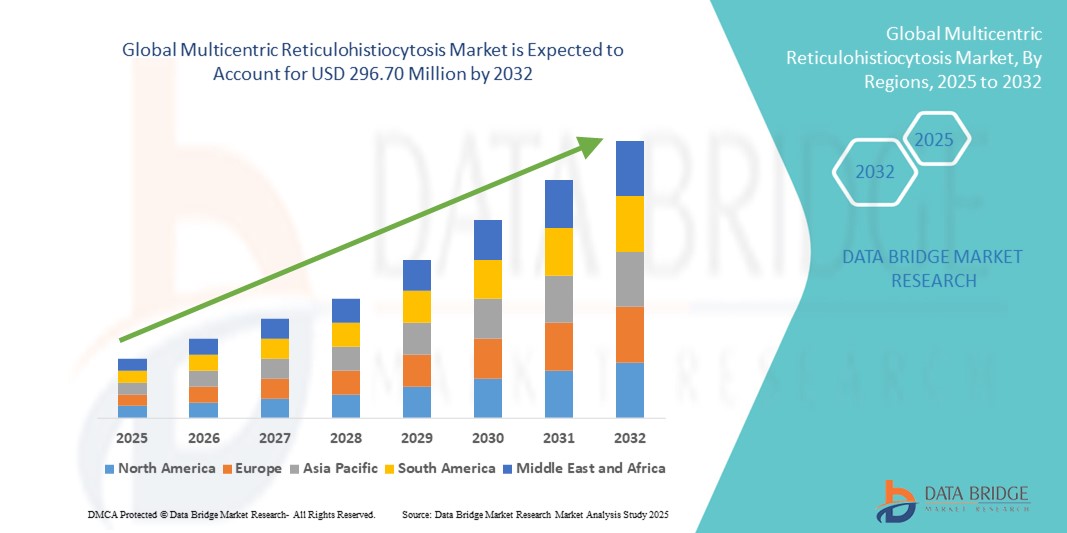
- The global multicentric reticulohistiocytosis market size was valued at USD 156.78 million in 2024 and is expected to reach USD 296.70 million by 2032, at a CAGR of 8.30% during the forecast period
- The market growth is largely fueled by increasing awareness and diagnosis of rare diseases, as well as ongoing research and development into targeted immunomodulatory and anti-inflammatory therapies specifically tailored to MRH treatment
- Furthermore, rising interest in orphan drug development and government incentives supporting rare disease research are positioning MRH-focused therapies as a niche yet promising segment within the broader autoimmune and dermatological therapeutics space. These combined dynamics are driving investment and innovation in MRH solutions, thereby contributing significantly to the market's expansion
Multicentric Reticulohistiocytosis Market Analysis
- Multicentric reticulohistiocytosis (MRH), a rare systemic inflammatory disorder affecting the skin and joints, is gaining increased clinical attention as advancements in diagnostic imaging and histopathological techniques improve early and accurate detection, enabling more timely interventions and management strategies in both hospital and specialty clinic settings
- The growing demand for MRH-specific treatments is primarily driven by rising awareness of rare autoimmune diseases, increased reporting of MRH cases globally, and ongoing development of targeted biologics and immunosuppressive therapies aimed at modulating chronic inflammation and joint degradation
- North America dominated the multicentric reticulohistiocytosis market with the largest revenue share of 38.7% in 2024, supported by advanced healthcare infrastructure, higher rate of disease diagnosis, availability of orphan drugs, and the presence of clinical research institutions conducting rare disease studies, particularly in the U.S.
- Asia-Pacific is expected to be the fastest growing region in the multicentric reticulohistiocytosis market during the forecast period due to expanding access to specialist care, growth in patient advocacy groups, and increasing governmental support for rare disease management
- Arthritis segment dominated the multicentric reticulohistiocytosis market with a market share of 47.3% in 2024, driven by its high prevalence, severe joint destruction, and the need for long-term rheumatologic management
Report Scope and Multicentric Reticulohistiocytosis Market Segmentation
|
Attributes |
Multicentric Reticulohistiocytosis Key Market Insights |
|
Segments Covered |
|
|
Countries Covered |
North America
Europe
Asia-Pacific
Middle East and Africa
South America
|
|
Key Market Players |
|
|
Market Opportunities |
|
|
Value Added Data Infosets |
In addition to the insights on market scenarios such as market value, growth rate, segmentation, geographical coverage, and major players, the market reports curated by the Data Bridge Market Research also include in-depth expert analysis, pricing analysis, brand share analysis, consumer survey, demography analysis, supply chain analysis, value chain analysis, raw material/consumables overview, vendor selection criteria, PESTLE Analysis, Porter Analysis, and regulatory framework. |
Multicentric Reticulohistiocytosis Market Trends
“Rising Focus on Early Diagnosis and Targeted Immunotherapy”
- A significant and emerging trend in the global multicentric reticulohistiocytosis (MRH) market is the increasing emphasis on early and accurate diagnosis, coupled with the development of targeted immunotherapies aimed at managing both cutaneous and joint manifestations of the disease. Enhanced diagnostic techniques—such as immunohistochemistry and dermoscopy—are playing a pivotal role in differentiating MRH from similar autoimmune or granulomatous disorders
- For instance, dermatopathologists and rheumatologists are increasingly utilizing markers such as CD68 and CD163 in biopsy analyses to support MRH diagnosis, enabling early treatment intervention. Simultaneously, researchers are exploring biologic therapies such as TNF inhibitors and IL-1 antagonists for their potential in reducing inflammation and halting joint destruction
- The integration of personalized medicine into rare disease management is also growing, with efforts to genotype patients for better treatment alignment. AI-driven clinical decision support systems are being explored to help clinicians distinguish MRH from conditions such as rheumatoid arthritis or sarcoidosis based on patient history and symptom clustering
- Furthermore, international rare disease registries are improving case tracking and enabling longitudinal data collection, which supports evidence-based treatment protocols. Organizations such as the NIH and Orphanet are backing global collaborations to enhance MRH research
- This trend toward precise diagnosis, immune-targeted therapy, and collaborative research is helping reshape the approach to MRH care. Consequently, biotechnology firms and academic research centers are increasingly investing in orphan drug development tailored to MRH and similar orphan diseases, aiming to address long-standing gaps in treatment
- The growing demand for specialized therapies and earlier identification of MRH is accelerating innovation and resource allocation across both public and private healthcare systems, particularly in North America and Europe
Multicentric Reticulohistiocytosis Market Dynamics
Driver
“Increased Awareness and Research Support for Rare Autoimmune Disorders”
- The growing global recognition of rare diseases, supported by public health campaigns and institutional research funding, is a major driver for the multicentric reticulohistiocytosis market
- For instance, in February 2024, the European Reference Networks for Rare Diseases expanded its coverage of rare multisystem inflammatory conditions, including MRH, increasing diagnostic access across member states
- Rising physician awareness and continued professional education initiatives have led to earlier identification of MRH, especially among dermatologists and rheumatologists. This is driving up the treatment rate and improving patient outcomes through timely intervention
- Moreover, government incentives such as orphan drug designations, priority reviews, and tax credits are encouraging pharmaceutical companies to explore treatment solutions for ultra-rare diseases such as MRH
- The availability of targeted biologics used in related autoimmune disorders has opened up repurposing possibilities for MRH, further stimulating market growth and clinical trial activity
Restraint/Challenge
“Diagnostic Challenges and Limited Treatment Standardization”
- The rarity of MRH, coupled with its clinical resemblance to other autoimmune and granulomatous conditions, creates significant diagnostic challenges, often resulting in misdiagnosis or delayed treatment
- For instance, overlapping symptoms with rheumatoid arthritis, sarcoidosis, or even neoplastic diseases often lead to incorrect clinical assumptions, requiring invasive procedures such as skin or synovial biopsies to confirm diagnosis
- In addition, the lack of standardized treatment protocols and FDA-approved therapies for MRH forces clinicians to rely on empirical strategies, often adapted from related diseases. This variability in treatment outcomes hinders consistent disease management
- Another barrier is the limited availability of specialists familiar with MRH, particularly in low- and middle-income countries. Without access to experienced rheumatologists or dermatopathologists, diagnosis and treatment may be further delayed
- Overcoming these challenges will require broader inclusion of MRH in rare disease diagnostic frameworks, increased research into its pathophysiology, and international collaboration to establish consensus treatment guidelines and accelerate clinical trial efforts
Multicentric Reticulohistiocytosis Market Scope
The market is segmented on the basis of symptoms, treatment, and related disease.
- By Symptoms
On the basis of symptoms, the multicentric reticulohistiocytosis market is segmented into arthritis, histiocytosis, and skin nodule. The arthritis segment dominated the market with the largest market revenue share of 47.3% in 2024, driven by its high prevalence and significant joint destruction leading to functional impairment. Patients often present with arthritis symptoms mimicking rheumatoid arthritis, which accelerates referral to rheumatology and ensures prompt therapeutic intervention. The need for long-term care and immunosuppressive treatment options further supports the dominance of this segment.
The skin nodule segment is anticipated to witness the fastest growth from 2025 to 2032, fueled by increased recognition in dermatological practice. Skin manifestations are often the earliest sign of MRH, prompting timely biopsy and diagnosis. Rising awareness and histopathological advancements are further supporting this segment's growth
- By Treatment
On the basis of treatment, the multicentric reticulohistiocytosis market is segmented into dermatologists and rheumatologists. The rheumatologists segment dominated the market with the largest market revenue share of 58.2% in 2024, driven by their central role in managing inflammatory joint damage and systemic immune modulation. The chronic and debilitating arthritis symptoms associated with MRH demand long-term rheumatological care, often involving biologics, corticosteroids, and DMARDs. Increasing access to rheumatologic expertise globally also contributes to this segment’s leadership.
The dermatologists segment is expected to witness the fastest growth during the forecast period, as skin nodules are frequently the first clinical signs prompting investigation. Dermatologists play a critical role in early diagnosis through biopsy and dermoscopy, particularly in distinguishing MRH from other dermatologic or histiocytic disorders.
- By Related Disease
On the basis of related disease, the multicentric reticulohistiocytosis market is segmented into leprosy, rheumatoid arthritis, xanthogranulomas, lymphomas, sarcoidosis, and Urbach-Wiethe disease. The rheumatoid arthritis segment dominated the market with the largest market revenue share of 29.7% in 2024, attributed to its clinical and radiological overlap with MRH. Both conditions share similar joint presentations, making RA a common misdiagnosis for MRH. This overlap results in a convergence of treatment strategies and heightened attention in rheumatology.
The xanthogranulomas segment is expected to see the fastest growth during forecast period, driven by histopathological resemblance requiring differentiation. Such aswise, the sarcoidosis segment holds clinical relevance due to overlapping granulomatous features.
Multicentric Reticulohistiocytosis Market Regional Analysis
- North America dominated the multicentric reticulohistiocytosis market with the largest revenue share of 38.7% in 2024, supported by advanced healthcare infrastructure, higher rate of disease diagnosis, availability of orphan drugs, and the presence of clinical research institutions conducting rare disease studies, particularly in the U.S.
- Patients in the region benefit from early diagnosis and access to emerging immunosuppressive and biologic therapies, supported by the presence of academic research centers and clinical trial activity focused on orphan diseases
- This widespread clinical engagement is further bolstered by supportive regulatory frameworks such as orphan drug incentives, strong insurance coverage, and active patient advocacy networks, positioning North America as a leading region for the diagnosis and treatment of MRH
U.S. Multicentric Reticulohistiocytosis Market Insight
The U.S. multicentric reticulohistiocytosis market captured the largest revenue share of 79.4% in 2024 within North America, fueled by high disease awareness, early diagnosis capabilities, and access to advanced immunosuppressive treatments. The presence of specialized rheumatology and dermatology centers, coupled with robust support for orphan drug development and rare disease research funding, continues to drive clinical and pharmaceutical engagement. In addition, strong collaboration between healthcare providers and rare disease networks is accelerating diagnosis and management strategies across the country.
Europe Multicentric Reticulohistiocytosis Market Insight
The Europe multicentric reticulohistiocytosis market is projected to expand at a substantial CAGR throughout the forecast period, primarily driven by an advanced healthcare system and growing investment in rare disease research. Government-backed initiatives and cross-border reference networks are enhancing access to diagnosis and treatment. Increasing collaboration between dermatology and rheumatology specialties, along with the expansion of rare disease registries, is helping improve case recognition and care delivery across multiple countries.
U.K. Multicentric Reticulohistiocytosis Market Insight
The U.K. multicentric reticulohistiocytosis market is anticipated to grow at a noteworthy CAGR during the forecast period, supported by centralized healthcare policies and a strong focus on rare disease management. The NHS’s integration of rare inflammatory disorder protocols and improved referral pathways between GPs and specialists are enhancing early detection rates. Furthermore, active participation in European rare disease networks is helping build consistent treatment standards and expanding access to novel therapies.
Germany Multicentric Reticulohistiocytosis Market Insight
The Germany multicentric reticulohistiocytosis market is expected to expand at a considerable CAGR during the forecast period, driven by the country’s structured healthcare system, investment in precision diagnostics, and robust rare disease registries. Germany’s emphasis on early detection and innovation in immunological treatments supports the integration of advanced therapeutic approaches, while growing awareness among dermatologists and rheumatologists is increasing diagnosis accuracy and clinical response.
Asia-Pacific Multicentric Reticulohistiocytosis Market Insight
The Asia-Pacific multicentric reticulohistiocytosis market is poised to grow at the fastest CAGR of 23.1% during 2025 to 2032, fueled by rising healthcare access, improved diagnostic capabilities, and increased awareness in countries such as China, Japan, and India. Public health campaigns and medical education initiatives focused on rare diseases are improving early detection, while regional advancements in biologics and immunotherapy are expanding treatment availability. Increasing cross-specialty collaboration is also contributing to a growing clinical response to MRH across APAC.
Japan Multicentric Reticulohistiocytosis Market Insight
The Japan multicentric reticulohistiocytosis market is gaining traction due to its high medical standards, aging population, and strong emphasis on rare disease identification. Multidisciplinary hospital networks are facilitating prompt diagnosis and patient care coordination. Japan’s extensive use of advanced diagnostic imaging and targeted therapy options, coupled with government-backed orphan disease frameworks, is enhancing MRH management and clinical research momentum in the country.
India Multicentric Reticulohistiocytosis Market Insight
The India multicentric reticulohistiocytosis market accounted for the largest market revenue share in Asia Pacific in 2024, attributed to improved access to specialty healthcare, rising awareness of rare autoimmune diseases, and the growing presence of rheumatology and dermatology clinics. With increasing case documentation and efforts by domestic medical associations to promote rare disease education, MRH is gaining recognition. Government-led digital health initiatives and clinical trial participation are also strengthening early detection and treatment frameworks across urban centers.
Multicentric Reticulohistiocytosis Market Share
The multicentric reticulohistiocytosis industry is primarily led by well-established companies, including:
- Pfizer Inc. (U.S.)
- Johnson & Johnson Services Inc. (U.S.)
- Novartis AG (Switzerland)
- Amgen (U.S.)
- Bristol Myers Squibb (U.S.)
- Lilly (U.S.)
- Gilead Sciences (U.S.)
- Sanofi (France)
- GSK plc (U.K.)
- Ultragenyx Pharmaceutical Inc. (U.S.)
- Abivax (France)
- Acelyrin (U.S.)
- IGM Biosciences (U.S.)
- AnaptysBio (U.S.)
- Mesoblast (Australia)
- Kymera Therapeutics, Inc. (U.S.)
What are the Recent Developments in Global Multicentric Reticulohistiocytosis Market?
- In April 2024, the National Institutes of Health (NIH) in the U.S. expanded its Rare Diseases Clinical Research Network to include multicentric reticulohistiocytosis under its inflammatory and autoimmune disease programs. This inclusion aims to facilitate deeper understanding of MRH’s pathophysiology through patient registries and biomarker research. The initiative highlights growing governmental support for ultra-rare conditions and enhances collaboration across clinical and research institutions focused on rare systemic diseases.
- In March 2024, Orphalan SA, a biotech company specializing in orphan diseases, announced a clinical research collaboration with European hospitals to assess the off-label efficacy of IL-1 inhibitors in patients diagnosed with MRH. This development marks a strategic push toward repurposing existing biologics for MRH treatment and reflects the industry's broader commitment to addressing gaps in therapeutic options for rare rheumatologic disorders
- In February 2024, GlobalSkin (International Alliance of Dermatology Patient Organizations) launched a rare skin disease awareness campaign, including multicentric reticulohistiocytosis, aimed at improving early diagnosis through increased awareness among primary care providers and dermatologists. The campaign, supported by digital and clinical outreach, signifies a growing movement to integrate patient voices and real-world evidence into rare disease policy and care delivery
- In January 2024, University Hospital Zurich, Switzerland, initiated a multi-center observational study to document the long-term progression of MRH and responses to immunomodulatory therapies across diverse populations. The project is designed to generate standardized clinical data that could support future regulatory filings and treatment guidelines, reflecting academia’s growing role in driving therapeutic innovation for rare diseases
- In January 2023, the European Medicines Agency (EMA) granted orphan drug status to a novel TNF-alpha inhibitor candidate being evaluated for off-label use in severe MRH cases. This designation facilitates accelerated development and regulatory support, underscoring the need for dedicated therapies to treat MRH. It also reflects increasing recognition among regulatory bodies of the urgent unmet needs in this disease space

- Interactive Data Analysis Dashboard
- Company Analysis Dashboard for high growth potential opportunities
- Research Analyst Access for customization & queries
- Competitor Analysis with Interactive dashboard
- Latest News, Updates & Trend analysis
- Harness the Power of Benchmark Analysis for Comprehensive Competitor Tracking
Data collection and base year analysis are done using data collection modules with large sample sizes. The stage includes obtaining market information or related data through various sources and strategies. It includes examining and planning all the data acquired from the past in advance. It likewise envelops the examination of information inconsistencies seen across different information sources. The market data is analysed and estimated using market statistical and coherent models. Also, market share analysis and key trend analysis are the major success factors in the market report. To know more, please request an analyst call or drop down your inquiry.
The key research methodology used by DBMR research team is data triangulation which involves data mining, analysis of the impact of data variables on the market and primary (industry expert) validation. Data models include Vendor Positioning Grid, Market Time Line Analysis, Market Overview and Guide, Company Positioning Grid, Patent Analysis, Pricing Analysis, Company Market Share Analysis, Standards of Measurement, Global versus Regional and Vendor Share Analysis. To know more about the research methodology, drop in an inquiry to speak to our industry experts.
Data Bridge Market Research is a leader in advanced formative research. We take pride in servicing our existing and new customers with data and analysis that match and suits their goal. The report can be customized to include price trend analysis of target brands understanding the market for additional countries (ask for the list of countries), clinical trial results data, literature review, refurbished market and product base analysis. Market analysis of target competitors can be analyzed from technology-based analysis to market portfolio strategies. We can add as many competitors that you require data about in the format and data style you are looking for. Our team of analysts can also provide you data in crude raw excel files pivot tables (Fact book) or can assist you in creating presentations from the data sets available in the report.












