


Musculoskeletal (MSK) Disease Management Market Size
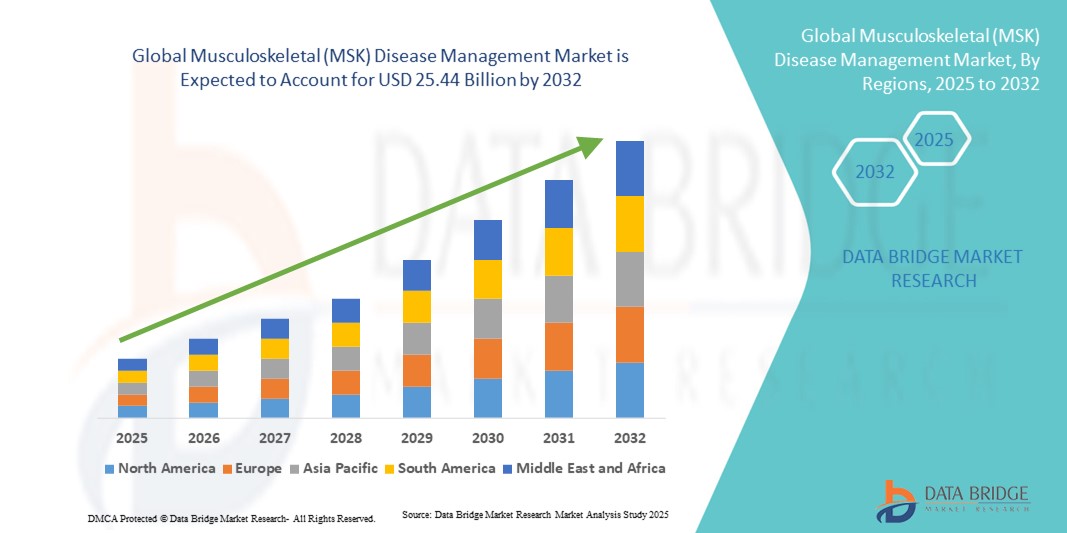
- The global musculoskeletal (MSK) disease management market size was valued at USD 4.92 billion in 2024 and is expected to reach USD 25.44 billion by 2032, at a CAGR of 22.80% during the forecast period
- The market growth is largely fueled by the increasing prevalence of musculoskeletal disorders, aging populations, and rising awareness about early diagnosis and effective disease management. Technological advancements in treatment options, including minimally invasive procedures, regenerative therapies, and digital health monitoring tools, are further driving market expansion
- Furthermore, growing demand from hospitals, rehabilitation centers, and orthopedic clinics for comprehensive MSK disease management solutions is establishing these therapies and services as essential components of patient care. These converging factors are accelerating the adoption of advanced Musculoskeletal (MSK) Disease Management solutions, thereby significantly boosting the growth of the market across diagnostic, therapeutic, and rehabilitation applications
Musculoskeletal (MSK) Disease Management Market Analysis
- The musculoskeletal (MSK) disease management market is increasingly vital in modern healthcare systems due to the growing prevalence of musculoskeletal disorders, rising geriatric population, and increasing adoption of advanced diagnostic, therapeutic, and rehabilitation solutions in both clinical and outpatient settings
- The escalating demand for MSK disease management solutions is primarily fueled by the rising incidence of orthopedic conditions, sports-related injuries, osteoarthritis, and chronic pain, coupled with growing awareness about preventive care, minimally invasive procedures, and rehabilitation programs
- North America dominated the musculoskeletal (MSK) disease management market with the largest revenue share of 30.4% in 2024, supported by advanced healthcare infrastructure, high surgical volumes, early adoption of minimally invasive techniques, and strong presence of key medical device manufacturers. The U.S. leads in adoption of robotic-assisted surgery, image-guided procedures, and advanced rehabilitation solutions, driving market growth
- Asia-Pacific is expected to be the fastest-growing region in the musculoskeletal (MSK) disease management market during the forecast period, with an CAGR from 2025 to 2032, driven by rapid urbanization, rising disposable incomes, expansion of surgical capacity, and growing investments in healthcare modernization in countries such as China, India, and Japan
- The adults segment dominated the musculoskeletal (MSK) disease management market with a market share of 46.7% in 2024, due to the high prevalence of musculoskeletal conditions such as back pain, sports injuries, and osteoarthritis in this population
Report Scope and Musculoskeletal (MSK) Disease Management Market Segmentation
|
Attributes |
Musculoskeletal (MSK) Disease Management Key Market Insights |
|
Segments Covered |
|
|
Countries Covered |
North America
Europe
Asia-Pacific
Middle East and Africa
South America
|
|
Key Market Players |
|
|
Market Opportunities |
|
|
Value Added Data Infosets |
In addition to the insights on market scenarios such as market value, growth rate, segmentation, geographical coverage, and major players, the market reports curated by the Data Bridge Market Research also include in-depth expert analysis, pricing analysis, brand share analysis, consumer survey, demography analysis, supply chain analysis, value chain analysis, raw material/consumables overview, vendor selection criteria, PESTLE Analysis, Porter Analysis, and regulatory framework. |
Musculoskeletal (MSK) Disease Management Market Trends
Enhanced Efficiency and Integration in Musculoskeletal Care
- A significant and accelerating trend in the global musculoskeletal (MSK) disease management market is the deepening integration of advanced diagnostic, therapeutic, and rehabilitation technologies. This convergence of tools and approaches is significantly enhancing clinical efficiency, patient monitoring, and personalized treatment outcomes
- For instance, modern MSK management solutions increasingly combine real-time imaging, computer-assisted surgical planning, and data-driven rehabilitation programs, enabling clinicians to optimize patient care from diagnosis to recovery. Hospitals and specialty clinics are adopting integrated platforms that track patient progress, adjust therapy plans, and provide detailed insights for both short-term and long-term musculoskeletal health
- The integration of minimally invasive surgical techniques with advanced rehabilitation technologies allows for faster recovery, reduced hospital stays, and improved functional outcomes. For instance, robotic-assisted orthopedic surgery combined with targeted physiotherapy protocols enables more precise interventions and tailored post-operative care for patients with fractures, osteoarthritis, or ligament injuries
- Centralized patient management systems are becoming increasingly prevalent, allowing healthcare providers to consolidate diagnostic results, surgical data, and rehabilitation progress into a unified digital framework. This integration enhances coordination among multidisciplinary teams and ensures that treatment is consistent, efficient, and evidence-based
- The trend toward more comprehensive, data-driven, and patient-centric musculoskeletal care is fundamentally reshaping clinical practices and expectations. Consequently, companies and healthcare providers are developing integrated MSK management platforms that streamline care pathways, improve surgical accuracy, and enable continuous monitoring of patient outcomes
- The demand for solutions that offer seamless integration across diagnostics, treatment, and rehabilitation is growing rapidly across both hospital and outpatient care settings, as patients and providers increasingly prioritize personalized, effective, and efficient musculoskeletal healthcare
Musculoskeletal (MSK) Disease Management Market Dynamics
Driver
Growing Need Due to Rising Prevalence of Musculoskeletal Disorders
- The increasing prevalence of musculoskeletal disorders, coupled with rising awareness about preventive care and rehabilitation solutions, is a significant driver for the heightened demand for Musculoskeletal (MSK) Disease Management solutions
- For instance, in April 2024, several healthcare providers in the U.S. announced the adoption of integrated MSK management platforms combining advanced imaging, robotic-assisted surgery, and post-operative rehabilitation programs. Such strategies by key companies are expected to drive the musculoskeletal (MSK) disease management industry growth in the forecast period
- As patients and healthcare providers become more aware of the long-term impact of musculoskeletal conditions, comprehensive MSK solutions offer advanced features such as early diagnosis, personalized treatment planning, and continuous monitoring, providing a compelling improvement over traditional therapies
- Furthermore, the growing adoption of digital rehabilitation platforms and telehealth-based physiotherapy programs are making MSK disease management more accessible and efficient, offering seamless integration across hospitals, clinics, and home care settings
- The convenience of coordinated care pathways, structured rehabilitation programs, and remote monitoring of patient progress are key factors propelling the adoption of MSK management solutions in both hospital and outpatient sectors. The trend towards multidisciplinary care models and the increasing availability of evidence-based, patient-centric MSK solutions further contribute to market growth
Restraint/Challenge
High Treatment Costs and Limited Awareness in Emerging Regions
- Concerns surrounding the high costs of advanced MSK management systems, including robotic-assisted surgery, imaging-guided interventions, and personalized rehabilitation programs, pose a significant challenge to broader market penetration. As advanced MSK solutions involve substantial investment in infrastructure and training, they can be less accessible to price-sensitive healthcare providers and patients, particularly in developing regions
- For instance, high treatment costs and limited awareness about comprehensive MSK care in emerging markets have delayed the adoption of these solutions in certain regions
- Addressing these challenges through cost-effective solutions, government initiatives for musculoskeletal health, and training programs for healthcare professionals is crucial for expanding market access. Companies and providers are emphasizing affordable and modular MSK solutions, along with patient education campaigns, to reassure potential adopters
- While costs are gradually decreasing with technological advancements and local manufacturing, the perceived premium for advanced MSK care can still hinder widespread adoption, especially for patients and facilities not requiring high-end interventions
- Overcoming these challenges through affordable care models, awareness programs, and scalable MSK management solutions will be vital for sustained market growth
Musculoskeletal (MSK) Disease Management Market Scope
The market is segmented on the basis of type, technology, integration type, modality, application, patient population, and end-user.
- By Type
On the basis of type, the musculoskeletal (MSK) disease management market is segmented into digital biofeedback systems, musculoskeletal-focused digital apps, solutions, and others. The digital biofeedback systems segment dominated the largest market revenue share of 38.6% in 2024, driven by its ability to provide real-time feedback on muscle activity and movement patterns, which helps clinicians tailor rehabilitation programs precisely for each patient. This system enhances treatment effectiveness and accelerates recovery, making it a preferred solution in hospitals, clinics, and virtual care settings. Integration with wearable sensors and advanced monitoring platforms allows continuous patient tracking, improving adherence to therapy regimens. Its ability to capture detailed data for outcome assessment supports clinical decision-making. Furthermore, Digital Biofeedback Systems are widely used in post-surgery rehabilitation and chronic condition management, which adds to their dominance. The segment’s robust adoption is also fueled by its compatibility with both in-person and remote therapy programs.
The musculoskeletal-focused digital apps segment is expected to witness the fastest CAGR of 22.1% from 2025 to 2032, supported by the increasing demand for accessible, interactive, and home-based rehabilitation programs. These apps guide patients through structured exercises, track progress, and allow therapists to monitor adherence remotely. Gamification features improve patient engagement, while analytics provide insights for personalized therapy adjustments. Low deployment costs and wide accessibility make these apps particularly attractive for outpatient care and telehealth services. The apps are also being increasingly integrated with wearable devices and cloud-based platforms, enhancing their functionality. Their scalability across different patient populations, including adults and geriatrics, contributes to rapid adoption. In addition, the growing trend of digital health and virtual care supports the segment’s significant growth trajectory.
- By Technology
On the basis of technology, the musculoskeletal (MSK) disease management market is segmented into precision motion technology, computer vision technology, and other technologies. The Precision Motion Technology segment dominated with a market share of 41.3% in 2024, as it enables highly accurate measurement of joint angles, muscle activation, and motion patterns during rehabilitation. This technology allows clinicians to create personalized therapy plans based on precise biomechanical data. Hospitals and rehabilitation centers leverage Precision Motion Technology for post-surgical recovery, chronic pain management, and injury prevention. Integration with wearable sensors and telehealth platforms ensures continuous monitoring, real-time feedback, and improved treatment outcomes. Its adoption is also driven by the rising emphasis on data-driven rehabilitation and patient-centered care. Moreover, precision tracking facilitates performance evaluation and outcome reporting, which is critical for healthcare providers and insurers.
The Computer Vision Technology segment is anticipated to record the fastest CAGR of 19.7% from 2025 to 2032, driven by non-invasive, markerless motion tracking capabilities. Computer vision allows remote assessment of patient movements without the need for specialized sensors, making virtual therapy sessions more effective and convenient. It enhances patient engagement through real-time visual feedback and performance monitoring. Integration with digital therapy platforms allows therapists to remotely adjust treatment plans and track progress efficiently. The technology is increasingly adopted in home rehabilitation programs, outpatient centers, and telehealth solutions. Its rapid development is supported by AI-assisted motion analysis and machine learning algorithms, which improve accuracy and predictive insights. As a result, this segment is set for significant growth in the MSK market.
- By Integration Type
On the basis of integration type, the musculoskeletal (MSK) disease management market is segmented into phone, tablet, computer, and others. The Phone segment dominated with a market share of 36.5% in 2024, due to its widespread use as the primary interface for digital rehabilitation and MSK-focused apps. Smartphones offer portability, seamless connectivity, and user-friendly interfaces that allow patients to engage with therapy programs anytime and anywhere. Integration with wearable sensors and cloud platforms provides clinicians with real-time access to patient data, enhancing remote monitoring and treatment effectiveness. Phones also facilitate interactive guidance, progress tracking, and alerts for adherence, increasing the likelihood of positive outcomes. Their accessibility makes them suitable for all patient populations, including adults and geriatrics. In addition, smartphones support telehealth platforms, expanding care delivery beyond traditional clinical settings.
The Tablet segment is expected to witness the fastest CAGR of 21.4% from 2025 to 2032, supported by larger display sizes, interactive touch interfaces, and enhanced visualization for guided therapy sessions. Tablets allow detailed visual instructions, immersive exercise demonstrations, and real-time feedback, which improves therapy adherence and effectiveness. They are particularly favored in clinics and home care settings for patients requiring more detailed monitoring and engagement. Integration with virtual therapy platforms and biofeedback systems enhances their utility for both pre- and post-surgical applications. The tablets’ ease of use for elderly patients and the ability to connect multiple users simultaneously further accelerates adoption. Their compatibility with advanced analytics platforms also supports clinicians in adjusting treatment plans dynamically.
- By Modality
On the basis of modality, the musculoskeletal (MSK) disease management market is segmented into virtual therapy, in-person therapy, customized/personalized therapy, and others. The in-person therapy segment dominated with a market share of 42.8% in 2024, owing to the critical need for hands-on guidance from trained therapists during complex rehabilitation sessions. In-person therapy ensures correct exercise execution, immediate feedback, and reduces the risk of complications, which is particularly important post-surgery. Hospitals and clinics prefer this modality for high-risk patients, while integrating digital monitoring solutions to enhance outcomes. Its effectiveness in restoring mobility, reducing pain, and accelerating recovery solidifies its dominant position. In-person sessions also facilitate personalized adjustments in therapy intensity and duration, improving patient satisfaction and clinical results.
The Virtual Therapy segment is projected to witness the fastest CAGR of 20.3% from 2025 to 2032, driven by tele-rehabilitation solutions, remote monitoring technologies, and patient preference for home-based care. Virtual therapy allows patients to perform guided exercises with real-time clinician feedback without visiting a clinic. The modality enhances accessibility, reduces travel time, and ensures continuity of care. Integration with motion tracking, AI analytics, and interactive apps further enhances engagement and treatment effectiveness. Its adoption is fueled by the rising trend of digital health, increasing comfort with technology, and demand for cost-effective rehabilitation. Virtual therapy is especially advantageous for patients in rural areas or with mobility constraints.
- By Application
On the basis of application, the musculoskeletal (msk) disease management market is segmented into pre-surgery applications and post-surgery applications. The post-surgery applications segment dominated with a market share of 44.1% in 2024, driven by the need for structured rehabilitation programs after orthopedic surgeries. Post-surgery therapy ensures faster recovery, reduces complications, and restores functional mobility. Hospitals and clinics deploy advanced MSK solutions to monitor patient adherence, track recovery metrics, and customize interventions. Integration with digital platforms and wearable sensors supports continuous monitoring, providing data-driven insights to clinicians. The growing number of joint replacement surgeries and orthopedic interventions globally also fuels demand. Post-surgery applications improve patient outcomes, reduce hospital readmissions, and enhance quality of life, reinforcing their market leadership.
The Pre-Surgery Applications segment is expected to witness the fastest CAGR of 18.5% from 2025 to 2032, supported by prehabilitation programs aimed at improving patient strength, flexibility, and resilience prior to surgery. Pre-surgery interventions help reduce operative risks, accelerate post-operative recovery, and improve overall surgical outcomes. Integration with digital apps and remote monitoring tools ensures patient engagement and adherence to exercise protocols. Rising awareness of prehabilitation benefits among healthcare providers and patients is driving adoption. The segment also benefits from the increasing number of elective orthopedic surgeries and preventive care initiatives globally.
- By Patient Population
On the basis of patient population, the musculoskeletal (MSK) disease management market is segmented into pediatrics, adults, and geriatrics. The adults segment dominated with a market share of 46.7% in 2024, due to the high prevalence of musculoskeletal conditions such as back pain, sports injuries, and osteoarthritis in this population. Adults form the primary user base for both in-person and digital rehabilitation solutions. Their higher engagement with technology-based interventions further strengthens market dominance. The segment benefits from workplace wellness programs, telehealth adoption, and access to rehabilitation centers. Adult patients also participate in prehabilitation and post-surgery programs, boosting market demand.
The Geriatrics segment is projected to witness the fastest CAGR of 21.0% from 2025 to 2032, driven by the aging global population and increased demand for fall prevention, mobility support, and post-operative rehabilitation programs tailored for elderly patients. Geriatric-focused MSK solutions help reduce hospitalizations, prevent complications, and improve quality of life. Home-based care and tele-rehabilitation initiatives further accelerate adoption in this segment. Growing awareness of age-related musculoskeletal disorders also contributes to market growth.
- By End-User
On the basis of end-user, the musculoskeletal (MSK) disease management market is segmented into hospitals & clinics, nursing homes, health centers, rehabilitation centres, virtual/home health care settings, and others. The hospitals & clinics segment dominated with a market share of 48.2% in 2024, owing to the availability of advanced MSK therapy equipment, trained professionals, and integration with surgical and diagnostic services. Hospitals act as primary hubs for both in-person and digital rehabilitation programs. The concentration of complex cases and post-surgical care drives adoption in this segment.
The Virtual/Home Health Care Settings segment is expected to witness the fastest CAGR of 23.4% from 2025 to 2032, driven by the growing adoption of telehealth solutions and remote rehabilitation technologies. Patients increasingly prefer receiving care in the comfort of their homes, which reduces the need for frequent hospital visits and travel, particularly for those with limited mobility or residing in remote areas. Integration with wearable devices, sensors, and remote monitoring platforms allows healthcare providers to track progress in real time, adjust therapy plans, and ensure patient adherence to prescribed exercises. These settings also enable personalized care, as clinicians can tailor rehabilitation programs to the specific needs and recovery pace of individual patients.
Musculoskeletal (MSK) Disease Management Market Regional Analysis
- North America dominated the musculoskeletal (MSK) disease management market with the largest revenue share of 30.4% in 2024, supported by advanced healthcare infrastructure, high surgical volumes, early adoption of minimally invasive techniques, and a strong presence of key medical device manufacturers
- The region benefits from well-established hospitals, skilled medical professionals, and widespread access to advanced rehabilitation technologies
- The availability of robotic-assisted surgery, image-guided procedures, and integrated post-operative care solutions further drives the demand for MSK disease management systems
U.S. Musculoskeletal (MSK) Disease Management Market Insight
The U.S. musculoskeletal (MSK) disease management market captured the largest revenue share within North America in 2024, fueled by high adoption of robotic-assisted orthopedic surgeries, advanced imaging technologies, and integrated rehabilitation programs. Hospitals and clinics are increasingly implementing personalized therapy solutions, digital biofeedback systems, and tele-rehabilitation platforms. The strong focus on improving surgical outcomes, reducing recovery times, and enhancing patient quality of life underpins market growth. Government support for healthcare modernization and ongoing investments in clinical infrastructure also bolster expansion.
Europe Musculoskeletal (MSK) Disease Management Market Insight
The Europe musculoskeletal (MSK) disease management market is projected to grow steadily during the forecast period, driven by increasing prevalence of musculoskeletal disorders, rising demand for post-operative rehabilitation, and well-established healthcare infrastructure. The adoption of digital therapy solutions, computer vision technologies, and integrated patient monitoring systems supports efficient care delivery. Countries across Europe are investing in clinical research, advanced medical devices, and rehabilitation centers, resulting in a significant increase in MSK management services across residential, hospital, and rehabilitation settings.
U.K. Musculoskeletal (MSK) Disease Management Market Insight
The U.K. musculoskeletal (MSK) disease management market is anticipated to expand at a notable CAGR, driven by rising cases of orthopedic injuries, aging population, and the government’s initiatives to enhance post-surgical care. Hospitals and specialized clinics are increasingly incorporating digital biofeedback systems, virtual therapy platforms, and advanced motion analysis technologies. The growing emphasis on patient-centered care and rehabilitation outcomes stimulates adoption across healthcare facilities, while private and public healthcare collaboration promotes access to innovative MSK management solutions.
Germany Musculoskeletal (MSK) Disease Management Market Insight
The Germany musculoskeletal (MSK) disease management market is expected to witness significant growth, supported by strong healthcare infrastructure, high patient awareness, and technological advancements in diagnostics and rehabilitation. The country’s emphasis on precision medicine, preventive care, and personalized therapy drives the integration of computer vision and digital biofeedback systems into treatment protocols. Hospitals and rehabilitation centers are adopting advanced tools to enhance post-surgical recovery, monitor patient progress, and improve clinical outcomes.
Asia-Pacific Musculoskeletal (MSK) Disease Management Market Insight
The Asia-Pacific musculoskeletal (MSK) disease management market is poised to grow at the fastest CAGR from 2025 to 2032, driven by rapid urbanization, rising disposable incomes, expansion of surgical capacity, and growing investments in healthcare modernization in countries such as China, India, and Japan. Increasing awareness of musculoskeletal disorders, improved access to advanced rehabilitation services, and government initiatives to upgrade healthcare infrastructure further support market growth. The region is witnessing accelerated adoption of digital therapy solutions, precision motion technologies, and tele-rehabilitation programs.
Japan Musculoskeletal (MSK) Disease Management Market Insight
The Japan musculoskeletal (MSK) disease management market is gaining momentum due to the country’s aging population, high prevalence of orthopedic disorders, and strong healthcare infrastructure. Hospitals and clinics are investing in virtual therapy solutions, personalized rehabilitation programs, and computer-assisted motion analysis technologies. The focus on improving post-surgical recovery, patient compliance, and overall treatment efficiency drives adoption across residential, hospital, and home care settings.
China Musculoskeletal (MSK) Disease Management Market Insight
The China musculoskeletal (MSK) disease management market accounted for the largest market revenue share within Asia-Pacific in 2024, supported by the country’s expanding middle class, rapid urbanization, and increased investment in healthcare infrastructure. Rising incidence of musculoskeletal disorders, government initiatives to modernize hospitals, and growing patient awareness contribute to market growth. Adoption of digital biofeedback systems, computer vision-based rehabilitation tools, and home-based tele-rehabilitation programs is increasing, enabling wider accessibility and improved clinical outcomes.
Musculoskeletal (MSK) Disease Management Market Share
The musculoskeletal (MSK) disease management industry is primarily led by well-established companies, including:
- RecoveryOne (U.S.)
- Omada Health Inc. (U.S.)
- DarioHealth Corp. (U.S.)
- Included Health, Inc. (U.S.)
- Kaia Health (U.S.)
- International Marketing Corporation Pvt. Ltd. (U.S.)
- Movement RX (U.S.)
- Phzio (Canada)
- Airrosti Rehab Center, LLC (U.S.)
- SimpleTherapy, Inc. (U.S.)
- Hinge Health, Inc. (U.S.)
- Sword Health, Inc. (Portugal)
- SPRITE HEALTH (U.S.)
- Limber Health, Inc. (U.S.)
Latest Developments in Global Musculoskeletal (MSK) Disease Management Market
- In April 2022, Airrosti Rehab Center, LLC formed a partnership with Buoy Health’s innovative healthcare marketplace. The partnership resulted to bring good value MSK care to Buoy’s more than 2 million users per month and the development of novel MSK virtual products
- In March 2022, DarioHealth Corp. formed a contractual agreement with Sanofi U.S. The agreement focused on the acceleration of commercial growth for DarioHealth Corp. in MSK disease management digital portfolio and the development of Digital Health Solutions on the DarioHealth Corp. platform
- In December 2024, TailorCare acquired RecoveryOne to revolutionize musculoskeletal care. TailorCare, a leading provider of specialty value-based care solutions, announced the acquisition of RecoveryOne, a virtual physical therapy platform focused on musculoskeletal (MSK) recovery. This strategic acquisition enhances TailorCare’s capabilities, creating a comprehensive MSK offering for patients, and better serving the needs of payers and providers
- In May 2023, Sword Health launched its platform to predict, prevent, and treat pain. Sword Health, the world’s fastest-growing pain solution, announced the launch of its platform to predict, prevent, and treat pain. With its products now used by members of more than 2,500 companies across three continents, Sword is turning everything it has learned about making optimal clinical-grade treatments more accessible into a single platform that can help people avoid and treat the pain that afflicts 60% of adults each year according to the CDC

- Interactive Data Analysis Dashboard
- Company Analysis Dashboard for high growth potential opportunities
- Research Analyst Access for customization & queries
- Competitor Analysis with Interactive dashboard
- Latest News, Updates & Trend analysis
- Harness the Power of Benchmark Analysis for Comprehensive Competitor Tracking
Data collection and base year analysis are done using data collection modules with large sample sizes. The stage includes obtaining market information or related data through various sources and strategies. It includes examining and planning all the data acquired from the past in advance. It likewise envelops the examination of information inconsistencies seen across different information sources. The market data is analysed and estimated using market statistical and coherent models. Also, market share analysis and key trend analysis are the major success factors in the market report. To know more, please request an analyst call or drop down your inquiry.
The key research methodology used by DBMR research team is data triangulation which involves data mining, analysis of the impact of data variables on the market and primary (industry expert) validation. Data models include Vendor Positioning Grid, Market Time Line Analysis, Market Overview and Guide, Company Positioning Grid, Patent Analysis, Pricing Analysis, Company Market Share Analysis, Standards of Measurement, Global versus Regional and Vendor Share Analysis. To know more about the research methodology, drop in an inquiry to speak to our industry experts.
Data Bridge Market Research is a leader in advanced formative research. We take pride in servicing our existing and new customers with data and analysis that match and suits their goal. The report can be customized to include price trend analysis of target brands understanding the market for additional countries (ask for the list of countries), clinical trial results data, literature review, refurbished market and product base analysis. Market analysis of target competitors can be analyzed from technology-based analysis to market portfolio strategies. We can add as many competitors that you require data about in the format and data style you are looking for. Our team of analysts can also provide you data in crude raw excel files pivot tables (Fact book) or can assist you in creating presentations from the data sets available in the report.













