


Nanotechnology in Medical Devices Market Size
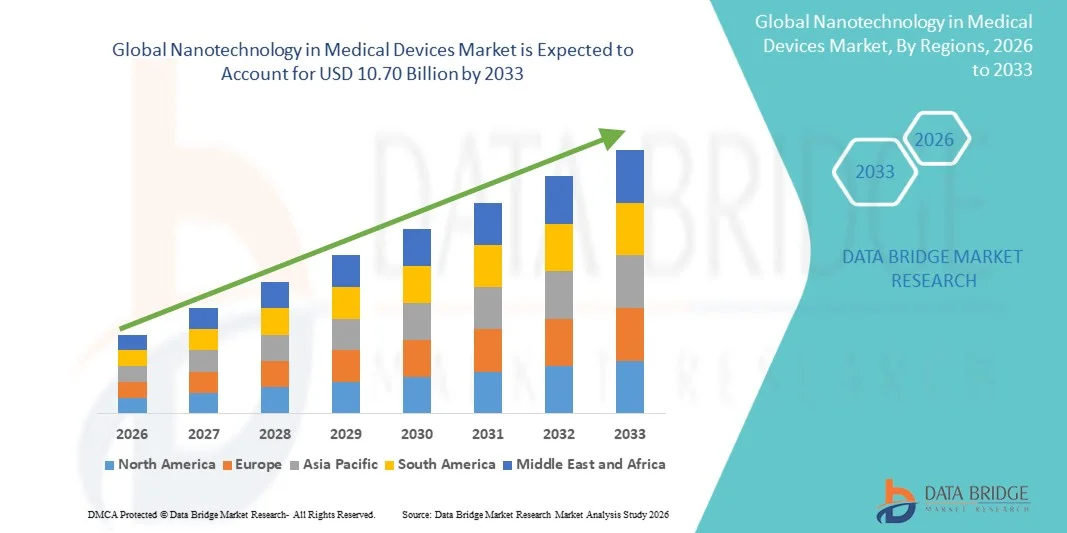
- The global nanotechnology in medical devices market size was valued at USD 4.17 billion in 2025 and is expected to reach USD 10.70 billion by 2033, at a CAGR of 12.51% during the forecast period
- The market growth is largely fueled by the increasing integration of nanomaterials and nanoscale engineering in advanced medical devices, driving innovation in diagnostics, drug delivery systems, implantable devices, and minimally invasive procedures
- Furthermore, rising demand for precision medicine, enhanced device performance, improved biocompatibility, and early disease detection is positioning nanotechnology-enabled medical devices as a transformative solution in modern healthcare. These converging factors are accelerating technological adoption, thereby significantly boosting the industry's growth
Nanotechnology in Medical Devices Market Analysis
- Nanotechnology in medical devices involves the integration of nanoscale materials, coatings, and engineered structures to enhance device functionality, enabling improved diagnostics, targeted therapies, and advanced implant performance across hospitals, research institutions, and specialized care settings
- The escalating demand for nanotechnology-enabled medical devices is primarily fueled by the rising prevalence of chronic diseases, increasing preference for minimally invasive treatments, and growing focus on precision medicine and early-stage disease detection
- North America dominated the nanotechnology in medical devices market with the largest revenue share of 40.4% in 2025, characterized by advanced healthcare infrastructure, strong R&D investments, and the presence of leading medical device manufacturers, with the U.S. witnessing significant innovation in nano-enabled biochips, implantable materials, and active implantable devices supported by favorable regulatory frameworks
- Asia-Pacific is expected to be the fastest growing region in the nanotechnology in medical devices market during the forecast period due to expanding healthcare access, rising government funding for nanotechnology research, and increasing adoption of advanced diagnostic technologies
- Implantable Materials segment dominated the nanotechnology in medical devices market with a market share of 36.8% in 2025, driven by growing demand for enhanced biocompatibility, durability, and improved patient outcomes in orthopedic, cardiovascular, and dental implant applications
Report Scope and Nanotechnology in Medical Devices Market Segmentation
|
Attributes |
Nanotechnology in Medical Devices Key Market Insights |
|
Segments Covered |
|
|
Countries Covered |
North America
Europe
Asia-Pacific
Middle East and Africa
South America
|
|
Key Market Players |
|
|
Market Opportunities |
|
|
Value Added Data Infosets |
In addition to the insights on market scenarios such as market value, growth rate, segmentation, geographical coverage, and major players, the market reports curated by the Data Bridge Market Research also include in-depth expert analysis, patient epidemiology, pipeline analysis, pricing analysis, and regulatory framework |
Nanotechnology in Medical Devices Market Trends
“Advancement of Precision Medicine Through Nano-Enabled Therapeutics and Diagnostics”
- A significant and accelerating trend in the global nanotechnology in medical devices market is the deepening integration of nanoscale materials with precision medicine platforms and advanced diagnostic systems. This convergence of technologies is significantly enhancing treatment accuracy and early disease detection capabilities
- For instance, nano-enabled biochips and biosensors are increasingly being utilized for rapid biomarker detection in oncology and infectious diseases, while nano-engineered drug delivery coatings are improving therapeutic precision and minimizing systemic side effects
- Nanotechnology integration in medical devices enables features such as targeted drug release, enhanced imaging contrast, and improved cellular interaction at the molecular level. For instance, certain nano-coated implantable materials enhance biocompatibility and reduce inflammation, while advanced nanosensors provide real-time monitoring of physiological parameters for proactive medical intervention. Furthermore, nano-engineered surfaces support improved tissue integration and faster healing responses
- The seamless incorporation of nanomaterials into therapeutic and diagnostic devices facilitates multifunctionality within a single platform. Through integrated nanoscale engineering, devices can simultaneously diagnose, monitor, and treat medical conditions, creating a more efficient and personalized healthcare ecosystem
- This trend toward highly precise, minimally invasive, and multifunctional nano-enabled devices is fundamentally reshaping clinical treatment standards. Consequently, companies are investing in advanced nanomaterial research to develop next-generation active implantable devices and biochips with enhanced sensitivity, durability, and patient safety profiles
- The demand for nanotechnology-enabled medical devices offering precision, improved therapeutic outcomes, and integrated diagnostic capabilities is growing rapidly across hospitals, specialty clinics, and research institutions, as healthcare providers increasingly prioritize personalized and data-driven treatment approaches
- Continuous advancements in nanofabrication techniques and scalable manufacturing processes are enabling improved consistency, performance reliability, and broader clinical adoption of nano-engineered medical devices
Nanotechnology in Medical Devices Market Dynamics
Driver
“Rising Demand for Advanced Therapeutics and Minimally Invasive Solutions”
- The increasing prevalence of chronic diseases and the growing need for minimally invasive and high-precision treatment options, coupled with expanding investments in medical research, is a significant driver for the heightened demand for nanotechnology-enabled medical devices
- For instance, leading medical device manufacturers have intensified R&D initiatives focused on nano-engineered implantable materials and biochips designed to enhance therapeutic accuracy and patient outcomes, supporting broader clinical adoption across multiple specialties
- As healthcare systems prioritize early diagnosis and targeted treatment strategies, nanotechnology-based devices offer advanced capabilities such as improved drug delivery efficiency, enhanced imaging resolution, and superior biocompatibility, providing a compelling advancement over conventional medical devices
- Furthermore, the growing emphasis on personalized medicine and value-based healthcare models is positioning nano-enabled diagnostic and therapeutic devices as integral components of modern treatment protocols, enabling data-driven clinical decisions and optimized patient management
- The ability to enhance implant longevity, reduce infection risks, and improve therapeutic precision through nanoscale engineering is a key factor propelling adoption in both developed and emerging healthcare markets. The expansion of research collaborations between academic institutions and medical device companies further contributes to sustained market growth
- Increasing funding support from government bodies and private investors for nanomedicine research programs is further strengthening innovation pipelines and accelerating product development timelines
- The rising adoption of nano-enabled wound dressings and medical textiles in advanced care settings is expanding application scope and reinforcing overall market demand
Restraint/Challenge
“High Development Costs and Stringent Regulatory Requirements”
- Concerns surrounding the high research and development costs associated with nanotechnology integration, along with complex regulatory approval pathways, pose a significant challenge to broader market penetration. As nano-enabled devices require extensive safety validation and long-term biocompatibility studies, approval timelines can be prolonged and resource intensive
- For instance, regulatory authorities require comprehensive clinical data to evaluate the safety, toxicity, and long-term performance of nanomaterials in implantable and therapeutic devices, creating additional compliance burdens for manufacturers
- Addressing these regulatory and cost-related challenges through standardized testing frameworks, transparent safety assessments, and collaborative regulatory engagement is crucial for accelerating commercialization. Companies are increasingly investing in robust preclinical research and quality assurance systems to meet evolving global compliance standards. In addition, the relatively high production costs of specialized nanomaterials compared to conventional materials can limit affordability, particularly in cost-sensitive healthcare systems
- While technological advancements are gradually optimizing manufacturing efficiencies, the complexity of nanoscale fabrication processes can still restrict scalability and widespread clinical deployment, especially in developing regions with constrained healthcare budgets
- Overcoming these challenges through streamlined regulatory pathways, strategic public-private research partnerships, and cost-effective nanomaterial manufacturing innovations will be vital for sustaining long-term market expansion
- Limited long-term clinical data on certain novel nanomaterials may create hesitation among healthcare providers and regulatory bodies, potentially slowing adoption rates in sensitive therapeutic areas
- Ethical considerations and evolving global standards related to nanomaterial safety assessment may introduce additional compliance complexities for manufacturers operating across multiple region
Nanotechnology in Medical Devices Market Scope
The market is segmented on the basis of product and application.
- By Product
On the basis of product, the global nanotechnology in medical devices market is segmented into active implantable devices, biochips, implantable materials, medical textiles and wound dressings, and others. The implantable materials segment dominated the market with the largest market revenue share of 36.8% in 2025, driven by increasing demand for enhanced biocompatibility, durability, and antimicrobial properties in orthopedic, cardiovascular, and dental implants. Nano-engineered implantable materials improve osseointegration, reduce inflammation, and lower the risk of post-surgical infections, significantly improving patient outcomes. Healthcare providers increasingly prefer nano-coated implants due to their ability to extend device lifespan and minimize revision surgeries. The growing volume of joint replacement and cardiac implant procedures further supports segment dominance. In addition, advancements in surface modification technologies are strengthening the performance and safety profile of nano-enabled implantable materials across multiple therapeutic areas.
The biochips segment is anticipated to witness the fastest growth rate from 2026 to 2033, fueled by rising demand for rapid diagnostics, precision medicine, and point-of-care testing solutions. Nano-enabled biochips offer high sensitivity and specificity in detecting biomarkers at very low concentrations, enabling early-stage disease identification. Their integration with microfluidics and nanosensors supports compact, portable, and highly efficient diagnostic platforms. Increasing prevalence of chronic and infectious diseases is accelerating adoption across hospitals and research laboratories. Furthermore, expanding investments in genomics and personalized medicine are strengthening the commercial prospects of nano-based biochips. Continuous innovation in lab-on-a-chip technologies is expected to further propel segment expansion during the forecast period.
- By Application
On the basis of application, the global nanotechnology in medical devices market is segmented into therapeutic applications, diagnostic applications, and research applications. The therapeutic applications segment dominated the market with the largest revenue share in 2025, driven by extensive use of nanotechnology in targeted drug delivery systems, implantable devices, and regenerative medicine solutions. Nano-engineered carriers enable controlled and site-specific drug release, minimizing systemic toxicity and enhancing treatment efficacy. Increasing adoption of minimally invasive procedures further supports the use of nano-enabled therapeutic devices. The rising burden of cancer, cardiovascular diseases, and orthopedic disorders significantly contributes to segment growth. In addition, ongoing clinical advancements in nanomedicine are reinforcing the integration of nanoscale technologies into mainstream therapeutic protocols.
The diagnostic applications segment is expected to witness the fastest CAGR from 2026 to 2033, driven by growing emphasis on early disease detection and real-time health monitoring. Nanotechnology enhances imaging resolution, biomarker detection accuracy, and sensitivity in molecular diagnostics. Nano-enabled sensors and biochips are increasingly being incorporated into portable diagnostic devices and point-of-care systems. Expanding demand for rapid and reliable diagnostic tools in both developed and emerging healthcare markets is accelerating segment adoption. Moreover, technological progress in nanoscale imaging agents and contrast materials is strengthening clinical diagnostic capabilities. The shift toward personalized and predictive healthcare models is anticipated to further boost growth in this segment during the forecast period.
Nanotechnology in Medical Devices Market Regional Analysis
- North America dominated the nanotechnology in medical devices market with the largest revenue share of 40.4% in 2025, characterized by advanced healthcare infrastructure, strong R&D investments, and the presence of leading medical device manufacturers
- Healthcare providers in the region highly value the enhanced diagnostic accuracy, improved therapeutic efficiency, and superior biocompatibility offered by nano-enabled medical devices across oncology, cardiovascular, and orthopedic applications
- This widespread adoption is further supported by high healthcare expenditure, a robust regulatory framework, increasing government and private funding for nanomedicine research, and the growing preference for minimally invasive and targeted treatment solutions, establishing nanotechnology-enabled devices as a preferred choice for advanced clinical care and research institutions
U.S. Nanotechnology in Medical Devices Market Insight
The U.S. nanotechnology in medical devices market captured the largest revenue share in 2025 within North America, fueled by strong R&D investments, rapid adoption of precision medicine, and the presence of leading medical device manufacturers. Healthcare providers are increasingly prioritizing advanced nano-enabled implants, biochips, and targeted drug delivery systems to improve treatment accuracy and patient outcomes. The growing emphasis on minimally invasive procedures, combined with robust funding for nanomedicine research and favorable regulatory support for innovative technologies, further propels market growth. Moreover, the integration of nanotechnology with AI-driven diagnostics and advanced imaging platforms is significantly contributing to the market's expansion.
Europe Nanotechnology in Medical Devices Market Insight
The Europe nanotechnology in medical devices market is projected to expand at a substantial CAGR throughout the forecast period, primarily driven by strong regulatory frameworks, increasing healthcare modernization, and rising investments in medical innovation. The growth in aging population, coupled with demand for advanced therapeutic and diagnostic solutions, is fostering the adoption of nano-enabled devices. European healthcare systems are also focused on improving patient safety and treatment efficiency, encouraging the integration of nanomaterials in implants and wound care products. The region is experiencing notable growth across hospitals, specialty clinics, and research institutions, with nanotechnology increasingly incorporated into both new medical device developments and upgraded healthcare infrastructure.
U.K. Nanotechnology in Medical Devices Market Insight
The U.K. nanotechnology in medical devices market is anticipated to grow at a noteworthy CAGR during the forecast period, driven by increasing clinical research activities and demand for high-precision treatment solutions. In addition, the rising burden of chronic diseases is encouraging healthcare providers to adopt nano-engineered implants and diagnostic platforms. The country’s strong academic research base and collaborations between universities and medical device companies are expected to continue stimulating innovation. Furthermore, growing investments in biotechnology and translational medicine are reinforcing the commercialization of nano-enabled medical devices across therapeutic and diagnostic applications.
Germany Nanotechnology in Medical Devices Market Insight
The Germany nanotechnology in medical devices market is expected to expand at a considerable CAGR during the forecast period, fueled by advanced healthcare infrastructure and strong emphasis on engineering excellence and innovation. Germany’s well-established medical device industry, combined with its focus on quality and regulatory compliance, promotes the adoption of nano-engineered implantable materials and diagnostic systems. The integration of nanotechnology in orthopedic and cardiovascular devices is becoming increasingly prevalent, with a strong preference for durable, biocompatible, and high-performance solutions aligning with local clinical standards. Continuous investments in research institutes and medical technology clusters further support market development.
Asia-Pacific Nanotechnology in Medical Devices Market Insight
The Asia-Pacific nanotechnology in medical devices market is poised to grow at the fastest CAGR during the forecast period of 2026 to 2033, driven by expanding healthcare infrastructure, rising disposable incomes, and increasing government support for nanotechnology research in countries such as China, Japan, and India. The region's growing focus on early disease detection and improved therapeutic outcomes is driving adoption of nano-enabled diagnostic and implantable devices. Furthermore, as APAC strengthens its position as a manufacturing hub for medical devices and nanomaterials, the affordability and accessibility of advanced technologies are expanding to a broader patient population.
Japan Nanotechnology in Medical Devices Market Insight
The Japan nanotechnology in medical devices market is gaining momentum due to the country’s technological leadership, rapidly aging population, and strong demand for minimally invasive medical solutions. The Japanese healthcare system places significant emphasis on innovation and patient safety, and adoption of nano-engineered implants and diagnostic platforms is steadily increasing. Integration of nanotechnology with advanced imaging systems and precision therapeutic devices is fueling growth. Moreover, Japan’s commitment to research excellence and collaboration between academia and industry is expected to accelerate development of next-generation nano-enabled medical devices.
India Nanotechnology in Medical Devices Market Insight
The India nanotechnology in medical devices market accounted for the largest market revenue share in Asia Pacific in 2025, attributed to the country’s expanding healthcare infrastructure, growing middle-class population, and increasing investment in medical research. India stands as one of the rapidly emerging markets for advanced medical technologies, and nano-enabled diagnostic devices and implantable materials are gaining traction in both urban hospitals and private healthcare centers. Government initiatives supporting biotechnology innovation, combined with the presence of domestic manufacturers and cost-effective production capabilities, are key factors propelling the market in India.
Nanotechnology in Medical Devices Market Share
The Nanotechnology in Medical Devices industry is primarily led by well-established companies, including:
- 3M (U.S.)
- Boston Scientific Corporation (U.S.)
- Medtronic (Ireland)
- Dentsply Sirona Inc. (U.S.)
- Izon Science Limited (New Zealand)
- Kastus Technologies Company Limited (Ireland)
- Abbott (U.S.)
- Thermo Fisher Scientific Inc. (U.S.)
- General Electric Company (U.S.)
- Ferro Corporation (U.S.)
- Eppendorf SE (Germany)
- Merck KGaA (Germany)
- BIOTRONIK SE & Co. KG (Germany)
- LivaNova PLC (U.K.)
- Demant A/S (Denmark)
- Cochlear Limited (Australia)
- Sonova Holding AG (Switzerland)
- MED-EL Elektromedizinische Geräte GmbH (Austria)
- Stryker (U.S.)
- Smith & Nephew (U.K.)
What are the Recent Developments in Global Nanotechnology in Medical Devices Market?
- In August 2025, scientists from IISER Pune and IIT Bombay introduced a novel “confined dewetting” method to create uniform metal nanoparticles for use in high-sensitivity disease detectors, promising more cost-effective nanostructured sensors for early diagnostics and biomarker detection
- In June 2025, researchers reported successful preclinical use of microscopic nanorobot swarms guided by magnetic fields to clear infected sinuses in animal models, demonstrating the potential of nano-robotics to treat infections and deliver therapies precisely without harming surrounding tissue
- In May 2025, researchers at the Indian Institute of Technology Indore (IIT-I) developed a Quantum AI nanotechnology system capable of detecting genetic mutations—including cancer-associated mutations with unprecedented accuracy and speed, representing a leap forward in nanotech-driven diagnostics and personalized medicine
- In October 2024, UPM Biomedicals launched FibGel™, the world’s first injectable nanocellulose hydrogel designed for use in medical devices, offering a biocompatible, sustainable alternative for soft tissue repair, orthopedics, and regenerative medicine, and expanding the application of nanomaterials in implantable devices
- In January 2024, Nanowear’s SimpleSense-BP wearable nanotechnology platform received FDA 510(k) clearance for continuous, cuffless blood pressure monitoring and hypertension diagnostics, marking a key regulatory milestone for nanotechnology-enabled medical wearables that combine nanosensors with AI to provide non-invasive, real-time cardiovascular data

- Interactive Data Analysis Dashboard
- Company Analysis Dashboard for high growth potential opportunities
- Research Analyst Access for customization & queries
- Competitor Analysis with Interactive dashboard
- Latest News, Updates & Trend analysis
- Harness the Power of Benchmark Analysis for Comprehensive Competitor Tracking
Data collection and base year analysis are done using data collection modules with large sample sizes. The stage includes obtaining market information or related data through various sources and strategies. It includes examining and planning all the data acquired from the past in advance. It likewise envelops the examination of information inconsistencies seen across different information sources. The market data is analysed and estimated using market statistical and coherent models. Also, market share analysis and key trend analysis are the major success factors in the market report. To know more, please request an analyst call or drop down your inquiry.
The key research methodology used by DBMR research team is data triangulation which involves data mining, analysis of the impact of data variables on the market and primary (industry expert) validation. Data models include Vendor Positioning Grid, Market Time Line Analysis, Market Overview and Guide, Company Positioning Grid, Patent Analysis, Pricing Analysis, Company Market Share Analysis, Standards of Measurement, Global versus Regional and Vendor Share Analysis. To know more about the research methodology, drop in an inquiry to speak to our industry experts.
Data Bridge Market Research is a leader in advanced formative research. We take pride in servicing our existing and new customers with data and analysis that match and suits their goal. The report can be customized to include price trend analysis of target brands understanding the market for additional countries (ask for the list of countries), clinical trial results data, literature review, refurbished market and product base analysis. Market analysis of target competitors can be analyzed from technology-based analysis to market portfolio strategies. We can add as many competitors that you require data about in the format and data style you are looking for. Our team of analysts can also provide you data in crude raw excel files pivot tables (Fact book) or can assist you in creating presentations from the data sets available in the report.













