


What is the Neonatal Jaundice Exchange Transfusion Size and Growth Rate?
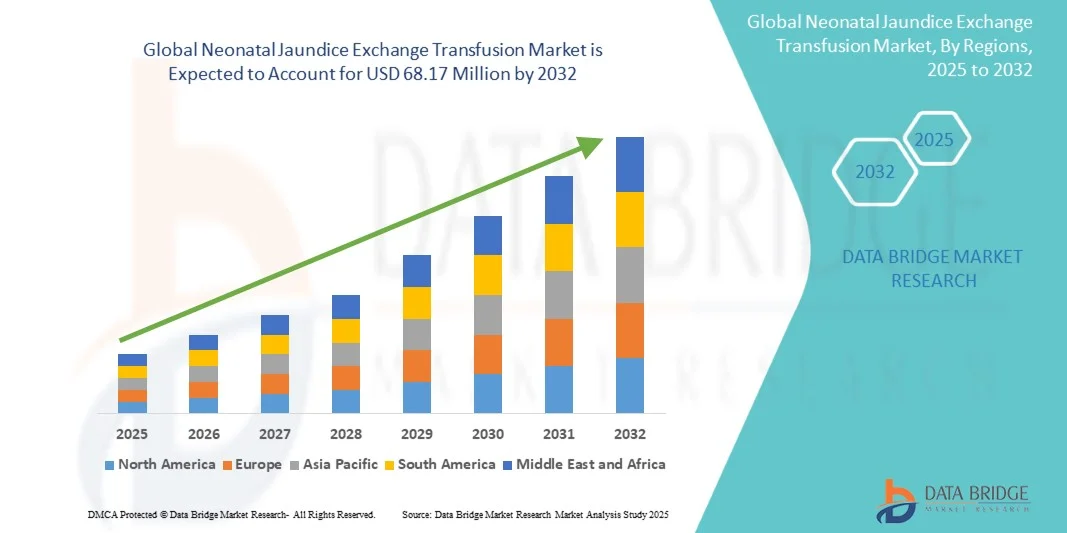
- As per Data Bridge Market Research Analysis the global neonatal jaundice exchange transfusion market size was valued at USD 41.26 Million in 2024 and is expected to reach USD 68.17 Million by 2032, at a CAGR of 6.48% during the forecast period
- The market growth is largely fueled by the increasing prevalence of neonatal jaundice, particularly in preterm and low-birth-weight infants, along with rising awareness among healthcare providers about the benefits of timely exchange transfusion therapy
- Furthermore, advancements in neonatal care technology, improved blood screening protocols, and the growing adoption of standardized treatment guidelines are accelerating the uptake of neonatal jaundice exchange transfusion solutions, thereby significantly boosting the industry's growth
Market Size & Forecast
- Global Market Value (2024): USD 41.26 Million
- Expected Market Value (2032): USD 68.17 Million
- Forecast CAGR (2024–2032): 6.48%
What are the Major Takeaways of Neonatal Jaundice Exchange Transfusion?
- Neonatal jaundice exchange transfusion, a critical procedure for managing severe hyperbilirubinemia in newborns, is increasingly vital in neonatal care units due to its ability to rapidly reduce bilirubin levels, prevent kernicterus, and improve clinical outcomes in high-risk infants
- The escalating demand for exchange transfusion is primarily fueled by the rising incidence of neonatal jaundice, increased hospital births, improved diagnostic capabilities, and growing awareness among pediatricians and parents regarding early intervention
- North America dominated the neonatal jaundice exchange transfusion market with the largest revenue share of 43.5% in 2024, characterized by advanced neonatal care infrastructure, high healthcare expenditure, and a strong presence of key medical device manufacturers. The U.S. experienced substantial growth in exchange transfusion procedures, particularly in tertiary care hospitals and specialized neonatal units, driven by innovations in blood transfusion systems, phototherapy integration, and automated bilirubin monitoring
- Asia-Pacific is expected to be the fastest growing region in the neonatal jaundice exchange transfusion market during the forecast period, with a CAGR of 7.8% from 2025 to 2032, due to increasing hospital deliveries, improving neonatal healthcare services, and government initiatives to reduce neonatal mortality
- The phototherapy segment dominated the neonatal jaundice exchange transfusion market with the largest market revenue share of 52.4% in 2024, driven by its non-invasive nature, high efficacy in reducing bilirubin levels, and widespread availability in hospitals and neonatal units
Report Scope and Neonatal Jaundice Exchange Transfusion Market Segmentation
|
Attributes |
Neonatal Jaundice Exchange Transfusion Key Market Insights |
|
Segments Covered |
|
|
Countries Covered |
North America
Europe
Asia-Pacific
Middle East and Africa
South America
|
|
Key Market Players |
|
|
Market Opportunities |
|
|
Value Added Data Infosets |
|
What is the Key Trend in the Neonatal Jaundice Exchange Transfusion?
“Advancements in Treatment Techniques and Device Innovation”
- A major trend in the global neonatal jaundice exchange transfusion market is the continuous development of more effective and safer treatment devices and protocols. Innovations in phototherapy equipment, bilirubin monitoring systems, and transfusion devices are enhancing the precision and safety of the exchange transfusion process
- For instance, in 2023, several hospitals in the U.S. began adopting automated neonatal apheresis devices that allow precise control over blood volume and exchange rates, improving clinical outcomes and reducing complications
- Newer devices are being designed to integrate seamlessly with neonatal intensive care unit (NICU) monitoring systems, providing real-time feedback on bilirubin levels, hematocrit, and vital signs, allowing clinicians to make rapid adjustments during the procedure
- Research efforts are increasingly focusing on reducing procedure-related adverse events such as electrolyte imbalance, hypocalcemia, and infection risk, which has led to the introduction of safer exchange transfusion kits and consumables
- The trend toward miniaturized, portable, and user-friendly devices is also gaining momentum, particularly in regions with limited NICU infrastructure, enabling treatment access in smaller hospitals or rural healthcare centers
- Furthermore, clinical guidelines are being updated to incorporate risk-based protocols, ensuring that exchange transfusion is performed only when necessary, and with enhanced patient monitoring, thereby optimizing both safety and efficacy
Neonatal Jaundice Exchange Transfusion Market Dynamics
Driver
“Rising Incidence of Severe Neonatal Jaundice and Improved Healthcare Access”
- The growing prevalence of severe neonatal jaundice worldwide, particularly in preterm and low-birth-weight infants, is a significant driver for the Neonatal Jaundice Exchange Transfusion market
- In April 2022, a regional hospital network in India reported a 15% increase in exchange transfusions due to rising awareness among pediatricians about early detection and treatment of hyperbilirubinemia
- Increasing access to NICUs in developing countries has facilitated timely interventions, driving higher adoption of exchange transfusion procedures
- The expansion of neonatal screening programs and routine bilirubin monitoring in both public and private healthcare facilities is leading to earlier detection and management of high-risk cases, fueling market demand
- Continuous training programs for neonatologists and NICU nurses on safe transfusion techniques are enhancing procedural adoption, especially in tertiary care centers
- Supportive government policies and funding for neonatal care initiatives in countries such as China, Brazil, and the U.S. are further boosting market growth, ensuring wider availability of exchange transfusion services
Restraint/Challenge
“Procedure Risks, Cost Constraints, and Limited Specialist Availability”
- The inherent risks associated with exchange transfusion, including infection, hemodynamic instability, and electrolyte imbalance, pose a challenge to broader adoption, particularly in regions with limited clinical expertise
- High costs of modern exchange transfusion equipment and consumables can restrict availability in low- and middle-income countries, limiting market expansion
- A shortage of trained neonatologists and specialized NICU staff in several developing regions hinders timely and safe execution of the procedure
- In some hospitals, the lack of standardized protocols or insufficient integration with electronic medical record (EMR) systems can reduce procedural efficiency and clinician confidence
- Parental concerns regarding potential complications or prolonged hospital stays may delay consent, indirectly impacting market uptake
- Overcoming these challenges requires enhanced training, cost-effective device solutions, increased government funding, and awareness programs for healthcare providers and parents, all of which are expected to support sustained market growth in the forecast period
How is the Neonatal Jaundice Exchange Transfusion Segmented?
The market is segmented on the basis of type, treatment, and end-users.
• By Type
On the basis of type, the neonatal jaundice exchange transfusion market is segmented into acute and chronic. The acute segment dominated the largest market revenue share of 48.6% in 2024, driven by the high prevalence of early-onset jaundice in newborns, rapid diagnosis through bilirubin screening, and immediate intervention protocols in hospitals and neonatal units. Acute jaundice cases are commonly addressed through phototherapy and exchange transfusion, which are widely adopted due to their efficacy in preventing severe hyperbilirubinemia and kernicterus. Hospitals and neonatal clinics prioritize acute cases for treatment, supported by government health programs and standardized neonatal care protocols. Enhanced awareness among healthcare professionals and parents has further reinforced the dominance of acute type management globally. The segment’s prevalence in both full-term and preterm neonates ensures consistent adoption of recommended treatment modalities, consolidating its leadership in the market.
The chronic segment is expected to witness the fastest CAGR of 7.9% from 2025 to 2032, attributed to rising incidences of prolonged hyperbilirubinemia and hemolytic disorders in neonates. Chronic cases often require repeated interventions and follow-up care, creating demand for advanced phototherapy systems, extended hospital stays, and specialized neonatal care. The growth is supported by improvements in neonatal screening programs, early detection of bilirubin metabolism disorders, and expansion of outpatient neonatal clinics. In addition, rising parental awareness, government initiatives for newborn health, and technological advancements in bilirubin monitoring devices contribute to the rapid adoption of treatment solutions for chronic jaundice, positioning this segment as the fastest-growing area in the market.
• By Treatment
On the basis of treatment, the neonatal jaundice exchange transfusion market is segmented into phototherapy, exchange transfusion, medications, and others. The phototherapy segment held the largest market revenue share of 52.4% in 2024, driven by its non-invasive nature, high efficacy in reducing bilirubin levels, and widespread availability in hospitals and neonatal units. Phototherapy systems, including LED-based and fiber-optic devices, are preferred due to safety, ease of operation, and integration with modern neonatal monitoring equipment. Hospitals and clinics continue to invest in advanced phototherapy units, supporting large patient volumes while ensuring consistent treatment outcomes. The segment’s dominance is reinforced by standardized neonatal care protocols recommending phototherapy as the first-line treatment for moderate to severe jaundice, along with continuous improvements in light intensity and device portability.
The exchange transfusion segment is anticipated to witness the fastest CAGR of 8.3% from 2025 to 2032, fueled by the critical need to treat severe hyperbilirubinemia and prevent neurological damage. Technological advancements in blood processing, safer transfusion protocols, and improved monitoring systems have increased procedural safety and adoption. Growth is further driven by rising awareness among neonatologists, expansion of tertiary care centers, and inclusion of exchange transfusion in treatment guidelines for high-risk newborns. The segment benefits from increasing hospital infrastructure, trained neonatal staff, and enhanced parental awareness regarding early intervention, making it the fastest-growing treatment modality in the market.
• By End-Users
On the basis of end-users, the neonatal jaundice exchange transfusion market is segmented into hospitals, neonatal clinics, ambulatory surgical centres, homecare, and others. The hospitals segment accounted for the largest market revenue share of 55.1% in 2024, driven by the presence of specialized neonatal intensive care units (NICUs), trained pediatric staff, and the availability of advanced phototherapy and exchange transfusion equipment. Hospitals are primary centers for managing both acute and chronic jaundice cases, offering comprehensive diagnostic and treatment services. Large patient inflow, established treatment protocols, and insurance coverage for neonatal care further strengthen hospital dominance in the market.
The neonatal clinics segment is projected to register the fastest CAGR of 8.1% from 2025 to 2032, owing to the growing number of specialized outpatient centers for newborn care. These clinics offer focused monitoring, follow-up care, and early intervention for mild to moderate jaundice, reducing hospital visits and improving treatment compliance. The expansion of neonatal clinics is supported by government healthcare initiatives, increasing awareness among parents, and integration with telemedicine platforms for remote monitoring. Rising preference for cost-effective, accessible, and personalized neonatal care positions neonatal clinics as the fastest-growing end-user segment globally.
Which Region Holds the Largest Share of the How is Neonatal Jaundice Exchange Transfusion Segmented?
- North America dominated the neonatal jaundice exchange transfusion market with the largest revenue share of 43.5% in 2024
- Characterized by advanced neonatal care infrastructure, high healthcare expenditure, and a strong presence of key medical device manufacturers
- The market experienced substantial growth in exchange transfusion procedures, particularly in tertiary care hospitals and specialized neonatal units, driven by innovations in blood transfusion systems, phototherapy integration, and automated bilirubin monitoring
U.S. Neonatal Jaundice Exchange Transfusion Market Insight
The U.S. neonatal jaundice exchange transfusion market captured the largest revenue share in North America in 2024, fueled by the growing prevalence of severe neonatal jaundice, expanding NICU facilities, and increased awareness among healthcare providers regarding timely intervention. The adoption of advanced transfusion equipment, automated bilirubin measurement systems, and integrated phototherapy devices is significantly enhancing procedural safety and efficacy. In addition, training programs for neonatologists and specialized nurses are contributing to higher adoption rates across the country.
Europe Neonatal Jaundice Exchange Transfusion Market Insight
The Europe neonatal jaundice exchange transfusion market is projected to expand at a substantial CAGR throughout the forecast period, primarily driven by improvements in neonatal healthcare infrastructure and rising awareness about early jaundice detection. The region is witnessing significant growth across hospitals and specialty neonatal units, with investments in updated exchange transfusion protocols and equipment, ensuring safer and more efficient treatment procedures.
U.K. Neonatal Jaundice Exchange Transfusion Market Insight
The U.K. neonatal jaundice exchange transfusion market is anticipated to grow at a noteworthy CAGR during the forecast period, driven by increasing hospital deliveries, advancements in NICU technologies, and a focus on reducing neonatal morbidity. Government initiatives supporting neonatal care and early jaundice management are encouraging higher adoption of exchange transfusion procedures.
Germany Neonatal Jaundice Exchange Transfusion Market Insight
The Germany neonatal jaundice exchange transfusion market is expected to expand at a considerable CAGR during the forecast period, fueled by growing investments in neonatal care, high standards for clinical safety, and the integration of automated bilirubin monitoring systems in NICUs. The country’s emphasis on medical innovation and clinical training enhances adoption in both public and private healthcare facilities.
Asia-Pacific Neonatal Jaundice Exchange Transfusion Market Insight
The Asia-Pacific neonatal jaundice exchange transfusion market is poised to grow at the fastest CAGR of 7.8% during the forecast period from 2025 to 2032, driven by increasing hospital deliveries, improving neonatal healthcare services, and government initiatives aimed at reducing neonatal mortality. The expansion of NICUs and pediatric care facilities in countries such as China, India, and Japan is supporting wider adoption of exchange transfusion procedures.
Japan Neonatal Jaundice Exchange Transfusion Market Insight
The Japan neonatal jaundice exchange transfusion market is gaining momentum due to the country’s focus on high-quality neonatal care, advanced NICU infrastructure, and rising awareness of hyperbilirubinemia management. Integration of automated monitoring systems and protocol-based care in hospitals is enhancing treatment outcomes and supporting market growth.
China Neonatal Jaundice Exchange Transfusion Market Insight
The China neonatal jaundice exchange transfusion market accounted for the largest market revenue share in Asia-Pacific in 2024, attributed to the country’s increasing healthcare expenditure, rising hospital deliveries, expanding NICU network, and growing awareness of neonatal jaundice management. Government programs promoting maternal and child health, along with improvements in neonatal monitoring and transfusion equipment, are key factors propelling market growth in China.
Which are the Top Companies in Neonatal Jaundice Exchange Transfusion?
The neonatal jaundice exchange transfusion industry is primarily led by well-established companies, including:
- Macopharma (France)
- Terumo Corporation (Japan)
- Haemonetics Corporation (U.S.)
- Fresenius Kabi AG (Germany)
- Baxter (U.S.)
- B. Braun SE (Germany)
- Vygon (France)
- Vital Care Products (U.S.)
- Marian Medical, Inc. (U.S.)
What are Latest Developments in Neonatal Jaundice Exchange Transfusion?
- In August 2022, the American Academy of Pediatrics (AAP) released updated guidelines for the management of hyperbilirubinemia in newborn infants of 35 or more weeks of gestation. These guidelines emphasized the importance of early identification and treatment to prevent severe complications such as acute encephalopathy and kernicterus. The recommendations included thresholds for initiating phototherapy and exchange transfusion, aiming to standardize care and improve neonatal outcomes. This development underscores the ongoing efforts to enhance neonatal jaundice management through evidence-based protocols
- In June 2025, a study published in Hospital Pediatrics examined the impact of the 2022 AAP guidelines on neonatal hyperbilirubinemia management. The findings indicated a decrease in hospitalization rates for jaundice in children's hospitals during the year following the release of the updated guidelines, suggesting a positive shift towards more effective and timely management practices. This reflects the practical implications of updated clinical guidelines on neonatal care
- In January 2025, a study published in the European Journal of Pediatrics evaluated the effectiveness of an educational program aimed at improving nurses' performance regarding pathological jaundice. The results demonstrated that the program significantly enhanced nurses' knowledge and practices, leading to better management of neonates with bilirubin-induced neurological dysfunction. This initiative highlights the importance of continuous professional development in improving neonatal care outcomes

- Interactive Data Analysis Dashboard
- Company Analysis Dashboard for high growth potential opportunities
- Research Analyst Access for customization & queries
- Competitor Analysis with Interactive dashboard
- Latest News, Updates & Trend analysis
- Harness the Power of Benchmark Analysis for Comprehensive Competitor Tracking
Data collection and base year analysis are done using data collection modules with large sample sizes. The stage includes obtaining market information or related data through various sources and strategies. It includes examining and planning all the data acquired from the past in advance. It likewise envelops the examination of information inconsistencies seen across different information sources. The market data is analysed and estimated using market statistical and coherent models. Also, market share analysis and key trend analysis are the major success factors in the market report. To know more, please request an analyst call or drop down your inquiry.
The key research methodology used by DBMR research team is data triangulation which involves data mining, analysis of the impact of data variables on the market and primary (industry expert) validation. Data models include Vendor Positioning Grid, Market Time Line Analysis, Market Overview and Guide, Company Positioning Grid, Patent Analysis, Pricing Analysis, Company Market Share Analysis, Standards of Measurement, Global versus Regional and Vendor Share Analysis. To know more about the research methodology, drop in an inquiry to speak to our industry experts.
Data Bridge Market Research is a leader in advanced formative research. We take pride in servicing our existing and new customers with data and analysis that match and suits their goal. The report can be customized to include price trend analysis of target brands understanding the market for additional countries (ask for the list of countries), clinical trial results data, literature review, refurbished market and product base analysis. Market analysis of target competitors can be analyzed from technology-based analysis to market portfolio strategies. We can add as many competitors that you require data about in the format and data style you are looking for. Our team of analysts can also provide you data in crude raw excel files pivot tables (Fact book) or can assist you in creating presentations from the data sets available in the report.












